

The following photographs are a selection from a collection of 47 images preserved and shared by the Dorset History Centre. They offer a rare, detailed glimpse of everyday post-war life in Sydling St Nicholas in 1947. These official photographs were issued by the Central Office of Information in London, and each is annotated, though sadly no photographer is credited. They capture not just the village itself, but the people, routines and small moments that defined it.
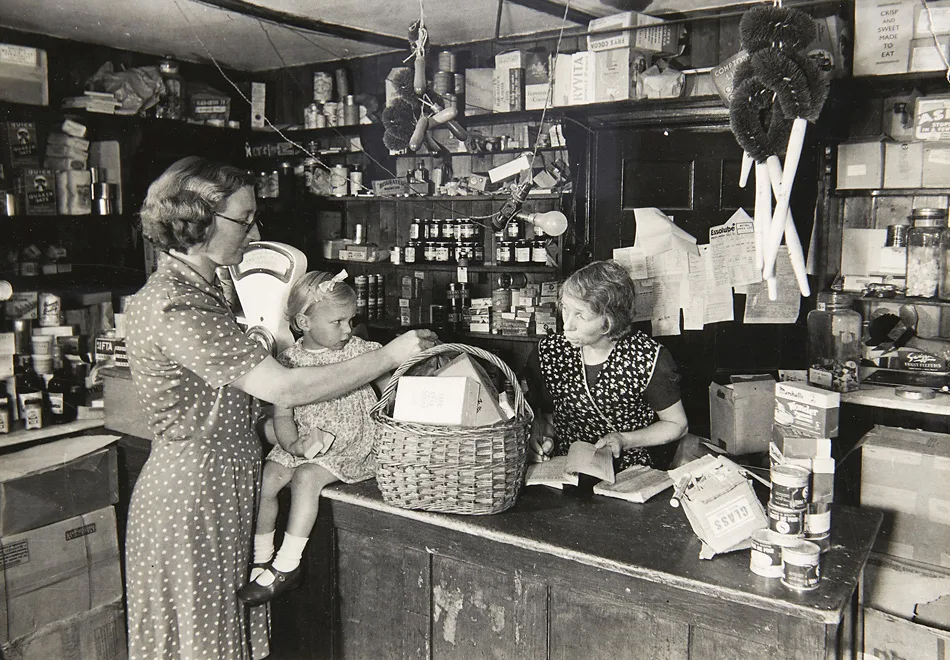
Mrs G L Spriggs runs the local village shop, which is still called Sherry’s Stores after her father.
Most of Sydling’s 350 people are registered with Mrs Spriggs for their rations. They can purchase almost everything (with the exception of bread) at the shop. Mrs Spriggs does all her own buying, dealing with as many as 60 different firms, and has over £500 capital tied up in stock. Rationing has added to her task enormously, and dealing with coupons, points and personal points takes up a great deal of her time.
Knowing what to stock, and just how much of each item she requires, is a business that would take a lifetime to learn. But as Mrs. Spriggs, being born in the business, says ‘it is an art that must grow on you.’
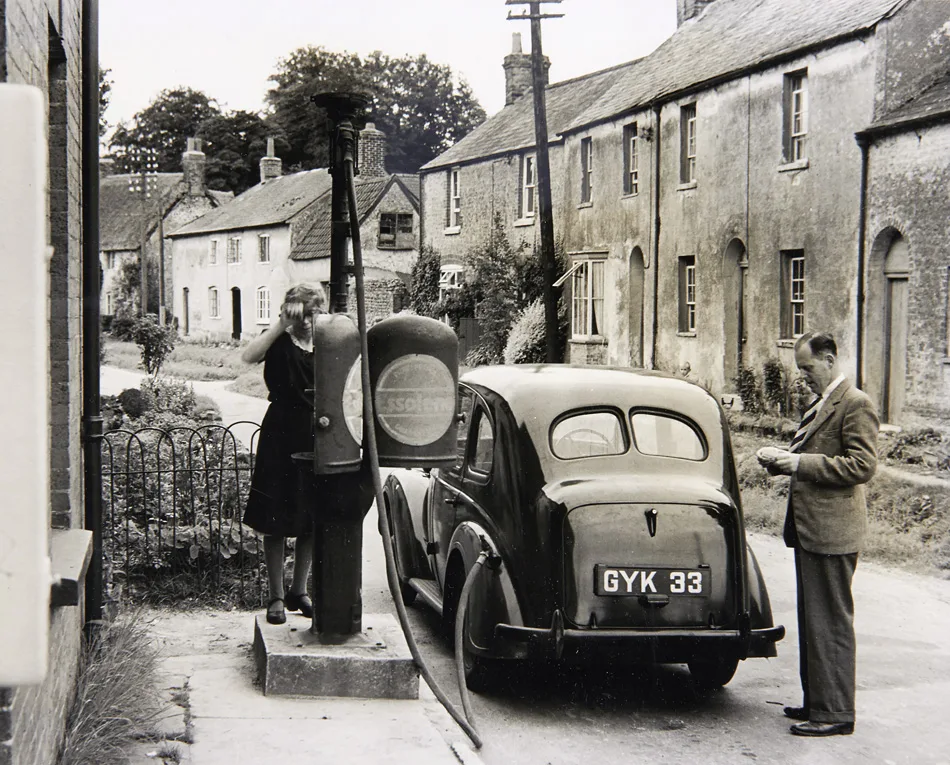
Mrs Spriggs also owns the local petrol pump. A constant stream of cars and commercial vehicles keeps her running in and out of the shop, creating an additional burden in her very busy day. The tank which holds 600 gallons is beneath the small garden behind Mrs Spriggs’.
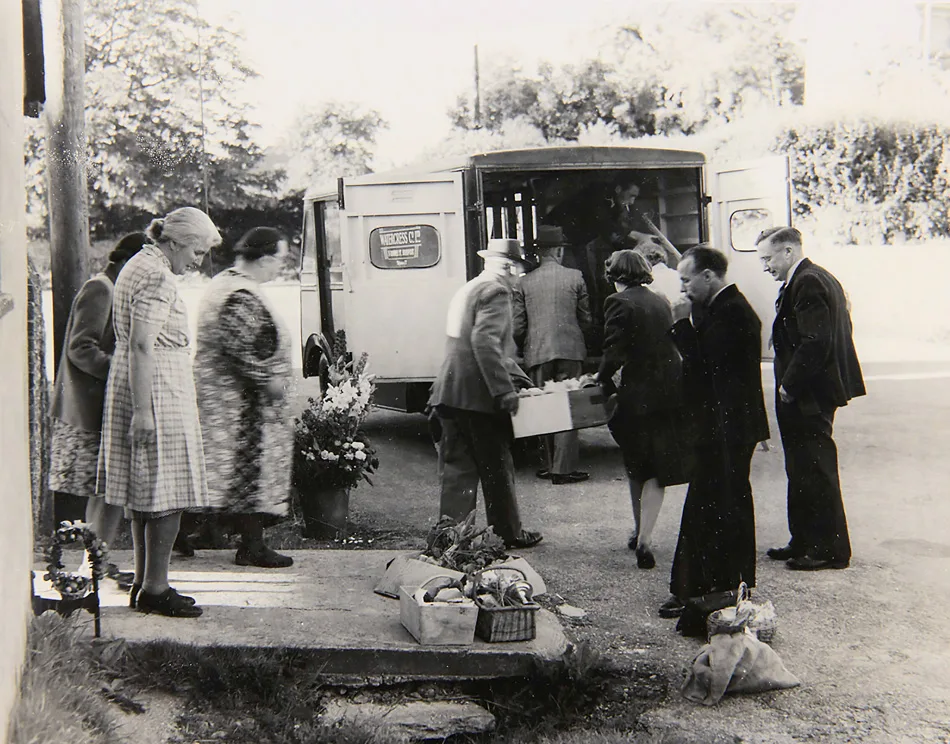
The village Produce Association, formed to encourage home-growing of produce, has 60 members in Sydling. Each pays 1/3d a year subscription, and for this they get seeds 2/6d in the pound cheaper, and seed potatoes 3s 9d in the pound cheaper. Lime is supplied to members at 2/- instead of 5/- a cwt under a Government subsidy.
Annually the Dorset Village Produce Association holds a competition, and here (from left to right) is Mrs Bowditch, Miss Ridout, Mrs Palmer, Mr Hallett, Mr Kellaway, Mrs Bowring, Mrs Hallett, Mr Bowring and Mr Bowditch, packing up the produce for the competition which was held in Weymouth.
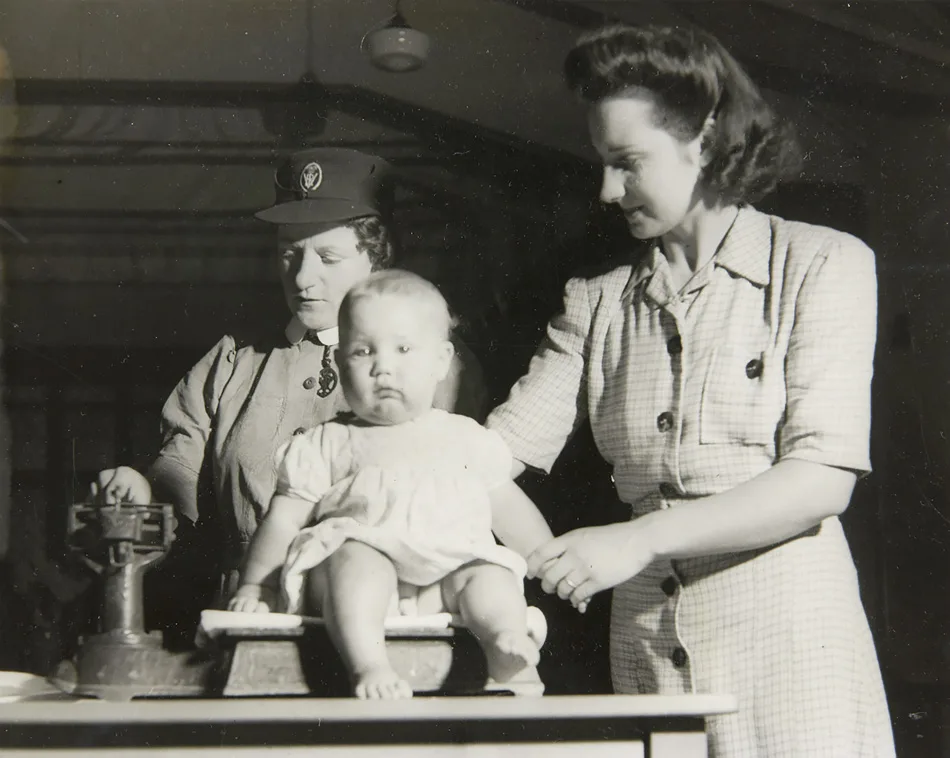
One of the most popular afternoon attractions at the Village Fete is the baby show.
Here Nurse Nightingale, the District Nurse, is weighing six-month old, fair-haired, blue-eyed Barry Wilkinson, while attractive Mrs Wilkinson, herself a Sydling girl, holds her baby son.
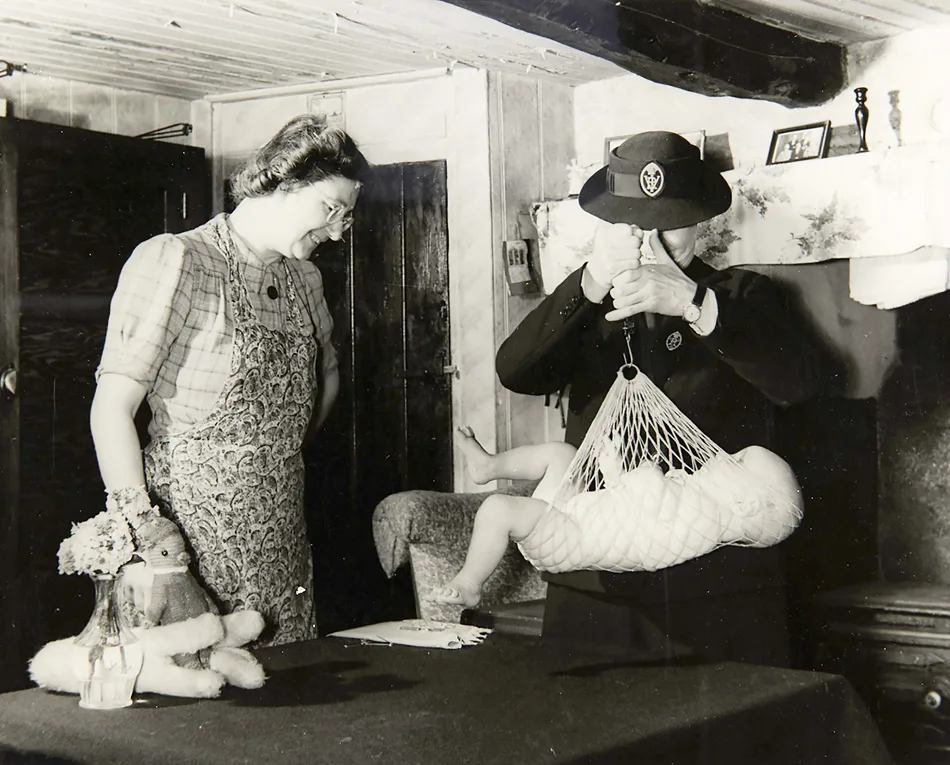
The relationship of the village with the County Town is constant in all matters of health, roads, public utilities and education. From the County Medical Officer of
Health’s department, health visitors tour the villages to give advice to expectant mothers and to mothers of young children. Here Nurse Keohane (pronounced Q-harn) calls on Mrs E M Swain of Up Sydling to see her eight-month-old son Terence is gaining weight satisfactorily.
Mrs Swain has a cousin, Mrs Thelma Peterson, living in Winnipeg, and an aunt, Mrs H Teal, who lives in Victoria, BC.
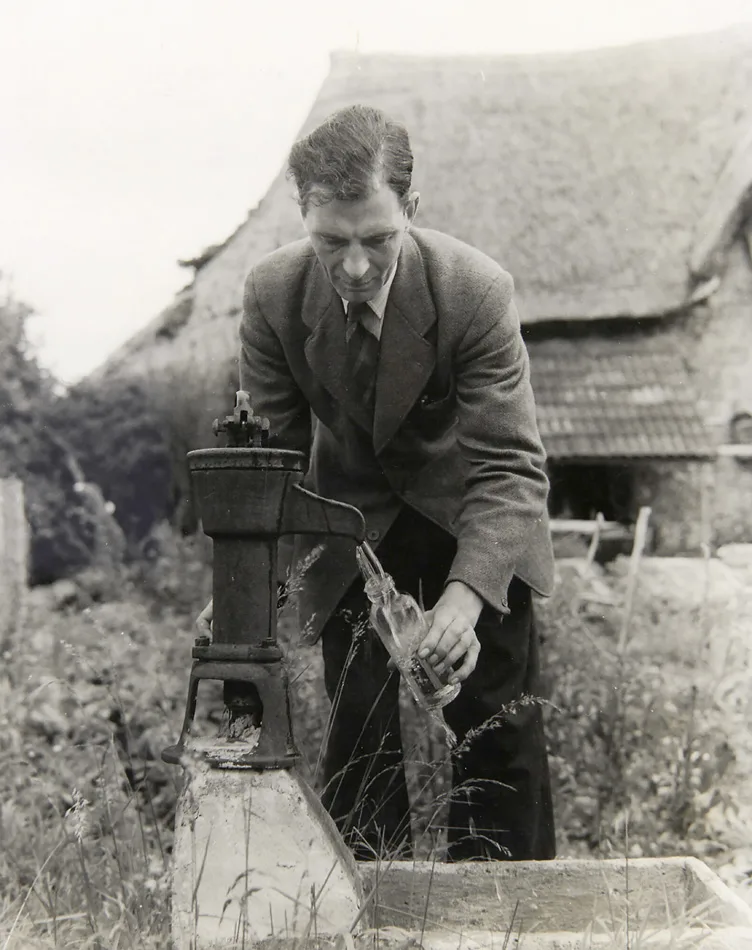
Sydling St Nicholas is dependent for most of its public services on Dorchester, County Town of Dorset. Here, Mr B R Swift, Assistant Sanitary Inspector of the Dorchester Rural District Council, is taking a sample of well water to test for purity.
The Dorchester Rural District Council is responsible for 128,000 acres (roughly 20 miles square) of rural areas with a population of 16,000 for housing, water, drainage, inspection of milk producing premises, refuse collection, obstructions of right-of-ways and footpaths.
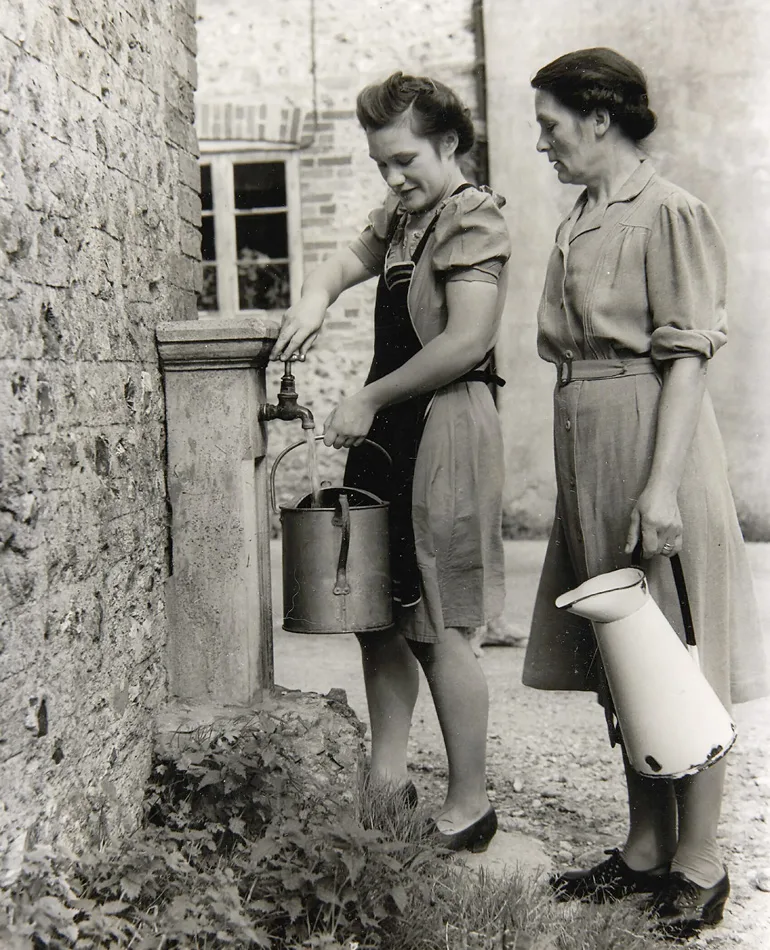
Water is Sydling’s greatest domestic problem. There is no water grid-system, and very few of the cottages and farmhouses have their own well.
Drinking water is supplied through pipes running along the village street, tapped at intervels from where the inhabitants can draw their supplies, as Mrs Turner and Joyce Grabb are đoing here.
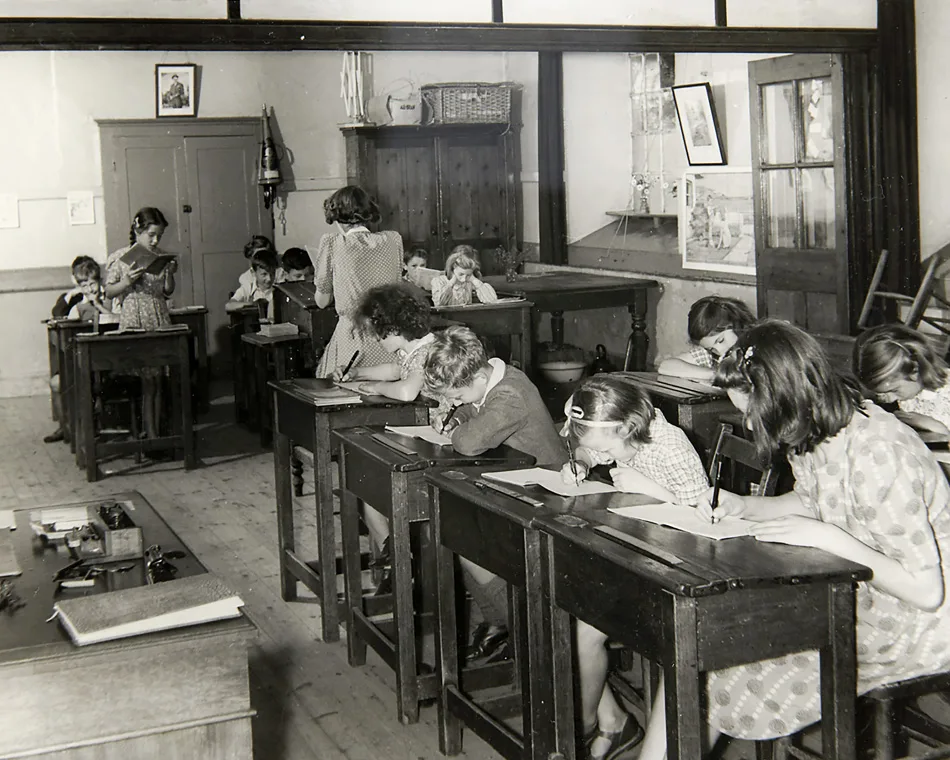
The village school at Sydling St.Nicholas has 34 children. the headmistress is Mrs I S Bowring, who is also clerk to the Parish Council, Chairman of the Village Produce Association and a member of the WEA Classes. Much of the village life revolves around the headmistress, who is in close contact with the population from early childhood onwards.
Here the junior class is in the background, and the senior class in the foreground. The latter will soon be moving on to either the Dorchester County School (for girls), Grammar School (for boys) or the Modern School (mixed).
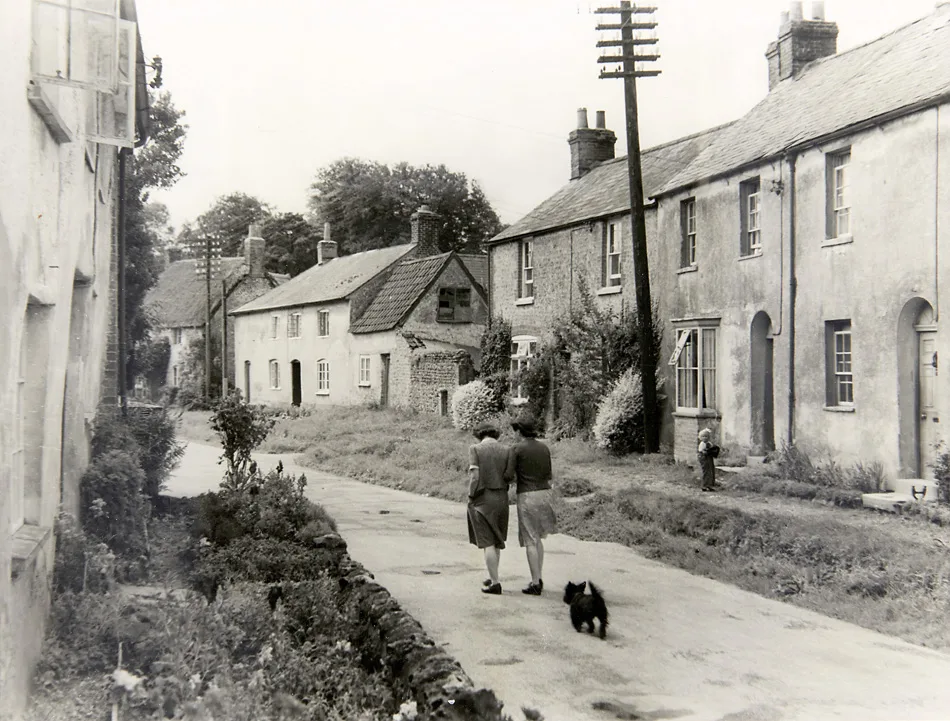
At dusk the village takes on a sleepy appearance, which belies the hard work that goes on from early morning to late at night. Mrs Davies (sister of the headmistress, Mrs Bowring) with her friend Miss Holland, on holiday from Scarborough, stroll through the main street while little Mary Lovell pauses in her play to watch them as they pass.
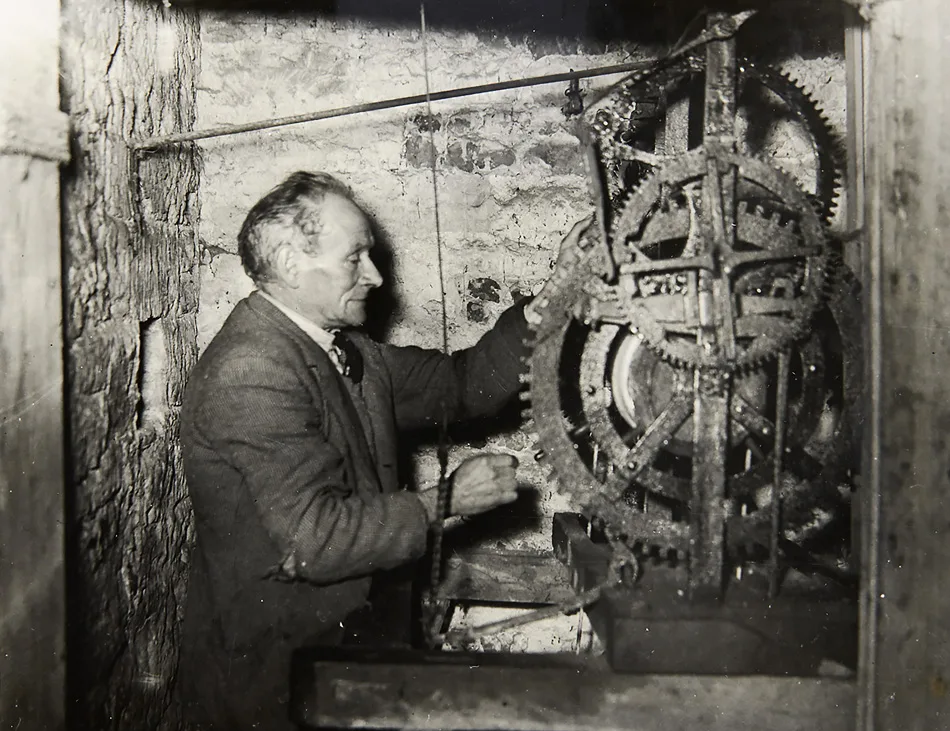
Every day Mr Sherry mounts the steps of the parish church of St Nicholas tower to wind the old Elizabethan clock. For this he is paid 1 1/2d [a penny ha’penny]
The clock was installed in 1593. It has no clock dial, as was the custom of the period, being designed solely to chime the hours.