

Martha Brown, a widow married to a much younger man, John Brown, ran a little shop in the tiny village of Birdsmoorgate in the Marshwood Vale of West Dorset. It was not a happy marriage – he openly flirted with a younger woman and drank a lot. One night he returned home late from the other woman’s house and beat Martha viciously. Driven by fear for her life, she grabbed a hatchet and killed him. Later, she tried to claim he had been kicked by his horse, but the evidence pointed to his having been attacked in the house.
Martha was found guilty of his murder at Dorchester Assizes, and condemned to death. She clung on to her story until two days before her execution, when she wrote her confession. But although the sympathetic prison chaplain rushed to London with the document it was too late – the Home Secretary was in Ireland and he was the only person who could commute the sentence. Martha was executed on Saturday 9th August 1856.
Her story would be just another grim footnote in Victorian court reports if her execution had not been witnessed by a young Thomas Hardy. That shocking event stayed with him, haunting him into old age, and importantly influencing, if not actually inspiring, one of his greatest Wessex novels.
© Angel Exit theatre
Most people associate William Wordsworth with the Lake District, but the revered poet actually lived in Dorset for two years (see Dorset Life here). He lived with his sister Dorothy in a manor house at Racedown, at the foot of the Iron Age hill fort Pilsdon Pen. The house was owned by the Pinney family and was leased to Wordsworth fully furnished and rent-free. William and Dorothy lived there between September 1795 and June 1797, and Samuel Taylor Coleridge came to visit them from Nether Stowey near Exmoor, where he lived in the late 1790s.
Racedown was a short distance from Birdsmoorgate in the Marshwood Vale, the scene of a notorious 1856 murder.
Nowadays, Wordsworth fans head to Dove Cottage in Cumbria, but in the early 20th century – with long-distance travel more difficult – Racedown attracted many people who were interested in the life and work of one of England’s greatest poets.
One of these ‘pilgrims’ was Thomas Hardy.
Lady Hester Pinney described the visit in a short memoir, published in 1966 by James Stevens Cox*, in his Toucan Press monographs on the life and works of Thomas Hardy.
‘Thomas Hardy came to the house as a pilgrim in 1925 and as such signed the pilgrim’s end of the visitors’ book. After doing so, he cleaned the pen on the striped lining of his waistcoat, a thing I remember seeing my father’s business friends do.
‘We had been talking about the years gone by, and as he was leaving and being hurried home by his careful wife, he turned to me and said: “Can you find out about Martha Brown? She lived over there,” and he pointed towards the west. “I saw her hanged when I was 16.” He was bustled into the car, before there was time for more.’
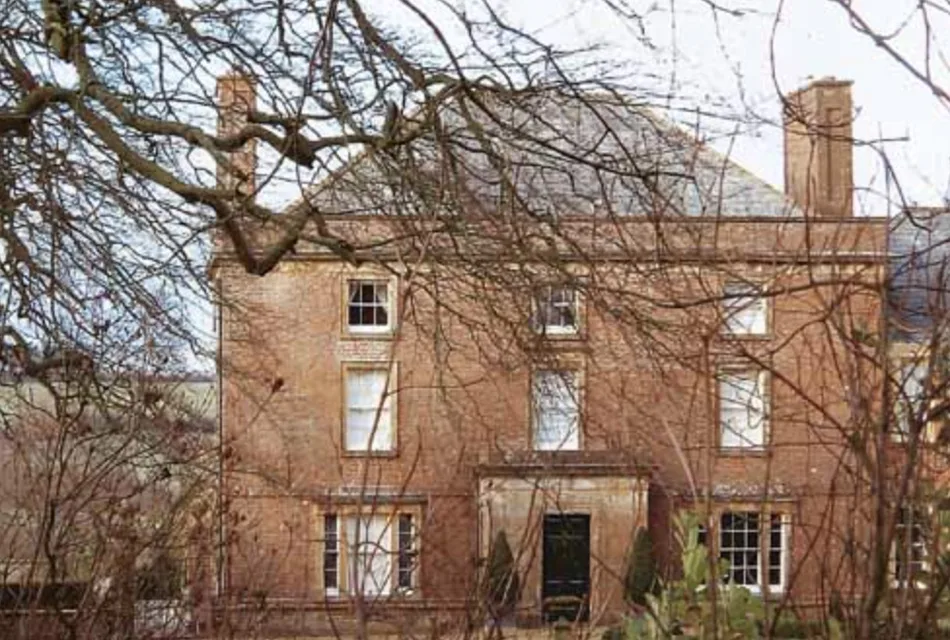
Image: Dorset Life
A fine figure
Lady Pinney was a district councillor and Poor Law Guardian, and used to visit the old and bed-ridden folk in the Beaminster Infirmary. In her memoir, she wrote: ‘I asked them about Martha Brown. They told me that she was a “wonderful looking woman with beautiful curls.”
‘She and her husband lived at Birdsmoorgate. Martha was about 20 years older than her husband, who, they said, had married her for her money – £50. John Brown was a tranter [a man who did jobs with a horse and cart], kept a horse and did hauling for people. Martha kept a general shop. The other woman in the story, Mary Davies [later Powell], also kept a shop and took in washing.
‘One day, Martha looked in at Mary’s window and saw her sitting on John Brown’s knee.
‘John Brown went to Beaminster on a Saturday with a load of poles and came back in liquor very late at night. He and his wife had a quarrel, and while he was bending down by the fire, untying his boots, Martha hit him on the head with a hatchet. Later she called in a neighbour and said she had found her husband dying at the door from kicks from his horse. The story was not believed and Martha was hanged at Dorchester.
‘Mary Davies started to walk the 25 miles to see the hanging, but when she reached the village of Broadwindsor, three miles away, the people threatened to mob her and she turned back. When I had collected all these stories I sent them to Hardy.’
In his reply thanking Lady Pinney for her report, Hardy wrote of his shame at seeing the execution of ‘that unhappy woman Martha Brown.’ Hardy, then only 16, said his only excuse was ‘that I was but a youth and had to be in the town at the time for other reasons … I remember what a fine figure she showed against the sky as she hung in the misty rain, and how the tight black silk gown set off her shape as she wheeled half-round and back.’
Hardy’s second wife, Florence, also wrote to Lady Pinney: ‘What a pity that a boy of 16 should have been permitted to see such a sight. It may have given a tinge of bitterness and gloom to his life’s work.’
It certainly stayed with him, and undoubtedly informed the development of the story that would become his best-known novel, turned into a play during his lifetime, and later filmed and staged. Tess of the D’Urbervilles ends with the heroine being hanged for the murder of the man who had seduced her, abandoned her, and later dragged her back into what we would now call a toxic relationship.

She had a little axe
Martha Brown’s story was vividly recalled to Lady Pinney by one of the Beaminster Infirmary inmates, Jim Lane, who (like Hardy) was only 16 at the time. He recalled John Brown as ‘a bad man’ and described what the villagers believed happened on that fateful night in Birdsmoorgate: ‘Martha went along … and found her husband on Mary Powell’s knee, she was at the window and she see’d un there. She went home and got there first. After John came home, he sat by the fire untying his boots. I expect they had a few words – you know. She had a little axe and she hit him on the head (because he had been along of that other woman.) She did hit him on the same night and the blood did make a stain what never could be got out till the house fell down.
‘Mary Powell, she ought to be hung instead because she did uphold a man to her house. Martha Brown were hung openly at Dorchester and no one’s been hung openly since …’
Martha had money, said Jim, but Mary was younger and smarter: ‘I suppose John liked the younger woman best … but Martha was a nice-looking lady, too. Me and one or two other lads went to see the body on Sunday morning about 12, before dinner, but they wouldn’t let us see it.’
John and Martha were both nice people, he said, but John ‘used to have a drop or two to drink going about on his job.’ Perhaps still thinking about Mary Powell/Davies and her part in the tragedy, he concluded: ‘It is hard to be killed for other folks’ wrong.’
A crowd of three to four thousand gathered to see the hangman William Chalcraft perform his grisly duty. He was reported afterwards to have said that he ‘never saw a criminal die so easily.’ Lady Pinney noted, in her memoir, that Martha’s execution was the first public hanging in Dorchester for 23 years – and she was the last woman to be publicly executed in the town.
In its report of Martha’s execution, the Western Gazette of 24th July 1856 looked back to that previous execution, of 15 year old Sylvester Wilkins: ‘In a lark he ignited a piece of tow that had been stuffed into a hole in an adjoining house … The jury recommended the convict to mercy on account of his youth, yet the judge left him for execution and he was hanged on the 23rd March 1833.’
A grim chorus
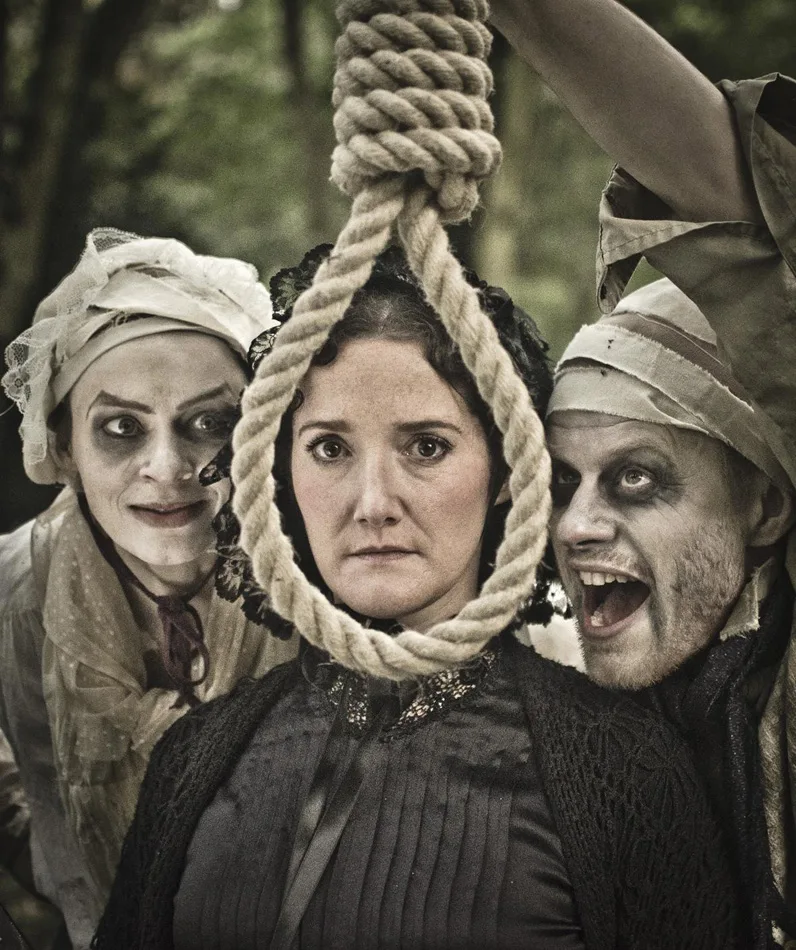
Martha’s story continues to attract interest and comment – most recently in an episode of Lucy Worsley’s Radio 4 series, Lady Killers. The historian and broadcaster travelled to Dorchester to see the old Crown Court in Shire Hall, where Martha was tried and convicted (as were the Tolpuddle Martyrs, 22 years before). Looking at the changes in understanding of domestic abuse and women’s suffering at the hands of men (fathers, brothers, husbands), Lucy Worsley also talked to solicitor Harriet Wistrich, the founder of the Centre for Women’s Justice, about coercive control and the plight of women who kill their abusive husbands – and they considered what the outcome would be if Martha was tried today (listen to the full Lady Killers episode here). The story has, of course, special resonance in Dorset. In 2014 it was turned into a play, The Ballad of Martha Brown, by the locally-based theatre company Angel Exit. The company presented the story in a dark and powerful visual style, with memorable, original music and gleefully black humour. There was a grim chorus of hollow-eyed storytellers evoking a mysterious blend of reality and fantasy played out under the constant stare of the gallows.
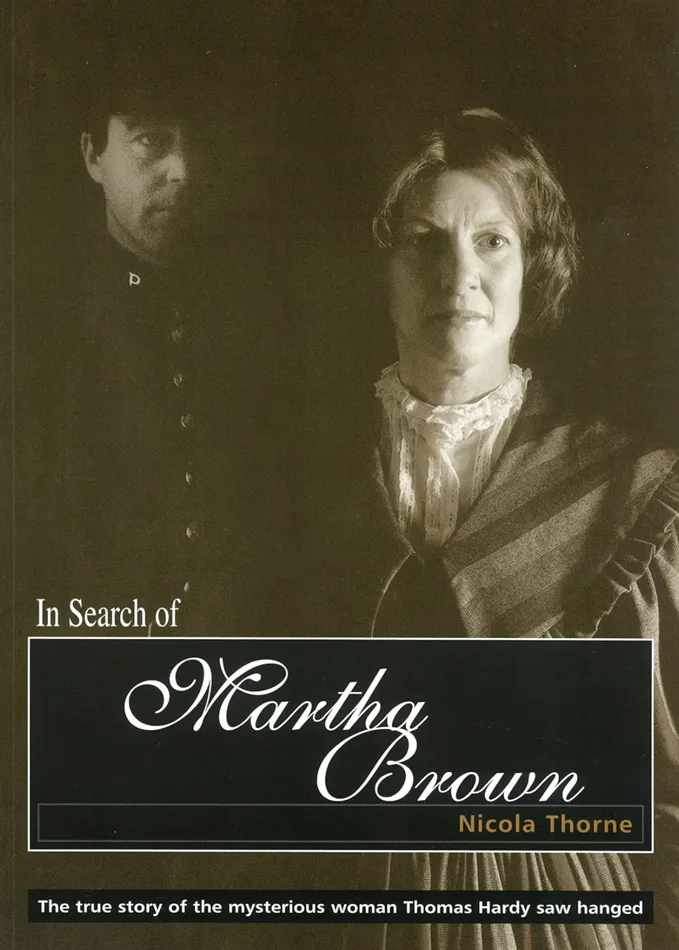
The prolific romantic novelist Nicola Thorne, who lived in Dorset for some years, developed the story into a novel, My Name is Martha Brown. The writer, who also wrote as Rosemary Ellerbeck and died in 2025 at the age of 92, became fascinated by Martha’s story and published a non-fiction work, In Search of Martha Brown, based on her own extensive research as well as Lady Pinney’s collected memories and records.
The reader who knows of Hardy’s teenage experience is bound to recall it in the final sentences of Tess of the D’Urbervilles, as Angel Clare and ‘Liza Lu look down on the prison where Tess is to be executed: ‘Justice was done and the President of the Immortals, in Aeschylean phrase, had ended his sport with Tess. And the d’Urberville knights and dames slept on in their tombs unknowing. The two speechless gazers bent themselves down to the earth, as if in prayer, and remained thus a long time, absolutely motionless: the flag continued to wave silently.
As soon as they had strength they arose, joined hands again, and went on.’
*James Stevens Cox (1910-1997) produced a series of monographs about Thomas Hardy and life in Dorset in the late 19th and early 20th century. They were published by his Toucan Press, extracts are published with permission of his son, Gregory Stevens Cox © Toucan Press
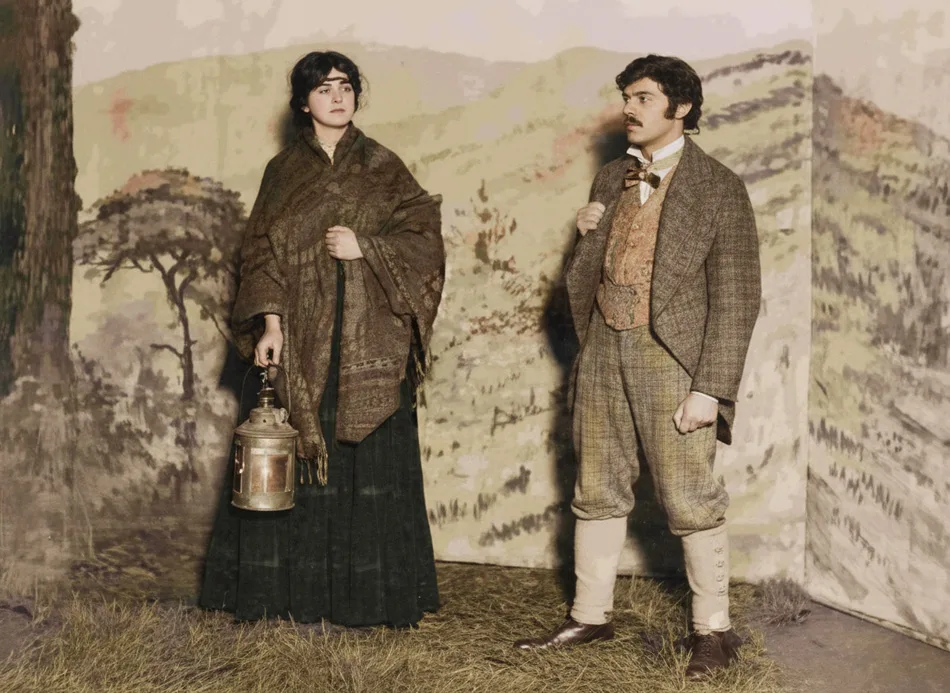
Gertrude Bugler’s mother, Augusta, had attracted the attention of a young Thomas Hardy years before he found fame, and is widely believed to have inspired his creation of Tess of the d’Urbervilles.
Decades later, when Hardy returned to Dorchester and formed his Hardy Players, he cast the teenage Gertrude in several productions before choosing her, in 1924, to play Tess herself. The role was still considered daring, and she said in an interview that the character was controversial: ‘A friend of my father was shocked … Even to-day there are people who think I am not quite nice to appear in Tess.’
The play opened in Dorchester on 26th November 1924 at the Corn Exchange.
The Daily Mail described it as “less a play in the accepted sense than four outstanding episodes … told in the language of the book”, and reported that the production’s “beauty … lay chiefly in the acting of Tess by Mrs Gertrude Bugler”.
Getrude died in 1992. Image above is an enhanced version of an original, showing Gertrude as Tess.