

With Lloyds leaving Gillingham, concerns grow over cash access, digital exclusion and whether rural towns still matter to Britain’s banks
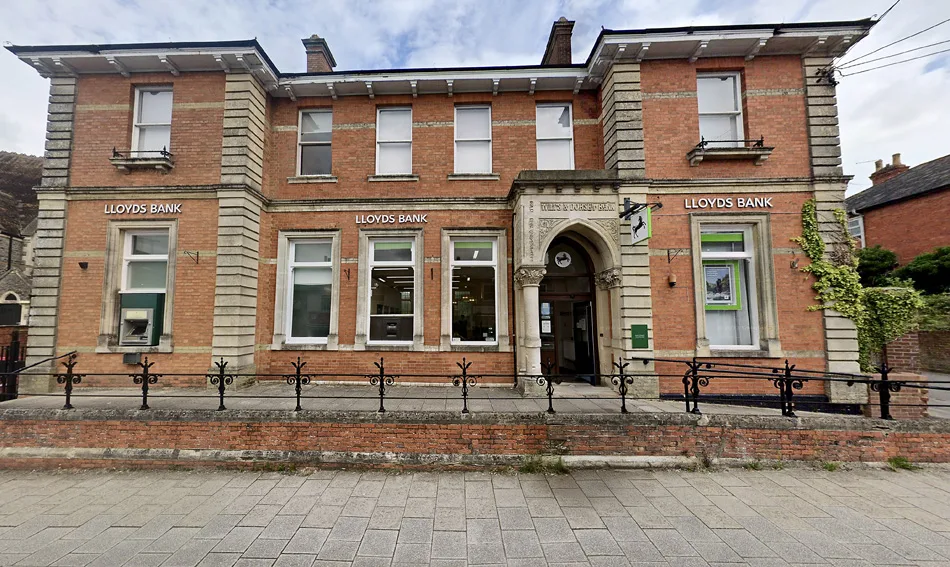
Most rural Dorset residents are used to seeing vital services eroded, having to travel miles to get things done. The decision to close the Lloyds Bank in Gillingham on 8th January was another unwelcome blow: businesses and local residents lost another Blackmore Vale bank. Many Shaftesbury residents who had recently moved to the Gillingham branch when their own bank closed were also left frustrated.
While many people use online banking services successfully, there are still those who struggle with digital access or worry about security. And sometimes, you simply need to speak to a human being in a physical building — to witness signatures, resolve a problem, or deal with financial matters at vulnerable moments. When people are dealing with a bereavement and cannot get past automated systems, speaking to a person with empathy and experience can make a huge difference. In rural Dorset, where public transport is sporadic, digital reach is patchy and broadband not always dependable, some people still rely on face-to-face banking. Although online transactions are now more popular, many people also like to use cash to budget, especially those having to watch every penny.
Last year, a House of Lords report highlighted the the impact of losing a bank on a town. The research showed that in 1986 there were 21,643 bank and building society branches in the UK, compared to 6,870 in 2024. More have since closed, including in Blandford Forum, Shaftesbury, Sherborne and now Gillingham. While the method of banking has rapidly changed to online services for many people, there are significant issues that affect those in rural areas, including slower broadband and inconsistent mobile phone signal which affects banking and accessing secure sites. Finally, bank closures often lead to yet another large empty building on an already-struggling high street.
The bank with no cash
Once the closure plans were known, Gillingham Town Council swiftly applied for a banking hub, similar to the one which operates in Sherborne, but that was refused. However, after some negotiation, there will be a banking service in Gillingham Library. So, as well as checking out new library books, you can also do your banking … or can you?
Unlike a full banking hub — such as the one operating in Sherborne — this service will not handle cash deposits or withdrawals. In other words, don’t ask it for cash. You can get other useful services such as opening an account or registering for online banking, and loan advice – just don’t expect to see physical money.
Gillingham residents can still deposit and withdraw cash at a Post Office or the cashpoint beside Waitrose, but is this adequate for a town with a lot of local businesses and a boom in population, with a massive housebuilding programme underway?
Councillor Barry von Clemens said: ‘Although Gillingham has been offered a community banking service, I do not believe it will meet the needs of local people. It does not allow essential transactions and largely focuses on moving residents towards online banking.
‘For many – particularly older residents, people with limited digital skills or unreliable internet access – face-to-face banking remains essential. Without a full service, they are left without a suitable alternative.’
The proposed service is unlikely to meet the needs of many of Gillingham’s residents, as it removes the personal, accessible banking option that many people still rely on.’
Cllr Clemens hopes things may change in the future: ‘Authorities acknowledge Gillingham’s growth potential and its designation as a hub town for North Dorset, serving surrounding villages. They remain open to revisiting the application in the future as new housing developments are completed and if retail numbers increase sufficiently to meet the required thresholds.’
Sherborne councillors and residents fought for their banking hub, which opened in June 2025. Does it seem to be working for the town? Sherborne councillor Taff Martin says: ‘I personally feel it’s a better option than just having ‘a’ bank. It’s been very well received in Sherborne and has become a great asset to the town. Everyone now knows when their particular bank day is, and can plan accordingly.’
The community banker
Lloyds Bank believes the suggested banking service in the library will suffice. A spokesperson said: ‘The way people are banking has changed. More than ever, customers are choosing to manage their money through our app. The local Post Office offers everyday banking, with cash also available at close by free-to-use ATMs. Customers can manage their money through our app, online, by calling us or visiting our Community Banker.
‘Our Community Banker will be available fortnightly on a Monday (from 19th January) at Gillingham Library between 10am to 3.30pm, offering face-to-face services – including making payments, account enquiries and online banking support – for as long as the community needs it.’
The days when local bank staff knew their customers by name and the state of their accounts are long gone. While most people do use online banking today, there are still people who need a physical service to access money and get financial advice. While it is essential to move with the times, that progress should not come at the cost of choice. Cash still matters. Human contact still matters. And in growing rural towns like Gillingham, access to basic services should not disappear just because they no longer fit a digital-first model.