The Blackmore Vale logo
Home Blog Page 5

The rise of the suspicious wax jacket man

0

Hello BV – long-time reader, first-time Grumbler here. I’m actually an avid fan of the excellent Dorset Insider, being a long-time parish councillor myself: turns out, jealousy is a powerful motivator. So I thought I’d submit a collective guest moan, if I may, on behalf of the parishioners I’ve just spent a lovely hour with, as we thoroughly enjoyed muttering into our milky teas in the village hall. We’d like to discuss technology. Not the sort that puts a man on the moon, just the kind that tries – and occasionally fails – to sell us a pint of milk and thirty minutes’ parking.
First in our firing line is the supermarket self-checkout. It looks helpful enough, smiling at you with its little blue light – until you dare to move a turnip. Suddenly it’s “unexpected item in bagging area” and you’re a shoplifter. A teenage assistant saunters over, scans their magic card, and mutters “just put it through as carrots” while you die a little inside. I don’t want to romanticise the past, but at least the old checkout lady never shouted “authorisation needed” because I’d dared to bring my own bag.

Poor dog
Next up was the parking apps. Oh, the parking apps. One of our little grumpy huddle swears he once spent longer downloading, registering, verifying, confirming and authorising than he did actually parked. By the time he’d remembered the password – which the app probably insisted must include a haiku and a rune – the car park timer had expired.
And just when you think you’re safe at home, your neighbour’s doorbell camera pings them because you’ve dared to deliver back their mis-delivered Amazon parcel. Within minutes, the village WhatsApp group lights up like a Christmas tree. “Does anyone know this suspicious man in a wax jacket?”
Yes, it’s me. Again.
The digital world has crept into parish life like ivy through an old wall. Lost dog? It’s online before the poor thing’s noticed he’s the wrong side of the fence. Rumour of a new planning application? Someone’s already uploaded the council map, pinned a screenshot of the salient points, and started a 58-comment thread about traffic chaos. Half the village is now on first-name terms thanks to the group chat – the other half have muted it permanently.

For the best
Don’t get me wrong: I’m no Luddite. I’m a BV reader after all. I deal with bills with my phone, and always pay contactless – my wallet hasn’t left my bedside table for a few years now (this was a controversial side quest in our huddle: sorry, but I really don’t miss the bank).
I do grocery shopping online, and I thoroughly enjoy a good spreadsheet. I just can’t shake the feeling that somewhere along the line, convenience is quietly turning into surveillance.
Still, perhaps it’s for the best. At least when the self-checkout accuses me of theft, the doorbell camera will have it on film, the parking app will log my alibi, and the WhatsApp group will have a full transcript before I get home. Efficiency, they call it.
I call it Dorset, 2025 – where even your grumbling is probably being published online …

**The Grumbler – the open opinion column in The BV. It’s a space for anyone to share their thoughts freely. While the editor will need to know the identity of contributors, all pieces will be published anonymously. With just a few basic guidelines to ensure legality, safety and respect, this is an open forum for honest and unfiltered views. Got something you need to get off your chest? Send it to [email protected]. The Grumbler column is here for you: go on, say it. We dare you.**
Finishing strong, dreaming bigger

0

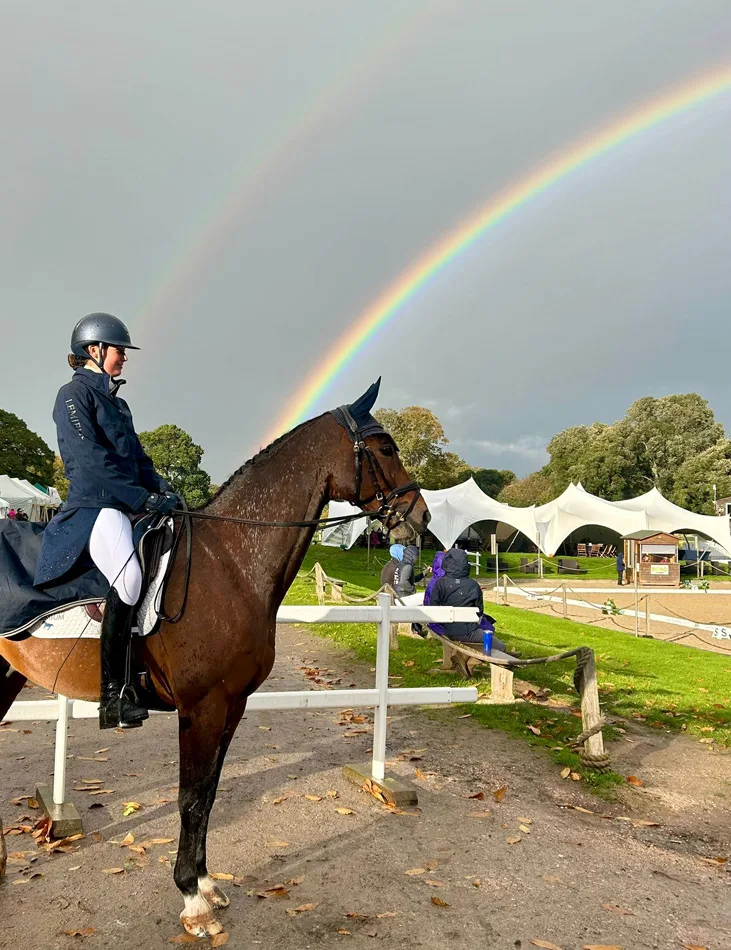
From Ballindenisk’s bold fences to Bovington’s ribbons, Team Rimmer’s Basil, Max, Ippo and Jimmy gave Jess their best year yet

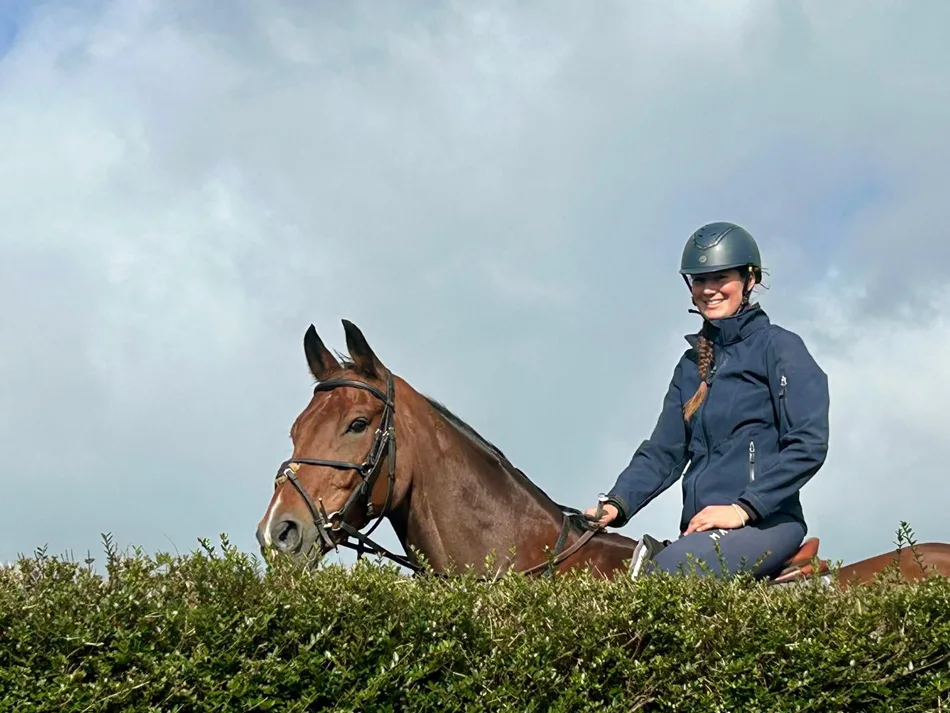
Ippo and Jess training at home. All images: Jess Rimmer

It’s the end of the season! When I tell you March felt like yesterday …
September saw us make a very exciting trip to Ireland with Basil (The Spice Merchant) to compete at Ballindenisk in the 4L. Ordinarily we would aim for the prestigious Blenheim Palace for our September 4L, but this year it hosted the FEI Senior European Eventing Championships – a showcase of the very best of the sport.
GB senior team selection remains the stuff of dreams for Team Rimmer, so off to Ballindenisk we headed – and wow, what an adventure!
Irish eventing has a reputation for being relaxed, fun and slightly chaotic – I think we can safely say Ballindenisk lived up to every expectation and more with its friendly, family-run team, a brilliant cross country track and an underground bar with a surplus of wine. We worked hard, played hard and learned a huge amount.

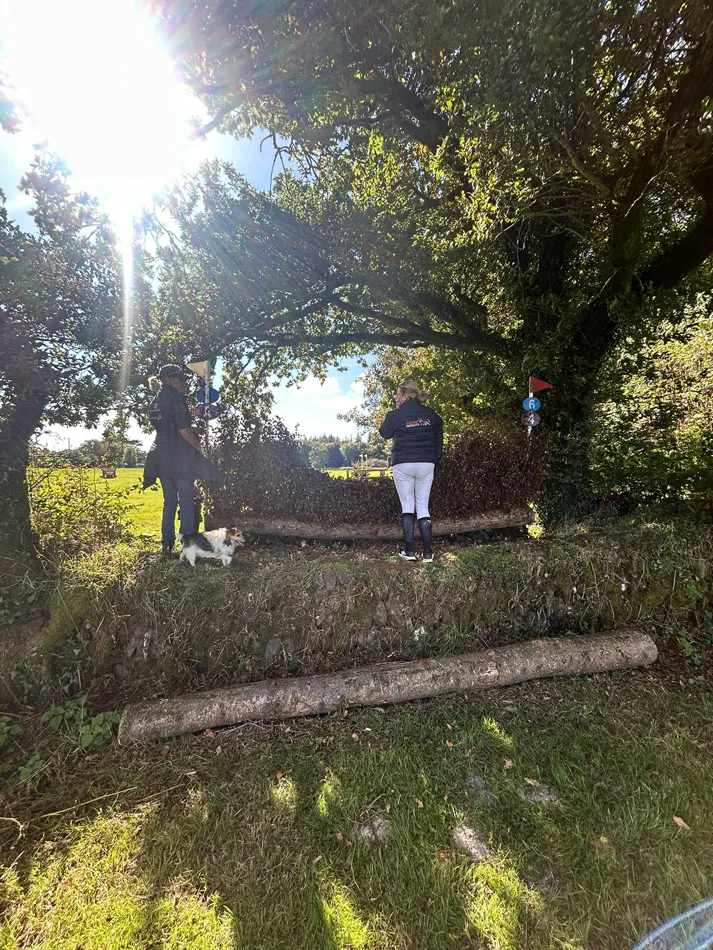
formidable fences at Ballindenisk


A little excitement crept into our dressage test, and the cross country track was unlike anything I’ve seen before. It was the biggest challenge Basil and I have faced together by far … big, bold and seriously rewarding of positive riding – which (in theory) suited us just fine. I felt very lucky to be sitting behind such brave, genuine ears – Basil read and understood every question with those ears pricked, jumping one of only 17 clears from 33 starters. Good boy Basil!
Saturday night brought the famous Ballindenisk’s Got Talent show in that underground bar. Rest assured I won’t be hanging up my boots to pursue a singing career any time soon. We celebrated our cross-country in true Irish style before a bright, early trot-up under the September sun.
Despite his efforts on the Irish terrain the previous day, Basil trotted up with a spring in his step and showjumped superbly. I was disappointed to have let him down at fence 3, costing us a double clear, but it’s easy to forget that nine months ago I’d never even sat on Basil! To finish top 20 at this level, with such a new partnership, really is the stuff of dreams. It’s a huge credit to Basil, his owners and our incredible team at home.

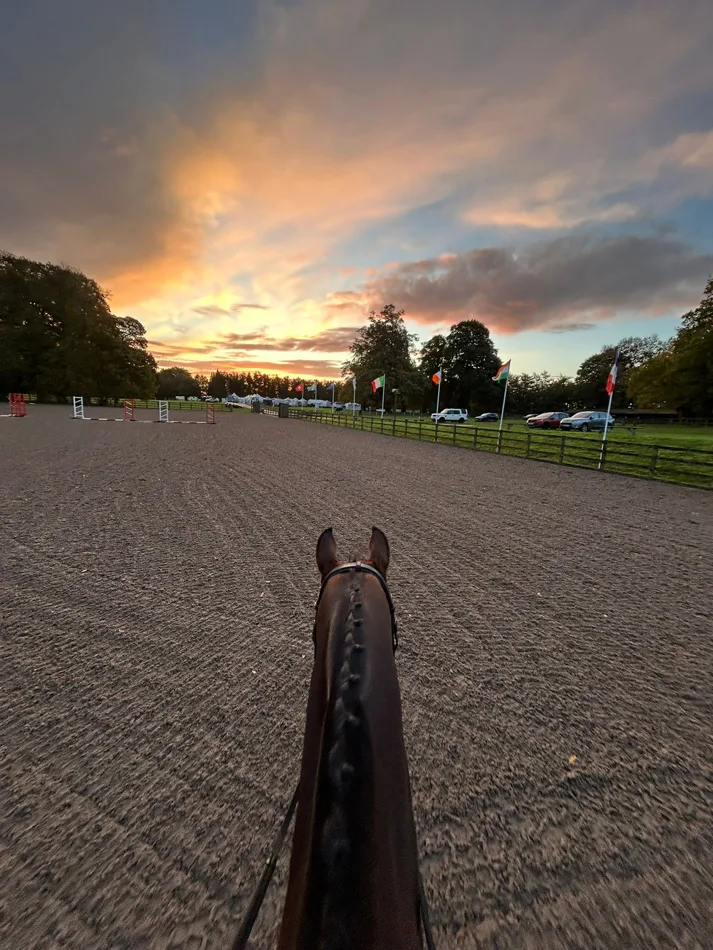
Ippo warming up bright and early at Bicton
Ippo and Jess training at home

Autumn campaign
Although Ballindenisk was our “big” autumn aim, our season was far from over. While Basil enjoyed some well-earned downtime, Jimmy, Max and Ippo still had work to do, with a busy run of autumn events on the horizon.
And boy, did they deliver!
Max won his Novice section at our local event, Bovington, with Ippo close behind in fourth. At Swalcliffe, Ippo improved again for third and Max – not to be outdone – finished second. Jimmy’s feeling properly established at Novice now: although I haven’t let the handbrake off enough to let him win another red ribbon, he finished eighth at Swalcliffe with another consistent run.

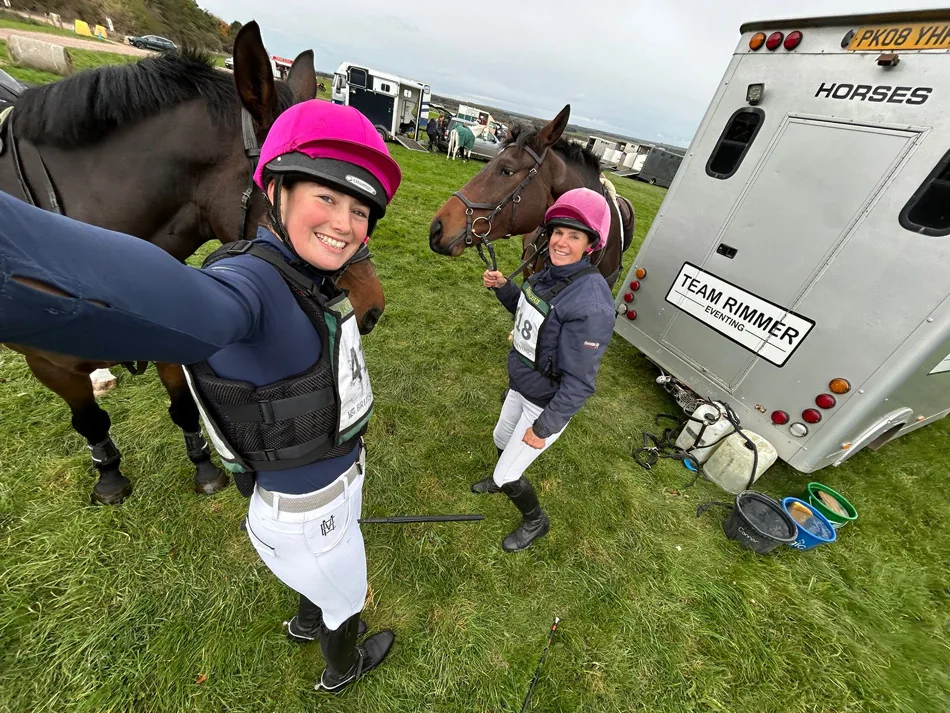
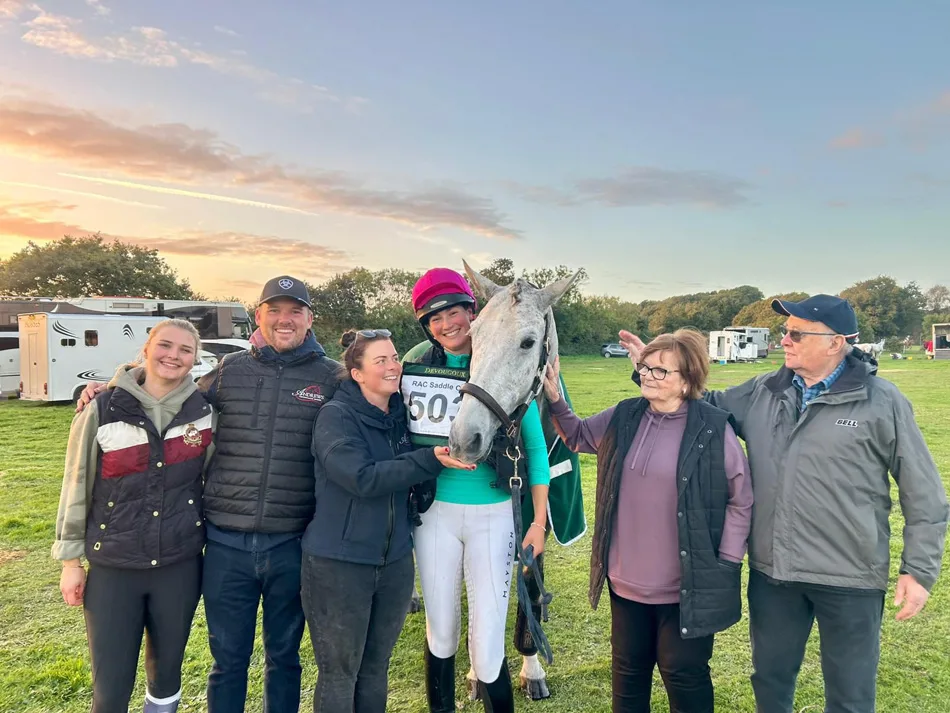
Matchy-matchy mother-daughter day for Jess and Jo Rimmer


We finished our season at one of my favourite internationals, Bicton. Being one of our relatively local events (and home to my first ever BE win), Bicton will always be a special way to end the year. To finish with two horses in the top five of the 2L was the icing on the 2025 cake. Ippo was just superb – finishing on his dressage score of 31 to come second, my best three-day result yet. Max wasn’t far behind, also finishing on his dressage score for fifth. Seeing both in the final-day prizegiving was something special. Such a credit to these two fabulous horses. Jimmy competed in the 2S, where I yet again wouldn’t take the handbrake off (sorry, Jimmy!) – he’s still a little too gangly for Bicton’s hills. Even so, he finished just outside the top 20 in a big section – and although he wasn’t in the ribbons I couldn’t be more pleased with how easy he made it all feel.

Max with Owners Peter, Sue, Becky and Dan Andrews and friend Liv celebrating our Bovington win


He is a real horse for the future … we just have to wait for his body to catch up with his brain!
Whoops, a bit of a lengthy update from our autumn campaign, sorry! And I’m only brushing the surface. You can imagine the mammoth effort behind the scenes. I couldn’t be more grateful to our owners, sponsors and the incredible home team who work tirelessly (and often unseen) to keep the wheels – and hooves – turning.
Time now for a well-earned break for both horses and humans, before regrouping for what’s shaping up to be an exciting 2026 (Oh, and Ballindenisk – can we come back, please?).

Can you balance Dorset Council’s budget?

0

Dorset residents are being invited to try their hand at balancing the county’s books through a new online simulator launched by Dorset Council this week.
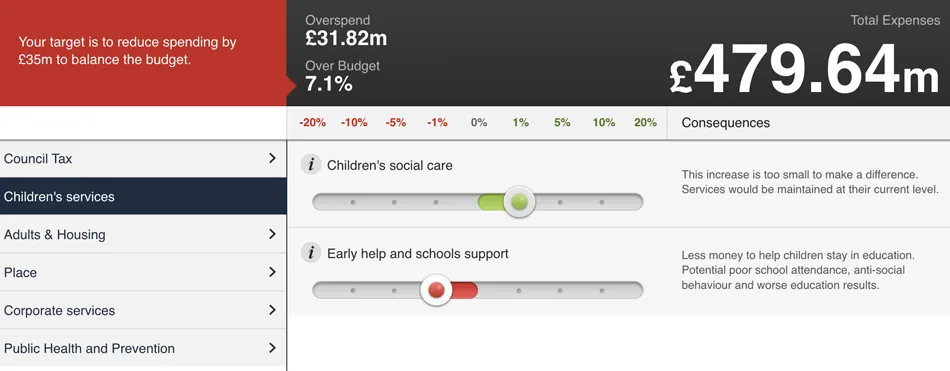
The interactive tool, available until 2nd December, lets users adjust spending across key services – from social care and road maintenance to libraries, housing and waste collection – to see how difficult it is to meet the council’s £479 million budget.

Screenshot


Councillor Simon Clifford, cabinet member for finance and capital strategy, said: ‘Setting a balanced budget is one of the most difficult tasks we face as councillors. Dorset’s older population means we have higher demand for adult social care, and our rural geography adds cost to delivering services. This simulator gives residents a chance to see the reality behind the headlines – it’s all about trade-offs and choices, listening to residents about what they want and need.’
The simulator lays out the challenge starkly. Users are told the council must reduce spending by £35 million to balance its books. Every reduction brings visible consequences – from slower pothole repairs to less support for vulnerable children, from increased flooding risks to reduced library hours. Councillor Nick Ireland, leader of the Council, said: ‘As with many councils, we are under growing financial pressure, with adult and children’s social care services facing the greatest challenges. But as a rural authority we have also been chronically underfunded by government for years. This means we are far more reliant on raising our income from council tax than urban councils.’
The simulator, he added, is intended to open up that discussion: ‘This not only gives residents the chance to explore the reality of budget-setting but also helps us understand what matters most.’
However, not everyone is convinced. One resident who tried the tool got in touch with The BV to say it feels ‘weighted to make you sympathise with the council, rather than understand the broader picture’.
The simulator highlights the negative consequences of every cut – fewer pothole repairs, reduced social care, slower flood maintenance – but offers no sense of how investment or efficiency changes might lead to future savings.
‘It could have been a fascinating exercise in transparency,’ they said. ‘Instead it feels like a nudge to throw up your hands and say “poor council, what a tough job they have”. Real decision-making is about innovation and nuance as well as reduction – not just choosing what to chop.’
The council stresses that this is not a formal consultation or a vote, but an engagement exercise designed to gauge public priorities. The results, it says, will inform future decisions as councillors prepare the 2026–27 budget.

The simulator takes around 10–15 minutes to complete and can be accessed at simulator.dorsetcouncil.gov.uk.

Leweston School Celebrates 135 Years With A New Strategic Alliance

0

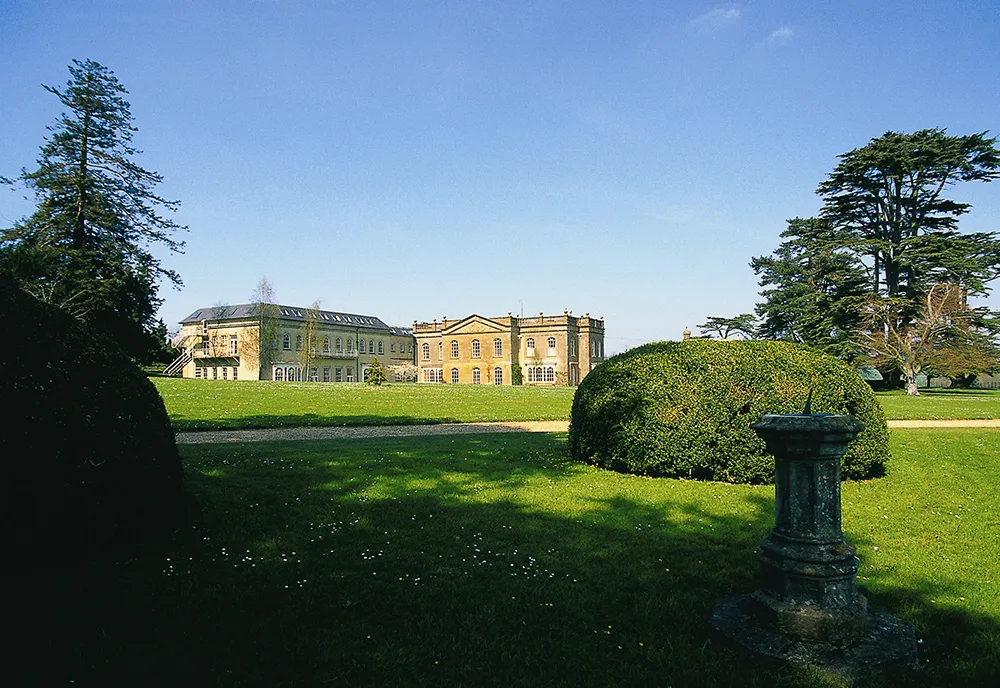
Leweston School in Sherborne has marked its 135th anniversary by announcing a new strategic alliance with Concept Education and the Catholic Schools’ Trust, a move intended to secure the school’s long-term stability and strengthen its position within the independent Catholic sector.

Founded in 1891, the co-educational school now educates around 550 pupils across its nursery, preparatory, senior and sixth form phases. It will become the first school to join the partnership, which is being developed by Concept Education, a group formed by former independent school headteachers and senior education leaders. Their stated aim is to ‘safeguard independent education for the next generation’, particularly by supporting affordable, well-run Catholic schools. Leweston says this aligns closely with its own strategic direction at a time when many independent schools are navigating financial pressures and policy uncertainty.

Announcing the move, Chair of Governors Ian Lucas said the agreement reflects a pivotal moment for the school. ‘This is an important milestone in our history,’ he said. ‘The partnership with Concept Education marks an exciting new chapter for Leweston enabling the school to build on its reputation for personalised, values-led education while expanding the opportunities available to current and future students. The collaboration will bring additional expertise and investment, ensuring Leweston continues to thrive in a rapidly evolving educational landscape. This allows us to grow while staying true to our values and mission to nurture confident, capable, and compassionate young people.’

Concept Education’s Chief Executive, Hugh Dickinson, emphasised that Leweston’s existing strengths made it a natural starting point for the organisation’s work. ‘Leweston is already a well-established, high-performing school. Our role is twofold: to maintain the school’s excellence and to break new ground. We know that the success of a school depends on the trust of its parents, their children and the staff. We are excited and privileged to be asked to carry on the outstanding work of the current governors and working to strengthen Leweston’s reputation as a unique, caring and high-achieving environment.’

Further detail on how the partnership will operate in practice has not yet been released, but both parties describe the agreement as a foundation for future development rather than a change to Leweston’s core identity.

Devolution of power … or dumping unwanted tasks?

0

A recent council get-together to discuss devolution tempted me out the house – it’s a hot topic just now. But what exactly is the deal with ‘super councils’ and devolution? Is it a Rayner pipe-dream?
Do we need more mayors?
And what’s the cost?

dorset insider

Devolution Rules
It’s fairly common knowledge that, following the Labour Government directive to form super councils, Dorset Council is set to merge with Bournemouth, Christchurch and Poole, Somerset and Wiltshire for strategic discussions. Already that’s cause for concern – more mayors, and the risk of rural voices drowned out by the conurbations. Less well known is the idea of ‘double devolution’, where services run by a local authority can be passed to town and parish councils. Could they actually do a better job? And what would we (as parish councillors) even want to take on?
As I sat listening to the superb work done by Yeovil Town Council in taking on big projects from Somerset Council, I was initially inspired. It’s no mean feat to take over a country park, recreation ground or entertainment services … and it looks as though the town council has made a cracking job of it. They did, however, have to increase the precept – yet few residents complained, perhaps because they could actually see results.

What to devolve?
That same call to raise precepts echoed throughout the meeting. Dorset Council was clear: anyone taking on services must also pay to maintain them. The list of potential hand-offs included public toilets, playgrounds, recreation areas and even community transport.
There was more crowing about the need to keep people healthy in communities (more of that later). Some of the town councillors looked quite smug. But for many small parishes – mine included – the question is what exactly is there to devolve? We have no public loos or car parks, and we already manage the recreation field. I’ve no plans to go full Rod Stewart and start filling potholes, though I might be partial to buying a few signs which Highways won’t. And I can’t see myself driving a gritter any time soon. Some things are best left to the professionals.
However, in some villages there are so many things that have not been maintained for years that it would be like opening Pandora’s Box.

Who does the work?
Then there’s another issue around the volunteers, who would no doubt be called upon to deal with all the devolved services as ‘free labour’. Our parish’s volunteer linesmen and grass cutters are in their eighties. It’s not just an issue about stuff the council wants to offload onto parishes, it’s about future plans for when current volunteers are having to call it a day. And it’s also about sharing the workload. Young people don’t generally come forward to help out with village jobs – it may be time for a rethink on how we make volunteering more attractive.
I imagine Dorset Council has a massive list of services which they would be happy to pass on to unsuspecting parishes. Ditches that have not been cleared in living memory, leaky toilet blocks, odd bits of land, and dodgy playgrounds created by developers all spring to mind.
After being told how Dorset’s aspiration to keep us healthy was paramount, a cholesterol-busting lunch awaited in the bar: chips, sausages, quiche, brie in breadcrumbs … all designed to cause havoc with your coronary arteries. Councillors do love their chips though, and over lunch I mulled things over.

Parish clusters
What I’d really like to do is turn the devolution discussion on its head and ignore the fire sale from Dorset Council – because there is very little that interests me there.
Everyone keeps asking where the infrastructure is for all these new houses. “It will follow,” we’re told. But it isn’t following. If we want decent infrastructure, we have to fight for it.
Maybe now is the time for clusters of parishes to get together and design a service that has never existed, but should. A community bus that runs to local hospitals and operates at weekends. Or a contracted verge-cutting service that operates more than twice a year? Could we work with farmers to get better gritting route coverage?
Like Yeovil, we’d need to raise the precept to pay for them – but at least we’d be funding things people actually NEED and USE. It could even mean employing local people to deliver services across several parishes.
While devolution got me thinking, it’s more about what is not being said than what is being expressed right now.
Devolution, it turns out, isn’t just about what councils hand down. It’s about what communities choose to build. Before we inherit anything, parish councils need the freedom – and the confidence – to design the services that truly serve them.

**The Dorset Insider is a no-holds-barred column pulling back the curtain on local affairs with sharp insight, unfiltered honesty and the occasional raised eyebrow. Written by a seasoned parish councillor who prefers to remain anonymous (for obvious reasons), it cuts through the noise to expose the frustrations of grassroots politics, and say what others won’t. Rest assured, their identity is known – and trusted – by the editorial team. Expect opinion, candour and a healthy dose of exasperation …**

Here we go again

0

As milk prices crash (again), Tim Gelfs says it’s time for farmers to stop being ‘price-takers’, and to start learning from Coca-Cola

Herd of Dorset cows under a stormy sky
Image: Laura Hitchcock

Just when it looked like our dairy farmers were finally getting back into profit, milk prices have come crashing down around their ears – and the outlook for any recovery over the coming winter months isn’t promising.
Volatility now seems to be the norm across all agricultural sectors. Boom and bust in the pig industry is almost a given, but have we even asked why the beef and lamb prices have managed to stay firm over the past few years?
We are told time and again that we are ‘price takers’.
But why?
British farmers have some of the strongest selling points in the world. Our husbandry and food safety are second to none. We produce home-grown British food, and our customer base – the consumer – wants to support us. Yet all of this seems to get lost on the shop shelf. The messaging is poor at best, and often confusing.

Just when it looked like our dairy farmers were finally getting back into profit, milk prices have come crashing down around their ears


Our farm assurance schemes are cumbersome and over-complicated, losing sight of their actual purpose – to assure. Their job is to reassure consumers that our produce is reared or grown to high, safe standards, so that when they place it in their trolley they can buy with confidence, knowing it’s been looked after from field to fork.
My biggest frustration with all assurance schemes is that none of them do what I call ‘the hard yard’ – actually marketing themselves to the consumer. Yes, I know Red Tractor currently has an advertising campaign celebrating 25 years (though how many non-farmers – i.e. actual consumers – have even seen it?).
But when I asked, ‘What are they following it up with?’ I got blank faces, shuffles of paper and a stuttering explanation of how much it all costs.
As they say, if you can’t do a job properly, don’t do it at all!

Eggs have been riding high for more than two years.

Caffeine and sugar
So, does some of the responsibility lie with us farmers? Of course it does.
I’ve always said we’re rubbish – not just at marketing, but at supplying the product at the right price, at the right time, and in the right amount. Take my own industry at the moment. Eggs have been riding high for more than two years. And what have we done as an industry? Invested millions to upgrade and produce even more eggs. We don’t need that many more eggs!
We haven’t spent a bean on marketing. We know we can increase consumption – we have a great product. Food inflation is out of control for many reasons, and here we have a superfood that provides a relatively cheap, on-trend protein … and we’ve done nothing. Nothing! At a time when the market is screaming out for it – and when, for once, as an industry we can afford it.
Do you think when Coca-Cola was making big profits and selling out, they said, ‘Let’s just up production and enjoy the good times while they last’? Of course not. They invested in their brand and their marketing. They are arguably the best marketeers around – selling carbonated water full of caffeine, sugar and chemicals, and putting a huge margin on it!
By comparison, we have products that are healthy and nutritious – things people have to consume every day, or they fall over.
It’s not rocket science.
Our big problem is that we’re fragmented, and we lack confidence in our industry leaders to manage and lead. We’ve never had to market our products before, because there was always someone to buy them – it’s only the price we didn’t like. That’s why we’re still ‘price takers’.
We need to invest not only in our farms, but in our products and our marketing. We really do have a choice: stay the same and hope for different results, or take a long hard look at ourselves – and make the changes that count.

Community climate action in focus at Dorset’s third COP

0

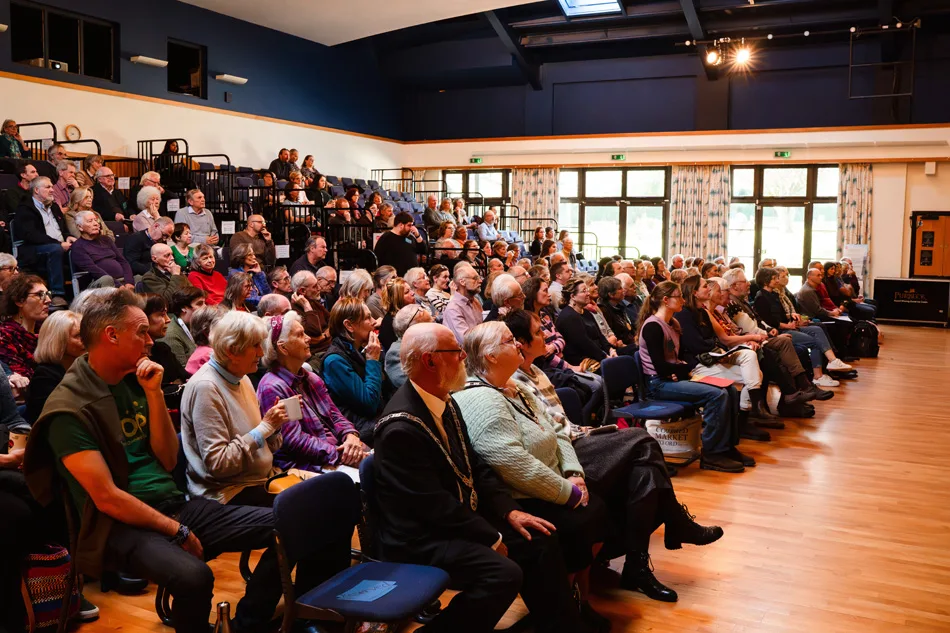
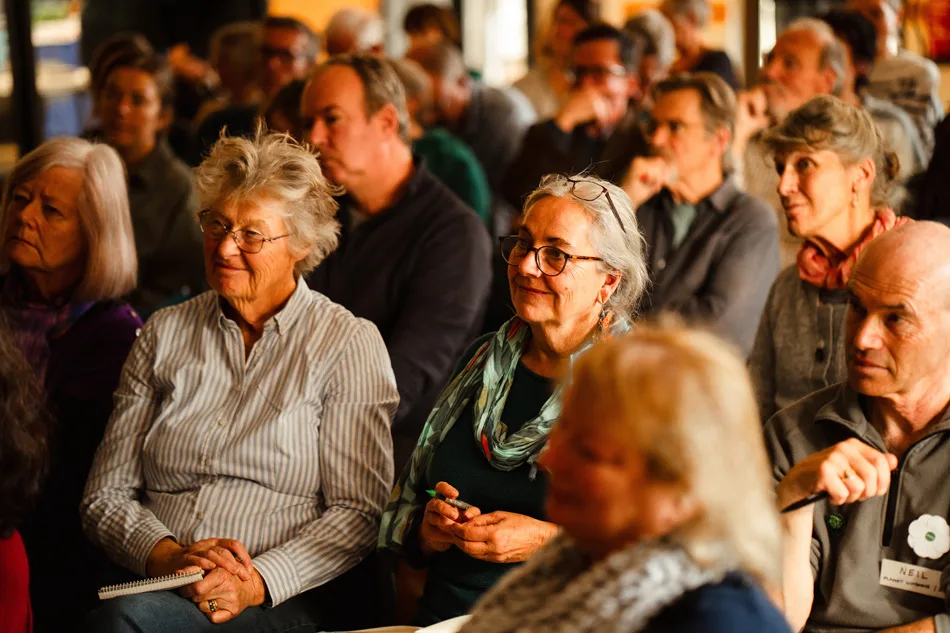
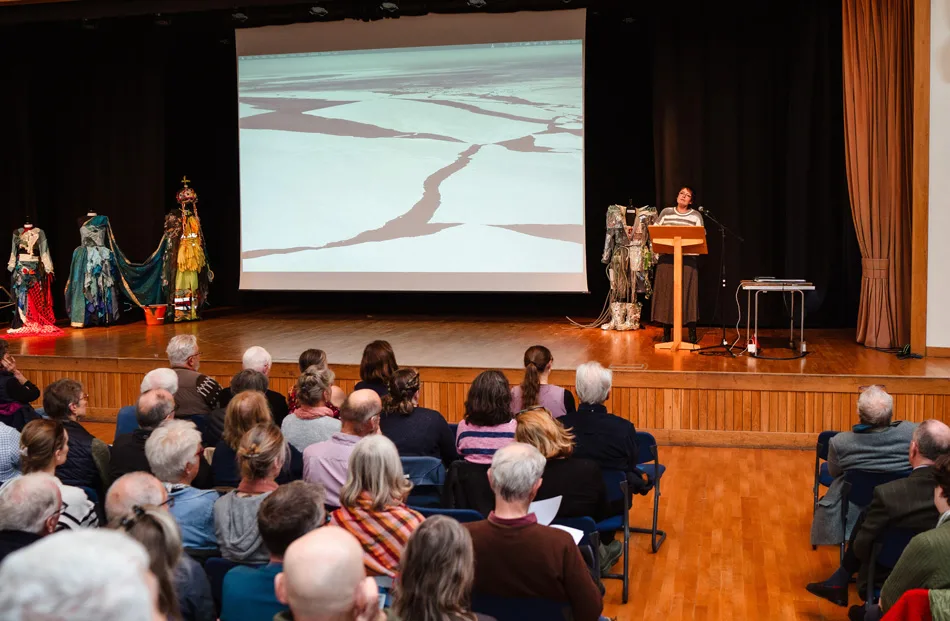
Dorset’s third community-led ‘conference of the parties’ – Dorset COP – was declared a great success, as more than 300 people gathered at The Exchange in Sturminster Newton on Saturday 1st November to discuss climate, nature, and community resilience.

All images
© Richard Clarke of Clarkie Photography


Now in its third year, the one-day event continues to grow in reach and impact. Representatives attended from both BCP and Dorset Council, joined by the Mayors of Sturminster Cllr Virginia Edwyn-Jones, Mayor of Shaftesbury, described the day as ‘powerful’ and praised the event for fostering genuine connection. ‘It is always so powerful to hear people speak, rather than just read their ideas,’ she said. ‘It really does provide a far more meaningful understanding.’
The day was opened by Jennifer Morisetti, chair of Sustainable Dorset, who paid tribute to the late Jane Goodall and acknowledged the many pioneering Dorset environmentalists who have shaped the county’s thriving grassroots movement.
‘Dorset continues to lead the country in local COPs,’ Jennifer said. ‘The fact that Dorset’s third COP was oversubscribed shows how seriously people here take the threat posed by a changing climate to our wellbeing and prosperity.’
With 26 speakers and a series of practical workshops, the event covered themes from local food systems and community energy to clean transport and nature recovery.

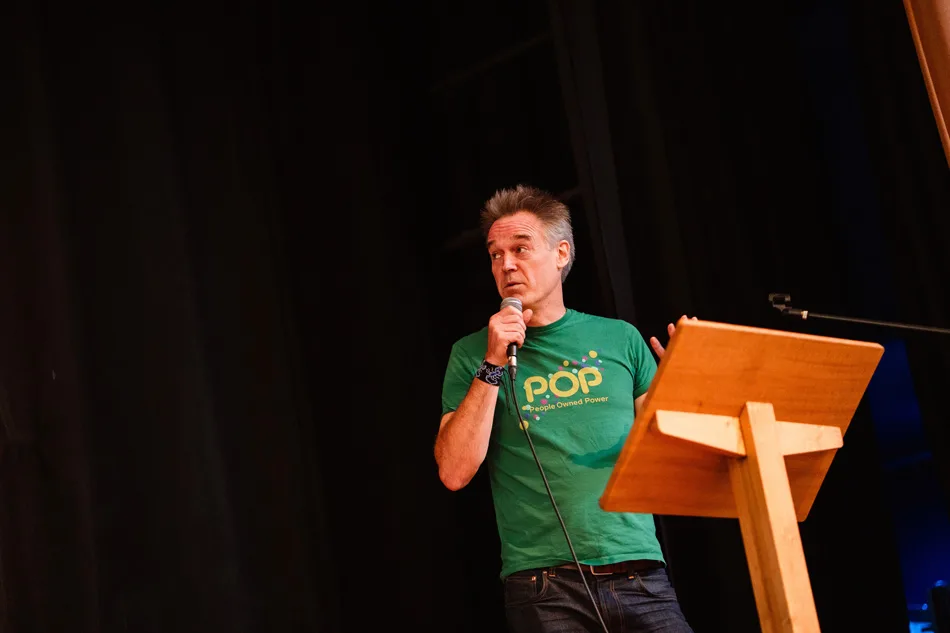
Highlights included Cllr Carole Jones, founder of the Vale Family Hub, who shared how a community tackling poverty, food waste and isolation in North Dorset had created something genuinely transformative. Howard Johns, founder of People Powered Energy, gave a dynamic call to action, making the case for street-by-street solar and community-owned renewables.
River pollution – a pressing concern across the county – was addressed by Tanya Bellows, Julie Leah and Kim Creswell, while transport challenges in rural Dorset were explored in a session opened by Nick Ireland, Leader of Dorset Council.
A workshop from the Sustainable Shaftesbury Advisory Committee presented a Nature Recovery blueprint for town design, offering a fresh take on how communities can prioritise biodiversity.
Attendee feedback was overwhelmingly positive. One audience member said ‘The sheer enthusiasm and positive attitude of the speakers – and the amazing work they are doing – was inspirational. It gave me the motivation to keep working for climate and nature, despite the apathy and resistance I often face.’

Howard Johns © Richard Clarke of Clarkie Photography
Emma de Saram © Richard Clarke of Clarkie Photography

The day offered space for hope, action and connection – and a clear reminder that Dorset’s communities are not waiting for permission to lead on environmental change.
‘This was an exciting day for environmental groups and individuals,’ said Jennifer. ‘We know we can combine forces to tackle the biggest challenge of our time. Also, huge thanks to all our speakers, and to everyone who came with energy and commitment. The work continues.’

To follow up on workshop outcomes, volunteer, or stay connected with Sustainable Dorset, email: [email protected]

Unlicensed to bury

0

MP Simon Hoare is calling time on the surprising loophole behind the funeral trade – anyone can set up shop, no licence or training required

Simon Hoare MP

Let me start with some exciting news. The esteemed editor of this august publication, Laura Hitchcock, and I are going into business together – we’re setting up a new commercial venture.
In the absence of any other idea, we have decided to become funeral directors. We will offer the full service, aas well as administering a prepaid funeral plan for those who wish to pay for their funerals in instalments and in advance.
Now, I think I hear one or two of you saying, ‘Interesting, but what experience have you got in this area?’ (They’re not alone – Ed)
The answer, dear reader, is none.
And guess what?
We don’t need any.
All we need are the formalities of setting up a limited company and some advertising. In a society and economy where business – and most areas of our daily lives – are regulated, inspected or licensed, the undertaking business has no such burdens or obligations. We have rules governing pubs, burger bars, tattoo parlours, cafés … but absolutely nothing about how we deal with our dead.
The only legislation covering the deceased is the Burials Act 1857, which mostly deals with the exhumation of a body. Common law has expectations about a decent burial, but that’s about it. There is a greater requirement on a farmer moving livestock than there is on an undertaker moving a body.

An expectation
I knew none of the above until I was a Minister, when a very bad case of undertaker-failure occurred in Hull. Alongside the Ministry of Justice, we looked into the situation and were appalled to find that there is simply no statutory, licensing or qualification requirement to set up as an undertaker.
However, before panic sets in, the vast majority of funeral directors know what they are doing – and do it well. There are several standard-setting voluntary trade bodies that around 80 per cent of operators belong to. They do inspect and help to set operating standards. But that still means around 20 per cent are not members of any such body.
Even if they are, and are found to fall below expected standards and are expelled from their trade association, they can still continue to trade.
The sector has grown up under a societal expectation that our dead will be treated with dignity and respect in the period between death and funeral.
But it is just that – an expectation. An assumption. There is nothing to back it up or enforce it.

They want red tape
Ministerial colleagues and I were working up detailed plans to rectify this when the 2024 election was called: new Government – same old issue.
It was after receiving a rather underwhelming ‘in the fullness of time’ response to a Written Parliamentary Question that I secured an Adjournment Debate in the House of Commons to get the issue in public and on the record.
Usually, when one seeks to introduce a new tier of paperwork and regulation, there is kickback from operators and their representative bodies. Not so in this case. The trade bodies want licensing, inspection and statutory regulation – I was at pains to stress this to the Government. The operators of excellent businesses do not want the limited but existing rotten apples to poison the barrel and erode public trust.
I was buoyed by the fact that there was strong interest from other MPs in the Commons and a united and clear message to Government that doing nothing is not an option.
The Minister clearly got this. The issue is that it affects several Government departments – the Department of Health & Social Care if it is to be the Human Tissue Authority that has an inspection role; the Department for Levelling Up, Housing & Communities if local councils are to have a role in licensing (this is my preferred option); the Treasury and Financial Conduct Authority regarding the selling of pre-paid plans; the Department for Business in terms of commercial issues; and the Ministry of Justice, which covers the Burial Act and registration of deaths …
My first task will be to establish which department is taking the lead and co-ordinating across Government. The second will be, alongside other colleagues, pressing for legislation that will drive out the cowboys, protect the good operators and ensure public confidence in this sensitive but vital area.

Point to Point returns to Badbury Rings

0

If you’ve never been to a point-to-point before, you’re in for a treat. It’s a great countryside day out where horses and riders take on a series of steeplechase fences in this much-loved amateur sport. It’s as social as it is sporting – a chance to meet friends, soak up the atmosphere and enjoy rural Dorset at its best.

Screenshot


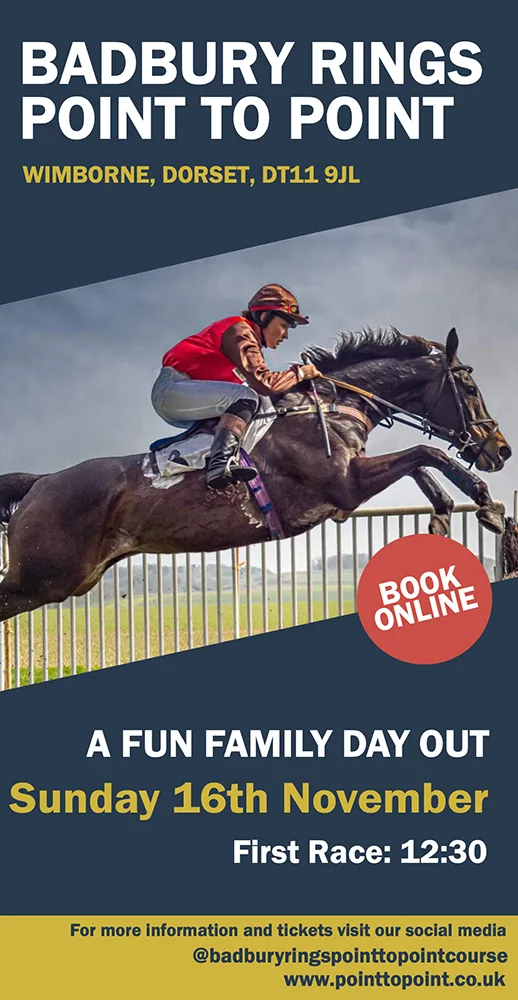
The Portman Point-to-Point is on 16th November at Badbury Rings – an Iron Age hillfort between Wimborne and Blandford, which offers sweeping views and a superb four-fence home straight which allows you to watch the horses thunder to the line.
Gates open at 10.30am, with Family Dog Racing at 11am – bring your dog of any size and have a go, you (they?) may win a prize!
The first race starts at 12.30pm, with six races through the afternoon. Whether you’re studying the form like a pro or simply picking your favourite horse name and cheering from the rails, the excitement builds with every race. All the racing can be followed on the big screen located near the paddock, and of course, no self-respecting race meeting is complete without a bookie for you to have a flutter!
Between races, explore the trade stands selling artisan food, drink and country clothing, or visit the Silent Auction in a marquee near the paddock. There’s always a superb selection of lots – websiye goes live on Wednesday 12th here. Wheelbarrow Raffle – a barrow piled high with alcoholic delights that could be yours if your ticket comes up trumps.
Tickets £15 from gopointing.com or on the gate. Hospitality tickets available from Susie Old at £40 – a steal for a base in the main marquee with all-day complimentary food and drink.

Sponsored by Wessex Internet