The Blackmore Vale logo
Home Blog Page 4

Service with a smile (and a lettuce)

0

From Brussels sprouts to bathroom rescues, the E.B. Marsh delivery team prove that real customer service still exists, alive and well, in Dorset

The E.B.Marsh delivery team

If you ever need reminding that proper local service still exists, just spend a morning with the E.B.Marsh delivery crew. From rescuing fallen neighbours to being accidentally locked in a second-floor flat, the team’s days rarely go quite to plan – but they always end with a smile (and sometimes a lettuce).
On one memorable occasion, a young installer was fitting a television when the customer popped out “for a few minutes.” She locked him in. An hour later, with no sign of her return, mild panic set in …
Another new recruit, fresh from Bournemouth, came back from his first delivery beaming – and baffled – holding a small bag of Brussels sprouts.

How many men does it take to move a washing machine …


“They’re for you, dear, to say thank you,” the elderly customer had said. He had no idea what to do with them, but he soon learnt that the delivery staff often get eggs, lettuce, courgettes and other garden produce as a thank you – and (apart from those Brussels sprouts) they are always very much appreciated tokens of goodwill.
It’s no wonder they receive them: Marsh’s team have long been affectionately dubbed the fourth emergency service around Sturminster and Sherborne. ‘I’m not kidding,’ says owner Sarah Palmer. ‘Ross saved an customer’s life a few years ago – he had fallen in his bathroom. His son was unable to get there, the ambulance was delayed … so they called us.
‘It wasn’t a one-off either; it’s happened a few times. A customer’s daughter called us to help her mother who had fallen over in her home near the shop – again, the daughter couldn’t get there. And we often look after people who have fallen in the square in Sturminster and near our shop in Sherborne.
‘Three-quarters of our staff are first-aid trained, so we’re often called to assist.’
Of course, not every adventure is quite so dramatic.
‘The delivery team have never forgotten going to install a television in one customer’s bedroom. The husband opened the front door, took the team upstairs to the bedroom and left them to it. Ten minutes later, the wife woke up … she had been asleep in the bed! The team hadn’t even noticed her, and the husband hadn’t said a thing!’

Inside the Sherborne store: there’s plenty of choice

Old-fashioned decency
It’s the attention to detail that has customers writing reviews: ‘We needed a TV and soundbar for elderly parents and wanted someone patient and trustworthy. Marsh’s were outstanding. They visited three times, spending hours making sure everything was right. The price matched Richer Sounds, but the service was extraordinary.’
And sometimes, honesty is the best service of all. One customer was quick to leave a glowing review: ‘My elderly mother-in-law recently purchased a Bosch hob as her old one had been diagnosed as faulty and in need of replacing. When Marsh’s engineer came out to fit it, he spotted that the old hob just needed switching back on. So they refunded her immediately – what a great service.’
‘The stories are just part of everyday life for me,’ says Sarah. ‘But asking the staff each morning this week what stories they have has definitely brought a laugh to the start of the day.’
Usually, though, the comments from customers simply sum up what makes Marsh’s different: ‘They phoned ahead, arrived right on time, made sure I knew how to use my new washing machine and also solved a small glitch with my dishwasher while they were here. Nothing was too much bother. What a super company to do business with.’
And though we might enjoy the funny tales, these same stories remind everyone why local, independent service still matters. So next time you’re tempted to click ‘Add to basket’, remember there’s a shop right here in North Dorset that will match the big retailers on price – and deliver with a level of humanity Amazon simply can’t.
ebmarsh.com
Healing the land by slowing the flow at Tadnoll and Winfrith

0

DWT’s Seb Elwood explains how water is finding its own way again – reviving floodplains, peat and wildlife in a re-wetted landscape

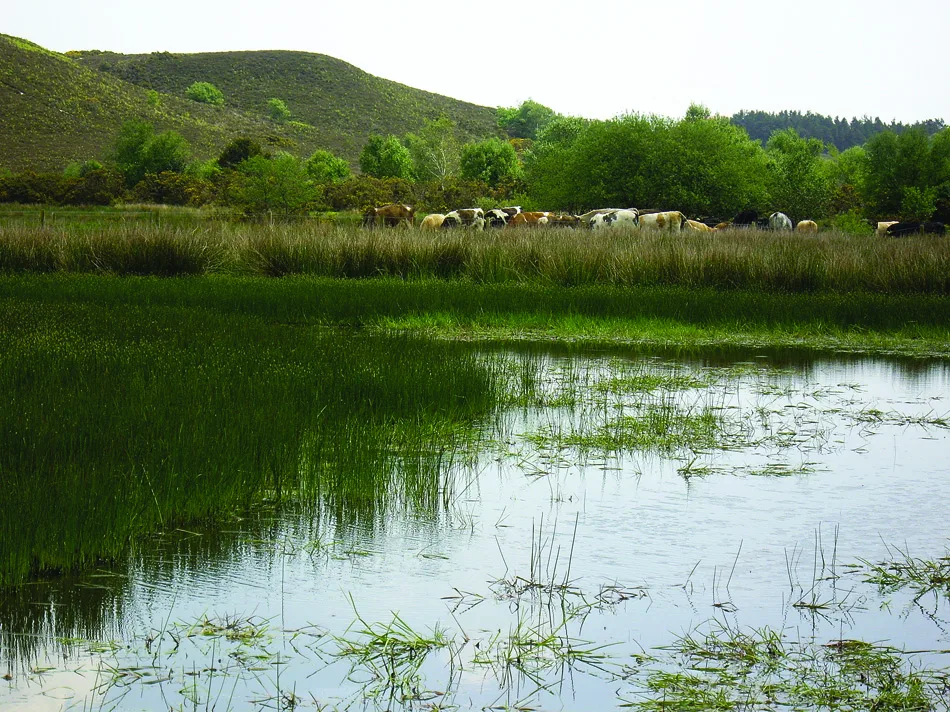
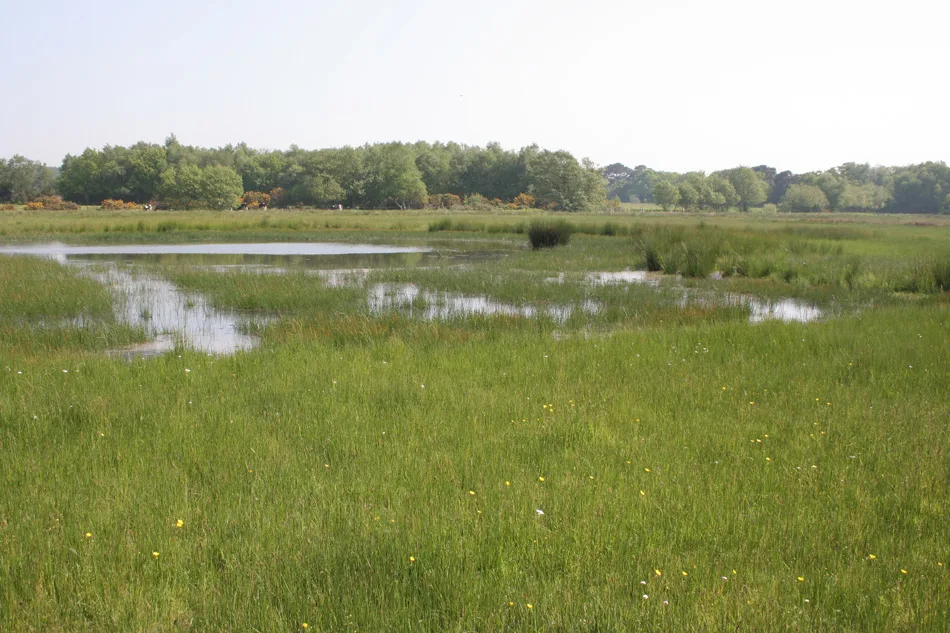
Tadnoll and Winfrith Heath © Tony Bates

We live in a thoroughly drained landscape. Over the last century we’ve dredged and straightened rivers, cut ditches through fields and buried pipes beneath our feet – all designed to move water off the land and out to sea as quickly as possible. The same policies that drove intensive farming, forestry and development have left us with fragile, polluted land that struggles to hold water, support wildlife or cope with a changing climate.
The Dorset Wildlife Trust’s new acquisition of fields beside the Tadnoll and Winfrith nature reserve near Wool is a chance to reverse that story. Here, water will be allowed to slow down again – to spill, wander and find its own course. Forgotten floodplains can be reconnected, rivers re-meandered and the land restored to its natural, gravity-led flow. Wetlands are home to around 40 per cent of the planet’s species, while storing carbon, improving water quality downstream and reducing flooding.
Years of agricultural drainage left the Tadnoll and Winfrith site criss-crossed with ditches, many perched above the true contours and cutting across the slope at right-angles. The fix is simple but transformative: fill the key ditches, lower a few banks – and the water begins to move through the natural hollows once more – forming shallow, shifting channels that bring life back to the soil.

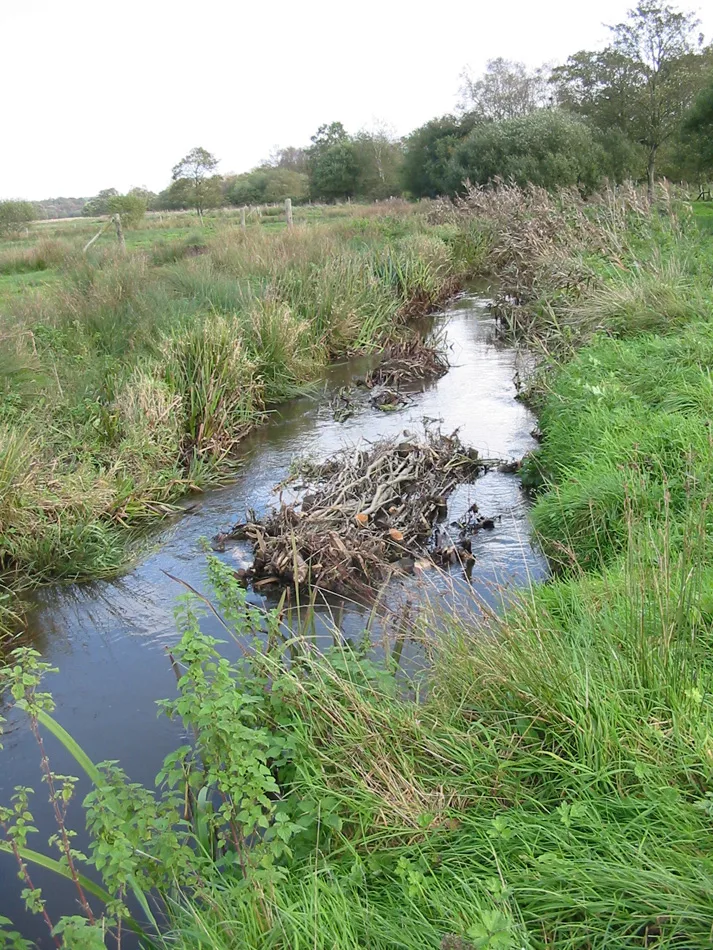
Slowing the flow with leaky dams © James Burland


In other places, ‘leaky dams’ made from willow, birch and gorse will hold water for longer. These small wooden structures trap sediment, clean the flow and create temporary pools that teem with invertebrates. The timber for them comes from the site itself – trees cleared for access will be reused to build the dams.
Within a narrow strip beside the heathland lie two forgotten peat mires, drained and drying for decades. Under the Dorset Peat Partnership project they’ll be re-wetted, reconnecting them with the floodplain, restoring the peat and allowing it to begin locking carbon in once more.
A second phase, planned for winter 2026, will focus on Tadnoll Brook, infilling part of its previously-straightened channel, raising the water table and spreading flow back across the fields to form a patchwork of wetland and meadow.

Far-reaching benefits
Once complete, the results will reach far beyond the reserve. The restored landscape will be alive with multi-threaded streams, seasonal pools and new ponds. Slower flows and wetland vegetation will strip nutrients from the water before it reaches Poole Harbour, helping tackle algal blooms. It will also provide the grazed ground that breeding waders need – lapwing, curlew, snipe and redshank among them.
By letting natural processes return, Tadnoll and Winfrith can show how wetlands heal more than themselves: they boost biodiversity, store carbon and clean our rivers. The project is about more than one site – it’s about rediscovering how to work with water, not against it – building Dorset landscapes that are richer, wilder and better able to face the future.

Tadknoll mire – or peatland – is one of two degraded mires identified near the heathland, drained and drying for decades. These are being recomnected to the floodplain, allowing them to be re-wetted, restoring the peat
© S Williams

Grants from the Species Survival Fund and the Nature for Climate Peatland Grant Scheme have allowed work to begin and the Trust has launched an appeal to help fund the remainder of the project.
For more details, see dorsetwildlifetrust.org.uk

Long-term residential care is not the only option

0

It is a common misconception that ‘needing a little extra help’ is a fast-track route to moving into long-term residential care … but this isn’t the only option. While many people thoroughly enjoy the certainty and peace of mind that comes from moving into a residential care home full-time, your care journey doesn’t need to start there.

Enjoy comfort and companionship at Grovelands in Yeovil
© Somerset Care Group


Day care and respite breaks can be useful interim care options, especially if you or your loved one need support for a certain period of time – perhaps while recovering from illness or injury, or if your family carers are away. Both care solutions can help people remain safe and independent in their home for longer.
Day care offers the chance to spend the day in your local care home, receive specialist care, enjoy a home-cooked meal, and enjoy the activities and entertainment on offer. As well as providing the opportunity for enrichment and companionship in a safe environment, supported by expert carers, many view day care as a break for family carers.
A respite break is a temporary stay in a residential care home, complete with expert, tailored care. Suitable for those who receive help at home with daily tasks, have nursing care to support a long-term or complex medical condition, live with dementia, are recovering from illness or injury, or are planning for the future, a respite break ensures that your care requirements are taken care of, so that you are free to enjoy the change of scene.

Sociable spaces for coffee and conversation at Cooksons Court in Yeovil
© Somerset Care Group


For some people, day care visits and short-term respite breaks provide a well-deserved break for themselves and their carers; for others, it provides an opportunity to experience care home life before making longer-term decisions.
Whether you stay for a day, a week or longer, you and your loved ones can relax knowing your care needs are being met.
Somerset Care’s day care and respite services support you to live independently at home, for as long as possible.

For more information and advice, please contact our expert enquiries team on
0800 817 4925 or visit somersetcare.co.uk/respite

When milk prices sour

0

Milk prices sliding, costs climbing, dairy farmers running out of room to manoeuvre – Andrew Livingston asks what went wrong for British milk

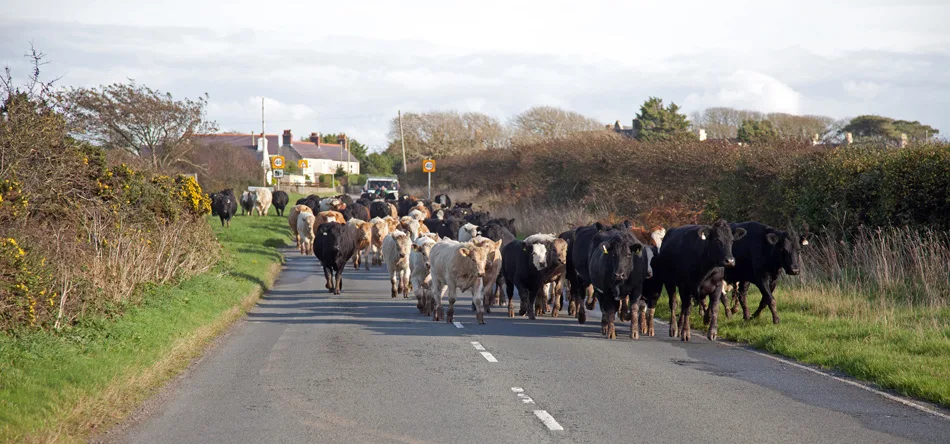
Cows coming in for milking

It’s a vivid memory for me – making sure you’re out the door for work before the Wallbridges let their cows cross the road, heading back to the field after milking. A (slow) freight train of black and white carriages, with the odd one stopping to low at you: ‘Don’t rush me!’
It’s a familiar scene across Dorset, Devon and Somerset – the sound of early milking blending with the dawn chorus, 365 days a year.
The cows don’t know it, but behind those timeless scenes, Britain’s dairy farmers are once again facing a crisis of confidence. Milk prices are sliding, costs refuse to budge, and farmers are being asked to weather yet another storm.
This week came the news that farmgate prices will fall again. By the end of the year, many farmers expect to receive under 40p per litre – around 6p less than before. That may not sound much, but for a typical herd it means tens of thousands of pounds wiped off annual income.

The final straw
The fall is part of a wider pattern. Milk deliveries are up six per cent year on year, while global prices for butter, cream and cheese are weakening. It’s a perfect squeeze – more milk chasing lower margins.
Here in the South West, the heartland of British dairy industry – that squeeze is being felt most acutely. Dorset, Somerset and Devon remain home to hundreds of family-run farms that supply the nation’s processors and retailers. When prices fall by just a few pence per litre, small producers are pushed to the brink. Since 2015 the UK has lost nearly a third of its dairy farms – from 12,643 to 8,738. Many parlours that once echoed with the clatter of buckets now stand silent, victims of an industry where supermarkets set the shelf price and farmers carry the risk. For those already grappling with this year’s drought, rising input costs, cuts to basic payments and the looming Family Farm Tax, this feels like the final straw.
Several MPs representing the milking counties have called for urgent reform. Yeovil’s Adam Dance warns that ‘farmers are at breaking point’ – and he’s right. He is pressing for a single, properly resourced regulator to replace the current split between the Groceries Code Adjudicator and the Agricultural Supply Chain Adjudicator – a system that he says is too weak to protect farmers. In Parliament, Sarah Dyke MP for Glastonbury and Somerton, has introduced a Dairy Farming and Dairy Products Bill. It aims to protect UK dairy farmers in trade negotiations, improve labelling for imported dairy products, and strengthen fair-dealing rules between farmers, processors and retailers.

Milk in the supermarket

A new deficit
For farmers here in Dorset, change can’t come soon enough. Most are working on knife-edge margins, with no buffer against sudden price cuts. A litre of milk might sell for £1.50 in the supermarket but after processing, transport and packaging costs, the person whose cows produced it gets less than half of that. In 2023 the UK exported 77,000 tonnes more dairy products than it imported. Last year, that turned into a deficit of 22,000 tonnes. So why, when we can produce the best milk in the world, are we closing farms and importing dairy from abroad?
The milk price conundrum isn’t new, but it’s growing more urgent. The government now faces a choice: continue with piecemeal fixes, or back the farmers who produce one of our most essential foods with fair contracts and proper protection.
A fair deal for dairy isn’t just about milk – it’s about the survival of our countryside, our food security, and a way of life that still defines the West Country.

Free inflatable fun filledSturfit with families this half term

0

Over the past year, Sturminster Newton’s charity-run leisure centre, Sturfit, has organised a series of fundraising events to establish a Community Fund. A community games night, Zumba glow party, raffles and even staff member Hayley running the London Marathon all helped build a healthy pot ready to support leisure and recreational activities at the centre.

The Sturfit hall was filled with inflatables for a free family fun day


The fund has already enabled the launch of the new Pickleball Club and covered staff training to offer chair-based exercise classes in partnership with Age Concern. For half term, the team at Sturfit came up with the idea of running a completely free inflatable fun session in the main hall.
Sturfit spoke to Bounceabout, who supply inflatables for both community and private events, and after hearing the plan, Bounceabout were more than happy to select the best range of inflatables to suit the space and all age groups, also offering generous hire rates.
On Tuesday 28th October, an early set-up was needed. By 9.15am Bounceabout had everything in place, and the Sturfit staff and volunteers were ready with refreshments, safety briefings and zoned-off areas.
‘With no booking system in place, numbers were hard to predict,’ says manager Roger Teasdale. ’But by 10.15 the centre was packed! Families arrived early to beat the rush, the car park quickly filled, and people were walking in from Honeymead Lane. Thankfully, the inflatables and the hall easily accommodated everyone: we were busy throughout the day.
‘Some families stayed the full five hours! Others came back after lunch for a second round.’
A small refreshment stand selling tea, coffee, biscuits and sweets helped put a little extra back into the Community Fund, and donations from grateful parents on the day also added to the pot.
‘It was a free event with absolutely no expectations of any payment,’ says Roger. ‘But we did receive a number of donations on the day, meaning we will be able to continue to provide events such as this for a little longer. It was a lovely – and tiring! – day for everyone, but it was fantastic to see so many people having so much fun. We received lots of grateful feedback from happy children, parents and grandparents for offering a fun, free event so close to home. We know similar days out from Stur usually mean a long journey plus a hefty price tag.’

sturfit.org

sponsored by Wessex Internet

Festive fun, community spirit and plenty to see and do

0

Christmas in Sturminster Newton is always a busy time – and this year’s line-up is full of great reasons to wrap up, head out and enjoy what the town has to offer. From carol services and craft markets to Father Christmas, lantern parades and live music, there’s something happening for everyone.
Local groups, churches, businesses and volunteers have pulled together to organise a wide range of festive events through November and December. Whether you’re bringing the family to meet Santa, supporting a community concert, or picking up a few Christmas gifts at a local market, it’s a great time to get involved and support the town.
Here’s what’s on across Stur this festive season – including key dates, free parking days and all the details you’ll need.

Make Stur Sparkle

Thursday 20th November
Merry Market at Newstone House 2pm – 4 pm
Bournemouth Symphony Orchestra at The Exchange* begins at 7pm

Friday 21st November
The Exchange Christmas Bingo – doors open 6.30pm, and eyes down 7.30pm

Wednesday 26th November
SN & Hinton Cricket Club Christmas Bingo at The Exchange – doors open 6.30pm, and eyes down 7.15pm

Saturday 29th November
Christmas Tree Light Switch On
FREE PARKING ALL DAY
Find the Angel Stur’s Christmas Shop Window quiz – running until 4th January
Christmas Market at The Exchange 10am-2pm
Father Christmas in his grotto on the Terrace by the Railway Garden from 10.30am.
Bookings via 1855**
Christmas Tree Festival at St Marys Church 10am
Lantern Parade led by Father Christmas from The Exchange to Market Place 4.50pm
Christmas Tree Switch On 5pm
Lantern Parade – led by Father Christmas, from the Market Place to St Mary’s Church to receive a welcome from the Choral Society
Rockit Choir 5.15pm – 6.15pm
Illuminated Tractor Parade to travel through the town at approx. 6.15pm to finish in Station Road Car Park
Late night shopping until 7pm
Los Pacaminos at The Exchange* at 8pm

Sunday 30th November
Christmas Tree Festival at St Marys Church 12-4pm
Advent Sunday Carol Service at St Mary’s Church 6pm

Monday 1st December
Angels Take Flight & Hide until Friday 19th December
Christmas Tree Festival at St Marys Church 10am-4pm

Tuesday 2nd December
Christmas Tree Festival at St Marys Church 10am-4pm
Wednesday 3rd December
Christmas Tree Festival at St Marys Church 11am-4pm

Friday 5th December
Moonlight Swing Band at The Exchange* at 7.30pm
Saturday 6th December
Small Business Saturday
FREE PARKING ALL DAY
Car & Bike Enthusiasts
9am-12noon
Meet the Traders & Tastings
at 1855 10am-1pm
Crafts at The Exchange
10am-2pm
Rock for Heroes Xmas Anthems at The Exchange* 7.30pm
Choral Society Concert at St. Mary’s Church 7.30pm

Thursday 11th December
Ridgeway Singers at The Exchange* at 7.30pm

Gillingham Singers set to premiere new choral work

0

Following a sell-out performance of Fauré’s Requiem in May, accompanied by Concordia Strings and David Grierson, the Gillingham Singers return this month with something truly special – the world première of Stars, by Dorset-based composer Stephen Deutsch.

Stephen Deutsch

The concert takes place at St James’ Church, Shaftesbury, on Saturday 22nd November at 7.30pm, and will also feature music by Bob Chilcott, Philip Stopford and others.
Stephen Deutsch, originally from the USA, has lived in Dorset for more than 45 years. Educated at Juilliard and a former professor of post-production at Bournemouth University, his music has been performed by the Medici Quartet, the Gaudier Ensemble and the London Mozart Players, among others.
Stars was developed through conversations with Richard Nye, the choir’s director, the two men discovering a shared love for combining voice and electronics. ‘It is a piece which comprises many elements: spoken text, electronic sounds, instrumental sounds and location sounds,’ says Stephen. ‘It is about the wonder of the heavens.’ Stephen will introduce the piece on the night, offering a rare insight into a composer’s process before its first live performance.
Tickets are £10 in advance (from Novia, Gillingham High St, or via Carole Brooks on 07572 786416 – cash only) or £12 on the door, and include a glass of wine or soft drink.

sponsored by Wessex Internet

Blandford & Sturminster Men’s Hockey Club – back with a bang

0

It’s been a fast-paced comeback for Blandford Men’s Hockey Club. Once it was a thriving side with three teams and a strong presence in the southern leagues, but the men’s division folded completely around eight years ago – a victim of dwindling numbers and severe lack of local facilities.

Blandford & Sturminster Hockey Club Mens team © Michael Clark Photography


But over the last 14 months, a handful of determined players have turned the tide, says club captain Paul Cross: ‘Back when I was at the Blandford school, hockey was really pushed – teachers played too. But when the school had the chance to put in a hockey pitch, they chose a 4G pitch that’s only for football … so there’s now no capacity for hockey there at all.’
After years playing for nearby Gillingham – a club that formed when Blandford began to decline – a group of local players began to wonder if they could bring Blandford men’s hockey back. ‘It started in a chance meeting – four of us from Blandford turned up at a masters event in Taunton, and we just wondered why there wasn’t a team in Blandford anymore?’

Blandford & Sturminster Hockey Club Mens team playing at Clayesmore school © Michael Clark Photography


The idea bubbled away until a couple of follow-up chats at Parkrun sealed the deal. Just over a year ago, Blandford & Sturminster Hockey Club added to its successful women’s teams by reforming the men’s section.
They’d initially hoped to build a support team around junior players. ‘We thought if we could find four or five experienced players, we could support the juniors – but actually none of the juniors could play Saturdays. So it ended up going full throttle.’
The club now fields three senior teams – two women’s and one men’s – playing in the South Central league. The men’s team won their first five matches without conceding a goal. By the end of their first season, they’d finished second in the league – and, thanks to a quirk in the structure, were awarded a double promotion.
‘We’ve now got players coming back from other clubs – three have come from Wimborne, they all live locally, and more are thinking about it. The more successful we are, the more enticing the project becomes.’

All about the crumble
The men’s team now has a pool of 36 players, with around 18 available most weeks, and at time of writing is sitting second in their Division 5 (south) league. They’ve just started a Sunday development league for juniors and rotational squad members too – a chance to build skills for players who will likely move into the second team next season.
‘We’re officially part of Bryanston and Clayesmore’s hockey strategy now, which is huge for us,’ Paul says. ‘It means school players will start being available on Saturdays, and we can begin creating a true pathway.’
Paul is quick to point out that it’s not just about the top squad. ‘We’ve always had a mix of abilities – players who’ve never played hockey before alongside experienced ones. The club’s success is down to the community spirit,’ he says. ‘It’s about building something local and welcoming.
‘You don’t have to be an elite athlete to join in – just committed and willing to learn.’
Balndford & Sturminster’s women’s side also continues to thrive – winning their league last season, and currently top of the Division 3 league this year too.

Blandford & Sturminster Hockey Club Mens team fixture © Michael Clark Photography


‘And the teas back at the White Horse are the envy of the league,’ says Paul. ‘Genuinely. One club wrote more about the apple crumble than about the game …’
The club trains on Thursday nights at Bryanston, plays Saturday fixtures at Clayesmore, and welcomes new faces. Paul says: ‘If you want to try something new, be healthier, or just feel like you belong – we’d love to hear from you.’

blandfordandsturhc.co.uk
All images by permission of photographer Michael Clark, who is running the London Marathon in April in aid of the Royal British Legion

First runs and winter prep

0

As the Tizzard yard gears up for winter, Chris Wald reports strong early form – and barn manager Jemma Sargent says there’s nowhere she’d rather be

Hartington won the Stephex Trucks UK Castletown Handicap Hurdle in good style for Brendan Powell and Joe Tizzard

It’s been a good start to the winter campaign,’ says Chris Wald. ‘We’re back into the thick of it now, and the horses have all come out of their runs well. We’ve had plenty out; not a huge number of winners yet, but lots finishing in the top three. And that’s what you want to see: horses running well and progressing. The team’s working flat out now – it’s a six-day week at this time of year, and everyone’s really stepped up.
‘Triple Trade ran a blinder at Ascot in the London Gold Cup. He was in front for a long way, got collared at the last, and finished second – but it was a massive run for him, especially first time out this season.
‘Elixir De Nutz was back at Cheltenham – he’s been a real stalwart for the yard. He’s a big, strong, tough horse, and he went up against younger, fresher ones but still finished third in a Grade 2. He’s still showing the spark.
‘We’ve been schooling lots of young horses over fences, getting them ready for novice chases. That transition is always exciting – you learn a lot about their scope and balance.
‘JPR One ran in the Haldon Gold Cup and put in a great performance to come second. That’s a strong result for him at this stage, and we’re hoping to build on that in his next run.
‘All being well, Fiddlerontheroof is aiming for the Coral Gold Cup (formerly the Hennessy) – a massive race. He had a pipe-opener at Aintree to blow away the cobwebs – it didn’t quite go to plan, but he’ll come on a lot for it.’

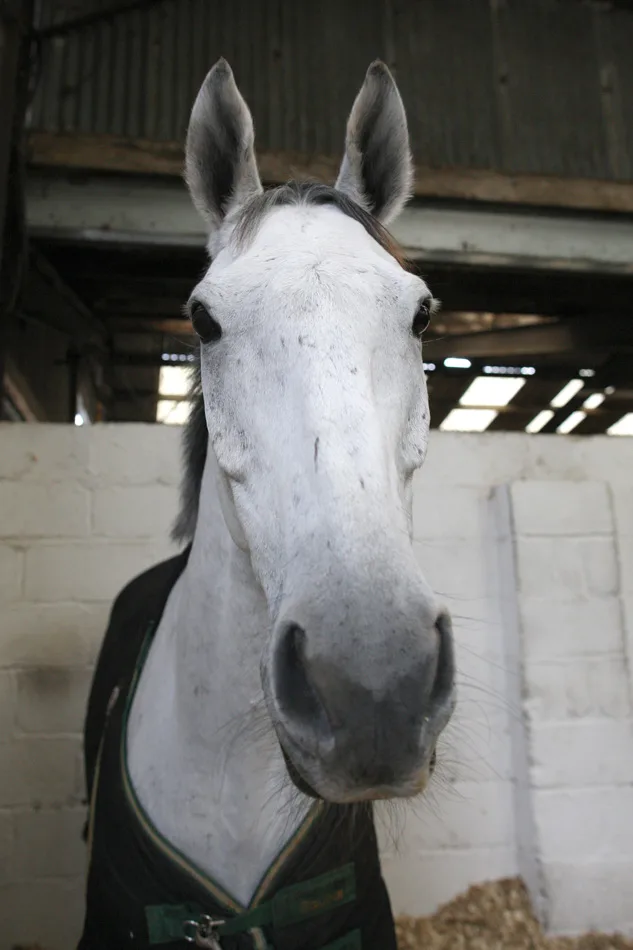
Eldorado Allen
© Courtenay Hitchcock

Meet Jemma Sargent
After Chris had given me the latest on the horses, he headed off to his next job. I stayed behind to talk to one of the people who keep the whole yard running – barn manager Jemma Sargent told me all about her job.
‘I’m the barn manager – it’s basically the head girl role,’ she says. ‘I ride out in the mornings, then do all the medical checks in the evenings – I check legs, make sure all the horses are OK, do whatever antibiotics need to be done … I help run the yard alongside Chris and Joe. Predominantly I look after the horses’ health – that’s my main job.’
Jemma’s been with the Tizzards for almost ten years, and her roots in racing run deep. ‘I started here when I was still at school, just riding out. Then during college, I kept coming back. Joe always said if I wanted a job, there’d be one here – I took him up on it, and I’ve worked my way up.’
She’s local – just five minutes away in Milborne Wick – and racing is in the family. Her uncle is former flat jockey Tim Sprake, and cousins Charlie and Catherine Sprake both ride point-to-points.
‘Catherine started riding out here when she was 13. This’ll be her first season pointing.’
Having strated at the bottom, Jemma now helps with everything from ordering feed to running the diary when Chris is away racing. But she rides every day:
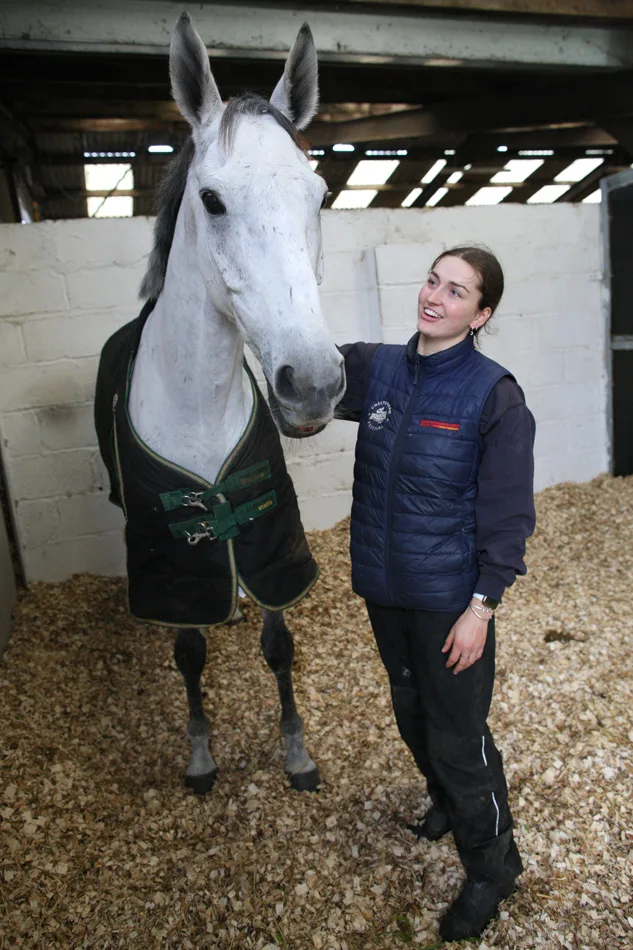
‘Allen! Eldorado Allen is my number one. I’ve ridden him pretty much every day since he came. I just … got him, straight away. He’s got such a personality – he’s a brilliant old boy. It’s probably his last season now. He’s 11, and I don’t feel the handicapper is very kind to him. I know he’s highly rated, but he’s not the biggest of horses. When you’re against horses carrying two stone less than you, it’s hard to be competitive. But he still wants to do it.’

Jemma Sargent with her yard favourite, Eldorado Allen © Courtenay Hitchcock


Jemma also rides Sunset Marquesa and Lord of Thunder, and goes racing when she can – though, like many of the yard’s senior staff, she’s often needed back at the yard.
‘I love going, especially with my favourites. I’ve been lucky to get to big meetings like Cheltenham and Aintree. That’s a real privilege.’
But even at the big races, Jemma doesn’t bet: ’If I ever do, it’s two pounds. Maximum!
I’d rather keep my money in my pocket. The races are exciting to watch – I don’t need a bet to love watching the horses run.’
Her hours are long and odd – quarter to seven until one, then back again from three to five, longer if the vet is in. But would she swap it?
‘Not a chance. I love this job. Summer’s chilled, and winter is go, go, go. It’s brilliant.
‘You’re here so much it becomes your life. But we’ve got a great team, and Joe and Chris are great to work with. I wouldn’t still be here nearly ten years later if I didn’t love it.’