

Driving a Dorset B-road in winter is not a gentle experience it is a series of jolts, dips, and sudden drops that your suspension was never designed to handle daily. For many local residents and farmers, this is not an occasional inconvenience. It is every single journey, every single day.
If you live around Sherborne, Shaftesbury, or the Blackmore Vale, you already know the roads here are in poor shape. Potholes appear after every wet season, verges crumble under heavy farm traffic, and repairs often take months to arrive. The result is a slow, steady attack on your vehicle and the most vulnerable target is your suspension, specifically your shock absorbers. According to the RAC Pothole Index, over the 12 months to the end of September 2025, potholes caused 25,758 breakdowns involving damaged shock absorbers, broken suspension springs, or distorted wheels across England and Wales up 11% on the same period in 2024. That is roughly 71 breakdowns every single day.
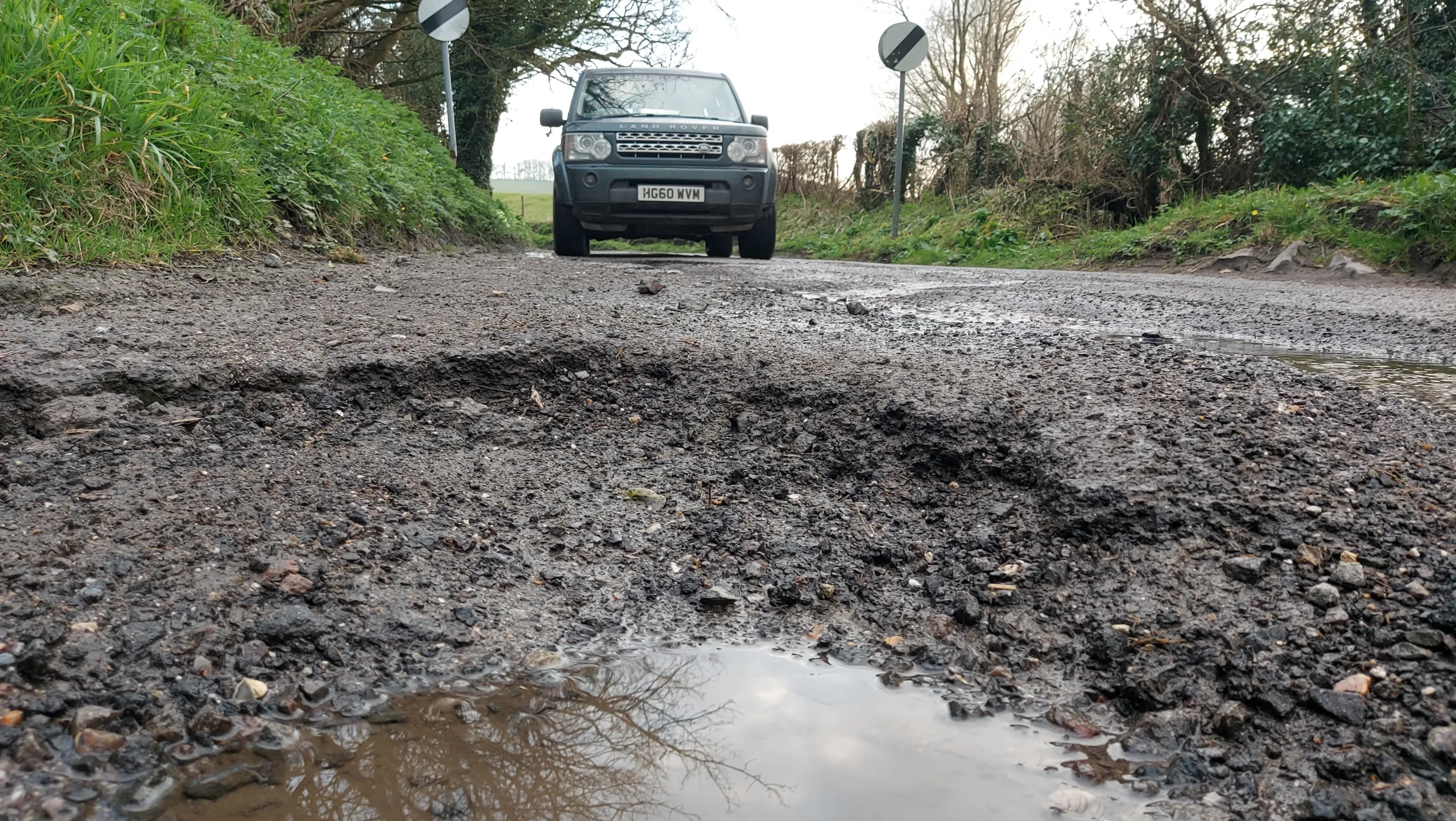
What rough Dorset roads really do to your suspension
Shock absorbers control how your car moves over bumps. They work together with the coil springs to keep your tyres on the road and your ride steady. On a smooth motorway, impacts are occasional. On a Dorset country lane, they are constant.
The damage builds slowly. Repeated stress causes internal seals to wear, hydraulic fluid to leak, and damping ability to weaken. The ride gets bouncier, the car feels less controlled around bends, and steering becomes less precise. According to AUTODOC, one of Europe’s leading online auto parts retailers, “a shock absorber can get damaged due to factors like everyday wear, rough driving conditions, impacts from potholes or road accidents, and contamination. Corrosion from water, dirt, or road salt can deteriorate the seals and shock components.” In Dorset, where wet winters and muddy farm tracks combine, all of those factors apply at once.
Why wet winters accelerate the damage
The weather plays a direct role too. Cold temperatures cause rubber bushings and seals to harden and lose flexibility, increasing noise and the risk of cracking. Heavy rain deepens existing potholes and accelerates road erosion. As experts examining the impact of road conditions on suspension performance note, even repeated trips over speed bumps at the wrong speed create cumulative stress that leads to structural failure over time. For Dorset drivers navigating the same rough routes through autumn rain, winter frost, and spring mud, every season brings a fresh challenge for the suspension system.
The repair bill most rural drivers don’t see coming
RAC garage data shows that for anything more serious than a puncture, drivers can expect to pay up to £590 after hitting a pothole. The RAC also confirms that drivers in England and Wales encounter an average of 6 potholes per mile on council-controlled roads. A worn shock absorber does not just affect comfort it strains tyres, brakes, and steering components. Braking distances can increase because the tyres are no longer sitting flat on the road. AUTODOC notes that most shock absorbers last around four to five years, but that assumes reasonable road conditions. For rural drivers in Dorset, that lifespan can be considerably shorter.
Six signs your shock absorbers are already struggling
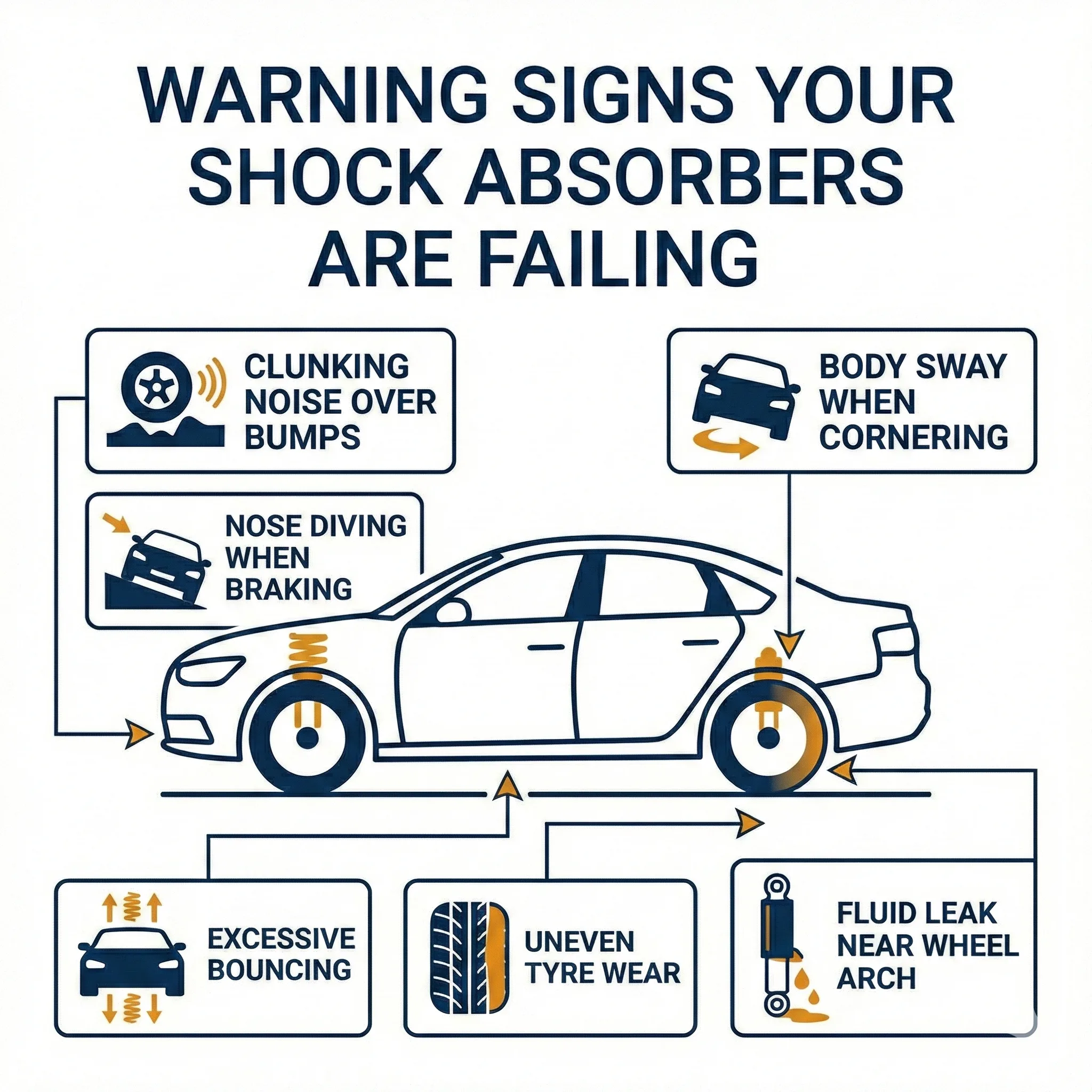
Clunking sounds over bumps, nose diving under braking, body sway when cornering, excessive bouncing that doesn’t settle quickly, uneven tyre wear, and fluid leaking near the wheel arch — any one of these is a reason to get the car checked. More than one is a reason to act immediately. The RAC attended 5,035 pothole-related breakdowns between July and September 2025 alone a 25% rise on the same period in 2024.
How to stay ahead of the problem before it gets expensive
Shock absorbers are not complicated to source or replace. AUTODOC offers a wide range of parts for most vehicles used in rural Britain, alongside detailed guides and video tutorials to help drivers understand when to act. Keeping on top of suspension maintenance is not just about comfort. On a narrow Dorset lane, with a hedge on one side and a ditch on the other, a car that handles well is a car that keeps you safe.
Sources
● RAC Pothole Index — rac.co.uk
● AUTODOC Blog: Broken shock absorber or spring on car — autodoc.co.uk
● Information about shock absorbers – buycarparts.co.uk
● The impact of road conditions on suspension performance – wefixautoservices.com
FAQ
How often should I check my shock absorbers if I drive rural Dorset roads daily? Experts recommend a visual inspection every 20,000 kilometres — but if you regularly drive uneven country lanes, it is worth checking for oil leaks, unusual bouncing, or tyre wear at least once a year. Rough rural roads can reduce the typical four-to-five-year lifespan of shock absorbers significantly.
Can I drive with a worn shock absorber on country roads? A failing shock absorber reduces tyre contact with the road, increases braking distances, and makes the car harder to control — particularly on narrow, uneven lanes where quick reactions matter most. It is not worth the risk: get it inspected and replaced before the problem affects your brakes or steering.