

Most drivers treat country lanes the same year-round, but Blackmore Vale’s seasonal shifts demand different approaches to stay safe. From summer’s dust clouds to winter’s frozen ruts, these narrow roads change character completely every few months.
The Blackmore Vale presents unique challenges for motorists throughout the year. Narrow lanes with high hedgerows, limited passing points, and surfaces that deteriorate with weather create conditions rarely found in urban areas. Rural road fatalities account for 60 per cent of all fatalities despite carrying only 44 per cent of road traffic, with one in every 31 accidents resulting in death compared to one in every 120 on urban roads.
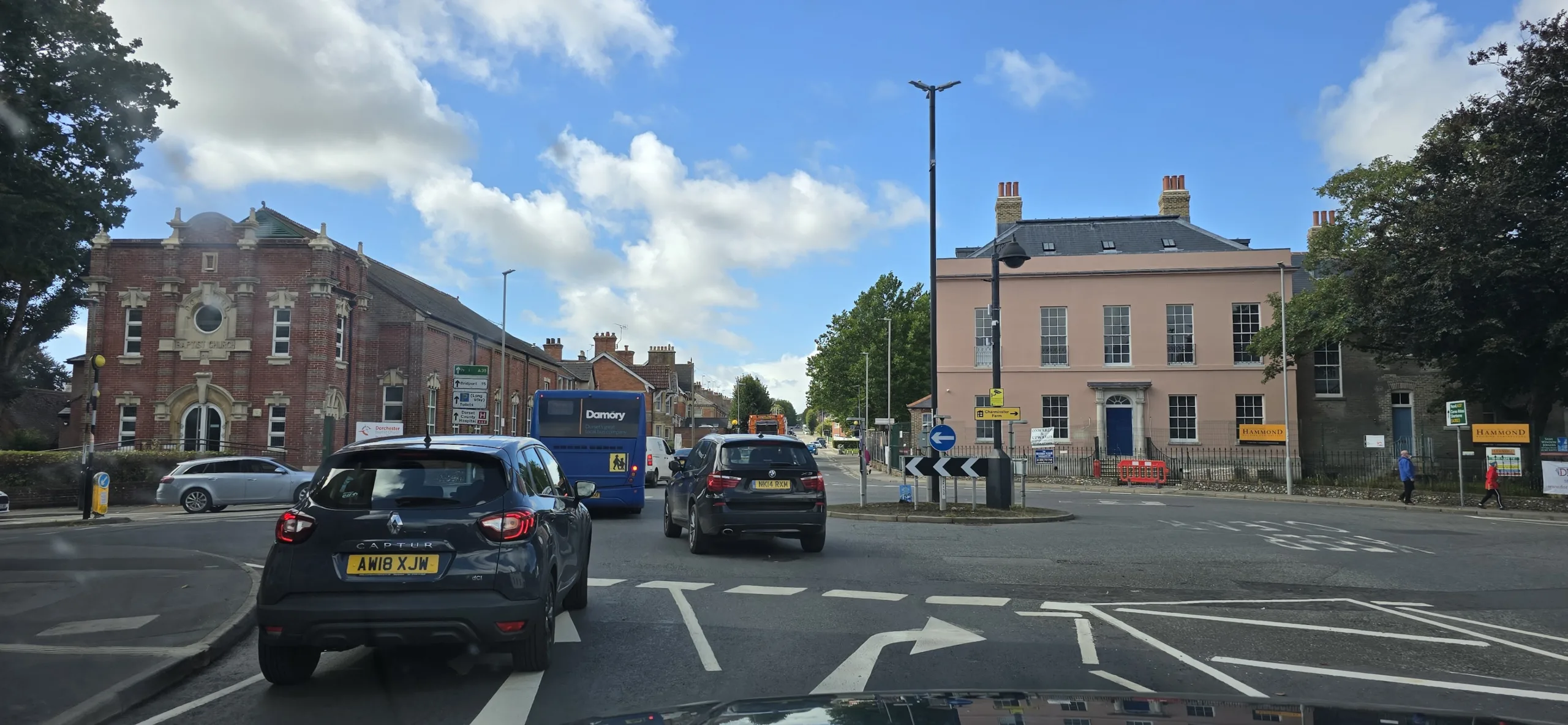
Spring brings mud and agricultural activity
Spring brings intensive farming work across the region. Tractors moving between fields deposit thick mud on road surfaces, particularly after rain. Local councils regularly warn drivers about these contaminated surfaces and reduced grip levels. These muddy patches reduce traction significantly and can hide potholes that developed over winter.
Fluctuating temperatures lead to changes in tyre pressure, which can affect handling on already unpredictable surfaces. Spring showers make conditions particularly slippery where mud mixes with rain. Drivers should anticipate sudden stops where farm machinery blocks the road and carry basic supplies, as many lanes lack mobile signal.
Summer creates dust and visibility issues
Dry summer months create their own problems. Dust from harvesting settles on windscreens, reducing visibility when sunlight hits at low angles during morning and evening commutes. Overgrown vegetation narrows already tight lanes, with branches scratching paintwork and obscuring road signs.
High temperatures affect vehicle cooling systems on steep climbs, whilst extended heat exposure impacts tyre pressure and condition. Experts at Precision I.A. Detailing note that overheating becomes a major concern during hot months, especially when cooling systems aren’t in peak condition. Tourist traffic increases substantially, with drivers unfamiliar with single-track etiquette causing delays. Popular walking routes mean more pedestrians on roads without pavements, requiring extra caution around blind corners.
Autumn and winter present the most challenging months
Autumn transforms road conditions dramatically. Fallen leaves create a slippery layer, especially dangerous on corners and hills when wet. They block drainage gullies, causing water to pool across surfaces. Morning frost catches many drivers unprepared, particularly on shaded sections that remain icy while surrounding areas have thawed.
This is when vehicle preparation matters most. Tyre condition becomes critical—worn tread struggles with wet leaves and mud tracked onto tarmac from field entrances. As reported by the AUTODOC expert: “It’s not a good idea to mix different types of tyres on your car, such as winter and summer tyres or different treads, as this can seriously impair handling, braking and stability.” This warning proves particularly relevant on Blackmore Vale’s challenging terrain, where consistent grip across all wheels prevents dangerous skids.
Winter brings the hardest conditions. Stopping distances can be up to ten times greater on icy roads than dry roads, whilst braking distances double in wet weather. Cold temperatures affect battery capacity and thicken engine fluids, making starting difficult on frosty mornings. Ice forms in ruts created by tractors, making steering unpredictable. Many minor lanes receive no gritting treatment, leaving drivers to navigate treacherous surfaces independently.
Understanding stopping distances on rural roads
The difference between safe stopping and a collision often comes down to understanding how weather affects your ability to stop. At 40mph—a typical speed on Blackmore Vale’s narrow lanes—the contrast between conditions is dramatic. On a dry road, you’ll stop within 36 metres, roughly a third of a football pitch. This feels manageable and gives most drivers confidence in their reactions.
Wet conditions tell a different story. That same 40mph now requires 72 metres to stop—double the distance. Suddenly, what seemed like adequate space becomes insufficient, especially on lanes where visibility around bends rarely exceeds 100 metres. Rain doesn’t just make surfaces slippery; it fundamentally changes your vehicle’s relationship with the road.
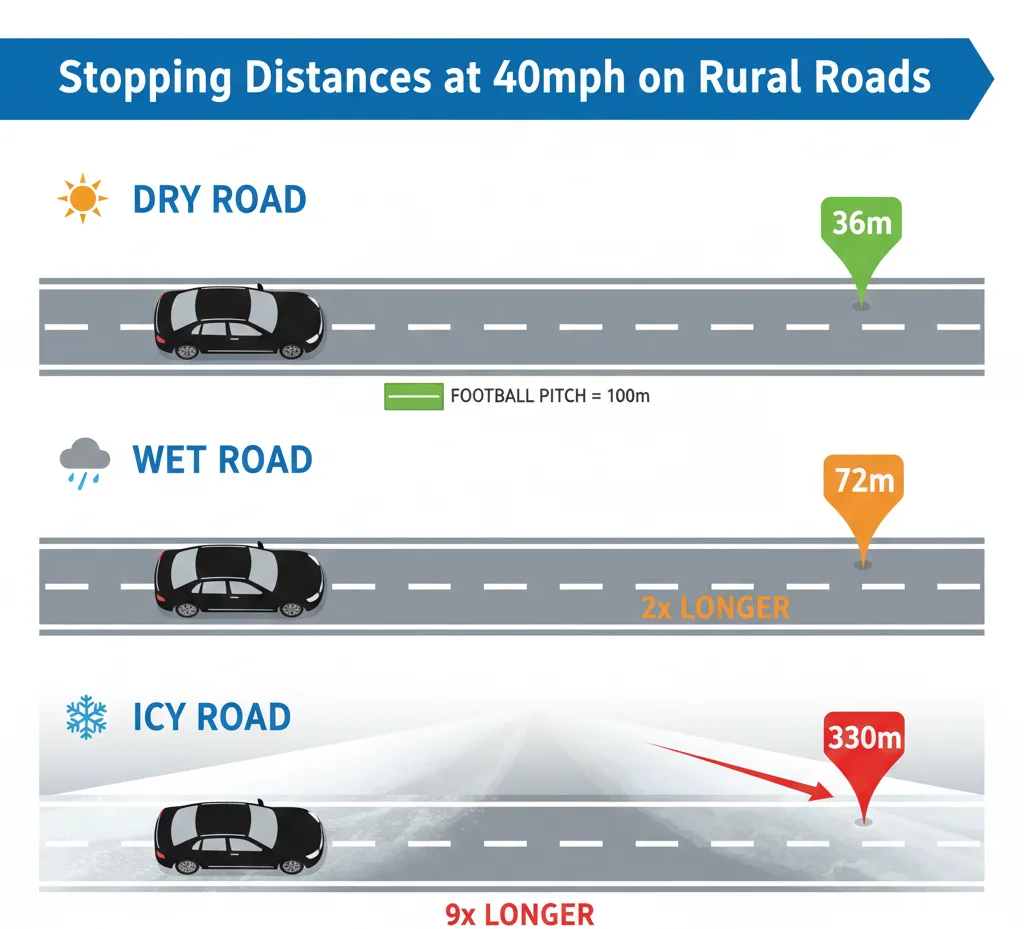
Winter ice creates genuinely dangerous situations. At 40mph on icy surfaces, your stopping distance extends to 330 metres—nine times longer than on dry roads. That’s longer than three football pitches. On most Blackmore Vale lanes, you simply don’t have that much visible road ahead, meaning if you spot a hazard at normal driving speeds, you’ve already lost the ability to stop in time. This stark reality explains why speed reduction becomes non-negotiable during winter months.
These figures, based on Highway Code and nidirect guidance, demonstrate why experienced rural drivers instinctively slow down when conditions deteriorate. The physics doesn’t care about schedules or familiarity with the route—ice eliminates the margin for error that exists in better weather.
Successful navigation requires seasonal awareness. In spring and autumn, assume every corner might have mud or debris. Reduce speed before you see the hazard, not after. Claims data shows a 25 per cent increase in accident claims during November compared with April, highlighting how dramatically conditions change.
Vehicle maintenance shouldn’t follow a standard urban schedule here. Check tyre tread and pressure more frequently, particularly before autumn arrives. Ensure windscreen washers contain proper cleaning fluid capable of removing agricultural residue. Battery checks become especially important before winter. Keep fuel tanks fuller than usual—running low on an empty country road in winter creates unnecessary risk.
Regular users develop instincts about which sections flood, where ice forms first, and which corners collect leaves. This knowledge builds over years, but newcomers can accelerate their learning by driving cautiously and observing how conditions change week to week.
The Blackmore Vale’s beauty comes with responsibility. These roads demand respect and adaptation. Drivers who adjust their habits to match seasonal conditions find rural motoring safer and less stressful throughout the year.
Sources of information: based on UK government data on road traffic accidents (2023), recommendations on traffic rules, the NFU Mutual Rural Road Safety Report (2023), nidirect rules, AUTODOC ( More information about car tyres can be found on autodoc.co.uk ) and Precision I.A. Detailing.
Q: When should I switch to winter tyres on Blackmore Vale roads? Consider winter tyres when temperatures consistently drop below 7°C, typically from late October through March, as they significantly improve grip on wet leaves, frost, and icy surfaces common on ungritted lanes.
Q: What’s the most dangerous time of year for driving rural roads in the Vale? November through February present the highest risk, with claims data showing a 25% increase in accidents during November alone due to fallen leaves, ice formation, and limited visibility combined with untreated road surfaces.