Discount supermarket chain Aldi has revealed plans for a new store in Sturminster Newton – and is inviting residents to have their say.
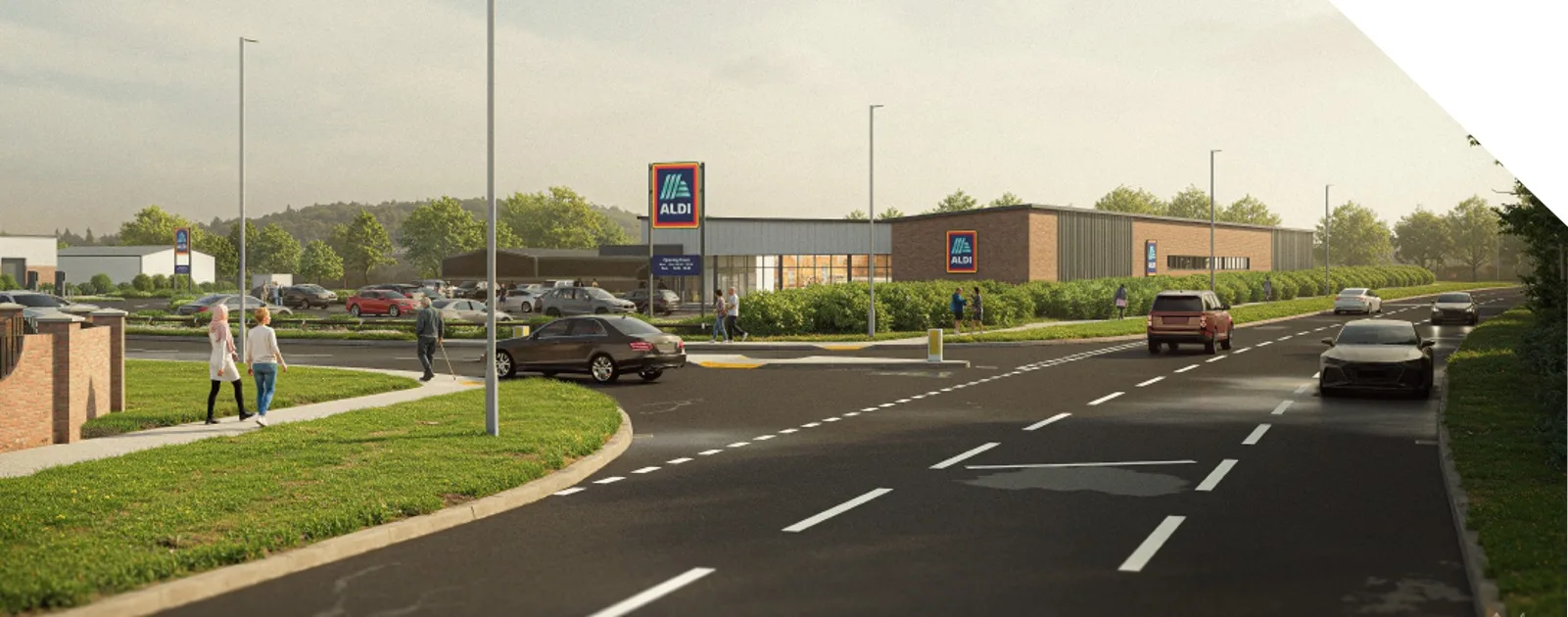
The proposed site is on North Dorset Business Park, just off the A357 on the outskirts of the town. If approved, the development would bring up to 40 new jobs to the town, with Aldi stating all roles will be paid at rates above the National Living Wage.
Representation of how the site on the North Dorset Busines Park may look
The £7 million investment would include free customer parking, electric vehicle charging points, and cycle parking for both customers and staff. The store would also aim to boost employment through construction and supply chain contracts.
Elliott Saunders, Aldi Real Estate Director, said: ‘We are thrilled to bring forward plans for a new Aldi store in Sturminster Newton, giving people better access to Aldi’s award-winning range of high-quality products at prices no other retailer can match. We encourage residents to participate in our virtual consultation to learn more about the scheme and share their views.’
Aldi currently has more than 1,000 stores across the UK and continues to expand its presence in rural and market towns.
Near misses and road rage are on the rise – North Dorset riders saddled up to raise awareness and urge drivers to slow down before it’s too late
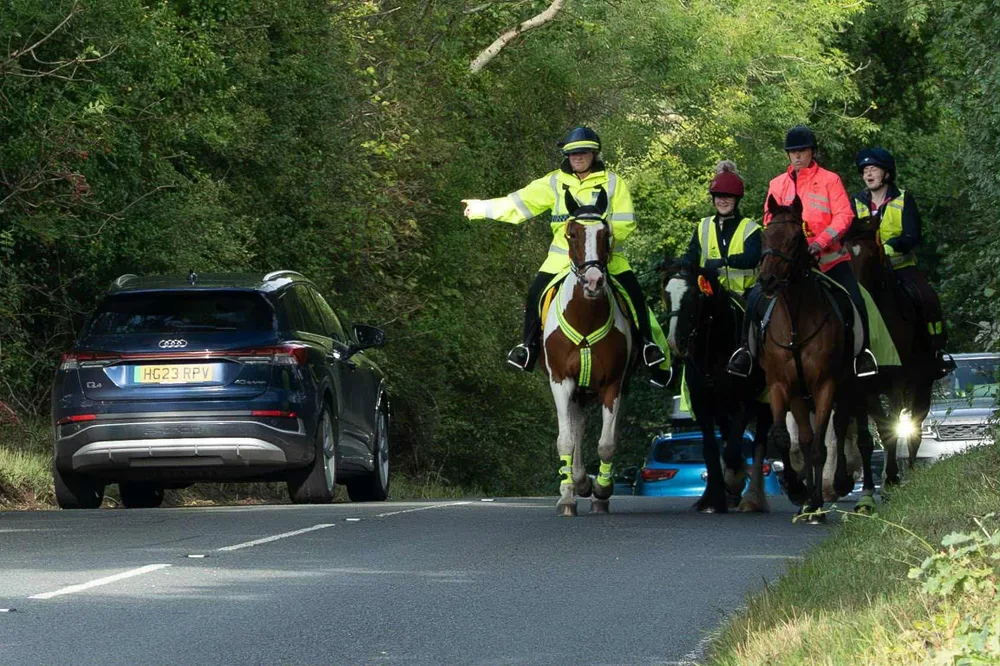
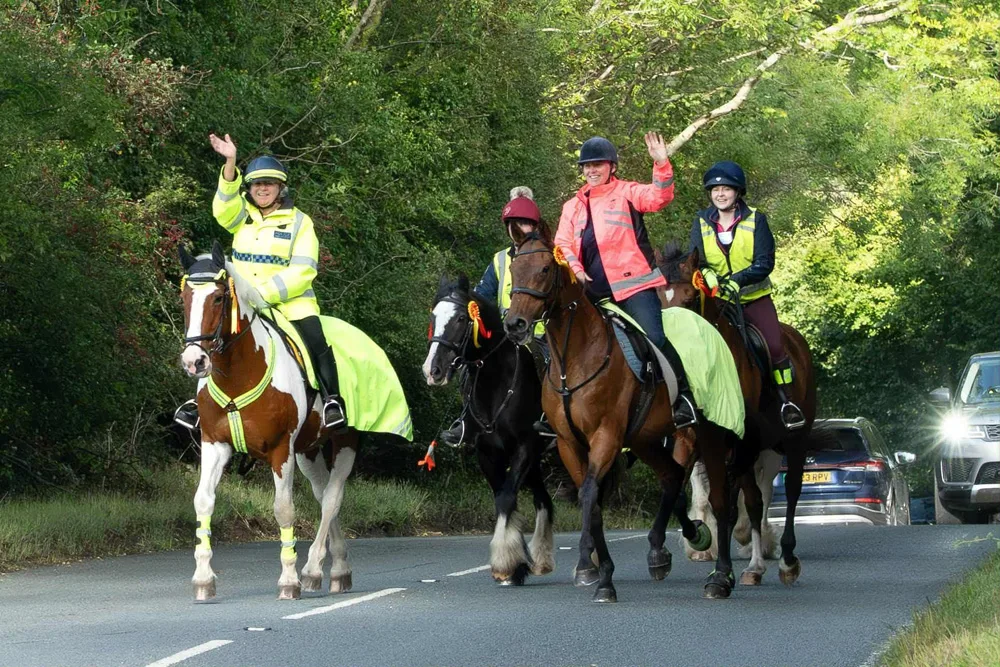
Sandra’s PWAS ride travelled up the B3081, crossed over the A30 to follow the back lanes towards Shaftesbury, then travelled down Foyle Hill and Coles Lane
Rug or no rug. Shoes or no shoes. Bit or bitless … The horse world rarely agrees on anything. Except this: every rider has had at least one terrifying moment on the road. And most of us have had far more than one. The Sass Queen really enjoys hacking, merrily mooching about the countryside (who am I kidding – she doesn’t know how to mooch. She marches). She is, thankfully, totally bomb-proof in traffic – trains, low flying helicopters, tractors, cyclists, you name it and she won’t bat an eyelid at it. Unfortunately, we’ve both been subjected to drivers putting us in dangerous situations, often due to their impatience at having to wait just a few extra seconds to carry on their journey. Incidents like this, especially on young or green horses, can result in a lifelong fear of being in the road and ultimately cause dangerous behaviour, often through no fault of their own. Two horses killed a week September marked Shaftesbury’s first Pass Wide and Slow (PWAS) campaign, organised by Sandra Stevens and her friends Alice Wood and Georgie Faulkner-Bryant. Pass Wide and Slow, a national campaign for horse and rider safety, was founded in 2015 by Debbie Smith, after a car frightened her horse by driving too close – a fear he never got over.The aim is to raise awareness on the safest way to pass horses on the public highway. In 2023 there were 3,383 road incidents involving horses: 66 horses died, 86 were injured and three people died. Of these incidents, 85 per cent were caused by vehicles passing too closely or too fast. Riders are frequently subject to road rage or abuse. Sandra’s driving force (excuse the pun…) to organise the PWAS ride was due to the massive increase in bad driving instances she’s experienced while riding her horse Flo. An experienced horsewoman, having progressed through the Pony Club to competing in endurance competitions, Sandra enjoys exploring the North Dorset countryside near her home with Flo, a tricoloured Belgium Warmblood. ‘I live on the B3091, which runs from Sturminster Newton to Shaftesbury. I have to ride along the road to get to the local bridleways which are, sadly, very few and far between in North Dorset. On average, two horses are killed a week on public highways: I don’t want my horse to become one of those statistics.’ Sandra recently went riding with her friends Alice and Georgie and mentioned she would like to organise a PWAS event – they both readily agreed to help, she says: ‘We’d all had bad experiences while riding on the road – I’ve been driven at, shouted and sworn at, had vehicles rev up and drivers blasting their horns … I wanted to educate other road users.’ Last year Sandra invested in a hatcam, and regularly reports issues to Dorset Police’s ‘Operation Snap’ website.
Sandra Stevens (left) and her friends Alice Wood and Georgie Faulkner-Bryant organised North Dorset’s first Pass Wide And Slow Ride
We don’t like it either What the general public perhaps don’t realise is that horses are ‘flight animals’ – their primary instinct in the face of a threat is to flee, to run away from danger. If they spook on the road, their natural reaction can result in them leaping sideways or bolting which, in the worst instance, could result in them ending up on the bonnet of a car. Recent research has shown that a horse shying can reach up to 54mph in a matter of seconds. Of course, the age-old response from keyboard warriors is ‘horses shouldn’t be on the road, you don’t pay road tax…’ Rest assured, we don’t want to be here, holding you up, any more than you want us there. However we often have to ride along roads in order to access bridleways. Sadly we cannot merely roam across the countryside wherever we wish.*
The Shaftesbury ride The aim of the PWAS ride was to promote awareness on how to safely pass horses on the public highway, and to remind drivers of the Highway Code, rule 215: ‘Be particularly careful of horse riders and horse-drawn vehicles, especially when approaching, overtaking, passing or moving away. Always pass wide and slowly. When you see a horse on a road, you should slow down to a maximum of 10 mph. Be patient, do not sound your horn or rev your engine. When safe to do so, pass wide and slow, allowing at least two metres of space.’ As Sandra points out, this rule applies to ALL vulnerable road users – cyclists, runners, dog walkers and parents walking their children to school. We are all responsible for ensuring our roads remain safe for everyone to use. The ride was successful – it was sponsored by Shaftesbury Rotary Club, who also purchased the banners. ‘We started from Hawkers Hill Farm by kind permission of Phil, Trish & Helen Lever,’ says Sandra. ‘Then we rode up the B3081, crossed over the A30 to follow the back lanes towards Shaftesbury, then travelled down Foyle Hill and Coles Lane. Here we met up with our lead-rein ponies, cyclists and walkers to process down Shaftesbury High Street – was quite impressive!’ Rosettes and refreshments were very much appreciated by both two and four-legged participants at the end.
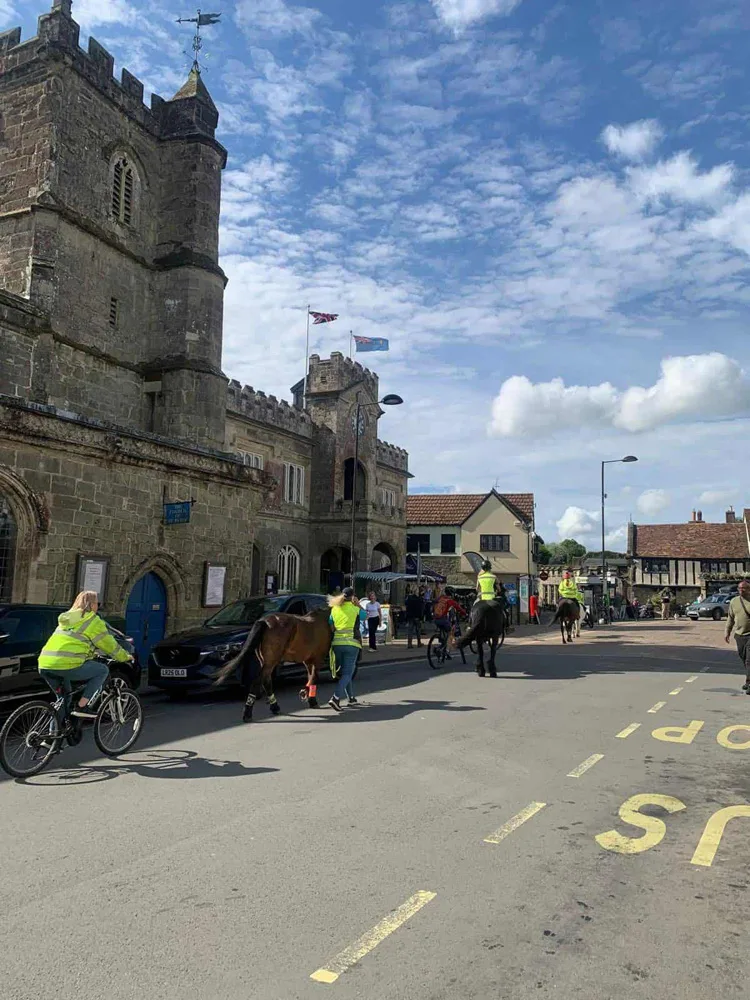
At the end of the route, the riders met up with lead-rein ponies, cyclists and walkers to process down Shaftesbury High Street
It’s a rider’s job too Sandra and the PWAS’ message to other road users is simple: ‘When passing horses, please just slow down to 10mph,’ she says. ‘And be prepared to stop: a pheasant or a plastic bag might be in the hedge that you can’t see, and horses can shy and spin on a sixpence. Please be patient, don’t rev your engine or sound your horn. Allow enough distance as you pass … and don’t suddenly accelerate once you have passed!’ Don’t forget, there are three brains at work and reacting to the situation when a driver passes a horse – the rider’s, the horse’s and the driver’s. It’s also worth noting that if you see riders two abreast, this is often because the inside one is a young or nervy horse or rider: it’s safer to keep them between the edge of the road and oncoming traffic. It’s not because we’re trying to hog the carriageway or have a chat! As riders, it is also our responsibility to encourage good driving, and acknowledge the efforts of those who do adhere to the highway code. It’s just as important that we thank drivers for slowing and giving us space – even if you can’t take your hands off the reins, nodding your head and shouting ‘thank you’ or smiling goes a long way. If possible to do so, trot on to a safer place for traffic to overtake, pull in when possible and don’t be afraid to use hand signals to tell traffic to slow down or wait if it’s not safe for them to overtake. We also can’t expect other road users to slow down if we can’t be seen – admittedly, being lit up like a Christmas tree is not exactly the height of fashion it can alert drivers to our presence from further away, giving them crucial extra stopping or slowing distance. That can make all the difference. Sandra hopes to organise next year’s ride to coincide with national PWAS day – keep your eyes peeled for dates. And to all of us who drive: remember to Pass Wide and Slow!
Some bridleways are inaccessible simply due to the lack of maintenance from councils and landowners – something which Georgie has taken into her own hands by setting up the Hedge Hackers facebook group to share badly-kept bridleways and to demonstrate opening them up to keep them accessible and safe for riders to use.
The Exchange is offering a powerful programme of theatre this autumn, visiting ancient Greece, the centre of the Roman Empire and Nuremberg 1590. Starting with an evening of fun, Too Many Greek Myths is a family friendly (8+) show from Living Spit. They will be lighting up the dark nights of 17th and 18th October with their familiar harebrained humour, questionable wigs and total disregard for historical accuracy. The chaos of 20 Greek myths in one evening is followed by a different and blacker sort of chaos a week later.
A short season in partnership with Artsreach starts with Tangle Theatre’s powerful production of Julius Caesar on 24th October. With original music preformed live on stage, Tangle brings African storytelling into the heart of ancient Rome. Caesar is a tyrant, Cassius sees the threat, Brutus is torn by loyalty and the murder of Caesar solves nothing. Chaos erupts and a civil war begins. Tangle have visited The Exchange before and always been enthrallingly different. A different sort of killing becomes the subject of a dark comedy about justice, corruption and the cost of survival on 11 November. Making a Killing, presented by Ha Hum Ah Theatre, set in 1590, in a world disturbingly like our own. The ropes are ready, the crowd is waiting and the hangman has a new apprentice – duty, morality and power collide and every decision leaves a mark.. The last event for 2025 from the Artsreach partnership is the visit of 12 musicians from the Bournemouth Symphony Orchestra on 20 November. Musical Families is a fascinating programme exploring the sonic possibilities of string instruments which is presented by the musicians themselves. It is a colourful show for all ages, including well known, charming and ethereal music from Karl Jenkins, Holst and Gershwin amongst others.
These shows are visiting theatres across the UK, including Theatre Royal Windsor, The Minack and the Mayflower Southampton – The Exchange is delighted to be joining this distinguished company. We believe that enjoying high quality live performance, theatre, music or dance in a shared space helps make people feel better, and that helps to build a happier community. Our exciting partnership with Artsreach makes it possible to bring more of these experiences to Sturminster Newton and the rest of North Dorset. Please support us – buy a ticket and join in. stur-exchange.co.uk
A night of generosity, community spirit and local flavour awaits at the Wine & Wessex Grazing Platter Evening and Auction of Promises on Saturday 18th October at East Stour Village Hall. The event, organised by the Gillingham & Shaftesbury Agricultural Society, aims to raise vital funds for the Student Support Fund, which helps young people pursue careers in agriculture and land-based industries. This exciting new event offers an immersive wine-tasting experience – led by an expert from Wild about Wine – paired with a delectable grazing platter featuring locally sourced treats from across the Wessex region. Guests can enjoy bold Barber’s cheese, award-winning From Dorset With Love chutneys, Olives Et Al nibbles, and artisan charcuterie from The Real Cure – all included in the £20 ticket price.
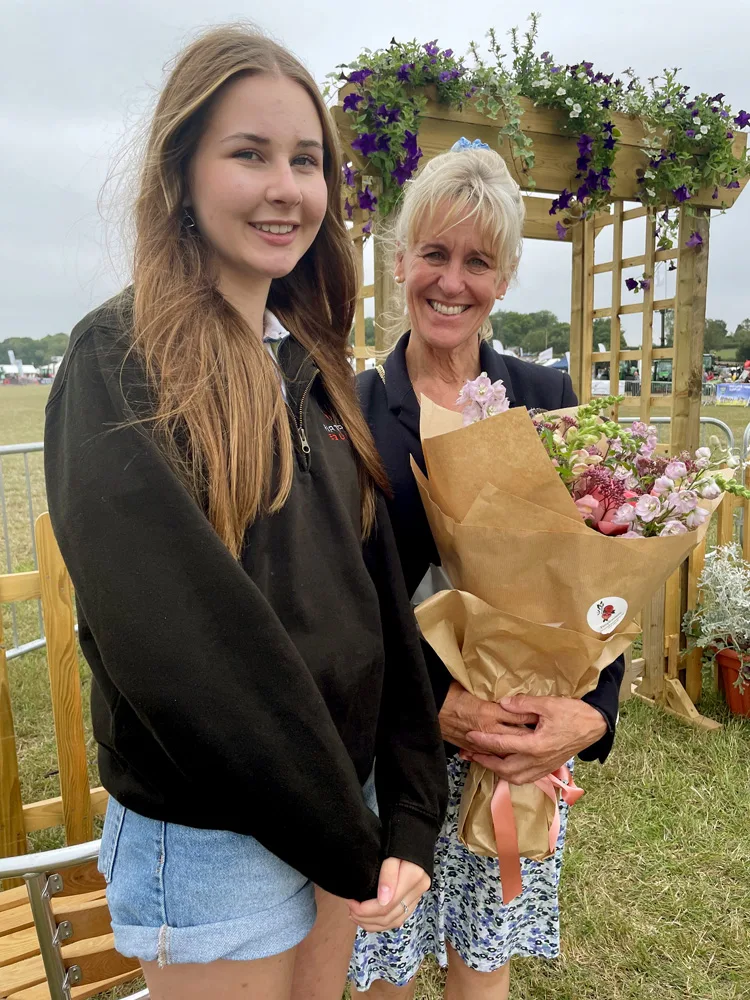
Olivia Payne (left) presented a bouquet to Baroness Batters at the Gillingham & Shaftesbury Show
Alongside the tasting, attendees will have the chance to bid on a diverse array of promises donated by local businesses and artisans. Highlights include a magical steam engine experience, a week’s stay in a luxury Newquay apartment, and a private wine-tasting at home. For food and drink lovers, there’s also a VIP tour of Hall & Woodhouse Brewery on offer. The funds raised will support the Student Support Fund, which provides financial assistance for travel, equipment and tuition fees – crucial support for young people embarking on rural careers. As one such beneficiary, 17-year-old Olivia Payne from Frome, said, ‘The grant means I can follow my dream of doing a university degree in Equine Veterinary. I’m so grateful.’ Anthony Wilkinson from the Student Support Fund says, ‘Young people wanting to go into rural careers often struggle to finance travel to college – for many it’s more than 50 miles – or to afford essential equipment. The Student Support Fund can make a huge difference to their ability to succeed.’ Tickets for the evening are £20, which includes the wine-tasting and a grazing platter. Booking is essential to ensure your place for an unforgettable evening of local food, drink and genuine community support.
Dorset NFU’s Tim Gelfs asks why questioning costs, data and green policies now risks branding you a sceptic rather than sparking discussion
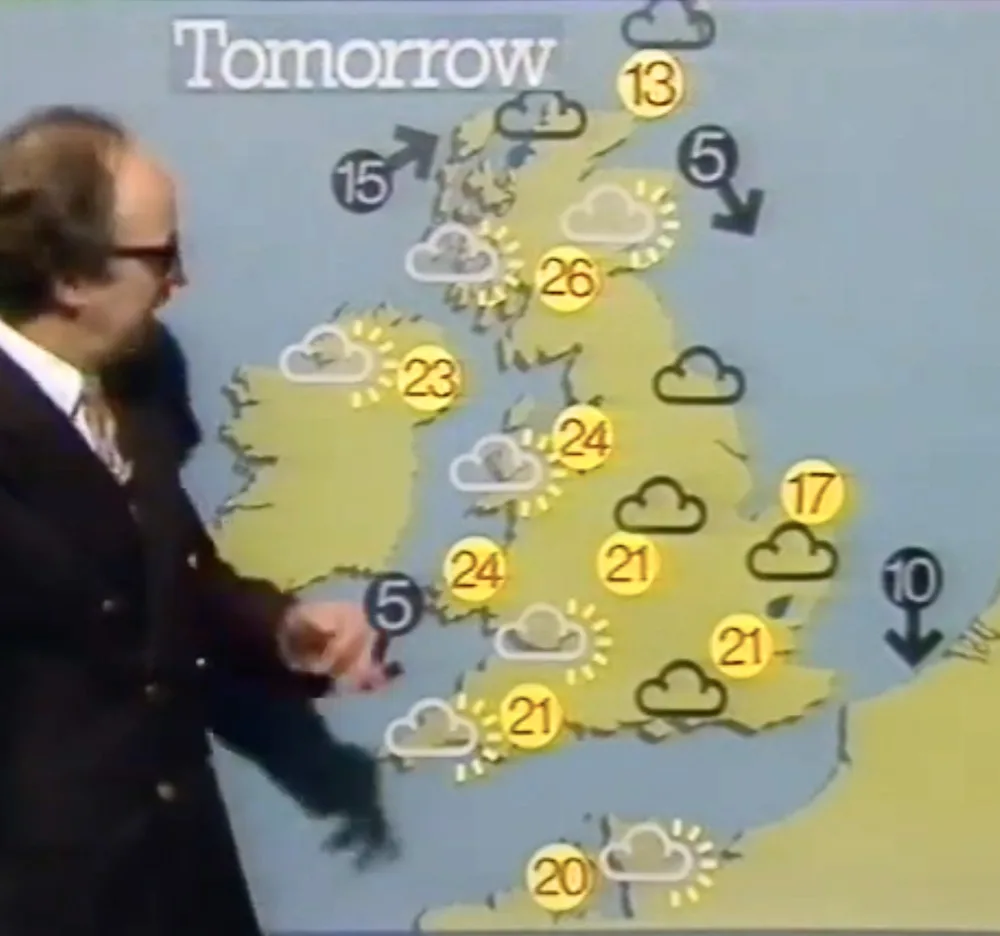
Michael Fish with a 1980s weather map
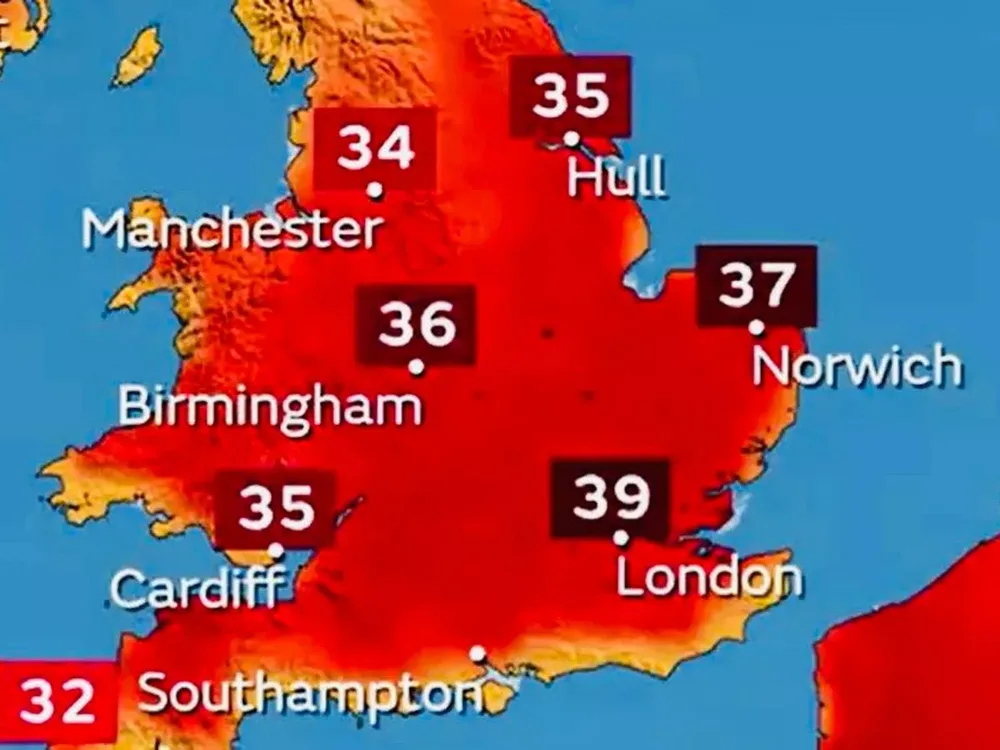
So, is Mr Trump right about the hoax of climate change? Probably not … Is Project Fear alive and well? It certainly looks that way! Call me cynical, but with so much money being made from climate change fears, it seems to be in no one’s interest to challenge the thinking or to report opposing views. Let’s look at the polar ice caps: we’ve all seen the reports that they are shrinking and we’re all going to have to grow webbed feet. All true, and seemingly well-documented. But no one has reported in the main media that it looks as though the ice fields have grown in the last year? Our weather forecasts, with the help of digitalisation, have changed beyond recognition – remember Michael Fish with his handful of magnets? Back then, a heatwave was depicted by a yellow sun with the number 30 on it, stuck to a map of the UK. Now, it is in glorious technicolour with every shade of red you can imagine. I’m surprised the telly doesn’t melt! We are told that we are setting record temperatures ‘since records began’ … that’s just the last couple of hundred years. On the scale of the planet’s life, that would barely register: insufficient data from a scientific point of view.
The ‘telly melting’ heat map of 2025
A fool’s game Then we have our biggest culprit of all, CO2, the evil gas that is driving up global warming. If we don’t stop producing it, we’re all doomed, Captain Mainwaring! What is not so well reported is that more than 90 per cent of its production occurs naturally. We humans are only responsible for somewhere around five per cent: but we must do our best to not only reduce its emission, but also help with carbon capture by sequestration. It sounds commendable – indeed, our illustrious fount-of-all-knowledge climate minister has chucked billions of pounds at it. But are we playing a dangerous game with not enough knowledge? CO2 is the gas of life: take too much out of the atmosphere and we have a real problem – probably a bigger problem than having too much?
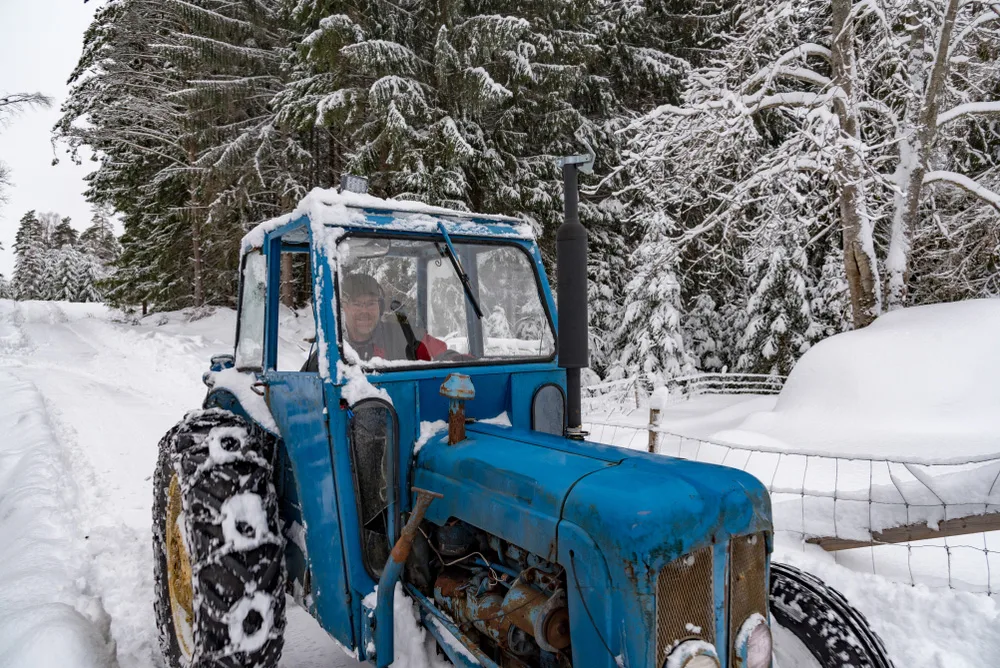
‘Where are our bleak mid-winter days spent thawing out pipes and using several cans of easy-start on the scrapper tractor?’
Is it just me? And then, around the world, we have the biggest money-spinner of all: Green Energy, the saviour of all our climate issues. But you’re not allowed to question how much carbon is produced in making the solar panels or wind farms. Nor what the cost is, at end of life, for disposal? I have asked, and no one can give me an answer. And literally no one wants to talk about the pollution of a lithium mine. By now you’re probably thinking I am a climate sceptic – if digital ID was already in place, I’d already have a big black mark next to my name! But I’m not, not really. What I don’t like is anything we are not allowed to challenge. If the arguments are so robust, what are they scared of? Climate change IS happening, we can see it for ourselves. Sea temperatures around the UK are higher, you can see that just by looking at the species such as tuna appearing off our shores. We go out in the sun and it does feel more intense than it did 30 years ago (or is that just getting older?). The weather patterns seem to be changing. Where are our bleak mid-winter days spent thawing out pipes and using several cans of easy-start on the scrapper tractor? Not that I am missing the ice on the inside of the window, you understand, nor the permanently cold feet for a couple of months! Are we responsible? Or is it just a natural cycle? It seems sensible that we’re having some effect on climate change. I don’t think the world is designed to have eight billion people living off it without some effect. If it is down to us, then one thing is for sure: it is not going to be solved in the West. Asia and South America will decide the outcome, and poverty will be the driver. The uncomfortable truth is that if we allow the world’s biggest populations to live in poverty, survival will take priority over climate change! We’d be much better off if we spent our money on pollution and resolving waste … but that’s for next month!
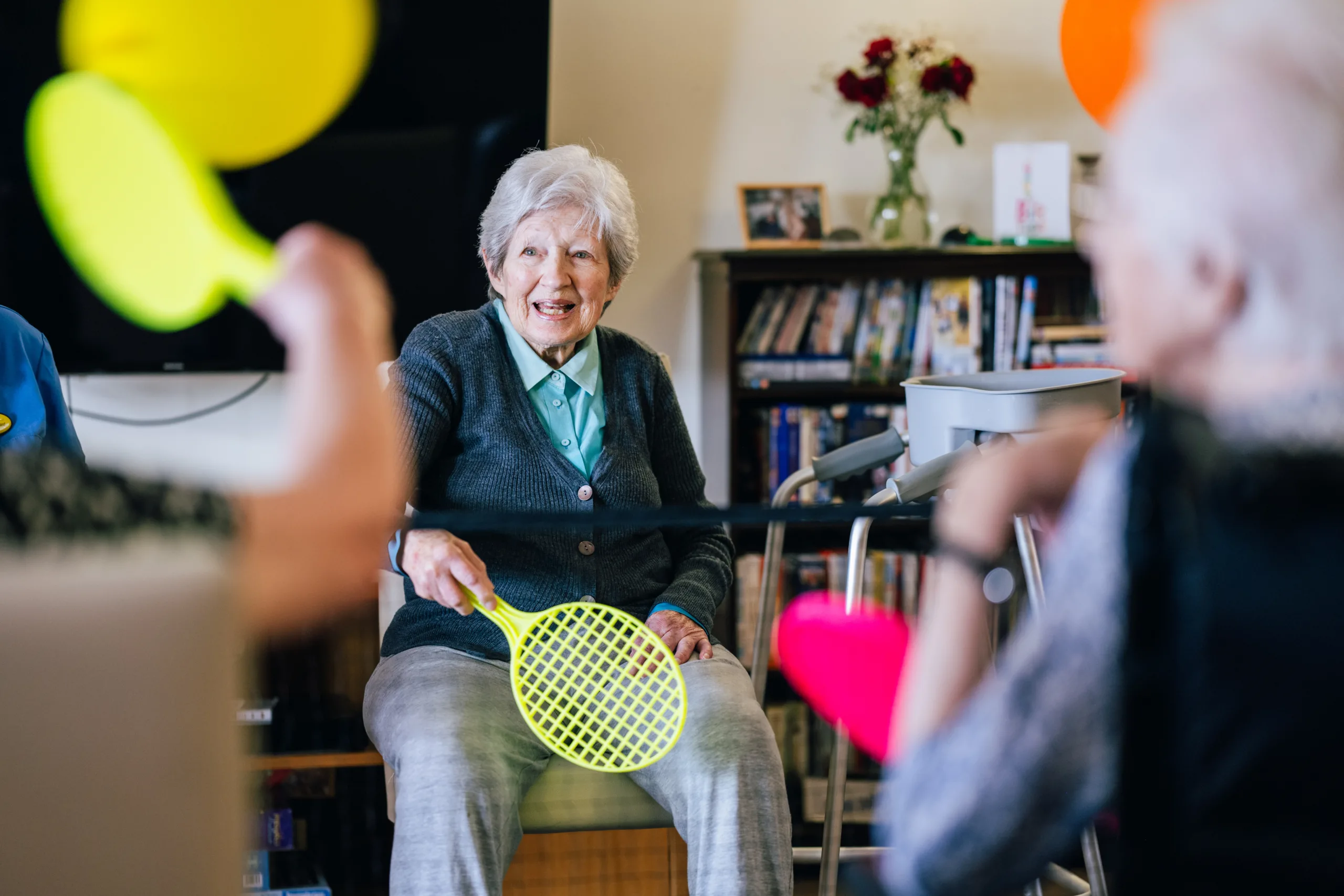
For many people, the time to seek some help comes when an individual’s dementia care needs can no longer be comfortably or safely managed at home. Whether you’re seeking support to remain independent in your own home, or considering moving into a care home which can support you to live well with dementia, the most important thing is that you receive the support you need to live the life you choose. Here are the key benefits and considerations for the three main dementia support options.
Dementia-friendly care homes Care homes for dementia fall into two categories. ‘Dementia-friendly’ care homes can support those with low-level dementia care needs to live as independently as possible within a residential setting, while ‘specialist dementia care homes’ provide expert care and support for those whose dementia symptoms are more advanced, or who need additional help to stay and feel safe. All of Somerset Care’s care homes are dementia-friendly, and able to support those with mild dementia symptoms to live the life they choose.
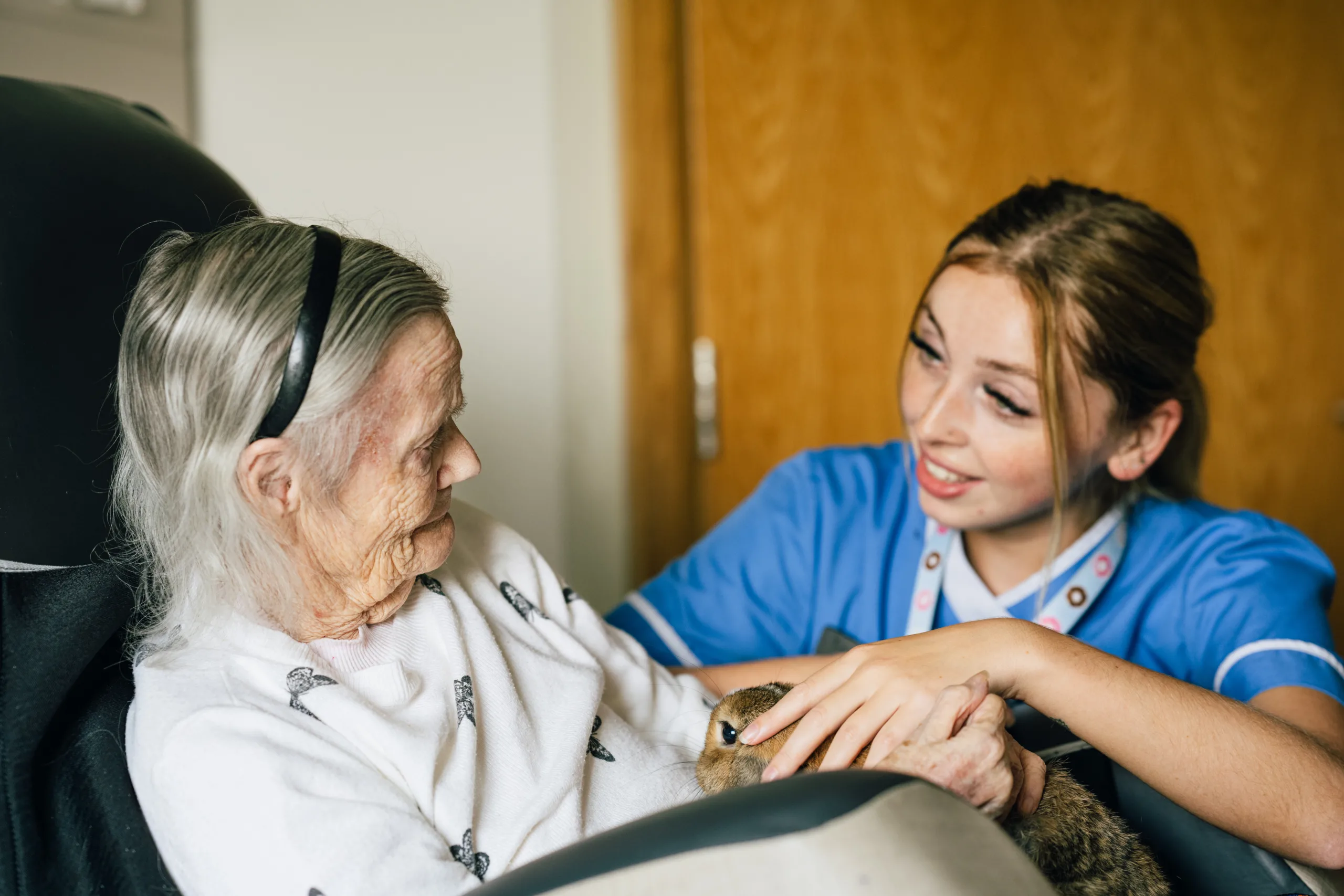
Specialist dementia care homes Specialist dementia care homes will seek to support the passions and interests of residents living with dementia, as well as provide tailored care which meets their needs. This person-centred approach to dementia care enables those living with dementia to find enjoyment and expression, and continue to lead a fulfilling life. Specialist dementia care homes, like Grovelands in Yeovil, have highly-trained, expert dementia care teams, and dedicated dementia care suites which provide safety, security, stimulation and reassurance for people living with more advanced dementia symptoms. A specialist dementia care home is a good option for those who are worried about their dementia symptoms progressing, as their expert dementia care team will be able to adjust the amount and type of support they receive, within the same, familiar setting.
Dementia support at home If you don’t yet feel ready to make the move into a care home, it is worth considering specialist dementia support which can enable you to stay in your own home for longer. This could include home care visits from specialist carers to support you with personal care or daily household tasks, or perhaps experiencing a snapshot of life in a dementia care home through day care visits or a respite break. Ultimately, the right dementia care is whatever meets your needs, helps you manage your dementia symptoms, and stay safe and well.
How to find advice and support to choose the right dementia care option Whether you have a dementia care option in mind or aren’t sure where to start, our friendly, expert enquiries team can talk you through the various care solutions available, and provide the information you need to make an informed decision about dementia support which meets your needs. somersetcare.co.uk/dementia
**UPDATE** Closing date for these vacancies is now Monday 27th October
We have exciting opportunities available to join Milton Abbey’s Health Centre as a School Nurse or as an Experienced Healthcare Assistant providing high quality care 24/7 for our pupils. The roles are diverse and rewarding and applicants should be confident to work autonomously and be keen to support and influence the lives of the young people in their care.
Full-time, part-time and bank contracts are available covering the school’s three terms leaving over 20 weeks’ for holiday each year. Successful applicants will work on a rota basis covering nights when pupils are on site (on call cover from home) and weekends (c25 weekends fall within term time). Night cover and weekend work will be distributed equally across the team.
The school offers competitive rates of pay, meals on duty and payment of NMC membership fees
Full job description and applcation pack may be obtained from our website here Working at Milton Abbey – Milton Abbey | Independent School in Dorset or from the school’s HR department on 01258 880484 or email [email protected]. Applications must be submitted on the school’s application form. The closing date for applications is Monday 20th October 2025. We reserve the right to close this vacancy early if we receive sufficient applications for the positions available.
Milton Abbey School is committed to safeguarding and promoting the welfare ofchildren. Applicants may be subject to online and other searches andsuccessful candidates will be subject to an enhanced disclosure check from theDisclosure and Barring Service prior to appointment.Please note that our school is a no smoking site.
Free school meals made from local Dorset produce could provide healthier options, reduce food miles and support farmers, suggests Andrew Livingston
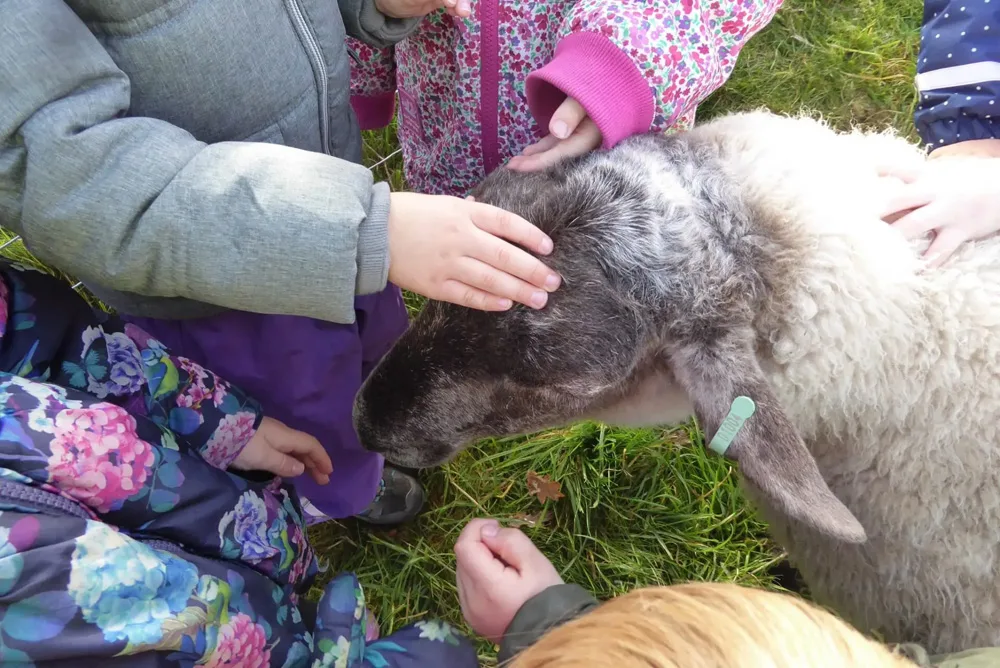
BV columnist George Hosford runs regular school visits to Travellers Rest Farm, where a small flock of sheep – kept just for these visits – happily accept toast. Daisy the ewe is known for her patience with the children, even after all the toast has been eaten. Image: George Hosford
In an age when supermarket supply chains stretch across continents, it’s easy to forget that some of the best food in the world is grown right here on our doorstep. And nowhere is that truer than in Dorset, a county blessed with a combination of rolling farmland, fresh coastal air and a proud farming tradition. With such abundant local produce, why are we not using it to address two pressing issues at once? If the Government is serious about supporting both children and farmers, then the solution is staring us in the face: free school meals, made with local produce. The free school meals programme has deep roots in Britain. It began in 1906 and the idea was simple, but radical: a hungry child cannot learn. More than a century later, that principle still holds. Today, all children in Reception, Year 1 and Year 2 are entitled to free school meals, while older pupils qualify if their families are on certain benefits. But in 2025, with almost all families struggling through a cost-of-living crisis, the debate has reignited over whether free school meals should be universal. What if the answer was in the fields beyond the school gates? Every child deserves a healthy meal at school … and what if that meal could also support the local economy, reduce food miles and reconnect children with the land? By sourcing from Dorset farms and food producers, schools could provide nutrition and education in one go. Imagine school dinners made with Dorset potatoes, seasonal vegetables, milk from our dairies and fresh fruit grown in nearby orchards. This is not some fanciful, romantic notion. It’s practical and achievable. Dorset already has a network of small family farms, many of which struggle to compete with the cut-throat pricing of supermarkets. By creating a stable, guaranteed market for their produce through school meal contracts, farmers would get a fair price and the money would keep circulating within our communities. Instead of funding imports of frozen chicken from thousands of miles away, why not invest in the hardworking families tending fields and herds just down the road?
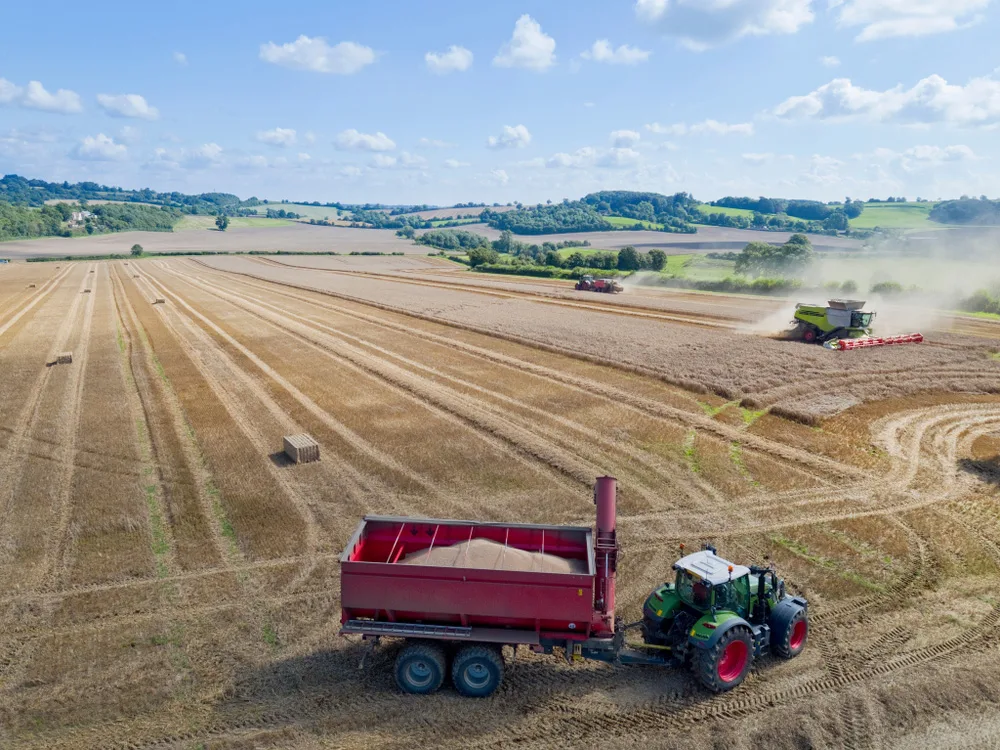
Dorset is a county blessed with an abundance of rolling farmland
There are other benefits too. Food miles are a pressing concern in the era of climate change. The less we rely on produce flown or trucked in from elsewhere, the smaller our carbon footprint becomes. Dorset-grown carrots don’t rack up air miles. Milk from the Blackmore Vale doesn’t need shipping containers. Our countryside could feed our children in a way that is both environmentally responsible and community-driven. And then there is the educational element. Too many children today are disconnected from how food is grown. Free school meals, proudly advertised as ‘from Dorset farms,’ could be reinforced with farm visits, school garden projects and lessons about seasonal eating. I would also tell farmers: ‘If you want this contract , work for it.’ Simply providing the food isn’t enough – farmers have got to be the bridge for these children into the agricultural world … they must get into the classroom and make food fun. Children could learn not just to eat, but to value food … and the people who produce it. This is about more than nutrition: it’s about fostering a culture of respect for farming and the environment. Critics will argue this is costly, but what is the cost of not acting? Rising childhood obesity, rural poverty and climate pressures will be far more expensive in the long term. Redirecting public spending towards local food is an investment in health, resilience and sustainability. Dorset can lead the way here, showing the rest of the country how schools, farms and councils can work hand in hand. We talk a lot about ‘levelling up’ in politics, but often forget that true levelling up starts with the basics – like ensuring every child has a hot, healthy meal. If that meal comes from the fields of Dorset, so much the better. Feeding our children while supporting our farmers is not just good policy … it’s common sense.
Do you agree? Should Dorset pioneer farm-to-school meals? Share your views – [email protected]
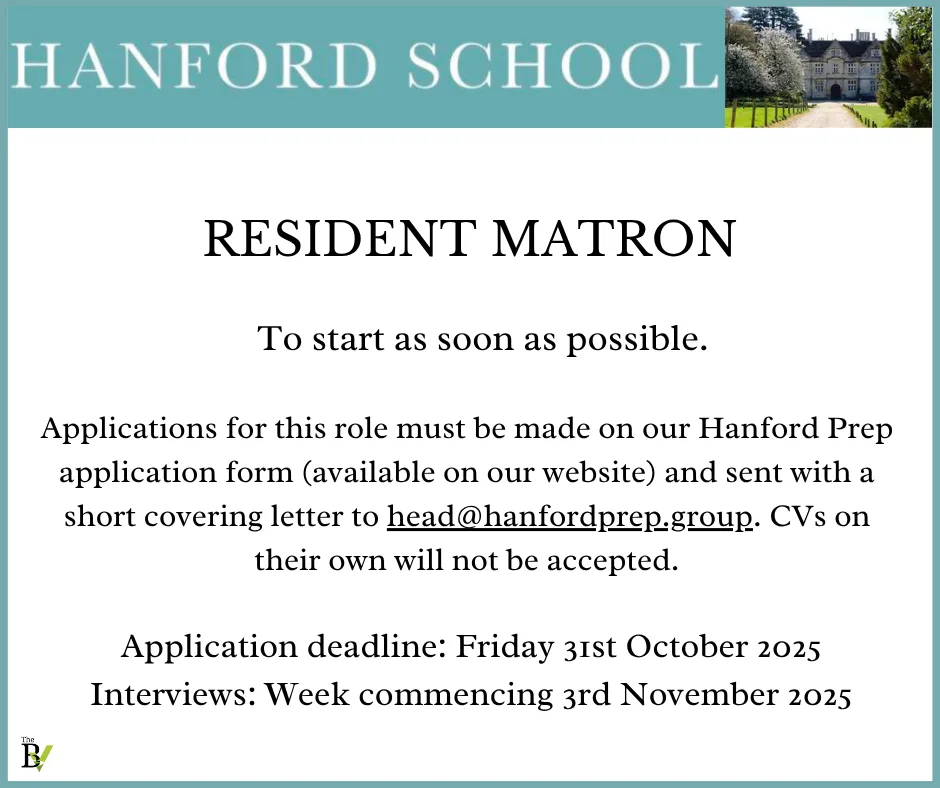
Applications for this role must be made on our Hanford Prep application form (on the PDF tab below) and sent with a short covering letter to [email protected]. CVs on their own will not be accepted.