Good news has seemed hard to come by recently, but there has been some light to lift the spirits. The unwelcome news included our MP Simon Hoare when he was found to have claimed four driving offence fines against his MP’s expenses. Boris Johnson hogged the limelight, again, with extraordinarily petulant outbursts over being found to have deliberately misled Parliament. Poor man was too upset to think about reimbursing the £245,000 of taxpayers’ money used to fund his legal costs during the investigation. Or to forego the (up to) £115,000 annual allowance he’s now entitled to receive as an ex-PM. Rishi Sunak has railed against concerned protesters, calling them ‘eco-zealots’. And he accused Labour of allowing donors to dictate the party’s energy policy of blocking new oil and gas projects – notwithstanding that large donations have been made to the Conservative Party and some of its MPs (including Sunak) by individuals and companies linked to fossil fuel interests. Labour disappointed us by refusing to support a Green Party motion in the House of Lords that would have prevented the government from using an unconstitutional manoeuvre to overturn a House of Commons vote on public protests. Instead, Labour tabled a motion of ‘regret’ – which no doubt troubled the government greatly. No wonder there are times when it’s best to switch off the news and take a break. Otherwise the many problems we face can feel insurmountable, which they are not – but we are running perilously short of time to deal with them.
In other news Some recent good news came via an unlikely source – the Daily Mail. I know, you didn’t see that coming, did you? The paper blasted Labour for having accepted donations from Dale Vince, founder of green energy company Ecotricity and a supporter of various environmental protest organisations. In response, Vince offered to match all public donations to Just Stop Oil made over a 48-hour period, which promptly raised £340,000. Well done Daily Mail! When the bad news seems relentless, it’s good to stay grounded – for example by enjoying positive community news in magazines such as this one. And reminding ourselves that we humans have the capacity to be so much better. And not only can we do better, we must. Ken Huggins, North Dorset Green Party
Climate change is all around us and it is being acted on. While vaping could be the next public health crisis, says MP Simon Hoare
Simon Hoare MP
I want to try to cover two issues this month: the first is around the environment and the second on a public health matter. We have gone through an incredibly dry weather period here in North Dorset, punctuated by just two heavy episodes of rain. From looking parched and somewhat ‘Augusty’, after the latest deluge the verges, gardens and fields are now looking a little fresher. Whichever way you look at it, our climate, and therefore the environment, is changing. It is no longer something anyone can ignore, or tuck away in the ‘too difficult’ drawer. I take the issue of climate change seriously and am proud of the record of the government since 2010 in driving forward the green, renewables agenda. We saw strong leadership provided at COP in Glasgow, have overseen a massive expansion of offshore wind and solar power generation, a focus on electric vehicles and the greening of the wider economy. There has been a significant tilt in the daily percentage of power generated in the UK from renewable sources, and a realisation that maximising domestic, renewable energy security is as important as defence or food security. The ground breaking Environment Act points the way to a more nature-rich, biodiverse and secure natural environment. We often forget that it was this government, the first among developed economy nations, that legislated for Net Zero by 2050. We are of course in a period of transition right now. Climate change sceptics point to the increase in costs to support renewable investments – and they are correct. But how much higher the cost of a degraded and destroyed world, rendered unfit by man’s own hand, for man’s habitation? I did not come into politics to witness a cultish global suicide pact. Those who are fully committed to addressing climate change worry that progress is not being made quickly enough. That all use of non-renewable power sources should stop now. Of course, the goal is desirable and attainable but we do have to keep the lights on, manufacturers manufacturing etc while we progress to that destination. Where things can be speeded up I will continue to press, but confidence in the commitment of the government to achieve progress cannot be in serious question.
On vapes and teens The second issue I want to touch on is teenage health. ‘Safe sex, don’t smoke, healthy diets, exercise, sensible alcohol consumption, no drugs’ – they are all part of the parent and carer’s mantra. It is only in recent weeks that media coverage and political narrative has turned to vaping. Somehow, plumes of dubiously sweet flavoured smoke can be inhaled and exhaled with impunity. It’s a flammable fruit juice isn’t? Perfectly safe isn’t it? Entirely harmless? Well, I would urge parents – and in fact all those who are using vapes as the ‘well it’s not a cigarette’ option – to take a look online, see some of the chemicals that go into vapes. Then ask a very simple question: if that was in food would I buy it? Let my child eat it? Government is alert to the issue and the Prime Minister is taking a lead. Locally I am particularly concerned (I declare an interest here – from September, my three children will be attending school in the town) to see two vape shops in Gillingham, one adjacent to a sweet and party shop! Two vape shops within striking distance of a very large high school – a coincidence or a deliberate marketing decision? You can probably guess what I think. I do not want, and neither does the government, to see vaping – and its potentially addictive and adverse health effects – become the next public health challenge.
For the first time in its 183-year history, the Dorset County Show is making a significant addition to its line-up by hosting qualifier classes for the prestigious London International Horse Show. This collaboration between the Dorset County Show and renowned equestrian organisations such as the British Show Pony Society (BSPS), the British Show Horse Association (BSHA), and the Association of Show and Agricultural Organisations (ASAO) aims to breathe new life into equestrian showing and attract a wider audience. The series of qualifiers consists of 20 different classes that encompass a range of categories, including Hacks, Riding Horses, Coloured Ponies, and Cobs. The classes will provide opportunities for rising equestrian stars to showcase their skills and vie for a place in the finals at the esteemed London International Horse Show in December. With only 45 county and agricultural shows across the UK chosen to host these qualifying rounds, the Dorset County Show joins an exclusive group of events contributing to this new series.
Reaching a new audience The collaboration with the BSPS, BSHA, and ASAO signifies a joint effort to revitalise equestrian Showing and increase the number of agricultural and county shows featuring equestrian classes. Over the past few years, these rural events have seen a decline in participation, making it crucial to introduce Showing to new audiences. By partnering with these organisations – that have a collective audience of over half a million – the series aims to really showcase equestrian Showing as a spectator sport to a far wider audience. James Cox, the Show Organiser for the Dorset County Show, expressed his enthusiasm for hosting the qualifiers; ‘We’re thrilled to have been awarded the chance to host qualifiers for the London International Horse Show for rising equestrian stars. It’s wonderful to be able to bring this new element of one of Europe’s oldest and most prestigious equine events to our historic show. Equestrian showing of this calibre promises to be exciting viewing for audiences of all ages.’ Nigel Hollings of the BSHA highlighted the importance of making the classes fun and accessible for everyone, whether or not they’re competing: ‘We’re determined to make them an enjoyable experience for competitors and the watching public alike. We’re requiring the commentators explain to the audience what the judges are looking for and why one horse or pony may win points over others. This will present Showing in a new light and make it much more accessible and entertaining.’
If you’re interested in participating, equine entries into the Dorset County Show are open until August 17th 2023. The show itself is on September 2nd and 3rd. Adult tickets are currently available for £19, and children attend for free. For more information and to book tickets, visit dorsetcountyshow.co.uk.
With 84 per cent of UK women feeling unheard by healthcare professionals, Dorset Mind is now offering local women a menopause pathway
Last year, the government surveyed 100,000 women for its Let’s Talk About It women’s health report. The results revealed that 84 per cent of the women surveyed felt they were not heard by healthcare professionals. And only 64 per cent said they felt comfortable discussing menopause-related issues. At Dorset Mind we are committed to challenging the stigma surrounding mental health – promoting open conversations about mental wellbeing. These discussions are beneficial in helping individuals realise they are not alone and we know it reduces the risk of suicide.
Menopause pathway As some staff and volunteers at Dorset Mind experience their own menopause journeys, we understand the impact of menopause on so many aspects of women’s lives, including mental health, empathising with the numerous challenges associated with menopause. Symptoms such as anger, irritability, anxiety, forgetfulness and low mood can affect women throughout this stage of their lives. In partnership with the NHS, Dorset Mind now offers a menopause pathway through its Active Monitoring service. This consists of six weekly sessions for patients with mild to moderate mental health issues. The menopause pathway – along with other available pathways addressing anxiety, depression, stress, grief and more – guides patients throughout their sessions. Referrals can be made by healthcare professionals. There is often no waiting list. Mery Zanutto, Dorset Mind’s Active Monitoring team leader, played a crucial role in the development of the new menopause pathway: ‘I am a former Advanced Surgical Practitioner as well as having experienced the menopause journey both naturally and finally surgically induced, so National Mind felt I was a good asset in providing both clinical and personal experience into the materials. Due to the increased awareness and demand for support services among patients in the past couple of years, we needed to be able to address and respond to the increasing number of enquiries. ‘Our new pathway focuses on perimenopause, menopause and post-menopause which, together with the two additional resources of The Role of Hormones and How to Best Manage the Menopause Treatment, will provide people with basic knowledge.’ Ensuring that women not only feel heard but also have their concerns taken seriously is essential. Throughout their healthcare journey, this includes discussions of symptoms, subsequent appointments, treatment options and follow-up care. Dorset Mind is proud to offer Active Monitoring support in GP surgeries across Dorset for individuals aged 11 and above. Currently available in 12 Primary Care Networks, the service can be accessed without a waiting list. More information about the specific GP surgeries offering this support is available on the organisation’s website
While Dorset Mind provides valuable support, it’s important to note that GPs remain the primary resource for clinical guidance.
It’s been a long five months, but June finally saw the end of the season at the stud – Lucy Procter explains just why the team are so proud this year
Waiting for breakfast Image: Lucy Procter
So that’s a wrap for the 2023 season! It began on 23rd January with the arrival of Solitairy Girl’s Jack Hobbs filly. Keen to get started, she arrived 18 days early. The foaling season finished on 15th June with a visiting mare foaling a Dartmouth colt, our 18th foal of the season. The foaling cameras were turned on in early January, and we have been watching all night for more than five months. There have been frantic flurries of activity in the foaling stables. On one night, three foals decided to start arriving at the same time. There were short periods when no mares were looking imminent and we had a few nights’ sleep!
Vet Paul Legerton at the Glanvilles Stud Wassail, trying not to share his champagne All Wassail images: Courtenay Hitchcock
Ten days after foaling, our vet, Paul Legerton, scans each mare to check she has had her ‘foaling heat’ (first season after foaling). At this scan, we decide when to look again, in order to track the mare and cover her on her second season, usually two to three weeks later. When Paul declares a mare is ready, we drive her to stud to be covered by the stallion that has been chosen, in order to get her back in foal for next year. With a number of ‘empty’ mares (no foal at foot, either because they are maidens or they were left empty the previous season) to add to those that were being covered after foaling, the lorry has been very busy. One day we had three mares all lining up to be covered in the same 24-hour period; twice the lorry returned to the yard and left again half an hour later. I drove the middle stud run so that Doug could get some sleep and rest before setting off again on the third. It’s all in the timing The mares travel extremely well in the lorry, with or without a foal at foot – the foals always come too. We’re lucky that the stud is just half a mile off a main A road and apart from a couple of small towns to wiggle round, we can be on the A303 in half an hour or on the M5 within an hour. Most of the studs we used this season have been a three to four-hour drive away in Worcestershire or Hertfordshire.
The teenagers are starting to gang up Image: Lucy Procter
However, we took one visiting mare to Falco in County Durham! As we were driving such a long way for the cover, Paul came in at five in the morning to scan her before she left to double-check that she would be spot on for a cover later that afternoon. After that particular drive, we were all incredibly pleased when Paul scanned her in foal two weeks later! It’s been in incredible season. The visits to the stallions were perfectly timed for all the 23 mares covered this season. Every mare except one (an elderly mare in her 20s) was ovulating within 48 hours. The mare who hadn’t ovulated within this ideal timeframe was driven back to stud for a cross-cover, ovulated the following day, and was scanned in foal a fortnight later. Only one mare had to return to stud for a second cover, having scanned not in foal the first time. One other mare, having been given two months to recover from a particularly difficult foaling, was not in foal after her first cover and, as it was getting late in the year, the owners decided to leave her empty and go for an early cover next year.
Lucy Procter with one of this year’s foals
Phenomenal stats Our job, in essence, is to get a live foal out of a mare and then get her back in foal as soon as possible so that, with an 11-month gestation period, her foaling date stays almost the same each year. To get the mares back in foal, we are very reliant on the skill and experience of our vet, Paul. Between us this season, 22 of the 23 mares covered have since scanned in foal, with 21 being on the first covered cycle. These are phenomenal stats of which we are incredibly proud. With an additional three non-Thoroughbred, artificial insemination (AI) covers scanned in foal, and four which are still to confirm pregnancies, we have at least 29 mares either resident or returning to foal next season at the stud. Spring 2024 is likely to be super busy!
The TGS Wassail To celebrate the end of our foaling season, we held our annual Team TGS barbecue which coincides with Racing Staff Week (the racing industry’s opportunity to say thank you to all who work for the greater good of the Thoroughbred in racing yards and on stud farms). We have created our own tradition, a twist on the traditional West Country practice of Wassailing the cider orchards to help ensure a good harvest of autumn fruit. We kicked off the evening by driving up the stud and raising a glass of the boss’ favourite champagne to toast the good health of our broodmares and their youngstock. We were joined by editor Laura and photographer Courtenay (happy birthday Laura!) so that finally Laura got to join C in cuddling his favourite foal, Sambac. Looking out across the stud, watching the happily-grazing mares and foals and knowing these paddocks have already produced two Grade 1 winners and multiple chase, hurdles and flat winners, we can’t help but wonder which ones of these will be our next racing superstars …
Catherine Southon was the expert filming a shopping trip in Sherborne Antiques Market – Terry Bennett spoke to owner Craig Wharton
L-R: Philip Traves, Catherine Southon, Craig Wharton
Probably everyone has seen the odd episode of ‘Antiques Road Trip’ on the BBC. The show recently visited Sherborne, and the historic town got to witness a proper treasure hunt as presenter and expert Catherine Southon took to Sherborne Antiques Market to find some items. The market – renowned for its witty and extravagant window displays – hosts 38 dealers currently, and is laid out in ‘rooms’, with each independent dealer having their own space to use as they wish. BV podcaster Terry Bennet spoke to owner Craig Wharton to get some insights on their day of filming, as well as hearing how Sherborne’s biggest antiques shop came to be. ‘It all started during COVID,’ says Craig. ‘I was a dealer and had decided it was about time I had my own market. Phillip, my partner, was working at Dukes in Dorchester. Initially, I was going to open on my own. But Philip decided that his time as an auctioneer was done and wanted to join me. ‘We went for lunch with Paul Atterbury and his wife, Chrissy, who Philip had been working with for some time. I used Paul as a sounding-board and asked if he might hypothetically join a market if a market was hypothetically going to open?
He said: ”Why, are you thinking of opening a market?” I said: “Yes – but I haven’t actually told anybody yet!” And Paul said: “Yes, I’ll join you.” So he became my first recruit! ‘It was a leap of faith really. Antique dealers normally like to hunt on their own, to trade on their own. However, the market works because the shop is open seven days a week.’ And what is Craig’s own speciality? ‘Philip’s an excellent furniture restorer. I would like to say that I’m a specialist in furniture – but I know so little compared with the people I work alongside. I’m probably a decorative dealer. There’s no shame in that! I look at something and think yes, that can be used in the home or the garden. It’s beautiful. Could I live with it? Could I sell it? And, more to the point, could I make a slight profit on it? I tend to buy furniture, pictures and items that are unusual for someone’s home. I sell a lot to interior designers who use us as a source of stock.’
Philip and Craig in their own window. Image: Courtenay Hitchcock
Do you only buy things that appeal to you? Or is it more scientific than that? ‘I don’t think there’s any science to it at all! Certainly not where I’m coming from. I do buy what I like but I also buy what I know will sell. Everybody needs a chest of drawers. People also need somewhere to put their computer. We’ve seen recently, with the move towards laptops, that people are beginning to buy bureaus again. Personally, they’re not my choice, but I know that they will sell! They’re functional and beautiful. I suppose if I do have a mantra, it would be “practical and pretty”. Everything should be usable. And it should look lovely.’
Sherborne Antiques Market is filled with 38 dealer’s ‘rooms’
On cameraThe BBC recently arrived to film an episode of the Antiques Road Trip – can you share any insider info on the day?‘A little! Catherine Southon was the expert on the day, and she was wonderful. She’d been filming in the morning and when she came into the shop she looked exhausted. She just said “Help me! What am I going to buy?”‘Philip was the one actually doing the filming, and he just took her arm and pulled her along, showed her a few things, and he also took her upstairs to show her where we restore our furniture – these things have been around for maybe 200 years. We like to give them another lease of life! ‘She loved it up there – she’s an auctioneer too, of course. It’s theatre, obviously, it’s all made for television. So they’re expecting to show the general public that there’s a deal to be had. And in the main there is. If something’s priced for, say, £110, you know that you can drop by £10 pounds and everybody’s happy. But of course, when you’re being filmed for television, you do drop a considerable amount – let’s face it, if she wasn’t able to buy anything, there wouldn’t have been a television programme! But she was very, very pleasant. They all were – the sound people, the camera people. They were super, it was a lovely experience.’And how long does the filming for what will probably be five minutes of screen time take?‘Well, I think it could have gone on a little bit longer. But we had tickets to go to the opera that night. So I said to her, I don’t care what happens. We are leaving here at half past six! They all burst out laughing. But they turned up at lunch time, and by half six they were ready to go.’Can you share one final tip, then, for somebody wanting to go and buy an antique and keep it for a few years in the hope of a sound investment? ‘Oh, heavens, if I knew what was going to be in fashion in ten years time I certainly wouldn’t be restoring furniture and doing what I’m doing now! All I would say is if you’re going to keep it, buy something you absolutely fall in love with. Buy something that, if you haven’t bought it by the time the shop closes, then all you do is think about it all night. Go back and get it because it’ll pay you back dividends, no matter the value.’
Tracie Beardsley caught up with Michael Murty, the man at the wheel of the world’s biggest monster trucks as his team prepares to rev into the main ring
Is this Dorset’s biggest larder? With a super-sized new Food Hall and more than 100 producers, we’re thinking: ‘Yes, yes, it is!’
Brilliant and unmissable, The Sheep Show hilariously highlights the importance of wool and the truth about sheep farming … while debunking certain sheep-related myths
Get set to cheer your favourite team – as the Pony Club Mounted Games gallops into the Dorset County Showground for the first time, we find out what happens during the exciting speed games
Meet Dorset’s soap star Kirsty Hearne (and more importantly, Honeybee the matriarch) – creator of a thriving artisan cottage industry selling goats’ milk and the soaps she makes from it.
Planning your visit? Don’t miss the Show Map and Timetables, ensuring you don’t miss a thing during your visit. Make notes and set a plan of attack – it’s a BIG show!
Take a nostalgic stroll through the showground with farmer and columnist Andrew Livingston
If you’ve not got them yet, don’t forget to book your tickets NOW: TICKET DISCOUNTS END ON FRIDAY 1ST SEPTEMBER 2023! Get ready for an unforgettable experience at the Dorset County Show 2023. We can’t wait to see you there!
Gardener Barry Cuff shares his June allotment diary – and admits to a little midnight raindance when the good stuff finally arrived
What a wonderful surprise to wake up in the early hours of Tuesday 20th June and hear the rain. I was so pleased that I put on some clothes and went and stood in the garden to enjoy it for a few minutes! It was a lovely hard rain, exactly what was needed to revive the plants and seedlings – after about 40 days of little-to-no-rainfall it was appreciated all round! We had about 1.2 inches, and an amazing amount of growth was made after the rain. On the allotment, we have a 12 to 14-foot-deep well which supplies seven raised 1,500 litre tanks and two 1,000 litre tanks – all of which are connected to cattle troughs fitted with ballcocks. During June’s dry spell, water was pumped at least five days a week to meet the demand of plot-holders.
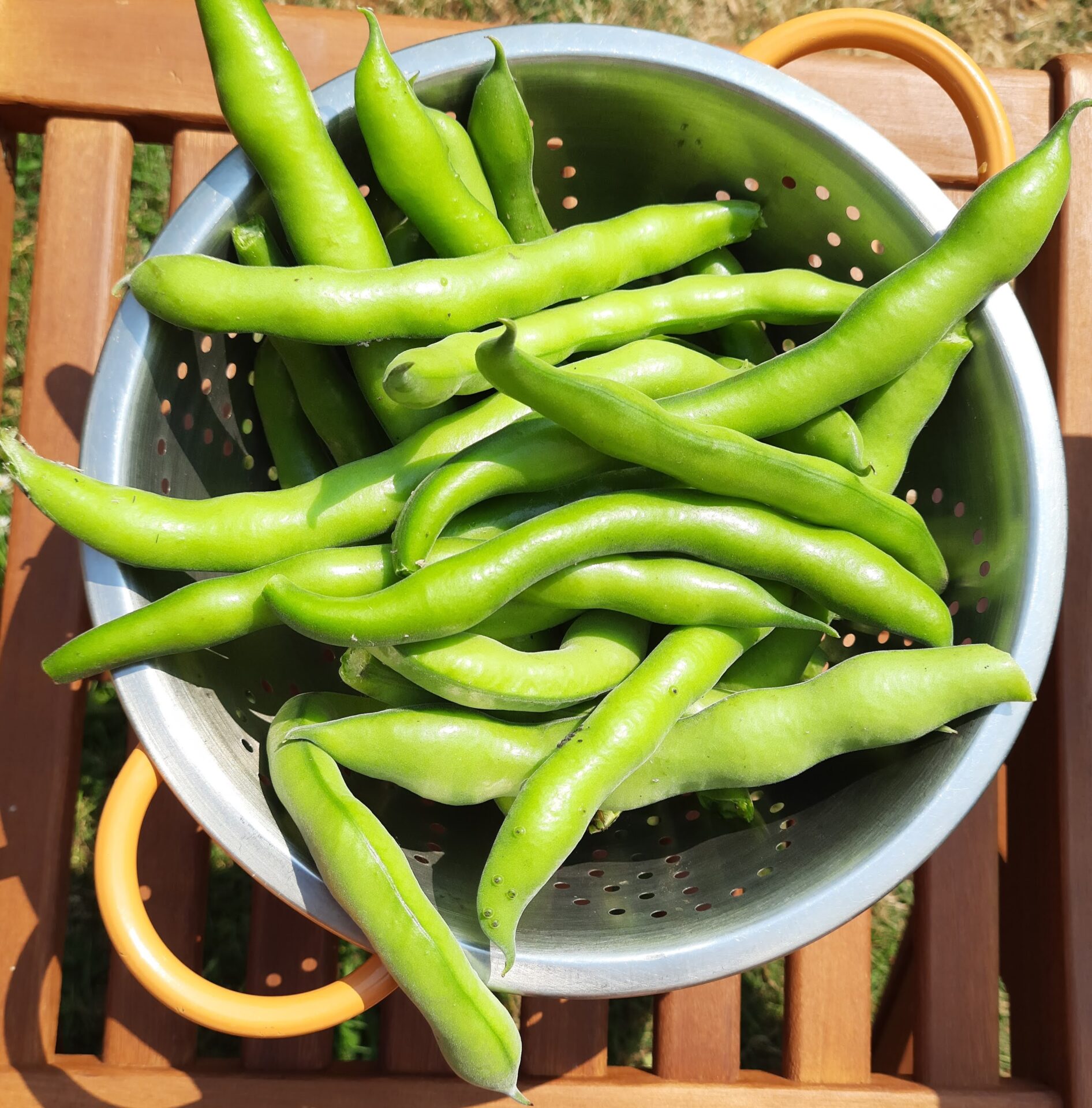
June diary 2nd – Planted out 22 Swift sweetcorn to bring the total to 52 plants. Water. 3rd – Side shoot and feed greenhouse tomatoes. Cut lettuce. 4th – Dug one plant of Jazzy potato (planted earlier than rest of crop). Got 17 good-size spuds plus a few small tubers – a very tasty ‘new potato’. Planted out two Defender, one Black Beauty and one Astia courgettes. Water. 5th – Water. 6th – Planted out 10 Cornichon de Paris gherkins, one Sweet Dumpling squash, four Butterfly Winter squash, four Crown Prince squash. Cut lettuce. Sowed Witloof chicory, coriander, Moulin Rouge beetroot and Early Nantes carrot. Water. 7th – Water. 8th – Water. 10th – Water. 11th – Cut lettuce, water. 13th – Dug three Maris Bard early potatoes. Water. 14th – Planted out from plugs a block of Little Gem lettuce. Feed tomatoes and peppers. Water. 15th – Water. 16th – Picked first two Defender courgettes and also the first broad beans (Masterpiece Green Longpod and Witkiem Manita). Pulled more spring onions and cut lettuce. 17th – Water. 18th – Hand weeding and hoeing. Water. 19th – Sowed French Breakfast radish. Water. 20th – RAIN IN NIGHT! Sowed Purple Magnolia and Carouby de Maussane mangetout peas. Sowed in plug trays Medallion cauliflower, Vertus savoy cabbage and Natalino Romanesco. 21st – Planted out a block of celery, consisting of 11 Tango and 28 Green Utah plants. 23rd – Planted out 20 Monarch celeriac. Dug Jazzy and Maris Bard potatoes. Pulled spring onions. Picked broad beans. Harvested garlic. 24th – Hand weeding and hoeing, cut lettuce. 25th – Planted out cauliflowers; Snow Prince, Cheesy and Cendis. Thinned parsnips and chicory. Hand weeding. 26th – Planted out Ironman calabrese. Sowed White Lisbon spring onion. Picked broad beans, pulled spring onions and cut courgettes. 28th – Picked first peas and more broad beans. Dug two plants of Maris Bard. 30th – Picked first tomato from greenhouse (Santonio)! Cut courgettes, pulled spring onions. Dug remainder of Jazzy potatoes. Planted out Cardinal and an early purple sprouting broccoli. Planted out a block of lettuce.
Fruit We picked strawberries for two weeks but they finished quickly due to the drought, despite watering them well. We started picking blackcurrants around 22nd.
A team of pupils from Thornford Primary School is celebrating after making it to the national finals of the Pokemon Primary School’s Cup!
The Thornford team were made up of Louis (goal keeper), Isaac (captain), Lenny, Zac, Billy, Jaxson, Reuben, Zac WT, Ruben and Benji.
The Year 6 pupils from Thornford began their journey to the King Power Stadium by winning the North Dorset Small Schools tournament in January. This meant they represented Dorset in the south west Regionals. Impressively, it’s the second year running the village primary has reached this stage. They finished top of their group to advance to the semi-finals, which they won in a penalty shoot-out. Ultimately the team narrowly lost a closely-contested final, but were thrilled to discover that the top two schools from the south west would progress to national finals. Thornford teacher Sarah Gibbs, says, ‘The boys were incredibly excited about the trip to Leicester, and the commitment from the parents was amazing. The pupils travelled the night before – one family even cut their holiday short to ensure their son wouldn’t miss the match!’
National finals Competing against the top eight teams from across the country, Thornford achieved a highly respectable 5th place in the national finals. Even more remarkable considering that Thornford Primary, a small rural school in North Dorset, has fewer than 65 pupils in Years 5 and 6 – less than half the maximum allowed for small schools. Sarah continues, ‘The day will be a lasting memory for the boys. The camaraderie they developed is exceptional, and they have all grown into enthusiastic and skilled young sportsmen.’ Jerry Ridout, who has voluntarily coached the school’s football team for the past eight years, played a pivotal role in their success. His youngest son left the school last year, but Jerry agreed to stay for one more year to coach the team. He says, ‘The boys are a credit to the school and their families. They have worked incredibly hard, and each one of them has contributed to the team’s success. It has been an absolute pleasure to be part of this journey, which I hope they will remember for years to come.’