Summer at Thorngrove has arrived with its usual riot of colour – and the never-ending task of watering, says Kelsi-Dean Buck
Summer has officially arrived and oh boy have we felt it! Despite those odd spots of wind and rain, the heatwave really let us know that June was in full swing, and the summer season was upon us. What’s there to say? Stunning weather, BBQs, catching up with friends long into the evening …for many this is the best time of the year. At Thorngrove, it’s the little things that you often don’t think would be a big deal, that catch us. Just watering our plants during the hot periods is a gargantuan task. Some plants need a drink twice a day! When you think about the thousands of plants we have …yeah, that watering time really adds up! The glasshouse and nursery teams really do have their work cut out for them during a heatwave, but we’re pleased to say their care and hard work means the plants are looking more lush than ever. Remember to take care in your own gardens if you’re working in the heat – stay hydrated, invest in a good sun hat, take breaks, and don’t forget the sun cream. We often put the care for the things we love ahead of ourselves, and no garden is worth heatstroke, trust us!
Blowsy summer Wandering through the courtyard and glasshouses during the summer in particular really can take your breath away. It’s not that there’s a favourite time of year, but each season brings something different and summer is all about an abundance of colour with plants vying to be the centre of the attention. Last month we mentioned the roses, of course (click here for a little video!), but there’s all kinds of summer plants which are just begging to seen and stand out from the rest. While we spend plenty of time trying to sell our beautiful plants to you, we wanted to take another moment to remind you that we now have a huge range of garden furniture available from Thorngrove. There’s still plenty of time to take advantage of the summer evenings, and if you’re having friends or family over, or are just seeking a new hanging chair for yourself, we’ve got you covered. High quality dining sets, loungers, fire pits and more. Your dream summer garden is something we’d love to help create, so please do visit our online shop, or pick up a brochure the next time you visit.
Successful, long-lasting weight loss is never about the ‘perfect’ diet, being hungry or weird food rules, says nutritional therapist Karen Geary
Karen Geary sticks a daily post-it on her fridge with her day’s menu
If you are one of those ‘all or nothing’ types, especially when it comes to going on a diet, chances are that permanent weight loss has always eluded you. Add mid-life hormone challenges or other life stressors into the mix and it can become particularly disheartening. If you think you have to follow the ‘perfect’ diet (whatever that is), chances are that this very idea is holding you back from achieving your weight loss goal. Perfectionism generally backfires at some point as it is just not sustainable. The desire to be ‘perfect’ means that you didn’t do what you wanted to do simply because you couldn’t do it ‘perfectly’. Generally it goes like this; you decide you were not ‘perfect’ today so you resolve to start tomorrow/Monday/next week – and then you’ll do it ‘perfectly’. But it never happens – or if it does, it is unlikely to be for more than a week. Weight loss is a mind game – this means mental health is a priority when it comes to losing weight, and placing unreasonable expectations on ourselves just creates added stress. Good mental health also relies on hormone balance and a healthy gut function – nourishing yourself properly is therefore absolutely essential.
It’s a trap What is the ‘perfect’ diet anyway? Is it some fad diet from the Daily Mail? Eating superfoods? Intermittent fasting? No. It is none of these. The ‘perfect’ diet is the one you can sustain, day in, day out, for the rest of your life. It is about being consistent. Yet we can all fall into a diet trap, where we torture ourselves with weird food rules, subject ourselves to yo-yo-ing blood sugar, get so hungry we will eat anything, possibly accumulate nutritional deficiencies – and end up exactly back where we started. The way out of this is to recognise that there is no quick fix. Instead you must give yourself time to discover what is right for you long term. It means doing the best you can, using days to your advantage when you feel really motivated. And those days when things are not so great, to feel OK about having that chocolate biscuit, and that is ‘good enough’! Weight loss is not a ‘perfect’ road.
Here’s the practical guide on being ‘good enough’ that I work on with my clients:
Create a meal plan Decide what and when you are going to eat and try to stick to it 80% of the time. Meal planning stops you from torturing yourself with that conversation you have with yourself in your head about ‘what to eat’, and whilst you decide, you go and eat a few biscuits. Choose a time when you are not hungry to do this. I meal plan weekly because it keeps the shopping bills down. Daily, I write it on a post-it note and stick it on my fridge (see image opposite). It also tells my husband (and hungry teens! – Ed) what we are eating today as I’m the cook and it stops him from haunting the fridge. Plan your snacks too if you like to snack.
Check your portions Using your hands is less stressful than counting calories/points/syns. Include the following in every meal:
palm size – a portion of protein.
cupped hand – a portion of carbs (grains and fruit/veg). If it is just vegetables, double the size.
thumb – a portion of fat
Snacks should ideally be high in protein and fat – for example nut butter and apple, or Greek yogurt and fruit. Protein and fat is more satisfying and may help prevent your snack from becoming a full on fridge raid.
Sit down to eat Stay off your phone and don’t watch the TV. Food is to be enjoyed and is generally a sociable time with family and friends.
Get rid of the scales Whilst it has been proven that people who weigh daily are consistently more successful at achieving their weight loss goals, for some a ‘bad’ number can trigger going off-plan. If that is you, then a tape measure is your best friend. If your waist measurement is half your height or less, you are in a good place metabolically, with a lowered risk for cardiovascular disease, high blood pressure and diabetes. Measure yourself weekly.
shutterstock
Have a back up Know what you are going to do if you go off-track. Note what happened and why – but do so without judgement. Your whole day is not ruined. Just carry on with what you were planning to eat for the rest of the day, or go again tomorrow. All your progress is not undone – you are simply human. I have a plan If you are the type of person who likes the inspiration of a done-for-you meal plan, I have put together a no-fuss Summer Plan, so you can enjoy the best of the summer with minimal kitchen time. You can download it from my website here.
The 1950s green ‘wonder foam’ for flower arrangers is not actually green at all, says flower farmer Charlotte Tombs
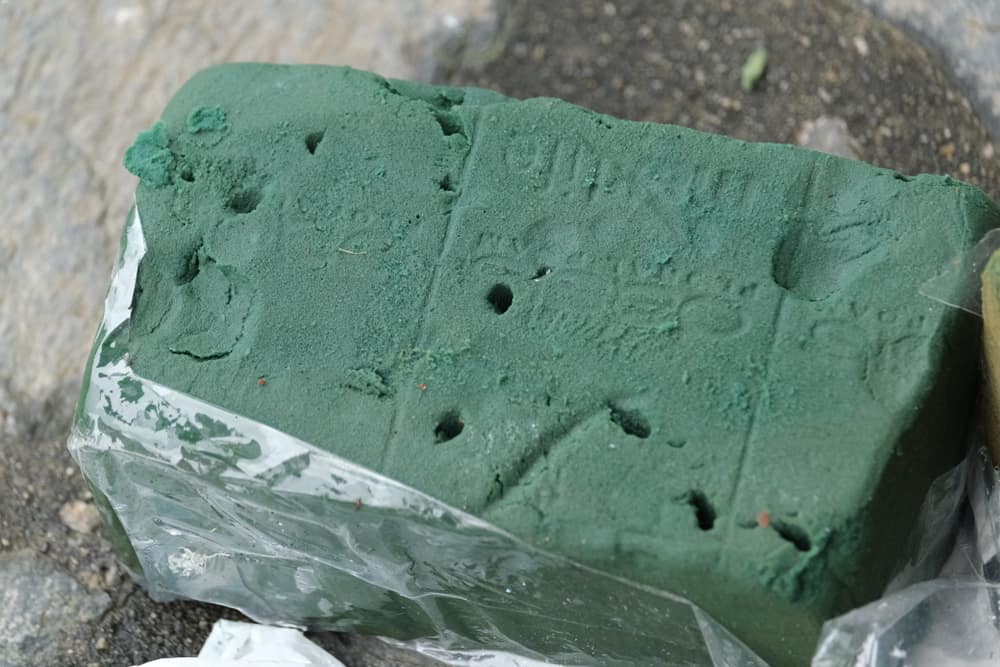
Chemical flower foam crumbles as it ages, causing micro-plastic pollution
Oasis. No, not the 1990s Brit band but the green blocks of crumbly square foam much-loved by flower arrangers. This squeaky plastic monster was a revolutionary wonder-product back in the 1950s, when it replaced those metal spikey frogs our grannies all had under their sinks. Oasis is made from the reaction of phenol and formaldehydes which are turned into foam when air is passed through. This is then treated with detergents to give it the ability to soak up water. It’s a chemical nasty which just keeps on giving. As it ages it either breaks into tiny pieces which run down your plughole, or it goes in to landfill. And although it crumbles, floral foam doesn’t fully dissolve in water or degrade in landfill or soil. Instead, it breaks down into smaller and smaller micro-plastics. These can take thousands of years to completely revert into natural elements and are a real menace for the environment by contaminating our marine life and food chains. Its horrors are now so widely accepted that The Royal Horticulture Society (RHS) banned the use of floral foam at all its shows from 2021. A ‘single use, non-biodegradable, micro plastic that can’t be recycled’ is frankly a sentence of expletives to any green gardener. The Church of England’s legislative body has also been asked to consider a ban on floral foam in their churches.
One of Charlotte’s eco-friendly arrangements of her own flowers Image: Charlotte Tombs
Please ditch the foam As a flower farmer, I grow my flowers in the most sustainable way I can. I grow a huge variety in all different shapes and forms to try and cater for as many pollinators as possible. It feels so wrong, then, that a plant I grow would be jabbed into such a toxic product. Luckily, a lot of florists have seen the light! There is an ever-growing array of great ideas for supporting cut flowers: in cucumbers, tightly packing moss into chicken wire (which can then be moulded into the shape that’s required), a grid made with compostable tape on top of the vase, filling the vase first with stiffer foliage … All of these methods take time to get used to but are equally as effective as using floral foam. And as a bonus you can have that warm fuzzy feeling that you are doing the right thing. Obviously, before the 1950s and the invention of floral foam, flowers were arranged and displayed using all of these methods. Search Google for ‘eco-friendly flower arranging’ for a host of inspirations, and try charity shops, antique stores or eBay to find your own vintage options. Failing that, they even now make those vicious metal frogs in plastic. At least they are not single-use.
How can I dispose of my own used floral foam properly? Oasis is hard to dispose of environmentally and can seriously contaminate compost, garden waste and water when its fragments end up in the wrong place. So here’s what you need to know about its disposal: Don’t put it in the compost or garden Water containing bits of foam should never be poured down sinks, toilets or drains: pour it through an old pillowcase, cloth or tea towel to capture as many of the fragments possible. Place the remnants in landfill-bound rubbish and pour the strained water into a hole in the garden.
Charlotte offers workshops throughout the year – please see northcombe.co.uk for further details.
When was the last time you saw a toad in the garden? Writer Jane Adams raises the alarm call for our endearingly ugly, slug-loving splodges
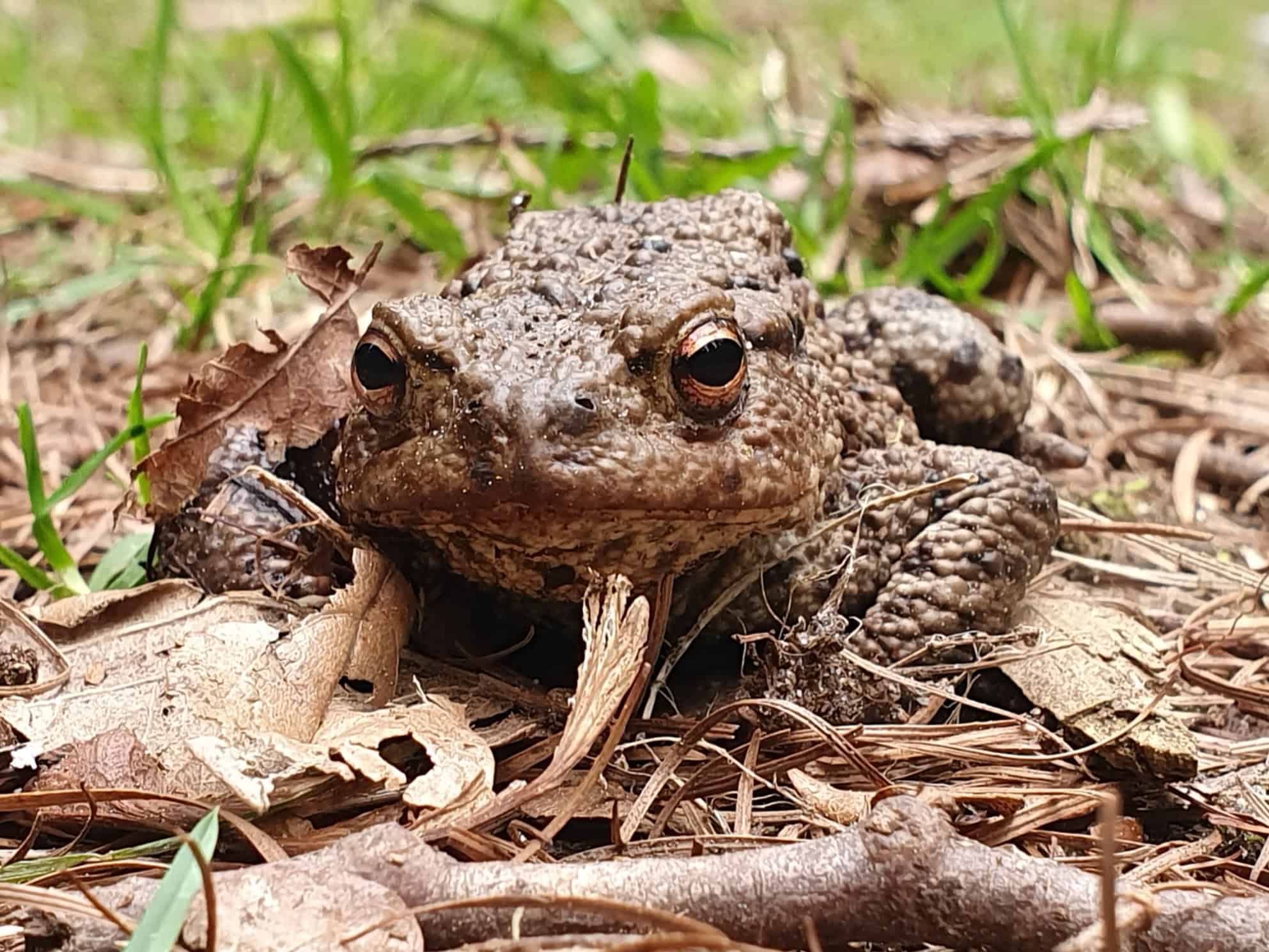
Common toad. Dorset, UK March – Shutterstock
As I drag out the recycling bin, a splodge the colour of pond water is looking up at me with copper-coloured eyes. A common toad. You rarely see them nowadays, but with their warty skin and bulging eyes, they’re an endearingly ugly and harmless creature. This one’s no bigger than a two-pence-piece and it’s winking at me.
Are they doomed? If you have an abundance of plants in your garden, with maybe a few areas of longer grass, the chances are you’re already sharing it with frogs, newts and toads. Many amphibians spend their lives away from water, only meeting at ponds to mate and spawn. The rest of the time, they’re surreptitiously chomping their way through considered pests, like slugs and snails. My toadlet lollops under a hydrangea and instantly disappears. If it keeps away from predators, it could survive ten to 12 years – longer than most people keep a car or live in one house. However, their numbers in the UK are declining (by 68 per cent just in the past 30 years) and in the last 100 years, thousands of the ponds they once used for spawning have been lost. Pesticides are killing slugs and other invertebrates they rely on for food and they’re being run over on the way to the few remaining spawning ponds. Toadlets emerge from ponds in June and July, so if you find one, think yourself lucky. This ugly Prince Charming could be a long-term, pest-eradicating tenant if you provide it with the habitat it needs to survive. If you don’t, it and the other amphibians we think of as ‘common’ could be gone in the wink of a coppery eye.
The common toad Image: Vanessa Wright
Encourage and protect garden toads
Don’t use pesticides. Let amphibians, birds and slow worms do the work for you. Provide them with a cool, dark, damp shelter. Let grass grow a little longer and pile up stones, logs and leaves in a shady area. Include water. A pond (of any size) is not only vital for amphibians but also for insects, birds and mammals. Be careful when you cut. Toads, slow worms and even hedgehogs are hard to spot – check before cutting longer grass. Drive carefully in areas near to spawning ponds – especially between January and March.
The second episode of July’s BV Magazine Podcast is out now – just click the play button to listen. If you’ve not had a chance to click through the July issue yet, then why not settle somewhere cool for 30 minutes of catch up?
In this episode:
Maggie Ollerenshaw, the acclaimed British actress, takes on the Random 19 questions Maggie Ollerenshaw, a proud Mancunian now resident in Stalbridge, is perhaps most famous for playing comedic Northerners, particularly in the sitcoms Last of the Summer Wine and Open All Hours
“The best guitarist that I have ever seen live” – Dorset Island Discs with Philip Coward Philip Coward is chairman of Hillbrush, sits on the Royal Warrant Holders Association executive committee and has been a Mere councillor for 46 years
The alchemy of the glassblower The Venetian art of glassblowing is little changed in 800 years. Edwina Baines visited Emsie Sharp’s studio in Child Okeford to interview the Murano-trained artisan
Local politics round up: North Dorset Labour’s Pat Osborne laments the undermining of rigts to peaceful protest. North Dorset Green Party’s Ken Huggins shares his thouhts on Boris Johnson, written before the PM resigned. And North Dorset Lib Dems’ Mike Chapman refelects on recent events in Westminster, with a bleak reference to America’s second Amendment.
Blandford Hospital and the Case of the Sozzled Servant Roger Guttridge finds the cottage origins still visible within Blandford’s hospital, and discovers the very first patients
The ‘fat old woman at the toll-bridge’ Roger Guttridge shares the second part of his dive into the Thomas Rackett Papers
Massage isn’t necessarily about scented candles, gentle pan pipe music and trying not to fall asleep, explains expert Mel Mitchell
Regular readers will remember May’s articles in which I spoke about the fundamental movements we use in everyday life. This month I thought I would explore in greater depth what is often described as the king of all exercises – others known as The Squat! The squat is one of the most effective exercises anyone can do. Not only does it train every muscle in the lower body but it also works the upper back and core. Most of us don’t really think about ‘good squat form’ as we come up and down from a chair (which essentially is squatting!). But what does make a good squat?
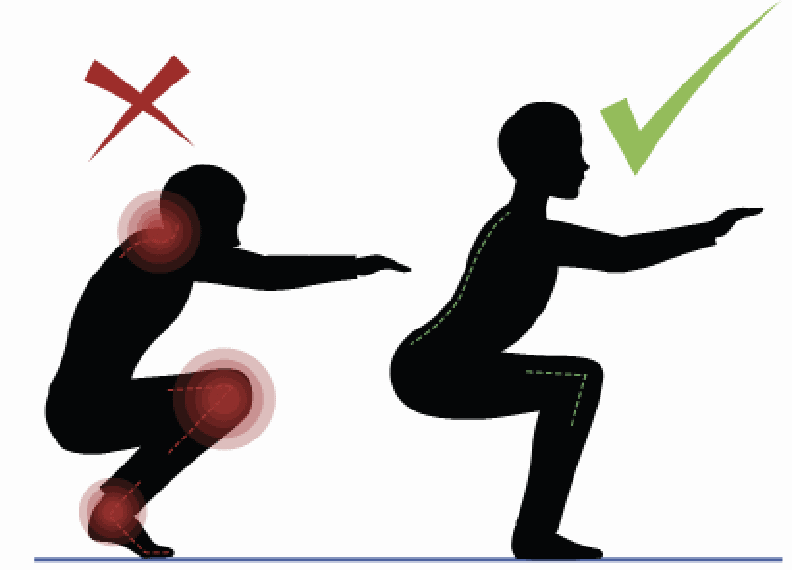
No rules Believe it or not there is no one best way to squat, and it should be tailored to the individual. If you watch a dozen people squat, you’ll see each of them will squat differently, particularly in terms of their stance. I often adopt the penguin stance with my toes pointing outwards. Does this mean my squat is any less efficient? Absolutely not! Essentially, as long as your squat meets the following criteria, chances are you have good squat form.
Lower the crease of your hips to below your knees
Neutral spine
Weight evenly distributed between the ball and heel of the foot.
When coaching squats, I often cue people to stand with feet shoulder-width apart, but even this may need to be adjusted depending on the individual’s natural stance. One of the most important things is that you keep your back straight with your chest up, keeping your spine in neutral. Squatting with rounded shoulders or having your chest down is not only less efficient but could lead to injury when squatting with added weight. Squatting with your chest down means your weight is going through your toes rather than your mid foot. There also might be a tendency to lift your heels as you go deeper into the squat. Try transferring your weight more towards your heels and you may find that not only does your chest lift, but you’ll feel more stable.
Why did we stop eating the Fat Hen, wonders expert Carl Mintern, who is celebrating the season for finding the jewel in the mushroom-foraging crown
One of the jewels in the mushroom foraging crown, the Chanterelle (Cantharellus cibarius)
July is here and we are in the full swing of summer, with the call of our gardens and the great outdoors as strong as ever. I find myself suggesting walks to my wife and children most evenings, exploring woodlands and footpaths, always with a glint of excitement at what I might find to bring home to use in the kitchen.
Eat the fat hen One such exciting find to be on the lookout for at this time of year is fat hen (Chenopodium album), also known as wild spinach. This plant, both nutritious and prolific, was a staple food for thousands of years, used as a valuable food source dating back to prehistoric times. Like so many things today, it has fallen out of favour as a menu item simply by virtue of its accessibility – it grows everywhere, and who wants to entertain guests by serving something that everyone has growing in their garden? Well, me, obviously. Amazingly, this plant which most people will never try has leaves that taste similar to those of spinach and can be treated the same way in the kitchen. Gardeners throughout the country will be picking it and throwing it to the compost, rather than saving the tender leaves and lightly steaming or tossing in butter. It also makes a fabulous base for soups. Fat hen has diamond-like, sometimes referred to as goose-foot-shaped leaves, with a coating of delicate white hairs covering them. You can find it masquerading as a garden weed, and on any footpath or waste ground. The fresh growth of leaves and flowers near the top are the choicest pickings for the kitchen.
Now considered a weed, fat hen was a staple food since prehistoric times
Elderflowers Another July staple which we must all be passing every time we drive down a country lane is elderflowers, from the elder tree (Sambucus nigra). This plant is extremely important to the forager as we come to harvest from it three times throughout the year. First, in early summer for the flowers, which we use to make cordials and other surprisingly exciting treats, then later in the summer for elderberries to make pies and jellies. Finally we return in the depths of winter for a mushroom (the jelly ear – Auricularia auricula-judae) that is found almost exclusively on the elder’s branches. Early July is usually the end of the window for collecting elderflowers, so set to it before it is too late. Often used as a hedging plant, they adorn roadsides right across the Blackmore Vale. Since late May, collections of the tiny off-white flowers have been hanging in sprays the size of breakfast bowls, enriching my walks with their deliciously distinctive sweet smell. Many of us gather the flowers to make cordials by steeping them in water and adding sugar, but a lesser-known use is to batter them whole and fry them, making elderflower fritters as a showstopping accompaniment to your summer dining. It is worth remembering that every part of the elder is mildly toxic raw and should always be cooked before consumption. Of course, I frequently hear anecdotal stories of people who have nibbled on the raw berries since childhood, but the mild toxicity is a scientific fact and one this forager cannot ignore when sharing his knowledge and passion, either here or on a guided walk.
The elderflower heads won’t last long into July
Simply the best Finally, towards the end of this month we are hopeful we may find one of the jewels in the mushroom-foraging crown, the chanterelle (Cantharellus cibarius). This bright yellow mushroom is one of the best looking, and tasting, mushrooms to hunt for full stop. Hopeful excursions for this mushroom can start now and continue right until the end of the year. With its distinctive funnel shape and apricot smell, this mushroom can be found in many diverse woodland habitats. The chanterelle’s preferred growing spot is on the sides of mossy banks nestled into last autumn’s leaf litter. It is a firm mushroom that you can wash without fear of it becoming spongy. It can then can be used as you would any shop-bought mushroom – just with a far more satisfying feeling as you do so. Beware the false chanterelle, which appears similar. There are three simple differences and even novices can learn to distinguish them: When cut in half, the false chanterelle is all one colour, whereas the chanterelle hides white flesh beneath the striking yellow outer. On close inspection, the true chanterelle does not have gills, but instead its flesh forms folds which give the gill-like appearance. The false chanterelle does, indeed, have true gills. Finally there is that aroma of apricots associated only with the true chanterelle. If you tick these three boxes you are sure to have a safe foraging experience, and one that would make many jealous, knowing you have hunted down one of the most prized finds in the foraging calendar.
See details and availability of Carl’s local foraging courses on his website SelfSufficientHub.com
Some of Dorset’s coastal creatures play an important national role in our coastal biodiversity, explains Hazel Ormrod from Dorset Wildlife Trust
A Dorset seahorse Image: Paul Naylor
In Dorset we are lucky to have the most astonishing marine wildlife, from secretive seahorses and delightful dolphins to colour-changing cuttlefish and rock-licking limpets. The theme of this year’s Marine Weeks, from 23rd July to 7th August, is marine superheroes. Wildlife Trusts across the UK are shining a light on the extraordinary sea creatures and plants which are helping to fight climate change and water pollution, or have amazing superpowers. Dorset is a national hotspot for many sea creatures which have evolved special talents to help them survive. One such creature is the enigmatic seahorse, unique because it is the father that gives birth in a complete gender role reversal. In addition, seahorses have incredible camouflage skills and the ability to move each eye independently. Another common sight in Dorset waters is the cuttlefish, whose greatest superpower is the ability to become practically invisible by instantly changing its colour and skin texture to blend in perfectly with its background.
Dorset’s marine events To celebrate Marine Weeks, Dorset Wildlife Trust has planned a series of special events to get families and individuals involved in exploring the seashore and wider marine environment, to discover some of the bounty that these habitats have to offer. At Kimmeridge Bay, there will be the opportunity to join a dolphin watching session on the cliff-top look-out, explore underwater marine life on the snorkel trail or take part in eco-friendly crabbing and rockpooling activities led by our expert wardens. At the Wild Seas Centre, at Kimmeridge, a state-of-the-art underwater camera will broadcast live footage to a screen inside the centre showing Kimmeridge Bay beneath the waves. All without getting wet! The centre staff will be getting the microscopes out on Plankton Day, when visitors can discover the amazing diversity of plankton found in water samples collected from Kimmeridge Bay and also learn about the vital role that these miniature organisms play in our oceans. Over at Chesil Beach, there’s the chance to join the Strandline Detectives walk, to hunt for wildlife treasure washed in from the sea and to find out what lives in the deeper water. Or you can take a trip on the glass-bottomed Fleet Explorer boat, which makes regular trips around part of the spectacular Fleet Lagoon, to explore its incredible underwater wildlife.
To find out dates, details and costs of all the events in Dorset (and not just for Marine Weeks), go to dorsetwildlifetrust.org.uk/events.
New boy Equador MW showed his Aston Martin tendencies but Freebie slowed to miss out on his second International win, says Toots Bartlett
Toots Bartlett celebrates with Freestyle R
Team Bartlett had a quieter month of competitions, but it still turned out to be an exciting few weeks. After a couple of months of getting to learn the do’s and don’ts with Equador MW, the newest member of the team, we travelled to Aston Le Walls for our first event together in the UK. It was also Equador’s first event for a couple of years due to the Covid lockdown in New Zealand, where he has recently come from. We had a truly fabulous day and I was thrilled with the way he behaved and performed. He posted a 29 dressage score, and followed that up with a lovely double clear in the showjumping. Being a little too speedy around the cross country course – he’s the equivalent of an Aston Martin on four legs – we picked up some ‘too fast’ time faults which cost him the win. However, I hadn’t been sure that I could form a partnership with him this quickly, so I was thrilled that there’s every sign a good relationship will develop. We now look forward to taking him to Somerford Park CCI2* at the beginning of July.
So close Freestyle R gave us a fantastic weekend at Nunney International Horse Trials near Frome. Nunney is a local event which we always try to support, and we are hugely grateful for all the wonderful volunteers who tirelessly to assist the organisers to keep it on the International circuit. Freebie finished the CCI3S dressage on a top score of 27.4, and after leading the two days of dressage, I did start to wonder whether the showjumping phase – historically our weakest together – would let us down. But he produced a lovely double clear, which was absolutely thrilling. My main aim for the competition was to gain my MER (minimum eligibility requirement) to enable us to move up to CCI4 together, rather than winning, so this did take a lot of pressure off me, and we were able to produce a solid clear round showjumping. I am fortunate that through my training on World Class, and having played nationally in several different sports, I have learned to try and utilise nerves effectively. I always try and turn them into excitement, to show what wonderful horses I have and how our training is being productive and beneficial. Unfortunately some ‘too slow’ time penalties on the cross country stopped Freebie from gaining his second International win, but he still claimed a very exciting fifth place. Homework for me is to get him a bit fitter and do some hill work. If you have prepared properly at home, then all that is left at competition is to try your best, safe in the knowledge that you have given your horses every opportunity you can to show what they can do. We definitely learn the most from the days we don’t get the results we want rather than from the days of success.