Home Blog Page 4

Public consultation opens on beavers’ return to Dorset

0

Dorset Wildlife Trust is inviting residents, landowners and businesses to have their say on the potential return of wild beavers to parts of the county.

One of Dorset Wildlife Trust’s resident beavers © Nick Upton


The consultation follows recent licensed releases elsewhere in the South West, alongside five years of monitored work at the Trust’s enclosed beaver project on the River Hooke. Since their introduction there in 2021, beavers have significantly altered the landscape through dam-building and tree management.
Research linked to the project suggests beaver activity can slow water flow, create wetland habitats and increase biodiversity, as well as helping the surrounding land cope better with both drought and flooding.
Beavers are now recognised as a native species in England, and the Trust has submitted an initial expression of interest for a possible licensed release within the River Hooke and wider River Frome catchment. No decision has been made at this stage, and the Trust is keen to emphasise that the consultation will play a central role in determining whether a full licence application is taken forward. It is intended to gather views from those who live and work in the area, particularly given the practical implications for farming, land management and flood risk.
A series of public drop-in sessions will take place in April and May, alongside an online survey. These include:
Saturday 11th April, 9am to 3pm at Maiden Newton Village Hall
Saturday 18th April, 9am to 4pm at Dorchester Town Hall at the Corn Exchange
Saturday 2 May, 9am to 4pm at Wareham Corn Exchange

Beaver-modified wetland in Dorset
© Steve Oliver
Dorset Wildlife Trust

Steve Oliver, Dorset Wildlife Trust’s Rivers Conservation Officer, said: ‘Our enclosed project has given us clear, science‑based evidence of the multiple benefits beavers can bring to Dorset’s rivers and wetlands. Wild beavers are already present in parts of the county, but any future releases in new locations must be shaped by the people who live and work here. This consultation is an opportunity for everyone to share their views, raise questions and help us understand what a future with wild beavers could look like for Dorset.’
Further details and the survey can be found via dorsetwildlifetrust.org.uk

The BV community news section is sponsored by Wessex Internet

Case study: Supporting home energy improvements with a Lendology loan

0

[adv] A Dorset household has shared their experience of making home energy improvements, supported by a loan from Lendology CIC.
Mike and his family were looking at ways to improve their home’s energy efficiency, including installing solar panels. With upfront costs to consider, they chose to apply for a home energy loan through Lendology — a not-for-profit community lender working in partnership with local councils.


Reflecting on the process, Mike said the support they received during their application was helpful, and that accessing the loan enabled them to move forward with their planned improvements. Individual experiences will vary depending on personal circumstances.
The solar panel system is expected to generate electricity that may contribute towards the household’s energy use, depending on factors such as usage and weather conditions. The family is also exploring further improvements, including the potential installation of a heat pump, as part of a longer-term plan for their home.
Lendology works with local authorities across the South West to provide loans that support a range of home improvements, including energy efficiency and renewable energy measures. These loans may be available to homeowners depending on eligibility and individual circumstances.
If you are considering improving your home, it’s important to understand the costs involved and whether borrowing is right for you. We recommend seeking independent advice, including a retrofit assessment, to help identify the most suitable options for your home and budget.
Because our loans are funded by local councils, what’s available can vary depending on where you live.
Find your local council to see what support may be available to Dorset homeowners: lendology.org.uk/partner/dorset-council/

Important information
Representative Example (4% fixed interest rate, Representative 4.2% APR).
Loans are subject to status and are typically protected by a Title Restriction.

Borrow £5,000 over 60 months, £92.08 monthly repayments. Total amount repayable = £5,544.96, including £20 fee for registering the Title Restriction against your property at the Land Registry. The £20.00 fee is only payable if a loan is agreed by Lendology and you decide to proceed with a loan. We do not charge interest on the fee. A Title Restriction means that you may not be able to sell your home without our permission unless the loan is fully repaid. This is a financial promotion approved by Lendology CIC. Missing payments could affect your credit rating and ability to obtain credit in the future.

Kool Kid leads the charge

0

Cheltenham brought solid runs, but Tizzard’s yard heads to Aintree buoyed by a promising next generation, writes Chris Wald

Kool Kid (centre) on his way to win at Plumpton

March has been something of a mixed bag for the Tizzard yard – solid performances on the biggest stage, followed by a string of encouraging results closer to home, and a reminder that the next generation is already coming through.
Cheltenham, as ever, set the tone. This year it was a Festival where the yard held its own, without quite landing a blow.
‘They all ran well without having any spectacular results,’ Chris Wald says. ‘Alexei was fourth in the Champion Hurdle, JPR One was fourth in the Ryanair – everything ran well. It’s just so competitive there.’
That lack of a headline winner doesn’t tell the full story. Horses ran to form, and in a week where margins are fine and competition relentless, that in itself carries weight: ‘We were happy with all the horses that ran,’ he says.

13-year-old Amber Tizzard winning her first pony race at Buckfastleigh P2P

Kool Kid has been one of the standouts of the last few weeks, winning over hurdles at Plumpton before returning two weeks later to score again on his first run over fences – a step up that suggests there is more to come. Sherborne has followed a similar path, winning at Exeter before stepping up again to land an impressive victory at Ascot. ‘They’ve both won their last two,’ Chris says. ‘They’re the two that have really stood out.’
There was also a notable success for The Italian Fox at Chepstow, a horse who has required patience. ‘He’s owned by a syndicate,’ Chris says. ‘And they’ve had to be patient with him. He’s been here a couple of years, since being bought as a three-year-old, and he’s taken a little bit of time to mature and grow into himself. But it all came together last Thursday, and he won nicely – by 14 lengths. So it looks like he’s a nice prospect going forward now. And it’s always nice for a syndicate to have a good day!’

Katherine Sprake, 16, winning on Whydah Gally, who she has trained herself

Attention now turns to Aintree, with around half a dozen Tizzard runners expected. Several of the Cheltenham horses will go again, including Alexei and JPR One, while Eldorado Allen is set for the Topham Chase, which is over the Grand National fences: ‘He jumped very well in the National a couple of years ago but didn’t quite stay the distance,’ Chris says. ‘Hopefully the shorter trip will suit him really well.’
From there, the season begins to taper. Ground conditions will dictate who runs again, with some horses already nearing the end of their campaigns. ‘We’ll try and get most of them one more run,but then we’ll start winding them down and turning them out.’
Smaller big wins
Alongside the headline race results, there are other stories emerging within the yard that matter almost as much.
Sixteen-year-old Katherine Sprake, who works on the yard around school hours, bought Whydah Gally from Joe last year and has been training him herself. ‘She rode in her first point-to-point at Maisemore – and they won,’ Chris says. ‘That was a really nice result.’ Still at school, she is set to join the yard full time next season.

She is not alone. Another of the youngest members of the team, 13-year-old Amber Tizzard, rides out at weekends and during school holidays. Too young for point-to-point racing, she competes in pony races and this month recorded her first winner at Buckfastleigh.
For a yard operating at the top level, it is a reminder that success is not only built on Festival results, but on the steady development of horses and the people coming through behind them.

April jobs in the flower garden

0

April brings longer days and warming soil, but patience remains vital as gardeners balance fresh sowings with the lingering threat of late frosts

April at last! Just a few jobs to do in the garden this month. Start by giving your trees and shrubs a boost by lightly forking a slow-release fertiliser into the soil surface. Roses will also benefit from a dedicated balanced rose fertiliser.
As the soil begins to warm, night frosts are still a threat – resist the urge to plant out too early! Check forecasts and protect early outdoor sowings with horticultural fleece if temperatures dip.

It’s time to plant your foxglove (Digitalis) seeds – planning ahead for next summer’s flowering

Sowing and planting
A cold greenhouse is now warm enough to start sowing annuals and biennials, including foxgloves, hollyhocks, nemesia, rudbeckia, and French marigolds. Sunflowers can also be started now, either in pots undercover or sown directly into finely raked soil. They are perfect for children to grow and excellent for pollinators and birds: while famous for their height, there are many interesting dwarf varieties now available.
Sweet peas can be sown outdoors this month at the base of their supports. To encourage a bushier plant with more flowers, pinch out the growing tips of any sweet peas you have currently in the greenhouse or cold frame. If you have dahlias started in pots, or dormant tubers, these can safely be planted out during April.

Perennials and bulbs
Place support frames or pea sticks over tall perennials now: doing this early allows the new stems to grow through the supports, hiding them from view. This is also the ideal time to plant summer-flowering bulbs such as gladioli, begonias, lilies, crocosmia and freesias. If you wish to increase your stock of primroses, lift and divide them now: they are hardy plants that split easily to fill gaps around the garden.

Rudbeckia hirta, or black-eyed Susan, make a bright splash in a summer garden – now’s the time to sow them

Lawn care and pruning
Your lawn will need regular attention from now on. Sow fresh seed on any bare patches and aerate compacted areas by spiking the turf with a garden fork or aerator.
There is still time to prune hydrangeas: cut back to a strong stem and for more plants simply push the cuttings into sheltered soil to root! Once spring-flowering shrubs like forsythia, winter jasmine, and chaenomeles fade, prune them by a third and feed. Conversely, lavender and grey-leaved shrubs prefer poor soil and don’t need feeding – but they do require a light 5cm trim to prevent them from becoming leggy.

Hanging baskets
Later in the month, start making up hanging baskets in the greenhouse. Keep them undercover for protection, only moving them to their outdoor positions once the danger of frost has passed.

On the March allotment

0

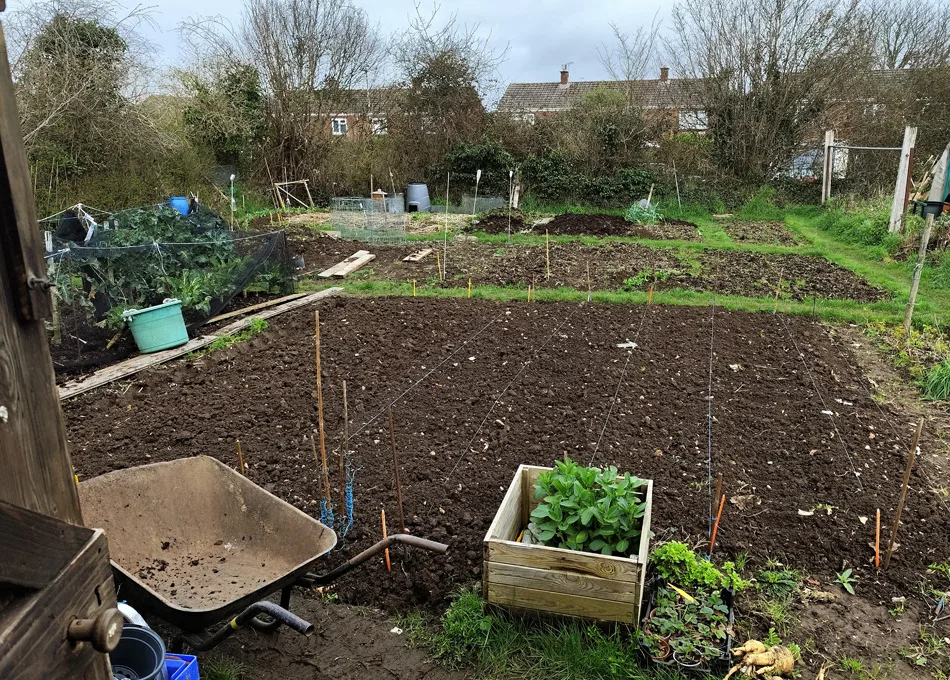
Barry Cuff takes a look back through his notes of what happened on his Sturminster Newton plot last month

Barry Cuff’s allotment in Sturminster Newton

allowed plenty of work to be carried out on the plots. With the blackthorn putting on an amazing show in the hedges, there was always a risk of overnight frosts (a Blackthorn Winter*), so a close eye was kept on the forecasts to determine whether there was a need to heat the greenhouses.

Plot work: As last year’s crops were cleared and old plants consigned to the compost heap, beds were manured and dug as required. A long-handled Cornish spade makes light work of it – far easier than a conventional spade or fork.

In the ground: Garlic planted in November and broad beans planted out in February are both looking strong, helped along by liquid seaweed, although the beans are showing a little weevil damage. Leeks continue to be lifted as required.

Planting and sowing: It is still too early to sow outside, but the greenhouse is busy. Second batches of lettuce and leaf salad mixes are under way, alongside agricultural peas for shoots and spring onions for either in-situ harvesting or transplanting later. Tomatoes (14 varieties, more than 100 plants) and around 45 sweet pepper plants are developing well indoors, with surplus destined for fellow plot-holders.

Potatoes:
The last of the Charlotte crop has been enjoyed (particularly good as wedges), with Desiree and Caledonian Rose still in store.
New plantings have gone in steadily as ground has become available: Orla and Charlotte, Jazzy, Sagitta, Caledonian Rose and Desiree. A greenhouse-grown Jazzy in a large pot is already fully in leaf.
Onions:
The final trays of the 2025 crop are being used up, with any early sprouters processed and frozen. This year’s crop has been sown in stages:
9th: 150 plugs of Bonus (white)
10th: 60 plugs of Red Baron (red)
17th: 150 plugs of Bonus
By 25th March, the earliest onion sowings were already showing strong emergence.

Fresh harvest and stores:
The final pickings of sprouts, parsnips, carrots and early purple sprouting broccoli have been gathered. Autumn salads and radishes are now finished, replaced under cover by mixed leaves, pea shoots and chicons, with the first Little Gem lettuces planted out inside.

From store and freezer: potatoes, squash and onions, alongside sweetcorn, peppers, broad beans and French beans.

Fruit: Raspberry canes are pushing new growth, while buds are breaking on pear, currants and gooseberry. Strawberries have been fed with liquid seaweed and potash.

Wildlife: Warmer days have brought out peacock, orange tip, comma and brimstone butterflies. Bees are active on red dead-nettle and dandelions, with dark-edged bee-flies and ladybirds also making an appearance.

*Blackthorn winter is an old saying, referring to a sudden cold snap, often accompanied by frost or snow, in early spring (usually April), coinciding with the blooming of the blackthorn bush

After the rain

0

A very long winter has suddenly been interrupted by a lovely weather interlude, allowing some much-needed work to be done on farms across the county. But the wet winter has once again been costly. For livestock farmers, the cost of bedding and keeping animals indoors has been significant, while many arable crops are still unhappy with waterlogged feet.


All of this places real pressure on farm businesses, and on the resilience and wellbeing of the farmers themselves. If you are finding things difficult, FCN is here to help – you can contact us in confidence on [email protected].
FCN hosted a Quiz Night at the Udder Farm Shop in March, with more than 130 people attending. More than £1,000 was raised for the charity.
This spring we are also holding more of our popular Walk & Talk events around the county – details in the ad. Anyone within the rural community is very welcome to attend. Come and join us for a five to seven mile walk. We always meet at a village pub or café car park, so there’s the option of a drink and a meal afterwards. To book please contact Helen Newman by text or WhatsApp on 07957158259 or [email protected]

Season Finale Thrills at Wincanton

0

The countdown is on to the final fixture of the 2025/26 season at Wincanton Racecourse, and it promises to end on a high.
Join us for the WinOlympics Family Raceday on Sunday 12th April: a celebration of sport, entertainment and great racing for all ages.

Bring your family, friends and even your dogs along for an action-packed afternoon!
There’s something for everyone, from crazy golf and a surf simulator to Velcro dart football, all designed to get you into the sporting spirit. Younger racegoers can enjoy soft play and a quiet arts and crafts area, perfect for those who need a more relaxed pace during the day.

On the track
Of course, the highlight remains on the track, with six thrilling races set to provide an exciting finale to a fantastic season of racing. Don’t miss your last chance to experience the atmosphere at Wincanton before the summer break. Celebrate the season in style and be part of a memorable day: gates open at 12:40pm. Visit our website for more information and to secure your place: thejockeyclub.co.uk/wincanton

Local retail roots run deep

0

The merger of two long-established Wimborne businesses is showing its strength on the shop floor as the team expands

From left: Andy Palmer, Ben Todd, Jakob Malodabry and Dacombes of Wimborne Managing Director Matt Renaut © BBPR

Founded more than a century ago, Dacombes recently combined with Holmans – itself established in 1948 – bringing together nearly 180 years of local trading. The result is not just a larger operation, but a depth of knowledge that few independents can match, with more than 200 years of combined experience across the team.

Andy Palmer joins from Holmans as Warehouse Manager


A key recent appointment is Ben Todd, 35, who joins as Sales Manager. His career spans the full spectrum of electrical retail, from early experience with Kirby Vacuums through to domestic appliances at Brian Dryden and Currys in Bournemouth, where he became the store’s top sales advisor. He later spent 12 years at Holmans, rising to manager.

Ben Todd joins from Holmans as Sales Manager


He says the move feels like a natural continuation rather than a change of direction. ‘It’s great to work for a business that shares the same customer ethos I’m used to – genuinely taking the time to find the right product. Unlike the multiples, we can switch appliances on and demonstrate how they work, so customers really understand what they’re buying. And you always get a real person at the end of a phone here – there’s no annoying call centres.’
Andy Palmer, 54, also joins from Holmans as Warehouse Manager, bringing more than three decades of experience. He will be overseeing thousands of items of stock and customer deliveries and sees the merger as a practical as well as cultural fit.


‘I’m proof that family-run independent businesses can offer real career stability and progression,’ he says. Completing the trio is Jakob Malodabry, 27, who is at the start of his career as a showroom assistant, while also training to become an installer. ‘I’m loving the training – both in person and online,’ said Jakob. ‘I’m a gadget geek, so electronics is ideal for me. The support from the team is brilliant: if you don’t know something, there’s always someone who does. It’s like working alongside walking electronic encyclopaedias.’
Managing Director Matt Renaut says the transition has been smooth, with many customers already following familiar faces across to the Leigh Road showroom. ‘That continuity really matters,’ he says, ‘and it’s been encouraging to see how quickly the expanded team has come together.’

Rural fire cover under threat

0

Cuts will kill, warns Fire Brigade Union, as rural communities rally to fight proposed station closures and loss of engines

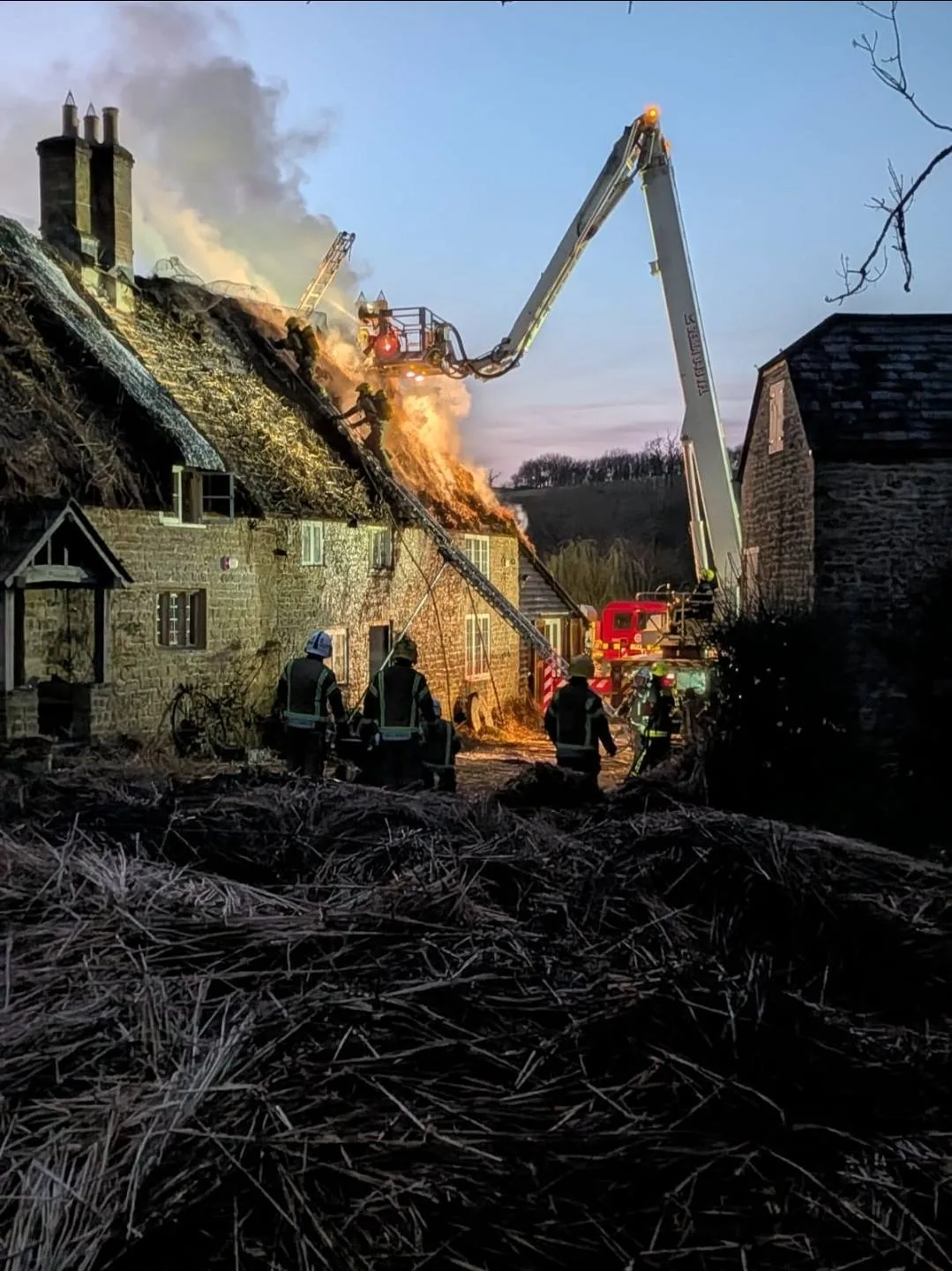
The thatch fire at Mosterton – 19 appliances and 60 firefighters were involved.
Image courtesy Charmouth Fire Station

The decision to close eight fire stations across Dorset and Wiltshire rests on a risk assessment that the Fire Brigades Union argues no longer reflects the reality of climate, rurality and rising demand.
Dorset and Wiltshire Fire and Rescue Service (DWFRS) has launched a public consultation proposing the closure of eight fire stations across Dorset and Wiltshire, four in each county, Charmouth, Cranborne, Hamworthy and Maiden Newton in Dorset, and in Wiltshire, Bradford-on-Avon, Mere, Wilton and remote Ramsbury in the north of the county. While the fire service naturally has a statutory responsibility to maintain a balanced budget, and has difficult decisions to make, there are widespread concerns about the loss of services due to these closures.
Dorset and Wiltshire currently have more than 70 engines – as well as several specialist support vehicles. Eight of these will be lost through the closures. That would leave 62 engines serving a region experiencing rapid housing growth and increased climate risk.

DWFireRescue handling floods in January 2026


The data used for this decision-making by the DWFRS came from three years prior to April 2025 – despite real-time data being available. Crucially this excluded one of the busiest ever years for the fire service in Dorset. Last summer’s Holt Heath fire was declared a Major Incident, with appliances and teams supporting the county from all over England and Wales. Initially, 100 firefighters from Dorset fought the fire which burned through 72 hectares of heathland, putting homes at risk. Crews from as far away as Manchester and Lincolnshire supported Dorset’s firefighters.
The Fire Brigades Union (FBU) told The BV: ‘The service response is that the data set that was used was the “last full year of data available”. The FBU has specific concerns about this, as 2025-2026 was one of the busiest years for the service in recent times. We believe this would have materially affected the data provided to the public.’
With climate change causing increased summer temperatures, the risk of heathland and crop fires is rising. However, the analysis and risk assessment by the fire service focused on road traffic collisions and fires: flooding and heathland fires were not a prominent feature of the strategic risk assessment, although there are obvious signs of change with floods and climate.
Given that the fire service has access to real-time data and reports on incidents, should the analysis be reviewed again using the latest available figures?
Response times and rural risk
The faster the emergency services get to the scene of an incident, whether it is a serious road traffic collision or a house fire, the sooner lives can be saved. The fire service faces difficult choices with a limited budget, but to what extent was rurality included in the assessment of the stations earmarked for closure? Agricultural fires are as devastating as burning buildings in remote villages.
It takes an average of 50 firefighters to tackle a thatched house blaze. When a home at Mosterton caught fire recently, engines from all over Dorset attended with 19 appliances at the scene when the fire was at its height. 60 fire-fighters from Dorset and Somerset attended the blaze, including from Charmouth station which is earmarked for closure. Dorset is home to ten per cent of England’s thatched buildings – ‘The Dorset Model’ is a widely recognised fire safety standard for constructing thatched buildings.
The FBU said: ‘The risk to thatched properties has been considered and the service’s position is that all residents will be less safe, should the stations close. The arrival-at-incidents time will increase in all areas. One resident with a thatched property described how their insurance requires a fire station to be within 10 minutes of their property – with the incident at Mosterton, firefighters initially came from Bridport, Charmouth and Sherborne as well as crews from Devon & Somerset at Chard, Ilminster and Yeovil. When firefighters cannot conclude an incident safely, we ask for more fire engines and firefighters until we can. This was the case here, where further appliances were called from Beaminster, Dorchester, Lyme Regis, and more from Devon & Somerset at Colyton, Wincanton, Street and Axminster.’
Dorset and Wiltshire Fire and Rescue Service acknowledges these are unpopular decisions: ‘We know that proposing fire station closures will not be a welcome decision for our communities or staff. However, the Fire & Rescue Authority has a statutory duty to set a balanced revenue budget.

Last summer’s Holt Heath fire was a Major Incident.
Image courtesy DWFireRescue
© Bliss Aviation


‘Our underlying funding position, specifically the recent finance settlement received from central Government, does not provide a sufficient level of funding for the service to continue to operate as it is. No decisions have been made yet and, before anything happens, we want to hear what you think.’
Meanwhile, the FBU’s position is clear: ‘All fire stations should remain open, as they provide an essential emergency service to otherwise isolated and predominantly rural communities. They provide resilience to DWFRS in spate conditions, but ultimately they should remain open as the Chief Fire Officer has a duty under the Fire Services Act 2004. Sections 7 and 8 require the Authority to secure sufficient personnel, services and equipment to meet all normal requirements. Reducing operational capacity while demand rises, and while mutual aid is also under pressure, leaves the Authority open to challenge on whether it can still meet reasonably foreseeable needs.’
Cuts kill, says the Fire Brigade Union.

A house fire can become lethal in less than two minutes and a residence can become engulfed in flames in five minutes. Regardless of the threat of closing fire stations, there has never been a more critical time to look at your home, get smoke detectors fitted, assess how fires can be prevented and how you would escape in an emergency.