The Blackmore Vale logo
Home Blog Page 14

Robbie Cumming answers the Random 19 questions

0

How Robbie went from Gillingham High School to landing a seventh series on BBC4 with a 42ft narrowboat called Naughty Lass
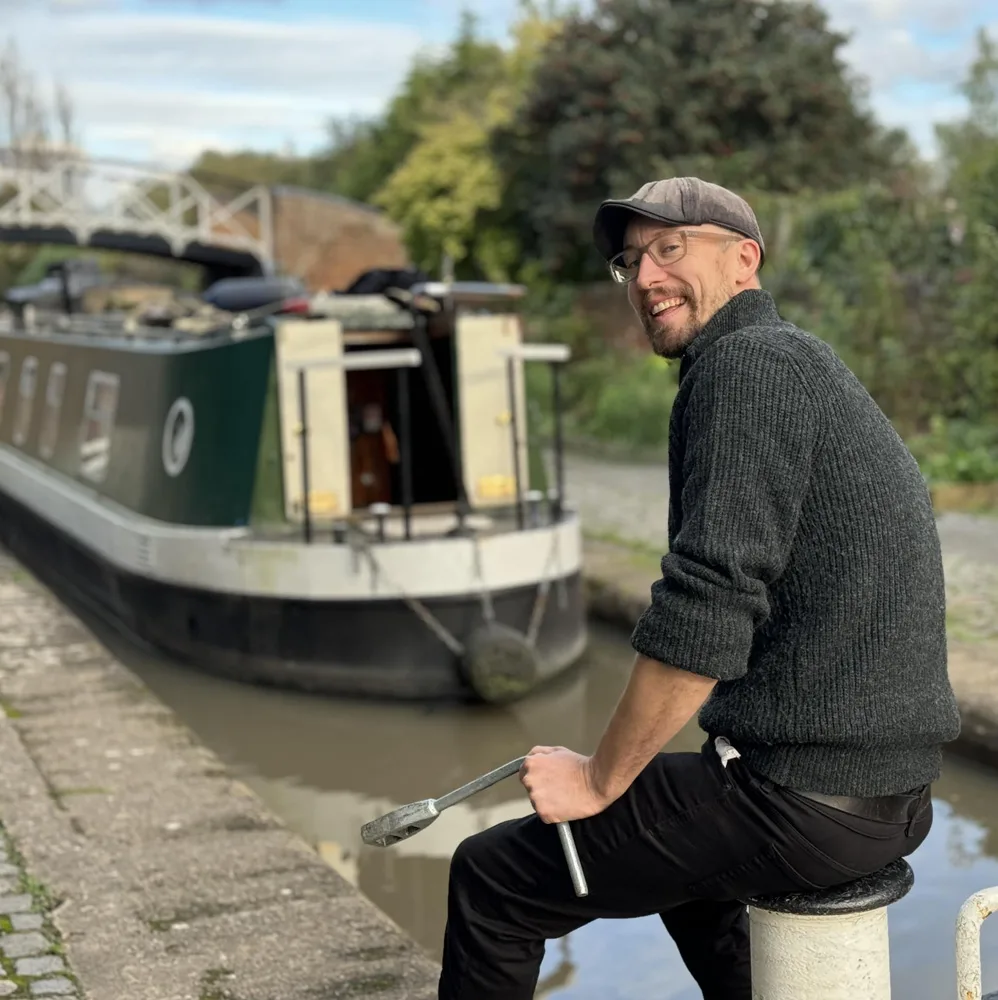
Robbie Cumming with Naughty Lass
Image © Stuart Woodman

Robbie Cumming never imagined he’d end up a cult TV favourite. But after a chance offer from a school friend to house-sit a London canal boat, everything changed.
‘It was through Sam Martin – she was the year below me at school and later became a comedy producer,’ Robbie says. ‘In 2012, she had a boat in London she was trying to sell. She asked if I’d look after it, rent-free, while she sorted the sale. I was dating someone in London at the time, and I didn’t want to keep paying for train fares – so I said yes.
‘I didn’t even have a job at the time – I was trying – but I just fell in love with boat life. So I neglected the job hunt and my relationship … and then boat sold. So I was left with nothing but a drive to return to the canals to explore them further. I’d grown up in Gillingham with no idea what the canal system even was. I just thought boats were for hippies or old people.’
It wasn’t an instant transformation to a TV presenter life, however.
‘It took a further two years to find a boat I could afford! Then I spent my first year aboard, learning the ropes while trying to hold down my work from home job. I started a YouTube channel for fun, filming in my spare time. It’s pure chance the BBC picked it up – and that Canal Boat Diaries became a thing.’
Now filming its seventh season, the quietly captivating BBC Four series follows Robbie as he travels solo through the country’s canals, exploring quirky industrial engineering, forgotten landscapes, and the slow magic of life at 4mph – with his own music as the soundtrack.
‘I film most of it myself on my iPhone – it’s got a very DIY feel. But it’s polished by some brilliant people behind the scenes, and I’ve learned loads from them over the years. Working in TV was always the dream, but it still feels absolutely mad.’
The result is oddly soothing, gently funny and packed with surprising niche appeal: Canal Boat Diaries has found an unexpectedly broad audience, from young kids watching with their dad to heavy metal fans.
‘I think it’s the industrial heritage. Or maybe it’s just me being a bit of a weirdo!’
His own passions often sneak into the show. ‘I’ve featured Led Zeppelin’s house, bits of music history, even comedy stuff – because that’s always been part of me. I used to run a six-week improv comedy course in Shaftesbury when I lived there.
‘Music, design, videography – I’ve always been into all of it. This opportunity somehow brought everything together. And yeah, the audience might be niche – but I think niche audiences are undervalued.’
When he’s not on a tight schedule, Robbie says his Dorset roots take over: ‘If I’ve got time, I head straight for the quietest, most remote mooring I can find. Somewhere peaceful, with a nice view. I’ll have a little fire, a barbecue, just sit outside and enjoy nature.
‘TV work can be stressful – the pressure’s full-on. So when I get the chance, I’ll just find a spot where I can stare at a fire or look across the water. That’s my reset button.’
Back in Dorset this month for a live appearance at The Exchange at Sturminster Newton, Robbie’s excited to slow things down with a local audience.
‘Dorset doesn’t have the same industrial heritage you see up north, so I love showing people the forgotten corners I get to explore – oddly-shaped bridges, crumbling locks, canal archaeology … it’s all out there.’
Before he hits the stage, we threw 19 quick-fire questions Robbie’s way – here’s what he had to say…
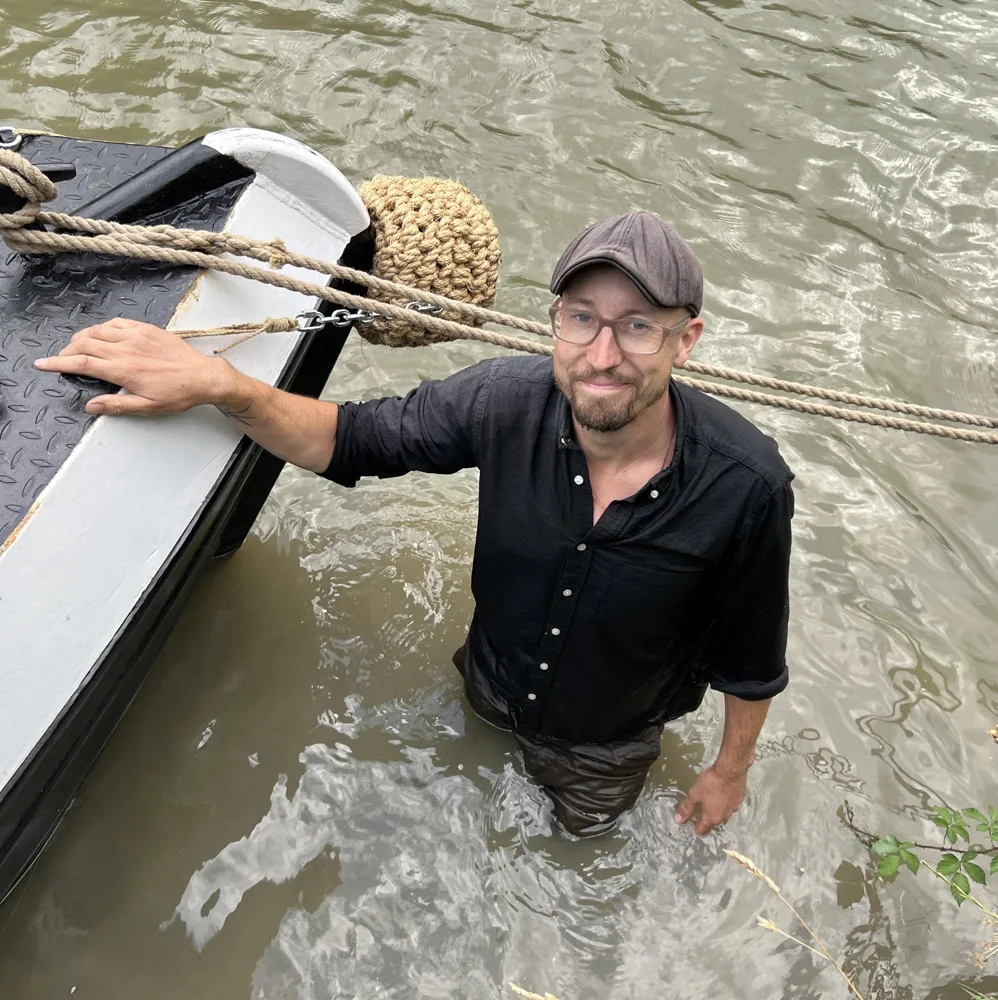
‘Living on a canal boat, you have to be flexible and prepared to rough it’
Image © Stuart Woodman


  1. What’s your relationship with Dorset?
    I lived just outside of Gillingham, on a garden centre, Milton Garden Plants, which moved and is now Orchard Park. I went to Gillingham High School and I moved away when I was about 20. My parents still live locally, though they’re in that weird bit around Shaftesbury which is technically Wiltshire.
  2. The last song you sang out loud in the car?
    Something by Bring Me the Horizon … probably Happy Song.
  3. The last film you watched?
    Beekeeper with Jason Statham. Its an enjoyable romp with old Statham, who never disappoints for me, in action terms. But the scene where he throws the jar of honey and sets it on fire was a bit far-fetched.
    I couldn’t help but think “What are you doing?” I know honey’s technically combustible, but it’s not flammable!
  4. It’s Friday night, you have the boat to yourself, no work is allowed. What will you do?
    I would definitely sit and record some music, but I think that’ll come under the ‘work’ rule … so I’d probably end up playing video games. I admit I play a lot. That, and watch movies.
  5. The best biscuit for dunking.
    Moore’s Dorset Knob biscuits. I’ve been to the Dorset Knob Throwing Festival, which was just hilarious. If I remember correctly, it wasn’t just knob throwing: you could count the knobs, run the knob and spoon, guess the weight of the big knob … only in Dorset.
    But yeah, they sell them as great to dunk in your cider, and you didn’t specify tea …
  6. Your most annoying trait?
    I can’t sit still and just chat normally in a pub setting. I find it excruciatingly painful. So I will, annoyingly, pester my friends or literally anyone who’s nearby into playing a game – pool, cards or Jenga, anything but sitting and chatting. Recently I was diagnosed as having ADHD – which probably explains a lot.
  7. What advice would you give to 15-year-old you?
    Don’t take life too seriously. But do remember that your mind is very, very powerful. If you think you’re going to achieve something, you will. But equally, if you doubt yourself and put yourself down, that will do the opposite.
    I’ve never forgotten my careers advice at school: “You come from Gillingham, and you want to work in TV and radio or film? Forget about it.” That’s what they told me. They were trying to be realistic, I guess, but even when I was doing normal jobs and going the normal route, like everyone else, in the back of my mind, I believed in myself, that I was going to do something completely different and weird. So yeah … believe in yourself.
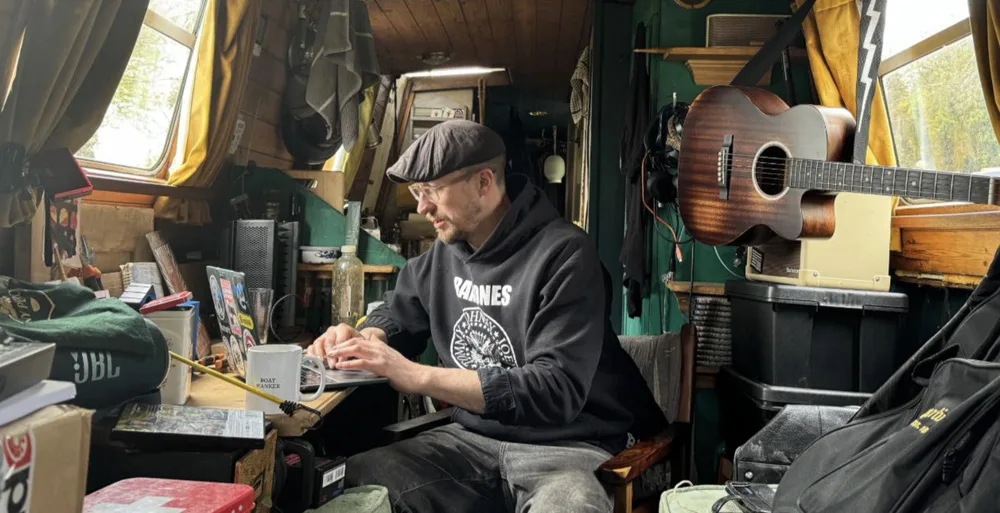
On board Naughty Lass
Image © Stuart Woodman
  1. What completely ordinary thing brings you disproportionate joy?
    It’s just being on my boat sometimes when I’m in that peaceful location, having a camp-fire, and just sat there staring at the flames. It’s just such a stupid, simple thing … but it doesn’t give me joy. It gives me peace. I’m not out here looking for happiness. I’m looking for contentment.
  2. What’s your secret superpower?
    I think it’s being able to come up with ideas – many of which happen all at once, keeping me up at night … and it’s very difficult to pick the best one.
    Also, being able to adapt to any circumstance – with a narrowboat, you have to be versatile and independent, and willing to rough it a bit.
  3. What was the last gift you gave or received?
    I bought my dad a trip on the Caledonian canal, we’re going on a family boat trip, for four nights. It’ll either be a lovely memory or a stressful nightmare. Probably both.
  4. What totally irrational thing makes you unreasonably cross?
    Being rushed, when I want to take my time.
    I spend a lot of my life driving around at four miles an hour on a narrowboat, and roads often feel a bit hectic. But you encounter it on boats too. People hire one, and think they’re still on the roads and they’re just rushing to try and get as quickly as possible to the next place. And that’s not really the point. You’re in the wrong vehicle for that sort of thing. I wish people would just slow down a bit, chill out and enjoy the moment.
  5. What’s your go-to comfort meal?
    I think I’d have to say a carbonara, an absolute Italian classic, especially if you use the right ingredients. And I like pepper, so I put loads of pepper in it. Although I can’t say it’s a genuine recipe … if I made it for an Italian, they would probably spit it out again and accuse me of heresy.
  6. What shop can you not pass without going in?
    Any charity shop. I’m a massive charity shopper. I did try working in one in Gillingham once, the Poppy shop. But I found out very swiftly that what I really loved is going to all the different ones in a day, not being stuck in the same one! I just want have a rummage and see what’s there. You never know what you’re going to find. You can’t really go out looking for certain things in charity shops. You just have to see what turns up.
  7. What little luxury would you buy with £10?
    I might go to the gym. There’s a gym I know that’s £10 a session, but also they include a sauna and steam room. So that’s what I probably would do.
    I know, it’s an odd luxury. But I’m travelling around on the boat a lot of the time. Because I don’t live in one place, I can’t just pop in to ‘my’ barbers, or whatever. I don’t have one, actually: going to the barbers is a treat, too.
    Even though I’m bald.
  8. The best crisps flavour?
    Salted. I know that sounds very sad, but I’m allergic to certain ingredients, and they keep putting rapeseed oil in everything. Popchips, any flavour – but they are quite expensive. Poshchips.
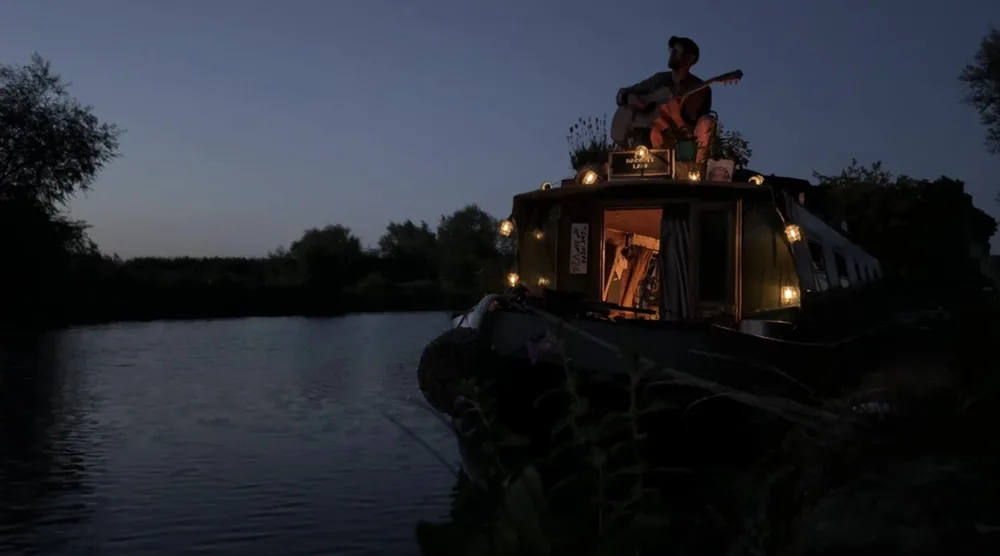
‘Being on my boat, having a camp-fire, and just sat there staring at the flames. It’s just such a stupid, simple thing’
Image © Robbie Cumming
  1. What was your first job and what did it teach you?
    I worked for my dad, mowing lawns and helping customers.
    It taught me the value of customer service, and that you’ve got to be polite to the people serving you, whether that’s in a pub, a supermarket … or the boy helping you in the garden centre.
    I still remember the people who were rude to me!
  2. What in life is frankly a mystery to you?
    Women! I know, I’m not doing myself any favours saying that.
  3. What was the first book you read and loved?
    Goosebumps, by RL Stein. That was one of the first ones I remember genuinely enjoying reading … I find reading really hard to focus on for long. But Goosebumps was brilliant, and it gave me a lifelong interest in horror films.
  4. You have the power to pass one law uncontested – what would you do?
    You absolutely have to wave to someone else if you’re passing them on a boat. That’s it, it’s now officially law.

An Evening With Robbie Cumming will be at The Exchange in Sturminster Newton on Thursday, 16th October at 7:30pm. Tickets £20, available at: stur-exchange.co.uk

Allotment diary: September 2025

0

Barry Cuff takes a look back at what happened on his Sturminster Newton plot last month

The summer’s drought came to an end on 26th August. Since then, we have had around five inches of much-needed rain, followed by a drier spell with sunny days and night-time temperatures dropping to near freezing on a few occasions.

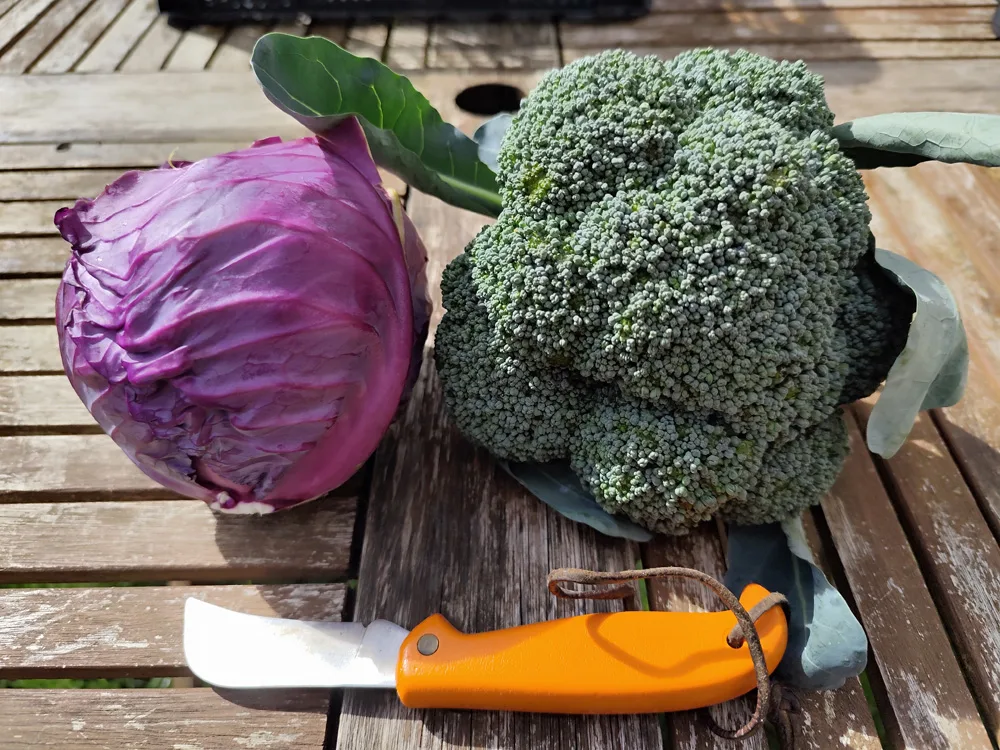
‘We are harvesting red drumhead cabbage and ironman calabrese when needed’. Image: Barry Cuff

Growth – After the first of the rain, most vegetables put on a growth spurt – as did the weeds, with new flushes of seedlings, especially chickweed and fat hen. Our grass paths also needed mowing every five days.

French and runner beans – Despite the rain, these finished producing by the third week. The Moonlight runner beans gave the lowest yield for many years, with few pods left to take seed from.

Brassicas – Looking well under their net, with just a few caterpillars of both the large and small white cabbage butterflies. We are harvesting red drumhead cabbage and ironman calabrese when needed: the calabrese throwing new side heads after a few weeks. We cut our first cendis cauliflower on 25th.

Root crops – Our carrots are growing well since the rain, including the latest lines sown. Early-sown lines are now harvested as required. We dug our first palace parsnip on 25th, which we tried roasted and steamed for Sunday lunch.

Lettuce – The last batch we planted was devoured by slugs overnight (forgot the pellets!).

Winter squashes – Most of the leaves and stems have died back now and we have some amazing-looking fruits – eight butterfly butternut and seven crown prince – which will be ready to harvest beginning of October.

Tomatoes and sweet peppers – We’re now coming to an end of production in both greenhouses.

Leeks – We can see good growth, and but they do need frequent hand-weeding.

Autumn salad and stir fry – Mustards, radishes, mixed leaves, Chinese cabbage and radicchio all growing well, needing frequent hand weeding and thinning.

Fruit – We have had a second small crop of strawberries, which was most welcome! The pears are all now harvested … one of the best years ever.
We are enjoying them poached in homemade wine with honey, cinnamon, cloves and vanilla.

Seed and manure – We have put in our orders, and both should arrive in the coming months.

Compost – The heap to which we are adding spent vegetables and weeds is now over-full. A job for October is to empty the adjacent one, which contains the well-rotted material.

Clearing away – The bean canes and pea wires have all been put away for the winter.

Green manure – This is a cover crop which is grown specifically to be dug into the soil while it’s still green to improve soil health. It suppresses weeds and releases essential nutrients like nitrogen. We have sown about 20 per cent of our plot with phacelia, and may sow a further 20 per cent with winter field beans.

Wild life – The garden spiders are everywhere now, with webs appearing between every tall plant and structure overnight.
On sunny days there are still commas, red admirals and peacock butterflies on the Michelmas daisy and tithonia.

October jobs in the garden

0

Don’t hang up the trowel just yet – this month is full of quiet garden jobs that pay off in spring, from bulbs to buds to blooms

Move potted tender plants like fuchsias and pelargoniums into the greenhouse to overwinter – most will survive happily in a cold greenhouse

While we can look forward to a spectacular display of colours from our deciduous trees and shrubs, this is a good time of year to take stock of the garden – what has done well? What hasn’t? – and then make a plan for next year!

A few jobs for the month …
The big job for October is to clear up your borders, and remove the tired annuals. Then you can plant up for spring with wallflowers, daffodils, alliums and crocus – and perhaps add some winter pansies. There is a wide range of spring-flowering bulbs, corms and tubers available now.
If your summer pots and containers are also looking past their best, clear them out too and either plant them up with winter bedding plants, or add some more bulbs. Try crocus and small daffodils such as Tete-a-tete. Also look for dwarf tulips, and iris reticulata. These miniature bulbs lend themselves to creating displays on tables or in the cold greenhouse, where you can appreciate their blooms close up.
With our milder winters, dahlias may well cope with being left in the ground: the foliage will be blackened by the first frosts – label them now so you know which are your favourites! Make sure you mulch them well, with at least four inches of leaf mould or compost over the tubers.
If you’d rather not take a chance and wish to dig them up, clean off the soil carefully and store the tubers in a crate in a frost-free shed – check them regularly for mould.
Cut back and divide herbaceous perennials, and protect half-hardy plants with leaf mould or compost if you are leaving them in the garden borders. Hardy fuchsias (even though they’re officially deemed hardy) will definitely benefit from this.
Prune rambling and climbing roses once they’ve finished flowering, and tie in the stems before autumn winds cause damage. Then clear up all fallen rose leaves to prevent diseases such as black spot from over-wintering. To avoid spreading any damaging fungi, don’t compost the collected leaves.
This is the month for a big greenhouse-keeping session too: clean and disinfect used pots, all staging surfaces and the inside of the glass with a warm solution of disinfectant to reduce pests and fungal infection.
Prepare the greenhouse for winter sowing and the bringing-in of plants: move potted tender plants (fuchsias, pelargoniums etc), into the greenhouse to overwinter, most will survive happily in a cold greenhouse. Tidy up, remove the growth by half, clear out any weeds in the top of the pots and reduce watering significantly.

Letters to the Editor October 2025

0
Laura
Laura Editor of the BV

It’s no big secret that I’m an Essex girl. Born and brought up in Southend-on-Sea on the smell of mud and cockles and the whine of boy racers tearing past the Golden Mile’s arcades. But I’ve lived in Sturminster Newton for 33 years – by the traditional rule, that makes me officially a local for the last three? Long enough to call Sturminster Newton Building Supplies ‘Snooks’ without thinking, anyway.
I instinctively know what someone means when they say the ‘top road’ to Dorchester. I know how to pronounce Rampisham. I frequently stop to chat to random acquaintances in the street, and I’ve even been known to use ‘somewhen’ as a legitimate estimate of time.
And yet.
I’m not sure I’ve ever been more strongly aware that I am not local. Not truly. I simply haven’t got – and can never have – that collective memory, deep in my bones. There’s a community consciousness here that I don’t have. People remember places and events and other people, not necessarily because they lived through them, but because Mum did, or Granfer told the story (‘Granfer’ is another learned Dorset-ism), or Aunty Joyce never let them forget it.
It’s history, but alive and walking the lanes.
Lately, I’ve been thinking a lot about roots and belonging – probably not coincidentally, when at the same time I keep seeing ’we want our country back’.
I’m the first to admit there’s plenty wrong right now. And there’s a lot of noise about what’s being lost. But I can see very little action around the things that hold a place together.
You want your country back? Start with your own town or village.
The local youth club needs a volunteer mentor. The litter-picking group would love an extra pair of hands. The library is still hoping someone will help run Storytime. The lunch club needs drivers. The sports team needs a linesperson. The community centre café is short-staffed on Wednesdays… There are signs up in every shop window about what your town needs. Maybe start by simply joining the board game club at the village hall.
Or – and this is the less poetic option – just admit you don’t actually want to help, and let the rest of us get on with it. But please don’t then complain about what you get.

Laura x


On the resignation of Pauline Batsone:
A Response to the Resignation of the Mayor
As a former Town Clerk with almost 30 years of experience in Dorset, I was surprised by the article on the resignation of Mayor Pauline Batstone after just four months. Ten electors have called for an election to fill the vacancy, but do the council tax payers of Sturminster Newton know this would potentially cost around £5,000?
Pauline Batstone is a highly respected and experienced councillor. In Ferndown, she was known for her hard work on behalf of residents, so much so that a road was named after her – a rare honour for a councillor. The council provides ample information, and public and press are always welcome to attend meetings. The reasons behind Pauline’s resignation are private, and if the public is curious, they should ask her directly. Speculation about the resignation and the handling of confidential matters is just that – guesswork. Confidential matters are not taken lightly and must be handled according to strict regulations. Some of the comments regarding the staff are frankly outrageous. The staff have an immense workload and need time to undertake the preparation and minute reporting for all the meetings. Erstwhile, keeping the accounting and finance under control and working on the many projects that this pro-active and hard-working council is undertaking.
It is unreasonable for councillors or the Town Mayor to ask to meet the Town Clerk the morning after a meeting. The Clerk needs time to write the minutes and organise the actions. It is quite right that the Town Mayor should be given time to go through the minutes and actions after a meeting, but the Clerk should also be allowed to allocate the time according to workload, not on demand.
Sturminster Newton’s council is not lacking experience – many councillors have decades of service. These volunteers work tirelessly: just look around and see for yourselves what the council provides. Who do you think looks after the recreation grounds, Railway Gardens and public toilets? The council is currently working to provide a centre for young people. Instead of making negative comments about the staff and councillors, look at the positives. Perhaps to those who seek to undermine a council of hard-working councillors and staff, for whatever reasons they individually have, I would say look to the future with positivity and knowledge of what this council does, rather than look at what a very small number of people choose to portray.
Mal Derricott
Former town clerk of Sturminster Newton


An open letter from William Willams Trust
As the temporary base for a re-established Youth Club in Sturminster Newton nears completion, the Charity of Willam Williams would like to record its appreciation of the Town Clerk for her personal commitment to this project.
Our trustees have been greatly impressed by the work and care that has been put into finding
and establishing an organisational structure property suited to maximising the potential of this
opportunity and ensuring its long-term viability.
The Charity is in full agreement with the Town Council that this project must be sustainable, with full security of tenure and financial underpinning. This is essential to avoid the potential loss of facitities when funding fails or circumstances change. The disruption this can cause to
the wellbeing of young people has already been experienced in Sturminster, and we are determined that this risk should be fully addressed.
We absolutely understand that Kate’s work has been, and is, well-supported by the Council’s staff and Councillors themselves, but we are also aware that it is she who has had to deal with repeated and unexpected reverses during this protracted process. Her perseverance in the face of so many obstacles and even attacks on her conduct should be commended.
The Charity would like to record its thanks to her now for her proactive rote in striving for constructive and co-operative engagement on behalf of the youth of Sturminster Newton.
Robert Cowley, Chairman of the Trustees and Carole Sharp, Vice Chairman of theTrustees
The Charity of William Williams


On Brownfield sites
A recent Guardian article clearly highlights the glaring truth about brownfield sites and the government’s targets for housing growth – almost 1.5m homes could be built on brownfield sites in England. That’s more than enough to avoid further encroachment on our precious green spaces.
Yet, developers continue to push for cheaper, easier options on green sites, including those near Areas of Outstanding Natural Beauty. More than half of brownfield areas already have planning permission – so why are we still seeing huge developments on greenfield land?
Councils lack the courage to stand up to these developers (or – perhaps rightly – fear their big biudgets and expensive legal teams) and enforce a brownfield-first approach, despite the growing pressure to build on our countryside.
If the government truly wants to meet housing targets without sacrificing our environment, it’s time for stronger enforcement of these policies.
Name and address supplied


On The Motor Inn
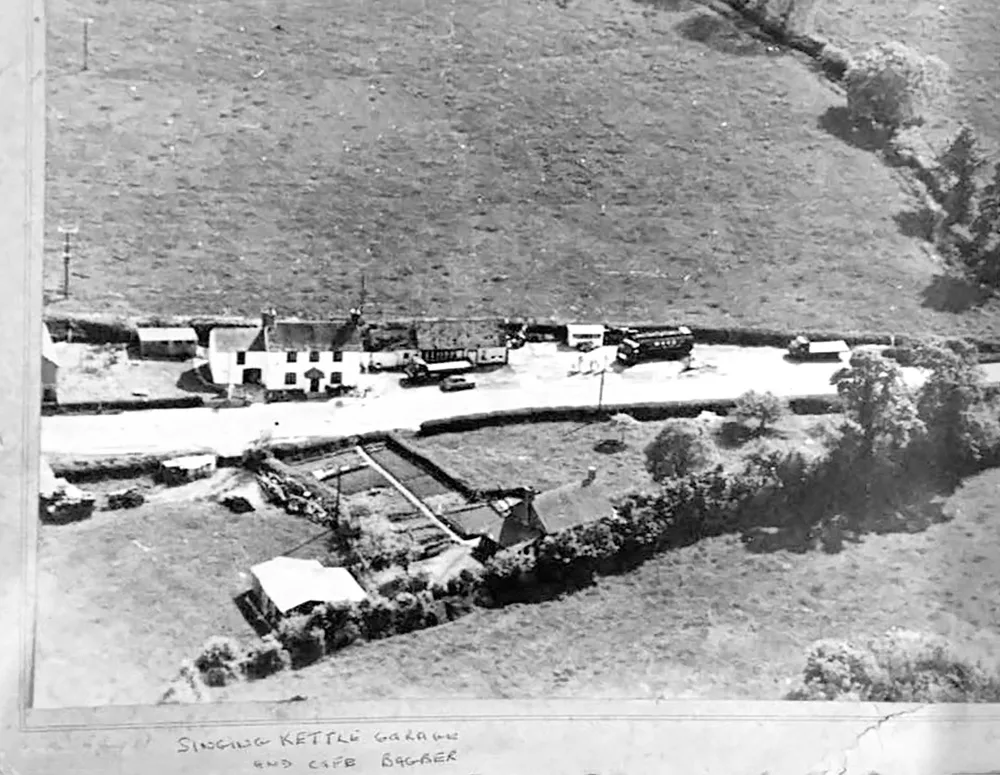
In last month’s ‘Then & Now’ at Bagber, we asked if anyone knew anything about The Motor Inn.
You did not disappoint:

‘My grandad Len Dodson ran the garage, and my gran Pat Dodson had the cafe, from 1962 through to the 70’s. It was then called the Singing Kettle Cafe.’
Adam Dodson
‘An 1886 map shows the ‘Motor Inn’ was originally called the Rose & Crown. The earliest mention I can find is from October 1837 and concerns a meeting at the inn to discuss the enclosing of a piece of land known as Bagber Common. There’s another mention a month later when the property listed as The Rose & Crown was sold by auction.
‘A further mention was in 1855, when the landlord James Tilffin was fined £1 for “keeping his house open for the sale of beer, on Sunday, contrary to the statute. It appeared by the evidence that this house was constantly open on Sundays”.
‘In 1932, the freehold property (now listed as ‘formerly the Rose & Crown’), along with outbuildings, garden and small farmery was sold for £240.
‘The only mention I can find of the Motor Inn was in 1935, when the furniture and effects were sold off – reading like something from a stately home!’
Simon Ludbrook

……..

And David Fox added to the story of the bridge:
‘The one delay during the 2009 work on the bridge was making sure that timber of the same specification was used: it took very careful sourcing, such was the durability of the original.’


Want to reply? Read something you feel needs commenting on? Our postbag is open! Please send emails to [email protected].
When writing, please include your full name and address; we will not print this, but do require it.

October’s issue – read all about it …

0

This month’s issue is a delightful mix of everything – think of it as a sweet tin full of buttons.


Somerset Confidential investigated the case for a new air ambulance by DSAA – a fascinating deep dive. We also cover TWO rogue trader cases scamming vulnerable Dorset residents out of more than £150,000 for unnecessary, shoddy work.

Farming’s shifting into high gear (you can tell harvest’s done): Andrew Livingston may have sparked a movement (we’re sensing a real campaign brewing here at BV HQ), NFU county chair Tim Gelfs is taking on climate change – and dramatic TV graphics – and George Hosford is shopping for combines based on their ability to not spill his tea.

There are stellar local business stories, a fiery letters page (the fallout from last month’s story), a smorgasbord of community news bites, and a wild love triangle that had Dorchester agog in 1901.

It’s all Dorset, and all yours! 🙂

Never printed. Occasionally argued over. Always Dorset.
The BV October issue – digital-only and always free.

Health and Wellbeing Centre Matron | Clayesmore school

0

Saturday’s overnight, term time only

An exciting opportunity has arisen for a responsible and well organised individual to be part of our friendly team in the Health and Wellbeing Centre, working a Saturday evening and overnight into Sunday shift to ensure that the highest standards of pastoral and medical care are in place.  The hours to be worked are 6pm every Saturday evening and overnight into Sunday until 5pm during term time.

The successful candidate will be confident working unsupervised and have excellent personal interactive skills with young people, their parents and staff. Preferably qualified in Paediatric and general First Aid (training can be provided if not already qualified) and with previous experience of working with young people, you will work with the team of nursing staff to ensure the smooth running of the Centre.

A competitive salary and attractive benefits are provided for the successful candidate.

For further information and an application form, please go to:

https://www.clayesmore.com/work-for-us

Clayesmore is committed to the safeguarding and promotion of children’s and young people’s welfare and expects all staff and volunteers to share this commitment.

We adopt a fair and consistent recruitment process which is in line with Keeping Children Safe in Education Guidance. This includes online checks for shortlisted candidates. All offers of employment are subject to an enhanced DBS check, satisfactory medical fitness, references, and where applicable a prohibition from teaching check.

www.clayesmore.com

Dr. Jane Goodall (1934–2025): the Dorset girl who changed the world – and never stopped fighting for it

0

Dr. Jane Goodall, renowned ethologist and lifelong advocate for the natural world, has passed away at the age of 91.
Known for her groundbreaking research on chimpanzees in Tanzania, her legacy goes far beyond science. She redefined how we view animals, understanding them as sentient beings with emotions and personalities.

Though born in London, Jane spent her early childhood in Bournemouth during the Second World War, living with her mother and grandmother.
When I interviewed her in July 2023, she spoke fondly of West Cliff and her Dorset roots. ‘Dorset is always home,’ she said.

Jane Goodall with her friend Rusty. Taken in Bournemouth 1954. Written on the back: “Jane and Rusty the Inseperables”

Her path to Africa began early. ‘When I was ten, I dreamed of going to Africa, living with animals and writing books about them,’ she told me.
With little money but her mother’s unwavering support, a series of chance opportunities allowed her to follow that dream – eventually meeting the paleoanthropologist Louis Leakey in Kenya. He recognised that her lack of formal scientific training might actually be a strength: she could observe without preconception.

At Gombe, Dr. Goodall spent decades observing chimpanzees in their natural habitat, making discoveries that shook the scientific world – such as the revelation that chimps use tools. She famously defied tradition by naming the chimpanzees she studied, showing them as individuals with distinct personalities and emotions.

Dr Goodall took delicious delight in answering our Random 19 questions – and while I’m sure she’s had many more intellectual interviews, I may be the first to discover her horror at biscuit dunking:
‘I HATE the very thought of dunking ANY kind of biscuit!’

I was told, rather firmly, that after 89 years on the planet she could not possibly pick out a single best evening. She then promptly began sharing a few memories of magical times: ‘Perhaps sitting out by the Platte river at sunset, listening to the sound of thousands of sandhill cranes as they fly in, formation after formation, to roost in the river.
‘There were many ordinary, special evenings with my mother, long ago (British authorities complained that a young woman should not be living alone in the jungle, so her mother Vanne accompanied her daughter as a chaperone for four months). We would sit round a little camp fire, lit by a hurricane lamp, almost always accompanied by Terry the Toad and sometimes a genet, who became tame. I would sit and just tell Mum about what I had seen during my day in the forest.
‘Closer to home, New Year’s Eve with my family in Bournemouth was always special, when all the lower rooms were lit by only candles, waiting for midnight.’

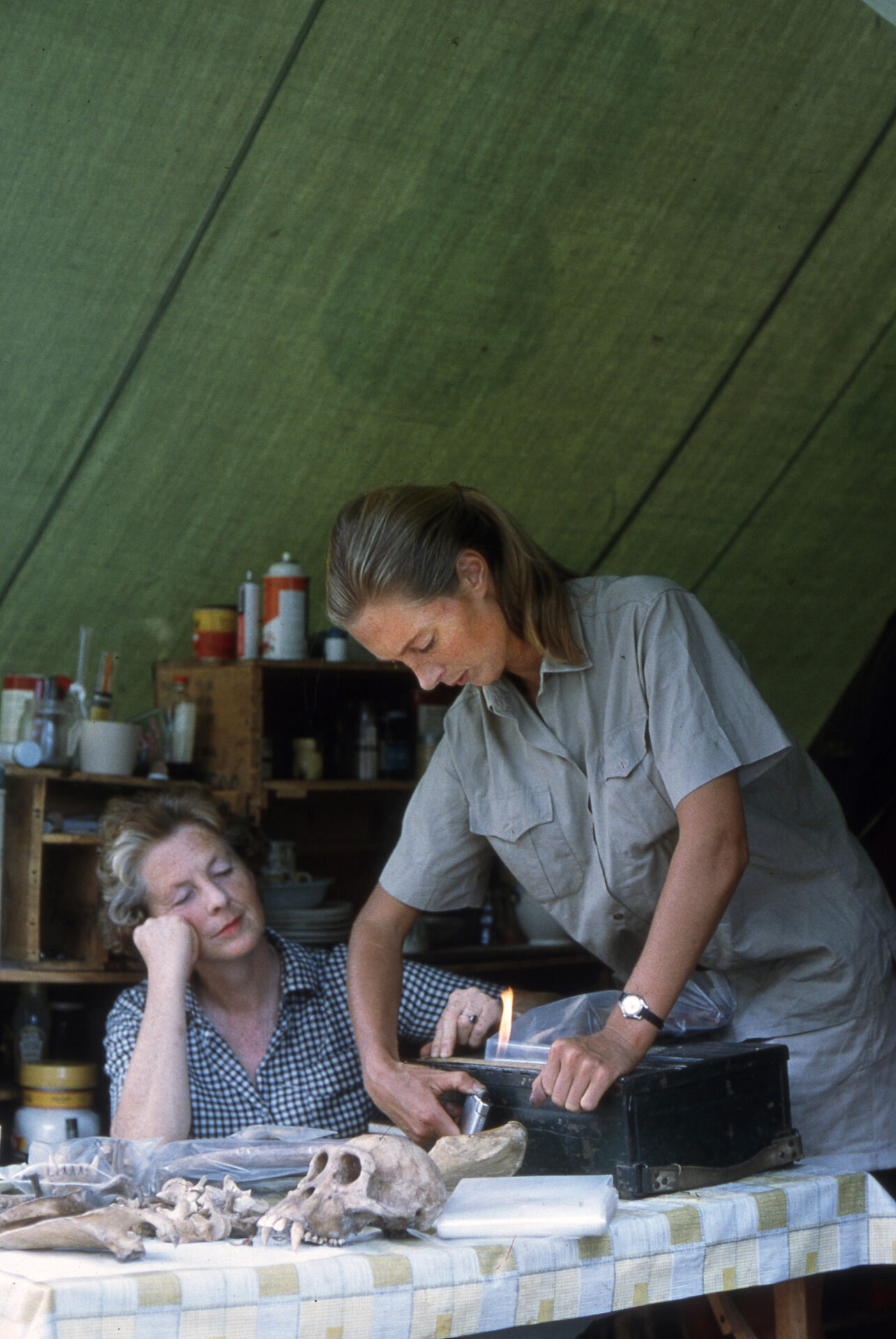
Jane Goodall and her mother Vanne sort specimens in her tent in Gombe Stream Chimpanzee Reserve.

I learned that she loved to read on her kindle – books were cumbersome for a traveller – and Lord of the Rings was her constant companion on long flights: ‘I love it because it is a completely imaginary world – yet it’s so very real. The Dark Lord is a combination of Putin, Bolsonaro and Trump. The black riders and the orcs are the CEOs of the extractive industries, animal traffickers and so on. We need to hugely increase our Fellowship of the Ring, and we all have to be prepared to join the fight to save planet earth.’

Her love for animals was also evident when she spoke about her childhood dog Rusty, who sparked her belief that animals have personalities and emotions. ‘Rusty taught me that animals have personality, reasoning power and emotions,’ she said. She had a deep fondness of ‘walking the streets in the old parts of London, Paris, Vienna, New York etc – in the NON touristy parts!’ and found secondhand curiosity shops irresistable. The sound that made her happiest? Beethoven’s Moonlight Sonata on childhood summer evenings: ‘After I’d gone to bed, I’d hear my grandmother playing the Sonata on the piano downstairs, window wide open, and the smell of roses coming through my open bedroom window. I still think of it.’

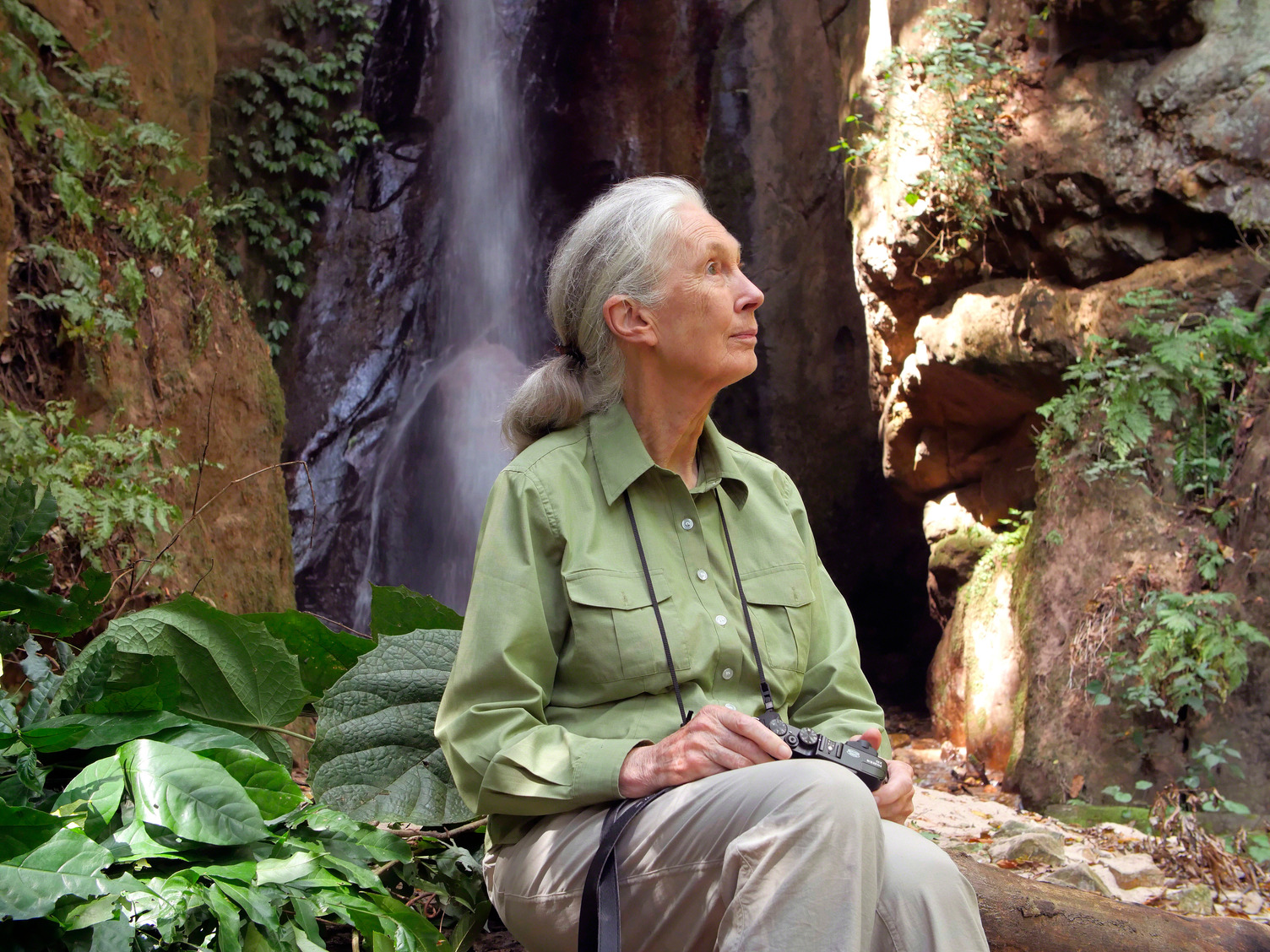
Dr. Jane Goodall beside a waterfall in Gombe National Park, Tanzania

When I asked how she would like to be remembered, she didn’t hesitate: ‘Two things, if that’s not greedy? The first is for helping to change attitudes about the true nature of animals – that they are sentient. They can feel emotions. They can feel pain. They are not just things.
The second is for starting the Jane Goodall Institute’s youth programme, Roots & Shoots. It’s now in 69 countries (and growing), and involves hundreds of thousands of young people from kindergarten to university. Even adults are joining in now – there are some 1,600 groups in the UK alone.’

Dr Jane Goodall leaves behind a legacy that continues to inspire millions to act, speak up, and protect the natural world – not just for the animals, but for ourselves.

You can read her full interview with me here: Dr. Jane Goodall Answers the Random 19 Questions.

Dr. Jane Goodall speaking at the Chan Centre, Vancouver, BC, Canada

The BV puzzles October 25

0

Welcome to October’s BV Puzzles page – your free online spot for a quick brain workout. Complete the interactive crossword, test your logic with a classic sudoku, or relax with our seasonal Dorset-themed jigsaw: this month we have the Moto-stunt International fire jump at Frome Agricultural & Cheese Show (and yes, we’re cheating, we know Frome’s just over the border in Wiltshire!)
No logins, no printouts – just free puzzles updated every month right here on The BV.
Perfect for puzzle fans across Dorset and beyond, our digital puzzles work on mobile, tablet or desktop. Enjoy a quiet moment of challenge with new puzzles published every issue of The BV magazine.


Play Sudoku online!

Harvest concert at St Greg’s

0

On Sunday 5th October at 3pm, St Gregory’s Church, Marnhull, will host a special concert as part of its Harvest Thanksgiving weekend. The programme will be given by the church’s own organist, Gordon Amery.
Born on the Wirral, Gordon studied piano and organ as a child and became organist at Irby Methodist Church at just thirteen years old. After a long break from playing, a twist of fate brought him back to the organ in 2002 at Gillingham Methodist Church, where he went on to organise concerts to fund a major restoration of the instrument. Over the years he has arranged and performed in programmes spanning classical, folk and jazz.

Gordon Amery


Since the closure of Gillingham Methodist Church in 2023, Gordon has taken up the post at St Greg’s. His career has seen him play some of the country’s finest instruments, including those at Salisbury Cathedral, Birmingham Symphony Hall and Liverpool Anglican Cathedral, where he gave a recital in 2010.
For this Harvest concert, Gordon will perform a selection of music by English composers, concluding with Percy Whitlock’s striking Plymouth Suite. Admission is free, with donations in aid of church funds welcome. Refreshments will be served after the concert.
Details are available from Gordon on 07817 379006 or via the ‘Music at St Greg’s’ Facebook page.

Sponsored by Wessex Internet