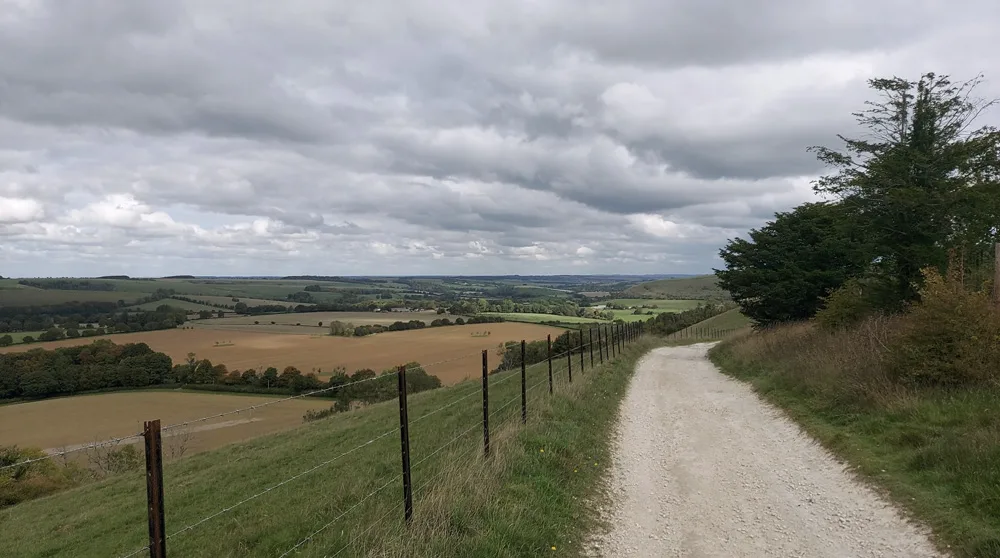
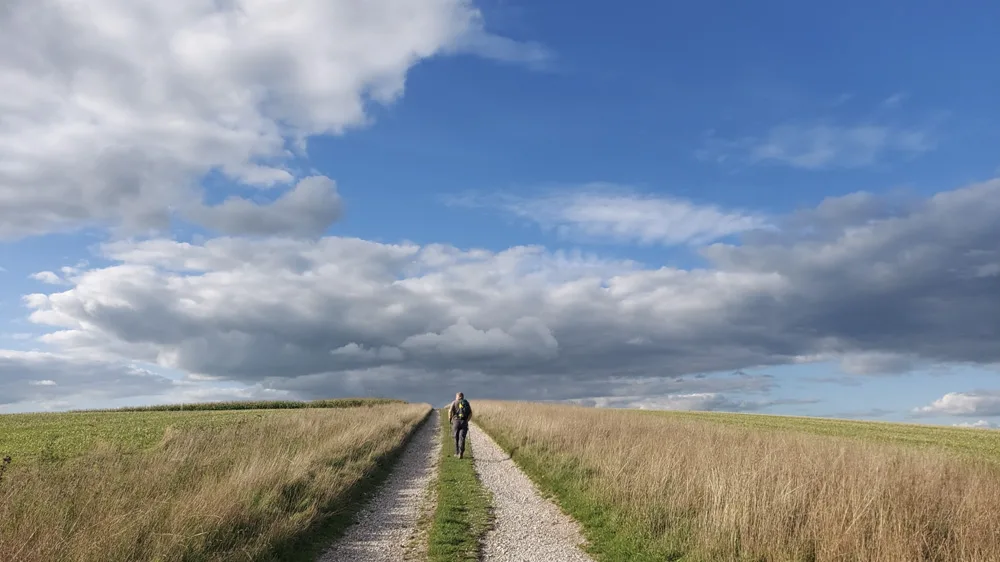
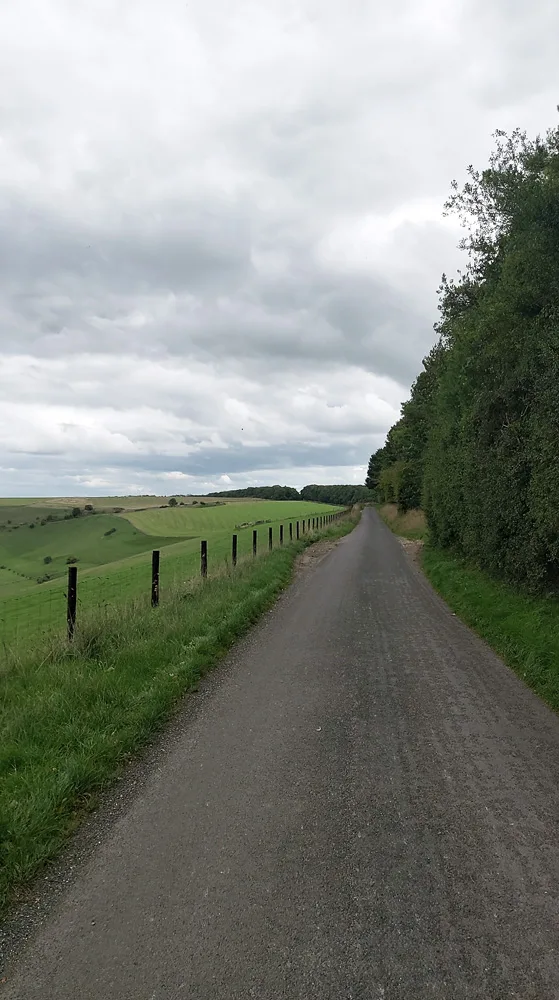
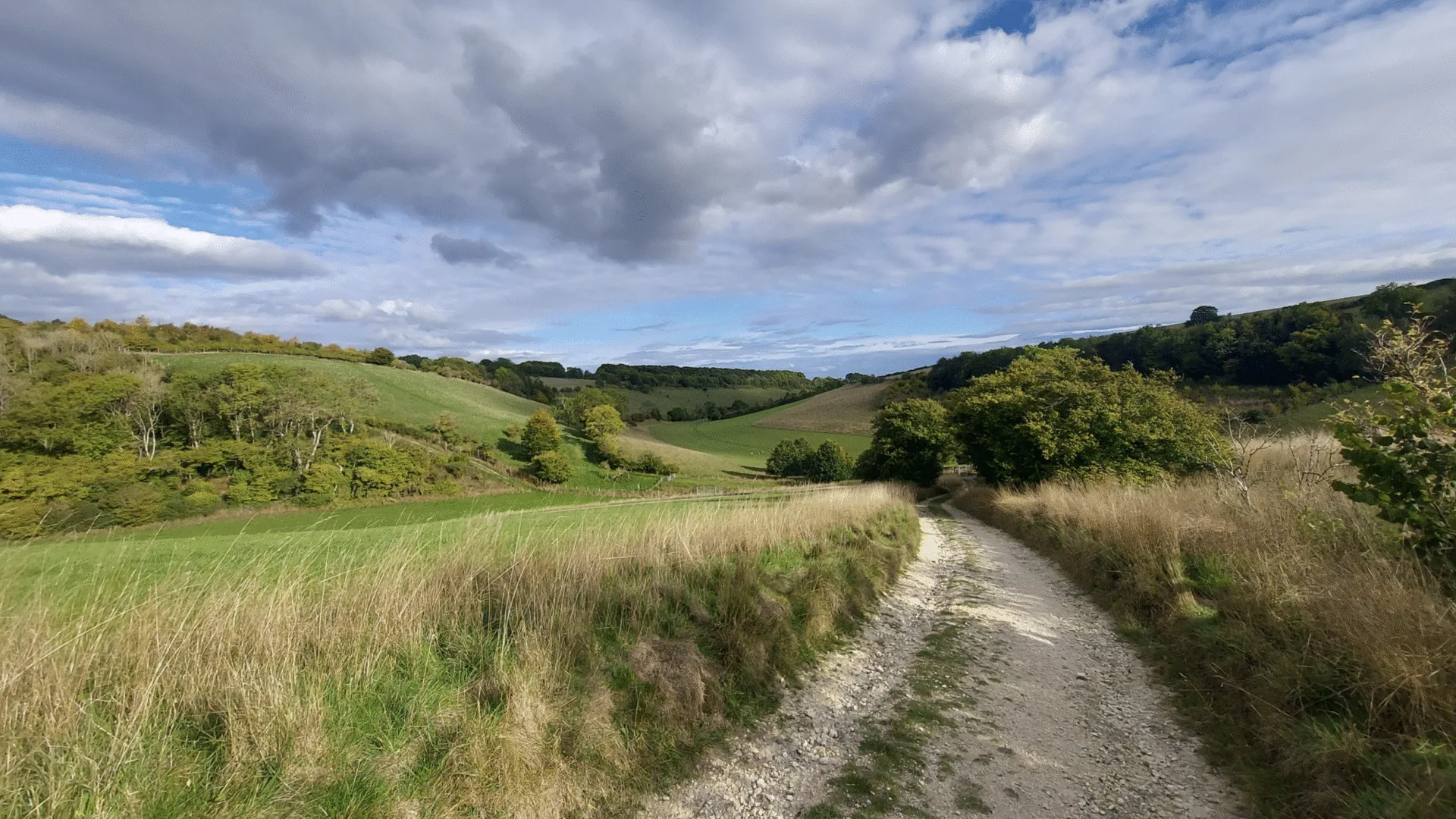
This is a lovely new variation on one of our favourite old walks – we took almost three hours to slowly enjoy what is a simple triangular route, with two miles of flat walking along the Ox Drove, followed by a gentle two-mile descent, and a steady two-mile climb back to the car. Be not afeared – the uphill section is fi-i-ine!
Start from the (free) parking area on Win Green. Although the route immediately follows the Ox Drove, if you’re new to Win Green we recommend detouring across the grass track over the hilltop to the trees, then joining the Ox Drove from the far side – it’s worth it for the view.
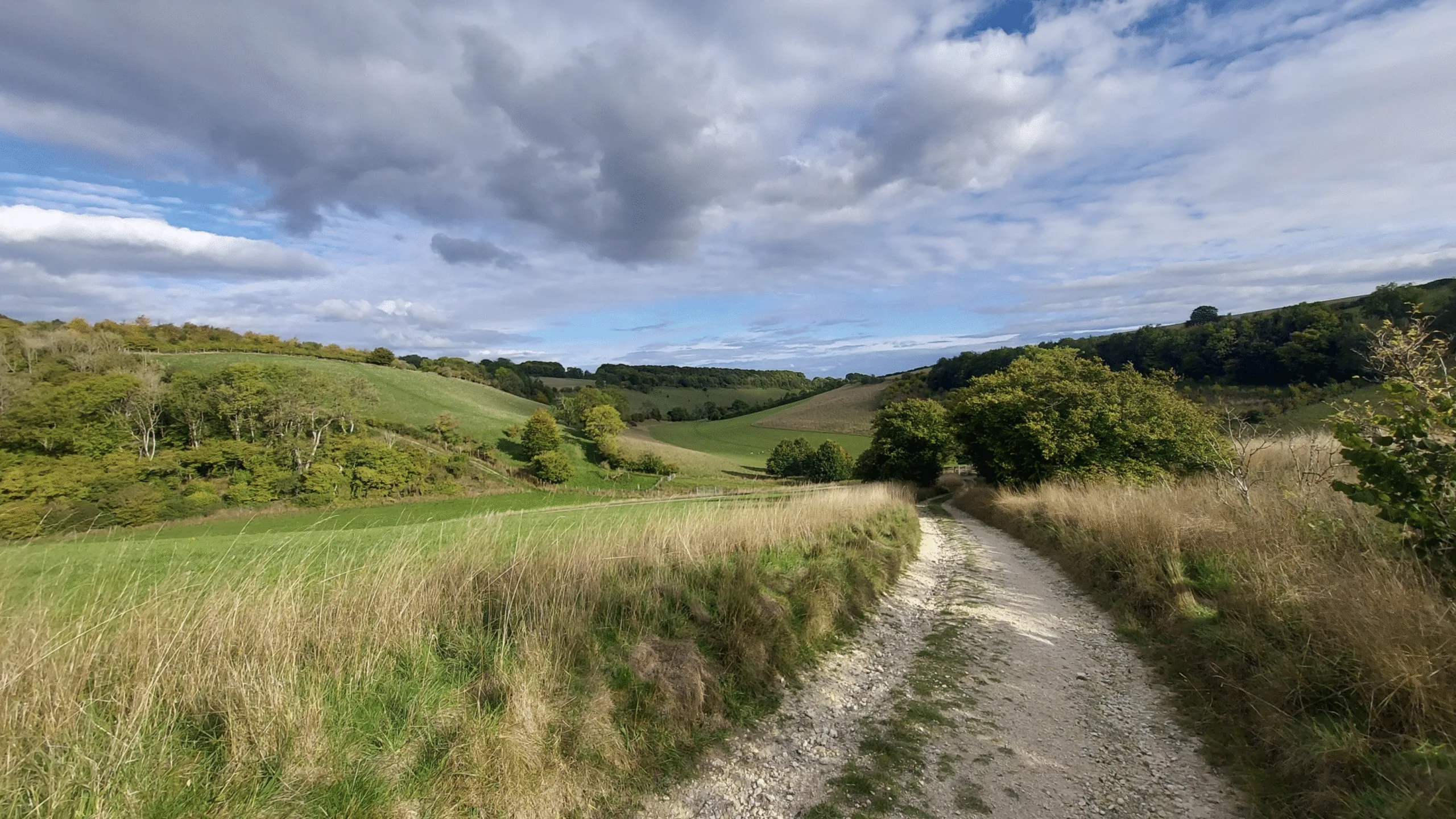
The view from the Ox Drove across Lord Rothermere’s estate, with its tree avenue lit in the sunshine
From there, simply follow the track downhill to the road, then keep going straight until your right turn.
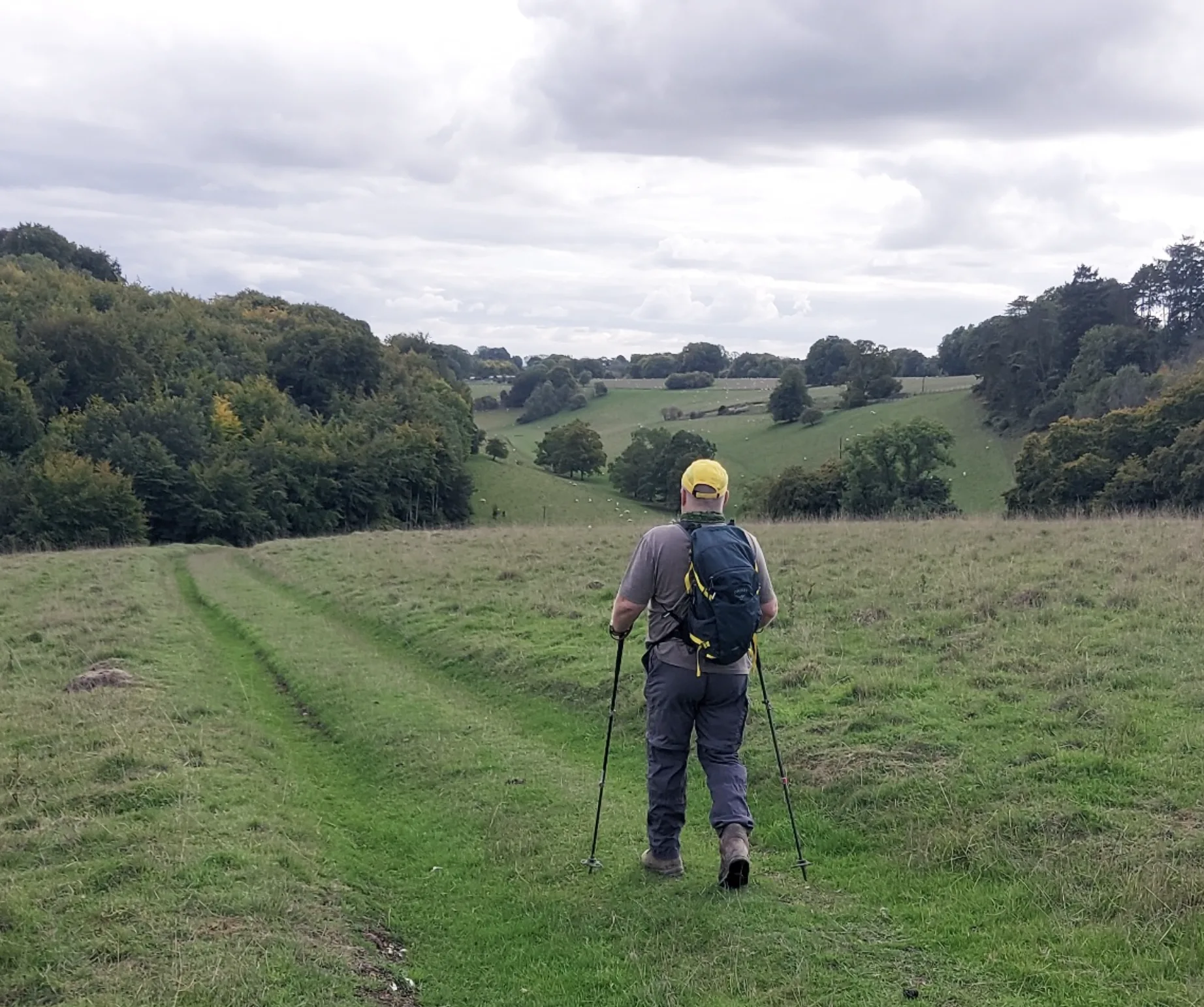
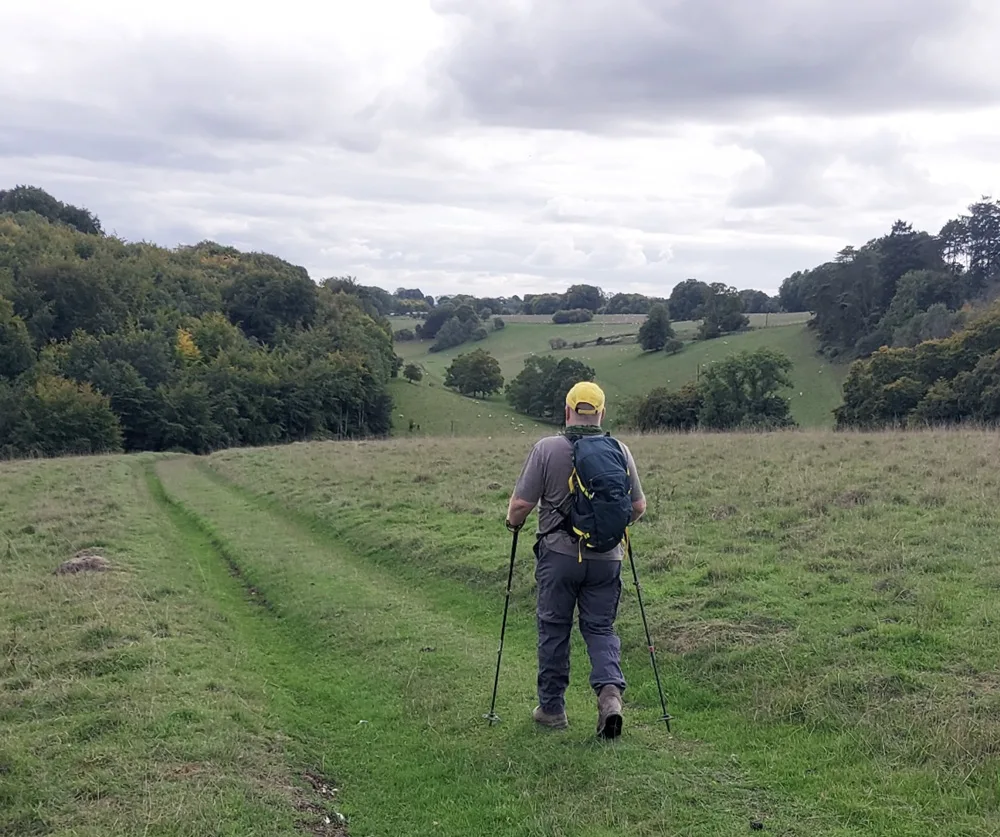
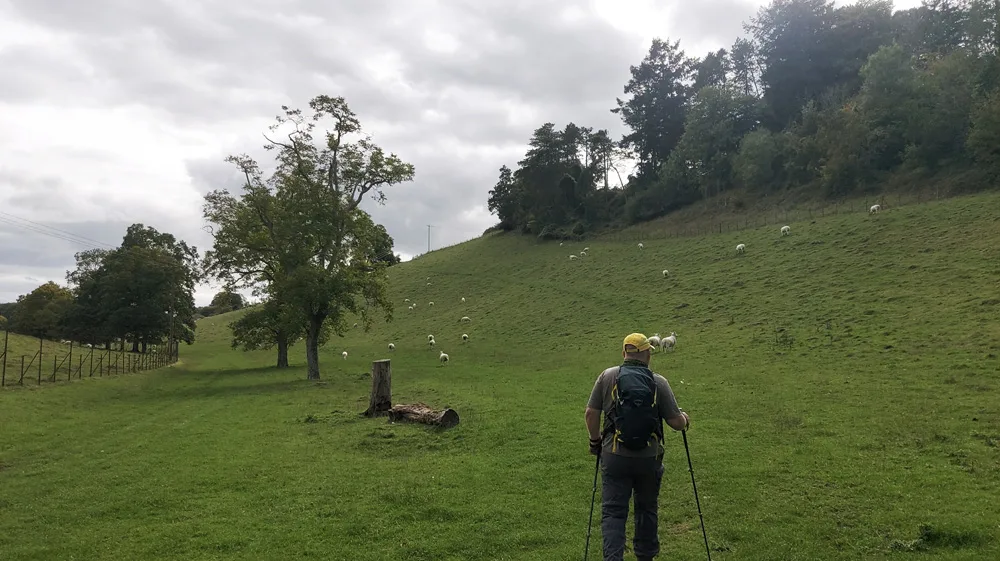
We love the long, easy descent through Rotherley Down – though be warned, there’s a short but sharp uphill near Munday’s Pond (which doesn’t ever seem to actually exist…).
Descending Rotherley Down towards Mundays Pond
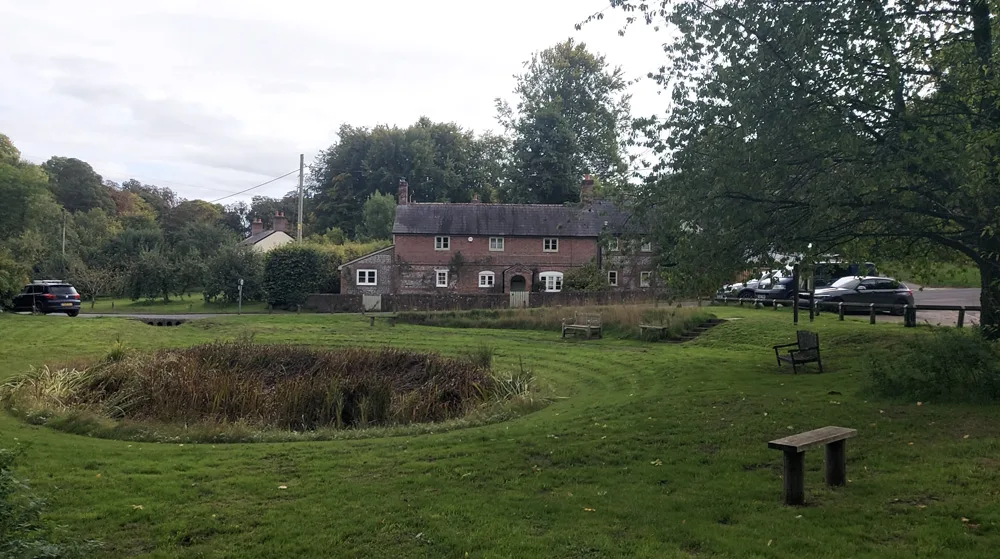
Next comes a short, winding wooded drop into Tollard Royal. If you fancy a break, you can detour left to the King John Inn for a pint – just remember, you’ve still got a two-mile climb back to the car!
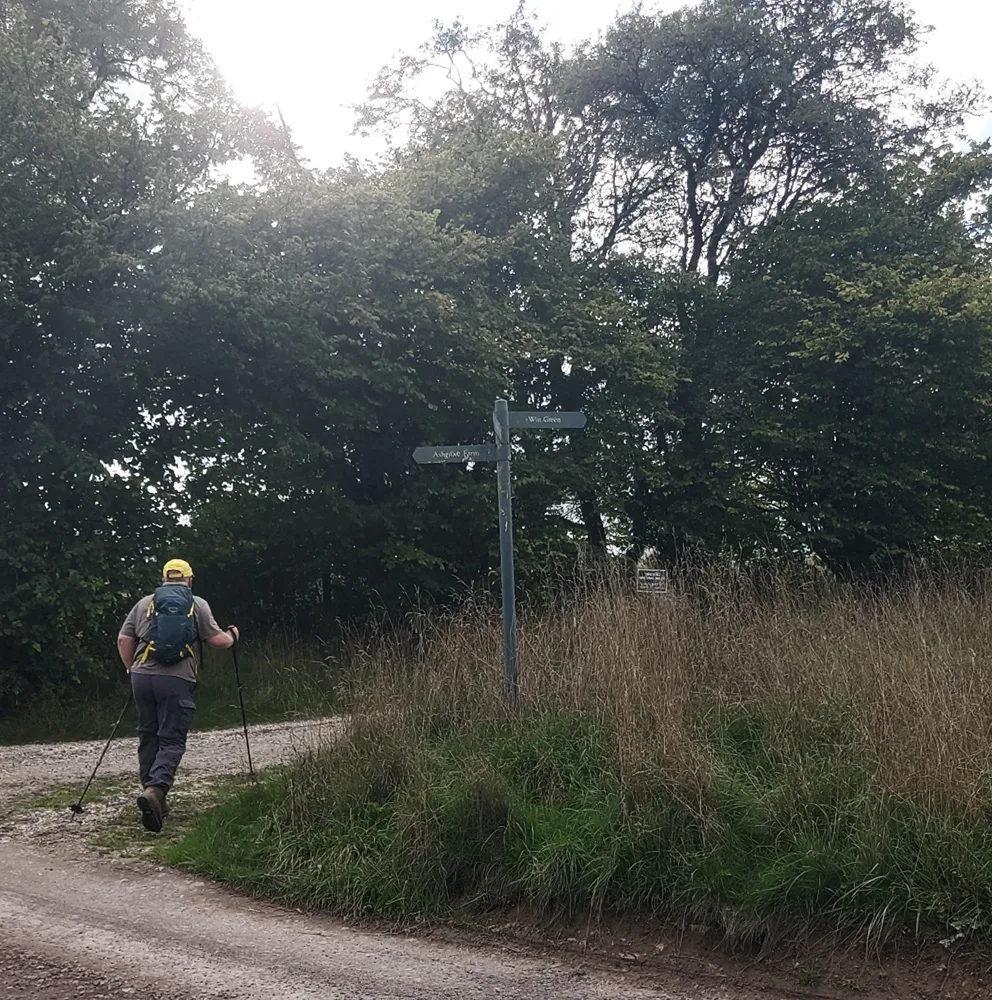
Once you reach Ashcombe Bottom, don’t be tempted to follow the Wessex Ridgeway towards Guy Ritchie’s Ashcombe House – that way lies a rather long gloomy track followed by a brutal climb from Under Win Green.
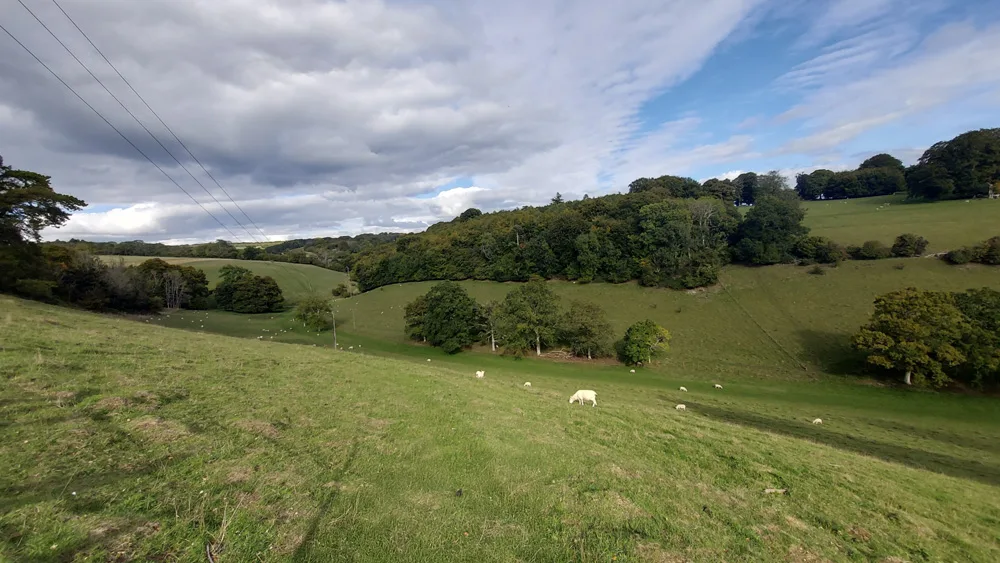
Instead, bear left and begin your gentle ascent on the Hardy Way, soaking up the bright views as you saunter your way back to the car.
A government pledge to cut regulatory costs for small businesses by 25% is being met with cautious optimism from Dorset’s SME community, amid long-standing frustration over red tape and administrative delays.
Peter Gallanagh, UK CEO at Azets
The plans, part of the new ‘Backing Your Business’ strategy, include simplified licensing, modernised corporate reporting, and reduced compliance burdens. But leading advisory firm Azets – which has offices in Poole and Blandford – says the key test will be whether business owners see any real change in their day-to-day workload. ‘We’ve been here before – “cutting red tape” sounds great, but SMEs will judge it on delivery,’ said Peter Gallanagh, UK CEO at Azets. ‘That means fewer duplicative forms, faster licensing, simpler tax processes, and regulation proportionate to business size. Until owners feel it in their everyday workload, it’s just words.’ Azets, which specialises in advising SMEs, said regulation continues to erode productivity, with delays and duplication making it harder for small businesses to invest and grow. It welcomed the government’s ambition, but warned that similar pledges have been made by successive administrations without meaningful results. ‘What matters now is that these reforms translate into tangible outcomes for business – and are felt on the ground, not just written into policy papers,’ added Peter. Azets is calling for practical metrics to track progress, such as reductions in compliance hours and simplified documentation. With many Dorset SMEs still cautious about future investment, the firm said real reform could provide a much-needed boost to business confidence and economic growth across the region.
AI is changing how we work – Dorset Chamber’s Ian Girling asks if it’s cutting corners, or simply a smart tool, no different to spreadsheets or templates?
Ian Girling, CEO of Dorset Chamber
The rise of artificial intelligence in the workplace has sparked a growing debate: is using AI a form of cheating, or is it simply the next evolution of workplace tools? I speak to many people in the business community who almost feel like a fraud or have a sense of guilt when they use AI in the workplace, whether that’s creating a job description, putting a presentation together or solving a business problem. The reality is AI offers a new way to streamline tasks, boost productivity, and reduce human error. However it’s true to say the rapid adoption of AI has raised ethical questions about fairness, authenticity, and professional responsibility. On one hand, using AI can be seen as no different from relying on software, templates, or reference guides. Tools such as grammar checkers, financial modelling software, and automated scheduling systems have long been accepted as part of modern work. In this respect, AI is just another step forward, helping us save time on repetitive tasks and focus more energy on the wider creative and strategic opportunities. Many businesses actively encourage its use because it can cut costs, enhance accuracy, and drive innovation. However concerns arise when AI is used without transparency or when it replaces rather than supports human judgment. For example, if an employee submits AI-generated work and presents it entirely as their own, without oversight, some may argue this undermines trust and accountability. Similarly, relying too heavily on AI could erode essential skills, leaving individuals less capable of independent problem-solving. Ultimately, whether AI use is considered “cheating” depends on context, intent, and honesty. If employees are transparent about when and how AI is used—and if it enhances rather than replaces their contribution—it should be viewed as a legitimate tool. But if AI use is concealed, misrepresented, or used to bypass learning and effort, it risks crossing into unethical territory. In conclusion, AI is not inherently cheating. Like any tool, it is how we use it that matters. Clear workplace policies, combined with open conversations about its role, can ensure AI becomes a partner in progress rather than a shortcut that undermines integrity. So – the big question – is this written by me or AI? The truth is it’s a bit of both. AI has done all the heavy lifting and produced the bulk of the copy and I’ve made some small tweaks to personalise the tone. What would have taken me an hour has just taken me 10 minutes.
Planning battles, Saxon skeletons, public transport woes and a fox-hunting fallout – this month’s podcast covers 1,300 years of rural life, and why the next few weeks could shape the next 30.
Editor’s Letter: Not Quite Pumpkin Season Laura reflects on the month’s sudden turn from drought to downpour, the return of green fields, and feels a quiet mourning for al fresco breakfasts and picky teas. Plus, she urges attention on the Dorset Plan:
“It’s the blueprint for how Dorset looks, lives and grows for the next couple of decades – and we’ve got just a few weeks to shape it.”
Sherry Jespersen: What the Dorset Local Plan Really Means Former chair of North Dorset’s planning committee, Cllr Sherry Jespersen, joins Laura to explain why the Dorset Local Plan is not just a boring bureaucratic document – it’s the most important planning consultation in decades.
“The government gives the numbers, but it’s not Dorset Council building the houses. There’s a mismatch between ambition and reality – and it’s residents who live with the consequences.”
Sherry breaks down how planning actually works, what people get wrong on social media, and why now is the time to speak up – whether you’re worried about infrastructure, affordability, school places or transport.
Dorset Insider: Roads to Nowhere This month our anonymous parish councillor takes a razor-sharp look at Dorset Council’s Local Transport Plan – a document full of admirable goals … and almost no money:
“If you’ve ever cycled in competition with a tractor on a country lane, you’ll understand why people drive. In rural Dorset, the car is still a necessity – and public transport doesn’t cut it.”
6,000 Saxons and a Shallow Grave In Iwerne Minster, archaeologists have uncovered one of Dorset’s largest Anglo-Saxon cemeteries – 6,000 burials from a period spanning 300 years.
Courtenay Hitchcock joins lead archaeologist Richard McConnell on site, where the discoveries are helping to reveal the lives (and curious deaths) of our early Christian ancestors.
“There’s one grave where a second body was squeezed in – and they had to remove the first one’s head to make space.”
The Grumbler: Foxhounds and False History This month’s anonymous opinion piece is from a local historian who took issue with the hound parade commentary at the Gillingham & Shaftesbury Show – and its one-sided sermon on fox hunting.
“The implication was that the rural economy will collapse without hunting, and that every spectator supports it. I wasn’t convinced.”
Protein may hog the spotlight, but fibre quietly builds better health – from gut and heart to blood sugar and mood, says expert Karen Geary
Mix Greek yogurt with chia seeds and raspberries. The yogurt delivers 20g protein, while the seeds and berries add another 10g fibre
In today’s health and wellness world, protein has been stealing the spotlight for a while, enjoying something of a “health halo.” We’re encouraged to prioritise protein at every meal, with influencers showcasing protein-packed smoothies, bars and bowls. And yes, protein is vital for maintaining muscle mass, supporting recovery and keeping you satisfied, though needs will vary according to age, health status and fitness goals. But there’s another nutrient – far less glamorous, yet arguably more essential: fibre. It admittedly doesn’t come in glossy shaker bottles or with high-profile sponsorships, but without enough fibre, even the most carefully crafted protein-rich diet is missing a critical foundation for long-term health.
Why fibre deserves equal billing Fibre is found in plant foods – vegetables, fruits, legumes, nuts, seeds and whole grains – and is the part we can’t digest. That’s not a flaw, it’s the magic. When fibre travels through our gut, it: Feeds beneficial gut bacteria. These microbes ferment fibre into short-chain fatty acids (SCFAs) that support immunity, lower inflammation, and protect against disease. Supports healthy blood sugar levels and a healthy weight. Soluble fibre slows glucose absorption, helping to avoid unwanted spikes and crashes. Keeps you full for longer. High-fibre meals promote satiety without excess calories. Helps with detoxification. Certain fibres bind to unwanted compounds (including environmental “forever chemicals”) and carry them out of the body. Boosts mood and longevity. Emerging research links fibre intake to better mental health and a reduced risk of chronic diseases. A BMJ article found that fibre reduces the risk of heart disease, stroke, type 2 diabetes and colon cancer by between 16 to 24 per cent. Yet, despite these benefits, 90 per cent of people don’t reach the recommended 30g of fibre a day.
The protein/fibre balancing act A common misconception is that eating more fibre means loading up on carbs – and for anyone watching their blood sugar or aiming for fat loss, that can feel counterproductive. Here’s the good news: you can eat both high protein and high fibre without overloading on starchy carbs. The key is to focus on non-starchy vegetables, legumes and low-sugar fruits, then pair them with quality protein sources. For example: Breakfast: Greek yogurt mixed with chia or flaxseeds and raspberries. The yogurt delivers 20g protein, while the seeds and berries add another 10g fibre. Lunch: Salmon fillet with lentils, broccoli and red pepper is roughly 35g protein, 10g fibre. Dinner: Grilled chicken breast with a chickpea and spinach stew has 40g protein, 10g fibre. This approach covers your fibre needs while keeping meals nutrient-dense, satisfying and balanced: no snacks required!
Salmon fillet with lentils, broccoli and red pepper is roughly 35g protein, 10g fibre
Increase fibre not carbs and sugar If you’re currently under the 30g daily target (most fitness trackers such as MyFitnessPal or Cronometer will track fibre for you), build up slowly to avoid digestive discomfort. Add seeds to your breakfast – 1 tbsp chia seeds contains around 5g fibre. Choose legumes – ½ cup cooked lentils or chickpeas will give you around 8g fibre. Double your veg portions – especially leafy greens, broccoli, peppers and courgettes. Snack smart – swap crisps for raw veg and hummus, or have a small handful of almonds. Two squares of 90% dark chocolate gives you 2g fibre. Winner! Think of each meal as an opportunity to combine at least 10g of fibre with a strong protein source. By the end of the day, you’ll have supported your microbiome, balanced your blood sugar, and nourished your muscles – without excessive carbs.
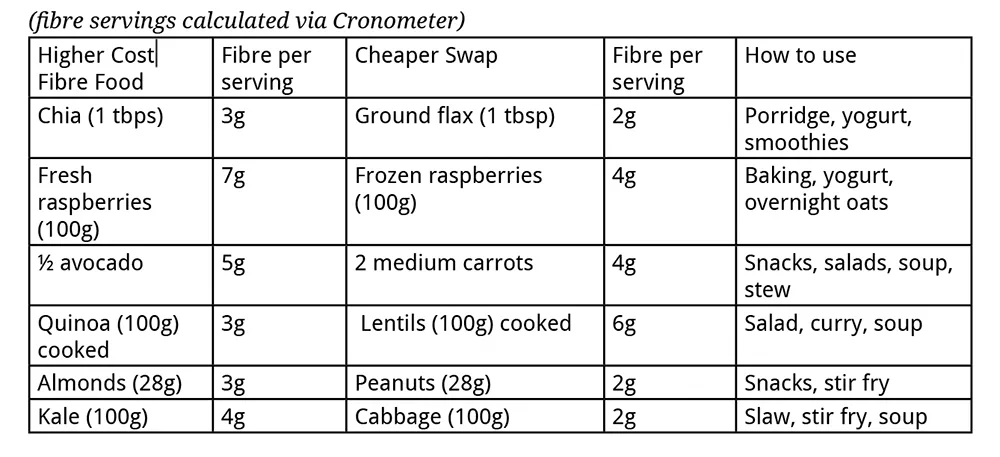
Budget fibre swaps The table below has some suggestions that are not carb heavy (grains and sweet fruit excluded for these examples, but feel free to work with pasta, grains and potatoes if it suits your objectives).Combine two or three of the cheaper swaps in a meal to hit the same (or higher) fibre target as the more expensive option.
The role of healthy fats While protein and fibre are crucial for a balanced diet, healthy fats also play an essential role in overall health. Fats are a vital source of energy, help absorb fat-soluble vitamins (A, D, E and K), and are necessary for building cell membranes and producing hormones. Incorporating healthy fats – such as those in avocados, nuts, seeds, olive oil and fatty fish – can support brain function, reduce inflammation, and promote heart health. A balanced diet includes a variety of nutrients, and healthy fats are an integral part of that balance.
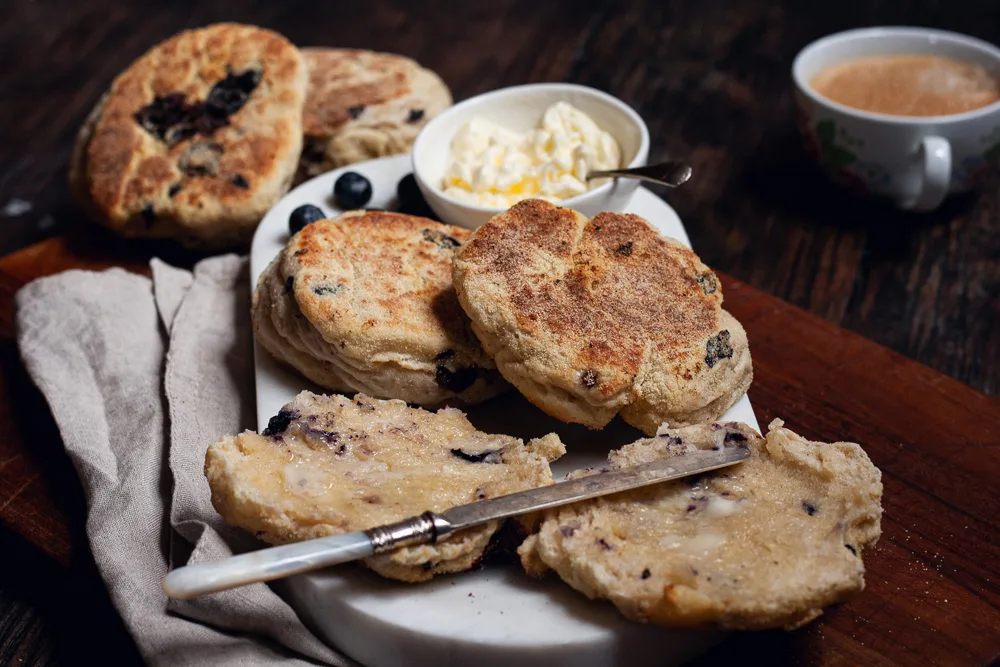
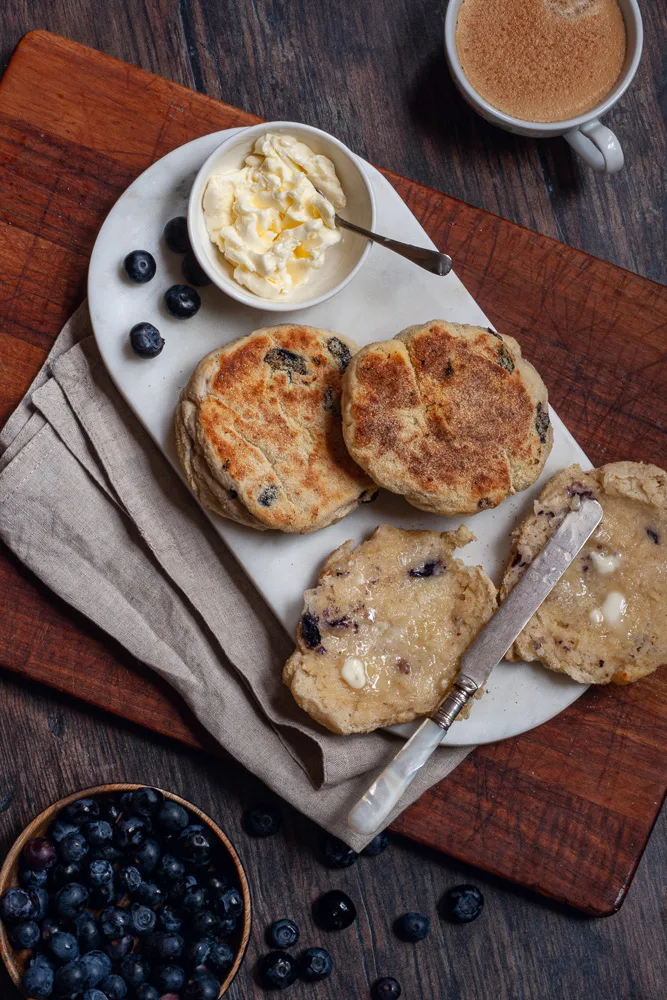
The blueberries in these tasty homemade muffins give a joyous burst of sweet flavour, and when they’re smothered in hot butter, straight from the oven, they are sublime. This recipe does involve some of the bread making process with two proves, so it isn’t quick, but you can leave the first prove in the fridge overnight if you would like hot English muffins for brunch. Heather x
Blueberry English muffins
Ingredients
300g strong bread flour
7g fast-acting yeast (1 sachet)
7g salt
2 tbsp caster sugar
2 tbsp butter
200ml milk
100g blueberries
Semolina
Heather Brown is a special officer for the Guild of Food Writers and has worked in the food industry for 20 years. She is a food writer and photographer, offering one-to-one help to local businesses for content and websites.
Method
In a jug, add the milk, butter and sugar and heat in the microwave in 20 second bursts until the milk is warm. Add the yeast to the warm milk mixture, whisk it in and leave for five minutes for the yeast to start creating foam on the surface.
In a big bowl, add the flour and salt. Pour in the milk mixture and stir until it forms a sticky dough. Either knead this by hand for 10 minutes, or mix using a stand mixer and the dough hook for 7-8 minutes.
Oil the sides of the bowl, cover and leave the dough to double in size in a warm place (an hour).
Line a tray with greaseproof paper and sprinkle with some semolina.
Once doubled in size, turn out onto a surface lightly dusted with flour. Add in the blueberries and knead until the blueberries are evenly dispersed. This will make the dough very sticky: use some of the semolina to help shape the dough.
Press the dough into a rough rectangle shape about 1cm thick and using a cutter (about 8cm in diameter, but it doesn’t have to be precise), cut out the rounds of dough and place on the tray. Use all the dough to get about 6 muffins. Sprinkle more semolina on top and leave to prove for another 45 minutes.
Once proved, heat a heavy-bottomed pan or skillet to a medium heat and add the muffins carefully to the pan. Each side should take 5 to 8 minutes to cook, but keep an eye on them in case they brown too quickly. If they do, just pop them into the oven to finish baking the centre.
These muffins are delicious hot from the pan but they will last three days, and once cooled they are delicious toasted.
Come and join our staff body at our vibrant and happy prep school for girls (aged 7-13) set in the beautiful Dorset countryside:
We have a vacancy for a PA to the Head / School Secretary. This is a vital role, which puts the post-holder at the heart of our school. You must be an effective communicator, friendly and approachable and exceptionally well organised.
Note:Please apply using our own application form and send direct to [email protected] and not through third parties.
CHILD OKEFORD BLANDFORD FORUM DORSET DT11 8HN
Hanford Prep is committed to safeguarding and promoting the welfare of children and expects all staff to share this commitment. This post is subject to enhanced DBS checks. Hanford Prep is part of Sherborne Schools Group. Charity Number 1081228 & Company Number 04002575
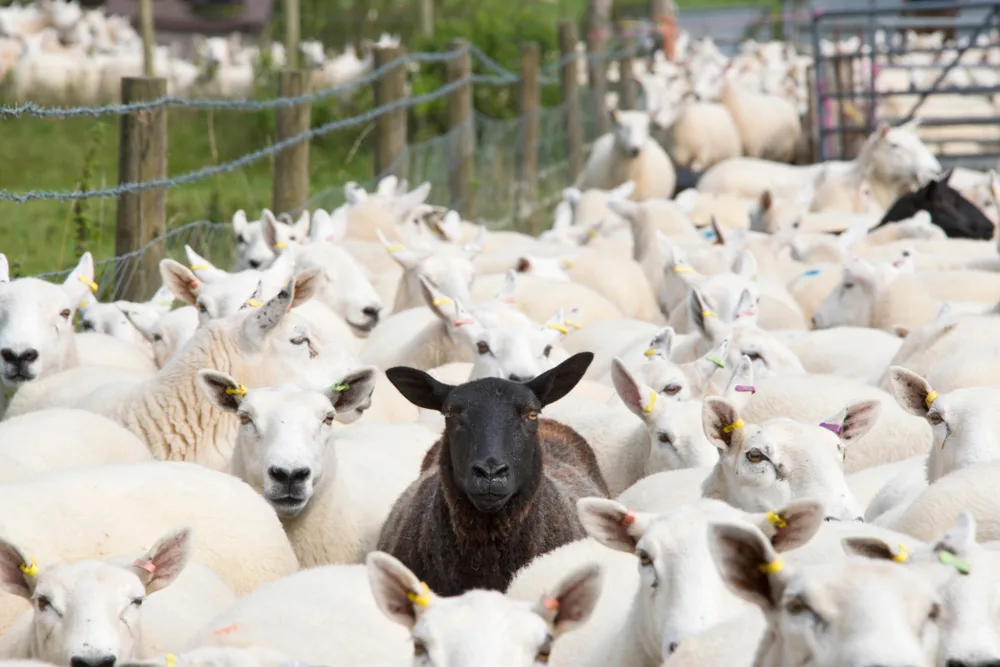
Fearing for the future and no inspiration from politicians, how can farmers stay positive? Andrew Livingston attempts optimism. It doesn’t entirely go to plan
I’ve promised that I’m not going to be negative this month. I’ve promised that I’m going to write something happy, uplifting and hopefully a little bit humorous. So I’m absolutely not going to mention the results of a recent survey by the Country Land and Business Association (CLA) for The Times newspaper. I definitely won’t talk about the fact that 80 per cent of those surveyed said that they were worried that their businesses wouldn’t survive the next ten years. Or that 90 per cent said that they have halted investment in their businesses since the introduction of the dreaded ‘family farm tax’. Nor will I mention that 60 per cent would now consider selling up and leaving the industry in the next five years. The one positive that did come from the survey was that the CLA respondents made it clear they had no trust or faith left in the Labour government – actually, looking at the results, you would think that the CLA had forgotten to put Labour as an option: not a single one of the 500 respondents said they would vote Labour. Surprisingly, in my opinion, only 38 per cent said that if there was a General Election they would vote Conservative. An almost equal 36 per cent would vote Reform, four per cent Lib Dems, one per cent another party, and the remaining 21 per cent were currently undecided. What scares me the most is that I don’t know where I would vote on that poll – probably suggesting that I’m an undecided, too.
No, no, no and no … I’ve always been rather opinionated*, but as I look at the options available I just think … Meh. The whole thing is, frankly, uninspiring. There’s not a single party right now that makes me think “yes! Here is the answer to all our problems.” Part of the problem is the rise of what I’d call ‘further-leaning’ right-wing politics (I think it’s a stretch to label Reform as ‘far right’). Nigel Farage is an interesting character – I wouldn’t mind having a pint with him, and he doesn’t give me the fear that past far-right leaders did. This shift to the right is definitely gaining traction across Europe and the US, but here in the UK I think Reform and Farage are ultimately overhyped by the media. Yes, people bang on hotel doors and throw red paint, but I suspect it’ll all amount to not-a-lot (feel free to throw this back at me if I’m wrong). I do hope some smarter-than-me journalism student is writing a dissertation on the correlation between parliamentary seats and mainstream media airtime. My straw poll suggests Reform is punching well above its weight. It’s no secret I have always been a true blue. I’m not afraid to say that I even liked Boris Johnson. But now, the Tories look rudderless, and potentially more likely to lose even the position of the opposition than to win the next election. Green? No. Labour? No. Tory? No. Reform? No. Lib Dem … Could I? Ed Davey doesn’t scream future Prime Minister to me, but what else is there? My vote is too important not to use it. I don’t have the answers. And honestly, I feel slightly bored by it all. It shouldn’t be that way: I promised to be positive, but I think I’m lacking the vision of any future with a possibility of positive days. I’m crying out to be inspired by someone – anyone! Politics should inspire us all. I’m crying out for someone to give me some hope – we could all use a little bit of that. *regular readers may have noticed that
Wimborne Minster’s Business Improvement District (BID) will face a crucial renewal ballot in October, as local businesses are asked to decide whether to support the continuation of the scheme for a further five-year term from 2026 to 2031. Established in 2011, Wimborne BID is a not-for-profit organisation funded by a levy paid by eligible town centre businesses. It has delivered a wide range of initiatives aimed at strengthening the local economy, including marketing campaigns, business support, environmental enhancements and community-focused events.
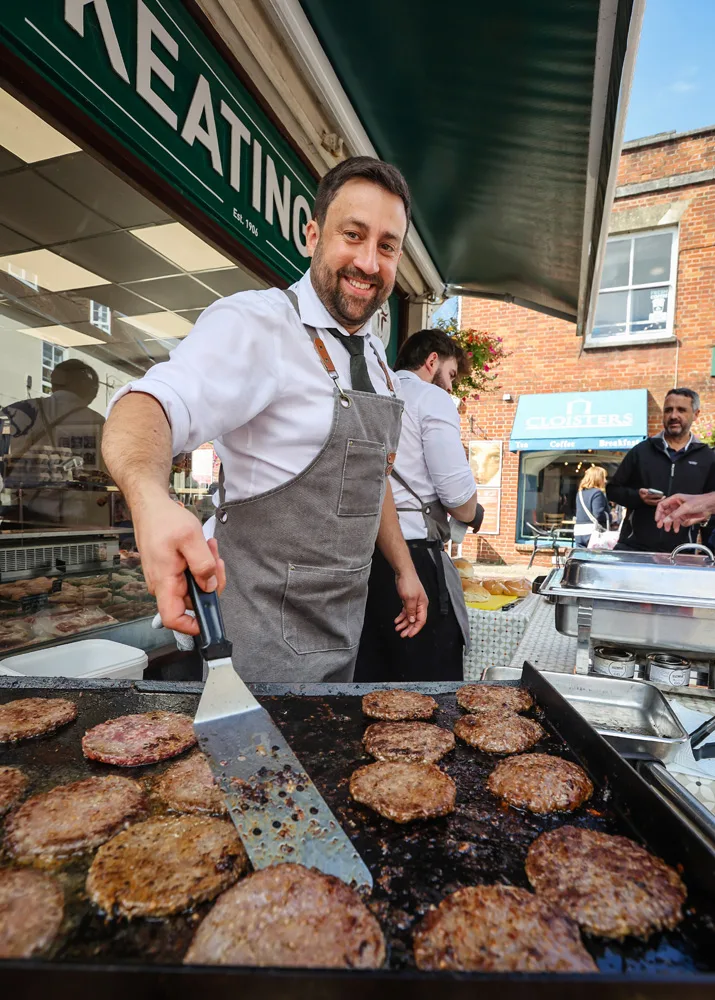
Pop up barbecue by Wimborne butcher Paul Keating
BID Chair Fiona Pawsey said the ballot offers an opportunity for reflection as well as decision-making: ‘This is more than just a vote – it’s a moment to consider what we’ve achieved as a community. From infrastructure improvements to seasonal events, we’ve focused on making Wimborne a place people want to visit, shop and spend time.’ Key projects to date include the Discover Wimborne campaign, a month-long festival each April designed to promote footfall and business engagement, and the newly-launched Wimborne Food Festival. The town’s Christmas celebrations, funded and co-ordinated by the BID, are now considered among the best in the county for their impact on seasonal trade. The BID also funds training, marketing and business support services for town centre businesses, with a particular focus on helping independent retailers compete more effectively. It has invested in improved signage, anti-crime initiatives and environmental enhancements. Deputy Chair Sam Devlin added: ‘There is no replacement body that will deliver what the BID currently provides. All BID income is spent in Wimborne, supporting the long-term success of the town and its businesses. We encourage every levy-paying business to vote and ensure their voice is heard.’ Only levy payers are eligible to vote in the upcoming ballot. Further information is available at wimborne.info