Home Blog Page 9

The cost of trying to build

0

Ours, I am sure, is just on of many similar stories of small builders going out of business and large builders mothballing sites. There is much talk in the media about the hospitality industry being brought to its knees – but little about the building industry. The economy cannot survive without itand the government says it is promoting it, promising to build more new homes … But in our experience this could not be further from the truth.
Historically, when budgeting for a new build, the land would cost one- third, the build would cost one-third and the profit would be approximately one-third. Now, with additional costs and a stagnant housing market, we would be lucky to make any profit at all.
The Grumbler

Example one: The build, Gillingham
We purchased a plot of land in Gillingham in April 2024 for around £130k including fees.
The build was a painful experience, with new regulations changing constantly. The cost grew steadily, with materials and labour continually increasing. Regulations now require all new homes to have low-carbon heating systems such as air source heating. This is a huge expense in itself, but the additional cost of fitting and setting up, with plumbers charging £350 to £400 per day, is a significant increase not factored into the original budget. The build eventually cost around £220k, making the total cost for this small four-bedroom house around £350k.
We initially put the house on the market for £395k – now, after a year, we have reduced it to £365k. By the time we eventually sell and pay agents’ fees there will be no profit left. In the meantime there are the ongoing costs of an empty house – utilities, insurance and Council Tax.
As we are a small builder, buying one plot, building on it and then selling the house to fund the next project, our development has been at a standstill – which also then means less work for sub-contractors.
The real kicker – and why I have finally ‘Grumbled’ today – is the new Council Tax ruling. Historically there were subsidies on Council Tax for empty homes and we did receive a small discount for one month. After that we have paid full Council Tax for the past year on a house we are desperately trying to sell to keep our business going, as well as Council Tax on our own home.
We have now received a bill stating that as the property has been empty and unfurnished for over a year, our Council Tax will be doubled to more than £500 a month. We are aware that this rule came in to protect second-home hotspots like Cornwall and the Dorset coast. But this is not our second home. It is our business – and a business from which we will now make no profit, probably a loss with this additional cost.
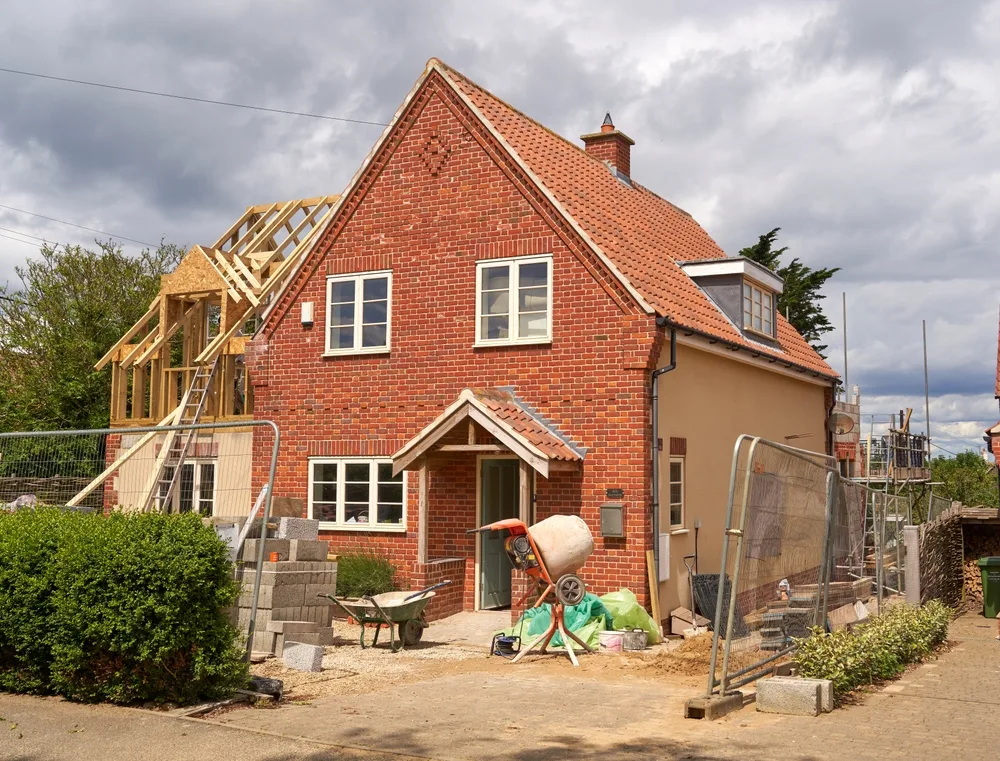
Stock image of a house under construction in the UK

Example two: The land at Bere Regis
We purchased this corner plot in 2019 with planning permission for a four-bedroom detached house. In 2022 we applied to change the permission to allow two semi-detached, two-bedroom homes, as we felt these were more urgently needed and more suitable for the area.
Planning was granted in principle but, as the land lies within 20 miles of Poole Harbour, development was put on hold until nutrient neutrality could be mitigated. This took around four years of hard work. We have now finally secured mitigation and full planning permission.
The initial cost of the land, plus additional costs over the years, totals around £145,000. Nutrient mitigation is £26,000, payable by 1st April, bringing our total outlay to over £170,000.
As the Gillingham house has not sold, we cannot start this build ourselves. To sell the land we would have to be transparent about further costs. The Community Infrastructure Levy when we first bought the land was around £3.5k. The new fee for 2026 is approximately £28,500 (£210 per square metre).
There is also now an Affordable Housing contribution because we are providing two smaller, more affordable homes rather than one executive four-bedroom property. That additional cost is around £38,000.
With these costs, any possible profit is gone, and no one wants to buy the land and build under these circumstances. Who can blame them?
The land development director at Goadsby recently valued the plot at £45k – a loss to us of over 70%. We are left with land that cannot viably be developed and a house build we cannot profit from. Yet the Government claims to be doing so much to help the building industry and provide millions of new homes …

***The Grumbler – the open opinion column in The BV. It’s a space for anyone to share their thoughts freely. While the editor will need to know the identity of contributors, all pieces will be published anonymously. With just a few basic guidelines to ensure legality, safety and respect, this is an open forum for honest and unfiltered views. Got something you need to get off your chest? Send it to [email protected]. The Grumbler column is here for you: go on, say it. We dare you.***

Interests not friends in Tehran

0

America’s restless view of its global role reveals a superpower long on strength yet short on patience, writes MP Simon Hoare

Simon Hoare MP

I have not long finished reading A Short History of America from Tea Party to Trump – an informative, slim volume by former editor of the The Times, Sir Simon Jenkins. It is full of interesting snippets of information, and worth a read. A theme he seeks to trace is how America views its role in the world. The early colonists maintained a close interest in Britain’s affairs, not least because they were ‘governed’ by the Crown. Following the War of Independence, the Founding Fathers maintained a determined and deliberate disengagement from the ‘old’ world, as they were the ‘new’. They studiously took no interest in world affairs, and this doctrine broadly held firm until America’s entry in the First World War – but it was short-lived, as their late entry into the Second World War all too clearly demonstrated.
A land, many argued, which was self-sufficient in resources need look nowhere else for its prosperity and security. Monroe and Wilson produced their ‘Doctrines’, but in the post-1945 world, as the British Empire retracted and naval supremacy vanished, America stepped up to be the policeman of the world, positioning itself as the ultimate defender of freedom, sovereignty and democracy.
The rest, as they say, is history – and so well known as not to require regurgitation here.
The really interesting point that Jenkins highlights is the shortness of American patience. He believes this is the reason that the US has never had an empire in the geo-political and administrative sense of that term. Spheres of influence? Yes. Dependent semi-autonomous countries? Yes. But an administrated empire? No.
He contrasts this with Britain’s approach – establish trading links and partnerships; secure a foothold; forge alliances; commit to the long term … and before you know it an empire upon which the sun never set is created. British long-termism and patience, or the tortoise approach, beating the American short-term, in-out, hare.

A moveable feast
I wrote the above the day following the latest US/Israeli attack on Iran, and the concomitant reprisals. Iran (the world’s 17th largest country by land mass and population) sits leaderless and under attack. Are the Middle East – and the world – better without the Supreme Leader? Of course. But to claim it is safer is a little premature.
As we saw recently in Venezuela, the US seemed content to replace a Super Villain President with a Villain President. Mr Putin is without doubt more dangerous and destabilising, yet Mr Trump prefers to play diplomatic footsy with him. While David Cameron was right when he said, in relation to Libya, ‘all because one cannot do good everywhere does not mean you should not seek to do good somewhere’, it should not be a vain hope that there is at least some moral consistency in the approach. With the US, it appears to be a more movable feast. Perhaps Trump takes his lead from another former British Prime Minister, Lord Palmerston, who declared that Britain had no friends, only interests.
The ordinary, put upon and oppressed Iranian will really not know what to do now. They will remember Iraq’s Marsh Arabs – urged to rise up and be supported by the West, only to do the former, find themselves abandoned by the latter and oppressed violently by those they rose against. Will the Shah-in-exile be dusting off the Peacock Throne? Will America, by the time you are reading this, have gone further? Will the Revolutionary Guards have turned their swords into ploughshares?
Will there be jubilation on the road to freedom in Tehran, or will there be silent anxiety behind closed doors? Hope beaten by experience.
We frankly do not know. The one thing we have to hope is that America, having started something, has the patience to see it through.
Another failed state is something the region cannot afford nor the rest of the world welcome.

Final call for Dorset Apprenticeship Awards entries

0

The deadline is approaching for this year’s Dorset Apprenticeship Awards, with nominations set to close on Friday 27th March.

Now in their fifth year, the awards are organised by Dorset Chamber in partnership with the Dorset and Somerset Training Provider Network, celebrating the impact of apprentices and supported interns across the county. Sponsored by manufacturing firm Superior, the awards recognise individuals and programmes helping to build a skilled workforce.


WINNERS 2025: Winners and dignitaries at the Dorset Apprenticeship Awards. From left are: Dorset Chamber chief executive Ian Girling, Sarah Matthias from University Hospitals Dorset, Aleasha Ellis from Bluebird Care, Alfie Blake from BCP Council, Morgan Simpson from Nusura Thai Fire Kitchen, Jack Lant from Poole Accident Repair Centre, Sonnaz Nooranvary from House of Sonnaz, Richard Jenkins from Dorset and Somerset Training Provider Network (DSTPN) and Superior managing director Tim Brown.

There are five categories, ranging from Intermediate (Level 2) through to Degree-level (Levels 6 and 7) apprenticeships, alongside a Supported Internship of the Year award.

Dorset Chamber chief executive Ian Girling said the awards offer a chance to recognise both individual achievement and wider investment in skills. ‘There is still time to nominate that fantastic apprentice who is a rising star in your workplace,’ he said.

The awards are free to enter and open to apprentices, supported interns, employers and training providers. Entrants must live or work in Dorset and have completed their programme by 29th May, when the awards ceremony will be held at Superior in Ferndown.

Last year’s winners included apprentices working across sectors from healthcare to hospitality and engineering, reflecting the breadth of training taking place across Dorset.

Further details and entry information can be found at  https://dorsetchamber.co.uk/dorset-apprenticeship-awards-2026/

The Inca trail with Parkinson’s

0

** Regular readers will remember 47-year-old Child Okeford resident Matt Riggs who had been diagnosed with young-onset Parkinson’s. We spoke to him last summer when he was preparing for the challenge of a lifetime trekking the 45km Inca Trail to Machu Picchu. The journey was about far more than reaching the summit – it was about raising awareness of the condition and proving what is still possible. Safely back in Dorset, Matt reflects on the experience.**

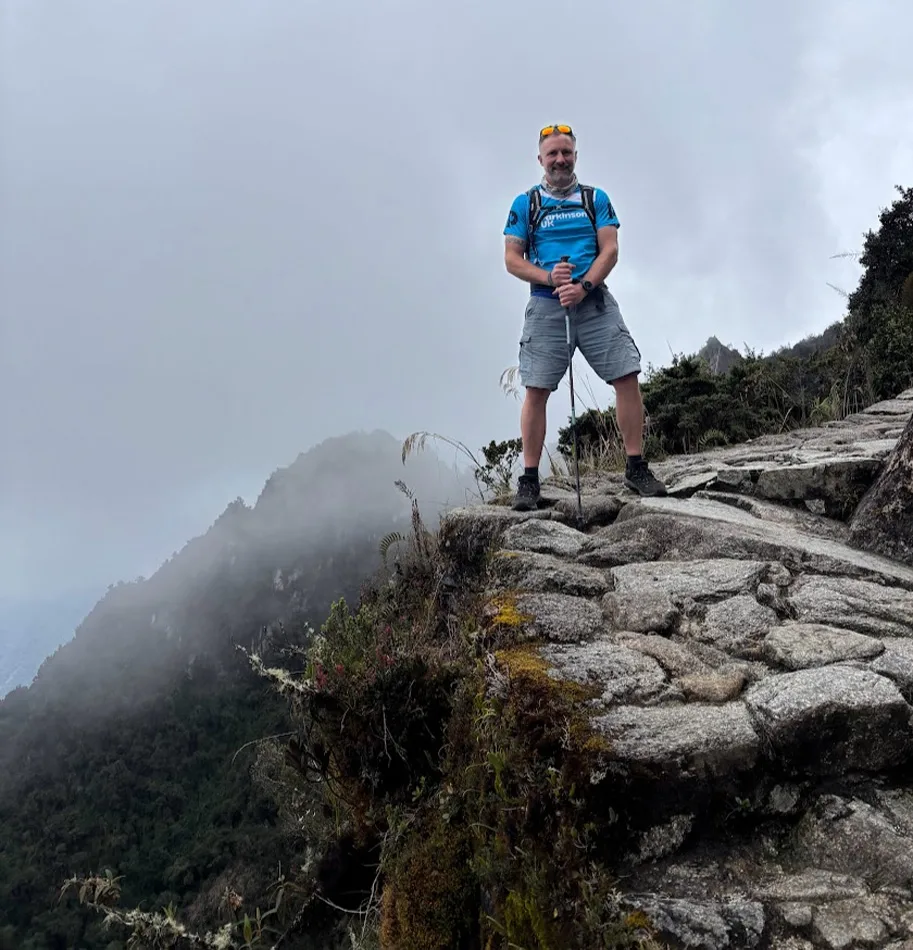
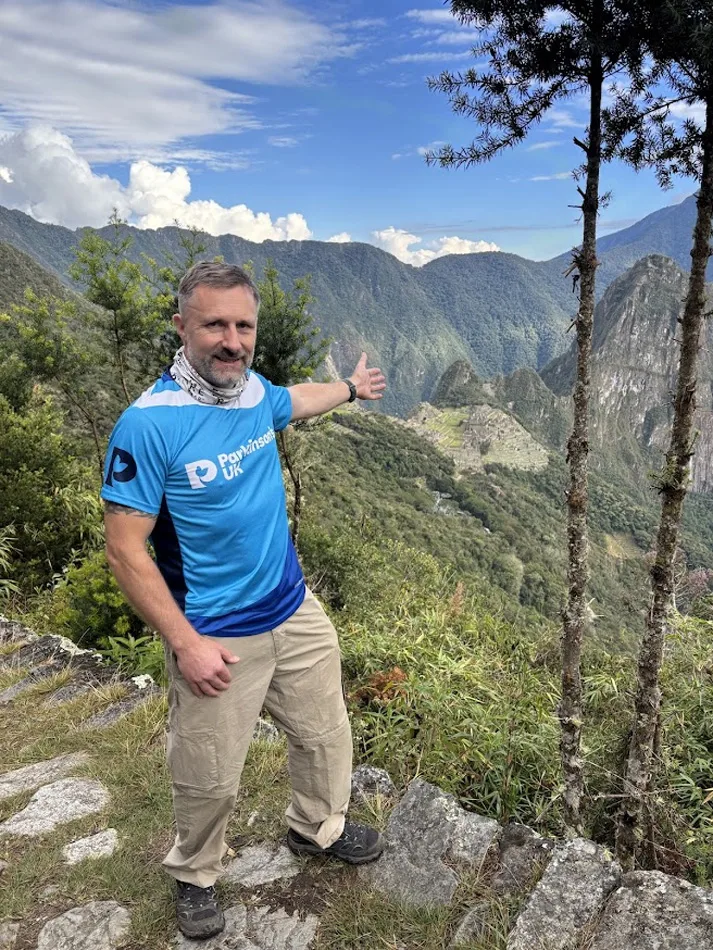
Matt Riggs, trekking the Inca Trail just 18 months after his young-onset Parkinson’s diagnosis.
All images: Matt Riggs

The Inca Trail to Machu Picchu had been on my bucket list for a very long time – and it most certainly didn’t disappoint. Following my diagnosis of young-onset Parkinson’s in March 2024 at the age of 47 – which reinforced the sentiment that we shouldn’t put off adventures until it’s too late – I decided to positively reframe the situation by signing up to trek the Inca Trail and committing to raise money for Parkinson’s UK.
My sister, Caroline, was keen to accompany me (I can’t think why!) so we embarked on our challenge in September 2025.
The excitement was really building as the plane began its steep, dramatic descent into the high-altitude valley surrounding Cusco in Peru, offering us our first glimpses of the majestic Andes mountain range.
As Cusco sits at an elevation of 3,400 metres, you notice the thin air immediately, and breathing can feel a little harder. Our first encounter with a stunning Inca site was during the first day’s acclimatising hike above Cusco, and we began the Inca Trail itself the next day.

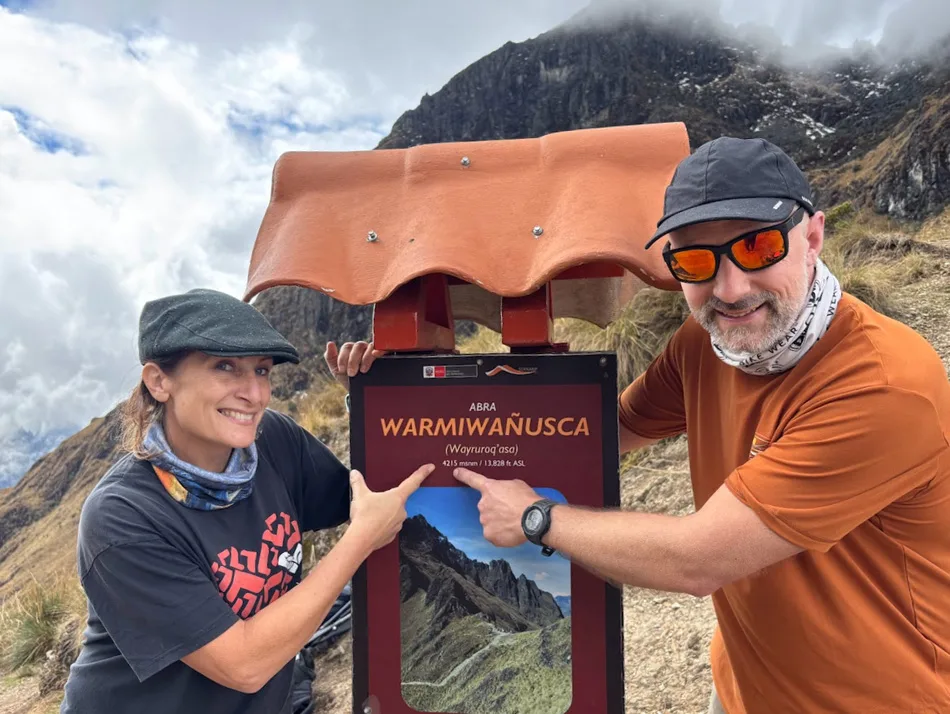
The top of the long, steep climb up to Dead Woman’s Pass (Warmiwañusca), the highest point of the trek at 4,125 metres

Into the mountains
We were incredibly lucky with our weather, enjoying sunshine for most of the trek – except for some mystical mountain mist and half a day of drizzle. We were also blessed with a wonderful group of fellow trekkers who continually supported each other, offering encouragement to anyone struggling with fatigue or altitude sickness.

Almost at Machu Picchu


We were genuinely buoyed on by the generosity of our supporters – the donations really did inspire us to keep going, knowing that vital funds were being raised to aid research into curing this debilitating disease. We were determined to complete the trail no matter what!
My training had consisted of walking up and down the hills of Dorset before the trip, but it really paid dividends. We both met the challenge of the relentless inclines, sharp descents and seemingly endless steps. One particular day is especially tough as it involves a long, steep climb up to Dead Woman’s Pass (Warmiwañusca), the highest point of the trek at 4,125 metres, though the effort is rewarded with stunning views of snow-capped peaks and alpine valleys.
Thankfully, I wasn’t adversely affected by the altitude and due to the focused, rhythmic nature of such a physical challenge, I was often grounded in the moment and able to block out any thoughts of my symptoms.

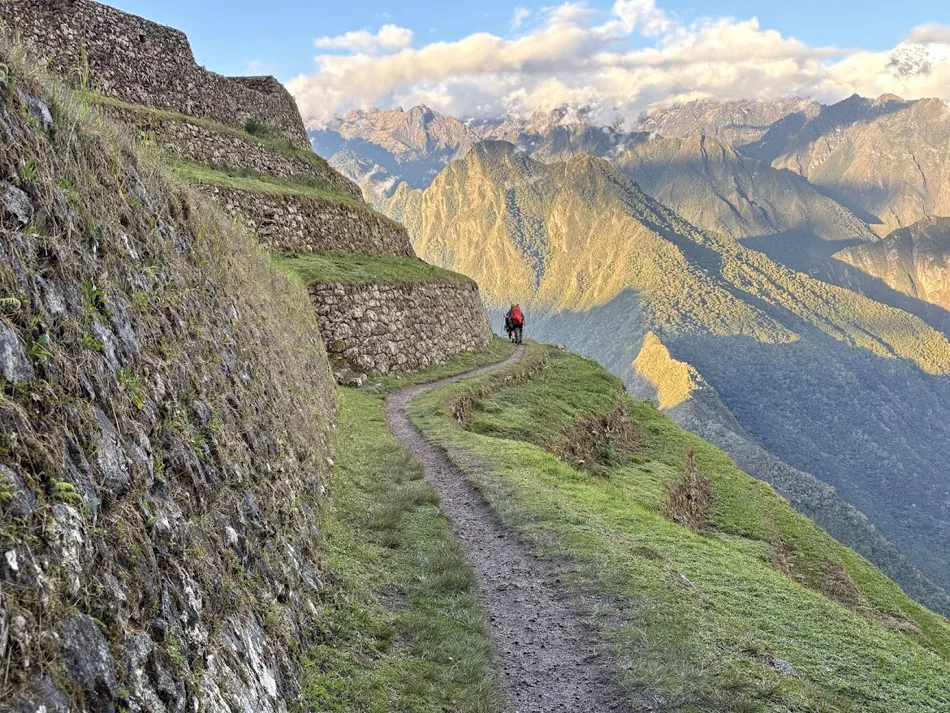
The trail at Intipata

Touching distance
Spending four solid days trekking in the Andes really allows the magnificence and beauty to sink in, creating a humbling sense of reverence for the sheer scale of the landscape. We explored various Inca sites along the route, each one mesmerising for its seamless integration, high altitude engineering and breathtaking scenery. We walked on ancient stone pathways that hugged mountain slopes, passing through sections of cloud forest, grasslands and tropical jungle.
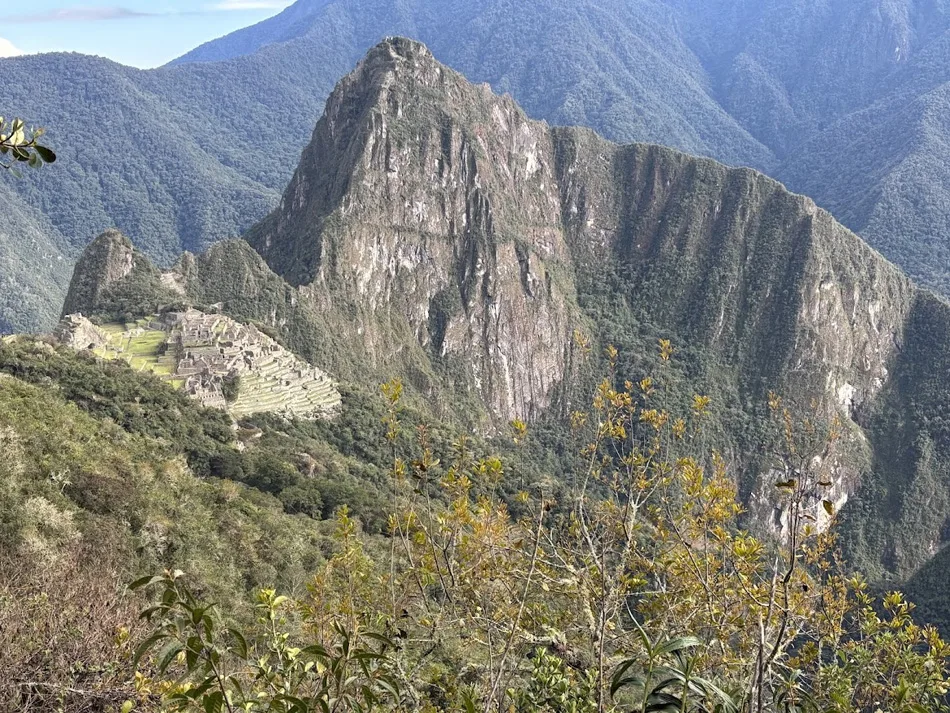
Reaching the Sun Gate (Inti Punku) on the morning of the final day and peering down to a sunlit Machu Picchu in the distance was a special moment. The sheer size of the site and its precarious position perched on a narrow mountain ridge is astonishing. Our goal was finally in touching distance, and there was a real spring in our steps as we descended the final stretch. Entering the citadel is a magical experience, with jaw-dropping views at every turn and some of the greatest vistas in the world. How the Incas managed to build a large complex of houses, temples, agricultural terraces and an advanced water system on top of a mountain, without any form of mortar, defies belief.

Approaching Machu Picchu


I have immense gratitude for the fantastic team at Discover Adventure who ran the trip.
The tireless, superhuman endeavours of the porters deserve a special mention: they’d set up camp and prepare delicious meals on a couple of gas burners prior to our arrival. We only carried small day packs, but the porters would often yomp past us carrying heavy bags of kit that were as big as themselves!
Thank you, too, to all our generous supporters who have donated an incredible £5,276, smashing our target. Absolutely 100% of donations go to help Parkinson’s UK fund research into finding a cure for this disease. Fundraising is still open if anyone would like to make a donation. Just click on the following link:
https://bit.ly/MattRiggsInca

Cake, candles and consequences

0

Victoria Sturgess from Black Pug Books says birthdays in literature reveal love, vanity and the unsettling truths that lurk beneath the celebration

Continuing the personal connection for this edition, my younger daughter has a birthday mid-March – so birthdays it is.
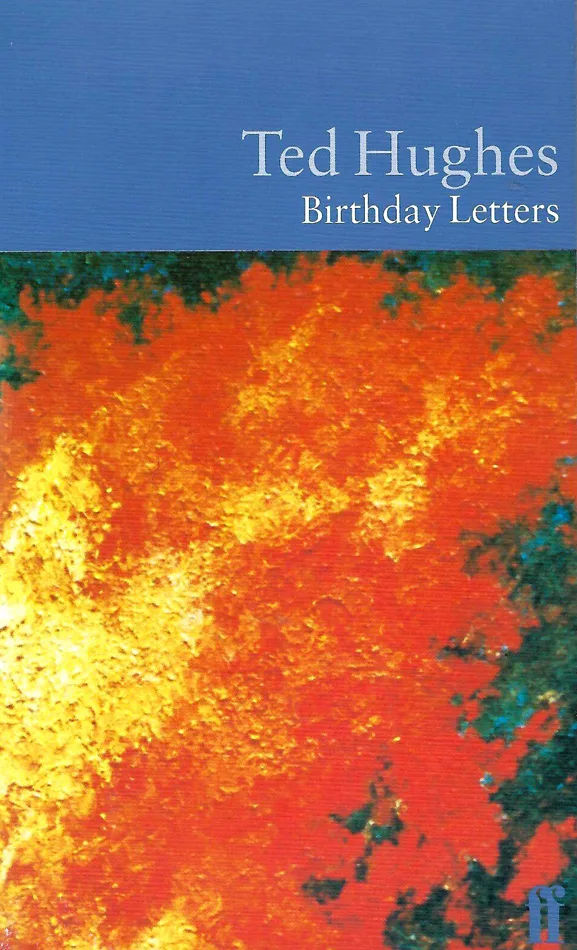
Probably two books immediately spring to mind for most: Ted Hughes’ Birthday Letters and Harold Pinter’s The Birthday Party, though the latter is admittedly a play. Ostensibly about a little party given for a guest in a rundown boarding house, the arrival of two strangers turns it into a nightmare. In usual Pinter fashion, nothing is as it seems.


It is a vehicle for his exploration of identity, time, place and political symbolism. Pinter, reflecting on a line in the play ‘Don’t let them tell you what to do,’ said, “I’ve lived that line all my damned life.”
The second book can initially seem equally bleak. Although it captures Hughes’ guilt and sorrow about his estranged wife Sylvia Plath’s suicide, there is deep love and admiration too.
The collection consists of 88 poems about his life with her – the first public acknowledgement of their highly complex relationship. Considered possibly his finest work, it’s an award-winning legacy to both.
Now a complete spinaround in mood and recognition. Although the author, Oscar Wilde, could hardly be more famous, The Birthday of the Infanta is a little-known gem from his collection A House of Pomegranates. The story revolves around the 12th birthday of the Infanta, only child of the King of Spain, and a dwarf dancer who becomes entranced by her. As with the previous titles, the ‘story’ is a means of exploring hidden themes – in this case, vanity and age, two of Wilde’s eternal obsessions. Lyrical and poignant, it’s a timeless classic.
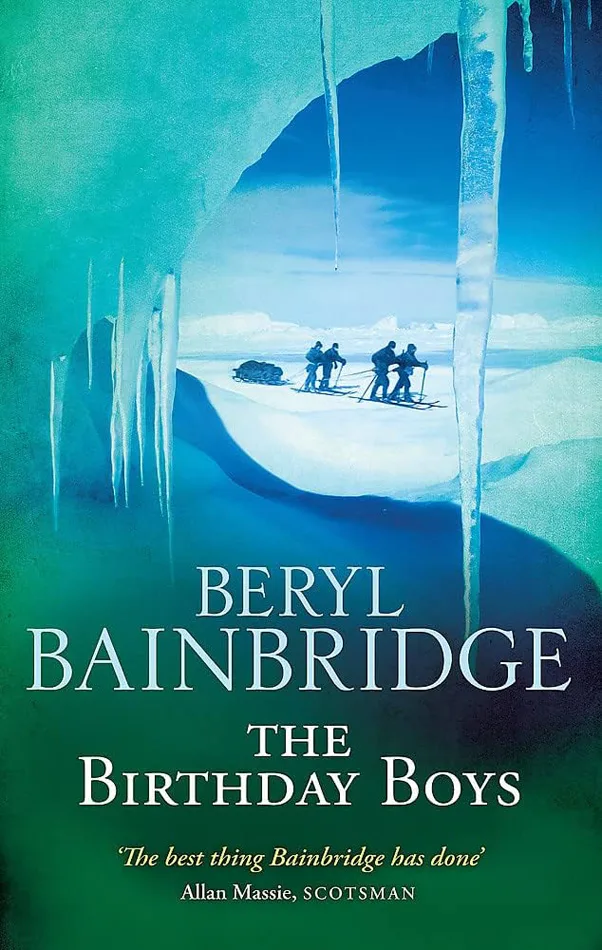
Beryl Bainbridge remains underrated. In her retelling of Scott’s Antarctic expedition, The Birthday Boys (1991), she was blurring fact and fiction long before it became fashionable.
Five first-person narratives by the crew give widely differing perspectives of the ill-fated expedition, and it’s up to the reader to decide the extent of the ‘truth’ – a hugely intriguing exercise which, for me, changes on every reading.
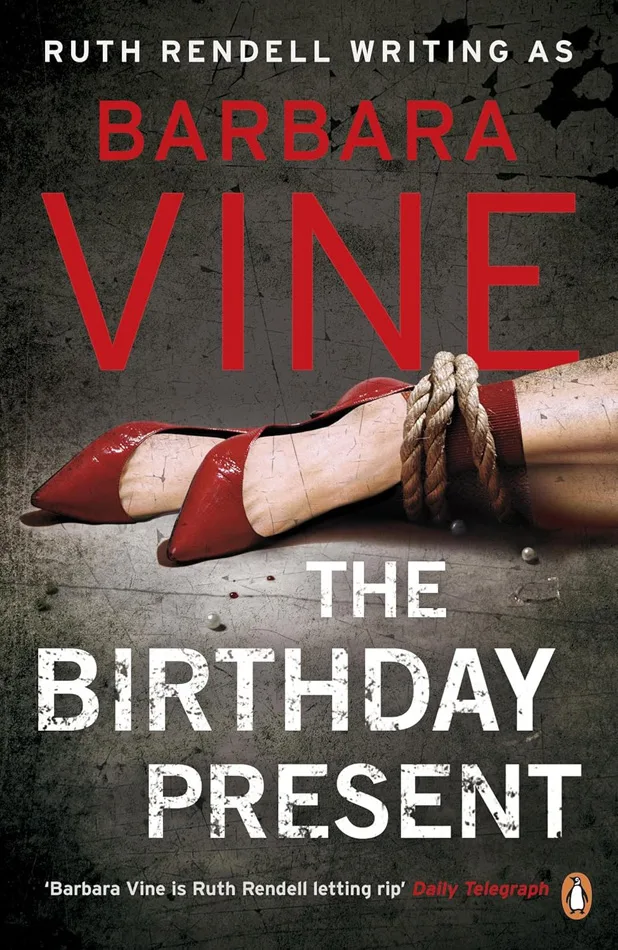
And to end, an amazingly prescient tale – although written nearly 20 years ago, The Birthday Present by Barbara Vine (Ruth Rendall’s psychological alter ego) could have been written yesterday.
Ivor is a handsome rising star MP who by chance meets a beautiful married woman. They become obsessed with sexual role-playing, which inspires Ivor to organise a surprise birthday present involving a kerbside kidnapping. What could possibly go wrong?
To quote a review: ‘an exploration of the dark twists of fate that can shake the lives of even those most insulated by privilege, sophistication and power’.
Er … sound familiar at all?

Streaming, security and the rise of VPNs

0

There’s a tendency in rural areas to assume online privacy is someone else’s problem – big cities, big companies, big data breaches. Not us. But the reality is, whether it’s streaming a film in the evening, checking bank accounts or running a small business, most of us are now leaving more data online than we probably realise.

Ten years ago, patchy broadband was the main frustration. Now, with better connections, it’s less about whether you can get online, and more about what happens when you do.

This is where VPNs – virtual private networks – start to come into the conversation. The name makes them sound more complicated than they are. In reality, a VPN simply creates a secure, encrypted connection between your device and the wider internet. It makes it much harder for anyone else to see what you’re doing online or to track your activity.

For many people, the first time they come across VPNs isn’t through security concerns at all, but through streaming. Anyone who’s travelled, or even just tried to watch something that isn’t available in the UK, will have run into those frustrating ‘not available in your region’ messages. It’s one of the reasons searches for things like the best vpn for smart tv have become more common. Not because people are suddenly tech experts, but because they’re trying to make everyday services work a bit more smoothly (or watch a Euros match while on holiday in France … *cough*)

But focusing only on streaming slightly misses the point. The more relevant issue, particularly for a Dorset audience, is how exposed everyday internet use can be. Public Wi-Fi in cafés, village halls or even local events is often unsecured. That doesn’t mean it’s unsafe, but it does mean your data can be easier to intercept than most people realise. A VPN adds a layer of protection that sits in the background.

For small businesses – and Dorset has plenty of them – the stakes are a little higher. Sending invoices, accessing accounts, managing customer details or simply working remotely all involve sensitive information. Most people take reasonable precautions, but they don’t necessarily think about the connection itself. A VPN doesn’t replace good practice, but it does strengthen it.

There’s also a generational angle. Younger users are often more comfortable with the technology, but not always more cautious. Older users tend to be the opposite. Most households sit somewhere in the middle – aware that privacy matters, but not entirely sure what to do about it.

VPNs aren’t a perfect solution, though, and they’re not always as straightforward as they’re made out to be. The market is crowded, with big names like NordVPN and ExpressVPN alongside dozens of others, all claiming to be the fastest or the most secure. In reality, there are differences. Some keep logs of user activity despite suggesting otherwise, some are slower than others, and some simply don’t work particularly well on certain devices.

Speed is especially relevant in more rural parts of Dorset, where broadband can still be inconsistent. A poorly optimised VPN can slow things down further, which rather defeats the point if you’re just trying to watch something or join a video call without buffering every few minutes.

There’s also the slightly awkward question of what VPNs are actually used for. While they are perfectly legal in the UK, using them to access content that’s restricted to other regions sits in a bit of a grey area. Most people aren’t thinking about licensing agreements when they just want to watch a programme, but it’s part of the wider picture of how digital services are structured.

What’s more interesting is what the rise of VPN use says about how people now view the internet. There’s a growing awareness that it isn’t quite the open, neutral space it once seemed. There are layers of tracking, data collection and restrictions built into it. Tools like VPNs are, in a sense, a response to that – a way of taking back a bit of control.

For most readers, the question isn’t whether you need a VPN in a strict sense. Plenty of people manage perfectly well without one. It’s more about whether it solves a problem you already have. If you travel, use public Wi-Fi, stream regularly or run any kind of business online, it may well do.

Otherwise, it’s simply one of those things that sits in the background of modern life. Not essential, not urgent, but increasingly part of the landscape – like decent broadband itself. And as with most things online, it’s less about hype and more about understanding what it actually does, and whether that matters to you.

Brixmis, the beret, the cow pat and the bomb

0

Among the artefacts in the Royal Signals Museum’s new Cold War exhibition is an object that looks entirely ordinary: a British Army beret. Yet its unlikely survival tells a small but remarkable story from a little-known front of the Cold War.
The beret belonged to Brigadier (Retd) Ian Cameron-Mowat, who as a young officer served with Brixmis – the British mission responsible for gathering intelligence on Soviet forces in East Germany during the tense decades of the Cold War.

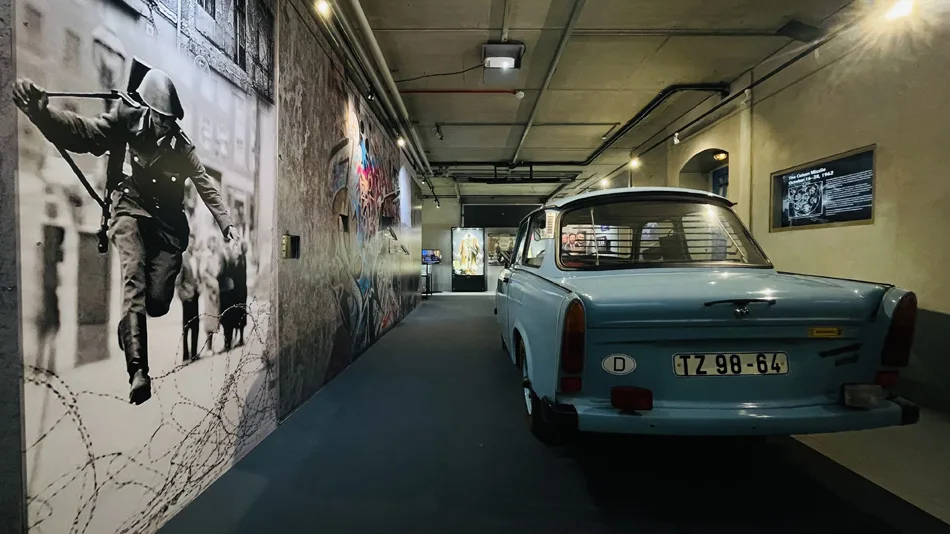
The car is a Trabant 601 – the modest East German car that became a symbol of life behind the Iron Curtain. On the wall to the left is Conrad Schumann’s 1961 leap into West Berlin – captured by Peter Leibing and later known as Leap Into Freedom


Operating in three-man patrols, often travelling cross-country in modified Mercedes vehicles, Brixmis teams observed Soviet military movements across the German Democratic Republic. The work demanded nerve, patience and a willingness to operate under constant scrutiny. Encounters with Soviet patrols were common, and the line between observation and confrontation could be thin.
Ian’s fluency in Russian made him well suited to the role. He could switch convincingly between Moscow and Leningrad accents and pass himself off as a Soviet officer if needed. “That golden thread of unconventional work stayed with me throughout my career,” he says.
One winter patrol provided a story that has now become part of the museum’s collection.
After a freezing night sleeping in the snow near a Soviet installation, Ian realised the following morning that his beret had been left behind. They backtracked 50 kilometres to retrieve it – and found it frozen solid beneath a cow pat in the field where they had slept. Thirty-six years later, that same beret – now cleaned – sits in the Royal Signals Museum.

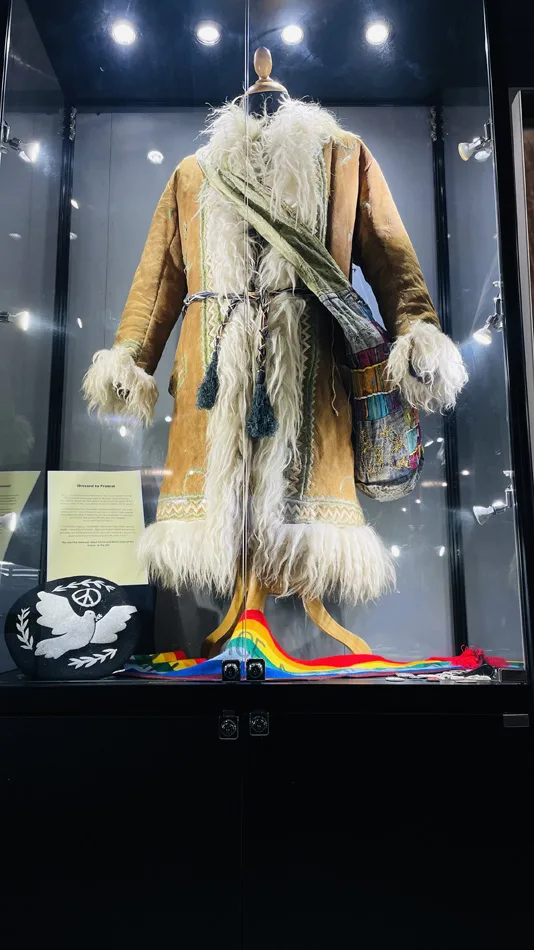
Dressed to protest


It is one of many personal stories explored in the museum’s new exhibition Cold War – in the Shadow of the Bomb, which looks at the human experiences behind one of the most tense periods in modern history. Alongside the intelligence work in East Germany, the exhibition also gives a voice to those who resisted from home. Carrie Costain and Rosemary Carcaterra were among the women who gathered at Greenham Common to protest against the presence of American cruise missiles on British soil.
‘This is the best thing I can do to protect my family,’ Carrie says she told a police officer who questioned why she was there. ‘Not staying at home making a meal, but protesting against nuclear weapons.’
The women of Greenham faced hostility, arrests and sometimes violence. But they spoke of acting from a sense of moral responsibility, clear about why they were there.

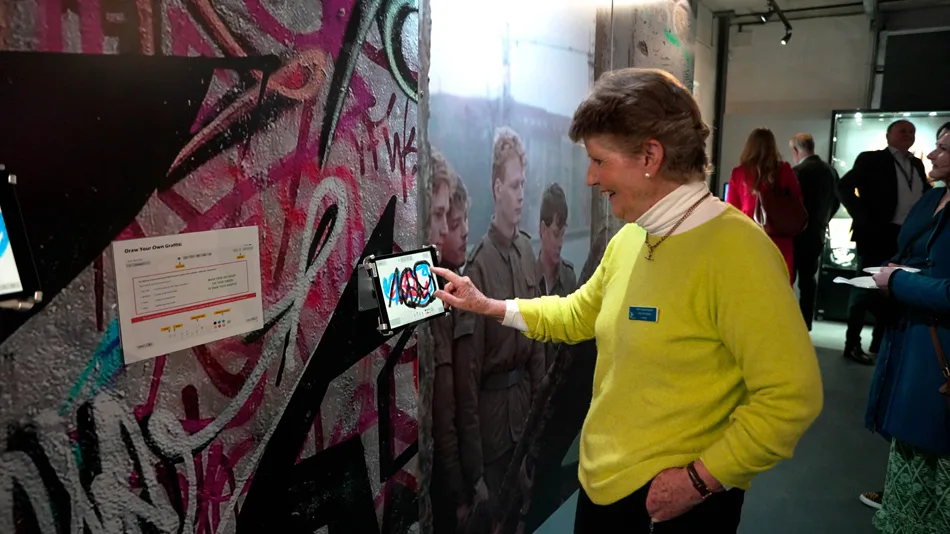
The interactive display allows you to draw your own graffitti, just like that which decorated the Berlin Wall


Together, they show how the Cold War was experienced not only through diplomacy and military strategy, but in the daily lives of soldiers, civilians and protesters.
Cold War – in the Shadow of the Bomb is now open at the Royal Signals Museum at Blandford Camp. Adult visitors must bring valid photo identification to access the camp.royalsignalsmuseum.co.uk

Sixth Form Pupil Wins National Young Artist Award

0

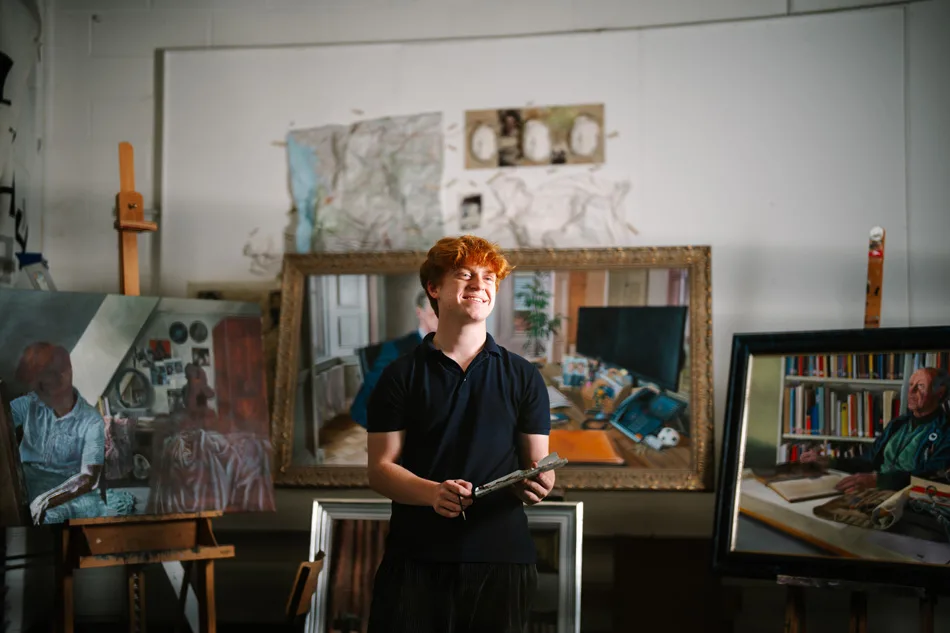
A Bryanston School Sixth Form pupil has gained international recognition after winning Young Artist of the Year at the 2026 BTA Art Prize.
Alfie G, who has a strong interest in fine art and portraiture, was first shortlisted in the competition before being selected as the overall winner in the youth category.

Sixth Form Pupil Wins Art prize


The award was judged by a panel of established artists, including well-known painter and materials specialist Michael Harding.
Alfie described the win as both surprising and encouraging. ‘It was exciting and unexpected,’ he said, adding that he is still waiting to hear full details about the prize and future opportunities linked to it.
The BTA Art Prize, run by the organisation Behind The Artist, was launched in 2024 to support emerging creative talent. The initiative highlights artists’ work through interviews, features and competitions, with the aim of making the art world more accessible and inclusive. As part of his award, Alfie will receive a cash prize, professional art materials, and a feature interview on the BTA platform.
There is also the possibility that his work may be exhibited as part of the prize.
The international competition is open to artists of all ages and backgrounds, welcoming submissions in a wide range of two-dimensional media.

The BV community news section is sponsored by Wessex Internet

Roundup and the road ahead

0

As glyphosate faces renewed scrutiny, George Hosford argues that routine pre-harvest use risks threatening its future altogether

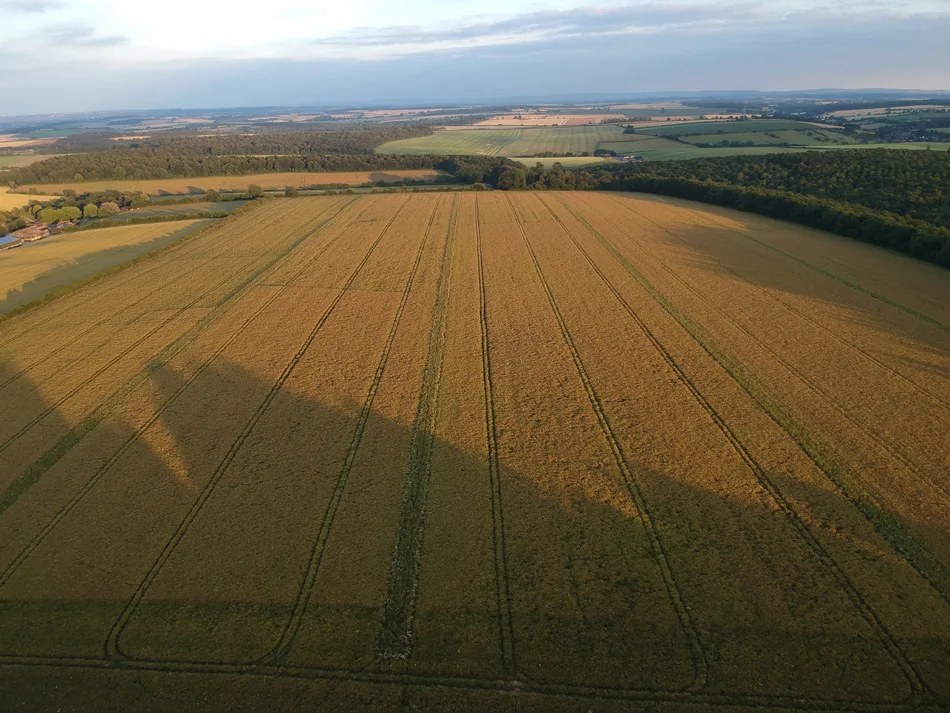
‘Left rear of the field is a greener area that ripened later than the bulk of the field. We cut the first part of the field, then left the rest to come back 10 days later.
No legally applied glyphosate would have evened up this field.
All images © George Hosford

There is a row brewing over the future of glyphosate – the very widely used weedkiller more commonly known as Roundup – and there is great concern among many in the UK oilseed growing fraternity that the sky may be about to fall in.
United Oilseeds, the farmer-owned co-operative through which we have sold our rapeseed for the last 40 years, reports as follows:
In November 2023, the European Commission renewed glyphosate’s approval for another ten years, until December 2033. Reviews by the European Food Safety Authority (EFSA) and the European Chemicals Agency (ECHA) concluded there were no critical safety concerns overall.
In short, the EU has renewed approval, but tightened how it can be used. However, the key restriction is a ban on its use as a pre-harvest desiccant, with countries such as Italy banning that particular use in 2016.
But what works in Milan or Verona certainly doesn’t translate to Aberdeen or Perth, where crops like oilseed rape face a far shorter, cooler growing season and a much greater need for pre-harvest management.
Further to this, United Oilseeds continues:
If the UK dynamically aligns with EU plant protection product legislation again, whether through new trade agreements or alignment mechanisms, our growers could face the same restrictions without the same level of subsidy support that EU farmers receive.
Since leaving the EU, the UK has followed its own regulatory path. In 2023, the Health and Safety Executive (HSE) and Chemicals Regulation Directorate (CRD) extended the approval of glyphosate until 15 December 2026.
This period allows for an independent UK assessment of glyphosate’s safety and environmental impact, using the latest data.
The possible outcomes range from
Full renewal (potentially up to 15 years)
Renewal with restrictions
Or, in the worst case, non-renewal of pre-harvest use altogether
To this I would add, as a very very worst scenario, the complete banning of glyphosate for any agricultural use at all.

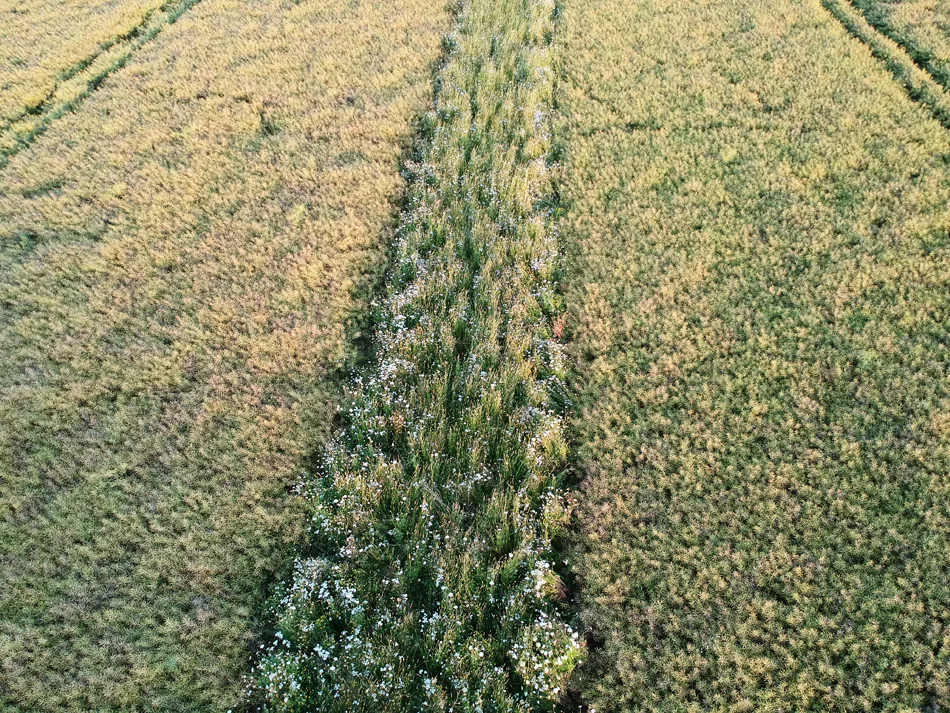
The potential for collateral damage: in-field flower strips, headland margins and hedges risk being wiped out by wind-assisted spray drift from pre-harvest spraying

The 30 per cent rule
Currently, it is legal in the UK to apply glyphosate to most agricultural crops within a carefully stipulated period, when the crop is in its ripening phase. This has been legal for very many years. The trouble is that in much of the industry, it has now become routine to treat crops in this way when farmers get impatient: they think they can hasten harvest by using glyphosate on the ripening crop.
However, this doesn’t really work if you follow the instructions on the label correctly. The crop grains must be below 30 per cent moisture before application: below this moisture, approval data suggests that translocation of the chemical into the grain cannot occur.
The label on a can of agricultural spray is a legal document, explaining how the chemical must be used. It is a requirement in order to both gain approval and for the granting of a licence for sale and use.

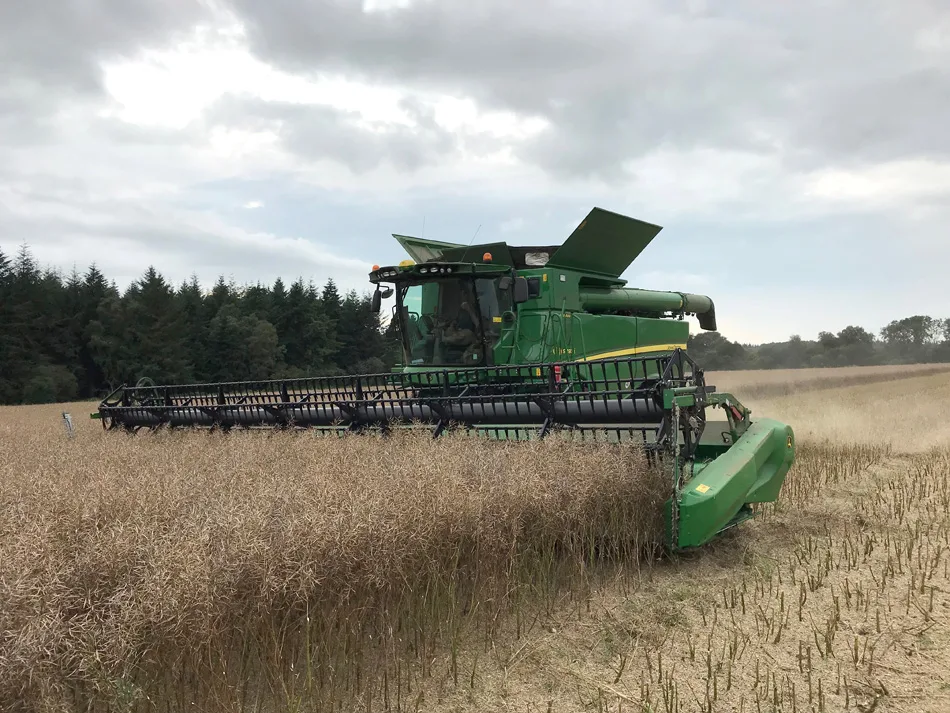
Oilseed rape (OSR) is combined when the yellow flowers have faded and the pods are leathery/brown, seeds are dark brown/black

Not in my beer
There are two main reasons for use of a pre-harvest glyphosate application.
Firstly, for the control of weeds that would make the combining process difficult or impossible, and secondly, to even up a crop that is maturing unevenly – maybe due to pigeon grazing or waterlogging earlier in the season.
The first is understandable, but usually indicates some kind of failure in the decision-making process during the growing season.
I have more of an issue with the second reason. If you spray any part of a crop containing grains which are above 30 per cent moisture, following the logic of the label moisture rule, there is at least a risk that some chemical could be translocated into the grain. I, for one, do not relish the idea of the presence of any kind of weedkiller in my cooking oil, my bread or even in my beer (made from barley). I cannot support the use of pre-harvest glyphosate, wherever it is grown.
It is worth noting that many brewers and maltsters do not allow their growers to use pre-harvest glyphosate on crops destined for their maltings and breweries. The naked grains of barley differ from wheat and rapeseed, covered as they are by chaff or pods. Oats, however, like barley, have no such protection (which of course is no protection at all if we believe that the chemical can be translocated into the grain anyway), should it be applied above 30 per cent moisture, whether by accident or by design.
Indeed, it also says on the label that crop destined for use as seed to grow the next season’s crop should not be treated with glyphosate pre-harvest. Does that not at least suggest that its interaction with seed needs to be treated with caution?
The pictures show various rape crops from recent years, largely even and weed free. Look closely at the one at the top, opposite, however, and you can see to the left rear of the field a greener area that ripened later than the bulk of the field.
We cut the first part of the field, then left the rest to come back 10 days later. No legally applied glyphosate would have evened up this field. If we farmers insist on the need to continue using glyphosate pre-harvest, I believe we can expect it to be banned for all uses sooner rather than later.