Relief/Part time calf rearer required on family farm near Templecombe.
We rear 280 calves between September and June, excellent facilities and good working conditions. Experience preferred but training will be given if required, good rate of pay to the right person who must be conscientious and 100% reliable.
The call has gone out for cyclists to join the 10th anniversary Rotary Dorset Bike Ride, happening on Sunday October 9, starting and finishing at Longthorns Campsite next to Monkey World in Wareham. Expected to attract over 500 riders, this year’s event is hoped to be Dorset’s biggest cycle ride. With five routes ranging from 22 to 108 miles, the challenge is designed to welcome riders of all ages and abilities. This event has raised money for a number of charities over the past ten years, including an impressive £300,000 for Cancer Research UK. Organiser, Richard Burnett said: ‘Our 10th anniversary is a huge landmark, and we are determined that this year’s event is the biggest ever, raising vital funds for cancer research. Our aim is for all entrants to have a great day out, whether that’s families riding together, or competitive cyclists pushing their limits. ‘There’s a serious side to the event, which offers cancer survivors and those celebrating the lives of friends and family members impacted by cancer, to fight back and provide much needed funds for research.’ The five routes in this year’s event are 22, 35, 55, 70 and 108 miles, all created to pass through beautiful Dorset countryside. Riders are invited to sign up for the event at dorset-bike-ride.co.uk. A discounted entry fee is available by registering in advance online – currently the fee is £35 per rider, and this will increase to £40 for registrations on the day. Children under 16 are free, if they are registered online and accompanied by a paying adult. ‘Come on, let’s make this Dorset’s biggest cycle ride for charity!’ If you’d like to be involved, the organisers are looking for volunteers and marshals to support the event – please contact via the website.
Just a few days after the September issue of the BV magazine published, the nation mourned the death of her Majesty Queen Elizabeth II. In recognition of this, Jenny Devitt leads this podcast with a statement from all of us at the BV, and with the words of Angus Campbell, Her Majesty’s Lord-Lieutenant for Dorset: “Our loss is incalculable.”
In the first of The BV podcast’s September epsiodes,
Boris Johnson’s levelling-up agenda comes to rural Dorset, bringing ‘lightning fast’ broadband and other benefits.
Wincanton Sports Ground could close by the end of September, warn the trustees, if no one comes forward.
Baffled by the exam system and what those grades actually mean? Kingston Maurward’s Principal Luke Rake has an explanation for all us confused ones.
Author Minette Walters takes on the Random 19 questions
Charlotte Tombs’ successful flower farming business grew out of one packet of sweet pea seeds and some Instagram inspiration.
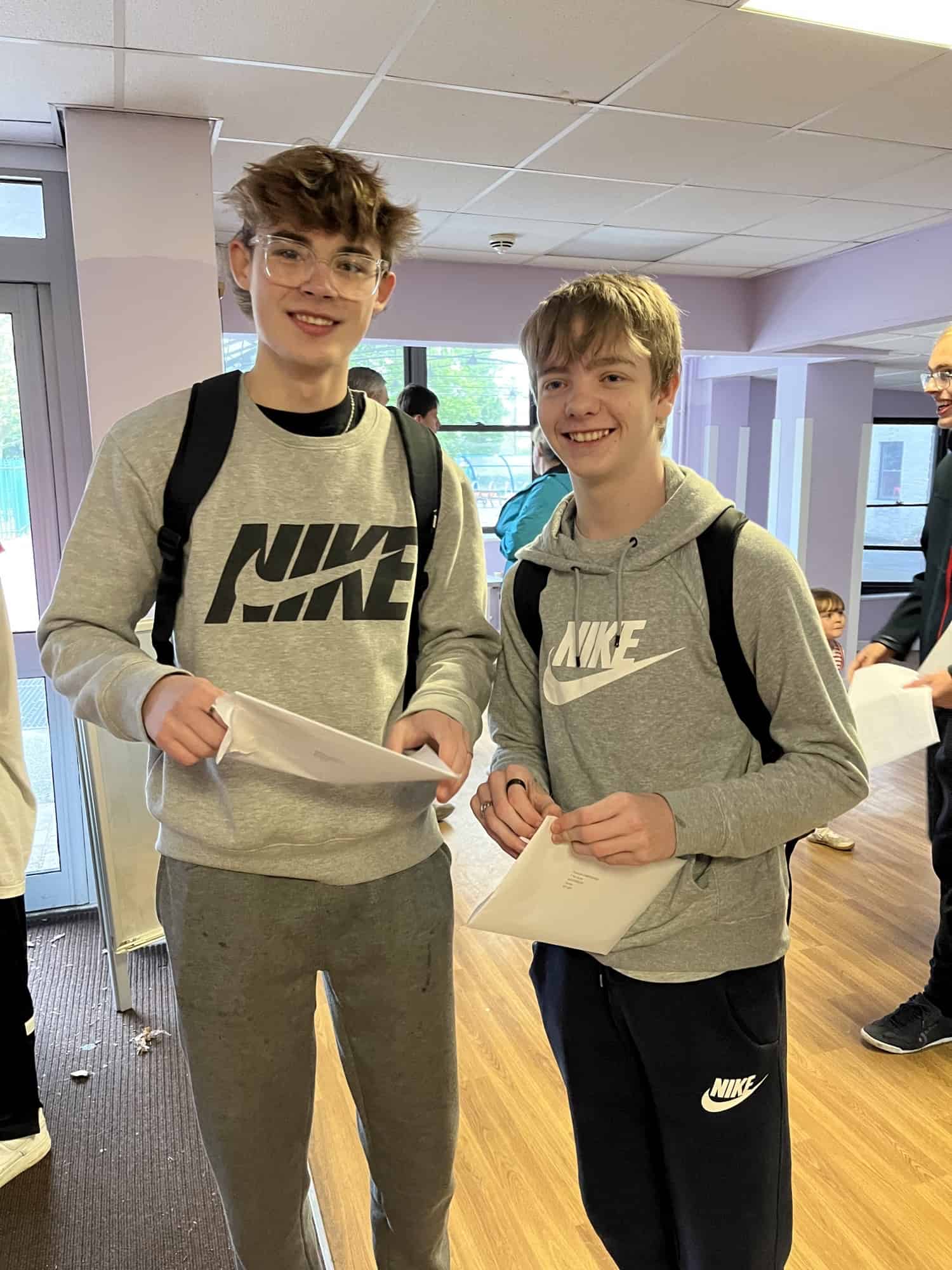
Shaftesbury School reports another great set of GCSE and BTEC exam results for students, among the best the school has ever achieved. The numbers of students achieving five or more 4+ grades including maths and English has improved, with many subjects securing at least 80 per cent of their entries at Grade 4+. The most successful subjects were: the Arts, Biology, Chemistry and Physics, French, Religious Studies, Drama, History, and Maths.
Better than I hoped Headteacher Donna London-Hill said: ‘We are thrilled with these results. They are a testament to the hard work of our students and staff who together have achieved these high outcomes. We all know that the past few years have been tough, but the resilience and determination shown by our young people has been brilliant, and it goes to show that hard work pays off. The students were relieved and delighted with the results and it was lovely to see so many happy faces. It means that they are able to move on to their next steps, which is great.’ The students were equally delighted with their results. One commented; ‘I am so relieved’, while another reported that ‘these are better than I could have hoped’. Lots of students were keen to thank their teachers for the support and guidance that they had been offered for the duration of their courses, proving that education is very much a partnership. The school is very proud of the outcomes today and would like to wish every student a very happy and fulfilling future.
A spokesperson for Sturminster Newton High School (SNHS) congratulated SNHS students on their GCSE results: ‘Despite two years of disruption and school closure, students have performed magnificently and showed true resilience and determination. These are the first GCSE exams for two years and the government has told schools that grades will be deliberately lower than in previous years, as they attempt to get outcomes in line with 2019 results. Given this fact and the very difficult circumstances over the last two years, students have performed magnificently and should be massively proud of their results. With so many tremendous achievements, it is difficult to pick out individuals but particular congratulations to:
Sofia Sutton (seven Grade 9s, three Grade 8s),
Ellie Mitchell (two Grade 9s, two Grade 8s, six Grade 7s),
Luke Alford (four Grade 9s, one Grade 8, two Grade 7s)
Alex Sharpe (six Grade 8s, two Grade 7s, one Grade 6 and a Merit)
Beth Saunders (five Grade 8s, two Grade 7s and a Distinction).
‘These are spectacular and well-deserved achievements for our students and we are extremely proud of them. ‘A huge well done to them and thanks to all the teachers and parents who have worked so hard to support, encourage and motivate them over the last two disrupted years. ‘We wish all the students the best for their next steps.’
Local fairs can lift a community – but there’s no hiding from the anxious mood that grips the Vale’s residents, says North Dorset Lib Dems’ Mike Chapman
Mike Chapman Lib Dems
At the peak of COVID, we recognised the difficulties families were facing – we saw the successful roll-out of community fridges in Poole. There was nothing similar operating at the time in North Dorset, so we decided to pave the way and set one up in Sturminster Newton. Community fridges have the double benefit of reducing food waste and stretching household budgets. Other schemes have since developed including fridges in Shaftesbury and Blandford and, of course, The Vale Pantry in Sturminster Newton. Two years on, we have decided to hand our community fridge over to The Emporium team who I am sure will be able to stock it more effectively from more local sources. The very best of luck to them with this and all their other initiatives. On another positive note, no-one does a Fair quite like Dorset, do they? In quick succession we have the Gillingham & Shaftesbury Show, The Oak Fair, The Great Dorset Steam Fair and the Sturminster Newton Cheese Festival. It always makes me smile that the Cheese Festival was borne out of a collective fury at the closure of the town’s creamery and cheese factory. This was a very Dorset response: an attachment to all things rural, coupled with a blend of stubbornness and entrepreneurial flair.
An anxious mood We found the G&S Show especially good. It gave us the opportunity to ask people about their priorities and to listen to a wide range of thoughts and perspectives. Although the Show with all its attractions served to lift most people’s mood, there was no hiding from the underlying anxiety about life and the world at large. And now have the winter of our discontent. We face a nasty enemy, multiple threats to our standard of living, a poor economic outlook and strikes and go-slows every which way you look. We ought to be pulling together but we are a million miles from that. Boris’s legacy will be dominated by that failure. Despite his ‘levelling up’ vocabulary, he has undoubtedly increased the polarisation of the nation. Blue wall, red wall, whatever colour wall; please can we just have fewer walls? Please would the new PM also address another noticeable polarisation – that between customer satisfaction and shareholder satisfaction. Across rail, energy, water, communications, the media and even the ports, a proper balance seems to be out of reach. Is this because the public as customers have so few real choices? Or is it due to a failure to regulate profits effectively? We need to find answers and properly invest in solutions before the roving eye of capitalism settles on the NHS and begins to espouse more and more salami-slicing of its routine, less complex activity, engendering counter-productive competition that distracts doctors, nurses, technicians, support staff and managers alike from their real purpose.
A plan to tackle the energy crisis was drawn up by a cross-party group of MPs in February and is ready to go, says Labour’s Pat Osborne
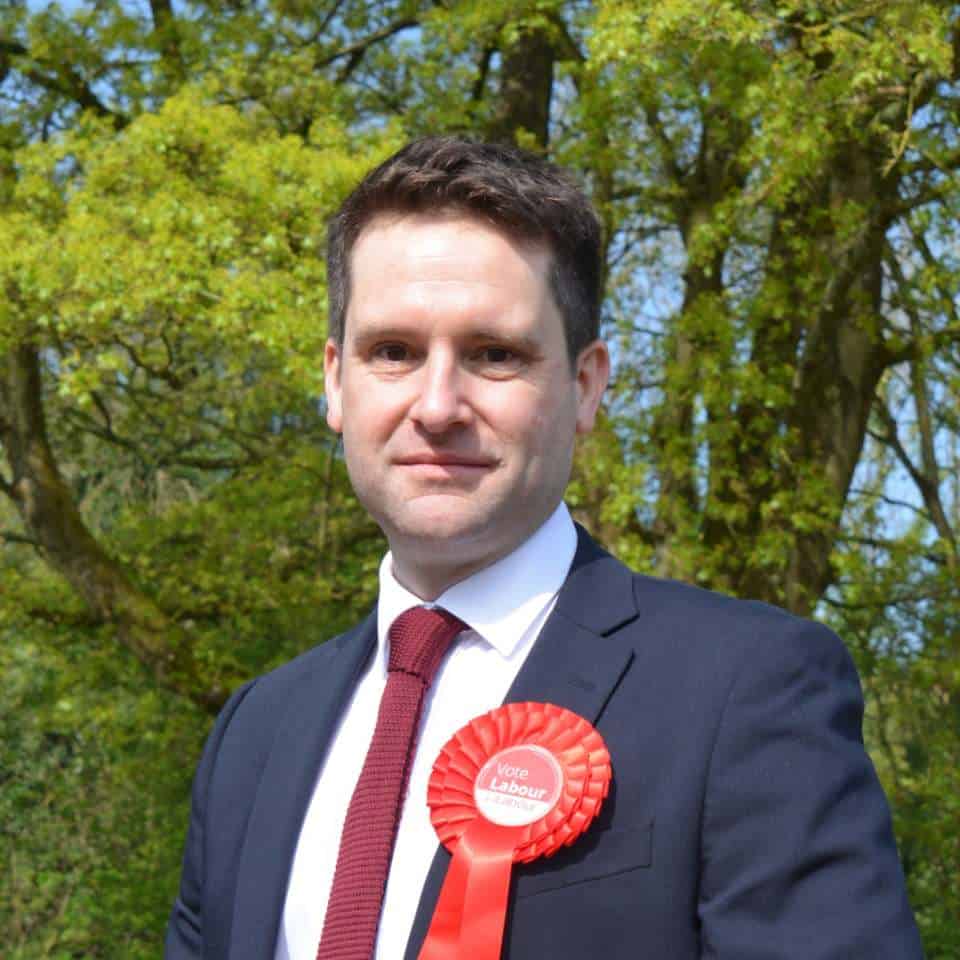
August’s column about Blandford Town Council’s ‘motion for the ocean’ already seems a lifetime ago. Within a few short weeks, that glimmer of hope was eclipsed by a tsunami of raw sewage engulfing our beaches, rivers, and the marine habitats around our coastline. The root cause of this? Greedy water company bosses prioritising shareholder profits and their own inflated paycheques over basic public health needs. It’ll be lost on nobody that we’re in deep ‘sewage’ with our other utilities too. Since 2010, under the Tories, energy prices have spiralled out of control. In September, bills will almost double with the promise of even more increases to come. People across North Dorset, who already have nothing else to give, are being asked to cough up yet more, so that a handful of shareholders can make even more profit.
Ready-to-go plans If that isn’t bad enough, the same Tories who passed the laws which allowed the water companies to do so much harm, are papering over their decisions to slash investment in energy efficiency and renewable energy from wind, waves, sun, and tides – implying instead that environmental policies are to blame for energy hikes, and that fracking and more North Sea gas and oil are the answer. What we really need is a plan that includes windfall taxes on the huge profits of energy companies, a plan to insulate homes to keep energy bills down, and to bring energy back into public ownership so we’re all in control of our future. Fortunately, such a plan exists. The legislation was written in February by a cross-party group of MPs and is ready to go. We can only live in hope that our new prime minister (whoever that will be) will deliver it. Until then, I’ll hold my nose as water company bosses pump more sewage into the environment – and cash into their pockets – but I won’t hold my breath.
Light-touch government is an excellent theory, says North Dorset Green Party’s Ken Huggins. But in practice it just doesn’t hold water. Or sewage.
The ideology that promotes ‘light-touch’ government sounds appealing. It makes for simpler government, with a reduced role for the state, minimal bureaucracy, reduced public sector borrowing and reduced taxation. The claim is that industry, free from the restrictions of red tape, can get on unhindered with the business of supplying the market with what people need. Bad businesses will fail, and only good businesses will succeed. Sounds good, but there is a fatal flaw … human greed. A ‘good’ private company is generally considered to be one which primarily focusses on maximising the money made for its shareholders and management, putting profit before people and planet. Take the water industry in England, overseen by the government regulator OFWAT and the Environment Agency which are both considered to be poorly resourced under light-touch government.
Polluted bonus The industry was privatised in 1989 by a Tory government, under the pretext that the private sector would inject the cash needed to upgrade old Victorian sewers and fix leaky mains water pipes … That went well, didn’t it! 30 years on, a 2020 report found the businesses had been loaded up with £48bn of debt to help fund dividends of £57bn, while customers’ water bills increased 40 per cent above the rate of inflation. In 2021, despite grossly polluted foul water being discharged uncontrolled into our rivers and seas for 2.7 million hours, water company executives received an average £100k bonus on top of their salaries. The water industry is not the only one raking in excessive profits. What we need is big bold honest government, with people and planet protected by appropriate regulations that are rigidly enforced by properly funded public authorities. The Green Party is calling for essential services like water and energy to be brought into public ownership. Not easy, we know, but the plundering has to stop.
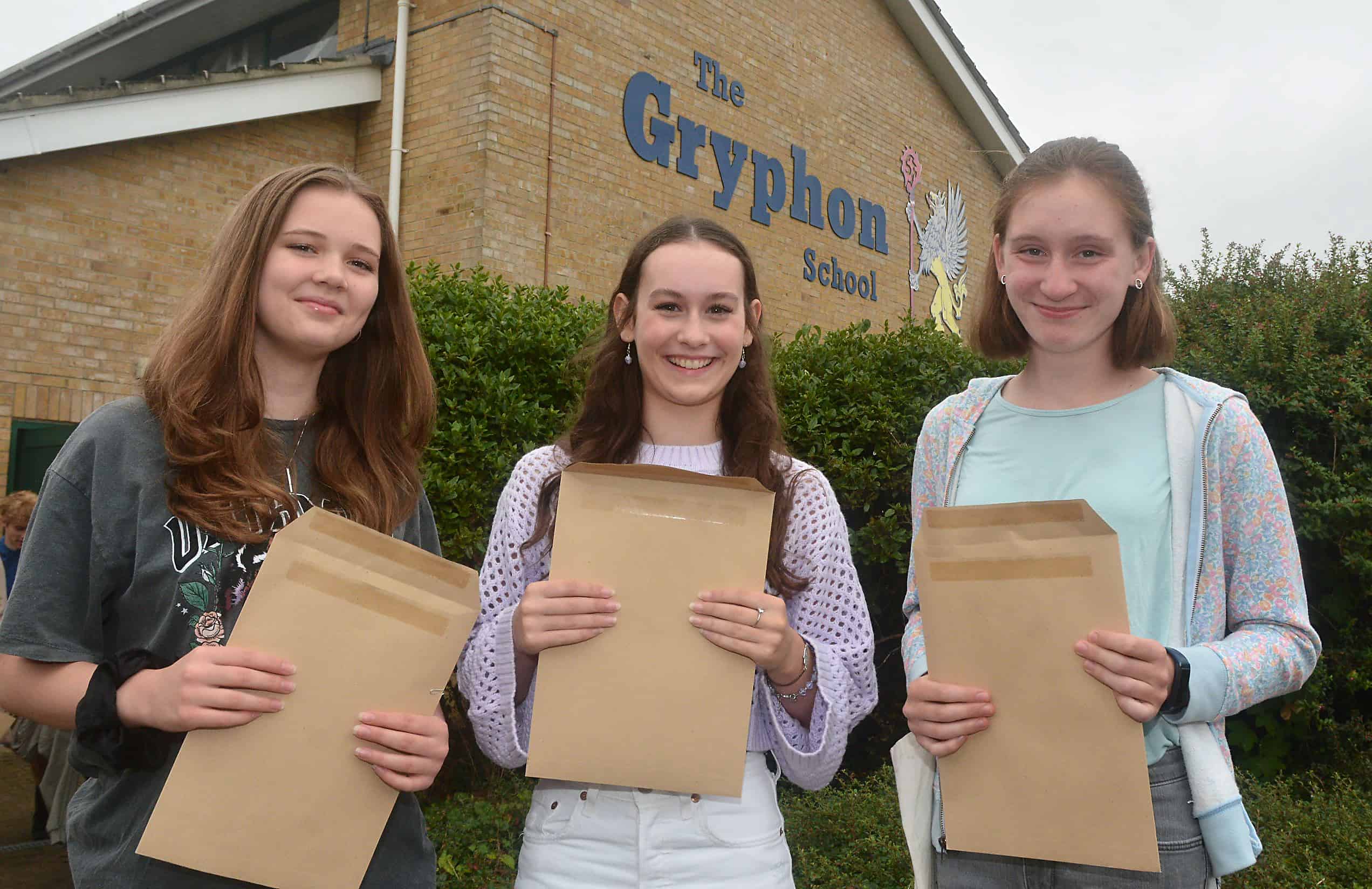
Gryphon School students are celebrating an incredible set of GCSE results today. 14 students gained 10 or more GCSE grades equivalent to the old A* grade, and 39 gained 5 or more grades at that level. Headteacher, Nicki Edwards, said ‘I couldn’t be more proud of all of our students. They have battled through three years of disruption in their education and have achieved these amazing results despite all of the challenges. We look forward to welcoming many of them into our Sixth Form, and wish those students going on to apprenticeships and college courses all the very best for their future. ‘I am very grateful for all of the effort put in by our incredible team of staff to support all of our students in enabling them to reach their full potential.’ Head of Year 11, Laura Bucke said ‘The achievements of this year group are a reflection of their resilience and perseverance in the face of adversity throughout their GCSE years. I am proud of each and every one of them.’
‘super proud’ Ben Titus
Olympia Pudelko – who achieved an amazing 13 Grade 9s – and her friends Sophie Lord and Imogen Kimber said ‘Thank you to all our teachers. We are so proud of everyone and feel shell-shocked!’ Ben Titus is feeling ‘super proud and over-the-moon’ as he joins The Gryphon Sixth Form. As are Barney Griffiths and Liv Bowditch – Barney saying “I am very happy and looking forward to the next steps”. Liv said she was happy and excited to get the grades she needed for her A levels.