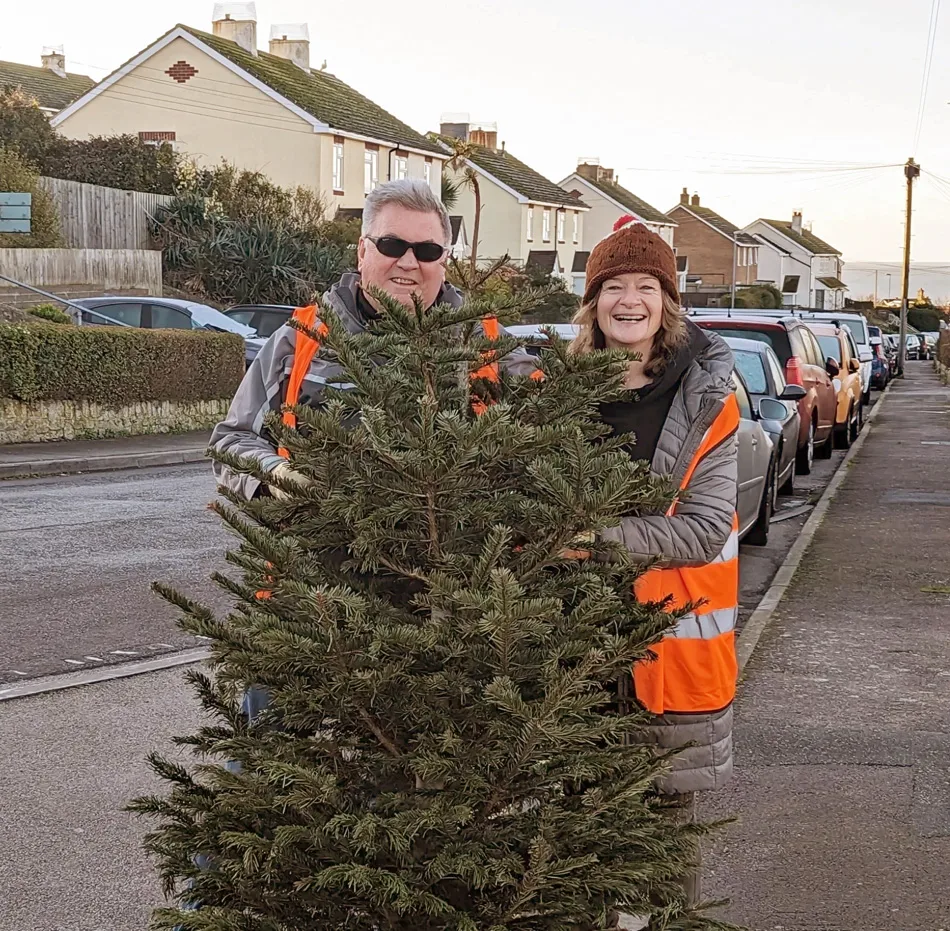
This year’s local Christmas treecycling efforts have smashed records, raising over £53,000 between them for two Dorset-based charities – Weldmar Hospicecare and Diverse Abilities.
Weldmar volunteers out collecting trees
In Weldmar Hospicecare’s annual Treecycle campaign, more than 1,600 trees were collected in early January from homes across Dorset, raising £18,085 to support adults with life-limiting illnesses and their families. Now a firm fixture in Weldmar’s fundraising calendar, the initiative is as much about community as it is about sustainability: ‘Treecycle has become part of my Christmas tradition,’ said Fiona Hansford, Weldmar’s Fundraising Lead. ‘We’re blown away by the support from residents, local businesses and volunteers – we couldn’t do it without them.’ All trees were disposed of sustainably, with Knighton Countryside Management processing the chippings for biomass fuel. Local support came from Trinity Street Christmas Trees, Bridport Freemasons, Beaminster Motors and several others who lent vehicles, volunteers and drop-off sites. Meanwhile, Dorset’s disability charity Diverse Abilities saw its own Treecycling scheme break new ground – collecting a staggering 2,488 trees over just one weekend and raising more than £35,000. More than 100 volunteers gave up 840 hours of their time to support the collection, backed by local firms including Wessex Water, Avon Material Supplies, and MATA Construction. The money raised could fund an entire year of Diverse Abilities’ STARS sibling support service, which provides a safe and understanding space for children growing up alongside a disabled brother or sister. ‘We’re overwhelmed by the support we’ve received,’ said Francesca Potton, Community Fundraiser at Diverse Abilities. ‘A huge thank you to everyone who booked a collection and to all the amazing volunteers and businesses who made this possible.’ Between them, the two charities saved nearly four tonnes of waste from landfill, repurposing the trees into renewable fuel – a perfect blend of community spirit, sustainability and support for two of Dorset’s vital charities. Both organisations hope to grow their schemes even further next year: you can already register your interest in Diverse Abilities’ 2027 campaign at diverseabilities.org.uk/trees
Barry Cuff takes a look back through his notes on what happened on his Sturminster Newton plot last year
Images: Barry Cuff
A wet, mild start to December kept us off the soil to avoid causing damage to its structure. Most of the mulching was done from paths and planks laid across the plots. It also meant that annual weeds – especially groundsel, chickweed, red deadnettle and Speedwell – continued to grow, but these can also act as a green manure to be dug in at the end of winter.
There were a few main jobs through the month:
manure or compost
Removed the old leaves from the brassicas
Covered the salad leaves with fleece when frost was forecast
Continued harvesting winter crops as required
Weeded the strawberry bed and the currant and gooseberry plot
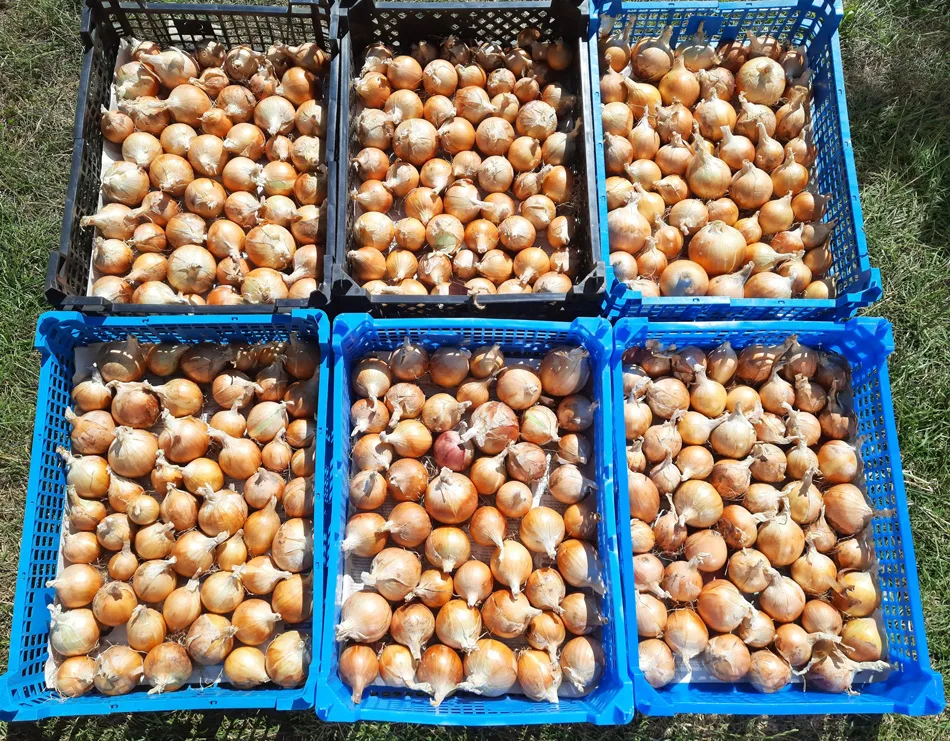
A ‘good yield’ of onions in 2025: Bonus, grown from seed
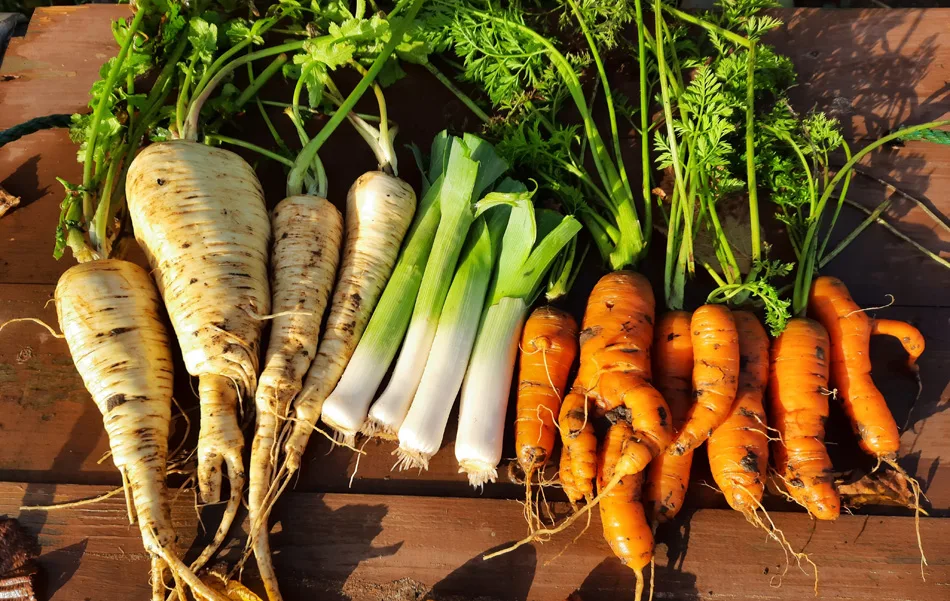
Our 2025 in review The long summer drought affected some vegetables more than others, despite being watered daily. We were lucky the alotment has a deep well and good storage containers on site – and even more so that it did not run dry! BEETROOT – Successional sowings from March to August ensured a constant supply for salads and pickling. BROAD BEANS – Started in the greenhouse and planted out in February. Two varieties of different maturing times. Average yields, but finished producing earlier than usual due to the drought. BRUSSELS SPROUT – 2024-sown plants finished cropping in March. Started harvesting 2025-sown plants in mid-December – they were smaller buttons than usual, but tastier. BROCCOLI (PURPLE SPROUTING) – 2024-sown finished producing spears in March, and we have just started picking the 2025 crop. CABBAGE – We only grow Red Drumhead for coleslaw and stir frys, and they have done exceptionally well. CARROT – Successional sowings of Early Nantes from April to September ensures we always have fresh roots. Many will stay in the ground until early spring. CAULIFLOWER – Three varieties to harvest between October and March this year, with smaller heads of those harvested so far. We cut our first Cendis at the beginning of December, and will have Aureo to cut from March 2026
The drought meant less cobs per plant than usual on the sweetcorn
CALABRESE – It was a good year, with many side shoots after the central head was harvested. CELERIAC – Poor seedling establishment (possibly diseased) so we had to buy some plants. They have done very well, producing some good roots. Six plants left in ground to lift this year (now protected with straw in case of hard frosts). CELERY – As with the celeriac we had poor seedling establishment and decided for the first time in many years to give it a miss. CHICORY (FORCING) – Roots lifted in November. Cut first chicons on 20th December, and will continue cropping until February COURGETTE – A good year despite the drought. CUCUMBER – A good year: we grew an outdoor variety (Gergana) seed which we got from from Lidl! FRENCH BEANS – We did have below normal yields due to the drought GARLIC – The 2025-planted bulbs were harvested in August, and we had a good yield. This year’s crop was planted in early November, and is looking well. LEEK – Finished harvesting 2024-sown plants in March. The new crop is looking well, although generally smaller than most years. Will continue cropping until February/March. LETTUCE – Monthly sowings of Little Gem ensured fresh lettuce to cut from April to October (November in the greenhouse!) MANGETOUT – Below normal yields, and also finished cropping early due to the drought ONION – We had a good yield of Bonus, grown from seed. It’s a variety that stores well over Winter. We had fewer lost to white rot.
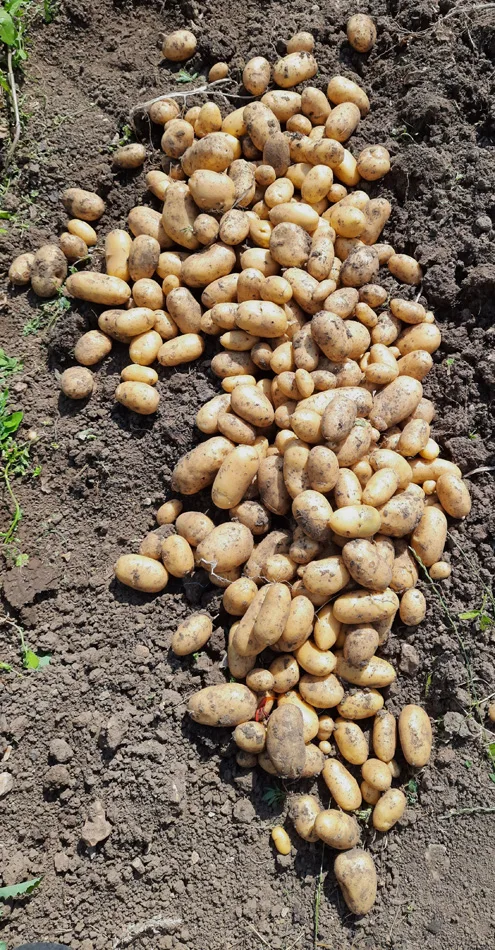
In the potato beds, all the earlies, second earlies and early maincrop varieties did well: the main crop less so, once the drought hit
PARSNIP – Finished lifting 2024-sown crop in March. 2025 crop established well from sowing in April, and will continue to crop for the next few months. PEA – Average yields, and finished early due to the summer drought POTATO – Not a bad year, despite drought. All the earlies, second earlies and early maincrop varieties did well: the main crop less so. RUNNER BEANS – A fair crop, but another that finished earlier than usual. SALAD LEAVES and ROOTS (ORIENTAL) – Established well from seed, and we’ve had good pickings. SQUASH – Both Crown Prince and Butterfly butternut gave a good number of fruits. SWEETCORN – Slightly less cobs per plant than usual. GREENHOUSE CROPS – Both tomatoes and peppers did exceptionally well in the summer heat FRUIT – We had excellent yields of strawberry, currants and gooseberries, though the raspberries were poorer than usual.
From bare-root planting to winter pruning, January is about thoughtful groundwork for a healthier, happier garden year ahead
Witch hazel – hamamelis – provides a cheerful splash of colour in mid-winter with its fragrant, spidery flowers in shades of red, orange and yellow
While there are generally fewer garden jobs to do in January, it’s a good time to plan for the year ahead. Have a look at your garden and see what worked well … and decide if any areas need re-thinking! Do you need to create a more wildlife friendly garden? Letting nature take over may reduce some of the work involved in tidying up: leaving piles of leaves in corners and on the flower beds will do no harm, and the worms will do some of the work for you! Winter is a good time to check on the weeds in the borders – remove them before their spring growth. Prune your wisteria this month by cutting back the newest thin summer growth, leaving only two or three buds. Prune your rose bushes while they are still dormant – especially if they are tall and vulnerable, they are liable to wind rock. Cut the branches back to just above a bud, making sure to remove any crossing or dead branches. Some of the other jobs that can be done this month are sowing this year’s sweet peas, begonias, pelargoniums, basil … a heated propagator will help with the seed sowing and germination temperature requirements.
Hellebores, also called Lenten or Christmas roses, are hardy perennials known for their beautiful, nodding flowers in whites, greens, pinks and purples, blooming from late winter into spring
Planting If the soil is not too wet or frozen, now’s the time to plant bare root roses, shrubs, hedging and ornamental trees. Bare rooted plants are much less expensive than container-grown plants and can establish very well. Many deciduous and evergreen shrubs, trees and hedging plants can be planted bare rooted as they are dormant between November and March. Plants and shrubs which flower in January include hellebores (try niger), hamamelis (witch hazel), lonicera (honeysuckle) and, of course, snowdrops! Mahonia are easy to grow and some are scented. Clematis cirrhosa ‘freckles’ requires very little pruning, just trim it slightly after flowering. Also viburnum (tinus is evergreen and easy to grow, bodnantense is a very nice scented plant, and another that’s easy to grow), and cornus – not actually in flower, but great for winter colour. For some instant garden cheer, these can all be bought now in garden centres.
One of the region’s most distinctive wedding venues has been recognised at the 2026 Wedding Industry Awards – with Larmer Tree named South West Regional Winner for the second year running. The win now takes the historic venue, on the Dorset–Wiltshire border, to the national finals later this month, and marks a proud milestone for a team long celebrated for its calm professionalism and attention to detail. Set within Victorian pleasure gardens created in the 1880s, Larmer Tree offers couples a deeply personal setting for their wedding day – with sweeping lawns, ornate garden buildings and a relaxed atmosphere that makes the place feel quietly timeless. ‘Winning this award means the world to all of us,’ said Amy Reid, Larmer Tree’s wedding and events manager. ‘We’re so proud to be heading to the National Finals again, and incredibly grateful to our couples for their support.’
Wedding Showcase – Sunday 25th January Larmer Tree will be opening its gates this month for a Wedding Showcase, offering couples the chance to explore the venue, meet the team and sample canapés. The event runs from 12 to 3pm and includes a welcome glass of fizz. For more information, visit larmertree.co.uk.
As pharmacies close and queues grow, Dorset’s official assessment says provision is ‘sufficient’ – a conclusion many rural patients would dispute
Stock image of two pharmacists
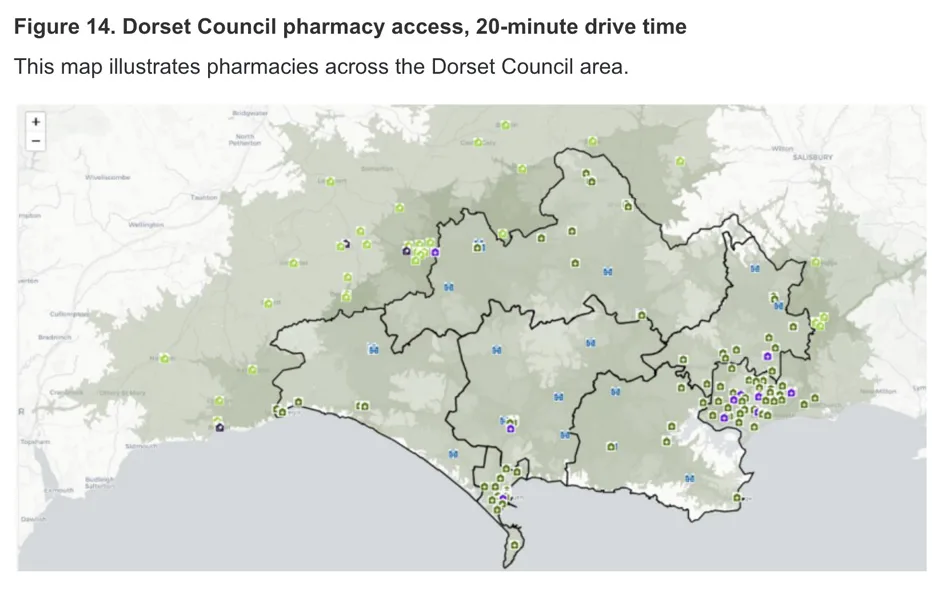
Community pharmacies are a lifeline in towns and villages across the nation – many do significantly more than dispense prescription drugs. Pharmacists give advice on minor health problems, administer flu jabs, and sell health-related items. However, when Jhoots recently closed its doors in Dorset (and other parts of the South West), the gap in service was evident. So why are there issues with the pharmacy service? Are there enough community pharmacies in rural Dorset? Dorset Council has recently published its Community Pharmaceutical Needs Assessment – the document that decides where pharmacy services are considered viable, and where they are not. Those people who have spent time queuing in their local chemist, especially with the recent issues with Jhoots, are probably curious about provision for their area. One of the key measures used is travel time. Nationally, the benchmark is that 99 per cent of residents should be able to reach a community pharmacy within 20 minutes by car – a standard Dorset Council has adopted for this assessment. The report assumes that high levels of car ownership – and the council’s view that areas with lower car ownership are located near pharmacies – mean access is ‘practical and achievable’ for most residents. That assumption would seem laughable to those without transport, or reliant on sporadic rural public transport. Are there enough pharmacies in the county? The needs assessment identified 132 pharmacies across Dorset (66 in Bournemouth, Christchurch and Poole, and 66 in the Dorset Council area), with the majority clustered in urban centres alongside GP surgeries. In North Dorset, seven community pharmacies were mapped, alongside GP dispensing practices which are included in the access calculation. On that basis – using a 20-minute car journey as the defining measure – the council’s steering group concluded that Dorset has ‘sufficient’ pharmacy provision, a finding that is likely to surprise many residents who have recently queued, travelled long distances or gone without their prescription. A complex business Richard Brown is the Chief Officer at Community Pharmacy Dorset, the group that works on behalf of pharmacies in the county, negotiating contracts and giving advice on pharmaceutical services. ‘By its very nature, rural areas don’t have many people. So who would pay for more pharmacies? There has to be a level of business thinking in these decisions because a pharmacy is a business, and needs to be viable,’ says Richard Brown. ‘Everyone in a village would love a pharmacy, but that doesn’t mean they would use it regularly. It’s always interesting how they get grocery items – they get them from somewhere, and it isn’t always the village shop. ’Jhoots was a successful business in the Midlands for several years. The owners are not amateurs, and bought their pharmacies in good faith. ‘There is chronic underfunding in the pharmacy service. If two pharmacies in Shaftesbury were struggling, think about what that would be like in a rural village. It costs a minimum of £250k a year to run a pharmacy because of the overheads, alongside staff wages, having secure IT systems … although the Government says there has been an increase in pharmacy funding, most of that has been absorbed in National Insurance increases.’ While it seems a simple process for people to go to pharmacies with their prescriptions, what goes on behind the scenes is revealing. Opening a pharmacy is tightly regulated. A provider must prove there is an unmet ‘need’ – even in communities already struggling to access services. Medication is sourced from suppliers and there is a variable price which can affect profit margins, especially where there are shortages of drugs. Richard gave an example: ‘During the winter of 2024, the price of a single box of penicillin rose to £20 because it was in short supply – that cost had to be absorbed by the pharmacy. For each prescription item dealt with, the NHS pays the pharmacy £1.46. The whole funding structure is chronically insufficient and has not been changed to address rising costs. To get pharmacies funded correctly would probably require an increase of 1% in National Insurance costs from each adult in the country. But if a pharmacy stopped giving out medications where they are making a loss, there would be deaths.’
This map illustrates pharmacies across the Dorset Council area
Heading online Local Gillingham social media groups have for months been awash with long threads of complaints as the Barn Surgery Pharmacy closed and the town’s remaining chemists have struggled to keep up with the demand. Many residents say they have simply given up and switched to online services – not by choice, but through exhaustion. Derek Day from Okeford Fitzpaine uses Pharmacy2U to help him manage a chronic health condition. ‘My GP automatically sent the prescription to Boots, and I assumed they were dealing with it. But when I went to collect it two or three days later it hadn’t been processed. They said it would be ready in an hour or two, but when I went back they hadn’t got the tablets I needed. I need to keep my blood pressure under control, and need to take tablets on time so I started using Pharmacy2U. I haven’t had an issue since, and the medication is delivered to my door.’ Other pharmacies are providing services, such as free delivery at the NHS pharmacy at Blandford, to support local people who may not drive. Allied Pharmacy will be taking over most of the pharmacies previously owned by Jhoots, including those in Lyme Regis, Bridport, and Shaftesbury, but will the inherited issues be resolved, given the chronic underfunding in the sector? MP for West Dorset, Edward Morello, comments in The BV this month: ‘I received the fantastic news that Allied Pharmacy had agreed to take over and re-open the pharmacy in Lyme Regis, bringing to an end the long-running Jhoots saga and meaning residents would once again have a local service. The resilience and strength shown by the staff, who have gone months without pay, was a sight to behold.’ Pharmacy services are complex small businesses. One of the key issues to emerge from the recent Jhoots problems in Dorset was the plight of the staff, who worked unpaid for months but continued to support the patients. The recent chaos has exposed a system held together not by funding or policy, but by staff who continued to show up – unpaid, overstretched and deeply committed – because they knew patients were relying on them.
Behind the rural calm of Guys Marsh prison lies a workforce in crisis and a system stretched so thin that progress remains fragile
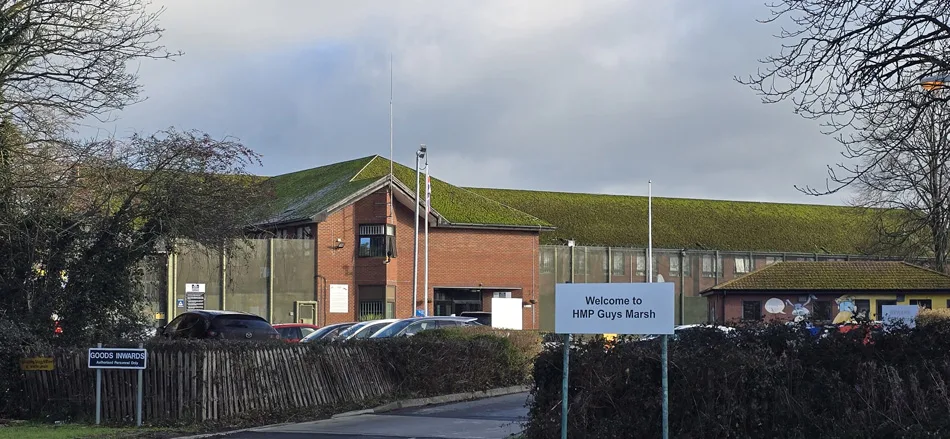
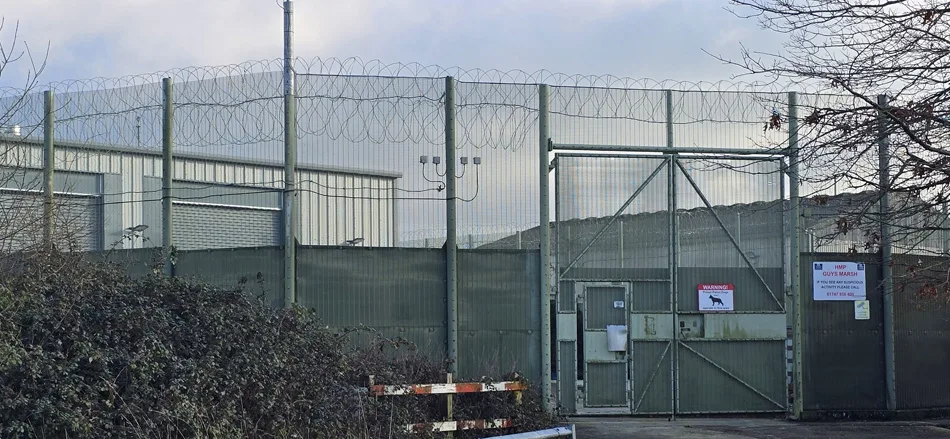
From the exterior, HMP Guys Marsh manages to blend gently into the countryside near Shaftesbury. However, appearances can be deceptive. Recent data from HM Inspector of Prisons showed that Guys Marsh is one of the most violent jails in England.
Guys Marsh prison, near Shaftesbury images: Courtenay Hitchcock
What has led to that problem? And, more importantly, what is being done to improve both staff and offender welfare? Guys Marsh began life as a 600-bed military hospital during Second World War. After the war, it served as a rehabilitation centre for ex-prisoners of Japanese war camps. The military hospital role ended in 1952. It became a borstal in 1960 and a Young Offender Institution in the 1980s. Today, it is a Category C men’s prison with resettlement facilities. Troubling reports were produced by HM Inspector for Prisons in 2022 and again in January 2025, highlighting the lack of leadership, illicit drug use, inadequate rehabilitation facilities and violence. The latest inspection report, published in December 2025, found that violence had reduced by a third. However, the number of incidents remained higher than in other UK prisons. A recent event in Sturminster Newton, hosted by the Friends of Guys Marsh charity, showcased inspirational work by staff and ex-offenders and was well attended by the public. But significant challenges remain at the prison.
The workforce crisis Sarah Rigby is the South West representative on the National Executive Committee of the Prison Officers Association. She has many years experience working in the justice service, and has several insights into the situation at Guys Marsh. ‘Over the last 15 years, we have lost an awful lot of experienced prison officers, and recruitment has not kept pace. It’s a job that you learn from experience. ‘When I joined, I was surrounded by officers with anywhere from 15 to 30 years of experience, and there were just two or three of us who were relatively new. Unfortunately, we are now in a position where, as a new member of staff, you’ll be trying to learn your role from someone who has only been in the job for six months themselves. They just don’t have the knowledge or experience. ‘Changes were also made to the role of first-line manager. That was someone on the same wing every day, whom you reported to and could go to for guidance. That role is now gone. ‘A place like Birmingham has a far wider pool to recruit staff – that’s missing at Guys Marsh. It’s a far smaller region to draw candidates from. ‘The nature of the prisoners has also changed: they are far more challenging. There are a lot more issues staff are exposed to, such as self-harm and violence. The prisons are also overcrowded. Healthcare is outsourced to private companies that lack enough mental and physical health nurses. ‘All that leads to frustration. Sometimes there are barely enough staff to unlock the prisoners and establish a regime. Every day feels like carnage.’ Guys Marsh, like many other British prisons, is overcrowded. Data from the Ministry of Justice shows that the baseline standard for occupied cells at uncrowded capacity is 476 – the current total capacity is 507. Overcrowded prisons inevitably lead to frustration and violence. Sadly, when there is significant pressure inside a prison, this also leads to staff sickness. When the Prison Inspector visited Guys Marsh recently, they found fewer than 60% of operational staff were available to be deployed to their duties. Over the past five years, the average number of annual sick days lost at Guys Marsh is 4,018. With 260 staff on site, that’s an average of 15 days a year, per employee. In England’s prisons, the average sickness rate is 12.6% – at Guys Marsh, it can reach 16%. In 2024, 43% of prison officers at Guys Marsh had taken a mental health break.
Deadly drones and drugs Drug misuse in prisons has been a significant issue for years and is often controlled by gangs. The problem has increased with the development of drone delivery of illegal substances. Recent data shows there were more than 1,700 drone sightings near prisons in 2024/5. In addition, agricultural drones can carry up to 100kg – technically a potential escape route. In December, Emma Brown, the area coroner for Birmingham and Solihull, issued a prevention of future deaths notice. This requires the Ministry of Justice to respond within 56 days to their plans to prevent drones from delivering drugs to prisons. It followed the death of 29-year-old Derrion Adams after he took Black Mamba, a form of ‘spice’. At the time, HMP Birmingham was understaffed, with several drug-related incidents after drones delivered drugs. While this tragedy occurred in the West Midlands, the coroner recognises this is a nationwide issue, far broader than Birmingham. Drones are also known to be involved in delivering illegal drugs to Guys Marsh. The Inspector of Prisons is concerned about the impact on safety and security, and called for improvements. Ministry of Justice data shows that in 2024/5 there were 238 finds of alcohol, 167 drug incidents and 98 weapons found at Guys Marsh. All these have increased significantly over the past three years, bringing trouble and danger with them. Sarah Rigby outlined the challenges: ‘The site is relatively easy to access with drone technology. Drugs bring high levels of bullying. The resulting behaviour is also difficult as some of these drugs are very unpredictable. You see some horrible things. For example, prisoners might get a parcel of drugs in, but instead of the ones who ordered them using the drugs, they will pick on the most vulnerable person on the wing and get him to try some. Officers on duty realise something’s happening, walk out there, and there’s some poor kid on the floor barking like a dog – with a group all standing round him, laughing. ‘They are very sad places with no hope. At one time, there was some hope. Sadly, at the moment that feels long gone.’ ‘The difficulty is, because we’re behind a brick wall, we’re never going to be a vote winner. Most of the general public have the attitude to just ‘throw away the key’. But the hard facts are that most of these prisoners will be released at some stage, and they could be living next door to you. And we’re doing nothing with them in prison. It is essentially warehousing in most prisons. ‘Most prison officers want to help these people, but there isn’t the opportunity anymore. They are too busy dealing with prisoners taking drugs or fighting. Those who want to do something don’t get anyone’s time or interest. ‘Even if someone comes along with a magic money tree tomorrow, it will take years of work and investment to put the system right.’
Guys Marsh prison, near Shaftesbury – image Courtenay Hitchcock The BV
Small, important things The Friends of Guy’s Marsh (FoGM) is a charity which works to keep prisoners in touch with their families, as this is known to lead to better integration on release and decreased re-offending. Secretary Annie Henschel outlined some of the other initiatives run by FoGM to support offenders: ‘We fund a yoga teacher twice a week, which helps with stress management and relaxation. It’s for prisoners and staff. One of the men got really interested and trained as a yoga instructor. On release, he set up his own yoga studio. ‘We also fund art materials. Some of the men do origami, and make really intricate models. One prisoner came to us and explained how, if an offender wanted to buy new socks or underwear, it took eight weeks through the prison service. We helped him set up a shop within the prison which reduced waiting times for items to a week, and gave the men some dignity. When he was released, other prisoners took on the role. I have never once felt threatened or frightened in that jail.’ The Ministry of Justice, which covers communications for Guys Marsh, was approached for an interview. A Ministry spokesperson said: ‘We inherited a prison system in crisis, plagued by drugs and violence. While inspectors recognised progress at HMP Guys Marsh, we know more must be done. That is why the prison is investing in security, implementing a tougher drug strategy, and continuing to recruit more staff.’ Guys Marsh has struggled for years to recruit staff and manage the site. Although the government has just relaxed visa regulations for prison officers from overseas, more work is required. The latest Inspector of Prisons report is a sobering read – but it’s easy to judge from outside the prison walls. This year is the 300th anniversary of the birth of prison reformer John Howard in 1726 – surely the best way to honour his legacy is to prioritise staff and offender welfare.
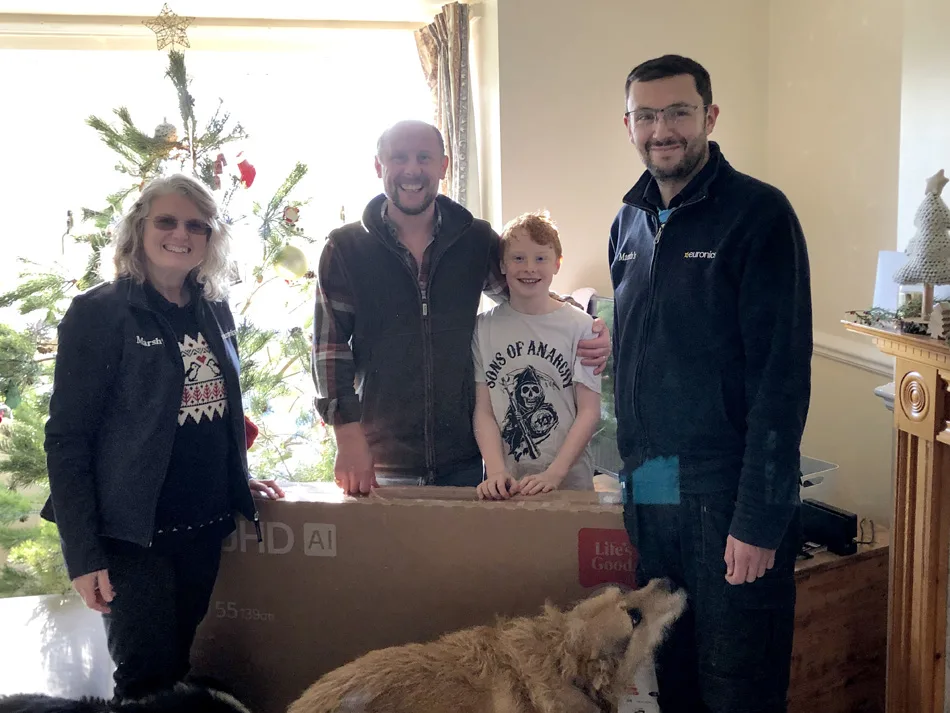
The Thompson family gets a TV for Christmas! Images by E.B Marsh
In our December issue, EB Marsh & Son – north Dorset’s long-standing independent electrical retailer – generously gave BV readers the chance to win a superb £400 LG 55” 4K Ultra HD Smart TV. The winner was drawn on Saturday 20th December, and true to their word, the Marsh’s team were on standby to deliver and install in time for Christmas.
Sarah Palmer, winner Henry Thompson and one of the Marsh’s delivery and installation team. Images courtesy E.B. Marsh
By the evening of the 23rd, Henry Thompson and his family in Blandford were settling down to their first festive film on the new screen. ‘We wish Mr Thompson and his family a very Merry Christmas and Happy New Year,’ said Sarah Palmer, third-generation owner of the family firm. The Thompsons were delighted: ‘Merry Christmas E.B Marsh & Son and The BV magazine,’ they wrote on Facebook. ‘Thank you for the wonderful present!’
With Lloyds leaving Gillingham, concerns grow over cash access, digital exclusion and whether rural towns still matter to Britain’s banks
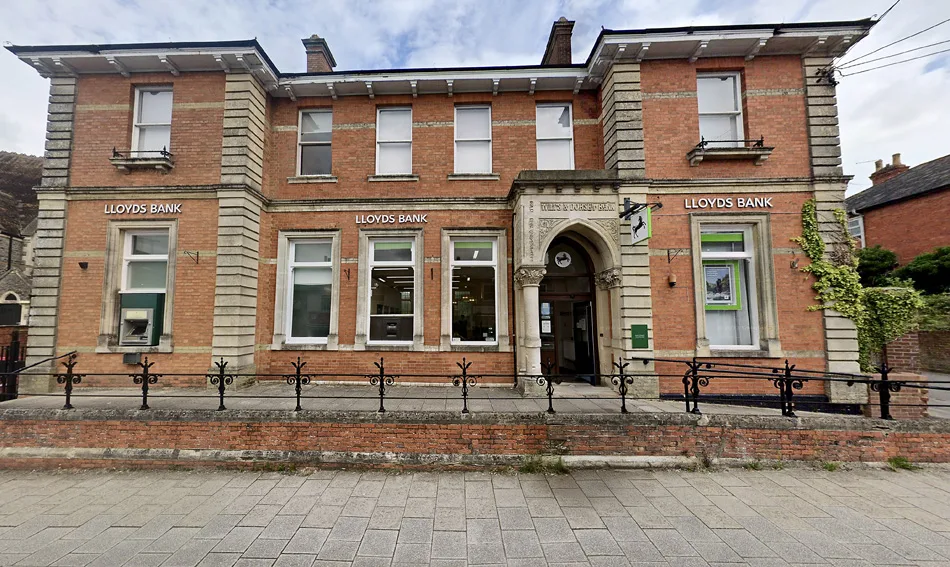
The Wilts & Dorset Banking Company was acquired by Lloyds Bank in 1914. The Gillingham bank retains its original elaborate carving over the entrance.
Most rural Dorset residents are used to seeing vital services eroded, having to travel miles to get things done. The decision to close the Lloyds Bank in Gillingham on 8th January was another unwelcome blow: businesses and local residents lost another Blackmore Vale bank. Many Shaftesbury residents who had recently moved to the Gillingham branch when their own bank closed were also left frustrated. While many people use online banking services successfully, there are still those who struggle with digital access or worry about security. And sometimes, you simply need to speak to a human being in a physical building — to witness signatures, resolve a problem, or deal with financial matters at vulnerable moments. When people are dealing with a bereavement and cannot get past automated systems, speaking to a person with empathy and experience can make a huge difference. In rural Dorset, where public transport is sporadic, digital reach is patchy and broadband not always dependable, some people still rely on face-to-face banking. Although online transactions are now more popular, many people also like to use cash to budget, especially those having to watch every penny. Last year, a House of Lords report highlighted the the impact of losing a bank on a town. The research showed that in 1986 there were 21,643 bank and building society branches in the UK, compared to 6,870 in 2024. More have since closed, including in Blandford Forum, Shaftesbury, Sherborne and now Gillingham. While the method of banking has rapidly changed to online services for many people, there are significant issues that affect those in rural areas, including slower broadband and inconsistent mobile phone signal which affects banking and accessing secure sites. Finally, bank closures often lead to yet another large empty building on an already-struggling high street.
The bank with no cash Once the closure plans were known, Gillingham Town Council swiftly applied for a banking hub, similar to the one which operates in Sherborne, but that was refused. However, after some negotiation, there will be a banking service in Gillingham Library. So, as well as checking out new library books, you can also do your banking … or can you? Unlike a full banking hub — such as the one operating in Sherborne — this service will not handle cash deposits or withdrawals. In other words, don’t ask it for cash. You can get other useful services such as opening an account or registering for online banking, and loan advice – just don’t expect to see physical money. Gillingham residents can still deposit and withdraw cash at a Post Office or the cashpoint beside Waitrose, but is this adequate for a town with a lot of local businesses and a boom in population, with a massive housebuilding programme underway? Councillor Barry von Clemens said: ‘Although Gillingham has been offered a community banking service, I do not believe it will meet the needs of local people. It does not allow essential transactions and largely focuses on moving residents towards online banking. ‘For many – particularly older residents, people with limited digital skills or unreliable internet access – face-to-face banking remains essential. Without a full service, they are left without a suitable alternative.’ The proposed service is unlikely to meet the needs of many of Gillingham’s residents, as it removes the personal, accessible banking option that many people still rely on.’ Cllr Clemens hopes things may change in the future: ‘Authorities acknowledge Gillingham’s growth potential and its designation as a hub town for North Dorset, serving surrounding villages. They remain open to revisiting the application in the future as new housing developments are completed and if retail numbers increase sufficiently to meet the required thresholds.’ Sherborne councillors and residents fought for their banking hub, which opened in June 2025. Does it seem to be working for the town? Sherborne councillor Taff Martin says: ‘I personally feel it’s a better option than just having ‘a’ bank. It’s been very well received in Sherborne and has become a great asset to the town. Everyone now knows when their particular bank day is, and can plan accordingly.’
The community banker Lloyds Bank believes the suggested banking service in the library will suffice. A spokesperson said: ‘The way people are banking has changed. More than ever, customers are choosing to manage their money through our app. The local Post Office offers everyday banking, with cash also available at close by free-to-use ATMs. Customers can manage their money through our app, online, by calling us or visiting our Community Banker. ‘Our Community Banker will be available fortnightly on a Monday (from 19th January) at Gillingham Library between 10am to 3.30pm, offering face-to-face services – including making payments, account enquiries and online banking support – for as long as the community needs it.’ The days when local bank staff knew their customers by name and the state of their accounts are long gone. While most people do use online banking today, there are still people who need a physical service to access money and get financial advice. While it is essential to move with the times, that progress should not come at the cost of choice. Cash still matters. Human contact still matters. And in growing rural towns like Gillingham, access to basic services should not disappear just because they no longer fit a digital-first model.
Years of planning and volunteer effort have turned a corner of a Shillingstone field into a purpose-built Honey Bee Centre, with education firmly at its heart
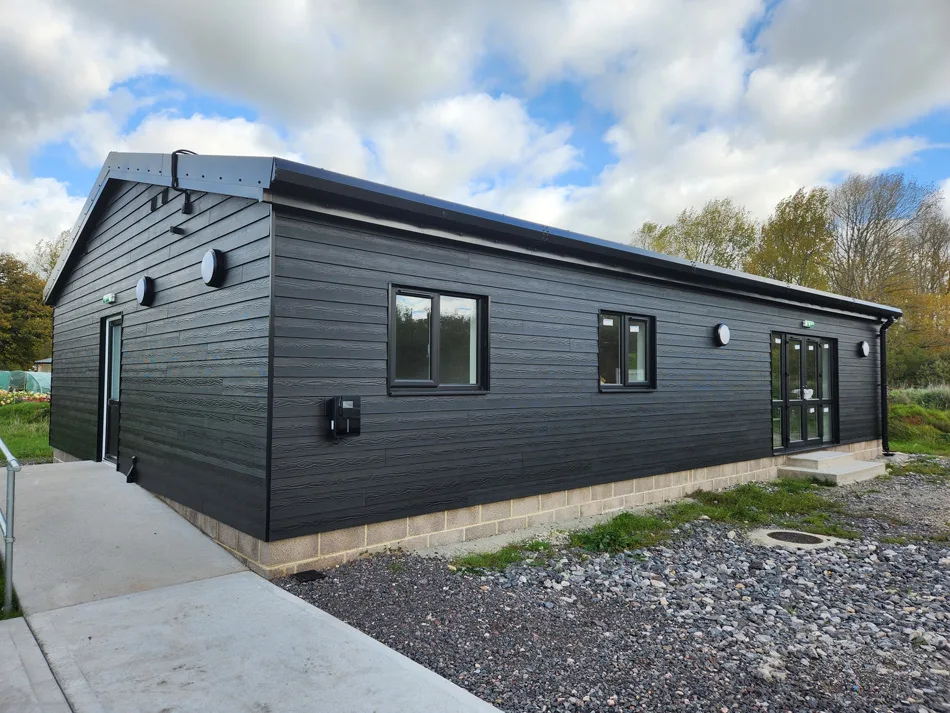
The new North Dorset Honey Bee Centre in Shillingstone is already in use, although the official opening won’t be until May. All images: North Dorset Beekeepers Association
When The BV first spoke to the North Dorset Beekeepers Association in January 2024, the limitations of their exisiting site in Shillingstone were obvious. As spokesman Robbie Baird put it at the time: ‘The site is remote – accessed by crossing a field and two wobbly stiles – and once you’re there, there’s no electricity, running water or any other facilities, just a storage hut and a corner of a field to keep the beehives (the apiary) … It’s better than nothing, but it does mean hosting anyone but the fully able-bodied simply isn’t an option.’ Now, that picture has changed entirely.
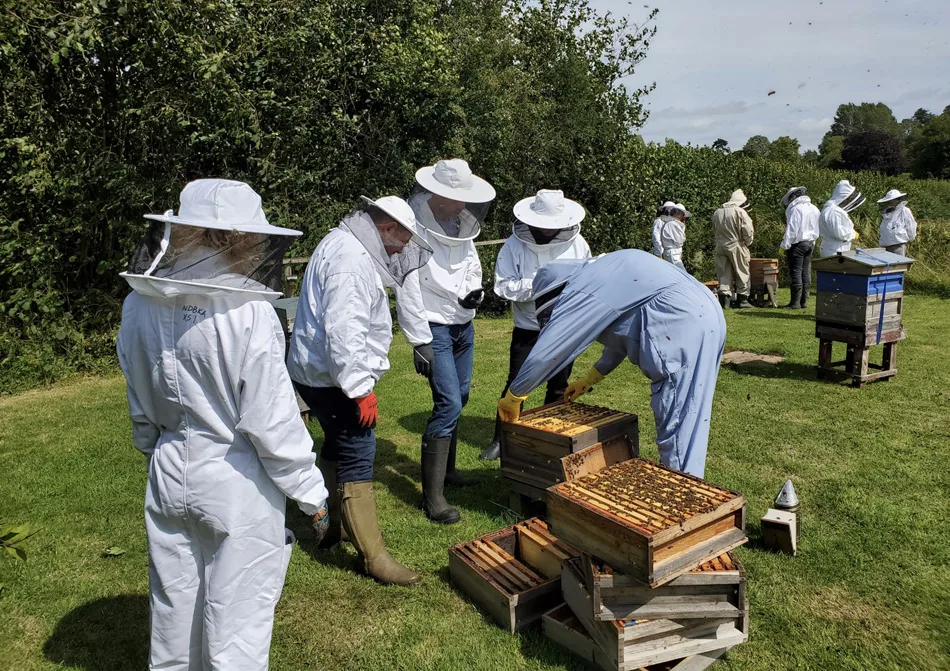
A Bees & Beekeeping Experience Day, run by the North Dorset Beekeepers Association
A practical space ‘It is finished,’ says Ian Condon, a long-standing member of the North Dorset Beekeepers Association. ‘Well – finished in the sense that the building’s there and it’s usable. It’s now just the nitty gritty stuff inside – fire extinguishers, lighting, connecting up the dishwasher … all the boring but essential bits.’ The new North Dorset Honey Bee Centre is the culmination of years of planning, fundraising and volunteer labour. Where once there was a hut and a corner of a field, there is now a purpose-built, eco-friendly teaching facility designed to open beekeeping up to a much wider audience. Inside, the building is centred around a large main room – roughly nine by ten metres – where meetings, talks and training courses will take place. ‘That’s where people will spend most of their time,’ Ian says. ‘We can sit down, we can teach properly, we can have conversations. That’s something we just couldn’t do before.’ Alongside it is a fully equipped kitchen, toilets, a general store and a bottling/honey room with a dedicated warming cuboard. That last space, Ian explains, is crucial to how honey is handled. ‘People think you just take the honey out of the hive and stick it in a jar,’ he says. ‘But honey crystallises. If you’ve got a solid bucket of honey, you can’t bottle it. At the same time, you can’t just heat it up, because you destroy what makes it honey.’ Instead, the centre includes a warming cupboard where honey can be gently brought back to liquid form over several days. ‘You’re talking about very controlled temperatures,’ Ian says. ‘Slowly does it. That way you keep all the properties of the honey intact.’
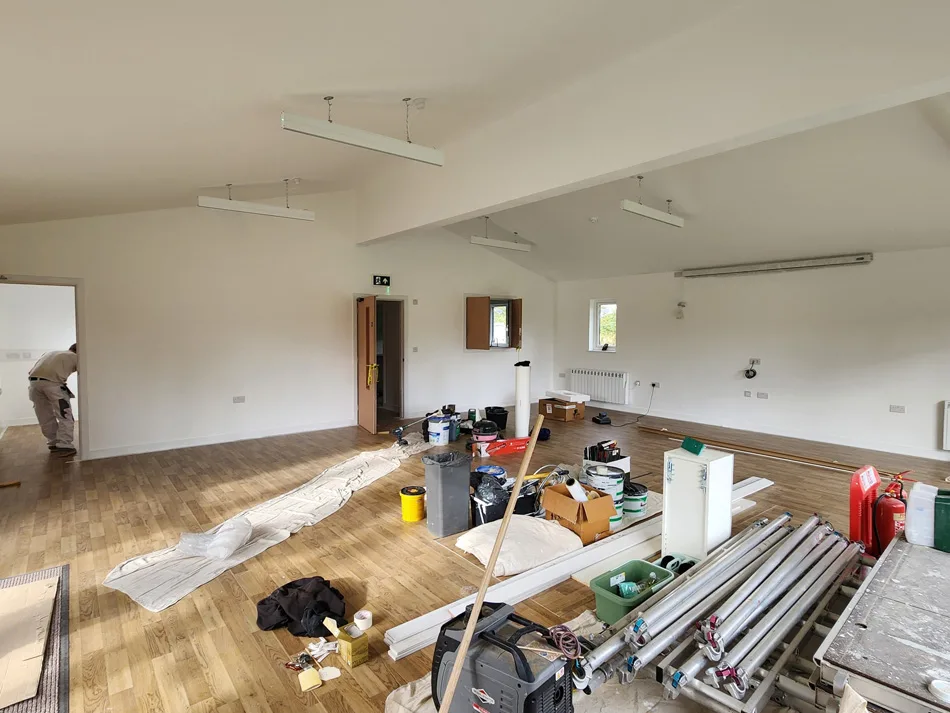
Volunteers are putting the finishing touches to the centre
New opportunities Education is at the heart of the project. Training courses restart this month, but the ambition goes much further than that: ‘Our whole plan is to open this up to the wider public,’ Ian says. ‘We’d love to see school parties here, adult learning groups, people who are just curious about bees and how important they are. That’s always been the dream.’ Crucially, the new building removes the accessibility barriers that previously limited opportunities. It is not only fully accessible, but also one end features a large picture window overlooking the apiary. ‘Some people just can’t get out to the hives,’ Ian says. ‘That’s the reality. But now they don’t have to. They can stay inside, warm and safe, and still see what’s going on.’ Hives can be positioned outside the window, and a beekeeper can work with them while wearing a radio microphone. ‘They can hold a frame up to the glass, talk people through what they’re seeing, explain what the bees are doing. You can be fully involved without having to put a suit on or walk across uneven ground.’ That focus on access and inclusion sits at the heart of the project. Environmental considerations have also shaped the build. The centre is well insulated and heated entirely by electricity, producing no direct carbon emissions. Solar panels on the roof generate power, feeding surplus back into the grid when not needed, and an electric vehicle charging point has been installed outside. ‘From that point of view, it’s as eco-friendly as we can reasonably make it,’ Ian says. ‘We wanted the building to reflect the values of the association.’ Outside, work continues. Weeks of heavy rain delayed grass seeding, and around 130 metres of native hedging will be planted to surround the site. Areas near the hives will be kept mown for safety during training sessions, with wildflower planting planned elsewhere. None of this, Ian is keen to stress, would have happened without volunteers. He singles out Robbie Baird for overseeing much of the project, but repeatedly comes back to the collective effort behind it. ‘It’s been a proper team job,’ he says. ‘People have given their time, their skills, their energy. And the fundraising side has been amazing. We didn’t even realise until mid-summer that we’d actually hit our target – and then the National Lottery came in with the final amount that got us there.’ With landscaping still to finish and an official opening planned for late spring, the North Dorset Honey Bee Centre is not quite the finished article yet. But it has already transformed what the association can offer – turning a remote, limited site into a place of learning, inclusion and connection. ‘It’s going to let us do things we’ve never been able to do before,’ Ian says. ‘And that’s incredibly exciting.’ From wobbly stiles to wide doors, the buzz around Shillingstone is well deserved.
There are still a few places open on this year’s Beekeeping for Beginners Course starting in April: see northdorsetbeekeepers.org.uk