This month Barry Cuff has chosen a couple of postcards of Winterborne Zelston: ‘I have been collecting since 1974, and I have only ever found four cards of the village – and the other two are unused.’
Sent to Miss Reeves at Wilderton House – an Edwardian mansion in Branksome, Poole, which was converted from a single home into seven flats in 1958 and demolished to make way for modern apartments in 2023: ‘Dairy House Dear E. When are you coming or can’t you get away just yet too busy I expect. I was down your home last Sunday I went to see A at Weymouth Saturday. Hope you & A are still on the best of terms. Write and tell me when you can come shall be very pleased to see you both love from Florrie to all
This month’s challenge! This card, sent to Mrs Church in Brixton Hill, London in 1909, has very difficult handwriting to translate. Here’s the editor’s best guess, but we’d love any corrections and suggestions: ‘D L (Top – Kind regards to Muriel and Gladys when you see them) Thanks for [Beers?]. Hope you are all well & Bob etc. Much put up for [… ]. Where is C’s christening? Fancy all was down for few hrs, only I [… ] We miss Charlies [… ] this week sometime. Told B – have had no reply to her correspondence. Fond all F.
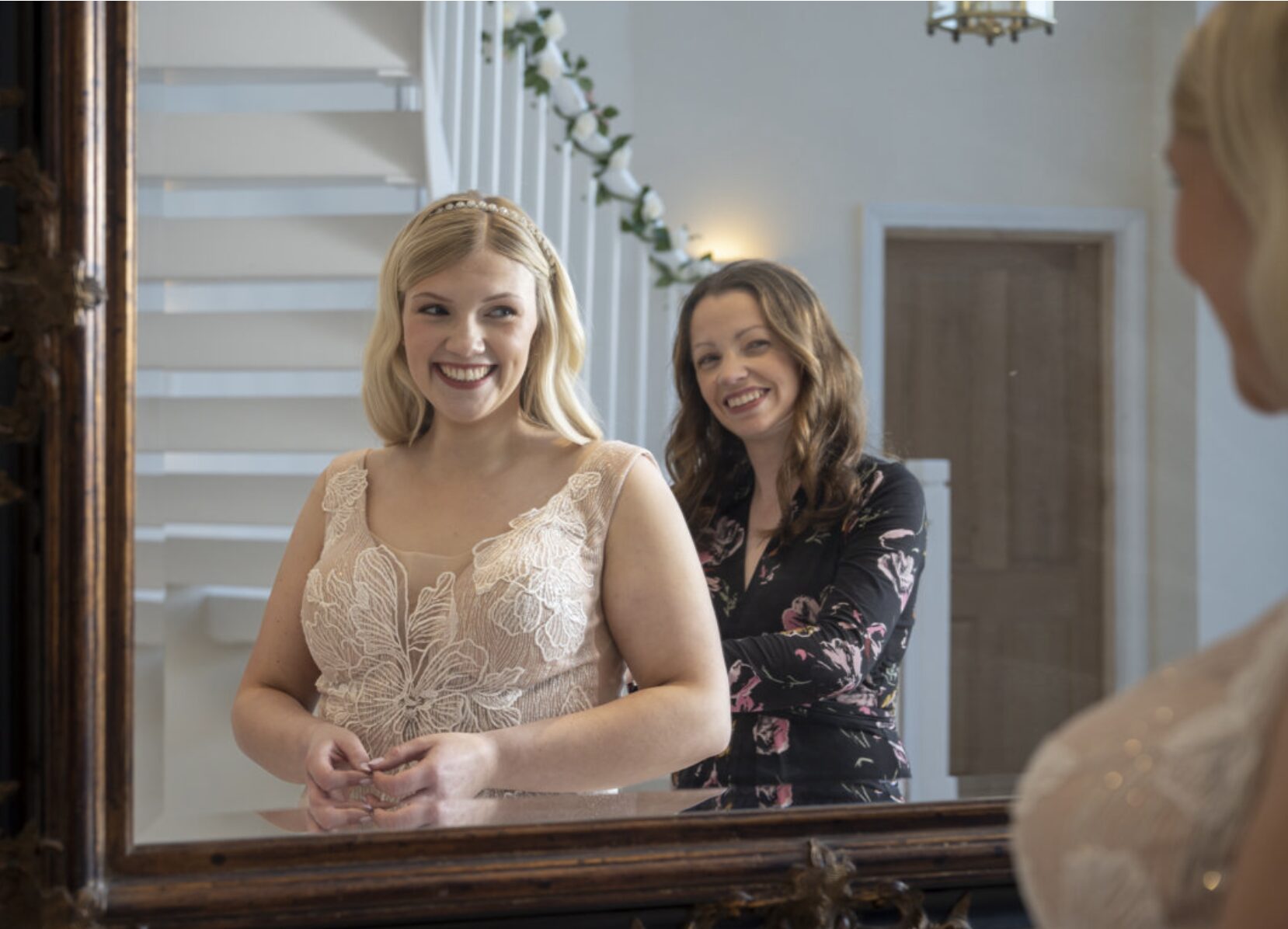
Tracey Goodall, whose Brides of Dorset business is based in Gillingham, was a full-time midwife when she took her sister shopping for wedding dresses in 2006. ‘I LOVED it. The dresses, the shops, my ability to help … it was wonderful. A friend soon asked me to come with her to choose her wedding dress, then another friend… I have no idea why. There is just something about being in a wedding dress shop. It’s my passion. I come alive. And back then I said to myself “one day, I’m going to do this”. ‘I became a stay-at-home mum when my first child was born, but it’s been ten years, and it’s time for me to do something for my own career again. I already knew what I wanted to do. I just had to take a deep breath and go for it. ‘I took a year to plan, working in some bridal shops to gain industry experience. I knew it was the right thing for me immediately – I’m actually living my dream job! The first year has been amazing, I cannot believe how far I’ve come, so fast. ‘But I had a clear vision, and I stuck passionately to it. I did so much research and visited so many dress shops. I have been with friends who have left shops in tears and have heard some horror stories from my brides. Giving brides and prom girls that special experience genuinely matters to me – and in the end, all the research led me back to myself. ‘I have just stuck to my own values – I treat every single bride the way I would want to be treated. I’m sure that has been a key factor in my success. ‘The first year was tricky, mostly because the business was brand new. I had no expectations or plan because I had no idea what sort of seasonal trade swings there might be or how long it would take to build a solid reputation. ‘And you have to be ready for the quiet months. I quickly realised that’s the nature of running your own business. You’ve just got to ride out the quiet spells, cover your bills and keep going. It’s daunting, and it’s difficult. ‘But fairly quickly, my word of mouth reviews started to spread and everything began to snowball. And the wedding industry is like a new family – the local wedding suppliers have swiftly become friends and mentors. I stock a range of options for bridal gowns, in sizes 6 to 30. It was so important to me to be size inclusive, to ensure that fuller figure brides can have the exact same experience. Every bride should get a choice and feel special no matter their size, shape or style. ‘I have a team of seamstresses – Bespoke by Summer Mai in Dorchester – who are amazing. I stock a range of ex-sample dresses which the seamstresses will alter and adjust – many brides will fall in love with a dress but want to add sleeves, or some sparkle or lace, for example. And the Louisa Jackson Bridal Collection is all made to order, with a four to five month delivery time. ‘Surprisingly, my biggest issue was finding the right premises. I nearly quit before I’d even started. I have no idea how businesses manage to stay afloat while they’re paying High Street rates. It was a total eye opener. Finding somewhere that was big enough and also affordable almost broke me. But then at the end of 2022 this place on the Kingsmead Business Park popped up out of nowhere – I hadn’t even considered Gillingham, but it’s perfect for me. It’s on the Dorset/Somerset/Wilts borders, and it’s gorgeous inside, attached to an old farmhouse with exposed brick and beams, huge windows so there’s loads of light … I knew immediately I could make Brides of Dorset into a destination experience, and I realised I didn’t need a High Street shop front. ‘Learning the nuts and bolts of running a business has been tough too – the admin, the tax, the finances generally. The not-fun bits you MUST do. It’s all so new to me. I attended a free course through Dorset Growth Hub which was incredibly useful. I strongly recommend it. ‘I had to make the choice to concentrate on what I was good at, and paying for what I wasn’t. I’m pretty good at marketing and social media, but don’t have a clue about websites (Vicky from The Graffiq Web Studio was an absolute saviour).
Tracey Goodall (centre), owner of Brides of Dorset
Love it or loathe it? ‘I love the flexibility I have to work around a young family. I love the absolute control that being my own boss brings – and also the lack of reporting to anyone else! Having said that, I work evenings, I work weekends … I probably work longer hours even than I did as a midwife. You’d never do it for an employer, but when it’s yours you somehow don’t mind. There’s joy in watching the business grow and thrive, knowing it’s down to you. ‘The flip side is that I’m constantly juggling – it’s a good job I’m a great organiser and good at time management! The balancing act is tough. ‘But in the end you’ve just got to be confident. Trust yourself and go for it. Because you’ll never know until you do it – and when you do, it’s fantastic.
Louise Davis (left) and Sam at the Shaftesbury Business Awards
When she was 18, Louise Davis decided to put off university for a year by taking what I intended to be a ‘short term’ job in retail. ‘I managed to get hired on the spot in a jewellery store for an assistant manager position. I wasn’t qualified – I knew very little about jewellery! But I instinctively understood what could make the shop better. I turned out to be really good at making the shop profitable. Before long I was promoted to an area manager position, moving to struggling stores within the company and turning them around. ‘Eventually I moved on to a high-end jewellery showroom in Kingston – where I was miserable. They had what they called the BOB tick sheet, which we had to complete for every single customer. Did we greet within five feet of the door? Offer a seat? Show what they asked for, plus the range in the next price bracket? Sell them insurance? Take their contact details and anniversary dates? ‘It was hard pressure sales and I really hated it. ‘But they offered terrific diamond training, so I decided to suck up the misery to get my qualifications, and as soon as I could, I left. It was most definitely what we now call a toxic workplace. I’d had my fill of retail, so I moved into the manufacturing side of the business – and found that I loved it. ‘We manufactured the jewellery that was stocked by retail outlets like John Lewis. I learned every aspect of the wholesale trade, and eventually I was designing my own ranges, overseeing their development within manufacturing and then taking them out on to the high street. ‘A few years ago I made the move to the West Country and decided to start Honour Jewellery. I wanted to take all the elements I loved about what I did, and to hire people to do the bits I didn’t! Richard is my business partner and Sam works with me on face-to-face design appointments. I have two goldsmiths, a stone setter and an engraver. ‘We started with a small studio in Mere – it worked well, but wasn’t really big enough, so after COVID we moved to our current design studio at the Wincombe Centre in Shaftesbury. ‘And it’s funny – I still see elements of that old BOB sheet! My clients are appointment-only now – no more standing around mindlessly polishing! But they always get offered a seat and a cup of tea… We only do bespoke or personalised pieces, so we’re either designing something from scratch, or taking something from one of our ranges and adjusting it to make it more personal. ‘I particularly enjoy the unique work, where we might take a client’s own sentimental metal and gemstones and make a new piece out of them. ‘That’s the most interesting and also often the most technical work, if we’re combining different metals, for example.
Honour Jewellery
Be consistent ‘The biggest thing I think I have learned is to treat every single customer in the same way. Every single one. We find people will often come in with a small job first; can we just fix a little silver brooch for them? Next time they come in, they might be there for a platinum and diamond ring. ‘Or they might just tell all their friends and family about the brilliant place they went to where the people were so lovely – and that sort of word of mouth referral is absolutely priceless. Never ever let them walk out feeling undervalued. ‘One client was a funeral director. She had a ring which had a strong emotional significance for her, but the setting was quite tall, and whenever she carried a coffin, it dug very painfully into her finger. ‘The ring I designed sat low and flat against her hand, she loved it. She not only became a long-standing client but also a useful business associate too. ‘The other absolutely vital thing is consistency. Whatever you do to find your customers, whether that’s a poster in the corner shop or big glossy ads, you have to keep on doing it. People need to feel assured that you’re real, and not going to vanish next month. I have relied a lot on social media, because I could easily control it and it’s very cheap for a start-up. But I’ve lost count of the number of people who have said ‘I have been following you on Facebook for a couple of years, and I’ve finally managed to come and get something done.’ ‘If I’d stopped using social media, I would probably have lost those clients. ‘And on a purely practical note, don’t spend all your money! Keep some cash in reserve – you still need to pay the bills during the quiet periods, and there are always quiet periods. ‘Actually, holding your nerve and just plodding through the mud in the bad times is a key resilience skill you need to run a business.
Love it or loathe it? ‘I love the flexible lifestyle running my own business allows me. Sitting at a desk 8.30 to 5.30 bores me rigid. Now I can choose balance – I can finish early, spend time with my kids, but then also work late into the night once they’re in bed. I’m not answerable to anyone. ‘I simply don’t do well in a controlled environment, having to justify every minute. I do the same for my team – I give them space, and trust them to do their job. They have free rein on when and how they work; I always try to hire the right people, then treat them well. ‘I do loathe the admin side though. I am not a fan of jobs I must do that ensure the business runs smoothly. In an ideal world, I’d just talk to the customers, do the design work, oversee production … and someone else can deal with all the rest! ‘But at the end of the day, all the dull admin jobs in the world don’t outweigh the benefits of having ultimate control over the business and its direction. ‘That freedom is priceless.’
There is an air of new season excitement at Thorngrove this month. You can’t keep a good gardener down, no matter how much rain comes their way
Hello, spring… are you here yet?! Despite the vibrance that’s been on display here at Thorngrove in February (daffodils, hyacinth, anemones and more), a few extended bouts of rain have made it feel like the winter has dragged on a little bit longer than we’d like. Hopefully you’ve still got some garden goals planned for this year – don’t let the rain hinder your progress! The new season is arriving and we’re on hand to help you make the most of your garden. Take some time in March to tick something off your list, even if it’s something small – like finally getting the lawn mowed and tidied, or picking out your summer bulbs (planting season is upon us!). Or maybe you’re taking a bigger step and setting about filling a space with new shrubs. Not only does ticking something off that list feel good (this is actual science!), any small task is another step towards hitting those gardening goals and making your home feel more YOU – plus it’ll give you something to show off to friends and family the next time they visit!
Speaking of family – Mother’s Day is almost here! Sunday 10th March. The Secret Garden Café is almost full for our Mother’s Day menu, but if you’re looking for that special gift, we’ve got you covered. Cristi in the shop put the finishing touches to our Mother’s Day display last week, and the range is beautiful. Whether you’re looking to fill a hamper or just pick-up a small token of appreciation, we’d love to know that we played a small part in treating mum right this year, so do come in and have a browse at the gifts.
More BIG news for us this month, March is the launch of our brand new loyalty scheme! FREE to sign up for, giving you a new loyalty card, allowing you to earn points across all purchases made in the garden centre and the Secret Garden Café, not only here at Thorngrove in Gillingham, but also at our sister site in Moreton, The Walled Garden and the Dovecote Café. Pop in and speak to staff to find out more! As we always say, our connection with the local community is something we continue to make stronger, and we’d love for you to continue to visit us and sign up! (again, it’s FREE!) Looking ahead to Easter, crafts for children will return with tickets going on sale very soon. Plus Nina from Green Spiral willow is back for another workshop, this time guiding you to the creation of a trio of bird-feeders. Not to be missed! Booking details on our website. Last but not least, our OPEN DAYS for Employ My Ability are in April (16th and 17th). Find out more about the opportunities we offer young people with SEND. Guided tours of the learning environments available – full details at employmyability.org.uk
For all the latest news and updates, offers and more see thorngrovegardencentre.co.uk
Served from a railway carriage overlooking the valley of the river Stour at North Dorset Railway, Shillingstone, treat Mum to a taste of vintage travel this Mother’s Day. Served at 2.30pm on Sunday 10th March, each afternoon tea will include
a selection of freshly made finger sandwiches
a homemade scone with jam and clotted cream
a selection of homemade cakes
a choice of tea or coffee
all served using traditional china
Priced at £9 per person (pre booked only).
Easter Family Fun Day Come and find out about the North Dorset Railway at the Family Fun Day on Sunday 31st March from 10.30am to 3pm. There’ll be a quiz trail with answers around the station, for children under 12, and each child receives a Cadbury’s Creme Egg when they hand in their quiz sheets. There will be more activities for younger children, as well as signal box tours, the museum and other attractions, and the shop and café will be open as well – something for everyone. The cost for the Easter Quiz is £2 per child, no booking needed. Both events are in aid of North Dorset Railway, which is entirely run by volunteers with all funds raised put towards the maintenance and development of the railway for the benefit of the community. For more information on either event, or to book an afternoon tea for Mother’s Day, please call 01258 860696 during opening hours of Wednesday, Saturday and Sunday 10am til 4pm.
Renowned photographer Charlie Waite will be the Spring Countryside Show’s judge
Keen local photographers are being invited to enter their submissions for the inaugural photographic exhibition at the Gillingham & Shaftesbury Spring Countryside Show, which takes place on the weekend of 20th to 21st April. This exhibition is a platform for local amateurs to display their unique perspectives of our world. The show team are excited to have Charlie Waite, world-renowned landscape photographer and North Dorset resident, to judge the submissions. With a career spanning more than three decades, Charlie has collected many prestigious photographic awards and held solo exhibitions all over the world. He’s lectured throughout the UK, Europe and America and provides private tuition. His images are held in private and corporate collections throughout the world, and he is the founder of one of the UK’s most prestigious photography competitions, Landscape Photographer of the Year. Cat Harris, Gillingham & Shaftesbury Spring Countryside Show Organiser said: ‘We’re so excited to launch this competition and it’s such an honour to have one of the world’s leading landscape photographers as judge. ‘Whether you’re a budding photographer or have been capturing moments for years, we encourage you to join in. This is a fantastic opportunity for amateur photographers of all ages to showcase their talent!’ Charlie will also be giving a free expert talk to share his top tips on landscape photography.
Hay bales at Stonehenge by kind permission of Charlie Waite
How to enter There is a nominal entry fee of £3 per photograph, and the deadline for submissions is Friday 5th April. To enter, please visit springcountrysideshow.co.uk.
The Gillingham & Shaftesbury Spring Countryside Show has a host of family attractions lined up including clown capers, pig racing, gardening talks and workshops, free tractor and trailer rides, Dorset food and drink and live music. Kids under 16 go FREE
Fixed Term contract Salary: Grade 14, pt 4 £11.98 per hour Contract type: Part time, 19.5 hours per week, term time only. Three days per week, hours to be negotiated. Fixed Term 15th April – 24th July 2024
The governors wish to appoint a new School Office Administrator to start on 15th April 2024.
We are looking for a skilled, efficient and highly organised person to join our friendly school team. The successful candidate will ideally be qualified at NVQ Level 2 in Business Administration.
They will need excellent customer service skills, to be hardworking, flexible, able to multi task, and be adaptable to change.
Milborne Port Primary School is committed to safeguarding and promoting the welfare of children and young people and expects all staff to share in this commitment. This post is subject to an enhanced DBS check. We are passionate about promoting British values, which is evident through our curriculum and the routines of our daily school life.
To obtain an application form, job description and person specification, please contact Mrs Claire Brown, School Business Manager via email on: [email protected].
All applications should be returned electronically to Mrs Brown
Visits to the school are warmly welcomed. Please telephone the school on: 01963 250366
Closing date: Noon on Monday 18th March 2024 Interviews will be held on: Monday 25th March 2024
Pauline Batstone shares her monthly round up of what’s happening among the town’s collection of community enterprises and events
Some of the wild daffodil planted with the help of William Barnes school in November 2019
Spring has unmistakably arrived, heralding the perfect opportunity for a fresh wardrobe update with ladies’ attire from The Boutique and gentlemen’s fashion from Dapper Chaps. Alternatively, you might be feeling like now’s the perfect time to revitalise your living space – head to the Furniture Store in the old Barclays Bank for an enticing selection of new-to-you items to keep, upcycle or re-purpose. Of course, then you should add some practical and/or decorative touches with some items from The Emporium. For art enthusiasts, The Art Gallery continues to offer a delightful selection of pictures. Additionally, above the Furniture Store, don’t forget the hub providing free school uniforms – if you have no need of it yourself, be sure to tell any parent of school-aged children that it’s there and available. Embrace sustainability – all our items are pre-loved, economically priced, recycled and good for the planet. To sustain our thriving community, we are in need of more volunteers, particularly at The Boutique. Would you like to come and join our cheerful family? Get out the house, meet new people, fill a few quiet hours and immerse yourself in the lovely feeling of giving back. However, it comes with a warning: your new found love for the fashion at The Boutique may necessitate a larger wardrobe from the Furniture Store. Recently, a Christian Dior silk scarf caught my eye during my shift. It simply had to come home with me, albeit at a price. Sadly, until we gain some new volunteers The Boutique will be closed on Mondays and Tuesdays. If you can spare a couple of hours during the week, please do drop by The Emporium or 1855 for a friendly chat, or email Cheryl on [email protected].
In other news … Mark your calendars for 2nd March, when 1855 will host its customary Meet the Traders event in the morning, offering a perfect opportunity for leisurely browse around the ever-changing stock. Car and Bike Enthusiasts are welcome to come along to the regular event for classic and sports car and bike enthusiasts. Classic cars and bikes, interesting modern sports cars and bikes are all welcome – it’s free and very informal. They meet from 9am til 12pm on the first Saturday of each month, in the winter at the bottom of the Railway Gardens. Next meet is Saturday 2nd March and then 6th April will, weather permitting, be the first of the year back on The Rec. Please come along with your car or bike, or just to have a look and talk to other enthusiasts. FREE PARKING in town on both days. Prepare for the return of the regular Car Boot Sales from the 7th of April until the 1st of September, with sellers setting up from 10 a.m. and buyers welcomed from 11 a.m. Parking will be available on site, with proceeds supporting the Vale Pantry and Hedgehog Rescue of Hazelbury Bryan. The Newton Residents Association will conduct its 2024 AGM at The Bull Tavern on Friday 15th of March, at 6:30pm. Thanks to Darryl and Emma of The Bull for their support.
Looking to Easter As Easter approaches, our churches are abuzz with activities. Look to their respective web pages for event details. On Good Friday, a brief service will be held at The Cross in the Market Place, followed by complimentary Hot Cross Buns from SturAction. Central to Easter celebrations, on Saturday 30th March, the three Sturminster Newton churches will embark on Jesus’ Easter Journey, commencing at Christian Fellowship, then Methodist Church, and concluding at St. Mary’s, with sessions at 10.30am and 12.30pm, fostering moments of reflection and praise. Easter Saturday also promises some tasty indulgence with a Chocolate Fair at The Exchange from 10am to 2pm. The Vale Pantry Easter Egg Hunt will be taking place on the same day from 10am to 4pm. And to counteract all that chocolate consumption, assemble at The Exchange at 2pm for an Easter Bonnet Parade around town. Don’t fret if you forget your bonnet – spares will be available at The Exchange from 1.30pm and everyone receives a prize – there’s absolutely no competition involved! On Easter Sunday, our churches will all hold special services, marking the pinnacle of the church calendar. Consult their notices for precise details.
Save the date Volunteer Day is on 13th of April, bringing together voluntary groups and potential volunteers from 11am to 3pm at Stour Connect on Bath Road. Come and see if there’s something you could be part of – and there will be an accompanying Jumble Sale if you enjoy a rummage, too!
D Day stories Lastly, a reminder that we’re seeking contributions from local people whose family members took part in the build-up and military invasion of Normandy 80 years ago. Stur LitFest will be creating an exhibition of local family testimonies and images that will be on show in the gallery at The Exchange. On 9th June, the exhibition will be formally launched alongside author events commemorating the invasion. If you’d like to contribute to the exhibition, please send a short summary (500 words maximum) of your forbear’s experience in June 1944 and a copy of any images to [email protected] – or deliver a hand-written account to the Town Council Offices in Sturminster Newton, marked ‘FAO Cllr Pauline Batstone, D-Day 80th Anniversary Project’.
Simon Ridley, the new head of Bryanston Prep, says a prep school education opens new doors for children, whatever their interests
Bryanston Prep
We all know every child is different. They don’t look the same, they don’t have the same skills and interests or family backgrounds, they have their own way of looking at the world and their minds and bodies will develop and mature in their own unique way. All children, though, have curiosity, uncertainties and excitement. As parents and teachers, I believe it is our responsibility to provide the inspiration, reassurance, encouragement and support that will help a child to develop their self-esteem, explore their passions and become the very best person they can be. That is certainly my approach to education. Of course, ticking all of those boxes is often easier said than done and there will always be challenges along the way. It’s also very important that the learning environment provides comfort, safety, happiness and social interaction, as well as the flexibility to reflect the different abilities and rates of development of each child. Dorset is blessed with many great state and independent schools with deeply dedicated teaching staff. What’s more, the county provides a myriad of opportunities on the doorstep to help children enjoy a varied and fulfilling childhood. Supportive educational partnerships between schools, through groups like the Blandford Schools Network, are also hugely beneficial for all involved.
Simon Ridley is the new head of Bryanston Prep
An evolving experience But it’s not just a case of choosing the ‘right’ nursery, primary, prep or senior school for your child. It’s just as important to consider how their learning experiences and opportunities will evolve as they progress through their childhood and develop the skills for a purposeful life. Some children will be ahead of the curve and ready for new challenges. Others will need a little extra help and encouragement. This is particularly evident in the formative years from five to 13, as children begin to discover their own talents and new areas of interest. Whether its sport, the arts, the environment, science and technology or an interest in just about everything, a child should have the scope to explore and extend their own learning experiences and to use the knowledge to fire their own imagination. This is where I believe the fee-based structure of prep schools comes into its own for local day pupils and boarders alike. Pre-prep and prep schools are fortunate – they are in a position to offer a more flexible and tailored approach to many areas of their curriculum, with an array of extra-curricular activities and real scope to explore a vast range of artistic, sporting and academic pursuits. They also have access to excellent facilities, subject-specific teaching and coaching and far smaller class sizes, where pupils can benefit from more personalised support. Significantly, many prep schools are themselves champions for many activities that will resonate with enthusiastic young minds but are the areas in which mainstream schools face considerable and well-publicised challenges and constraints. Whether it’s sport, music, dance, fine art, classics, modern languages, outdoor learning or cutting-edge technologies, a well-resourced prep school offers every child the opportunities to be inspired and to develop their skills as well as important personal qualities such as determination, empathy and selflessness.
‘It is obvious just how much children enjoy and benefit from creative and imaginative outdoor play and education
Feeding enthusiasm and curiosity Not surprisingly, many prep schools in the west country engage in a wide range of outdoor activities – Bryanston is certainly not alone in providing a dedicated forest school within its own grounds. In my professional capacity, it is very obvious just how much the children enjoy and benefit from creative and imaginative outdoor play and education. This is such an important part of childhood, rather than pushing them to grow up too quickly. Outside, they are getting up close to nature, making things and building dens while also learning those soft skills that will stand them in good stead as they progress through their school years and move towards adulthood. It is also a place where we can feed the enthusiasm, curiosity and interest in the environment that is so much in evidence in today’s younger generation. The same is true when we look at sport, technology and the arts. Providing every opportunity for a child to excel and to develop their skills and talents is the guiding principle of practically every parent and teacher. The real hope for all is to provide the right learning experience, with the resources to allow personal development uncompromised by curricular or budgetary restrictions. It is equally important that any school doesn’t inadvertently hold back the development and wellbeing of children. If a child outgrows their learning environment, they will soon become demoralised and frustrated and their development will be stifled. This is true for all children, but especially those with exceptional talent and ability. That’s why partnerships with neighbouring schools and sports and arts venues, as well as close community engagement, are so important. And it’s why the flexibility and opportunity provided by through-schools are so valued. After all, early exposure to the next level of learning is not only good preparation, but also helps to maintain interest and motivation through all stages of a child’s education.