

They were farmers, labourers and tradesmen, but Dorset’s Auxiliary Units trained in silence to become Britain’s last, lethal line of defence, says CPRE’s Rupert Hardy
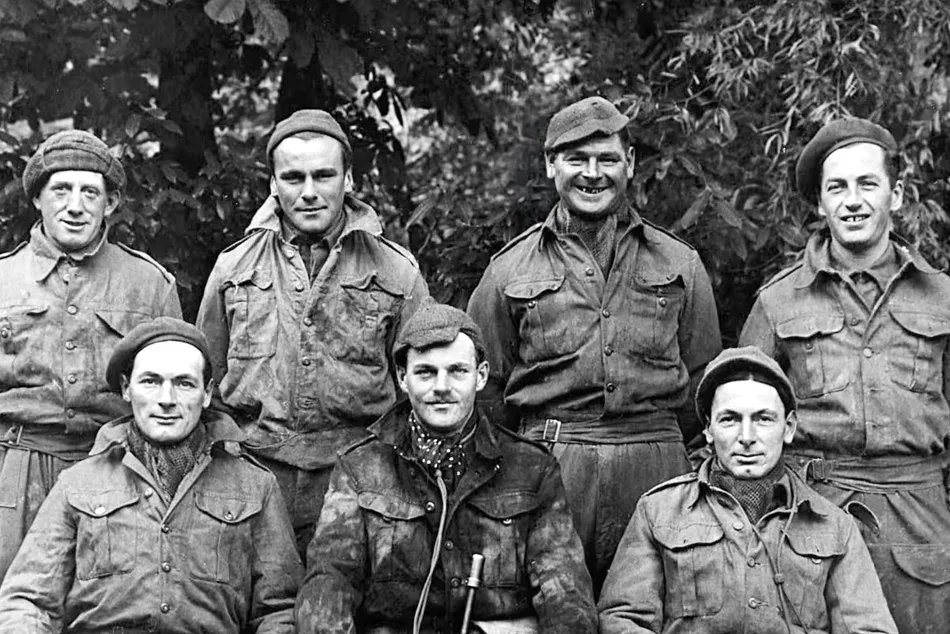
It is only in the last 20 years or so that details have become known of the secret guerrillla army created in the aftermath of Dunkirk, in the summer of 1940, specifically to deal with a German invasion. Innocuously called Auxiliary Units, they were trained in sabotage, explosives and irregular warfare in order to be the last line of defence. Churchill had seen how quickly Britain’s allies on the continent collapsed, and was determined to set up a trained resistance force in Britain.
The Home Guard they were not, even if they reported to GHQ Home Forces, and would only be activated once local regular defences had been overrun.
The role of the Auxiliary Units was to attack key transport lines and fuel dumps, as well as assassinate senior German officers. Much of the inspiration came from the success of Boer Commandos during the Boer war, and TE Lawrence’s exploits in the First World War.
Overall they were expected to slow down any invasion, attack the Germans from behind their own lines and allow a retreating British army to regroup. The aim would be for them to cause maximum harm over a brief but violent period. They were quickly nicknamed ‘Scallywags’.
They were initially commanded by Colonel Colin Gubbins, experienced in guerrilla warfare from the Irish War of Independence. In 1940 he had commanded a predecessor of the British Commandos during the Norwegian campaign.
He said: ‘Time was of the essence … at the shortest we had six weeks before a full-scale invasion could be launched.’
He set up units totalling 3,500 men on a county-wide basis, primarily around the south and east coasts. Later, command of the Scallywags fell to Colonel Bill Major – a Dorset man who had served with the Dorset Regiment.
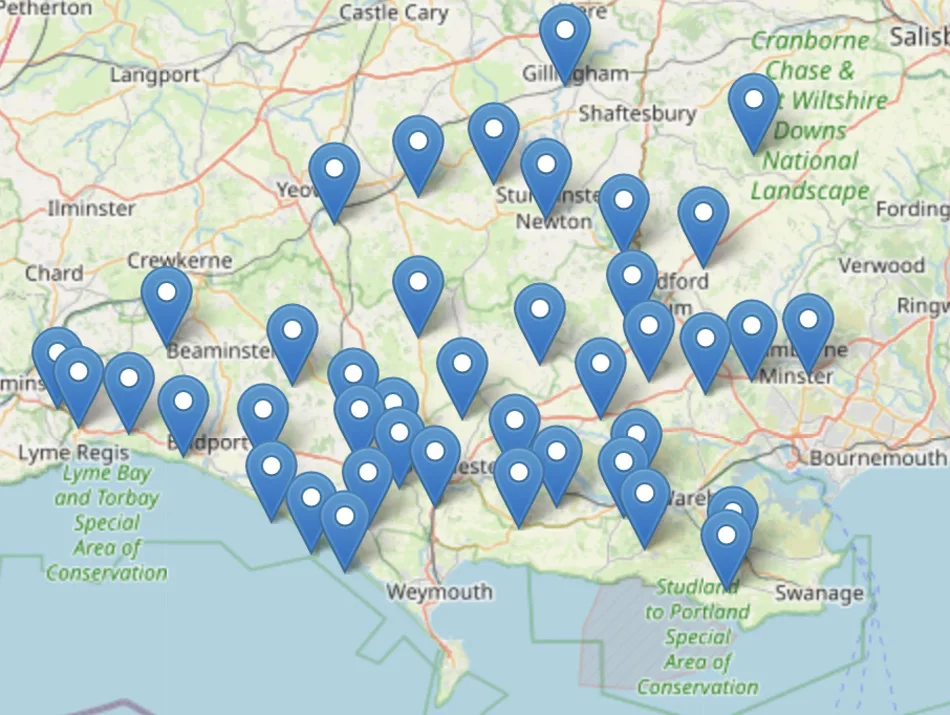
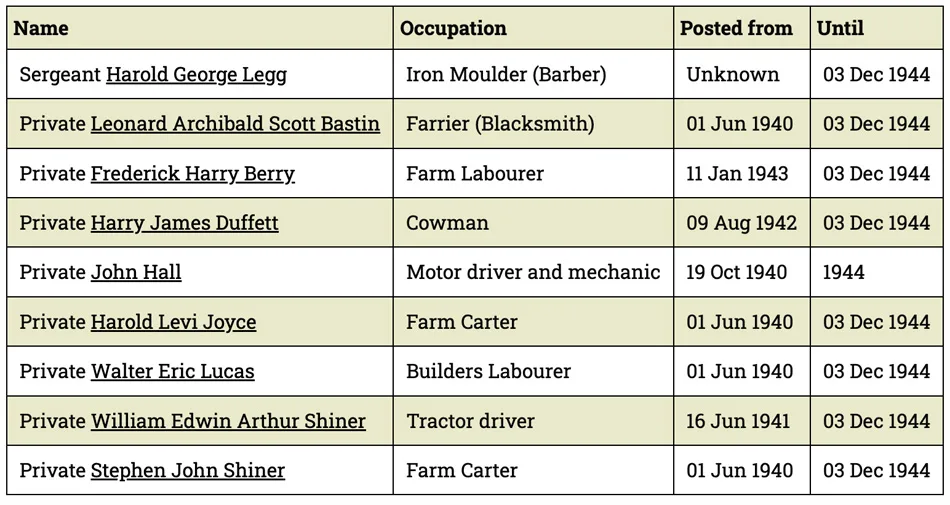
Pimperne Patrol
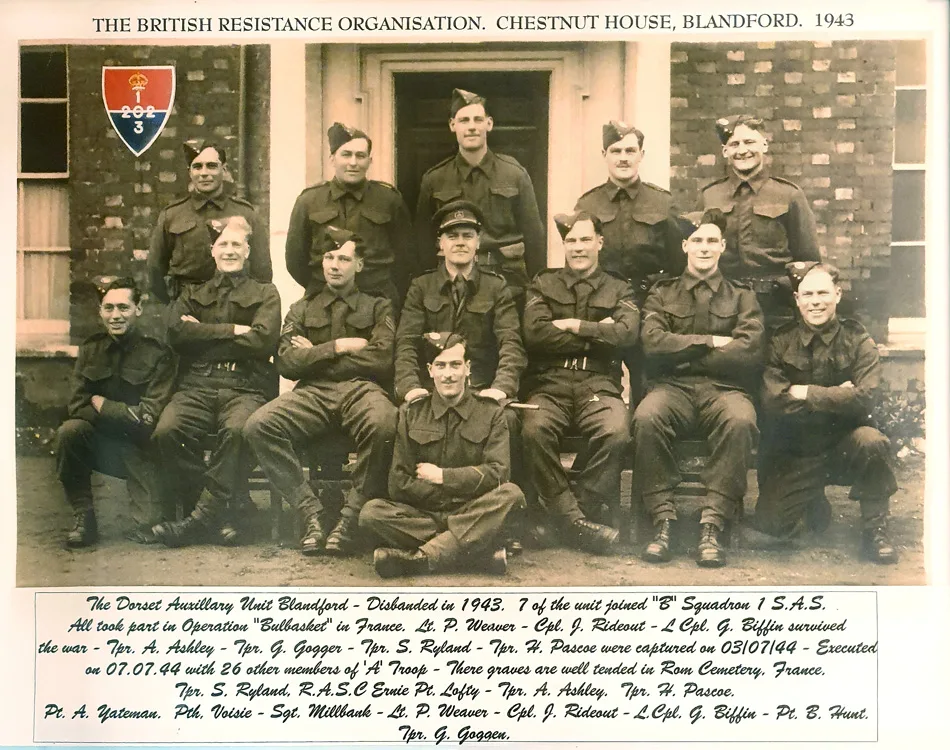
Dorset had six groups: East Dorset, Wareham, Dorchester, Weymouth, Blandford and Bridport. The North Dorset group was based at Chestnut House in East Street, Blandford, reporting to Major Robert Wilson. It had eight patrols, each of four to eight men. They operated autonomously in self-contained cells using hidden bunkers in Child Okeford, Hinton St Mary, Leweston, Motcombe, Pimperne, Plush, Stourton Caundle and Woodyates. Many Scallywags were recruited from the Home Guard, and most were in reserved occupations essential for the war effort. Gamekeepers (and poachers!) were especially valued for their local knowledge.
Service in the Auxiliary Units was expected to be highly dangerous. Peter Wilkinson, GS02 Auxiliary Units, said: ‘It was doubtful whether many of them would have survived the first few days of invasion’.
Patrol members had orders to fight to the death, and to shoot each other if capture by the enemy was likely. Although they wore some elements of Home Guard uniform, it was expected the Germans would treat captured members as irregulars … and shoot them.
Dorset’s patrols would have been swiftly mobilised in the event of a German invasion. Enemy plans pointed to a possible landing in Lyme Bay, while other intelligence suggested Studland Bay – even closer. Blandford would be a strategic inland target for invading forces heading north to Bristol.
Just east of the Stourpaine and Blandford to Shaftesbury roads, the patrol’s underground operational base was well-disguised in a small copse on Bushes Farm, alongside the original showground for the Great Dorset Steam Fair. The hideout had a shaft down to a Nissen hut-style camouflaged, underground construction with a concrete pipe tunnel – probably an escape tunnel. Operational targets would have been Blandford Camp if it fell into German military hands and the sabotage of enemy movements on the Blandford-Shaftesbury and Blandford-Salisbury roads. The hideout was well-stocked with supplies of explosives, hand grenades and ammunition.
As countrymen, the patrol members knew the local area well, and they would have been trained in hand-to-hand combat. Auxiliary role members would not have told family members that they had become ‘Scallywags’.
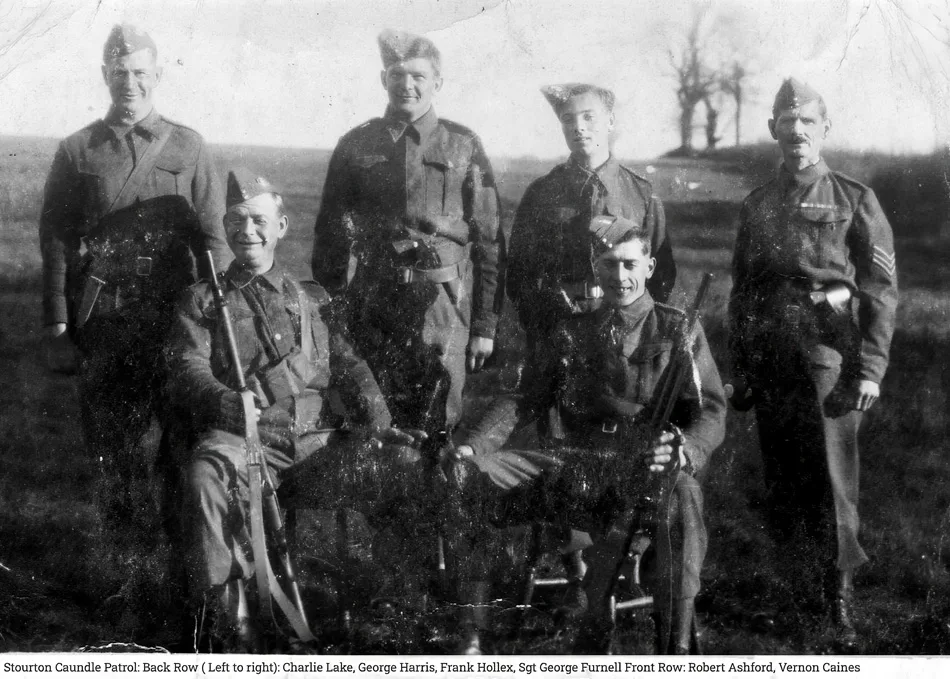
Front Row: Robert Ashford and Vernon Caines.
Image courtesy of CART
No monument in North Dorset?
The Auxiliary Units were kept in being long after the threat of invasion had passed and were only formally stood down in late 1944. Many then joined the SAS and other special forces and saw service liberating Europe in the regular forces.
Four men from North Dorset units took part in the ill-fated 1944 SAS Operation Bulbasket, to hamper the progress of German reinforcements towards the Allies’ Normandy beach-heads. They were captured and executed as ‘commandos’ by the infamous 2nd SS Panzer Division Das Reich.
There has been little recognition of the part these brave men played in protecting their country – even their wives and families were often unaware of their role. In South Dorset there are a number of memorials, but I know of none in North Dorset.
Surely it is time for one?
More information on the Auxiliary Units can be found on staybehinds.com compiled by the Coleshill Auxiliary Research Team volunteers (CART).
In a later article this year I will cover the Special Duty Sections, recruited from the civilian population who acted as “eyes and ears”, as well as Scout Sections, who were regular soldiers with the role of training the patrols.