

Collections of old carols and songs found in Dorset’s churches have inspired a thriving revival of the West Gallery tradition
THE recent resurgence of West Gallery music and traditional Dorset carols and songs is partly attributed to Thomas Hardy and his early novel, Under The Greenwood Tree. It’s the story of a village quire, playing old tunes on ancient instruments, and their replacement by the new-fangled organ, part of the Victorians’ fetish for modernising and tidying up old village churches.
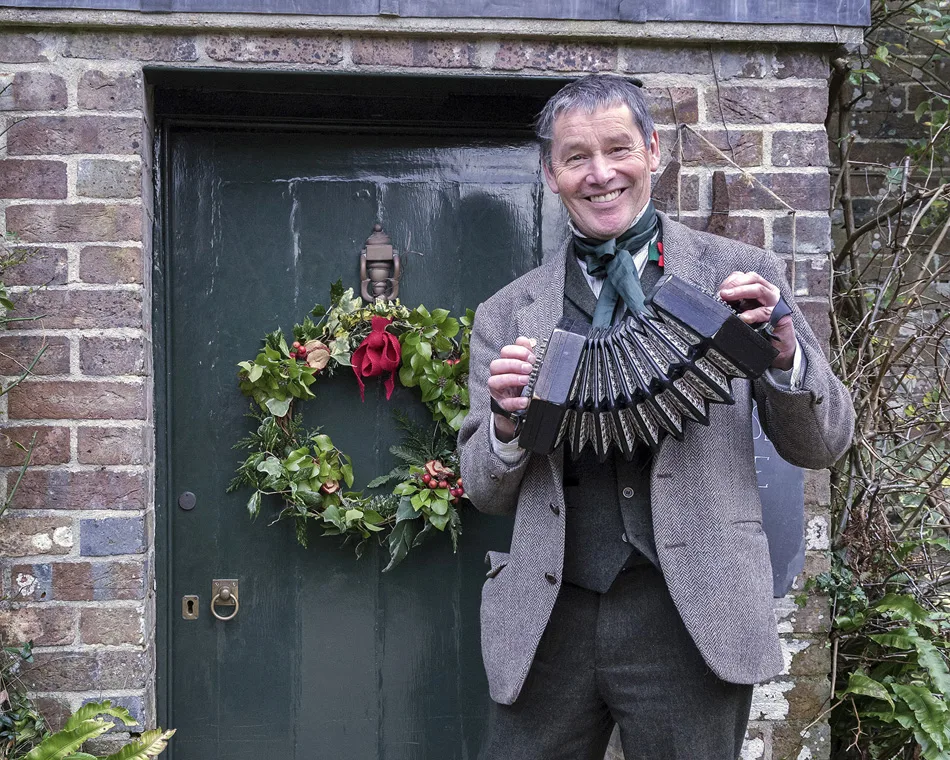
Now, there are groups of musicians and singers, including West Dorset’s Ridgeway Singers and Band, who regularly perform the old songs and carols, many collected from church archives. Public performances are well-attended and the revival has also brought renewed interest in the writing and lives not only of Thomas Hardy, but of his fellow Dorset writer and poet, William Barnes.
As well as the music, songs and dances, the restoration of these simple folk tunes has also brought back some of the instruments that were played by the old West Gallery quires and bands – notably the serpent. It was this strange, centuries-old instrument that attracted Phil Humphries to the West Gallery revival. A long-standing member of the Mellstock Band, Phil is one of the few musicians who can play the unwieldy thing. Dating from the Renaissance – late 16th century is the generally accepted period – it is an early ancestor of the tuba – and has attracted much comment over the years.
Phil has traced a total of 11 mentions in Hardy’s writing, not all of them as enthusiastic as this quote from Under the Greenwood Tree: “The serpent was a good old note; a deep, rich note was the serpent!”
Handel was not impressed when he heard it: “Aye, but not the Serpent that seduced Eve,” he said. The 20th century German musicologist Willi Apel described it as “a drain pipe suffering from intestinal disorder.” And music historian Charles Burney, father of the famous 18th century novelist Fanny Burney, said it was “not only overblown and detestably out of tune, but exactly resembling in tone that of a great hungry, or rather angry, Essex calf.”
But in Dorset it is much loved and Phil’s virtuosity has won him many fans, not only with the Mellstock Band but in his role with the Ridgeway Singers and Band, which he has jointly directed with Tim Laycock. You can listen to the Mellstock Band in action in the video on this page, including Phil on the serpent. It will also doubtless make its booming presence heard at the annual Tea with William Barnes afternoon of music, poetry and food at Sturminster Exchange on Sunday 22nd February.
A great chronicler
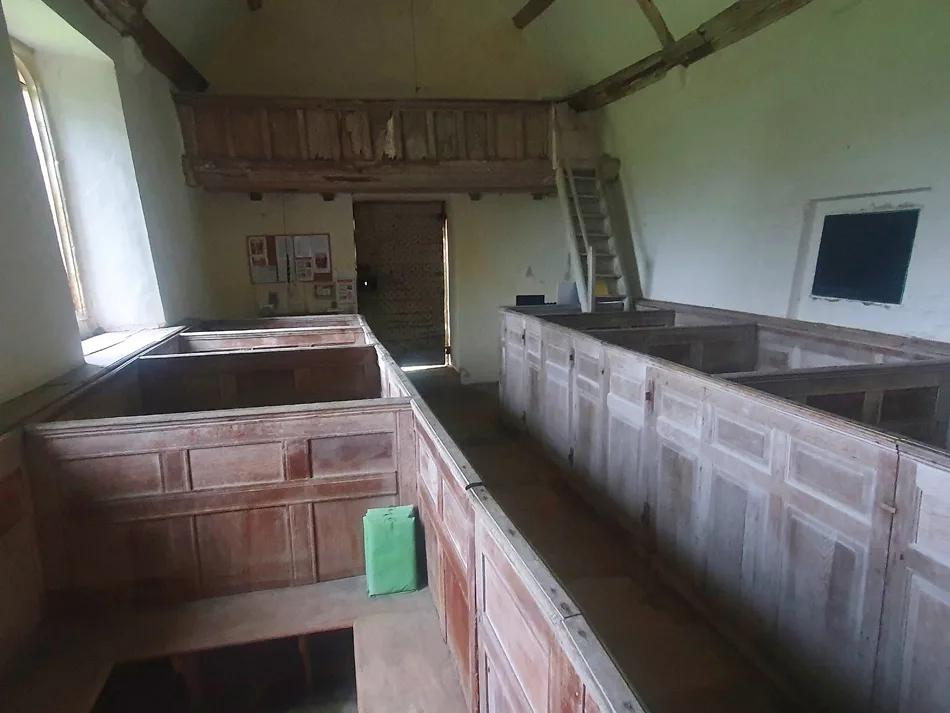
The West Gallery revival began in the 1980s and one of the key figures is Mellstock Band founder Dave Townsend, a musician with a particular interest in old Dorset tunes and the folksong and folklore in Hardy’s writing. With fellow enthusiast Caroline Jackson-Houston, Dave discovered a collection of old gallery music books at St Mary’s Church, Puddletown, one of the Dorset churches which still has a fine West Gallery. These books are now in the Dorset History Centre, and Dave’s arrangements of some of the carols are regularly performed. These and other carols from similar Dorset manuscripts, mostly now held in the Dorset History Centre, are central to the Dorset West Gallery repertoire.
Another influential figure was the late Rollo Woods, founder of the Madding Crowd West Gallery singers and later the Purbeck Village Quire, who unearthed manuscripts from the Purbeck villages. Other localised collections and traditions have been discovered, notably at Durweston and Long Burton. The Bloxworth carols, predating the West Gallery revival, were compiled by the Rev WA Pickard-Cambridge, vicar of Bloxworth, from gallery books from many Dorset parishes. First published during Hardy’s lifetime in 1926, it includes carols sung at Bloxworth that date back to the beginning of the 19th century.
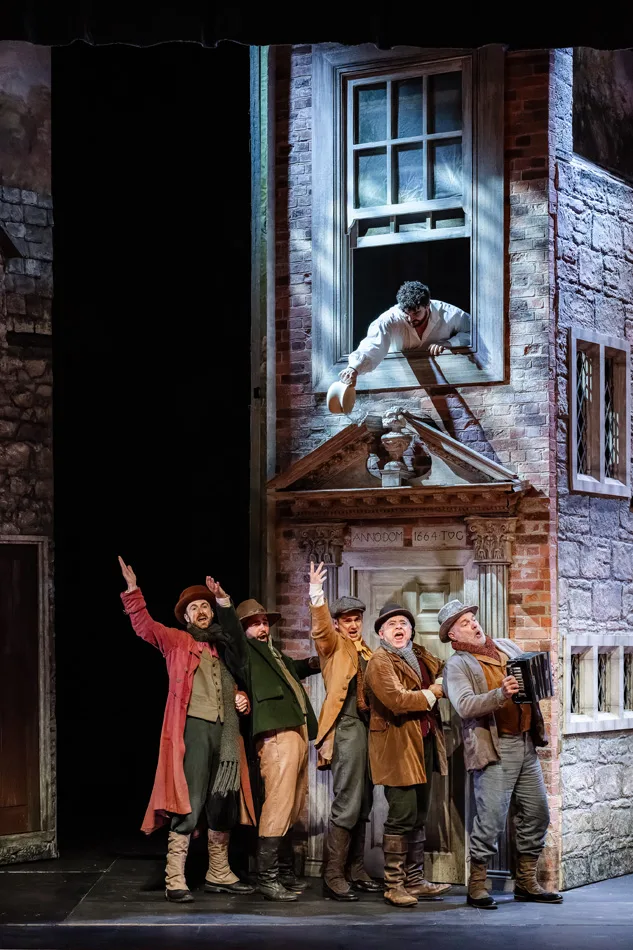
The lasting appeal of the story of the Mellstock Quire and the struggle to save the traditional carols and instruments from the new fashion for organs is well-illustrated in a new opera, commissioned to mark the 50th anniversary of Dorset Opera. Paul Carr’s charming work had its premiere at the Coade Hall at Bryanston School, Blandford, as part of Dorset Opera Festival’s 2024 golden jubilee season.
Hardy’s importance to the revival both of the West Gallery music and other seasonal rituals is recognised by Tim Laycock: ‘Dorset is unique in having an internationally-renowned writer who was also a folk musician and a great chronicler of the music, song and dance that inspired his father and his grandfather in their music making. And most importantly, he understood how the music worked in the community, and the importance of season and celebration in the lives of the people.
‘The more I’ve learned about oral history, folksong and stories and traditional celebrations, the more I relate to Thomas Hardy and his insightful and sympathetic comments about the joys and the difficulties of homemade music-making. We are very fortunate to have such a rich resource of traditional music, dance and song here in Dorset. The writings of Hardy, informed by his own musicality and affection for the inherited music of his family and friends, complement and inform the collections of songs made by [folk song collectors] Henry and Robert Hammond, and the dance tunes and carols found in the Hardy family music books.’
Keeping the music alive
Although Hardy’s story of Mellstock and its village quire is a well-known part of the West Gallery tradition, there are descriptions of other traditional and seasonal festivities and music in the work of both Hardy and William Barnes.
Tim Laycock says: ‘The two Dorset writers shared a mutual interest in folklore and the “long-loved customs o’ the poor”. Hardy’s dramatic use of seasonal rituals rings true – the preparations for the mummers play in The Return of the Native and the description of the performance itself at Mrs Yeobright’s party, convey not only the anticipation and the effect of the performance, but also the attitude of the players and their audience to their mumming. What Hardy’s stories do is to provide a convincing context for the performance and the appreciation of community song, dance and music.
‘I have had so much pleasure and fun over the years playing the music in the Hardy books, telling the stories, reading the poems and making plays from the novels with the New Hardy Players. We as modern-day performers recognise so much truth in the way Hardy writes about the ups and downs of village music making. Every time I re-read a Hardy novel, I’m struck by how accurate he was in his depiction of the musicians and their craft (or occasionally, lack of craft). Usually, I’m chuckling at his humorous comments about the music making and its effect on the listeners.
‘Thomas Hardy continues to be a great inspiration to me. And I feel that here in Dorset there is a real continuity of interest in the music, the fiddle playing, the songs and the stories that he loved so much, and we in turn love to keep alive.’
Before Covid, Tim could often be found at Max Gate or Hardy’s Cottage, reading and sharing the tunes, poetry and stories of Thomas Hardy. Sometimes he would be accompanied by local musicians. For Tim, this brought Hardy even closer. The author was a keen folk fiddler himself: ‘To hear Colin and Ruth Thompson playing Enrico, Hardy’s favourite hornpipe, in the cottage where Hardy himself would have learnt and played the tune, is an extraordinary sensation. You can shut your eyes and hear Hardy and his father playing jigs at a country dance in 1855.
‘I’m sure Mr Hardy would be thrilled that Colin and Ruth Thompson, Tatterdemalion, The Ridgeway Band musicians and the Dorset Fiddlers keep the music so vibrantly alive. “Strings forever!” as little Jimmy says in Under the Greenwood Tree.’


