

As spring gathers pace, Dorset’s gardens begin to fill with tawny mining bees, hairy footed flower bees and colourful nomads emerging from winter
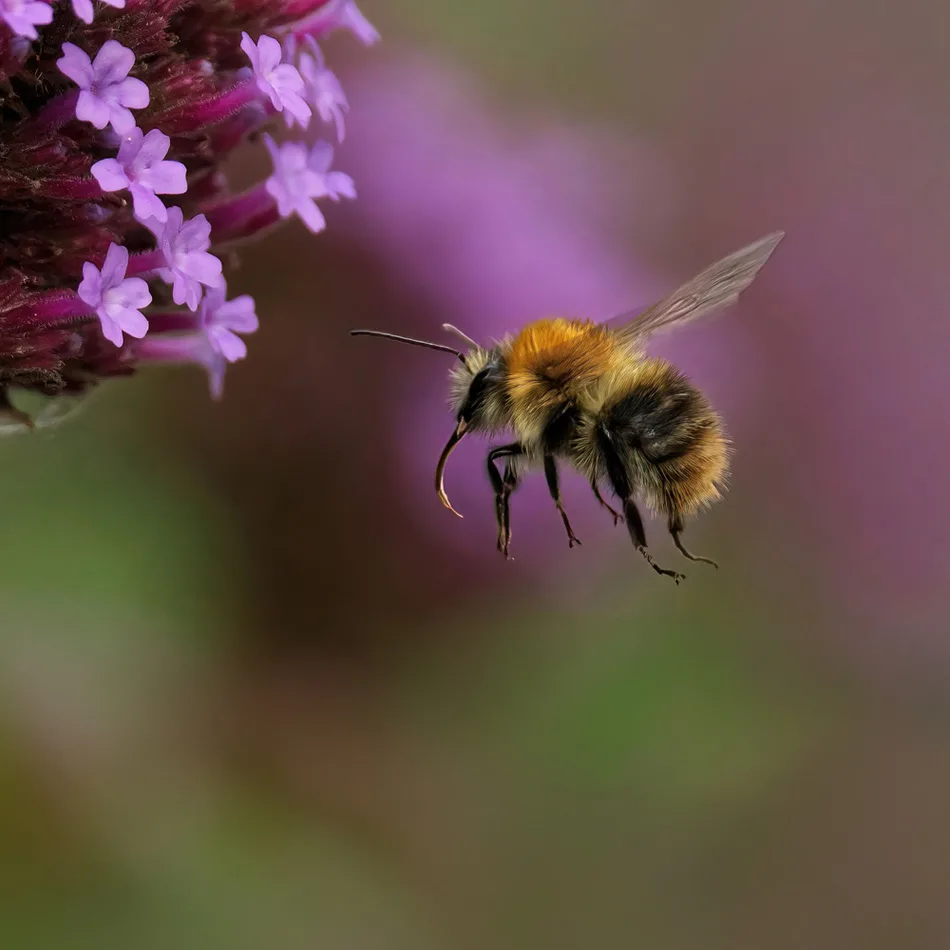
Bees are a welcome sign that spring has arrived – or, at least, is just around the corner. Most people are familiar with bumblebees and honeybees, but these are only a small fraction of the 270 or so species of bee that can be found in Britain. Some bees live in social colonies, while others lead solitary lives. A surprising number of bees are parasitic – laying their eggs in the nests of other bees.
Spring is a good time to study bees and there are several excellent online resources available. The Field Guide to the Bees of Great Britain and Ireland (Falk and Lewington) is an indispensable book for anyone wanting to extend their knowledge of these fascinating insects. Find out more online at the Bumblebee Conservation Trust website: Bumblebeeconservation.org
Dorset Wildlife Trust Conservation Officer,
Hamish Murray, is sharing his guide on which bees will be buzzing around between March and May …
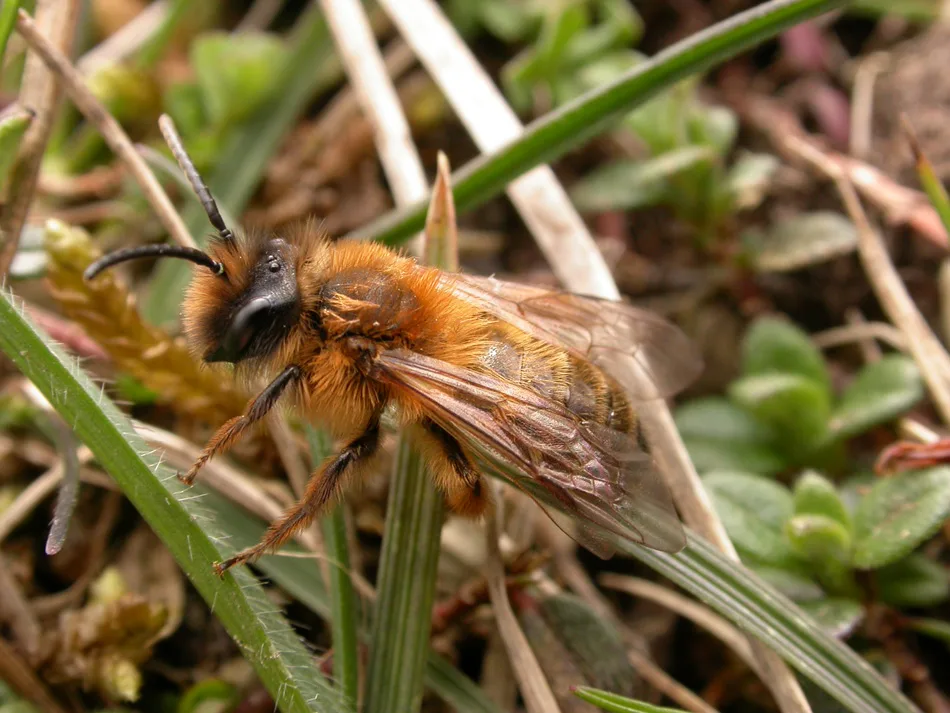
Tawny mining bee
One of our most distinctive bees, the female is particularly striking, with dense reddish-brown hair covering most of her body while the head and legs are black. Like all mining bees, these are solitary insects with each female digging its own nesting burrow, typically in light soils. The distinctive burrow entrances (looking a bit like worm casts) are a good clue that mining bees are present in an area. Tawny mining bees are found over much of England, and are frequently seen in gardens, even in urban areas.
Ashy mining bee
With 68 species recorded in Britain, Andrena (mining bees) is our largest genus of
bees. Many species are difficult to identify but from mid-March, the grey and black ashy
mining bee is easy to spot as it collects pollen from a variety of wildflowers. As with many
spring bees, dandelions are a favourite foodplant: if you want to encourage bees (and other insects), it’s certainly worth leaving some of the showy yellow flowers to grow in your garden.
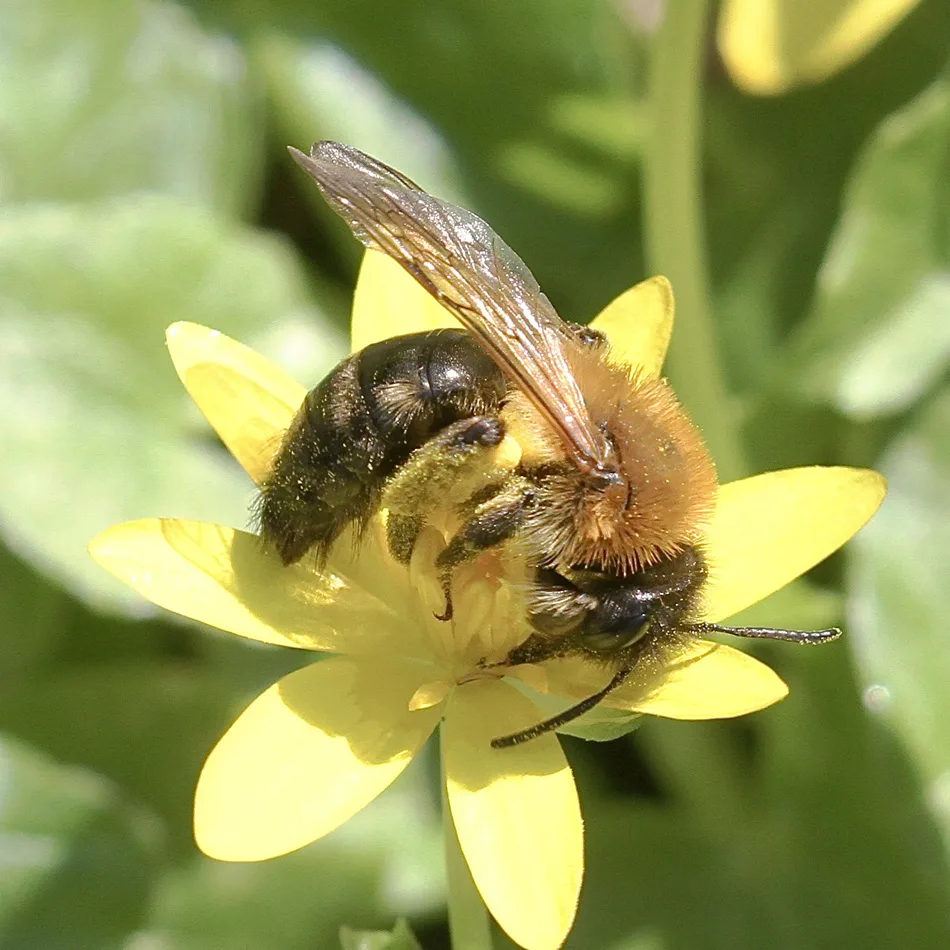
Grey-patched mining bee
Another large and attractive mining bee, this one has foxy-brown hair on the thorax and a shiny black abdomen. Closer inspection might reveal the small patch of grey hairs on the side of the body which give this bee its English name. This is a late spring species, found in Dorset gardens during April and May. A carefully cultivated patch of lesser celandine in my front garden attracts many spring insects, including this mining bee.
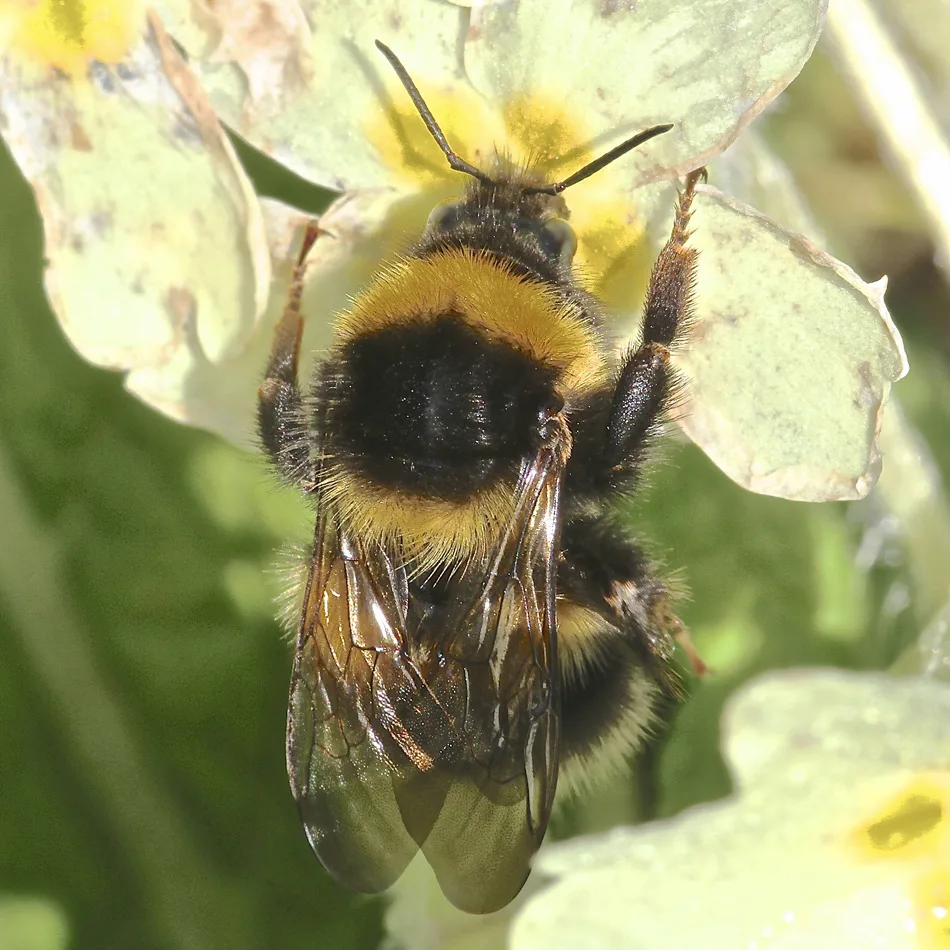
Garden bumblebee
In a recent poll to find Britain’s favourite insect, bumblebees came top. Early spring is a
good time to see bumblebees as this is when the queens emerge from hibernation to look for a suitable site to build a nest and lay their eggs. Of the seven widespread and abundant species of bumblebee found in Dorset, the garden bumblebee can be distinguished by the yellow lines at the front and back of its black thorax. This species also has a noticeably long tongue which it uses to feed on primroses and other early spring flowers.
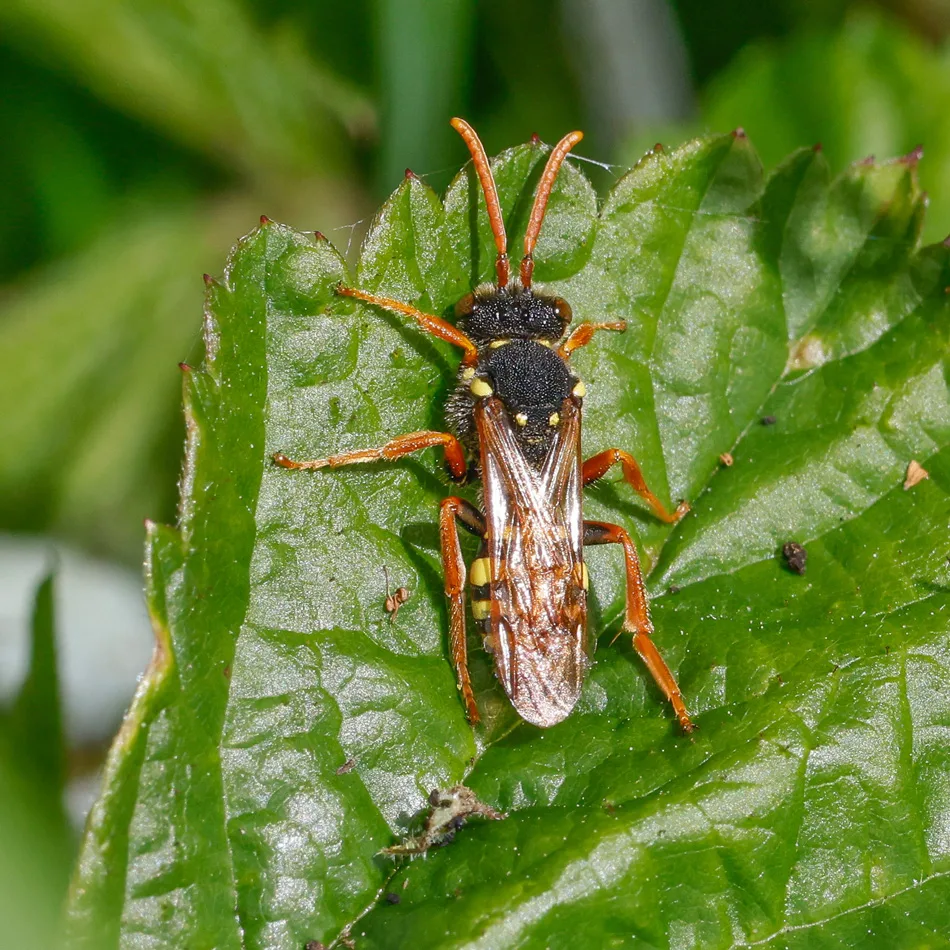
Gooden’s nomad bee
There are around 30 different species of nomad bees in Britain. As their name suggests, they do not build their own nests, but lay their eggs in the well-stocked burrows of various mining bees. The wasp-like Gooden’s nomad bee is one of the most colourful and widespread of this genus, often occurring in large numbers around the nests of their unwitting hosts. Look out for the bold yellow-and-black striped body, orange legs and yellow spots at the base of the wings.
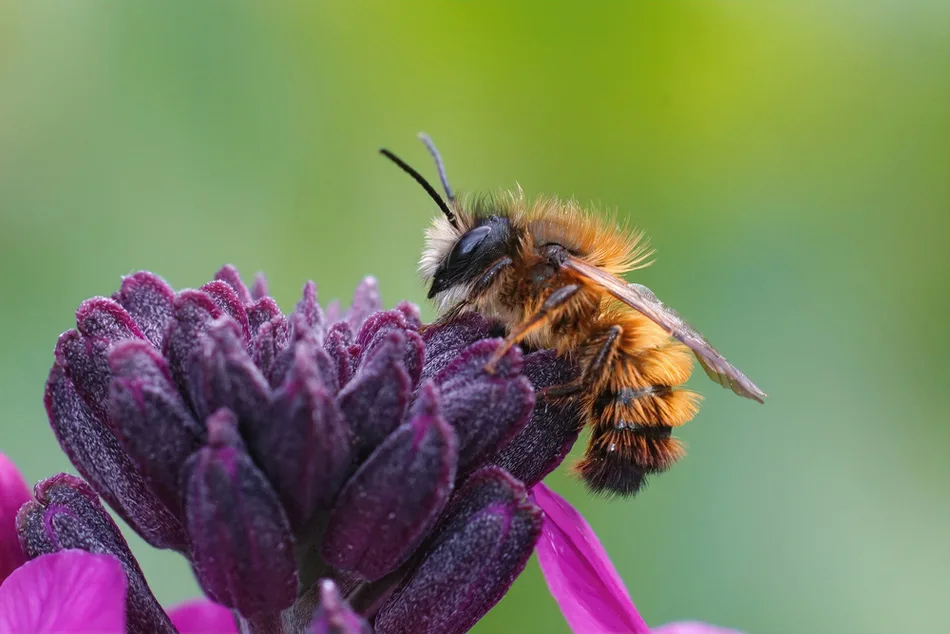
Red mason bee
Unlike their mining relatives, mason bees build their nests wherever they can find a suitable ready-made hole, whether it’s in the mortar of an old wall or in a specially made ‘bee hotel’. Having found a suitable hole, mason bees collect wet mud from which they construct their nest cells. Once completed, the nest entrance is capped with a mud plug, allowing their young to develop in safety over the winter.
Common carder bee
One of the commonest of our 20 or so native bumblebees, the common carder can be found in a wide range of Dorset habitats from suburban gardens to sea cliffs. Unlike the familiar striped bumblebees, carder bees are a uniform gingery colour. Although common, carder bees are one of the earliest bees to emerge in the spring, they can be seen right through the summer and well into the autumn.
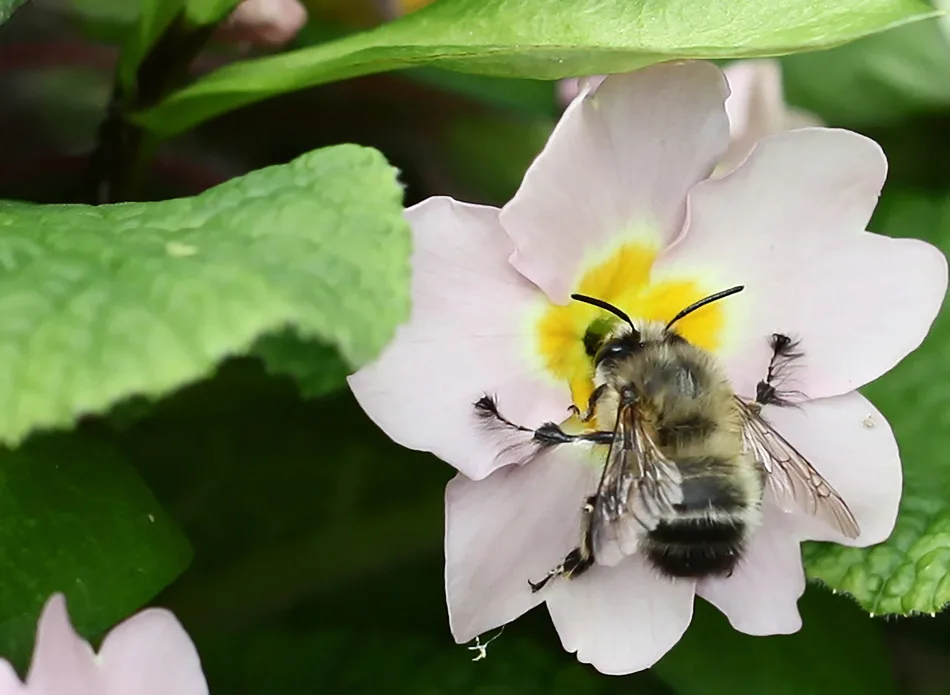
Hairy-footed flower bee
The name of this distinctive bee arises from the long, feathery hairs on the legs of the male. The dark females look quite different to the buff-coloured males, but both sexes are very active fliers and have a characteristic high-pitched buzz.
In my garden, hairy-footed flower bees are particularly attracted to comfrey and lungwort.