

CPRE’s Rupert Hardy introduces the Dorset man who was Archbishop of Canterbury, Henry VII’s Lord Chancellor, and the deviser of Morton’s Fork
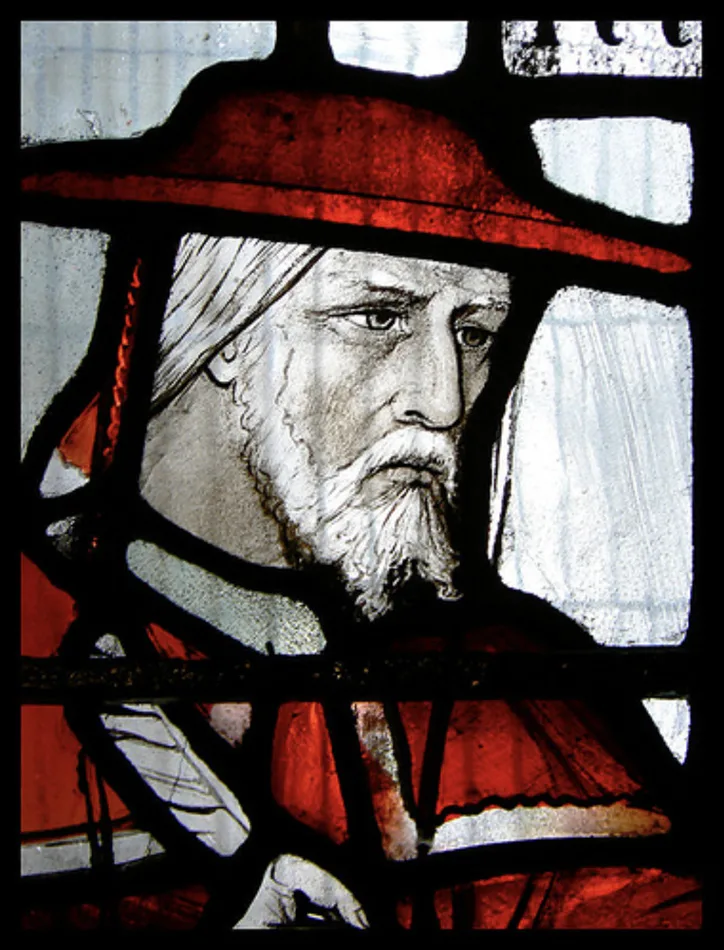
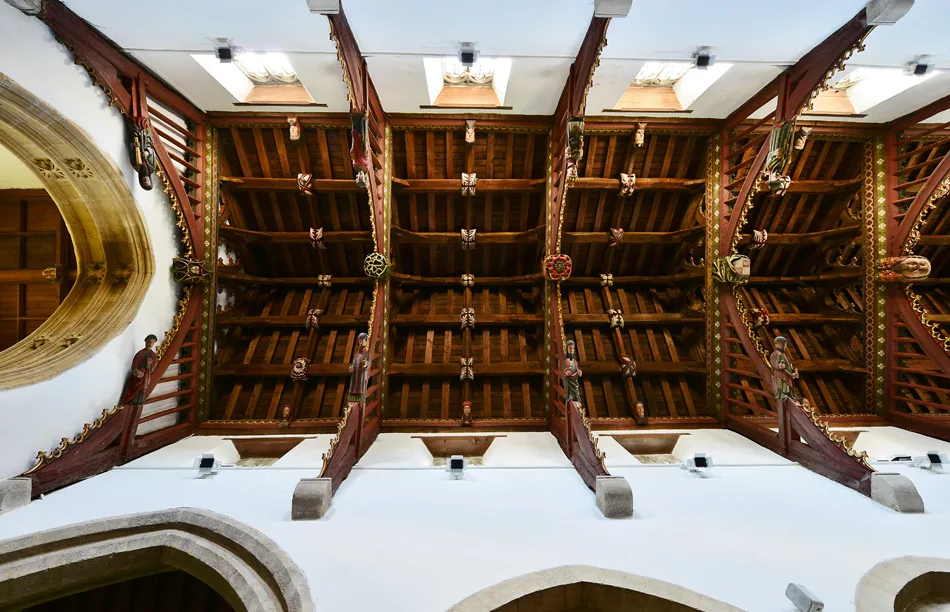
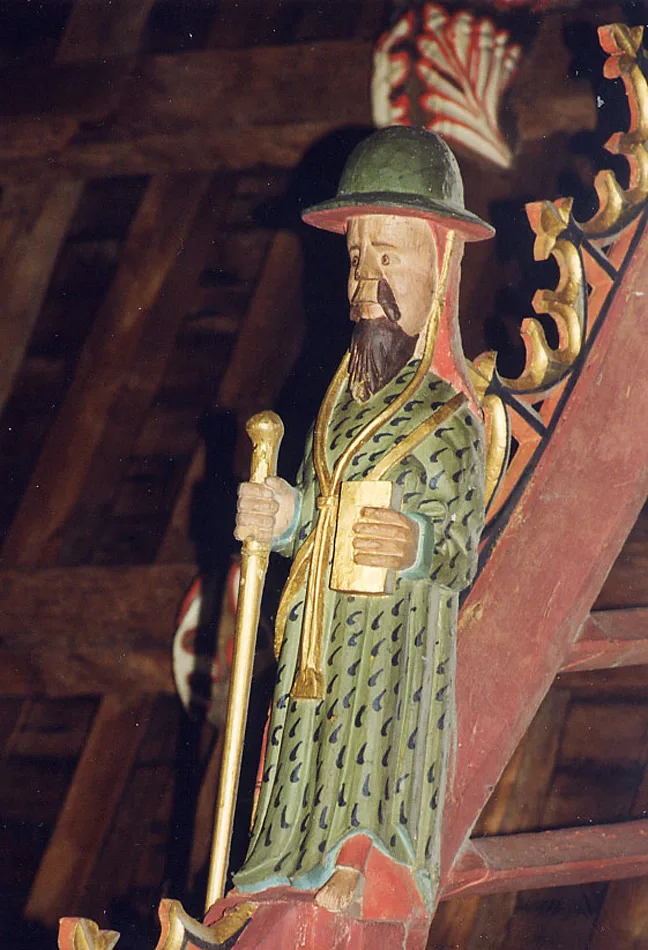
If you visit the splendid St John’s church at Bere Regis, you will be encouraged to look up at the beautifully carved 15th-century hammerbeam roof, its bosses brightly painted with the 12 apostles — and one enigmatic face looking back down. He was Cardinal John Morton, born in Bere – and arguably one of the most influential figures in late 15th century England.
He was born into the gentry around 1420, his mother a Turberville, a well-known Dorset family. An intelligent boy, he was educated at Cerne Abbey and won a place to read Law at Oxford. Morton quickly established a reputation as a formidable administrator, attracting the attention of senior churchmen and the royal court. This put him on the fast track: he entered royal service and by 1456 he was chosen to be Chancellor to the infant Edward, Prince of Wales. At the same time he followed an ecclesiastical career, being ordained only two years later. At one stage he held three benefices. He was rector of both Bloxworth and Maiden Newton.
A Lancastrian advisor to the Yorkist King
This was the time of the Wars of the Roses, and Morton was one of the lawyers involved in drawing up the Act of Attainder against the Yorkist nobles revolting against Henry VI. After the bloody Lancastrian defeat at Towton, Morton was captured. Imprisoned in the Tower, he was lucky not to lose his head at the hands of the new King, Edward IV. After a brief exile – during which he served the Lancastrian Queen Margaret of Anjou – Morton was pardoned and resumed his career in royal service. King Edward had recognised his extraordinary administrative skills, making him Master of the Rolls, and also appointing him as a diplomat to establish peace with France.
His ecclesiastical career too was on an upward path again, being appointed Bishop of Ely. The new bishop enthusiastically engaged in several notable building projects, including the rebuilding of the old Bishop’s Palace at Hatfield in 1480. Hatfield was acquired by the Crown and eventually became the much-loved residence of Anne Boleyn’s daughter, Elizabeth. On Edward IV’s premature death, Morton was involved in planning the coronation of his young son Edward V. Edward’s uncle, Richard Gloucester, decided to take the throne himself as Richard III, however, and Morton found himself back in the Tower. He avoided execution, and was committed into the custody of the Duke of Buckingham, under house arrest, was involved in a plot against Richard and eventually had to flee to Flanders where he co-ordinated opposition, under Henry Tudor, to King Richard III.
Inventor Of Morton’s Fork
Henry VII’s success at the battle of Bosworth Field in 1485 meant a swift return to London – and a new role as Lord Chancellor, becoming one of the King’s most trusted and faithful advisors, sitting at virtually every recorded council meeting for the rest of his life. His role was to implement royal policy, including taxation, but first he was instrumental in arranging the marriage of Henry to Elizabeth of York, thus ending the Wars of the Roses: a significant achievement which is remembered in the central boss of the nave at Bere Regis.
There is no evidence that, as Chancellor, Morton advocated a harsh level of taxation, but clearly Henry needed to replenish his coffers after a civil war that had devastated England for decades, as well as the French war. The idea later known as ‘Morton’s Fork’ – named for him by Francis Bacon a century later – captured the brutal logic of his Tudor taxation. It is a type of false dilemma, in which contradictory observations lead to the same conclusion. Apparently Morton rationalised the payment of a benevolence tax to the King by arguing that someone living modestly must be saving money, and could therefore afford the benevolence, while someone living extravagantly was obviously rich and could afford it anyway. Although used in various contemporary Jacobean plays, the term did not come into more regular use before the 19th century.
The death of his mentor, Archbishop of Canterbury Cardinal Bourchier in 1485 led the King to persuade the monks at Canterbury to elect Morton as his replacement. He did not seek personal enrichment, but he was very active in defending the jurisdiction of the archbishop’s courts, reforming the church and restoring ecclesiastical buildings. His main achievement was to complete the memorable central crossing tower at Canterbury Cathedral. He was appointed a Cardinal by the Pope in 1493.
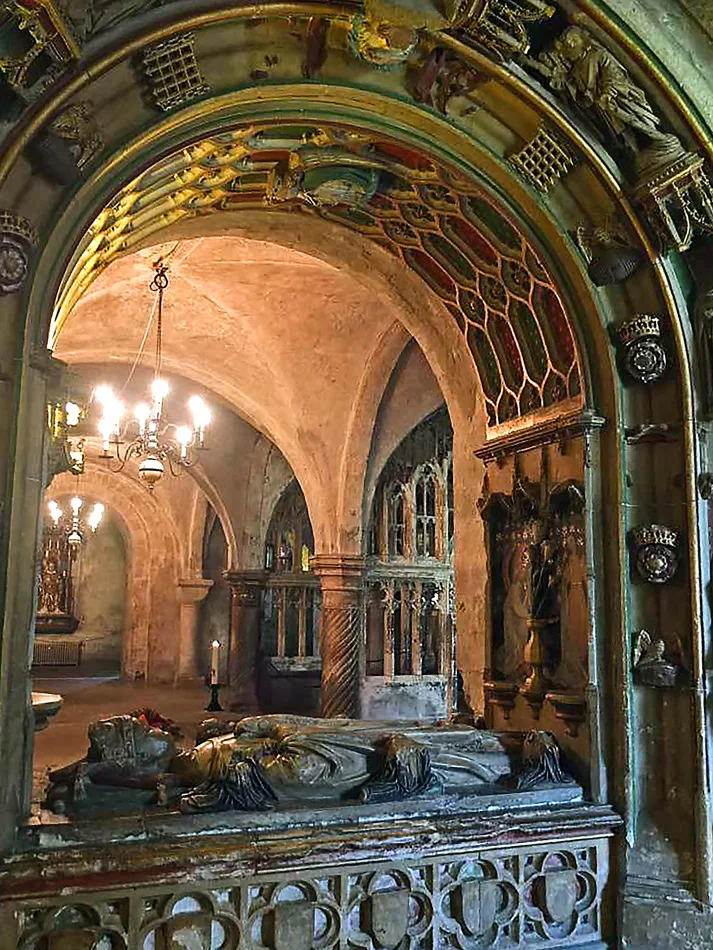
Morton died in 1500, and was buried at Canterbury Cathedral. His tomb was desecrated in the Civil War and his remains pillaged, with his skull ending up at Stonyhurst College in Lancashire. He was much mourned in his time, having enjoyed a high reputation … if you ignore the views of some apologists for Richard III, who were no doubt biased. The Spanish ambassador, De Puebla, wrote: ‘The Cardinal of England is dead, and has left no statesman who can be compared to him.’
He was a mentor of Thomas More, who described him as talented, witty, erudite and charming – and known to be a moderating influence on Henry VII. Morton is also believed to have contributed to a critical but unfinished biography of Richard III, which may have been the inspiration behind Shakespeare’s plays, which demonised the king.
He was recognised as an extremely capable and loyal administrator, who had been the right hand man of two kings and one queen. There are not many who combined key roles in both the church and politics so well.
For most visitors to St John’s, Morton is just a face in the roof among the bosses. But for a man born in Bere Regis, who survived civil war, shaped a dynasty and quietly steered England through one of its most unstable periods, that carved gaze feels entirely fitting.
Anyone who would like to know more can read Stuart Bradley’s excellent book
John Morton: Adversary of Richard III,
Power Behind The Tudors.