

From secret Dorset saboteurs preparing for Nazi invasion to the 19th-century TB tests still dictating modern farming, February’s BV podcast is a deep dive into two stories that will linger long after you’ve listened.
(full transcript below)
TB Testing and the Farming Treadmill
Dorset farmer George Hosford is in conversation with Jenny, taking apart the current bovine TB testing regime – a system first devised in 1890 and still at the heart of national policy: ‘It’s two steps forward, one step back.’
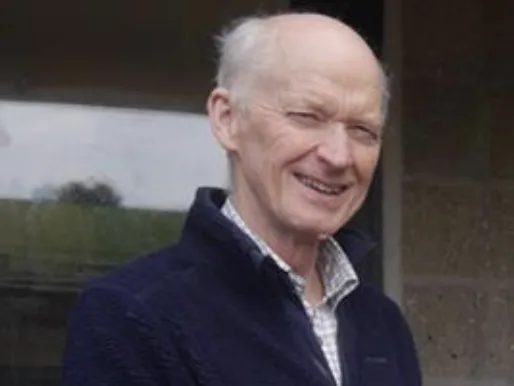
‘We’re not getting anywhere – and arguably it’s getting worse again.’
George Hosford
George explains how the skin test can miss up to 25% of infected animals, why movement rules undermine progress, and why newer blood tests are still entangled in red tape.
From cattle movements to vaccine development, from bulk tank milk to badgers, this is a lucid, unsparing look at a system farmers feel trapped inside.
The Secret Army Beneath Our Fields
Historian Dr Will Ward tells Jenny the extraordinary story of the Auxiliary Units – Dorset men recruited in 1940 to hide underground and wage guerrilla war if the Germans invaded.
‘They were prepared to do something very dangerous – probably suicidal.’
Dr Will Ward
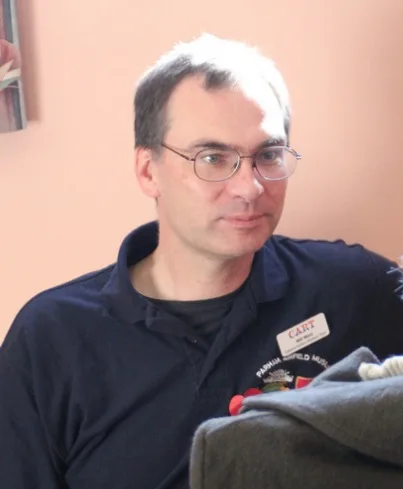
Drawn from the gamekeepers, farmers and poachers who knew every hedge and hollow, these patrols trained in secret bunkers, ready to sabotage railways, airfields and supply lines behind enemy lines.
‘They were told they only needed two weeks’ worth of supplies – because they weren’t expected to last longer.’
Many never spoke of it again. Some went on to join the SAS. For decades, their story remained almost entirely hidden.
From Dockside to Dorset: The Art of Good Coffee
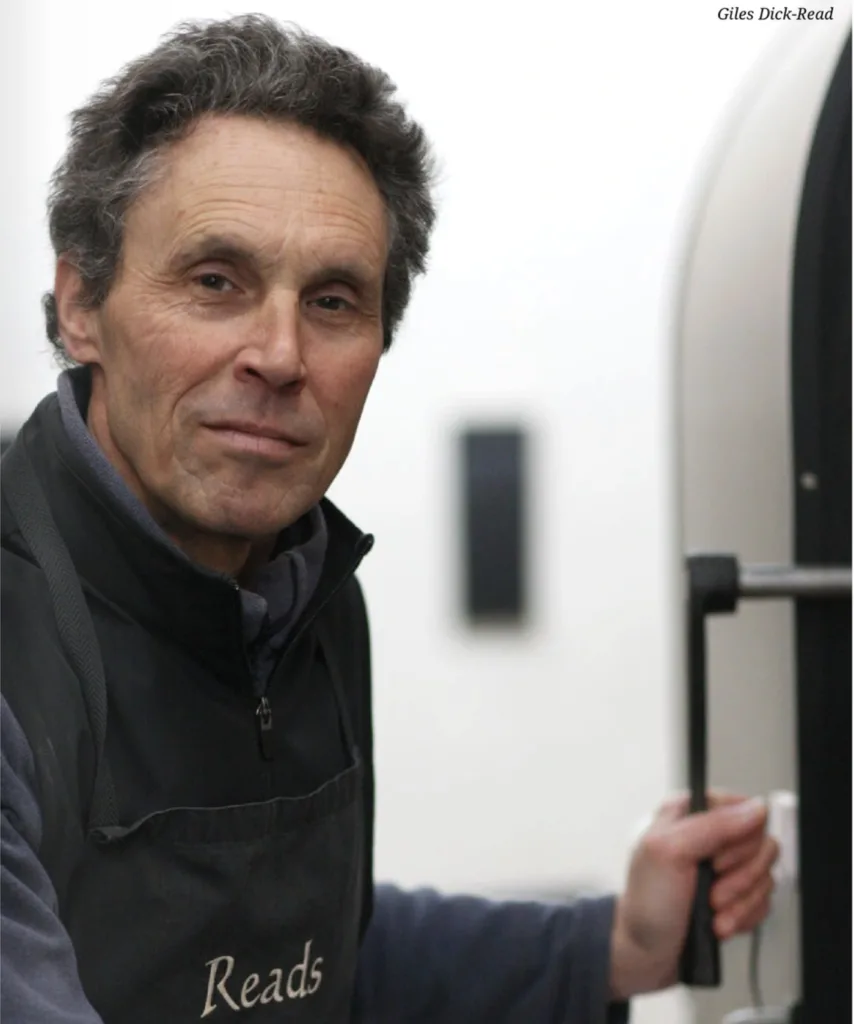
‘Coffee is just an ingredient, like flour. You can buy the best coffee in the world and make the worst cup from it.’
Giles Dick-Read
Jenny visits Giles Dick-Read at his Sherborne roastery to discover how green beans from Brazil become the perfect moka pot brew. From metal detection and de-stoning to why your grinder matters more than your machine, Giles explains the craft behind a proper cup – and why freshness is everything.
This episode takes two stories from February’s BV, available to read online here, and explores them in far greater depth than a page or two can allow.
TRANSCRIPT:
Jenny Devitt 0:15
Hello and welcome from me. Jenny Devitt, to the BV podcast for the month of February. It’s so good to see signs of spring in Dorsets, lanes, hedgerows and woodlands, is it not? Not to mention in our gardens!
On offer for you in today’s podcast will be Farmer George Hosford explaining TB testing in cattle, which, like other cattle farmers, he regards as a complete nightmare. We’ll also hear something of the fascinating story of the men of a little known specialized group of English resistance fighters, the auxiliary units formed to sabotage and kill should the Germans invade in World War Two.
And we’ll pay a visit to a first class coffee roastery just outside Sherborne, the brainchild and passion of Giles Dick Reid, who knew there was such an art to producing a good cup of coffee.
We’ll start this edition, as we always do, of the BV podcast with our editor, Laura Hitchcock…
Laura Hitchcock 1:15
Well, now I know it’s all very traditional for us Brits to talk about the weather, but really it’s starting to push its luck. Now, you wouldn’t think just a little dry spell was too much to ask, would you, but we made it through the 384 days of January and February is finally underway. A magazine editor once told me that the key to a good issue is something serious, something surprising, and something with cake. And on that basis, if we can swap cake for delicious mac and cheese, trust me, you must page 70, then this month’s BV is a triumph. It’s funny. I often think that when I grow up, I’ll be one of those editors who themes their issues a year in advance. Wouldn’t that be calm and lovely? Instead, every month, it feels like the entire first third comes together in the final 48 hours. I swear I do try. It never gets better. And although we never set out with a theme, some issues do just develop a life of their own, dictated by events so big they simply can’t be ignored. And this is one of those, putting it together. We’ve learned more than we ever thought we wanted to know about flooding. I know there’s a lot, but there are also lots of genuinely brilliant pictures, which always helps, and it is fascinating and a bit rage making (sorry). Elsewhere, we had the cheering news that the government has finally decided that a 73% biodiversity loss probably is seriously bad for everyone everywhere, all at once. So that’s good.
In actual good news, Dorset’s own world champion, Ruby White had a very good weekend in Sweden. I won’t spoil that for you. And I also have a feeling that the grumbler this month page 17 is going to hit a lot of nerves. He is right, though.
Oh, and the letters page is a bit of a Corker too this month, so don’t miss that. What am I saying? Literally, everybody flips to the letters first. While I have you do go back and look at that cover. One sorry looking squirrel, bits of moss randomly stuck in its whiskers, taking his snack business very seriously, even though it’s raining. Yes, it’s actually just me in publication week.
So if you’re in the mood for something that’s not doom scrolling, dive in as always. You’ll find proper journalism, photo galleries, columns, community, events, opinions … occasionally grumpy, often witty, always Dorset.
Jenny Devitt 3:28
That was Laura Hitchcock. And now for our regular BV farmer, George Hosford, always lucid, always interesting and always thought provoking. And his topic this time certainly is that it’s the subject of TB testing and cattle, a time dreaded by cattle farmers and definitely not enjoyed by the cattle themselves,
George Hosford 3:51
A complete and utter nightmare. Yeah, haunts, haunts everybody who’s involved with it. And a lot of farmers are so resigned to it that they they just do it, because it’s one of those things like you’ve got to do. You’ve got to feed your animals every day. Got to test your test your animals every year, or once every six months, or once every 60 days, if you’re under restrictions.
And sometimes it needs … we need to step back a bit and ask some searching questions. How are we going to get on top of this disease? Because otherwise, quite frankly, the way we’re going, it’s actually getting worse again. So running, running to stand still, we’re running to go backwards. It’s actually two steps forward, one step forward, two steps back to almost where we are, and that’s how I see it right now, with the testing regime that we’ve got, when there are better techniques about that. The government is very slow. It’s so easy to blame ‘the government’, but we do depend on legislation to tell us what to do. In this case, the government has got a 25 year TB eradication plan that was dreamt up by the last government anyway, and this one hasn’t abandoned that yet. They’ve stopped us from culling any more badgers. But culling badgers is only part of the story anyway. And it’s not going to get us free of TB, whether we’re doing it or not.
Jenny Devitt 5:04
Well, let’s, let’s set badgers aside for a moment. So please just remind us how the TB testing system works.
George Hosford 5:12
The TB testing system works that if you’re, if you are a herd with no recent history of being, of being closed down from having reactors. You will get in this area. We’re in the high risk area of the country. All of Dorset is along with all of the rest of the West Country, in parts of Gloucestershire and going north Worcestershire, Herefordshire, I believe I can’t quite memorize the map off by heart, and there’s one or two other small pockets of high risk area. So the rules for the high risk area are different to the edge area or the low risk area. And the edge, of course, is the area that’s between the high risk area and the low risk area. And there are different rules for all three areas. In the low risk area, TB testing is only undertaken once every four years, which I regard as ludicrous when movement of animals is occurring all the time and is perfectly legal between the high risk the edge area and the low risk areas. And that will become more understandable when we get on to talking about how the actual testing works. Yes. How does it work? Okay, so you’re you have an appointment from AFA, the Animal and Plant Health Agency, which is an arm of Defra you get a letter telling you when that you’re due at a TB test for your animals, and you must carry out your TB test between date a and date B, and then they liaise with your vet, and between the farmer And the vet. You fix a date for your TB test. There are times of year when it’s more easy than others, but if you’re under restrictions, then you have less choice over the date. But we’ll go back to a herd that is theoretically clear, and so this is a this is a regular annual test. The vet will turn up on the day when you’ve got all your animals organized all over the farm, well, maybe they’re housed. It’s easier when they’re housed, because you’ve got more control over them. You haven’t got to gather them in from fields all over the farm into a central point where you can put them through a race. You know, we’ve got, we’ve got a mobile race that we can take to different parts of the farm and set it up consists of a load of gates that you fix together. You gather the animals into the into a pen, and then push them through the race one by one, which holds them firmly if you need to, so that the vet can trim two patches of hair off their neck and then inject them with two different vaccines. One is an avian type, as in birds, avian type of vaccine. And the second is a tuberculin, which is a mixture of proteins derived from the tuberculosis disease. And the reason why they give two injections is so that the avian jab the top one gives you a level of background, other varieties, other species of tuberculosis that may be floating around in the atmosphere, but which aren’t bovine and then and present no risk. But it means that if the animal shows a reaction to those local other types of TB that you compare the difference between the two bumps after three days. So you take the size of lump B and subtract it from the size of lump A, and that gives you your reaction to TB. And there is a there’s a breakdown of what size those lumps should be for declaring whether you are clear, or whether you’ve got an inconclusive reactor, or whether you have a reactor,
Jenny Devitt 8:45
yes, I mean that the reactor means, of course, that you have, you it’s read positive, in fact, and the inconclusive is exactly what it says on the tin. It’s inconclusive. So another test, presumably
George Hosford 9:00
to be clear aspect, because I’ve dug out the actual sizes of the lumps. So the lumps are a reaction to the things you’ve injected into the animal’s neck. And three days later that you have to gather all your animals in again, and the vet, the same vet, will come having, having measured the thickness of the skin. Sorry, they trimmed the hair where you’re going to put the jab in. Then they, I forgot to say, they measure the thickness of the natural skin before it’s injected. And they record that the thickness of the skin at the both places that you’re going to inject the vaccine. And then, after three days, they come back and with a caliper. Well, if there’s no reaction, they can feel with their hand, there’s no reaction, but if there’s any kind of reaction, they have to get their caliper out and measure both lumps. It’s the difference between the two lumps which determines whether the animal is a clear or a reactor or an inconclusive to be clear, there has to be no reaction if it’s a reactor, under a standard interpretation of the test. And that’s something we will go into in more detail in a moment. The dump size has to be above four millimeters, and if it’s between one and four millimeters, it’s an inconclusive reactor, and that means the animal gets a second chance at a subsequent test 60 days later. And when you get to that point, the leeway for the size of the bump is between one and two millimeters. When it’s over two millimeters, it would be declared a reactor. And if it’s a reactor, from either interpretation, that is a death warrant. There is no two ways about it. The animal has to go for slaughter, and the farmer is compensated, not quite at full market value, but certainly three quarters of, I can’t remember what it is exactly, but certainly three quarters of open market value, except that if it’s carrying a calf close to birth, that is not valued. So that is a major loss to the farmer, and maybe a welfare issue, but again, something we could return to if you want
Jenny Devitt 11:02
well, and of course, I assume, just as with diseases amongst humans, that if you’ve got an animal that has always suspected who may be carrying TB, you presumably have to isolate them from the herd, because otherwise there’s a risk of disease transmission.
George Hosford 11:19
Absolutely you do have to isolate them. That is the first rule. As soon as it’s deemed a reactor, you have to separate it from the others and keep it on its own. Or if there’s more than one reactor, you can keep them together and the same with an inconclusive
Jenny Devitt 11:32
and for for a herd animal, of course, that’s a matter of distress and stress, just as as the actual the actual testing process is distressful for the animal and and, of course, for the farmer.
George Hosford 11:45
We have plenty of anecdotal evidence about how the cattle know that it’s TB testing day and they don’t run through the crush anything like as easily as they do if you’re, say, worming them, or maybe whatever other things we might do with them, because obviously, clearly, the lump, the injection of the thing of the TB can hurt. Of the vaccines, the test vaccines can hurt. They just know they’re not daft cattle, and then keeping them on their own is, you know, you could say, as a welfare issue. Now, we keep our bulls on their own through the non breeding season because we can’t leave them with our cows all year. And you could say that’s a welfare issue, but there’s a safety issue too. If you put the bulls together, they might well fight, and then if they, if they, if they fight, then how on earth do you get them apart without them beating us up as well? So that’s the difficult decision we’ve come to. But you could say, well, maybe they’re used to that by now, but that’s the bulls. That’s a slightly different issue. And they have to be tested for TB, of course, as well. But yes, if they’re used to being in a herd all the time, it’s hard for them.
Jenny Devitt 12:53
Now, do you think I mean you in your article, you make it clear that you think that the current TB testing system is inadequate, and you, and it’s you said earlier, it’s a bit like running to not just to stand still, but to go backwards. There are other methods of testing for TB, which, which, of course, are not covered, I assume, by not compensated for by government or by Defra. Is Defra keeping up with the science. Do you think should it be doing something better
George Hosford 13:24
the strong request from all the vets that I’ve spoken to about it and the vets that we were listening to at the meeting the other day, which led to me writing about it in my article, are of the opinion that the Defra and the Animal and Plant Health Agency need to be far more flexible about what they allow, because they won’t even allow us to use some of these newer tests at the moment, because once your herd is closed down because they’ve detected reactors from the testing testing system we’re using now, you are on a sort of a treadmill of events that you really can’t control as A farmer or a vet, you have to follow the Defra prescription for what happens. So they’ve got to be the inconclusive. Reactors have to be tested again at 60 days.
Jenny Devitt 14:09
So you’re saying, George, that once you’re locked into this system, that’s it. You’re, you’re stuck with having to do it that way.
George Hosford 14:15
Basically, you are, yes and you’re, you’re not allowed to use more intelligent systems. There are what you can make applications to use other tests that is possible, but it doesn’t always get approved. You can apply, and sometimes you’re allowed to in certain special technical cases, which I can’t remember clearly enough to be able to explain here, so you can get a sort of a derogation. But what the ministry, the Defra, won’t, won’t do, is pay you for animals that have been detected as reactors with a different test that have to go for slaughter, if you see what I mean. So farmers are reluctant to do it, because if, if you know, if they test a herd of 100 cows, and the skin test has only shown up one reactor, maybe this a second secondary test might show up. Five or 10 reactors, you know, including the ones that the skin test didn’t pick up. Because the skin test is notoriously bad at spotting individual animals that, you know, they’ll it’ll Miss 20 to 25% of animals that actually are infected with TB. So that’s, you know, that is the root of all my complaints, is that we are not that’s why I say we’re going backwards because we’re not picking up.
Jenny Devitt 15:22
So this sounds like administrative red tape, just preferring to maintain the status quo.
George Hosford 15:31
Yes, and if they and a resistance to the ministry allowing us, allowing those tests to become part of the testing regime, a cynical person. Me, certainly not.
Jenny Devitt 15:43
Never George, never you. You cynical?
George Hosford 15:46
Never. Might suggest that they’re frightened of the number of reactors that they’ll throw up, which would a cost a fortune and B, cause absolute mayhem in the in the cattle industry, the dairy industry, particularly because of the numbers that will have to be taken out. But that means that, to my mind, that means we’re just we’re like the See, no evil speak, no evils his hear, no evil speak, hear, see, no evil monkey that I like to use as an emoji on my email messages. Sometimes they’re sort of burying their head in the sand. Is a better analogy and making do with the skin test, which is only doing half a job,
Jenny Devitt 16:25
it occurs to me, George, that a possible partial solution to the problem would be not to be bringing in any cattle from the areas that you described as edge and just maintaining the, keeping the market within the West Country for if we’re the high risk area, would that be a possible, possible way of preventing the spread of TB country, TB country wide?
George Hosford 16:56
You’ve, you’ve got it. You’ve, you’re very astute, Jenny, as always, you’ve got it in one Absolutely. But there are an awful lot of cattle farmers who unfortunately, their business model relies on bringing in animals from elsewhere. I don’t understand why they would do it, but there’s plenty of dairy farms where their policy is not to breed their own replacements, but to bring in their replacements so when their cows reach the end of their productive life, they’ll replace them with cows that they they’ll buy in, or they’ll buy in heifers from other farms and bring them into their herd. And you can, you can do research into the TB status of the farms that you buy your replacement animals from. There’s a very good website called ibtb. I think it is where you can go and look. You can find out what the status of a farm that you’re buying cattle from is, and then you have to any young stock or new cows that you want to buy in, have to have had a pre movement test to show that they’re not carrying TB. But guess which test is used for the pre movement test,
Jenny Devitt 18:01
no, no, I couldn’t possibly guess George, not after what
George Hosford 18:06
was the one that I’ve explained that the skin test, commonly known as the skin test, also known as the s, I, C, C, T test, which is only 20 to 25% sorry misses, 20 to 25% of infected animals. So if you’re going to go and buy 20 cows from a farm which is reportedly, reputedly free of TB at the moment, but has a history of TB in the past, how clean are those cows going to be, really, When that herd will be undergoing the skin test once a year on a regular basis, about missing 20 to 25% of the animals that could be carrying TB. I mean, it’s a joke, isn’t it?
Jenny Devitt 18:51
Bit of, as you very So, right? Bit of, as you So, rightly said in your article, a case of bit of
Jenny Devitt 18:58
Russian roulette, but possibly go wrong?
Jenny Devitt 19:01
Yeah, yes, exactly. But finally, George and in conclusion, what would you like to see being done about this
George Hosford 19:09
stricter cattle movements? For a start, I have a colleague in a friend in Essex who are way, way, way into the low risk area, where they only test their animals once in four years. He tells me he’s got his test coming up quite soon, and he’s quite nervous because I tell him lots of stories about how awful TB is in the southwest. And when I was at his farm last year, he pointed to a farm over the within view of his farm, and said, I know that that farm imports animals from the southwest, cattle, animals from the southwest. They keep them indoors all year until they’re ready to kill. So that’s all right, isn’t it? Well, is it all right? Do Do they ever let any of their animals out? Does their manure carry TB, which absolutely can do. Uh, would badgers roll in the manure that gets spread from those theoretically high risk TB animals and then run to my friend’s farm and roll around in the cowmuck on his farm. Blah, blah, blah. You can see where I’m going with this. Can’t you absolutely yes, it’s, it’s, you know, it’s getting worse, not better, and but the veterinary services of the country are not geared up to do one year testing for the whole of the country. And to be fair, the biggest, highest density of cattle is in the southwest, not in Essex, but there are cows in Essex. So, you know, where do we go? So stricter cattle control, movement controls, I would bring in, I would supercharge the development work on a vaccine, because as far as I remember, I was given a TB test, sensitivity test followed by a TB jab when I was a child. That doesn’t happen anymore. So why can’t that technology be used in cattle? I’m told one of the answers we get is that the TB vaccine is not very effective, so maybe only protects 30% of the animals. And if they’ve already had got TB, it doesn’t stop that necessarily stop them from spreading it in a herd, but even if it covers 30% of them, if you do that, year after year, you will gradually erode the numbers of animals that are affected in your herd. If you follow that logic, something else that can be done, which is being worked on quite hard by our clever group of vets in this county and probably other counties, is to take the information that is obtained from the skin test. So all the information on the size of the lumps of every single animal, which is recorded because every animal has an ear tag which identifies it. So if you went back through five or even 10 years of data to test which animals, which? What the skin reaction was from all your animals, you could maybe then divide your herd into high risk animals and low risk animals, ones that consistently produce a larger lump than none, so we say, and you can manage them in that way. And when it comes to culling, maybe you could cull those animals more quickly than you might otherwise have done when they can’t get closer to their the end of their productive life, if you follow so that that does leave us with a quite interesting direction to go in. And then the selective use of other tests, such as the there’s one called N for Plex. There’s another called IDEX, which tests animals blood, rather than testing their reaction to a vaccine, which is what the skin test does. These ones are a more technical examination of blood for the presence
Jenny Devitt 22:50
of antibodies, and that would be a more a more accurate test. Would it? It sounds like it,
George Hosford 22:56
it takes more false positives, unfortunately. So it there’s a higher risk of animals that actually aren’t infected being taken and, of course, farmers don’t like the idea of that any more than Turkey is voting for Christmas. But if we, if we’re going to be serious about getting rid of this disease, which at the moment, looks incredibly difficult, we have to make some very, very difficult and unpleasant decisions. Otherwise, we’re going to carry on with this ludicrous system we’re in where we’re not we’re not getting anywhere, and arguably, it’s getting worse again.
Jenny Devitt 23:25
And a test that was devised well over a century ago in
George Hosford 23:28
1890 that was staggering. I only discovered that very recently, and I was staggered by that. But it’s such a blunt instrument, and it needs to be. It’s still, it would still be an important tool, but it needs sharpening up with the use of intelligent use of other tests and better cattle husbandry, without question, needs to be very high on the list. There are many farmers still who don’t pay enough attention to keeping animals out of their badges, sorry, out of their feed stores, out of their silage clamps, and it’s very difficult to keep them out of the grazing fields. So hence, quite a lot of dairy farmers keep their animals indoors all year round, which you could say might be a welfare issue, but it might reduce the amount of TB, because you’ve got more control over their interaction with wild animals, badgers primarily, but also deer do carry TB, as well as improving. Of course, the worst, worst enemy of all of them is just another cow that might be carrying it, which has not been detected.
Jenny Devitt 24:25
George, I think this is it. To me, it was extraordinary when, when I read that you discovered that the test was first devised in 1890 I thought, when you think of the huge leap forward in medical knowledge and scientific knowledge in the last 130 years.
George Hosford 24:44
It’s quite sobering, isn’t it? If listeners want to just to investigate that a little more, they could simply Google for the TB skin test. And there’s a lot of really, really interesting information. And the TB hub, which is a is a government website. Explains how the skin test works. All sorts of information on preventing TB breakdowns. Explains the testing, explains strategy. It talks about the TB in wildlife and in other non bovine animals as well.
Jenny Devitt 25:13
I must say, George’s A while back, I came across a paper, an article, which said that one of the problems with the TB disease transmission in this country was that we were not able, unlike places like America, where there’s a lot more a lot more land, a lot more space, we’re not able to leave a field ungrazed, with no livestock on it, no cattle on it, for sort of five, five years or something, during which time the bacterium in the soil might disappear, and that, that was part of the part of the disease transmission problem in this country was the the fact that, you know, we use, we have to use our fields on a more regular basis than you would if you had, if land was not at quite Such a premium.
George Hosford 26:01
Yes, it’s the value of the land. It’s what you’re alluding to, I think, isn’t it? And also here, because we have to house our animals for half the year because of our climate, you know the productive cows. I mean, you couldn’t, you couldn’t expect a fried and Holstein, highly productive milker, such as a friedian Holstein, to survive in the in our winters, they would shrivel up very quickly. They are bony animals. They don’t they’re not well fleshed. They’ve been bred for milk production. And the animals we’ve got outdoors are Aberdeen Angus, traditional British breeds Herefords, who grow a really good warm coat. And they can put up with all this rain. They can put up with the snow. If we get snow the cold weather,
Jenny Devitt 26:39
tell me, George, are there breeds of cattle which show a greater natural resistance to TB than other breeds?
George Hosford 26:49
That’s a really good question, and I’m amazed that no one has had the sense to ask that question in any of our meetings. I’ve not heard it asked, and I’ve not heard an answer, and I don’t know the answer, I suspect not, but I don’t. I’ve not heard it asked or answered, so I shall ask that
Jenny Devitt 27:04
question. Let me know if you get an answer.
George Hosford 27:08
I haven’t mentioned a second test, which is used if you get persistent failures on skin tests. You are then obliged at some point, and we haven’t had to do this yet, fortunately, to use a test called the interferon gamma test, or known as the gamma test, which is a blood test, and it has very strict rules about how it should be used, because the blood has to be taken from all your animals and refrigerated almost straight away, and then got to a laboratory within a very short time. I’m not sure if it’s 12 or 24 hours. It’s nearer 12, I suspect, because I’ve heard of stories where the tests haven’t got to the lab quick enough, and they’ve all been thrown out because they they’re not capable of being verified in their laboratory. But what it does is use the same it’s looking at the same biological process, basically as the skin test, whereas the other tests I talked about are actually looking at a completely different part of the biochemistry involved in the reaction to the disease, and it would seem sensible to me not to use the same to be looking at the same biological reaction with the two different tests. But which are the only ones that the government will approve of? Do you get? If you get my drift, you know, one needs to be nimble to deal with this. Or we’ve been looking at, we’ve been dealing with this disease for decades, all my working life and before,
Jenny Devitt 28:29
but you’ve also been dealing with the Humphreys of this world, haven’t you think of Yes, Minister, you’ve
George Hosford 28:35
probably had enough, but it’s worth bearing in mind that the cattle industry, the cow industry, the cow industry, cattle industry, milk industry, have changed unrecognisably since the days when TB levels were very low, say, in the 1970s or 1980s when the milk marketing board was abolished in 1994 I think it was, and it’s much more difficult to keep on top of it. Animals, the cows are very often in much, much larger herds, managing larger groups. They will be living in cubicle houses where they poo in the passageways, and the passageways ways gets scraped every day, but they’ll still be walking on slightly dirty ground, and if the poo is infected with TB, maybe that it’s as easy as that to spread it around, and then all the poo gets spread on the land on which the animals will graze later in the summer. That’s one point. Another point that has been brought to our attention recently is that when you’ve got calves on the farm, they are very often fed from the bulk tank, where the milk is all collected. And so you’ve put into the bulk tank the milk from all of your cows, obviously, except the one that’s been deemed a reactor from the last test. So any that have not been detected by the skin test, their milk’s gone in the into the bulk tank. That presumably means that there’ll be a diet. If you’ve got any TB animals left on the farm at all, there’s a dilute mix of TB in the milk, which you are then. Going to feed to your calves, which is, again, another high risk activity that goes on. And as soon as dairy farmers, I was at a meeting where this just hadn’t occurred to someone who was present, it hadn’t occurred to me. You know, it’s so basic, but until someone brings it to your attention, maybe it didn’t occur to you. But there’s another thing, and this person I was listening to said straight away, oh my goodness. Well, I can’t, obviously can’t carry on feeding my calves out of the bulk tank. I’m going to have to buy in milk powder, which will have been through a process which would no doubt have killed any risk of TB. And before consumers get worried about TB and milk, all milk, unless you buy raw milk, which is pretty risky to me, gets pasteurized in the process, in the processing. So it’s it’s quite harmless, and that’s what brought that was a huge contributor to the reduction of levels of TB in humans, way back in the 30s and 40s when pasteurization began. So you could ask yourself, why are we worrying about this disease so much, any more than any of the other diseases that happen in cattle, we could be managing the disease and not have this draconian destruction of otherwise healthy animals and just deal with them when they get sick, which is what you do with the other diseases, whether it’s TB or Leonis or one of a number of other problems. But you know, we’re going to go on. I could be here all day. But it’s far from straightforward.
Jenny Devitt 31:23
George Hosford and the complexities and woes of TB testing in cattle now to that extraordinary story of the Dorset and southern Britain auxiliary units, these secret and small units, were formed in 1940 to engage in guerrilla action in the event of a German invasion. Dr will ward is archivist for the Coleshill auxiliary research team cart, for short, and he’s something of a specialist on the subject of the auxiliary units. So how did will first get involved?
Will Ward 31:58
So the story goes back to 1995 actually, when I used to live in East Anglia, and I was near to the Imperial War Museum at Duxford, and a project was set up there called the defense of Britain project, and it was run by a recently retired Army Major who invited me down for a chat. When I dropped them a note about a couple of things I knew about auxiliary and it said, put a little piece in the newsletter, saying, Does anybody know anything about this? And so I answered, and they came down, had a chat, and he said, come to this meeting next week. And I turned up at the meeting, and everybody in the room was twice my age, and at least. And he went around, they were introducing all these people. They literally come from all over the country. And he got to me and he said, This is Will. He’s doing auxiliary units for the whole country. And I was like, hang on, what happened there? Did I miss something?
Jenny Devitt 32:49
You mean, you got volunteered to do it straight away?
Will Ward 32:52
Exactly, yes. I think it was an Army volunteering technique. It was yes. And the nature of that was that then people from all over the country started sending me things about the auxiliary units, the sort of secret Home Guard organization, and then you become quite knowledgeable, because people keep sending you information. So it started from there. That project ran till about 2000 which happened to be just about the time I moved down to Dorset. And then I had a short hiatus. And then a chap near Coleshill called Tom Sykes set up the Coleshill auxiliary research team, or cart for short, which he took a different view. So he very much took a view that, you know, actually the way to go was social media, publicity, getting things on TV. He’s a cameraman by trade, and he did that, and it turned out to be incredibly successful. This is an extension of that, as it were, so using podcasts to reach people in the same way, and we find that we get a lot of information coming through even now, even you know, over 80 years later, people are still counting at contacting us on a regular basis with new information.
Jenny Devitt 34:00
So will Are you now the country’s expert on the auxiliary units?
Will Ward 34:05
Not the only one. There’s a few of us. So the carts are a nationwide group. We’ve got people from all over the country. And obviously some people are specialists in their area, particularly some people are specialists in certain parts. And even in Dorset, I’ve got a couple of close friends who are very knowledgeably in the Dorset area particularly. But we travel around and visit places, visit some of the underground bunkers. It’s always nice to find a new one that’s gone undiscovered for years. We had a little group trip out to Wales for a TV series that’s upcoming, to visit one that had only very recently been rediscovered, which was great to see.
Jenny Devitt 34:42
Well, you know, I had a farm once upon a time on the lizard Peninsula in Cornwall, and at the edge of one of the fields there was an underground bunker. So I’m wondering if it would have been used by, potentially, by an auxiliary, the local auxiliary unit.
Will Ward 34:57
Well, absolutely, we know there were. Trolls on the lizard. So we’ve got a marvelous website. You can look us up and have a check and see you might even find you find a location there.
Jenny Devitt 35:07
I might indeed, because I remember that somebody came along. Oh, this is a few years ago now to to list it. Oh, right.
Will Ward 35:14
Oh, interesting. Interesting. We know, for example, that in Cornwall they used some of the go. My pronunciation hideously wrong here. Fugu, the sort of Iron Age underground structures. We know at least one of those was recycled for use, then
Jenny Devitt 35:30
what a sensible thing to do. I mean, if it been perfectly good for you several 1000 years ago, why not? Why not recycle it? So let’s, let’s roll things back a bit here and explain exactly who and what the auxiliary units were and when they were set up.
Will Ward 35:47
So the auxiliary units are set up shortly after the Dunkirk evacuation, at a time when, obviously, things are going pretty badly for Britain in World War Two. So we’re expecting to be invaded in the near future. We you know, we don’t know when, but we were expecting it to be very shortly. And the auxiliary units were a stay behind organization designed to let the German invasion essentially roll over the top of them by going to ground in underground hideouts and let the German invasion pass them by and then come up in their rear area to sabotage all their supplies, assassinate officers, blow up their headquarters, essentially try and disrupt the German invasion whilst it’s in process.
Jenny Devitt 36:29
So not actually stop it, but let it happen. And then, and then do a rear guard
Will Ward 36:34
action, exactly. And indeed, some of the some of the men in the patrols, said that they were going to very openly run away in the face of the enemy at the first sign of invasion, so that everybody around them would think, well, you know, these people are cowards, and they ran off when the Germans invaded, rather than fighting them. And that was their idea for cover. So nobody suspects the people who ran away. And so they would, they would hide out in the initial German invasion, and then drawing on stocks of explosives and demolition equipment and incendiaries, they would then attack the German supply, supply chain, attack railway lines that we know are always used in water to try and transport large numbers of supplies,
Jenny Devitt 37:16
so that they were not to be confused then with The Home Guard. Is that right?
Will Ward 37:20
Well, interestingly, they used Home Guard uniforms as cover. So if you’re heading around the countryside carrying weapons and blowing things up in training, you need some kind of cover. And so they they were provided with cover with Home Guard uniforms, although most of the men were told that this is not going to do you any good if you’re captured, you’re going to be treated as a saboteur and probably shot without any kind of trial or anything. You’d be very lucky if you’re treated as a prisoner of war in terms of what you’re doing. The men were given two weeks worth of supplies, and I did speak to one of the chaps who said that he once asked, Well, why only two weeks? And he was told by his officer, well, that’s all you’re going to need, because we don’t expect don’t expect you to last
Jenny Devitt 38:04
any longer. So the men who were recruited for this knew that they were taking on, they were accepting a very dangerous commission because they were not likely to survive.
Will Ward 38:13
Exactly, yes, you you’re running around behind the enemy lines. If you can escape for a couple of weeks, you’re probably doing well, and sooner or later, you’re probably going to be captured. And the men all knew it and realized it was, it was really a potential suicide mission. The only hope would be that the allies could reform and counter attack during those couple of weeks and over on your area. Once again,
Jenny Devitt 38:35
these were very courageous men. So I’m wondering so this is they were a form of resistance fighters, a resistance unit. So was this the first time in our history, to your knowledge, that such units had been formed to such a sort of a body of resistance or guerrilla fighters had been formed?
Will Ward 38:52
Well, I think the certainly is, it’s probably the first time we have a formed organization ready, just in case the idea had, in fact, been stolen from Germany, funnily enough, by a British General, General Andrew Thorne, who had traveled in Germany before the war and been shown exercises where the Germans had tried had got the very same plan in case of a Russian invasion coming through Poland and invading them from the east. And their plan was very much this to send people to ground. So the idea itself wasn’t completely original, but certainly for Britain, this was first time it was done, and really in the in having such an organized setup, it was very different, for example, from the French Resistance, which very much formed organically after Germany invaded France. And the same for the other countries in Europe was that the resistance wasn’t a planned thing in advance of invasion,
Jenny Devitt 39:43
whereas the auxiliary units were planned, and this was Churchill’s idea. I thought that the actual inspiration for these guerrilla tactics, where we’re following in the footsteps of the Boers in South Africa and the Boer War, where their guerrilla tactics have proved so success. Useful against the English, exactly.
Will Ward 40:02
And we know that church lottery had first hand experience of this himself, having fought in the bull where and been captured. And we know he had very much the experience of this and strongly felt how useful it would be. And of course, he names the commandos after the burr commandos who had fought in South Africa against the British. So we know that is very much on his mind at this stage of the war.
Jenny Devitt 40:24
That kind of indicates a degree of admiration for the Boers, doesn’t it? Exactly?
Will Ward 40:29
Yes. Well, it obviously found them to be very effective against himself personally, although he quite famously, obviously escaped from them as well. So he
Jenny Devitt 40:36
otherwise, history would have been different, wouldn’t it, and though it was also based on the tactics of Lawrence of Arabia and the Arab army.
Will Ward 40:44
That’s right, and we perhaps don’t realize now just how famous that was in that period between the wars. And obviously here in Dorset, we’ve got a very local connection with Lauren, who is serving at the with the tank regiment of Bovington. And indeed, we know that a number of auxiliaries had personal connections to Lawrence before his untimely death, so perhaps they’re joining up with this was was influenced by their knowledge of Lawrence’s campaigns.
Jenny Devitt 41:09
Personally. How very interesting. So given that these were not the the men of the auxiliary units, and I assume it was all men were not regular soldiers, how were they recruited, and where did they come from?
Will Ward 41:23
So the recruitment happened really by word of mouth, and overall it they would choose an officer for a particular area. So for example, in Dorset, initially, it was Lord Ashley chosen, and he he would know a number of people in the area. So often they would approach ex army officers and talk to them about, well, who did they know? Who did they know, anybody locally who is reliable with the right sort of skill set? And they were looking for people that knew the countryside very well, who could move around, you know, kind of using all the local lanes and footpaths, and knew their way through the woods without even needing maps, because that was what was giving them a big local advantage. So very often they’re recruiting gamekeepers. And often, if you recruited the gamekeeper, the gamekeeper would recruit the poacher as he knew the poacher was the other person that knew just as well as he did how to get around the same places.
Jenny Devitt 42:15
And perhaps it perhaps knew even better, because he had to do it stealthily, didn’t he
Will Ward 42:20
exactly, exactly so, so we often find gamekeepers. Typically, they’re the people that the senior officer might choose. So we often find gamekeepers in charge of a patrol. But then with a number of local people, and if your life is going to depend on these units, are about six or seven men. Typically, if you’ve got to depend on men like that, you tended to choose people you knew very well, or indeed, often family. So we often find brothers or cousins in patrols together, or you’re in with your brother in law as well as your brother as well. So choosing people you know you can trust with your life.
Jenny Devitt 42:55
I mean that that makes it would seem to me that would have made for a much stronger unit, because you you would have that sense of loyalty, wouldn’t you
Will Ward 43:03
Exactly, exactly? And these are almost always countryside people. There’s a handful of exceptions, but almost all of them are recruited from rural areas where you would have much more freedom of movement. It’s impossible for the Germans to occupy every last bit of countryside, particularly shortly after an invasion, and then you’ve got the freedom to move around to get to places, whereas in a town, it’s much
Jenny Devitt 43:25
more difficult, and an invading army would go for the urban areas, wouldn’t it, exactly.
Will Ward 43:29
So we know that even in France later in World War Two, they’re not occupying many villages. A lot of them are left free of German troops much of the time. But the German convoy might come through, or the German troops might arrive for a day or two. They’re not occupying the place non stop.
Jenny Devitt 43:46
So will. How did they How did they train these men? It was because it was all done in secrecy, presumably, absolutely.
Will Ward 43:52
So they set up a training headquarters at a place called Coleshill house, which is just in northeast of Swindon, near a village called highworth, and the men would be sent up to highworth, which was the nearest rail stop, and would arrive in highworth. As they arrived there, they’d be asked to report to the post office, where one of the very few people who was let in on the secret was the postmistress, a lady called Mabel strangs And she, when approached with the right code word, would contact by telephone Coleshill house, and a vehicle would arrive, and the men would be taken in the vehicle, and often taken a very circuitous route, so that they couldn’t work out where they were going blindfolded as well, perhaps, well, no, usually what they did was have a lorry that was covered so that they couldn’t see out and be able to sort of have a clear view of where they were going. So they’re inside a sort of Canvas covered lorry. So they the plate. The exact location is kept secret, but once they get there, simply the men who are in the Home Guard patrols would turn up for the weekend. They would sleep in the stables there, and they would go on a series of exercises training them how to set explosives, how. To fire weapons and how to creep into the estate unnoticed. And then at the end of the weekend, there large exercise where the men were grouped together and had to approach the coals Hill House headquarters, against the guard staff, who obviously were doing this regularly, and try and sneak through and set dummy explosive charges in order to show that they were, they were fully trained.
Jenny Devitt 45:23
My goodness, yeah, I don’t imagine, though, that, given that you said that a lot of the men recruited were gamekeepers or poachers, they would and farmers they would already be very familiar with using a gun, wouldn’t they,
Will Ward 45:37
exactly so a lot of a lot of them would be shooting already, and it was simply a case of learning a new weapon, perhaps. But one of the things about auxiliary units was the idea was not to do too much shooting. Shooting was the very last resort to try and escape from your from your job. What, what the ideal was, was be able to, for example, sneak into an airfield. And we know, just as an example, we know that they practice against Raf warmwell and Dorset, and they practice a number of times exercises against there
Jenny Devitt 46:05
you’d want to be as silent as possible, hence not using the guns Exactly.
Will Ward 46:10
And so they would creep in often try and not cut the wire, which would give away that somebody had broken in, but find a way under it. And they said, it’s very difficult to guard an airfield because the perimeter is so vast that the guards can’t be everywhere at once. So there was always a chance to get between the guards and across the airfield. And once you’re inside, people are looking out. They’re looking out for sabotage. Saboteurs not inside. So it was often fairly easy, once you’re inside, to creep through the airfield. And we’ve got examples, as they said, of, you know, attacking in the rain, and they would realize that all the guards were stood under the wings of the aircraft. So they would sneak around the back whilst the guards were under the aircraft, and attach stickers that were sort of the equivalent of explosives to the planes, and then head back out again. And on a famous example at wormwell, they did this very, very successfully. And the officer turned up in the auxiliary units. Officer turned up in the morning to talk to the commander about the success of the raid, and it’s actually nobody got in at all. You know, we didn’t notice anybody. And he says, Are you sure? And so they go out to the aircraft and realize that every single one of them has a sticker plastered on it for where the men have been in. And then allegedly, all the leave for the base was canceled for a week in punishment for doing so poorly. The good news was that they did it again a little while later, and the guard were much more successful on the second time it did capture a number of the auxiliaries.
Jenny Devitt 47:32
So they’d learned that. They’d learned their lesson, you know, and you said that they didn’t cut the wire to get in, presumably, again, being gamekeepers and poachers were very familiar with the tactics of wild animals. They could do what a badger might do and dig underneath
Will Ward 47:48
Exactly, exactly. And this was the thing is that you’re trying to do it all unnoticed. And towards the end of the war, they produced a training manual. In fact, they had a couple of previous editions, but their third edition, towards the end of the war, is becoming clear they weren’t going to go into action, and it became slightly tongue in cheek, but on the cover, it says, we do our stuff unseen, and that was really the watchword was, to try and do all of this without being seen at all.
Jenny Devitt 48:13
I find it fascinating will that not only were their identities kept secret and their activities kept secret, of course, they had to be in order to be successful, should an invasion occur. But even members of the family, other members of the family, didn’t know that they were part of these auxiliary units, exactly.
Will Ward 48:31
And even in 1940 we know, you know. We know what’s likely to happen is, you know, are they going to take hostage? Are the Germans going to take hostages? Are they going to round up families of men who don’t appear to be there and things like this? If your family know what’s going on, they become a risk. You’re endangering them by the knowledge. And so many families didn’t know. And interestingly, quite a number of them, I’ve heard a number of stories where wives thought their husbands were going off to have an affair and couldn’t prove anything, but were very suspicious, and didn’t really find out until after the war what was going on otherwise, although the only, the only confirmed example I’ve had was that the in fact, it was the wife that was having an affair whilst the man was off training with the auxiliary unit. So you could understand why people might think that, and it’s difficult these days when you know, everything goes online immediately, even if it’s meant to be a secret that you know this was taken very seriously. You know, they they signed the Official Secrets Act even before they knew what they were signing for. Amazing. They weren’t told what was, what was up and with auxiliary units until they’d signed the Official Secrets Act. And these men volunteered not knowing what they were volunteering for.
Jenny Devitt 49:42
That really is courageous, isn’t it? You know, I find it fascinating that after the war, in war, in fact, after the any thought of an invasion had ended, a number of them joined the SAS and other special forces.
Will Ward 49:58
Yes, the SAS. This had been in action in Italy. If anybody’s been watching the rogue Hero TV series, that’s essentially where it ends at this point. I think the 2026 season will be dealing with them going into Europe, and at that point they come back to Britain, and sadly, they’ve suffered some losses in Italy, and they’ve also been asked to expand to brigade size, so with four SAS regiments, and they need to recruit a lot of men very quickly. And just as they arrive back, they discover that the auxiliary units have started to downsize. So a lot of the regular army personnel that have been doing the training were being released. It was starting to be realized that now we’re about to invade the Germans. They’re not about to invade us. And so a lot of men were starting to be released from auxiliary units to join the regular forces. Members of the Home Guard, who had previously been exempt from the call up, were also being called, being allowed to be called up, particularly the younger men, to join the army as well. And the SS realized there were all these men trained in blowing things up, in sabotage behind enemy lines, all of the things that the SS wanted to do. And they called them down to London for a big meeting at a cinema in London, and said to them, you know, this is really SS, this is what we do. We know you can pretty much do everything that we need, except for parachute, and there’s a two week course for that. And certainly, we think over 100 auxiliaries, possibly more, joined up to the SAS at that point, and they become a large part of the operations in northwest Europe in 1944 and 45
Jenny Devitt 51:30
that’s all absolutely fascinating. To take you back to this. You mentioned underground bunkers. These presumably still exist in Dorset do
Will Ward 51:37
they so we have a handful. Obviously, these were built 80 years ago, and a lot of them were built from corrugated iron. You have something that, if you imagine a Nissan hut that shape but buried underground with a perhaps a shaft going in and then a tunnel coming out. The tunnel was just in case the Germans found the entrance, there’s an entrance shaft, and if they found the entrance shaft, the idea was that you escaped down the tunnel, and they would pop up a short distance away, and you would have two options. One is to attack the if it was a small German patrol, you would attack the small German patrol by surprise from behind, or else, you would have the option to escape, often down a river or valley, something like that, without in a position where you couldn’t be seen. The entrances to these were very well disguised. And it was, there was very much a sort of almost competition to see how well disguised they could be. And often you would have a hatch cover that literally had plants on it growing on it. They would have a little tray of soil in the top, on the top of the hatch that would have plants inside. Alternatively, you would have something like a big tree stump, because people, if they’re walking through a wood, walk around a tree stump and avoid it. So it would then be a way of disguising where the hatch was.
Jenny Devitt 52:48
And again, the knowledge of a gamekeeper or a poacher would be or a farmer would be, invaluable, wouldn’t it?
Will Ward 52:53
Absolutely, and they often had a, what we call a doorbell. They might be under a particular Bush, you might find that was a branch, and attached to the branch was a wire, and if you tugged on it, this would release the hatch to spring up. And people, when they think of a hatch, often think of something that sort of flips up at an angle, whereas if you think about, if you’ve got lots of soil on top, you don’t want that to happen, it’s all going to fall out. So they often rose vertically upwards, and then you would slide in underneath to get inside, and then you would bring this back down on top of you, and it would become invisible again,
Jenny Devitt 53:29
I think, will that you’ve been having an absolutely fascinating time studying the history and digging out all these, all these arcane and strange little stories about the orcs, these very courageous people, men of the auxiliary units,
Will Ward 53:44
and many of them never spoke about it again. They’d signed the Official Secrets Act. And really the there was a tiny amount of publicity right at the end of the war. And interestingly, we know that one of the officers who had been involved and had been working with MI six actually said, no, no, can we quieten this all down again? Because we might want this again. They were thinking about the Russians coming and that they might want to reuse the very same idea. And so at the end of the war, was all quieten down. And really the first publicity about it wasn’t until 1968 when an American wrote a book about it. This was an American author called David lamp who lived in East Anglia, and he’d written a book about the Danish resistance and was wondering what to do next, and discovered the auxiliary unit, and he was allowed to write about it, but he wasn’t allowed to use any official documentation at all. So in other words, it was one of these stories where you couldn’t prove that it was true, but it did sound like it should be, and it was better publicity at that time, and indeed, then it was really kind of forgotten about, and it wasn’t until the 1990s that the really story came back to light, again, helped by the fact that the mod in 1998 finally announced that it was no longer officially a secret, and this allowed the men who had been involved to talk about it. And sadly, we think that all. One of them is gone. Now we have one survivor who had been recruited as a teenager near the end of the war down in Cornwall, and we think he’s our last survivor of auxiliary units.
Jenny Devitt 55:09
And these were the unsung heroes, arguably, of the war, or some of
Will Ward 55:14
them, well, it exactly. They were prepared to do something very dangerous, you know, probably, probably suicidal. And at the time, they volunteered. We didn’t know the Germans weren’t going to invade. We thought it was inevitable, and that didn’t stop them. They were prepared to do it. They were afraid to do it with civilians on top of their day job. And remember, you know, the rural farming community during the war was very, very busy. Many men had gone away to war. They were being asked to produce ever more food than before, and yet, on top of that, here they are training to be high standard saboteurs so good that the SES are happy to take them straight into service. Well.
Jenny Devitt 55:50
Thank you so much. I think it’s the most amazing story. I really do. I’ve never, never heard about them at all they need that. Are you writing a book.
Will Ward 56:01
So yes, I’ve written a book about one of the men. A chap called Peter Weaver has spoken about him. He went from the auxiliary units into the SAS. He, for a while, actually commanded the auxiliary units in Dorset, and has played a very big part in the story locally. And his training unit that we’re doing the training many of them went off and joined the SAS as well and took part in an operation called bull basket, which, tragically, many of the men lost their lives. But what it did was slow up the German Das Reich Panzer Division on its way to Normandy, not alone. Lots of help from the French Resistance at many steps on the way, but they were part of the process to delay the German reinforcements to Normandy that then allow the invasion to be successful.
Jenny Devitt 56:43
Well, thank you will so much for sparing the time. It just is. It’s the most wonderful story. I mean, I’m surprised that Ben McIntyre hasn’t picked it up, and then with there’ll be a TV series. I think you need to be doing that.
Will Ward 56:57
Well, as I mentioned, we’ve done some work with Dan snow, and we’re hoping that it will be coming to television later this year with a Dan snow TV series about some of the auxiliary units. So we’re hoping to see a bit more then I believe it’s coming first to his history hit, and we have a very large website, over 7000 pages of information about the auxiliary units, which is stay behinds.com, and if anybody’s interested, go and have a look there. One of our favorite moments doing research is where somebody says My dad said he was at home guard, and told all these ridiculous stories about it. And then I looked him up and he’s on your website. We go, yes, yes. That means he’s in the auxiliary units. And they said, What? It’s all true, yes. And because it was so secret, you know, they might give away little bits and pieces, but they, in a sense, they weren’t allowed to prove it. And many, many people have been shocked to discover that they’ve got family who were involved,
Jenny Devitt 57:56
shocked and, no doubt, very proud and delighted.
Will Ward 57:58
Well, exactly it. And as I say, you know one thing to sort of, you know grandpa’s tall tales, as it were, of what’s going on. And yet, actually, for these men, it was all true. And as I say, it’s a delightful moment to be able to do it. We’ve done it occasionally at events where we were running displays about the auxiliary people come up and talk to us, and then we’re able to look them up on the website and go, yeah, here he is. Great fun to do that.
Jenny Devitt 58:26
Dr will ward and the amazing story of the world war two auxiliary units. If you have family stories or connections about them, he’d love to hear from you. Get in touch via the website of the Coleshill auxiliary research team [email protected] changing gear completely now and returning to the 21st Century and that increasingly popular drink coffee just outside Sherborne is a coffee Mecca, a specialist quality roastery set up some 21 years ago by Giles Dick Reid. I went to visit him, ostensibly to learn how to make a really good cup of coffee, but also to visit the heart of his operations at Reed’s coffee. I’m going to start Giles as as we we walk up to collect the beans. Give me a bit of background, the story of how you got into being a coffee fanatic. It all
Giles Dick-Read 59:27
came long time ago, when I worked for I’ve always been an automotive or mechanical person, and in the days when I worked for Sony UK, I used to travel a lot in the country, and was very, very frustrated at the inability to get a decent cup of coffee as I was traveling around the country. So I finished with Sony and then went out to Canada for six months. And whilst I was in Canada, came across Starbucks, which was a fledgling business in those days, and I woke up early in the morning having. Arrived in Vancouver, went to find a coffee, and found myself sitting in a Starbucks overlooking English Bay, which is one of the most stunning iconic views in Vancouver. And there was this thriving, trendy, believe it or not place, which was an extraordinary trend at the time, because in those days, Starbucks was only in Portland, Seattle and Vancouver, hadn’t even reached the east coast of the estates, and nor had it got as far as San Francisco by then. So it was really a new phenomenon. And I thought, yep, this is what I want to do. So from then on, I was focused on coffee and new things coffee,
Jenny Devitt 1:00:42
did you? Did you presume you liked coffee before then? Did you as a drink?
Giles Dick-Read 1:00:47
Yes, although, ironically, what had put me on a quest to find good coffee was being told by my doctor that bad coffee was giving me heart palpitations. And he said, Oh, you’ve got to drink less coffee or drink better coffee. So I thought, right?
Jenny Devitt 1:01:00
Oh, really interesting theory. I thought it was the caffeine
Giles Dick-Read 1:01:04
did that. Well, it is. But I think there’s good and bad, and I think drinking excesses of really nasty coffee, which I was, you know, obviously wasn’t doing me any good, combined with the job that I then started. You sure it wasn’t more the job? Well, I think that might have had something to do with it. Corporate life wasn’t for me, although I did thoroughly enjoy the company and had a very good career there, but yeah, no, and I found that by drinking less better coffee, then I was healthier.
Jenny Devitt 1:01:32
So did you go back and tell your doctor? Haha, you were right,
Giles Dick-Read 1:01:36
probably, but maybe not. Maybe I kept Sturm on that one, but that was a long time ago. So, um, anyway, so what we’re going to do is choose some beans. And I’ve chosen,
Jenny Devitt 1:01:48
here we are surrounded by all sorts of this is your warehouse workshop. This is, this is the, this is where it all happens, hub
Giles Dick-Read 1:01:57
of the business. So basically, though it’s got a natural flow green, unroasted coffee comes in at one end. We’ve got the roaster in the middle, with my desk off to one side. And then all the roasting and blending is done in the center of the building. And then as the roasted coffee is produced, it comes up to the, let’s say, the north end of the building, where all the packing and grinding takes place. We only keep beans. We don’t stock any ground coffee at all. So any orders which are placed for ground coffee get ground to order and beans. We’re doing a mixture of wide range of beans, but our customer base is a mixture of commercial clients who take the volume and direct to retail customers through our website and markets and visitors, which is where we have a range of single origins from all over the world. And so they’re roasted here, and we keep as little stock as we possibly can. So we’re always wanting to supply the coffee fast and fresh,
Jenny Devitt 1:02:57
fresh, fresh, absolutely, it’s, um, it’s pretty chilly in here Giles, now that presumably, is for the sake of the beans, rather than the humans.
Giles Dick-Read 1:03:05
Yeah, no, that’s good. So chili is good. Beans freeze, but they don’t like fridges, funnily enough, because they don’t like moisture. So dry and cold is good for coffee beans. It keeps them well. But to be honest, the beans that are in here, regardless of temperature, they wouldn’t sit for long enough for any damage to happen, beans, actually, when they come straight out of the roaster, they’re they’re almost they’re not undrinkable, but they’re not at their best. They need coffee needs to rest for a few days before it really settles down and you lose some of the initial acidity, and you end up with a smoother drink. So that’s why I always say to people, a grinder is the single most important investment you’ll ever make for domestic coffee, get a good grinder. Invest in a good grinder before you invest in an expensive machine. Or if you get an expensive machine, ideally, get one that’s got a very good grinder built in. And yeah, and so grinding is the key to good cups of coffee at home and a set of scales, but we’ll show you those later.
Jenny Devitt 1:04:02
Oh, goodness me, this is getting very sophisticated. Giles, I want to take you down to the end here, where you’ve got these exciting looking sacks of hessian sacks with the unroasted beans. I mean, that’s the sort of thing that you see being unloaded from a ship in the dock, isn’t it?
Giles Dick-Read 1:04:18
Absolutely and all our coffee comes through? Well, quite a lot of this coffee either comes through Tilbury or other docks in the UK. And I mean, in the case of Tilbury, where we get a certain amount, we get a small proportion of our coffee from there. I literally will go and collect it from dockside from time to time, not necessarily through choice, but it’s through some of the couriers can be a bit unreliable when it comes to Tilbury Docks. So anyway, it’s always an exciting place to visit, but yeah, literally, it comes off the ships, and this is shipped as sacks in shipping containers, and burly people at either end load them on and off to the containers by hand. It’s still very much a hand ball loading and unloading process. Box. And if you go to the docks at any time of year, you’ll see young fellows, you know, sort of hoking sacks around thinking nothing of it, I think probably using it as a sort of cheap version of a gym.
Jenny Devitt 1:05:16
Certainly building up, building up those, those biceps. You know, I’ve always found docks and those big ships so exciting you’ve come from exotic places,
Giles Dick-Read 1:05:28
and never ceases. I never get bored. The small boy in me gets excited every time I go there. And the other a lot, a lot more of our coffee comes from a big depository in Bury St Edmunds, which is even more exciting for me, because the warehouse, which is houses the coffee is a world war two hangar. It’s on roughham industrial estate, which used to be an American bomber base in the Second World War. And I have got a fantastic photograph of the warehouse where the coffee was is now currently stored with a B 17 sitting in the doorway being worked on, it couldn’t be better. So again, that’s always hugely exciting to visit. Rumor has it, yes, rumor has it that Glen Miller played in that very building, and that on a misty evening, you sometimes hear him still playing in the background.
Jenny Devitt 1:06:20
But bit of ghostly stories. Giles, I sense that you’re a bit of a machinery, particularly a big machinery.
Giles Dick-Read 1:06:27
Man, absolutely. So hence the link with coffee. There is a strong link. You were asking, How did I get into it? Well, coffee is all about a lot of coffee is about equipment. So we’ve got grinders, we’ve got fantastic Italian espresso machines. We’ve got super complicated Swiss Automatic machines. We’ve got the roaster itself. This is a German roaster. And, you know, fantastic, the well engineered piece of equipment from a company called Probat, who are based in Emmerich on the Rhine, just across the border from Arnhem. And it’s, you know, they’re properly engineered bits of kit, but Coffee Roasters, yes, if you like your medium sized toys, it’s quite a good one, although it does have its moment. We had a breakdown last week, which is about the worst thing that can possibly happen. So at that point, you get onto it and you sort it out. And that’s exactly
Jenny Devitt 1:07:19
what we did. Can you do that yourself? I mean, are you any good at fixing machinery?
Giles Dick-Read 1:07:22
I have no choice. So yes, I can sort of cope with the basics. But yes, it does involve the old phone call to the Germans. And also, you know, ingenuity. I mean, we’re in a fantastic part of the country, Yeovil. I mean, Yeovil helicopters are built in Yeovil. And I have a theory that there isn’t a skill you can’t find in Yeovil, which won’t help. And in the past, we’ve had electronic issues with it, and sure enough, somebody in Yeovil was able to help. And from an engineering perspective, there’s some fantastic engineering businesses there, specialty engineering businesses. So I’m pretty confident that we’re in the right part of the country for urgent maintenance, should it be required. So continuity is everything so.
Jenny Devitt 1:08:03
So here we are, the raw beans behind us. Here’s the roastery, and then what’s in these, these blue
Giles Dick-Read 1:08:09
plastics, yeah. So what we do is, as coffee is roasted, it comes through the machine. So the way the coffee’s roasted is there’s various stages. The first thing we do is we all the beans go through a metal detection to make sure we get any ferrous metal out of the raw beans. It’s a raw product. It’s an agricultural product. So it’s come off patio, swept off patio, so it can have little bits and pieces in it, regardless of the quality of the coffee. And I say that because some of the best coffee has the most bits and pieces in it, because it comes from the most humble origins. So all the coffee is metal detected. It’s then cleaned to blow the dust off. We winnow coffee to blow the dust off, and then, as it’s loaded into the roaster, more dust is taken off by the roaster, by the vacuum system. Once it’s roasted, it comes out of the roaster. It’s cooled rapidly to stop the roasting process. It then comes through the de Stoner. And the de stone is a critical bit of kit, and that’s the lump of metal you see at the end. Sorry, I’m building up to answering the question about the barrels, but this is how it gets there. So it’s roasted, cooled through the de Stoner, which is an incredibly large piece of kit to take out unbelievably small stones from the coffee. And believe you me, even the best coffee can have little, tiny impurities in it. And we don’t want those getting into people’s grinders at home, people buy expensive machines from sort of sage or bean to cut machines, and the last thing we want to do is to supply coffee that’s got impurities in it which might harm their kit. So it’s the cleanliness of the coffee is really important. So we’ve invested in that area. So the idea is that by the time the coffee gets into the blue barrels, which are airtight barrels holding 10 and a half kilos apiece, and they’re airtight and sealed, then that’s where it sits prior to being packed. So I was roasting yesterday, and so hence there’s quite a. Pile of barrels. And yeah, the chaps are in today, and they’ll be busy packing that today for dispatch out to customers as we go.
Jenny Devitt 1:10:09
But you still, you you could make me a cup of coffee. Aren’t you good? You know, I was, I was waiting for you to say that. But you, Giles, you still, you still do some of, I mean, I’ve seen you at the Oak fair. You still do some of the local, local places with your with your little wagon, yeah.
Giles Dick-Read 1:10:28
So we take that to Sherburn castle for the for the country fair, and then also the oak fair. We’re doing less of them now, just simply because the pressures of running a business and all the rest of it, it’s quite time consuming. But we thoroughly enjoy doing those. And yeah, we serve drinks. I mean, it’s a cradle to grave business, shall we say? We take green coffee in at one end, and if you’re lucky, you get a drink at the other but that’s our relationship, particularly with our commercial customers, is exactly that we want people we I spend a lot of time with customers, visiting them and teaching them about making coffee, and also quality auditing their coffee. So cafes, restaurants, you know, we really do work with people almost embedded as part of their operation to keep an eye on the quality of the espresso they’re producing, and also on the way their staff trained, because there’s no point in us working hard to roast good coffee, if, sadly, by the time it’s finished with and been made, it turns into a bad cup. So we want to see it right the way through. If I could go and make every cup of coffee for everyone, I would, but it’s not entirely
Jenny Devitt 1:11:33
split yourself over 1000 pieces. Yes, there’s nothing more
Giles Dick-Read 1:11:37
frustrating than seeing good coffee being made badly. Because one of the things people forget about coffee, or perhaps they realize, is it is an ingredient. It’s not like a bottle of wine where you open the lid and you take the cork out of the bottle of wine and give or take what you taste is what you’re supposed to taste and what the vineyard have hoped you will taste. But with coffee, you can buy the best coffee in the world, and you can make the worst cup of coffee from it, believe you, me, and so often people do, and there are a few simple little steps you should follow, and just a few basics. YouTube’s fantastic place. I mean, my, my the quality of coffee in people’s houses must have changed, because if you want to know how to make a great cup of coffee, go to YouTube, and there’ll be any number of people explaining how to do it. Some better than others.
Jenny Devitt 1:12:25
You’re going to explain to me, right? So collect, collect some beans. Which, What kind are you? Are you going to select for me, Brazil? Now, Giles? Is that a Robusta or an Arabica? That’s an Arabica. So this is
Giles Dick-Read 1:12:50
the got here. This is a Brazilian, single origin Brazilian, but it being from the Santa Lina farm, which is in the Val de grama. It’s just to the north of San Paolo.
Jenny Devitt 1:13:00
Do you? Do you prefer to to get single origin beans? Yeah.
Giles Dick-Read 1:13:06
So everything starts with single origin. So single origin, inevitably, because it’s regions of the world. But what we really like is when I say single origin, really talking about single estate. So we’re down to a particular farm, and in this case, this is the santorolina, the placenta santorolina, and it’s a bourbon Bean, and it’s just a particularly delicious It smells wonderful. This was actually roasted on Friday, so it’s now, tell me, the
Jenny Devitt 1:13:34
obvious question is, do you go and visit these estates yourself?
Giles Dick-Read 1:13:38
Well, we’ve been busy raising children, so for the for the last 921, years since we’ve been here. But yes, certainly that’s the plan.
Jenny Devitt 1:13:46
And sounds to me as if that’s definitely something you should be doing.
Giles Dick-Read 1:13:50
I’m well overdue visiting coffee plantations. But so anyway, so yes, we do. So what we’ve got here is a pure Arabica, fantastic, really good quality Brazil. And the reason I’ve chosen this is because, for me, if we’re going to make mocha pot, which is what we’re aiming for, Brazil is the best. It makes the best mocha pot coffee, and a good, nice chocolatey Brazil will produce a lovely drink. So that’s what we’re going to make, the Italian let’s do it, please, which is one of the hardest and most misunderstood bits of kit, and so I’ll talk through how we’re going to make it and hopefully make you a good cup of coffee.
Jenny Devitt 1:14:27
Wonderful Giles Dick Read – and in next month’s BV, we’ll actually be making and drinking a cup of coffee. At least Giles will be making the coffee and we’ll both be drinking it. Join us again in next month’s podcast for that, and that’s all for this month. See you next time. Until then, it’s bye, bye, from me. Jenny Devitt, bye. You.