

Eye-watering machinery costs and disappearing hedgerow incentives: this spring’s progress comes with familiar frustrations, writes George Hosford
All images © George Hosford
Spring sowing has proceeded at pace over the last couple of weeks, aided by some welcome dry weather – all the more enjoyable following a grim couple of months of record-breaking rainfall. We started over at Thornicombe at the beginning of the month with around 30ha of spring beans.
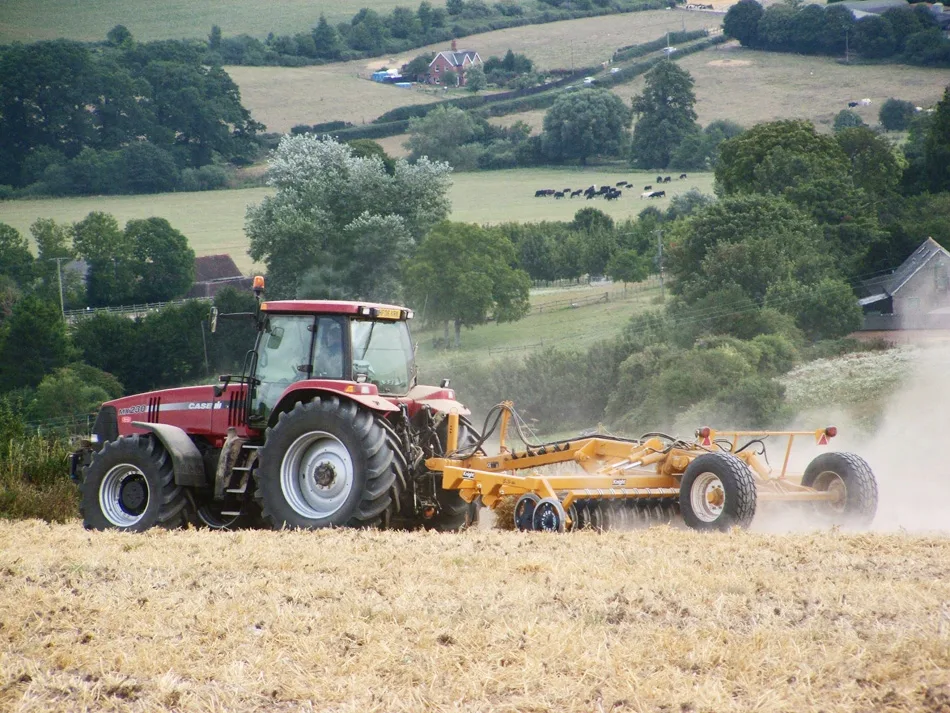
As is usually the case with spring-sown crops, the soil benefits from a bit of a lift with a cultivator: direct drilling doesn’t work as well now as it does in the autumn. After the summer, soils are generally dry and able to absorb moisture as the weather turns; in spring, they come out of winter wet and need time to dry out. A regenerative approach means cultivations are minimised, as tines, discs and tyres can damage soil structure if used too eagerly. However, it always feels like a race to get spring crops in ahead of a potential early drought, so once the sun comes out, you have to move.
This year we’ve been trying out a few different cultivators on demo from local dealers, as our old Knight M press – bought new in 2006 for £11,000 – is beginning to show its age. A new 4m cultivator of this type now comes in at nearer £40,000, which is eye-watering. The second-hand market may prove more realistic; quite how manufacturers expect to sell many new machines in the current climate is hard to see.
All of our spring beans, wheat and barley are now safely tucked into good seedbeds, awaiting a little moisture and warmth before the fields turn green again. These crops follow over-winter cover crops, most of which have been grazed by cattle. We’ll wait for much warmer conditions before sowing millet, winter bird food and further cover crops.
Our old friend the SFI
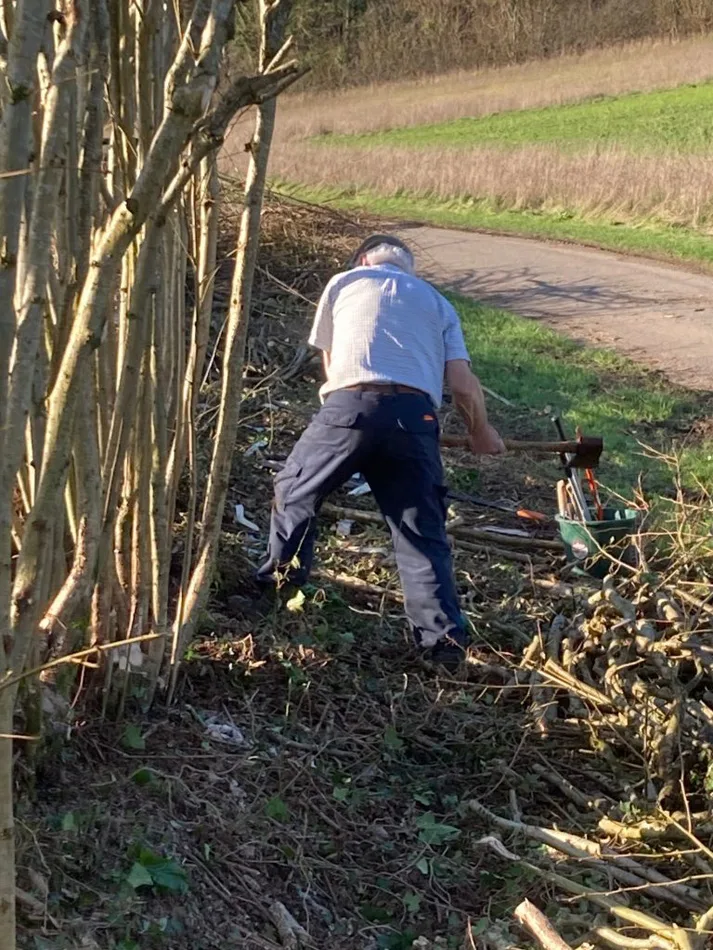
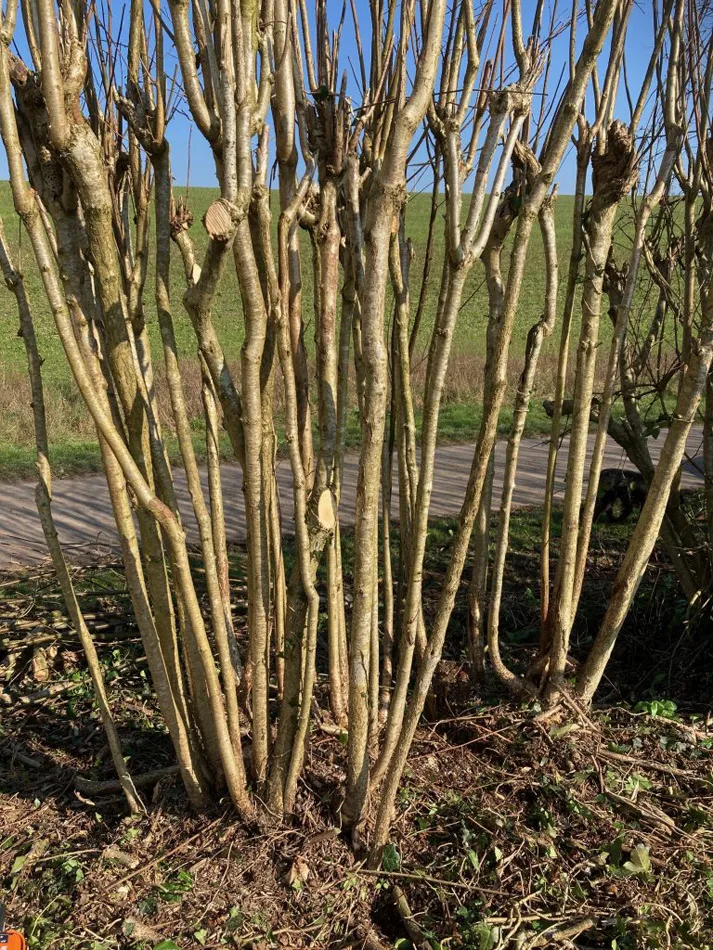
Our good friend George D has been steadily working his way along an overgrown hazel hedge beside Lime Kiln field, along the road to Shepherds Corner, rejuvenating it by laying. Over the past few years he has patiently reintroduced me to the skills involved – it is a long time since my own hedge-laying course by the cricket ground in Moreton back in 2002.
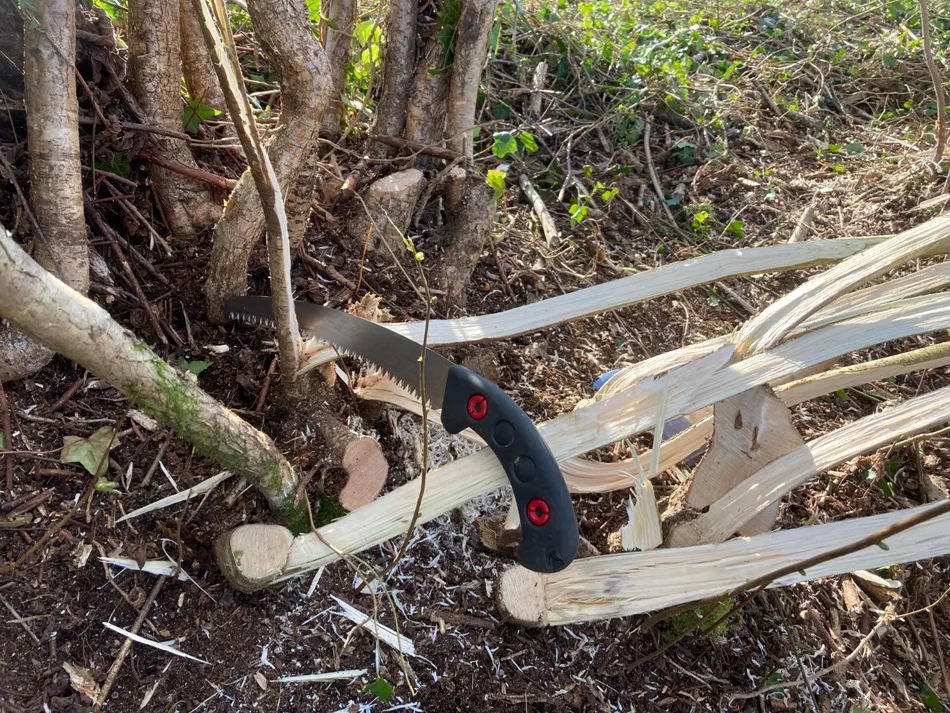
This winter he has also branched out (!) out by training some Great Big Dorset Hedge (GBDH) volunteers, so that they may go forth – armed with billhook, axe and saw – to set to the task of renewing some of the many miles of Dorset hedge that have been surveyed and found in need of restoration. More than 100 farmers across the county have engaged GBDH to come and survey the condition of their hedgerows: it’s the first step towards getting to grips with (in many cases, long overdue) overhauls, by laying, coppicing and gapping up, or simply by incremental trimming with a flail.
Against that backdrop, the latest version of the Sustainable Farming Incentive (SFI26), announced by DEFRA in February, has for some reason dropped the Hedgerow Condition Assessment (CHRW1) option.
This was a simple, relatively low-cost payment that encouraged land occupiers to begin assessing and improving their hedgerows. It also created an opening for wider community involvement, something the Great Big Dorset Hedge has successfully tapped into. Since it started, many miles of hedge have been surveyed, gaps replanted and new hedgelayers introduced to the craft. There is now a huge band of around 400 volunteers willing and able to get stuck into the county’s hedges, but without the assessment incentive, the whole project suddenly looks very vulnerable.
This is what we are so often up against – the constant moving of goalposts.
The hazel argument
The process of laying is slow but satisfying work. Dead or poorly-shaped growth is removed, and the best stems are partially cut and laid over to form a living structure that will regenerate from the base. Hazel is by far the easiest species to work with, producing long, straight stems that split readily – one of the reasons it has been used for centuries in hurdle making and thatching spars.
George is a passionate fan of hazel hedge farming, preferably on a seven-year cycle of cutting, and then returning to lay them again without any mechanical trimming in between.
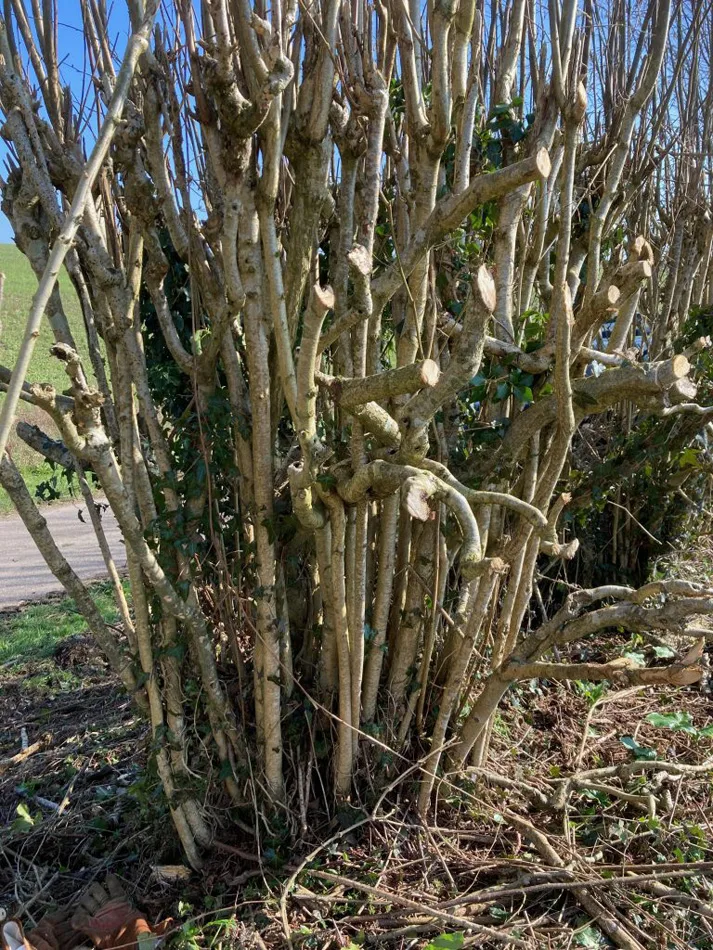
This allows the stems to grow straight and usable, rather than developing the knuckles that flailing creates. Will we find someone willing to harvest and market them in seven years’ time though?
We have many many miles of hedge on the farm, a great proportion of which desperately need laying, so the big question is should we create an in-cycle hedge along Lime Kiln, or incrementally trim it with the flail next year– and every other year hence – rendering the timber largely valueless, in order to put off the day when it next needs laying for as long as possible?
George argues that hazel hedges can outperform traditional coppice in terms of usable timber, thanks to greater light exposure and less competition between stools. I find it hard to accept this (admittedly persuasive) logic, having been brought up to believe that hazel coppice is the ultimate in farmed woodland, a unique habitat that not only produces spars, hurdles, pea sticks and fuel for charcoal production, but is an ecosystem all of its own.
After a couple of weeks of laying, however, I am convinced that a hazel hedge is not particularly valuable as wildlife habitat. The long, straight, smooth stems, with few branches unless it has been flailed, offer very little purchase for birds’ nests for example, and there is no ‘bottom’ to it at all, as all stems reach for the sky from day one.
Bad ivy
When planting new hedge I would never intentionally plant hazel: it would outgrow all other species, and when flailed the leaves unseemly split ends on every stem. Another no for a hedge mix would be elder. It’s poisonous to many animals, grows too fast and seems to possess allelopathic properties (suppresses neighbouring plants). Also on my no list would be any bramble, or wild clematis (Old Man’s Beard), which can ruin a young or re-growing hedge.
Another trouble-maker can be ivy, which will appear from nowhere, and needs repeated knocking back. I have to admit it is quite satisfying to cut a ring around an ivy-clad tree, and then watch over the following months as the ivy leaves shrivel and fall, until finally the stems decay and fall away. A tree that is clearly losing its battle with marauding ivy is a sad sight. When it reaches the crown, ivy declares a pyrrhic victory, only to crash to the ground with the defeated tree once it has been suffocated. Don’t get me wrong, ivy has a beauty all of its own, and it supports a wide variety of other species, especially when flowering in late summer, it truly hums. But there’s a time and a place …
Elsewhere on the farm
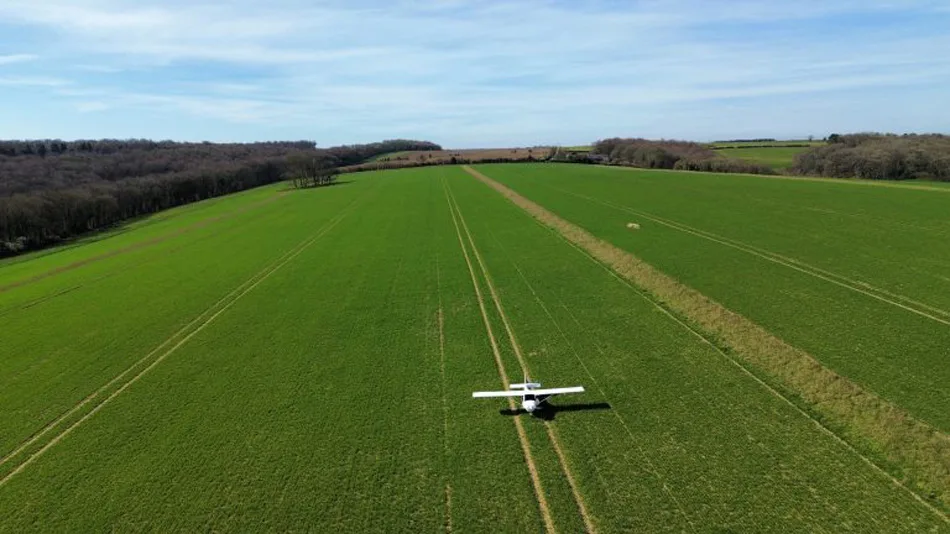
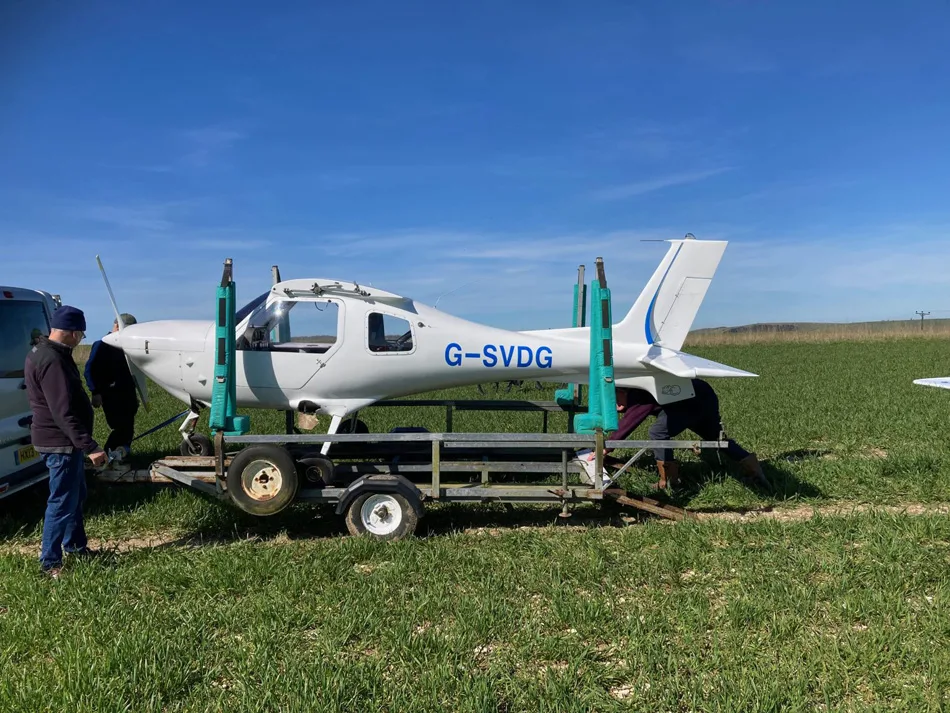
The pictures below are of a surprise visitor one Friday evening in March. The pilot had to make a hurried landing when the engine faltered – luckily for him the winter wheat crop on the Knoll presented itself, with room to land before the wires. Exactly a year ago this field had just been sown with oats, and the soft soil would have caused the plane to sink in – the landing might not have been so comfortable. Attempts to restart the engine were not rewarded with smooth running, so eventually she had to be loaded up and driven home.
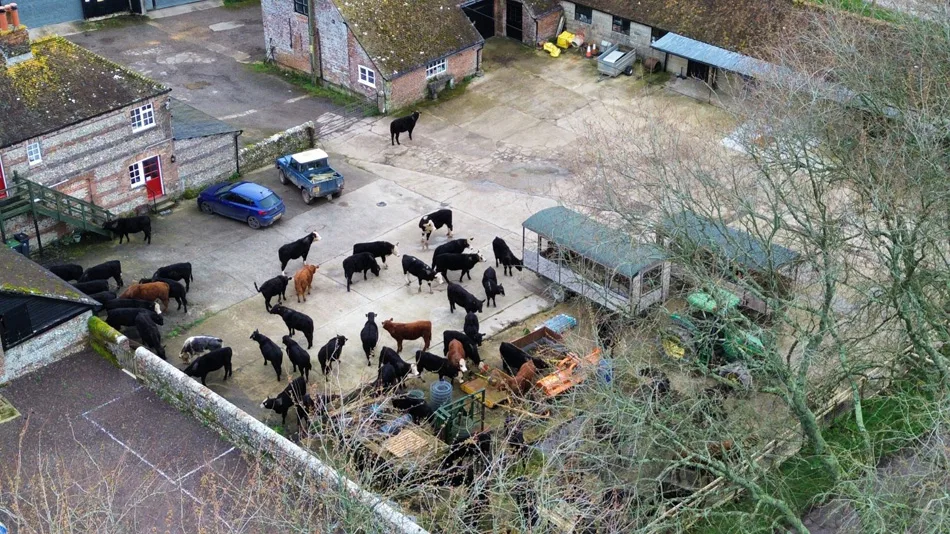
And finally, please do enjoy this image of cattle loitering where they should not. They had to be corralled in the ‘tidy’ yard while their mates were carefully cajoled into passing the scary tractor shed: they were supposed to meekly walk straight past and up the track to the next grazing field …