

Winter may feel muted, but Dorset still offers colour, from evergreen trees and bright birds to fungi, mosses and lichens thriving in the colder months
The long nights and dark days of winter may still be with us, but even at this time of year, many plants, birds and fungi bring noticeable colour across Dorset. Exploring a nature reserve or green space near you will offer good opportunities to see these species up close, even during the coldest months.
Several evergreen trees keep their leaves through winter and stand out among the bare branches. Holly is one of the most common native evergreens in Dorset. Its dark glossy leaves and bright red berries are easy to spot at Kingcombe Meadows near Dorchester and Lorton Meadows in Weymouth, where they also provide food for birds.
Yew grows widely in churchyards and older woodlands, offering another reliable splash of green. Box survives in small pockets on chalky slopes in southern England, including parts of Dorset’s downland. Juniper is now very rare locally, but heathland reserves such as Upton Heath in Poole resemble the type of habitat where it once grew more widely.
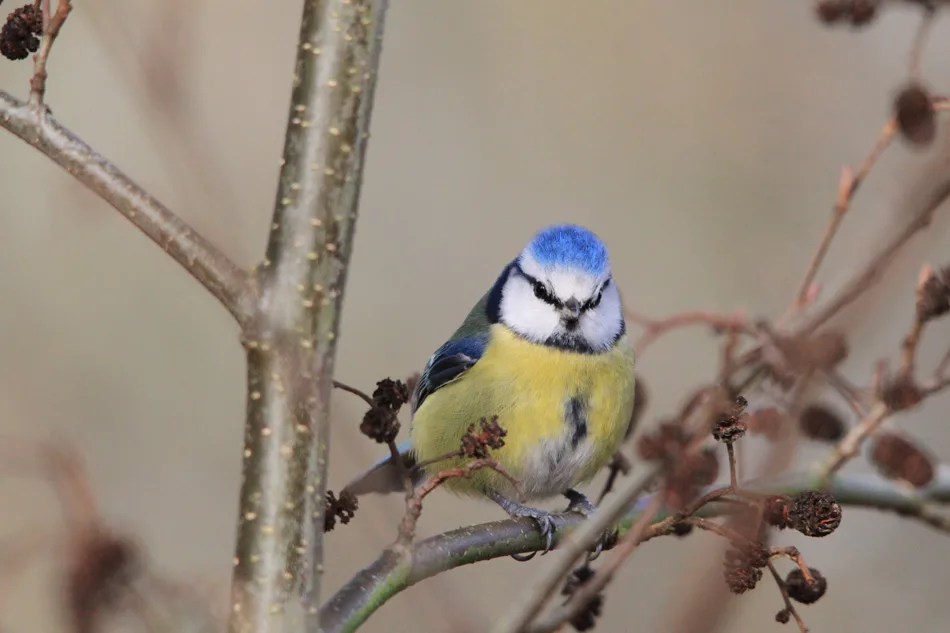
Birds are often the most visible wildlife in winter. Robins are common across Dorset Wildlife Trust reserves, and their orange‑red breasts makes them easy to identify. Blue tits are also widespread, showing bright yellow and blue plumage as they move through hedgerows and feeders. Yellow-green siskins are less common but do appear in Dorset during winter, sometimes gathering in flocks around alder and birch trees at Lorton Meadows.
Small but mighty
Fungi add smaller but still noticeable patches of winter colour. Scarlet elfcup, a vividly red cup‑shaped fungus, can sometimes be found on damp, decaying wood at Kingcombe Meadows. Yellow brain fungus grows on rotting branches in many Dorset woodlands, while yellow stagshorn appears on conifer stumps and can be seen on the edges of Upton Heath.
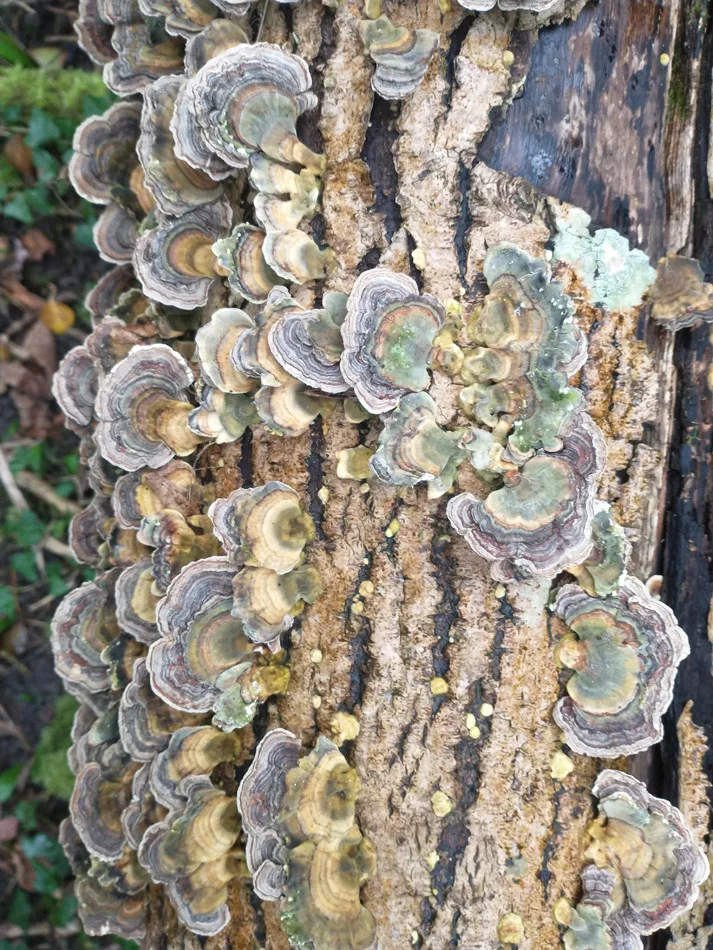
Turkeytail, a common bracket fungus found year‑round on dead wood at sites such as Ashley Wood near Blandford and Girdlers Coppice near Sturminster Newton, shows concentric bands of browns, blues and yellows – it plays an important role in recycling nutrients.
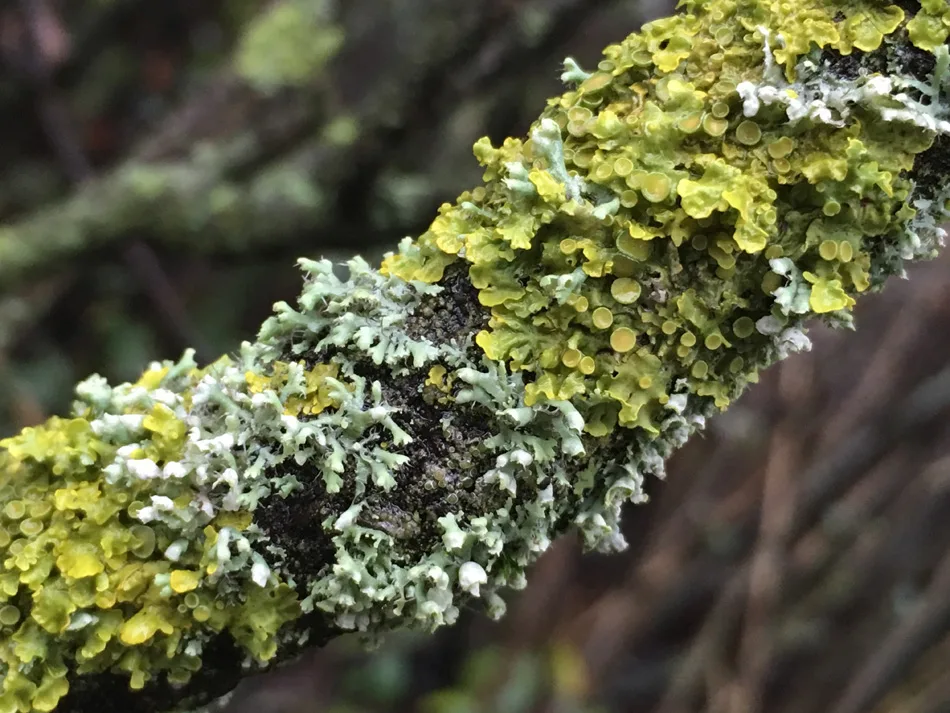
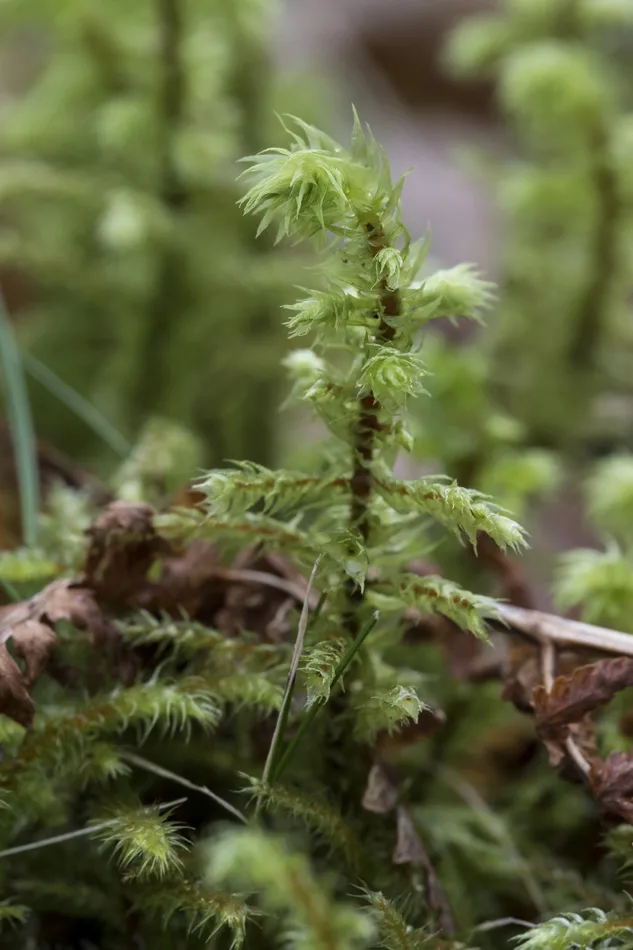
Mosses and lichens also contribute to our winter colour. These small but resilient species thrive in Dorset’s relatively clean air and are easy to find on shaded paths, fallen logs and stone surfaces. Bracketts Coppice, an ancient woodland near Beaminster, supports lush carpets of woodland mosses such as common tamarisk moss or big shaggy-moss in its damp, shaded areas. Lichens such as oakmoss are widespread on older trees, fence posts and dead wood.
Lichens add even more variety across the county. Yellow‑green crusts of xanthoria and pale, branching ramalina species are common on trees and exposed rocks at Fontmell Down near Shaftesbury, where open chalk grassland and scrub provide ideal conditions.
Overall, Dorset’s winter landscape contains far more colour than you might notice at first glance. A walk through any Dorset Wildlife Trust nature reserve can reveal a surprising range of wildlife that stands out, even during the darkest months of the year.


