

Barry Cuff takes a look back through his notes on what happened on his Sturminster Newton plot last month
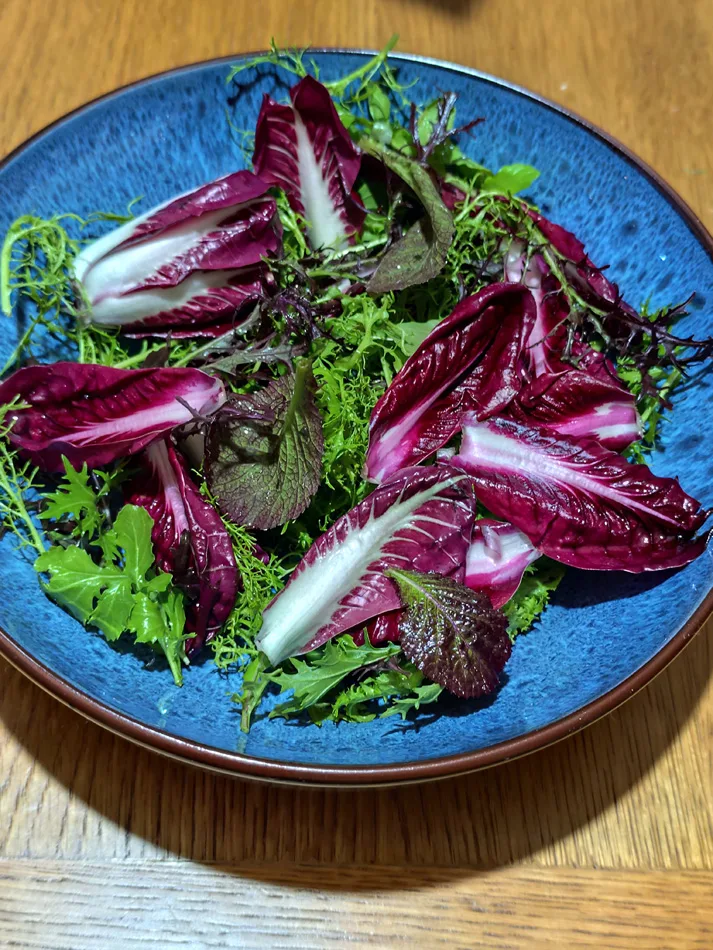
Image: Barry Cuff
Three days of frosts at the beginning of the month (one was down to –7ºC!) appear to have done little or no damage, thankfully: the phacelia, our green manure, was partly killed out by the hardest frost but our salad leaves are all protected with fleece.
The very high rainfall kept us off the plot in January, except for gathering vegetables and pruning the fruit bushes. We did no groundwork at all except for adding manure to any areas cleared of produce – and we carried this out using planks across the soil, or from the paths.
Hopefully February will be a much drier month, and we can start digging and preparing the soil for sowing and planting in March.
Pruning: All the fruit bushes were pruned. We had a lot of gall mite (big bud) on the blackcurrants this year, so all buds have been removed and bagged. These will be burnt later with all the other prunings
Potatoes: Val and I made our annual trip to Mill House Nurseries at Owermoigne to buy our seed potatoes. This year there were 73 varieties to choose from – it’s almost certainly the largest selection in Dorset. They were made up of 19 first earlies, 22 second earlies and 32 main crop. This year we have decided to try a few Orla, a first early with excellent taste. The remainder – Charlotte, Jazzy, Sagitta, Caledonian Rose and Desiree – are all varieties which we have tried and tested in previous years, and all have been chosen for their reliability, taste, yield and cooking qualities (especially for salads, roasting and making chips). The average cost was 21p per spud.
Peas: While we were at at Mill House, we also bought this year’s peas – Hurst Green Shaft. Sold loose, we got approx 1,800 seeds for £3.50, which is very good value.
Seeds: We always test any open packets for germination – if stored correctly, the germs hold up well even on two and three year old seed.
New seed we tend to trust, though we always check the germ of new parsnip seed as it can be poor (there is no marketing standard for parsnip as there is on all other vegetables)
Sowing: In the propagator we have sown the sweet chillis. In the greenhouse, we have two varieties of broad beans – Witkim manita and Masterpiece Green Logpod. We also have two varieties of sweet pea, a tray of agricultural peas for salads and also a tray of mixed leaves for salads.
Fresh vegetables: We have continued to pick leeks, celeriac, parsnip, carrot, cauliflower, sprouts
and broccoli.
From the store: We’ve still got supplies of potatoes, onions and squash, as well as garlic and hazelnuts.
In the freezer: We’re still enjoying last season’s broad beans, peas, sweetcorn and French beans.
Salads: We always enjoy our tasty colourful salads at this time of year, and everything is picked fresh from the plot. For salad leaves we grow winter cress, mizuna, radicchio, red and green mustards and chicons. To the leaves we usually add several roots – celeriac and various radishes: white daikon, red and blue moon.