Home Blog Page 297

Hanford School’s nativity –unchanged for over 60 years

0

A local school has performed the same nativity since 1960 – even using the same costumes!
Every school’s nativity play is a special highlight of the year. But for Hanford School near Blandford, the nativity play is a timeless school tradition.

hanford school's nativity is unchanged for 60 years, including the costumes


It was written in 1960, especially for Hanford‘s founder, Mrs Canning, by Donald Kittermaster. He had been headteacher of The King’s School, Worcester before joining Hanford as an English teacher. Mr Kittermaster wrote the nativity specifically with Hanford’s hall in mind, and he based his play on the Gospels of Luke and Matthew.
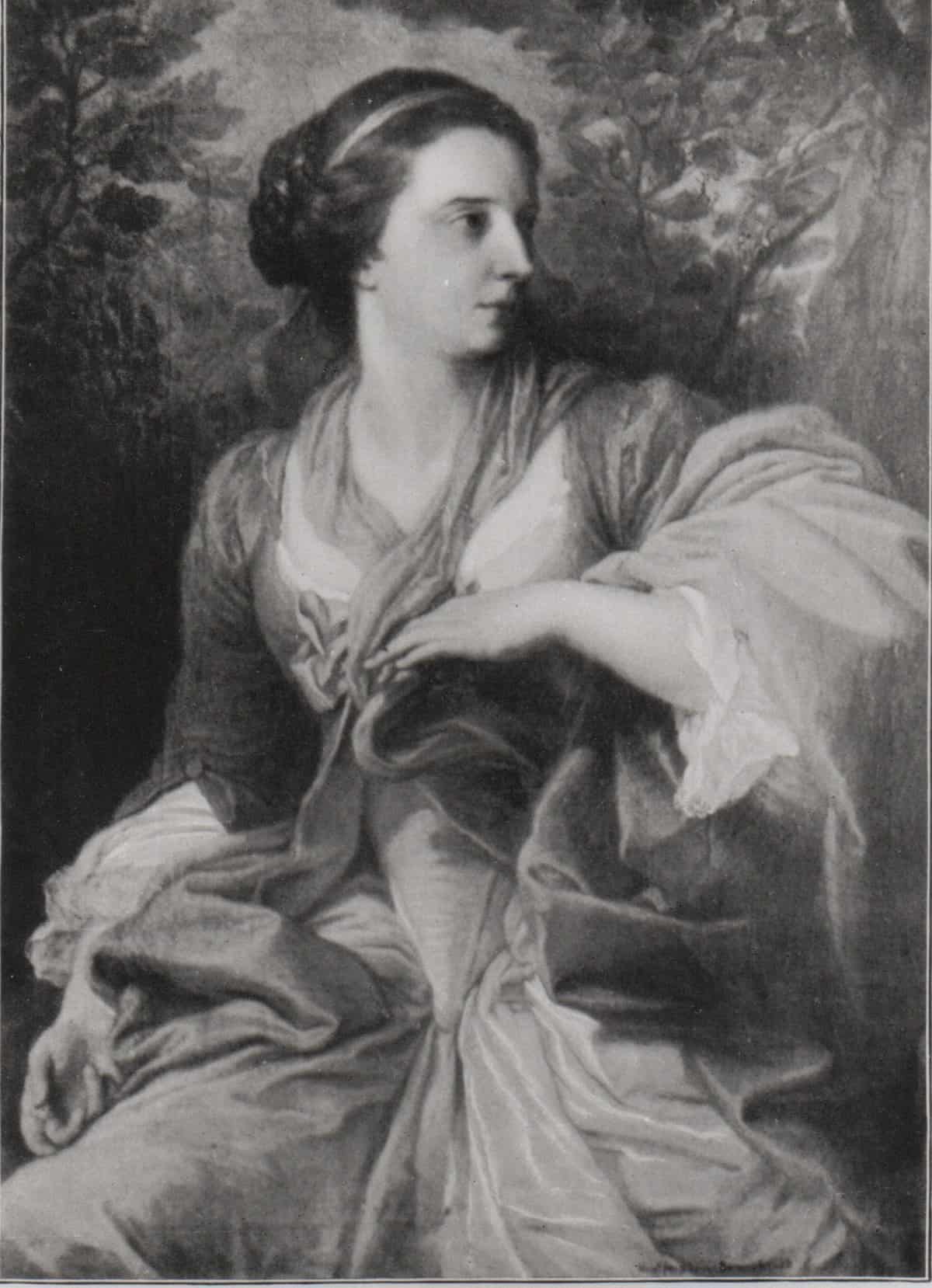
The original costumes, some of which were given by Lady Rockley from the Amhurst Collection, are still used every year and give the play not only its colour but add a sense of authenticity and history. Mrs Canning, who encouraged girls to develop an interest in History of Art, wanted to recreate tableaus from Renaissance paintings, particularly works by Botticelli, Guido Reni and Murillo.

hanford school's nativity is unchanged for 60 years.


Old Girls were welcomed back to see the nativity play, many of whom had happy memories of playing their own part in the nativity when they were at Hanford. Rory Johnston, Head of Hanford School, said, ‘Congratulations to all the girls involved in this year’s nativity play; once again the magic of the Christmas story came alive in the Hanford Hall. As ever the music, singing, costumes and script all came together so beautifully to create a very special experience for all involved. Hanford’s nativity play has not changed for over 60 years and is a much-loved part of the school calendar.’

hanford school nativity shepherds

The play is considered as much an act of worship as it is theatre; always performed by girls in Years 7 and 8 it incorporates beautiful choral music. Interestingly, the first girl to take the role of Mary was Emma Kirkby, who would go on to become Dame Emma, one of the greatest sopranos. The Hanford nativity has been performed every Christmas since 1960 and its appeal is timeless.

The Winter Woodland Realm

0

As winter sets in, Dorset Wildlife Trust’s Reserves Ecologist Steve Masters urges us all to go down to the woods today

Woodland (veteran trees) at Arne (RSPB) nature reserve, early morning light, Dorset, UK. August 2011.

As winter’s cloak settles on the British countryside and wisps of mist float among the treetops, a walk among some of our oldest organisms is a must.
Entering the woodland winter realm evokes a calming sense of contentedness. As you descend deeper into the recesses of canopy and understorey, you retreat from the elements outside, whether environmental or anthropogenic.
Immerse yourself and let your imagination run wild with the history of these most ancient of habitats – the large herbivores of Britain’s past sheltering among the trees and grazing in woodland clearings; our distant relatives coppicing and working the woods for fuel and building materials; and for many of us of a certain age, Enid Blyton’s faraway tree, sheltering its magical folk.
These old, mainly broad-leaved woodland habitats in Dorset are home to an incredibly diverse range of wildlife. The towering canopy of trees, often oak ash or beech, supports thousands of species.
In winter, bird song is scarce, but the crisp air is occasionally pierced by the high-pitched peeping of troops of long-tailed tits, flitting from tree to tree in search of food.
Although deer in some areas currently pose a threat to the natural regeneration of woodlands, winter is a good time to see and hear them, especially as they rut, as the vegetation dies back.
As you walk, take time to contemplate the ‘wood wide web’ beneath your feet, a combination of fungi, bacteria and roots, all interconnected. This network allows the altruistic sharing of food and communications between trees and other plants.
In winter though, you may need to delve a little deeper for your wildlife fix and notice the more introverted of woodland species.

Isothecium myosuroides, commonly known as slender mouse-tail moss

Fungi
An important cog in the woodland ecosystem, fungi are key to recycling organic matter and helping to lock up carbon. Each time you place your foot on the woodland soil you are standing on miles of underground fungal mycorrhizae – what we see above ground is just the fruiting body of the fungi. One spectacular iconic species to keep an eye out for at the moment is the fly agaric, with its bright red cap and bright white stalk. Its colour is nature’s warning of its toxic nature.

Ferns
These ancient plants, relics of times when dinosaurs still roamed the earth, are often overlooked. Their reproduction is reliant on moisture, so they often inhabit the shadier parts of woodland. Sometimes they will be perched high above your head, growing epiphytically on moss-covered tree branches. One of the most common species to look out for on your winter walk is soft shield fern, a typical shuttlecock form growing on the woodland floor. They can be large plants, but their surprisingly delicate fronds are divided several times to give a soft, feathery appearance.

Mosses and liverworts
One of the oldest lineages of plants on our planet, this diminutive floral is abundant across our woodlands, often forming cushioned mats across trees, rock and woodland floor. Their amazing structures are often difficult to see with the naked eye but are really brought to life with a magnifying glass. One species which you’re likely to come across is mouse-tailed moss, growing around the base of trees. It gives a lovely, cushioned spot to sit for that coffee break!

Fly agaric – if eaten it can cause hallucinations and psychotic reactions

Find your nearest forest
We are lucky in Dorset to have a wide variety of woodlands. Dorset Wildlife Trust looks after a number of them: Powerstock Common and Bracketts Coppice in West Dorset; Kilwood and Stonehill Down in the Purbecks; Girdlers Coppice and Ashley Wood in North Dorset.
So, take some time, find a spot where the signal is strong, connect yourself into the Wood Wide Web and down your load.
Find out more about Dorset Wildlife Trust’s woodland nature reserves: dorsetwildlifetrust.org.uk/nature-reserves

Have you tried The Writers Block at Clayesmore?

0

[AD] Fancy treating yourself to somewhere different for a coffee or a bite to eat this week? How about The Writer’s Block, the new café at Clayesmore School? The gingerbread muffins are *chefs kiss* 🙌 and I’ve heard tales about Katie’s Pigs in Blankets panini (will need a return visit ASAP to check the truth in the rumours, obviously).

Also – the coffee. SO good. And it’s sourced from local grinders in Sherborne, too.

The squishy sofas and chairs are perfect for a comfy pre-Christmas coffee and cake. But there’s also tables for proper ‘let’s do lunch’ as well as good WiFi if you’re working from home and fancy a change of scene.

They’re proud of the ‘drop dead gorgeous cakes’, the winter warmer soups aren’t to be missed (cream of tomato and basil served with a cheese toastie today), and there’s a Christmas selection of seasonal paninis (not just pigs in blankets – how d’you fancy brie, bacon & cranberry?). And of course there’s mince pies.

And I’ve just spotted that they also happen to have a really nice set of hampers if you’re looking for a quick and easy gift suggestion (https://shop.clayesmore.com/…/christmas-hamper-collection ). The Coffee Lovers Mini Hamper is perfect, with a limited edition Writer’s Block matte black mug for the perfect Sumatra Bourbon Espresso coffee, a little luxury chocolate biscuit oatie on the side and a Writer’s Block travel mug for your coffee on the go.

The Writer’s Block opening times are Monday to Friday 8am to 6pm, and Saturdays 8am to 3.30pm. Closed on Sundays.

Final day before they close for the Christmas holidays is the 16th December, so don’t think about it too long!

Clayesmore School

Find the writers Block on Instagram here – https://www.instagram.com/the_writers_block_cafe/

The coffin in the crypt | Looking Back

0

Almost 250 years after the funeral of the young Milton Abbey heir, questions remain about whose “body” was actually buried. Roger Guttridge reports

Anne Damer left her husband a year before his reported suicide

According to the Milton Abbas parish register, the funeral of the Honourable John Damer took place on 21st August 1776.
Amid much pomp and wailing, the body of Lord Milton’s eldest son and heir was laid to rest in the family vaults beneath the north transept of Milton Abbey church. But were they?
Milton Abbas villagers had serious doubts. Persistent rumours suggested that the young Damer not only survived his own funeral but was often seen out and about in later years.
There is also cause to suspect that the coffin that today sits beneath the memorial to Lord and Lady Milton may contain something other than their son’s mortal remains.

Wild and foolish
As a young man, John Damer was the very definition of profligate.
His costly pastimes included gambling and horse racing and his estranged wife Anne’s biographer Percy Noble described him as ‘one of a wild, foolish set about London, whose whole glory in life was centred in the curl of a coat-collar and the brim of a hat’.
Noble added: ‘These young fops made up for a want of wit by the most extravagant display of ridiculous eccentricity.’
Three times a day, Damer appeared wearing a brand-new suit, and after his alleged death, his wardrobe was sold for the collossal sum of £15,000 (roughly £1.3m today). He ran up debts estimated at £70,000 (over £6m in 2022) – well over twice the annual income of his father’s Milton Abbey Estate.
By 1776, his creditors were closing in and Lord Milton – who also had two other extravagant sons – had run out of patience and was refusing to bail him out.
In the early hours of 15th August, 32-year-old Damer apparently shot himself in the head at the Bedford Arms in Covent Garden.
At an inquest in the same pub later that day, a 22-man jury concluded that he had killed himself while not of ‘sound mind, memory or understanding, but lunatic and distracted’.
But the circumstances were not straightforward. Innkeeper John Robinson explained that Damer had earlier dined in an upstairs room along with five entertainers he had requested – four women who sang and a blind fiddler called Richard Burnet.
The ladies left at 3am after which Burnet was asked to leave the room and return in 15 minutes.
Twenty minutes later, the sightless fiddler told Robinson that Damer had not spoken since his return to the room and that there was a ‘disagreeable smell’ he thought might be from a candle that had fallen over.
When the landlord joined him, however, he found Damer dead in his chair, bleeding from a head wound with a discharged pistol at his feet.
On a table was a suicide note, which stated: ‘The people of the house are not to blame for what has happened, which was my own act.’

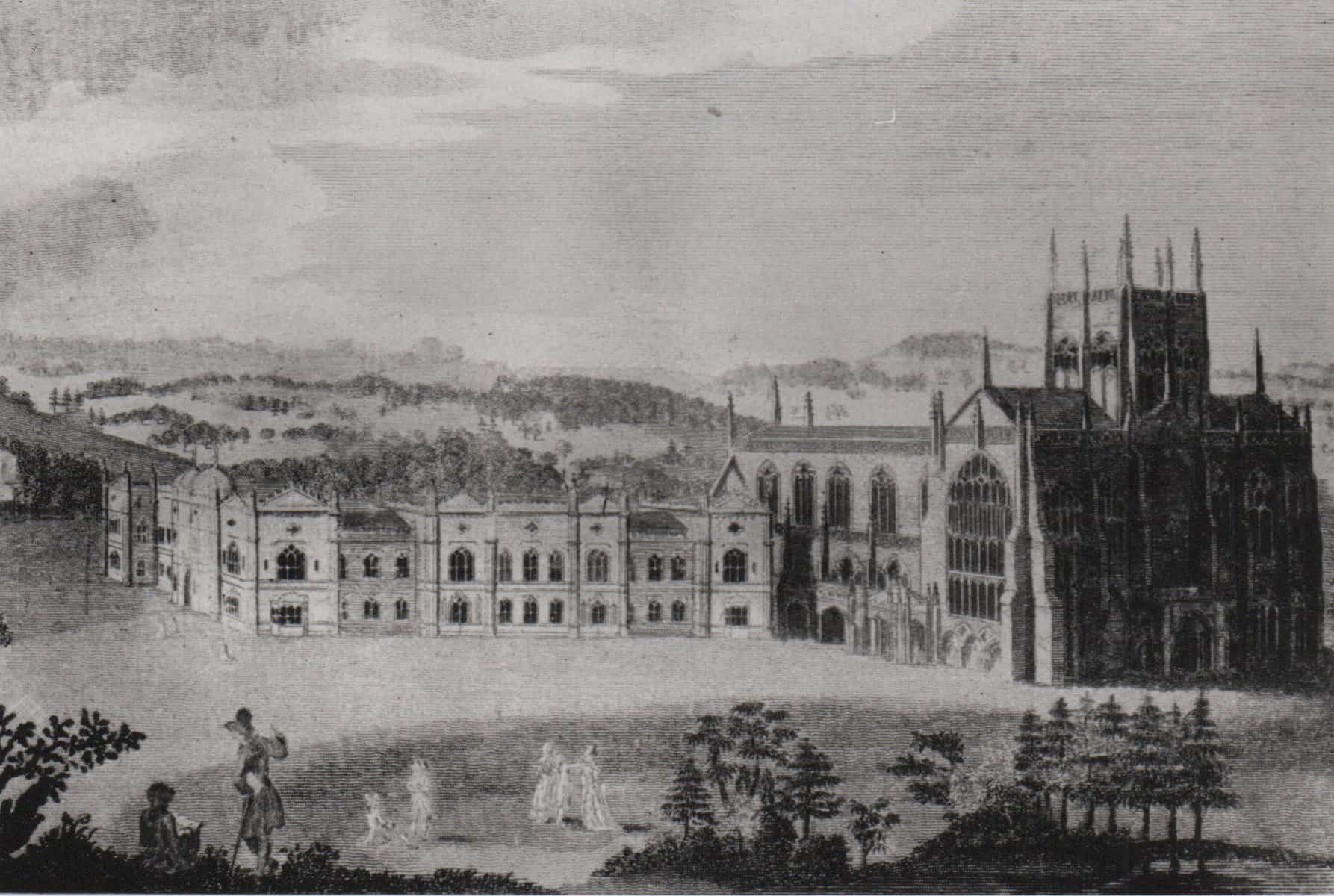
Milton Abbey and House in Damer’s time

In collusion
Damer’s house steward John Armitage told the coroner his master had been in ‘oppressed spirits’ of late and Burnet confirmed he was not his usual cheerful self.
If there is anything in the stories that Damer did not die that day, he must surely have had an accomplice or two and a replacement body waiting in the wings.
This would not have been difficult to arrange, especially if the body was ‘borrowed’ to be returned later.
In 1776, it was normal for a coroner and jury to view a body, but it’s fair to assume that none of them knew Damer personally so would not have known if it was not his.
Given that Burnet was blind, it appears that Robinson and Armitage were the only people in a position to identify Damer’s body.
Both had served him loyally for years. Could it be that they also co-operated in some elaborate scheme to fake his death?
On the face of it, that is no more than speculation.
A hundred years later, however, one Frederick Fane of Fordingbridge added substance to the story.
During a visit to Milton Abbey, Fane heard about the legend of the ‘bogus funeral’.
As it happened, his visit coincided with some repair work on the north transept, and the clerk of works invited him into the vaults, which were usually inaccessible.
Among numerous coffins was one bearing John Damer’s name and the date of his death, and Fane was invited to lift it.
‘This I found impossible due to its extraordinary weight,’ he later recalled.
Invited to lift a second coffin, Fane did so ‘without the slightest exertion’.
‘There, sir,’ the clerk told him. ‘This one contains a body gone to dust. The other one is full of stones, as it was supposed by the old villagers would be the case if any opportunity occurred for investigation.’
Once the works were complete, the vaults were re-sealed and their coffins left to sit undisturbed indefinitely.
Perhaps one day a need will arise to open the vaults once again.
Until it does, the mystery of John Damer’s death will continue to remain a mystery.

• Roger Guttridge’s books Ten Dorset Mysteries (1989) and Dorset: Curious and Surprising (2016) both include a chapter on the Damer mystery.

Sturminster’s Royal British Legion joins with Combined Cadet Force

0

On Saturday 12th November, Clayesmore School’s Combined Cadet Force (CCF) assembled at Sturminster Newton. The detachment was to be awarded new badges, announcing its affiliation to the town’s Royal British Legion (RBL) branch.

Lt Gen Sir David Bill KCB, President of the Sturminster Newton RBL Branch, presented cadets with their badges
Image: Courtenay Hitchcock


Ian Rockett is an ex-Royal Engineer currently working as a school staff instructor at Clayesmore School’s Combined Cadet Force. He approached Trevor Legg, the Sturminster Newton RBL branch chairman, to discuss the possibility of an affiliation between the two groups a year ago, and Trevor was equally excited at the prospect.
‘The affiliation is great for the cadets,’ says Ian. ‘Apart from the obvious pride in the new badge – they all love a badge! – they enjoy the contact with the veterans. We currently have a smaller cohort in the detachment than in previous years, due to a new timetable which has meant cadets have to choose between a variety of activities. But the cadets are keen to participate and are committed to their cadet journey. Some have aspirations of a career in the services, but others simply enjoy the participation and the enormous range of activities cadets can enjoy.’

Clayesmore School CCF was keen to affiliate with Sturminster Newton RBL
Image: Courtenay Hitchcock


Once the paperwork and checks were completed, the weekend of Remembrance Sunday was chosen for the formal parade.
The mustered Clayesmore cadets were inspected and addressed by
Lt Gen Sir David Bill KCB, President of the Sturminster Newton RBL Branch, who presented each cadet with their affiliation badge and had a few words with each of them. General Bill said that it was great to see the younger people having an interest in the Legion, ensuring the future of the organisation. Reductions in the size of the UK Armed Forces mean it is vitally important to engage with the next generations.
Trevor Legg expressed his delight at the new affiliation: ‘We hope it’s very much a jointly beneficial relationship. We provide the obvious opportunities to the cadets for their volunteering and Duke of Edinburgh’s Award, but also, I hope, by sharing our personal experiences and broad range of expertise with them. In return they support us with fundraising work, at community events and also join our parades’.
A few cadets stayed in town to continuing fund-raising for the Poppy Appeal, raising about £180 in just a few hours.

Youth groups and organisations (uniformed or otherwise) can become affiliated with any Royal British Legion branch to support fundraising projects and more.
How can RBL help youth organisations?
Offering opportunities for The Duke of Edinburgh Award Programme
Fundraising under the name of the youth organisation
Offering experience on military knowledge, such as providing an instructor/lecturer from within the branch
Providing free educational resources
Raising awareness about the Royal British Legion, and encouraging young people to take part in our activities

How can youth organisations help?
Help raise funds for the Poppy Appeal
Become Branch Standard Bearer (adult and youth)
Attend Remembrance services and parades

Teacher of Business | Clayesmore School

0

To commence January 2023

An opportunity has arisen for a dynamic, enterprising and inspiring person to join our Business and Enterprise department at Clayesmore School.

The ideal candidate will have an understanding of what a modern and relevant business curriculum should offer and have the ability and understanding to motivate and inspire pupils and colleagues. Experience of teaching A Level Business is essential and A Level BTEC Enterprise would be an advantage.
In addition they will be keen to contribute to the life of a busy boarding school.

This is a permanent, full time position; a competitive salary and attractive benefits are provided for the successful candidate.

For further information and an application pack, please go to:
https://clayesmore.com/work-for-us/

Closing date: 8.00am on Friday, 16 December 2022

The vacancy may close earlier if a suitable candidate is appointed. Early applications are therefore encouraged.

Clayesmore is committed to the safeguarding and promotion of children’s and young people’s welfare and expects all staff and volunteers to share this commitment.

www.clayesmore.com

Put in a little winter work now

0

Gardener Pete Harcom has your list of jobs (and not-jobs!) for December

Leave the dead hydrangea heads on the bush to protect new growth

Though the garden is quiet in the middle of winter, getting on with some jobs now will get you well ahead for the spring and will ensure your garden is ready as the seasons turn towards the warmer, brighter months.

Prepare your borders
Winter digging can continue, weather permitting – just don’t dig when the soil is too wet or frozen. To feed the soil and improve the structure, use garden compost, well-rotted manure and leaf mould.

Cut it back
Pruning all the climbing roses and any tall ones will help reduce wind rock during the worst of the winter weather. Prune old flowered rose shoots to a third of their length, and check all climbers to ensure they are adequately supported.
Now is also the right time to prune your Japanese Maple (Acer palmatum) if required

Protect your pots
Bring your potted plants into the greenhouse, or failing that at least move them into groups – this will help protect them from harsh winds and frosts.

Sowing time
Sow your sweet peas and micro greens seeds in the greenhouse. Also sow some alpine plants now – these can be very easy to grow in a cool greenhouse, and don’t worry about the exposure to low temperatures before germination some alpines need, an average UK winter should provide the right temperatures. If you already have alpines in the flower borders, it’s also a good idea to put some gravel around them now to prevent them getting waterlogged.

A little protection work
Fungal spores and many pest-pupae overwinter in the soil at the base of plants, ready for action once spring arrives and growth begins again. Remove (and compost) all old mulches in all areas of the garden, and lightly dig around the base of plants to expose any resident pests to predators (birds love grubs!) and winter weather.

Pond life
If you have a pond, ensure plenty of light is getting in through the winter months by removing any overhanging shrubs and trees. This will help your pond plants to replenish oxygen levels in the water. Always ensure there is a ball or similar to help prevent the surface entirely freezing over during any cold snaps.

Christmas decorations
Harvest the winter berries on plants like Holly if you intend to use them for wreaths or garlands for Christmas displays, before the birds and the weather get them all. They should be fine if you put them in buckets of water until you are ready to use them.

And what NOT to do:
Avoid disturbing large piles of leaves now. Leaf piles are amazing for wildlife, providing shelter and a great nesting spot for hibernating animals, such as hedgehogs, small mammals, frogs and countless insects.
Lastly, just leave your Hydrangeas’ spent flower heads on the plants! They help protect the new flower buds that are forming lower down the stems.

Sponsored by Thorngrove Garden Centre

A conduit to a past era | Then and now

0

Roger Guttridge explores the history of a Sherborne landmark

Looking up Cheap Street c 1900
All ‘Then’ images from the Barry Cuff Collection

These days its main raison d’être is ornamental, although it can also serve as a temporary shelter during a storm or shower.
But in its 500-year history, Sherborne’s grade-one listed Conduit has had several other uses, mostly in the 19th century.
It was built by Abbot Mere in the early 1500s as a washroom for his monks and originally stood in the northern alley of the Abbey cloister.
Some sources say it was built by ‘Albert’ Mere but I suspect this is an error that began with someone mishearing or misreading ‘Abbot’.
It pays not to believe everything you see in print…
In 1560, a couple of decades after Henry VIII’s Dissolution of the Monasteries, the Conduit was moved to its present site in the Parade towards the bottom of Cheap Street.
The hexagonal building originally had a short cross on its roof but that is long gone.
The addition of windows and a door in 1834 made the Conduit a lot less draughty and enabled its next use as a reading room.
Later it became an early Victorian police station and in 1861 a penny bank.
One thing that is not welcome there today is the bicycle – a sign tells us that the parking of cycles is prohibited.
The nearby village of Bradford Abbas once had a smaller version of the Conduit but it was ‘taken down by the overseer’ about 1800, ‘to the great regret of many of his neighbours’.

Looking up Cheap Street today. The milk cart of yesteryear has been replaced by a trailer carrying Christmas trees for this year’s public decorations

The Conduit three ways
My ‘then’ pictures from Barry Cuff’s collection show the Sherborne Conduit from three still-recognisable angles.
The one looking up Cheap Street in about 1900 (opposite, top) shows a horse-drawn milk cart in the foreground, albeit possibly super-imposed in the darkroom.

The Conduit from Long Street c 1900

At the junction with Long Street (far right) is Durrant’s grocer’s shop, whose tall delivery vans were a familiar sight in the Sherborne area.
According to David Burnett’s book Lost Dorset: The Towns, Henry Durrant was a champion of Dorset Blue Vinny cheese when it was going out of fashion.
I’ve heard that the original Blue Vinny needed prolonged exposure to the bacteria of a manure heap to reach maturity, but for some reason this is now against public health regulations!
Henry Durrant was also a councillor and a magistrate but a 1931 Directory of Dorset lists him as an antique dealer in Long Street.

From Long Street today

The second picture (above) looking along Long Street towards the Conduit and Conduit House, with the Abbey literally towering majestically above all, also dates from about 1900.
Far right is Edwin Childs’ Cycle Works. Like many people in that business, he moved with the times and later opened a garage for motor vehicles further along Long Street on a site later replaced by the Cloisters housing development.

Looking towards South Street, probably 1950s

J H Short, pictured outside the shop next door, was a family grocer. Opposite are the Castle Hotel, a favourite haunt of carriers, and the National Provincial Bank.
A rainy post-war Sherborne
The coats worn by the couple in the final picture looking towards South Street (above) suggest it is post-war, possibly 1950s.

Looking towards South Street today

Frisby’s, the shoe shop chain, occupied the tallest of the buildings on the left side of South Street.

HGV/Livestock Lorry Driver | Andrew Frizzle Livestock Haulage

0

Andrew Frizzle Livestock Haulage Urgently requires an HGV/Livestock Lorry Driver

Join our established family run livestock haulage business based in Stoke Wake, Dorset, serving
farmers throughout the South West.

The position is flexible and can be full or part time

Please contact Andrew on: 07977 136863