The Ibberton, Belchalwell and Woolland Village Hall – from a tin church to a thriving community hub, with state of the art big screen facilities
The Ibberton, Belchalwell and Woolland Village Hall
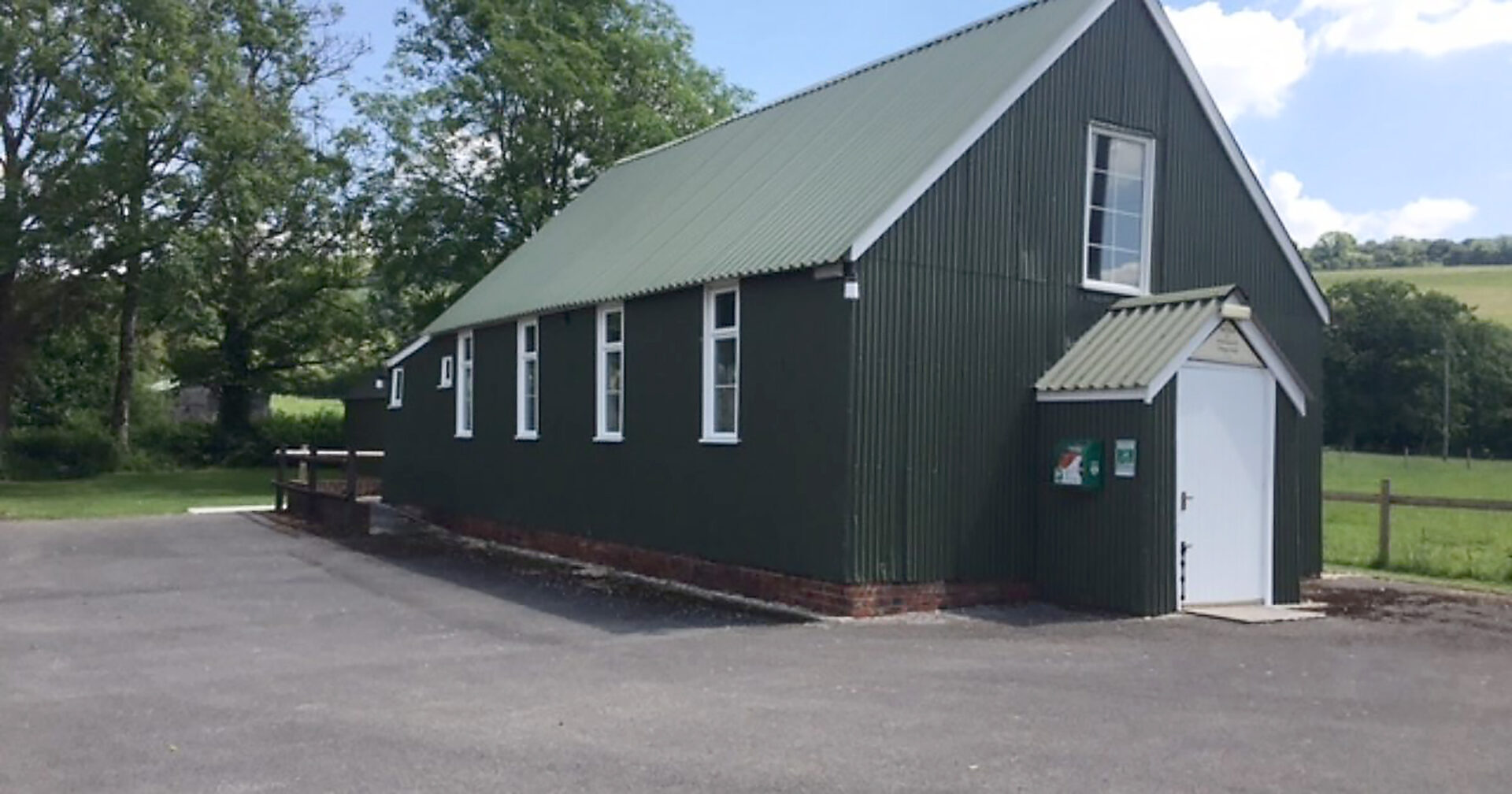
Nestled in the tranquil embrace of North Dorset lies the Ibberton, Belchalwell and Woolland Village Hall. The unassuming building has constantly evolved over the course of its 130-year existence to continue meeting the ever-changing needs of its three small rural communities. In 1892, when the roofs of the local churches in Ibberton and Belchalwell had crumbled, local carpenter George Loder, undertook the construction of a temporary corrugated-iron church on glebe land at Ibberton. The simple structure served as a place of worship and community gathering while Reverend L. S. Plowman began extensive fundraising efforts to restore the churches. In July 1909, Ibberton and Belchalwell welcomed back their places of worship, and the temporary church took on a new role as a Church Room for meetings, clubs, and entertainment. The hall’s altar was transformed into a makeshift stage, and was the setting for much homegrown entertainment including singing, handbells and acting with improvised costumes. Christmas parties were a much-loved regular event and they continue to this day.
A Village Hall In 1948, the hall and its surrounding glebe land were sold to the Pitt-Rivers Estate, ushering in a new era as the Church Room became the official Village Hall, with its own committee and trustees. In 1977 the hall was finally purchased for £250. The hall’s story took another turn in 1996 when ‘temporary’ centenarian was discovered to be leaning. With grants and local fundraising efforts, steel girders were installed to strengthen the structure. Three years later the 107-year-old windows were needing attention. At the same time grants allowed the electric heating and the 1950’s kitchen – complete with a butler sink and camping gas stove – were updated, and a disabled toilet and ramp access were added. In 2001, a grand reopening marked a new chapter in the hall’s history, with the modern amenities creating a vibrant community hub.
Popcorn and ice cream, bar and raffle [email protected] or 07771 561099 for tickets
Another facelift The latest hall project has just completed – a major upgrade of the audiovisual equipment, with LED stage lighting, and an electric film screen and projector. This new upgraded equipment will enable the trustees and committee to offer new ways to bring the community together through films, theatre and live music, bringing the big screen into the small hall. The hall also has a new gigabit fibre broadband connection supplied by Wessex Internet, which will enable streaming of live arts performances, talks and training. They will be further enhanced by the energy efficient, maintainable, stage professional lighting. As it looks forward to the next 130 years, the Ibberton, Belchalwell and Woolland Village Hall stands as a testament to the enduring spirit of rural communities, and is still here thanks to the dedication of its residents and the support of generous organisations.
For ten years, Dorset’s Digital Champions have been inspiring digital inclusion and transforming lives. Rachael Rowe reports
Digital champions at work in Sturminster Newton
Dorset Council is celebrating a decade of award-winning by its team of digital champions, in getting more of the county to use the internet. Most of us are quite comfortable with online shopping – or even opening a copy of the BV Magazine. But in an ever-more digital world, what about those people who find accessing the internet a challenge? In the first ten months of 2023, Dorset Council’s digital team were contacted by almost 2,000 people and a further 900 calls were made to the hotline. The Lloyd’s Consumer index identified that 63 per cent of the UK population has a very high or high ability to use the internet, but 27 per cent has low or no ability – and that’s exactly where Dorset’s Digital Champions have their focus.
A trailblazing project Lyndsey Trinder is the Route to Inclusion project officer at Dorset Council, focusing on getting Dorset people confident in using the internet. She has worked with the team for five years and credits the project to one person’s ’tremendous foresight.’ ‘When I joined it was known as the Superfast Dorset Team and concentrated on getting superfast broadband to everyone. However, my manager saw that the basic skills and abilities to be able to adapt to broadband just weren’t there – we were only doing half a job. She had the foresight to ask the then Dorset County Council to look into and develop this area – and she was given free rein to get on with it. ‘Our digital inclusion work in Dorset was way ahead of its time. It’s quite an achievement – no-one else is celebrating ten years.’
We are the champions One of the pivotal elements of getting more people to use the internet was the introduction of Digital Champions into the community. Lyndsey is incredibly proud of the group of volunteers: ‘Oh they’re lovely … amazing. Around three-quarters of them have a background in IT or software, and they come from all walks of life. They really need strong people skills as well. One of the big things they have to do is to win the trust of those people who don’t really want to be online – they need patience plus patience plus patience.’ Mark Jago has a military and technology background and volunteers as a Digital Champion in Gillingham. He runs a session each Saturday morning in the local library. ‘I got involved because I saw the frustration on social media, people not able to get things to work with their computers. I saw there was a need to help people with IT issues ‘People generally know more than they think – it’s often just a confidence issue. ‘There are all sorts of things we can help people do. For example, we’re helping a couple of Ukrainian refugees at the moment – they just need some support to use the internet. We’ve also helped people with Excel spreadsheets, and we have saved people money by showing them how to look online for better deals one energy bills. We saved one person around £600. ‘And then the other day we helped someone complete an Australian visa online so they could go and see their son.’
The Sturminster Newton sessions are held at The Exchange
Changing lives There are 45 Digital Champions spread across Dorset in 39 locations. All the libraries have support, and two GP Surgeries, in Poundbury and Weymouth, have a Digital Champion. Lyndsey says: ‘We work very closely with the NHS and we can help people use the NHS app, for example. But that isn’t very exciting! If we want to engage people in using the internet we have to find something that interests them. One of our champions had a reluctant gentleman come to see them – he just didn’t seem interested. But then he mentioned that his son was in a rock band in the 80s, so they started looking him up. Sure enough, they found lots of mentions of his son – and that got him interested!’ The team has helped many people over the last decade. Lyndsey remembers one case in particular that still gives her goosebumps today. ‘It was in 2020 when we were distributing IT equipment. It was near Christmas, and one of the social workers came to me because she had just met a deaf man – she could sign, and she realised that she was the first person he had communicated with since the start of the first lockdown. We gave him a smartphone and at the time I wondered why we were giving a deaf person a smartphone – but he used it to video call other signers and joined a WhatsApp group with signing friends. ‘It changed his world.’
Digital champion Mark Jago in his Gillingham library session
Being left behind Lyndsey is concerned about how to meet the offline population. ’Things are changing so fast. I worry these people will be left behind. A lot of things are going exclusively on line and people are missing out.’ Mark also recognises that even people who are online don’t always realise the extent of things they can do. ‘We were at a meant’ health event recently and, although people said they used the internet, we were able to say: “But do you know this?” It really helps if you can enable them to look more widely at what is available to them.’ The team has just won a Connection Britain award for its work on spreading and embedding digital knowledge. They trained other teams, including librarians and social housing staff who can also help people with online tasks so that they become more confident.‘A simple five-minute interaction can make a significant difference,’ says Lyndsey.
Join wildlife columnist Jane Adams on a nostalgic journey as she rediscovers the magic of autumn, sharing the joy of re-connecting with nature
Sometimes the best days come from the simplest things Image: Shutterstock
As a chill breeze ruffles the undressed trees, it brings with it a sense of excitement for the month ahead. At least, it used to … when I was young. Which got me wondering – how can I recapture that love? Because I really did love autumn when I was young. I couldn’t get enough of it. With the ground a canvas of russet, amber and gold, pavements turned into a rustling playground. A gang of us would spend hours searching for conkers, stuffing them into already-bulging pockets, and even though conker competitions left our knuckles bruised and our shoes without laces, we couldn’t have cared less. Then, as temperatures dropped, we’d crunch through frozen puddles, revelling in the feel of the ice exploding as it cracked deliciously under our feet. Autumn was fun – and having fun stimulated our imaginations, encouraged questions, and sparked a deep (unrecognised) connection with nature. This is probably how many of us remember autumn. But then we grow up. We become serious and sensible. Find partners and set up homes. Bills, jobs and responsibilities weigh us down. We suffer setbacks, heartbreak, grief and loneliness. I’m not saying life is all doom and gloom, but when you’re an adult, autumn can sometimes feel … well, a bit gloomy. I groan as the days get shorter and the sun loses its warmth. The other day I even caught myself comparing hot water bottles on Amazon! However, I have friends who still love autumn – and I mean they really love autumn. What if I could love it again? So, for the last few weeks, I’ve given myself a challenge. Every day I search out piles of leaves, kicking them into the air, making myself (and passers-by) laugh. When I put the bins out, I’m stopping to appreciate the dazzling stars and moon before rushing back inside. I pause and listen when I hear tawny owls and foxes calling, and I call back (even getting a reply sometimes). After it rains, I slosh through puddles in my wellies, and I’ll be jumping onto them after a frost just to hear the satisfying crack of the ice. Welcome back, nine year-old me. Having fun, being silly and not worrying about what others might think, as well as really appreciating nature and the season around me, has helped. Try it. You might enjoy it.
Puddle jumping – guaranteed to cheer up the gloomiest of days.
Wildlife walks and treats Red Squirrel walks and a cream tea Brownsea Island Visit the island out of season, enjoy a guided walk, see the red squirrels – and finish with a delicious cream tea at Brownsea Castle. 12:40 to 4pm on 2nd, 9th, 16th, 23rd and 30th November £30 includes ferry, entry, guided walk and cream tea Booking on National Trust website here
Welly Wednesday walks Kingcombe Nature Reserve A regular meeting – join the Dorset Wildlife Trust group for a walk on Kingcombe Meadows followed by an optional visit to The Kitchen at Kingcombe for a restorative cuppa. 10:30am to 12pm on 8th and 22nd November – FREE Booking on Dorset Wildlife Trust’s site here
An artist’s life from fashion to ceramics – for more than 60 years, Sally Tuffin has been at the forefront of British design. By Fanny Charles
Dennis Chinaworks celebrates 30 years of art pottery – All images Courtenay Hitchcock BV Magazine
If you took a magical mystery tour that began in Swinging Sixties London, went to the potteries in Stoke-on-Trent and to a specialist pottery shop in Stratford-upon-Avon, you would not expect to end up in Somerset’s hidden village of Shepton Beauchamp. The journey that began in the vibrantly exciting fashion scene of Biba, Mary Quant, Barbara Hulanicki, Ossie Clark and Foale and Tuffin was serendipitous – and serendipity has always played a big part in Sally Tuffin’s life. It still does. Now in her mid-80s, she continues to design for Dennis Chinaworks, the art pottery she and her husband Richard founded in 1993 – this year they are celebrating the 30th anniversary of the business which they run with their artist son Buchan at their home, Shepton House, in the tiny village near Ilminster. They bought the characterful Victorian manor more than 40 years ago, and now the house and its outbuildings house their various interests, including a glassworks and Richard’s publishing business. With their skilled team of potters and decorators, Richard and Sally create beautiful and unique vases, pots, bowls and teapots, with inspirations that range from tigers to penguins, from Greek myths to Elizabethan textiles, from traditional Japanese geishas to the Austrian artist Gustav Klimt, who was a leading light in the Vienna Secession movement.
Sally, who is not only still working but also learning Italian ‘just for the joy of it’, trained initially at Walthamstow Art School, where she met Marion Foale. They went on to the Royal College of Art, where their fellow students included David Hockney, Peter Blake, and Paula Boty, the outstanding female Pop Artist who died tragically young, aged 28. Sally and Marion recognised they were ‘like minds’ and decided they would work for themselves rather than for a company. ‘We never thought about money,’ Sally recalls. After graduating from the RCA Fashion School, Sally and Marion started their design business, with a £200 loan and a sewing machine, in a rented bedsit. Their style was dressing down not dressing up, looking as if you hadn’t tried too hard – a style that is still effortlessly cool. They were trail-blazers at the start of an era that would see Britain become the youth fashion capital of the world, leaving the staid and male-dominated hot-house of haute couture in their wake. Shoe designer Manolo Blahnik says the pair ‘represented the revolution that was happening in London in the 60s.’ Foale and Tuffin rapidly became one of the leading design houses of the 1960s. In Iain Webb’s book profiling the two designers, he describes them as ‘two cocky, feisty, bolshy, arty, clever-clogs young women who at the beginning of the 1960s just happened to collide with fashion at the split second that they were needed.’ You certainly wouldn’t describe Sally in quite those terms now, but she is undoubtedly still feisty and very, very artistic.
Cloth for clay It wasn’t only clothes that got the Foale and Tuffin treatment – they were also commissioned to design the Sindy doll, England’s answer to America’s pink and perfect plastic Barbie. Sindy was, says Webb, ‘the doll with the hippest clothes’ but she was also ‘the girl next door,’ according to Marion, who knew that Barbie was too sexual for English girls. After leaving London in 1972 and having a family, Marion went on to run a successful knitwear business for many years, but has very recently retired – after all, both women are in their mid-80s. They met most recently at the memorial service for Mary Quant, held in the Chapel Royal at Hampton Court Palace. For three years after Marion left, Sally continued to run the fashion company, but, she says, ‘it was lonely without Marion.’ By now she was married to Richard, who at the time was an antiques dealer in Kensington, and they moved to Shepton House. In the mid-1980s, Richard got involved with the famous but ailing historic Moorcroft Pottery. They bought a share in the business and Sally became art director, ‘substituting cloth for clay.’ She showed the team how to use the pattern-cutting approach to design that she learned at art school, and also encouraged the designers to sign their own work. Moorcroft once again became a success, and in 1992 Sally went on to work briefly at Poole Pottery, where her designs included a commission for a British Airways tailfin – Blue Poole was a beautiful collage of dolphins and seagulls.
Sally still has the very first Sindy doll, along with her original designs for the outfit in the box. – image Courtenay Hitchcock BV Magazine
In 1993 Sally and Richard set up their art pottery business at Shepton House. She says she is ‘not a natural potter’ and she was worried about the challenge of running a pottery. Support came from the ceramics specialist Barry Thornton, who sells Moorcroft and other famous names at his Stratford-upon-Avon business. ‘He told me, “Sally, if you make them, I will buy the lot.” So I started making!’ She may not be a natural potter, but her designs and creativity have been central to the lasting success of Dennis Chinaworks, even in times of austerity and uncertainty. The business has ‘grown like Topsy,’ she says. ‘There was nothing planned – there never was anything planned in our lives. It has just been serendipity.’ As well as their permanent small team, Dennis Chinaworks has a long record of training potters and designers. Sally says: ‘We have trained about 20 people. Most of them have later gone off to do it themselves. I feel we have put back something of what I got from an amazing free education.’ She and Richard are also proud that their business has its succession in place with Buchan, who studied painting at art school. He is grateful to be able to work in the family business: ‘I feel lucky to be in the arts and making a living. We weren’t taught anything about business at art school.’
Buchan Dennis in the saddlery – his personal studio space – image Courtenay Hitchcock BV Magazine
Unique commissions Dennis Chinaworks has a huge archive of designs showing many influences, and is constantly producing new work, sometimes to commission. Most of the designs come from Sally’s endlessly inventive imagination, with her vast artistic knowledge and particular love of late 19th and early 20th century Art Nouveau. Buchan is responsible for some of the more contemporary pieces with their vivid colour palette – look out for his distinctive horizontal rainbow stripes in particular. Occasionally, there have been pots, vases or plates by other artists – the quirky cartoonist Glen Baxter designed a series of six plates, featuring some of his best loved illustrations (‘Uncle Frank would keep us amused for hours’ with his saw and his sawn-off leg) and some Delft-blue style plates featuring exotica such as tennis played from the backs of an elephant and a tiger! The very small and highly skilled making team includes the decorators Vanessa Thompson and Theresa Blackmore and potter Rory Mcleod. The pots are thrown and turned on the wheel. Colour is spun on the leather-hard earthenware and decorated by incising and slip-trailing the designs. Further colour is added using underglazes and natural oxides, then the pots are finished with a clear glaze. From beginning to end each pot is the work of a single decorator, and their signature joins the number, company name, date and thrower’s mark on the base.
Inside the Dennis Chinaworks kiln, waiting for firing. Image: Buchan Dennis
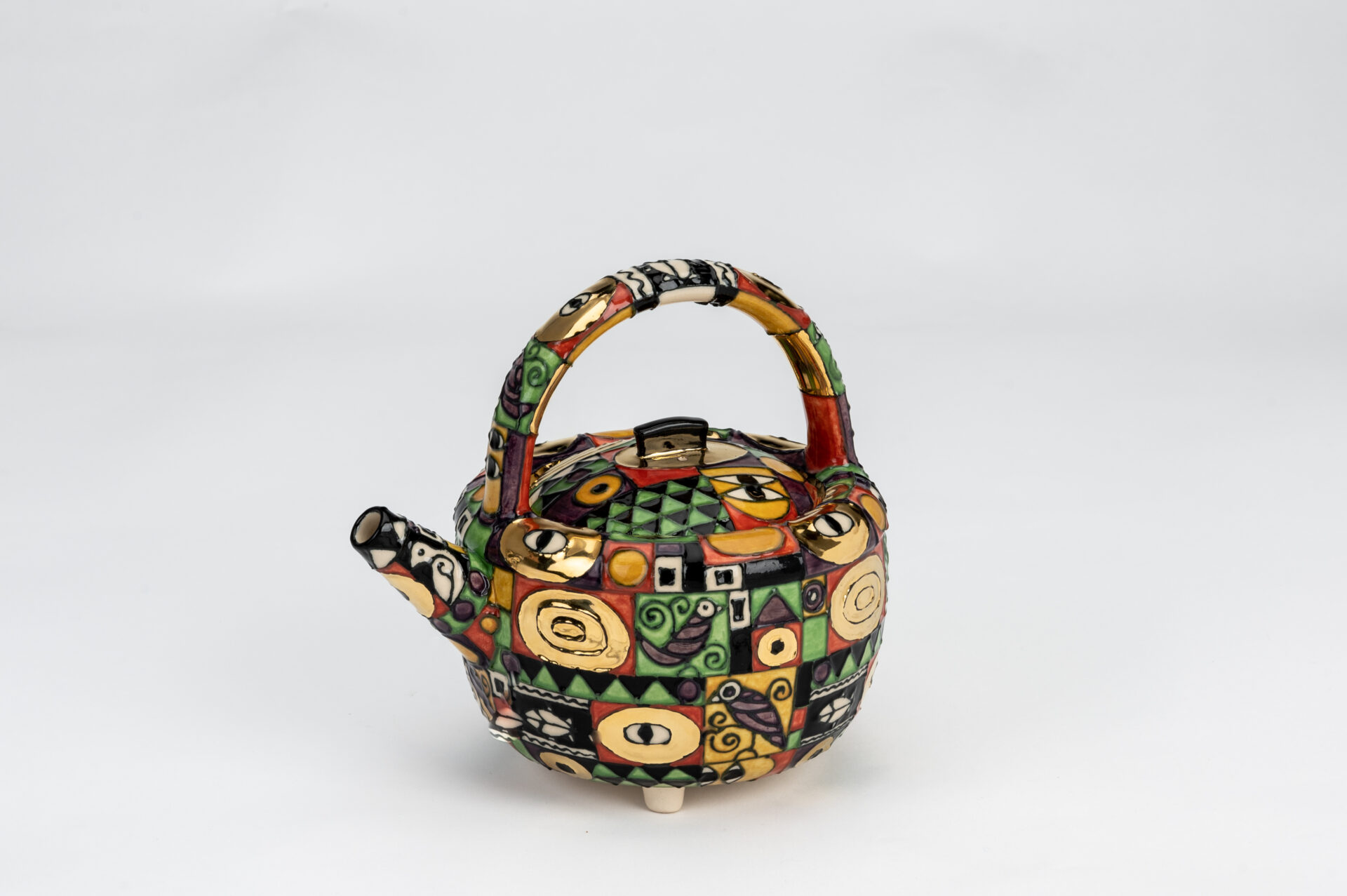
Hero, Titan and a teapot The vases, bowls, boxes and dishes are bought by collectors and lovers of decorative pottery not only across the UK but around the world. The company has made commissioned work for galleries, museums and organisations and for individuals, as well as special sales or events, such as the British Art Pottery and Design sale at Woolley & Wallis’s Salisbury showroom on Wednesday 29th November. For this important auction, Dennis Chinaworks has made three unique pieces, a tall square Art Nouveau style vase called Hero, a gloriously colourful Klimt-inspired Japanese teapot (below, right), and Titan, a lidded bowl with Buchan’s distinctive fine horizontal stripes.
Klimt Japanese teapot, designed by Sally Tuffin, thrown by Rory McLeod and painted by Theresa BlackmoreDennis Chinaworks blanks are all hand thrown on a wheel at the Somerset pottery
Other commissions have included work for the Andrew Lloyd Webber Collection (Royal Academy of Arts), the Pugin exhibition at the Victoria & Albert Museum, the Durer exhibition at the British Museum, the Cult of Beauty exhibition, also at the V&A, and the Duncan Grant exhibition at the Courtauld Gallery. Richard Dennis trained with the auctioneers Sotheby’s before establishing an antique glass and ceramics business, together with a publishing house producing specialist books for collectors. His business acumen has obviously been a key part of the success of the company, and he continues to run Richard Dennis Publications, publishing a wide range of art books, with a particular focus on historic and contemporary ceramics and pottery, including Moorcroft, Royal Doulton, Crown Derby, William de Morgan, Wedgewood, Midwinter and the Martin brothers, but also including jigsaws, cartoons, design, glass and furniture. Richard also published ‘Foale and Tuffin – The Sixties, A Decade in Fashion’, Iain R Webb’s portrait of his wife and her design partner, with contributions from leading figures of the period, including Jean Shrimpton, Terence Conran, Barbara Hulanicki and Manolo Blahnik and images from the top photographers of the day, including David Bailey and Helmut Newton.
Sally Tuffin with her son Buchan Dennis in front of the 17th century fireplace at Shepton House – image Courtenay Hitchcock BV Magazine
And finally … a bit of priceless advice from a fashion icon. If you worry about the cost of a clothing item you want to buy, Sally recalls the Foale and Tuffin motto: ‘Divide the price of the garment by the number of times you wear it.’
Artist Vanessa Thompson works in the shop area of the pottery – image Courtenay Hitchcock BV Magazine
This year the Dennis Chinaworks Open Day will be two days: Saturday 2nd and Sunday 3rd December, from 11am to 4pm.
Businesses in Sherborne’s old Yarn Mill face uncertain future after devastating floods, but the community rallies to support recovery efforts
The devastation left behind in the LS Flooring unit – Lee Steele estimates there’s £30,000 of damage
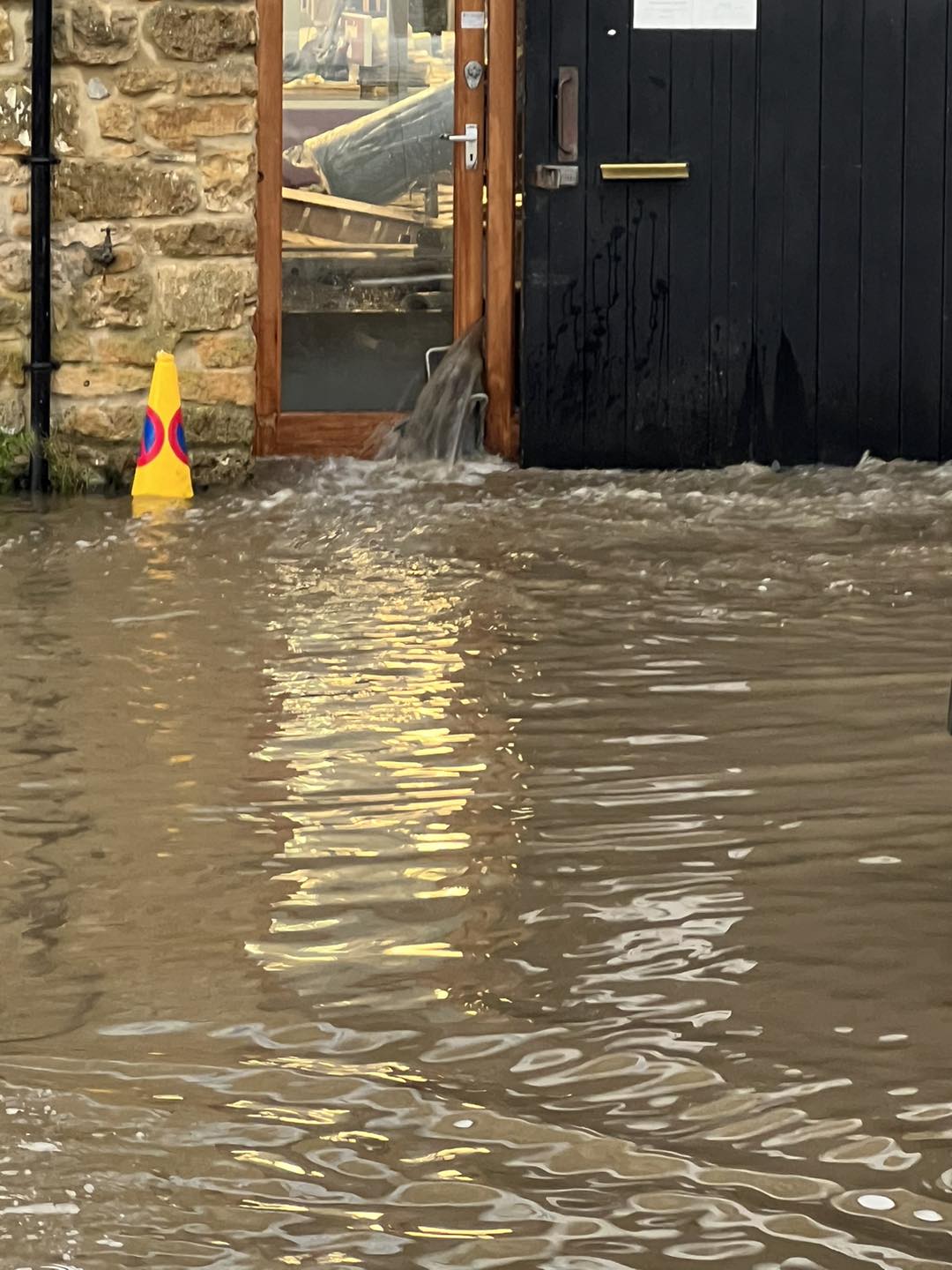
‘I think I have lost my business. How do you recover from something like this?’ When a torrent of water swept down Sherborne’s Ottery Lane on the A352, the impromptu river devastated to businesses in the Old Yarn Mill Business Centre. Lee Steele has run LS Flooring for 25 years and it was his unit which bore the brunt of the deluge on 28th October: ‘The back doors to my business just couldn’t hold up against the water that poured through the building. To start, I was ankle deep … before I knew it the doors blew off and I was up to my hips in floodwater. ‘All the carpet samples and equipment have been ruined and had to go to the tip. I’ve lost around £30,000 of stock. Because there has been a flood before, the insurance won’t pay out. We’ve had floods three times in the last 18 months – before that just once in the previous 25 years. To be honest, I don’t think it’s sunk in yet.’ Hannah Wilkins from Vineyards was also affected by the flooding. ‘We have never had flooding like this before. Although our back doors are three feet above the ground, passing cars caused bow waves, making the water higher and it just kept washing in. With all the roads above us and the concrete, this run off had nowhere to go. ‘The last time the drains had been cleared by the council was 12 months ago, so there was a lot of build up of silt and leaves. ‘Lee’s business became a river and water flowed from his into everyone else’s. The drains in the car park were unable to cope with the water. We were all firefighting at the exits and also the front of the premises. Although our wines were stored off the floor, our store-room was affected. And down there, the water made all the cardboard boxes crumble so it was unsafe. We had to get loads of pallets and make plinths to store everything. ‘But now, when it comes to insurance, we’re classed as a flood plain and everyone’s premiums will go up. The landlord is having to install flood defences. All this water has come from somewhere. When you put more concrete around, the water has nowhere else to drain. We know the builders made a reservoir at the top of the road, but we’ve been and looked at it – and it is empty.’
Vineyards had to work fast to raise their stock above the flood
Community action One of the positive things to come from all the devastation was the community response. Hannah was amazed at how people turned out to help. ‘We put an appeal on social media for help with the clean-up and around 30 people turned up! They cleaned the place, took stuff to the tip and helped build plinths. And people brought coffee and cakes and bacon sarnies. It was one of the positives to come from this. ’There are lots of businesses here that were affected, including Molecula, Mary Hossack Antiques and Parachute Bar.’ Sherborne town councillors turned up on Sunday morning.Town Clerk Steve Shield told the BV: ‘We became aware of the problem last Saturday and visited to assess the damage on Sunday. The town council assisted with the clear-up process and was able to negotiate with Dorset Council about removing the waste to the recycling centre. Six full loads, weighing two tons, were removed from the site. ‘On Monday we spoke to Dorset Council, and the highways team has been doing some clearance. The sheer amount of water was incredible – we had properties affected all over the town, including on Cheap Street, parts of Horsecastles and the top of the town. ’The public can help. If they see a blocked drain, report it to Dorset Council highways department, so that it receives attention. If we don’t know there’s a problem, it can’t be fixed.’
The pressure of the floodwater forced LS Flooring’s back door off its hinges and an impromptu river filled the unit – the water level can be seen inside the glass as it begins to pour out the front of the building
Owners of businesses in Old Yarn Mill continue to clear up and assess the damage. They are also looking ahead with trepidation at a season of winter storms. ‘We are very worried about Storm Ciaran this week,’ says Hannah. ‘The Chamber of Commerce and Town Council have been to see us and Highways have now been clearing the drains. However, when this has all settled, we need to sit down with all of these people and sort out what can be done to support us – particularly if this area is going to be regualrly flooded. ‘And the public can really help by supporting the local businesses at Yarn Mill. Come and buy a beer from Parachute (or wine from us). Keep Molecula and Mary Hossack in mind for antique shopping – maybe for Christmas gifts. If you need signwriting, check out South West Signs. ‘We also have an open weekend from 16th to 18th November, so do please come and support us all. We have been blow away by the community spirit we have encountered and we want turn this disaster into a positive.’
It’s November, and this month’s jobs are almost all about the final clear-up for winter – with a little planning ahead, says gardener Pete Harcom
It’s time to finish the winter preparations! There are still a few more jobs to get done in the garden this month – before the Christmas rush! It might be November, but we can still get some good dry days to finish up outside before the harshest of the winter weather.
Your jobs list Clear any faded and dying annual climbers such as sweet peas from their supports. When clearing up flower beds, do try to keep off the soil if it’s wet to avoid compacting it – use wooden boards to spread your weight. Clear up fallen leaves and put them in plastic bags or in a heap to rot down as leaf mould (which may take a year or so). This can then be used as a mulch. Cover and protect agapanthus plants with mulch or garden compost. Straw can also be used for protecting half-hardy plants. Alpines planted in the garden can have a gravel mulch, or, if they are in containers, they will benefit from covering with straw (or simply bring them into the cold greenhouse for the winter).
Watch the compost Keep on top of the compost heap by turning it regularly. Keep it moist and mixed well with shredded paper – if the heap gets heated well, nettles and some weeds can be composted. Do not compost any of the ‘difficult’ weeds such as bindweed, ground elder or dock.
Leave the heads It is a good idea to leave your plants with attractive seed heads – like rudbeckia, sea holly (eryngium), teasels, love-in-the-mist and any ornamental grasses – as these will provide valuable food for birds in the winter months (and can also be used for indoor flower arrangements!). Just cut down the old seed heads in spring, when the new growth appears.
Bulb it There is still time to plant your spring bulbs and bare rooted trees and shrubs before the colder weather. Don’t panic if you haven’t got round to it yet!
Autumn show-offs Japanese maples, or acers, are particularly spectacular at this time of year with their rich autumn colours. They can be planted in the ground or in pots this month and will benefit from sheltered semi-shady spots in the garden.
Sowing seeds This is a nice job to do at this time of year. Just a few of those I strongly suggest sowing this month are sweet peas, ajuga reptans (really good for ground cover), cornflowers, astrantias, corydalis solida and allium sphaerocephalon. Eryngium (sea holly) is particularly attractive and can be sown now in a cold greenhouse. The seeds can take a while to germinate, but they are worth it – and bees love them.
Lastly … After all that is done, take a break and browse through your seed and garden catalogues – you need to start making a plan for next year!
OK, they didn’t walk into a bar, but in this podcast episode, the farmer, the brewer and the coffin maker did chat to Terry and Jenny as they unearthed the intricacies of rural entrepreneurship and sustainable living. From the seasoned wisdom of a fifth-generation farmer to tales from a best-selling novelist, from artisanal craftsmanship of eco-friendly willow creations to the innovative journey of a homebrew hobbyist to a commercial success – these are the stories that weave the rich fabric of Dorset life. So pour yourself a mug of something warm, settle in, and let the authentic voices of Dorset accompany your day in this latest episode of our podcast – where every story is a thread in the tapestry of our county.
Tune into a candid conversation where soil meets soul, with fifth-generation local farmer James Cossins. Delve into the trials and triumphs of this year’s difficult harvest, and discover the world where the crunch of fresh produce and the rustle of golden fields meet business savvy and environmental stewardship. James opens up to Jenny about the delicate act of juggling profitability with passion for animal care and land conservation. It’s an enlightening insight that foodies, farmers, and eco-enthusiasts alike will not want to miss. rawstonfarmbutchery.co.uk
Brush shoulders with literary royalty as Victoria Hislop, the mind behind the international phenomenon The Island, reveals the muses and memories of her journey in literature as our Random 19 guest of the month. Jenny Devitt brings Victoria’s voice to life.
Crafting ales and reviving traditions with Eight Arches Raise a glass to the incredible story of Steve Farrell, the homebrew aficionado turned founder of the award-winning Eight Arches Brewery. From a 10-litre hobby to a 1,000-litre business, Steve tells Terry about his flavourful voyage bringing commercial brewing back to Wimborne. (featured image is Archie, the fostered cat who sleeps on the bar and is ‘even more grumpy than he looks!’) See the BV feature on Steve and Eight Arches Brewery here
Cath Abbott: Weaving Nature into Every Strand of Life Dicky Meadows is lovely to work with but Flanders Red is tricky, and the flecks in Harrisons Purple are lovely. Join Jenny as she weaves a conversation with Cath Abbott, the artisan who crafts life’s final journey with willow coffins and sails history with her viking burial ships. Listen as she shares how she grows her own willow, harvests local hazel and champions the revival of willow in everyday use through shopping baskets and trolleys at cradletogravewillowcoffins.co.uk.
Read the full October issue of the BV magazine here – jam-packed with incredible Dorset folks doing magnificent things. There’s also farming, equestrian, wildlife, food & drink… and if you like glorious photography you’ll be a fan. Did we mention it’s FREE?
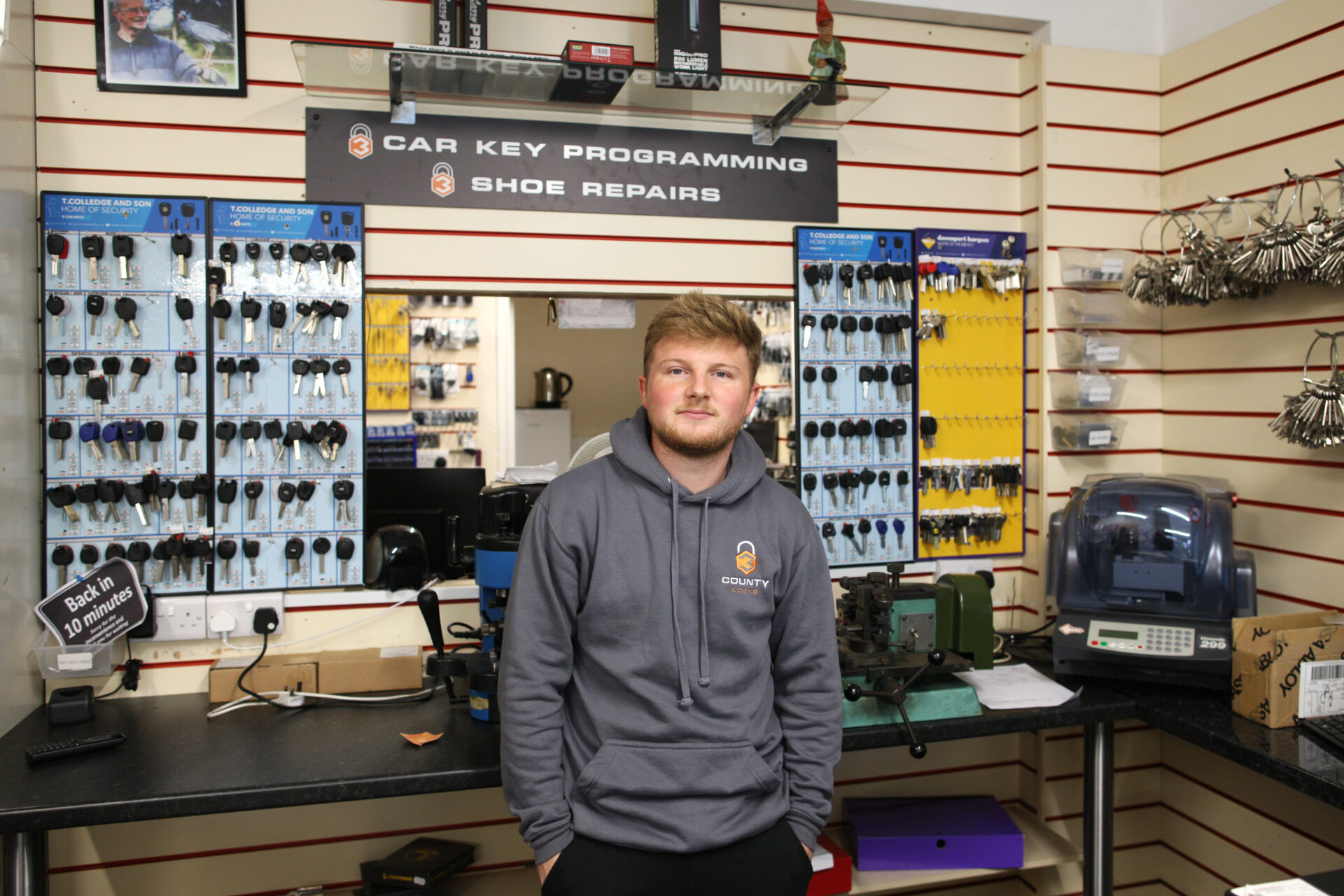
For nearly six decades, the familiar sight of Reynolds & Son stood as a steadfast presence on Shaftesbury’s bustling High Street, offering its reliable shoe repair services. The shop’s signage still sits over the entrance, and the interior continues to echo with shoe repairs expertly undertaken. However, Reynolds & Son has evolved over the past decade into 3 County Locksmiths, another cherished local family business. The craftsmanship and service remains intact as they continue to provide on-site shoe repair services. Yet, their primary focus, and the facet of their business that has seen remarkable growth, lies in the realm of locksmithing and precision key cutting. In a progressive move, 3 County Locksmiths recently made a substantial investment in more than £10,000 of state-of-the-art machinery, advanced tooling, and cutting-edge software. This significant upgrade equips them to program remote key fobs, vital with today’s keyless ignition systems. Some raise concerns about the security of these advanced capabilities. Manager Archie McCarthy is quick to assurecustomers, ‘Should someone break in and steal the machine, there’s no record of previously cut keys stored within it. So, there’s no possibility of anyone duplicating keys and helping themselves to your vehicle.’ 3 County Locksmiths offers a range of services, including engraving work, and they are well-versed in household locksmithing, including barrel, five-lever sash and dead locks. Some keys can prove challenging to replace, Archie McCarthy says: ‘There are some, particularly the very old ones. Occasionally, we encounter keys for locks that are so old that obtaining blanks is impossible. Then we have to look at lock replacement or, in certain instances, attempt to handcraft a custom key to meet the situation.’ With adaptability, craftsmanship and good old fashioned service, 3 County Locksmiths continue in the spirit of Reynolds & Sons, blending tradition with cutting edge modern solutions to be your first port of call for all your locksmithing needs.
Cllr Spencer Flower shares his journey from a Gillingham council estate to the leadership of Dorset Council as he chooses the discs he can’t live without
Spencer Flower
Born in Gillingham in his grandmother’s house to a divorced single mum, Spencer Flower was raised by his mum until he was five. ‘I have a distant memory that we lived in Yeovil for a period of time,’ he says. ‘I remember sitting watching the workmen coming out of Westlands Helicopters, waving at them as they were finishing work! Then mum remarried and we came back to Gillingham, where we lived in a council house until I was nine.’ Spencer Flower, the first leader of the new Dorset unitary council, has been shortlisted for Leader of the Year in the Cllr Awards run by the Local Government Information Unit. He says: ‘It’s an unexpected and huge honour to be shortlisted.’ When Spencer was nine, he moved from Gillingham to the coast. ‘Dad was a local postman, and he got a promotion, which meant we moved to Weymouth. They bought a three-story house which they turned into a guesthouse. Growing up I always knew what was for dinner; the menu was on a two week cycle because you couldn’t have the same meal twice during a fortnight’s holiday! ‘I completed an engineering apprenticeship, living with my parents until I was 21, when I realised I needed to leave town for better opportunities. ‘I moved to London and started as a skilled worker on the shop floor, swiftly transitioning to a junior draftsman role, despite the initial pay cut. Over the years, I progressed through various positions, ultimately becoming the contracts and commercial manager. When I expressed my desire for general management, I was encouraged to work in quality assurance, where I excelled at managing a team of 50. I then set up a new operation for the company, increasing my staff from 12 to 370 in five years. Eventually, I was headhunted and by chance the new role meant a return to Dorset. Village life led me to engaging in local politics, and I joined the parish council and then ran for district council on a last-minute decision in 1995, narrowly losing. I thought, “next time around, I’m really going to do it.” Four years later, I knocked on every door, delivered leaflets and leaflets – and ultimately won with a substantial majority. ‘I stayed as the district councillor, moving to Verwood in 2006, where I was councillor for 14 years until the district council was disbanded in 2019 to form the unitary. I was fortunate enough to win a seat on the new Dorset Council and was also leader of the Conservative group – so de facto I became the leader of the council. I’ve got local government in my blood now!
No apologist ‘The thing that motivates me is that I like to help people. I’m an outcome-driven person. Someone once told me I was a workaholic, but I’m not, I’m an achiever-holic. I like my results! My business experience has been incredibly useful – managing people, understanding balance sheets and how you can structure things – and I’ve learned from colleagues whom I respect and listen to. ‘When I became leader in May 2019, it was probably one of the shortest acceptance speeches on record – I simply said: “I’ll be an advocate for Dorset, not an apologist for government. I’ll work across this chamber, because we’re all elected to do the best we can for the people in our individual wards, and collectively as a council. That’s my ethos and I won’t budge from it.” ‘And I haven’t. I know that I’ve come in for the occasional bit of criticism, but I don’t believe in tribal politics, I don’t believe in rigidly following an ideology. I’m very much in favour of working as a team to get the best outcomes. And it works. I’ve only got a majority of four and yet our budgets were approved with a majority 49. That meant across the chamber, the vast majority supported the budget. It was a common sense budget, so why wouldn’t they?’ Spencer is known for noisily and repeatedly tackling government ministers on the issues where he feels Dorset is getting a rough deal on the national stage. ‘We do rely very heavily on our local taxpayer for more than we should. In Dorset, 84 pence in the pound of our income comes from our local taxpayers. The national average is 67p!
Normal service will resume ‘We get a very, very small amount of revenue support if you compare us with some of the boroughs in London – they get 20 or 30 million a year with much lower council tax. ‘So I’ve been lobbying really hard. I remember early on in my tenure being told: “Nobody in Westminster really knows about Dorset” ‘And I thought, “well, I’m going to change that!” – they know about Dorset now, I can assure you! ‘And I’ve told the cabinet, there will be no service cuts. Don’t come to me until you’ve looked at every avenue to reduce our costs. I’m proud of that – cutting services is an easy route, and I don’t want an easy route, I want the long-lasting route of delivering services at an affordable cost. I recognise that we put a huge burden on the people of Dorset – I’m trying to gradually reduce that burden. ‘The issue in Dorset is that our demographics are way out of line with the rest of the country. Our number of over-65s is hitting 30 per cent of our population, and we’ve got the highest number of over-84-year-olds in the country. ‘Of course, people want to come and live in Dorset, and we welcome that. But there’s no recognition from government – the burden of the additional adult social care costs is on us, on the local taxpayers. And it’s huge. It’s £142 million out of our £348 million total budget, and we don’t get any support from government to fund that. ‘But by reducing to one unitary council, I predicted we’d save 70 million quid over the first five years – we’re actually looking as though we’re going to save about £110m, and that’s all been rolled back into service delivery, which is the key reason we haven’t had to cut services. We’ve managed to self-fund by our own efforts. ‘That’s buying time but it doesn’t stop me saying to government, “You’re not funding the shires!” It’s not just Dorset. All the shires are under-funded. ‘There’s a formula that’s used nationally for determining how the government distributes “the pot” and one thing they don’t factor in is the age of the demographic. The other one is the sheer cost of delivering services in rural areas. ‘I think there’s a growing recognition in government now – they will come up with a fairer funding formula at some point. But that doesn’t help me now! I have regular meetings with our MPs, they know that I’m on the warpath. I am always very polite. Assertive, but very polite. And I won’t take no for an answer. I don’t think it’s my job to accept second best for the people of Dorset.
A life in music And so to Spencer’s eight music choices, in no particular order, along with how and why they have stuck in his life:
Truly Lionel Richie I’m sort of cheating here, and I’m going to bundle three together; Have I told you lately that I love you? Rod Stewart and Everglow Coldplay These three songs together are for my late daughter. We lost Tracy seven years ago – she had undiagnosed stomach cancer. I lost her at the age of 48. Which is no age. I still think about her every day. It’s my way of coping with my loss. Talking about it helps me … bottling it up doesn’t. Tracy and I had a really really good dad-daughter relationship. I mean, the phone would go and I’d answer with “OK, what’s up? Do you want advice or money?” It was usually one or the other! But we always had a close relationship, all the way through. These three aren’t songs that we shared particular memories of – after she died, my wife and I looked through her music, to see what she played, what she loved. We had to pick some songs for the funeral, and we picked these three. I’ve just … I’ve just always kept those in my mind. It’s that little link to when she was alive, you know? So that’s why I picked those.
We Are The Champions Queen I’ve told my wife, I want this played at my funeral! Because it’s me. I’m a winner. I’m out to win. I’m not ruthless, but I do always try and win. I want to put effort into something and be walking away saying: “Done that. Achieved. Let’s move on to the next thing.” And We Are The Champions epitomises that mindset. I played football until I was 40, and at a company football match someone commented “I notice your tackling was an uncompromising as your management style!” I’m not quite sure that was true. But I do take the point. I don’t suffer fools, but I do it by persuasion, not by confrontation, I simply try to persuade people to see a different way of getting something done.
It’s Now or Never Elvis Presley I’m an Elvis fan – I always have been. I’m not quite sure why I picked this one particularly – probably my personality coming out here again, isn’t it? It’s now or never – me, the achiever-holic, I’m going to make this happen. So it’s sort of a bit of that, I guess, which attracted me to this particular song. I do a bit of karaoke, occasionally, and I do Elvis, as well as Sinatra and Tom Jones!
My Way Frank Sinatra You can see where I’m coming from now … My wife persuaded me that I had to put My Way in! The thing is, I’m always willing to listen to other people’s views and move position if it’s for a better outcome. I’m a great fan of ‘triangulating’ – I test ideas on two or three people, because I think you then come out with a better decision. I’ve always told my managers that we are never too big to ask the right question. If you’re not sure, there’s no disgrace in asking the question, because if you end up with a better decision, no one’s going to remember you asked the question, they’ll remember you found the solution. It’s a bit of a convoluted answer, but that’s why I chose it!
It’s Not Unusual Tom Jones It was a tough choice between Delilah and this. I just love them both – no big reason or story here. We did go and see Tom Jones last year – he’s getting a bit creaky now, but he’s still got a voice. And I do respect Tom, because he has a great voice, and a good range of songs. So I just like Tom Jones – and this one because it’s a good one!
Hotel California The Eagles We’ve seen the Eagles in concert four times. All over the country – my wife and I think they’re absolutely amazing. We saw them before Glenn Frey died, so the original line up, and then since with his son on the stage. And I think we’ve seen a couple of tribute acts too! They are a feelgood group, sort of country with a twist. The last time we saw them was at Wembley Stadium. Wow, it was packed – and my wife nabbed us (with my credit card, mind) seats that were six rows back from the stage. It was fabulous. Six rows back from the stage! Sheryl Crow was the warm up act, and then the drummer came on and said ‘Evening everybody! We’re going to play for two and a half hours. Because we can!’ And they did, too! It was absolutely brilliant. My eldest stepson says he could always tell he’s walking into our house, because you can hear the Eagles being played in the kitchen. We just say ‘Alexa, Eagles!’ So this one’s the best reason really – I picked it because it’s my favourite group!
The book – Success Through a Positive Mental Attitude by Napoleon Hill It doesn’t sound like a fun read, does it? It’s interesting – when I took on the role as a Quality Assurance Manager it was a bit of a challenge, a poisoned chalice. I didn’t really mind because it gave me a chance to show whether I could manage a crisis. One of my inspectors came in one day, put this book on my desk and said: “you might find it useful”. And I did. I read it twice (I never read a book twice). And it has had the most influence on my attitude in life that I could have ever imagined. If you’re negative, you use a lot of energy and you’ve achieved nothing. Everything I do is based on having a positive outcome. Even in a crisis, I will always look for the positives, then build on them. I just never hold my head in my hands – because that achieves nothing does it? If you spend all your time grumping, looking down a hole, talking about going to hell in a handcart then you might as well not bother. It’s having that ability to think positively about how you’re going to achieve your objectives. So that’s my book.
Luxury item – a chilled glass of dry white wine When I go on holiday in a very warm climate, it’s the only time I ever drink really cold, dry wine. So if I’m on holiday on my lovely Dorset island, I’m relaxing. It’s going to presume it’s a warm, dry, sunny stay, so a nice glass of cold dry white wine would go down nicely.
A giant wave is coming and you only have time to grab one disc – which will you save? Lionel Richie’s Truly, because it leads me to my daughter.