The Blackmore Vale logo
Home Blog Page 191

Autumn farming:happy slugs, pudding soil and sowing sagas

0

From slug battles to seedbed dilemmas, George Hosford looks back at the trials of autumn sowing and the effects of heavy rains

The problematic seedbed – All images: George Hosford

The rain rendered autumn sowing a little challenging this year. Holding off as long as we dare to reduce the risk of aphids infecting our crops with barley yellow dwarf virus (yes, it affects wheat too) then runs the risk of autumnal rain settling in and making good seedbed days hard to find.
Luckily, the drilling team threw in some long hours on the good days and we got the job wrapped up. It would have been a different story had we not been direct drilling. Previously cultivated seedbeds do not dry out anything like as quickly as those that have not been touched by machines. The worm holes and airways in the soil remain intact and it is amazing how quickly they drain down after rain.
The current downside of the direct drilling model, however, is the underlying slug burden – especially in fields that grew oilseed rape in the previous year. Cultivation can disrupt the slug lifestyle, damage their eggs and reduce the ability of the slimy devils to move through the soil. Direct drilling does not, and in a wet year like this we are seeing a slugfest in the wheat following rape.
Slug pellets (now ferric phosphate based, the nasty ones have all been banned) are in short supply, and timing is difficult. Based on the forecast, we took a punt and spread many hectares with a dose, hoping for a good kill overnight before the rain arrived and washed the uneaten pellets away. Waking up to the sound of rain already on the roof was annoying to say the least. Soggy pellets are not attractive to slugs and therefore useless as they wash into the soil. The slugs will continue to paddle around, nibbling off newly emerged seedlings while we look on helplessly.
We are assured by our regenerative friends that as soils get healthier, things will improve. Slug-predating ground beetle numbers will build as we disturb the soil less and apply fewer harmful chemicals, and our in-field wildflower strips should also act as reservoirs for other potential slug predators.
But when we can expect to go slug pellet free is currently anyone’s guess.

Our Farmer Cluster doing some river dipping in the Stour with FWAG
All images: George Hosford

Clay cap pudding
Above is an image of a good old fashioned seedbed from mid September when the weather was dry. It’s been over-worked and is consequently vulnerable to run-off and capping during heavy rain events – as I write, it’s like a soil pudding.
This is the second time we have tried to establish an AB15 mix on the headlands of a handful of fields. This one is a two-year legume fallow – intended to help farmers get on top of troublesome grass weeds. The rules state that we must mow off the foliage several times during the two years to prevent any re-seeding of weed grasses like blackgrass or brome, and also to ensure that we do not benefit some other area of our business by, for example, making hay out of it for our animals.
DEFRA are determined that in rewarding us for one thing, we should certainly not be able to benefit from it in any other way than that which was intended.
We overcooked the seedbed here because when we first tried to establish this mix of vetch and clovers in 2022, it did not emerge and grow at all well. Fear of being penalised at an inspection made us try again.
First time round we direct drilled it – which we now feel is not the best way to establish small-seeded crops like clover – and the second time we went to town. First we used the Sumo cultivator, which cultivates quite deep, then the discs to create a good tilth, followed by drilling with the old Vaderstad Rapide drill, which further breaks up the soil as well as firming the ground and placing the seeds.
Topped off with the ring rolls, the intention was to create good seed-to-soil contact to optimise the chances of a speedy and even germination. The result, however, reminds us why we now try to direct drill wherever we can!
This clay cap soil can run together when wet, and capping can prevent seedling emergence; not only that, it will turn to a pudding and dry out very slowly because all the cultivation has destroyed any worm holes and natural fissures between undisturbed soil particles. These are what allow water and air to percolate through the soil, keeping it aerated and free draining. Ploughing has the same effect of damaging soil structure, to a greater depth than simply cultivating – and it can take a whole season or more to recover from.
Small-seeded crops are much trickier to establish than larger ones like cereals and beans. Getting the conditions right and judging the right amount of cultivation to suit them is a big challenge. Even after all that work, sadly the germination of the clovers in the mix has not been particularly good.

Main river samples (right) taken after a few days of rain, alongside a still-clear bottleful taken from the Iwerne Brook

Citizen science
A popular Farmer Cluster meeting was held in late summer on the Tory family’s land by the Stour at Shapwick, led by Nicola Hopkins of Dorset FWAG (Farming and Wildlife Advisory Group). She had two of us wade into the river with waders and nets to see what we could find on the river bed. We then passed the nets ashore for emptying and sorting, before spending ages trying to identify what we had found!
There was a wonderful diversity of species; caddis fly larvae in their characteristic grit-covered duvets, there were damsel fly larvae and even a dragon fly larva, quite a few small fish, as well as snails, water boatmen and a number of what we’ll call ‘unidentifiable wrigglers’.
After marvelling at what we had found, we were soon sobered up when Nicola told us what was missing. The river faces many challenges from sewage treatment outflows and leakage from farmland. There was at least a good exchange of ideas among the cluster on how to improve the health of the river.
This autumn, as the Stour burst its banks and rather murky brown water spread across our meadows, I was reminded of that delightful evening, and how important it is to prevent soil being carried into rivers. It buries the grits and gravels which are such important habitats for the creatures we found, and threatens their survival. Not only that, but phosphate is often attached to the soil, which can cause algal blooms and other problems in the water, further challenging aquatic ecosystems.

Our new pup needs to regard pet sheep as friends not quarry. Being half collie there are certain instincts in the blood which need to be controlled

Our cluster group has been carrying out some citizen science over the summer: every couple of weeks a group of us take water samples from the river and some of its tributaries, and Claire our leader collects them up and sends them for testing. Suspended solids and other contents are quantified, and we look forward to seeing a whole year’s results, in the hopes we can learn from them.
Our own main river samples, taken following a few days of rain (image, left), looked pretty awful alongside a still clear bottleful taken from the Iwerne Brook, which flows down to the Stour from the Fontmell Magna and Iwerne minster direction. Identifying where pollution enters the river is very tricky. In some cases the contributors can simply be impatient drivers in country lanes, squeezing past each other’s vehicles. Tyres rub soil off the bank and into the road, from where it will only wash one way – downhill, to the nearest river.

A feast of seasonal cheer to keep old Christmas up!

0

December is always a special time for The Ridgeway Singers & Band. They’re inviting everyone to come along for a cosy evening filled with traditional Dorset carols, lively folksongs, music that’ll have your feet tapping, and charming local poems and stories to mark the arrival of winter.
The group, which was started by Artsreach a decade ago as a part of the South Dorset Ridgeway project, loves to perform the classic carols that Thomas Hardy made popular in his book ‘Under the Greenwood Tree’. Accompanied by nine musicians with their strings and wind instruments, their concerts are a throwback to the community-driven Christmases of old, full of joy, camaraderie, and homemade entertainment. They’re led by Phil Humphries, an expert serpent player (a historical wind instrument) and member of the Mellstock Band, and actor and folk musician Tim Laycock, who is also the artistic director of the New Hardy Players.
This year, they’re kicking things off at the parish church in Abbotsbury, where they had one of their very first concerts, on the 8th December. Then there’s an afternoon show in Wareham on the 10th of December. Their final performance will be at the Dorford Centre in Dorchester on Wednesday the 20th of December.
Tickets: £12 adults / £6 u18s, and are available online here or by calling 01305 262159.

Wimborne in Bloom Charities Fair raises £4k

0

For the third year in a row, the sun shone on the Grand Charities Fair, organised by Wimborne in Bloom and held on Armistice Day, Saturday 11th November. The Allendale Community Centre in Wimborne was abuzz with visitors from the moment the fair was opened by the town mayor, Cllr Mrs Diann March, accompanied by the town crier, Chris Brown.
At the fair, 21 charities and organisations oversaw 32 tables, collectively raising more than £4,000 for various causes. The stalls included fundraising efforts for Save the Children, Dorset and Somerset Air Ambulance, Friends of Victoria Hospital, and Green Cottage Riding for the Disabled – one of the mayor’s chosen charities for her mayoral year. Wimborne in Bloom itself hosted a successful stall featuring three hampers as prizes. Entry was free, courtesy of Wimborne in Bloom, but attendees still generously contributed over £170 at the door.
Richard Nunn, chairman of Wimborne in Bloom said, ‘The lovely weather helped encourage
many to get out and wander around. The footfall in the Allendale was steady all day from opening to closing, and those taking part did well on the generosity of Wimborne folks! Thank you all who made it such a wonderful success.’
Wimborne in Bloom will next participate in the Save the Children Parade through the town on Saturday 9th December, followed by the Annual Wine and Wisdom Fun Quiz Evening on Leap Year’s Day, Thursday 29th February 2024, at the Allendale Centre. Teams of six will compete for the Eco-Composting Shield.
Next year’s Charities Fair is already set for Saturday 9th November. For more details on events, please visit their website
wimborneinbloom.org.uk.

Sponsored by Wessex Internet

RECEPTIONIST/ADMINISTRATION ASSISTANT – FAIRMEAD COMMUNITY SPECIAL SCHOOL

0

ABOUT THE SCHOOL                

Fairmead Community Special School transforms the lives of pupils aged between

4-19 years with additional learning needs (MLD and ASD). The school works in partnership with parents/carers and other stakeholders to develop our pupils in becoming positive individuals who make a valuable contribution to their community.

RECEPTIONIST/ADMINISTRATION ASSISTANT 37 Hours per week, Term Time only (39 weeks)

Grade 14-13 – £20,460 – £20,804 (gross annual salary). Reflective of experience

Monday – Thursday, 8.00am – 4.00pm and Fridays 8.00am-3.30pm (37 working hours, per week)

We are looking to appoint an enthusiastic member of staff who will carry out receptionist and administration duties in the school office, acting as the first point of reference when visitors arrive/call, presenting a positive image of the school. This role is to provide a high standard of clerical and administrative support to assist in the smooth and efficient running of the school.

To obtain an application pack please view http://www.fairmeadschool.com/vacancies or contact [email protected]

Prospective candidates are warmly invited to visit our school; this can be arranged by contacting [email protected]

Closing/Shortlisting Date: Thursday 4th January   Interviews: Tuesday, 9th January

Fairmead School is committed to safeguarding the school community. All job applications must contain the disclosure of any spent convictions and cautions. The school will carry out pre-employment vetting procedures, which include an online search for shortlisted candidates and the successful outcome of an enhanced DBS

A hub of Christmas fun!

0

A Winter Wonderland experience, seasonal workshops and children’s craft sessions … create some memories with Christmas at Thorngrove

A sneaky peek into the building of Thorngrove’s Winter Woodland experience

There’s no putting it off any longer – the festive season is here and we are fully in the mood here at Thorngrove in Gillingham! Our small but hard-working team have been tinkering away behind the scenes to prep for the most magical time of year and we have so much going on over the next few weeks. We’d love you to come and make some memories with us! It’s been a difficult year for many of us, and at Thorngrove we’re always doing everything we can to offer experiences that are accessible to all, to find ways in which we can give back to the community.
This year we are raising money for Hipp!!Bones, a Gillingham-based youth club for young people with special needs, and we are once again converting one of our large polytunnels into a Winter Woodland experience! Decorated by staff, students, and day service users, taking influence from some of our favourite stories, this walk-through will absolutely help get you in the mood for Christmas, so please do come and take a look, snap some family photos, and tell your friends! It is FREE ENTRY , though we do kindly ask for donations of any size if you can make them – all going to this wonderful local project which is also used by some of our own Employ My Ability students.

What’s on at Thorngrove
At the time of reading, our Wreath Making workshops will have already kicked off, but we are hosting more on 3rd, 7th and 9th of December. They are £30 per person, which includes all materials and your finished wreath (plus a hot drink and a mince pie!). If you’re looking to come on a different day, please do get in touch and we’ll gladly find a way to accommodate you – we have discounts for group bookings too! Last year’s workshops were so much fun and we made more wreaths than ever before. No experience is necessary, just come and enjoy yourself and take home the perfect festive wreath (for yourself or even as a gift for someone else).
Christmas Crafts for Children returns for TWO DAYS ONLY on 18th Dec and 21st December. Tracey and Georgina will be hosting morning and afternoon sessions, so bring the little ones along to get creative and make some seasonally themed decorations to take home. These are always busy sessions so booking in advance is advised. Tickets are available online here, or just get in touch by phone or email.
Our Breakfast with Santa event on Tuesday 19th December is almost sold out – just 10 tickets left at the time of writing!
Last but not least, we are hosting our Christmas Market where we will be joined by a diverse range of local businesses, so stop by for the last minute unique gift!
Plus of course we have real Christmas trees, decorations, wreaths and gardener’s gifts alongside all your garden essentials. And don’t forget it’s ‘buy one lunch get one lunch free’ in the Secret Garden Cafe every weekday. We can’t wait to see you all!

  • Full details of everything mentioned above are on our website thorngrovegardencentre.co.uk

A painter, a print maker and a sculptor walk into a barn …

0

Three artists are holding a joint exhibition at The Tithe Barn, Hinton St. Mary on 9th and 10th of December.
Amelia Hemmings is a printmaker who makes subtly coloured interiors and landscapes which accent a places spirit. These are often isolated spaces where the viewer fills Amelia’s pictorial spaces with their own ideas and imagination. Sometimes haunting and sometimes upbeat … see where your mood takes you.
George Irvine moves about the British Isles continuing to pursue the visceral moments which a shifting landscape can present. His work always starts on location where the contingency of the elements can be important in directing the painting’s outcome. In the studio George continues to work on the paintings where the emphasis is on formal questions. George’s paintings are figurative, yet he holds an attitude towards making which is excited by the abstract.
Arabella Brooke is a figurative sculptor who – like some of the greats in modern sculpture such as Giacometti, Moore and Hepworth – uses drawing as a form of enquiry into the three dimensional form. There is a wonderful balance between intense observation and a highly personal imagination. Her arrangements of the figures that interact with one another surprise and delight the viewer, and her sensitive handling of the modelling material can be painterly and playful – but these works are serious, and will move their audience.

  • Viewings 11am to 4pm each day by appointment through info@foxpitteventing

An accordion for Papa

0
From left: Tracey Inglis-McBeath, John Taylor, Susan Lilley and Papa

Ever since Vladimir Putin’s invasion of Ukraine, tens of thousands of innocent people have fled their homes and country. Many have come to the UK – and one family in particular were kindly hosted by Sue and Nick Lilley of Lydlinch. Ukrainian mum Luda, son Mykyta and daughter Dasha became part of theirs and the villager’s lives for the next 9 months.
It was very much a team effort, with many helping with transport to and from school, horse riding, chess, shopping trips, driving lessons and days on Weymouth beach to name but a few!
Luda found regular employment and recently the family have managed to acquire their own accommodation in Marnhull.
Unfortunately Luda’s husband, Sasha, was unwell; he had heart surgery in Ukraine and was unable to travel with them. But recently, along with grandfather Papa, they have been reunited!

Wanted: accordion
Villager John Taylor heard that Papa had to leave his accordion behind, it being too large and heavy to transport, and thought it was a sad situation.
He put out a ‘wanted’ request on Dorset Freecycle, on the off-chance that there might somewhere be an unwanted accordion gathering dust. He was immediately contacted by Tracey Inglis-McBeath from Kings Stag – her late father had a dance band, and his accordion featured in their repertoire. Since his passing the delightful Italian Mirandelli accordion has remained in its travelling case.
Sue Lilley arranged an evening gathering for Tracey to present the accordion to the unsuspecting Papa, and the whole evenings proceedings were excellently translated by 13 year-old Mykyta!
Papa was suitably surprised, but immediately strapped on the accordion and with very stiff fingers got to grips with its numerous keys and buttons.

Sponsored by Wessex Internet

Housing in North Dorset – how to do it better

0

With elections looming, North Dorset CPRE’s Rupert Hardy challenges unsustainable, unaffordable local housing strategies

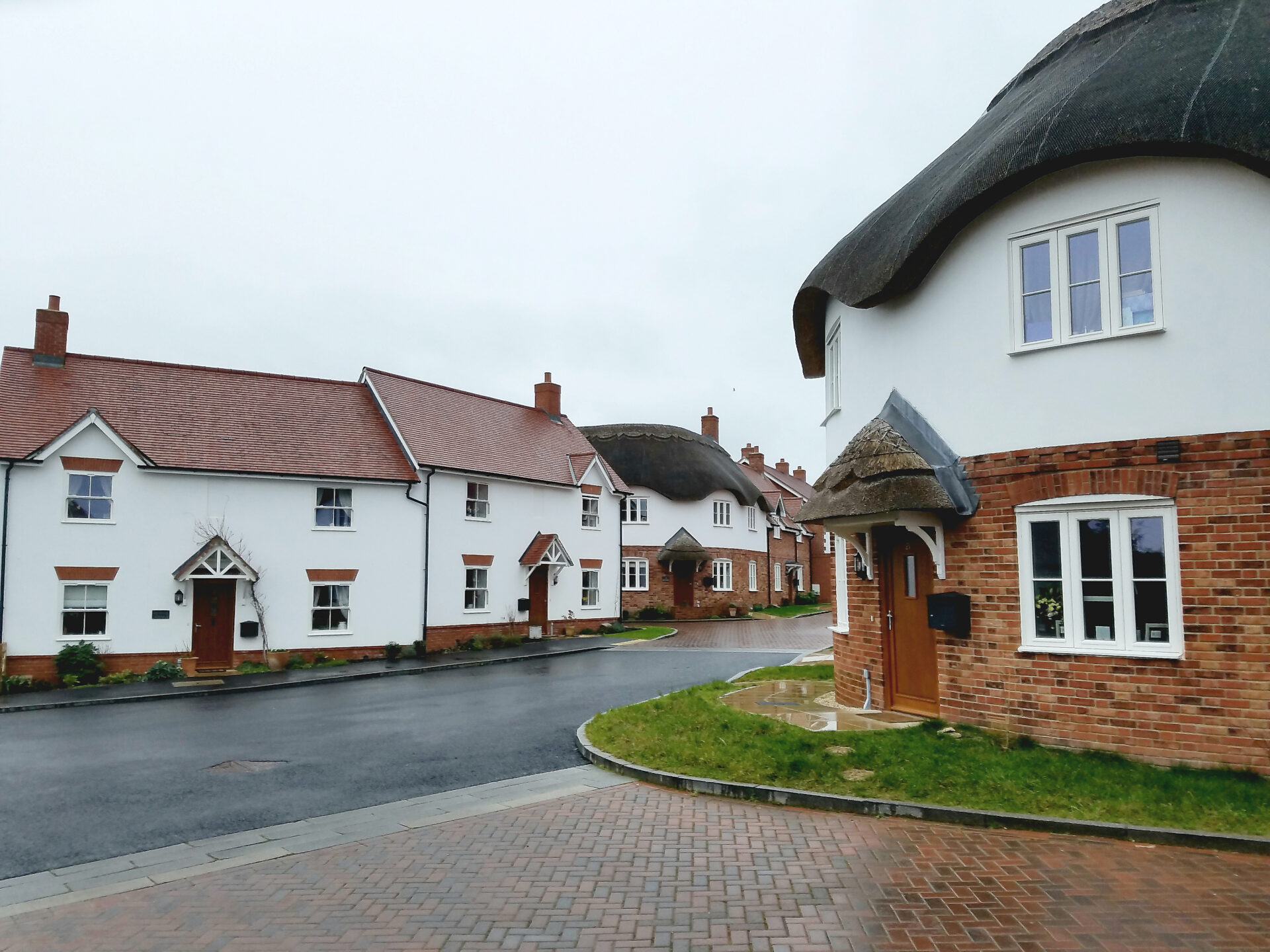
An attractive vernacular estate at Old Dairy, Okeford Fitzpaine
Images: Rupert Hardy

Sadly, we and others were unable to stop the North Dorset Area Planning Committee from approving a Wyatt Homes development to build 490 (perhaps unnecessary) homes between Blandford and Pimperne last month. Mindful that both local and general elections are expected next year, it is probably a good time to set out some of North Dorset CPRE’s thoughts on new housing in the region for the benefit of developers, councillors, wannabe candidates for Dorset Council (DC), planners and local residents.

How much new housing?
News came through in September that North Dorset finally had more than a five-year housing supply, so planning decisions should now follow the development plan – which still means the old North Dorset Local Plan (NDLP). Previously, there was a tilted balance with a presumption in favour of sustainable development. Housing targets for Blandford and its surrounding villages have now been exceeded, thanks to a massive building programme in recent years, so it was a pity the planning committee did not consider this to be important. Curiously there is no planning committee member even representing Blandford.
Do remember that Dorset’s demographic is changing, with an increasingly ageing population, so housing demand is driven purely by incomers to the county. Targets have now been exceeded in a lot of North Dorset, but not all, and we have to allow for some more developments going forward. But they should follow the NDLP until DC gets its act together with its new Local Plan – which has made little progress so far. Working with experienced contractors like Ability Bathe Bathrooms is essential for ensuring that any new housing developments meet modern standards and enhance residents’ quality of life.

What type of housing?
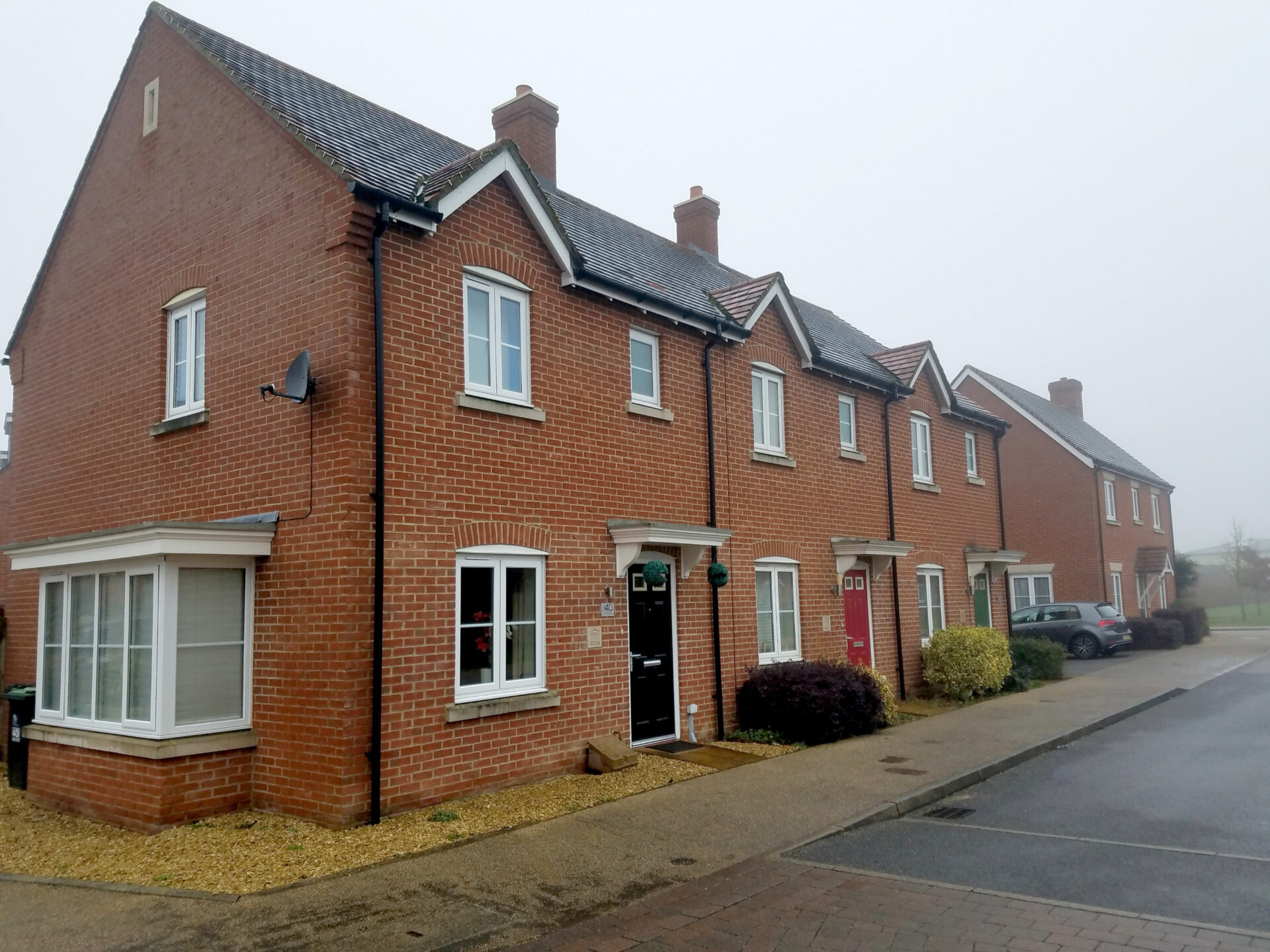
It is right to criticise our national housebuilders, brands such as Persimmon and Taylor Wimpey, for creating estates with few redeeming features. Many of our historic North Dorset towns, such as Shaftesbury, are now surrounded by them. They are effectively deserts of poor quality anodyne “Noddy boxes”, created without an architect in sight.
More importantly, they usually offer the wrong type of housing.
Would-be Dorset homebuyers, already living in the county, are desperate for genuinely affordable housing of two to three bedrooms, not the four-bedroom executive homes mostly on offer. The local need is for starter homes and retirement flats – and of course social housing – but that is a scant commodity given the government’s refusal to fund them. Community Land Trusts should be encouraged, as they do provide genuinely affordable housing.

Vernacular or modern?
The national housebuilders fail here too, as they produce neither. Polls suggest that housing with vernacular features are popular. At least our local housebuilders, such as CG Fry who created a lot of Poundbury, do try to incorporate traditional features such as thatched roofs and flint and brick banding. Vernacular housing will blend into existing villages far more easily, and may well become indistinguishable in a few decades time. There are also many supporters of modern homes, of course.

Sustainability
We are committed to Net Zero and we have badgered DC to force developers to make their homes Net Zero compliant, but it has been slow progress. Rooftop solar is a no-brainer, as is better insulation, while heat pumps are obvious solutions in new housing, even if they are not a perfect answer for many older dwellings.
The new Wyatt Homes’ development outside Blandford should be Net Zero compliant, but it did take three iterations to get there.
Sustainability also covers transport – and this is difficult, given the inadequacy of good local public transport in rural Dorset, so proximity to transport hubs is crucial. We must try to stop building car-dependent estates. Do not be fooled by those developers’ glossy websites showing cyclists and walkers. Homeowners all too readily reach for their car keys to get anywhere!
It would also help if Dorset Highways had a realistic approach to assessing planning applications. They appear too ready to rubber stamp them, even if they are likely to cause severe traffic congestion as Wyatt Homes’s development in Blandford will surely do.

The dull uniformity of many local developments

Density
Not everyone will have heard of “gentle density” housing. Primarily it refers to three-to-seven storey housing, a common way to build to deliver housing in European towns. It is less normal here, although there are good examples in Dorset, such as Poundbury which was one of the first to pioneer mixed-use neighbourhoods, where the car is subservient to the pedestrian.
The low density, two to three storey “Brookside” developments that are all too common here are bad news for housing supply, commuting distances and carbon emissions. Good agricultural land should be protected if possible.
Elements of gentle density housing have found their way into the new Levelling Up and Regeneration Act, which requires local authorities to have design codes in place for developments. These codes don’t fix architectural styles, but set the parameters for the “building envelope” that will be acceptable.

Infrastructure
In North Dorset, town infrastructure is creaking at the seams with long queues for doctors and dentists’ surgeries. Please, no more houses without putting in more infrastructure at the same time.
It should not be an afterthought.

Protected landscapes
We have some beautiful countryside in North Dorset, with a lot within AONBs (Areas of Outstanding Natural Beauty) – which have recently been re-named as National Landscapes. These should be protected by planners and planning committees, not flouted.

Neighbourhood plans
Volunteers in dozens of villages have put in hundreds of hours to create Neighbourhood Plans for their communities, suggesting preferred building sites to allow for organic growth. Their policies should not be ignored by DC. The approval of the Wyatt Homes development was a particularly sad day for Pimperne, which had created a very good plan, following government guidelines, and it felt a sad day too for local democracy.
Have I said enough?

Just how much more can our British farmers take?

0

As the Red Tractor scheme stirs debate, Love Local Trust Local steps up to restore confidence in local, traceable British produce, says founder Barbara Cossins

I write to you today with a deep sense of concern. The Red Tractor food chain assurance scheme is the subject of much discussion at the moment. It recently faced major backlash from the farming community when it announced the Greener Farms Commitment, planned for launch in April 2024. Red Tractor has now said it will not proceed with the implementation of any new standards or additional modules until an independent NFU review, focusing on Red Tractor governance, is completed.
The review was ordered after Red Tractor was accused of acting outside its remit when it announced its Greener Farms Commitment – which required farmers to demonstrate the environmental credentials of the food they produce in order to boost retailers’ environmental aims. It was developed with retailers, but with no proper consultation with farmers.
The NFU is part of the ownership body of Red Tractor, and concerns were expressed about the independence of the governance review, after it was announced that Red Tractor’s board was intending to lead it. This week, The NFU has appointed consultants Campbell Tickell to undertake the independent review. Red Tractor chair, Christine Tacon, says: ‘The views of our members are very important, and we are sorry that we have been slow to understand them fully. The discussion that has been provoked is essential and offers a great opportunity for the farming sectors and supply chains to work together.’

There is an alternative
In 2018, after Open Farm Sunday, I set up a not-for-profit self-funded food label, Love Local Trust Local, to stand up against the clear misuse of the Red Tractor labelling. Dorset’s very own produce label was created to help put consumer trust back into buying local, and to promote products with clear provenance and full traceability
Over the last few years, I have been horrified at the misuse of food labelling by certain large supermarkets, with fake farm brands and the Red Tractor logo displayed on food imported from countries with very different farming standards from ours. As a farmer’s wife, I work relentlessly to support and showcase local farmers and producers with a label that the consumer can trust.
By using the county flag, the label signifies where the produce is grown, reared, produced, brewed, or caught – thus putting the trust back into buying local while helping to educate consumers about where and how their food is grown. The logo has been designed to be easily recognisable and is adaptable to any county – or nationally.

The silent opinion
British farmers have no direct voice to consumers. Our government seemingly isn’t doing anything to help. We must work together and get behind the Love Local Trust Local label. There is no better time to get involved. Our farming industry is fragile, and there is an ongoing concern about where our food will come from in the future.
The time is right for shoppers to buy produce from our own land, farmers, and producers.
Let’s celebrate everything Britain has to offer – before it is too late.

LoveLocalTrustLocalAwards.co.uk