Home Blog Page 9

John Morton – the face in the roof that shaped Tudor England

0

CPRE’s Rupert Hardy introduces the Dorset man who was Archbishop of Canterbury, Henry VII’s Lord Chancellor, and the deviser of Morton’s Fork
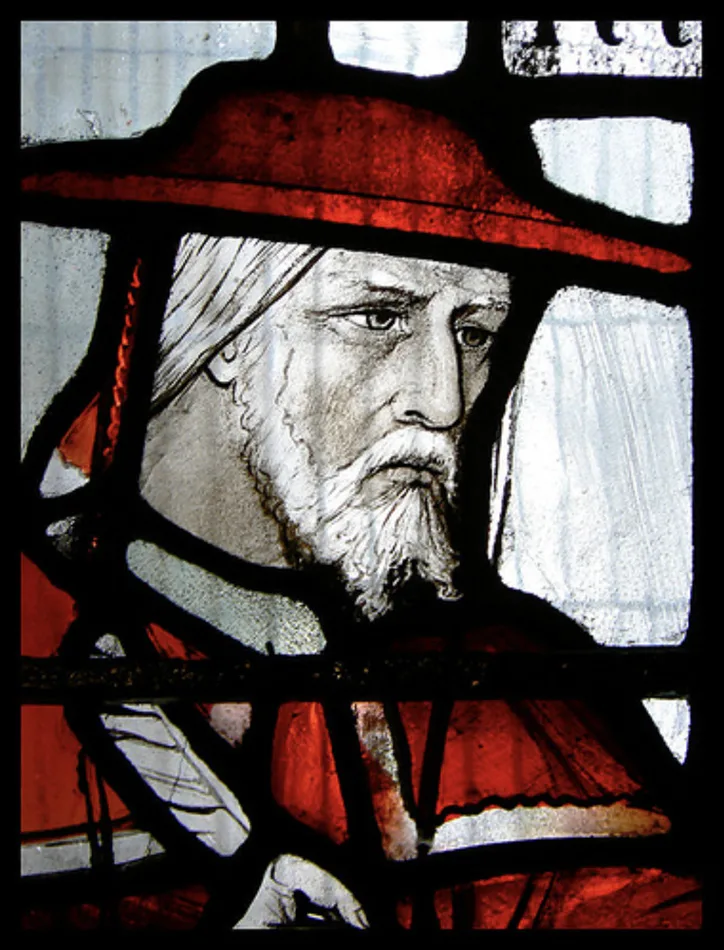
This image is widely shared online as being Cardinal John Morton, but there is no documented source that confirms the location of the stained glass window, or that it was ever part of a known work

If you visit the splendid St John’s church at Bere Regis, you will be encouraged to look up at the beautifully carved 15th-century hammerbeam roof, its bosses brightly painted with the 12 apostles — and one enigmatic face looking back down. He was Cardinal John Morton, born in Bere – and arguably one of the most influential figures in late 15th century England.
He was born into the gentry around 1420, his mother a Turberville, a well-known Dorset family. An intelligent boy, he was educated at Cerne Abbey and won a place to read Law at Oxford. Morton quickly established a reputation as a formidable administrator, attracting the attention of senior churchmen and the royal court. This put him on the fast track: he entered royal service and by 1456 he was chosen to be Chancellor to the infant Edward, Prince of Wales. At the same time he followed an ecclesiastical career, being ordained only two years later. At one stage he held three benefices. He was rector of both Bloxworth and Maiden Newton.
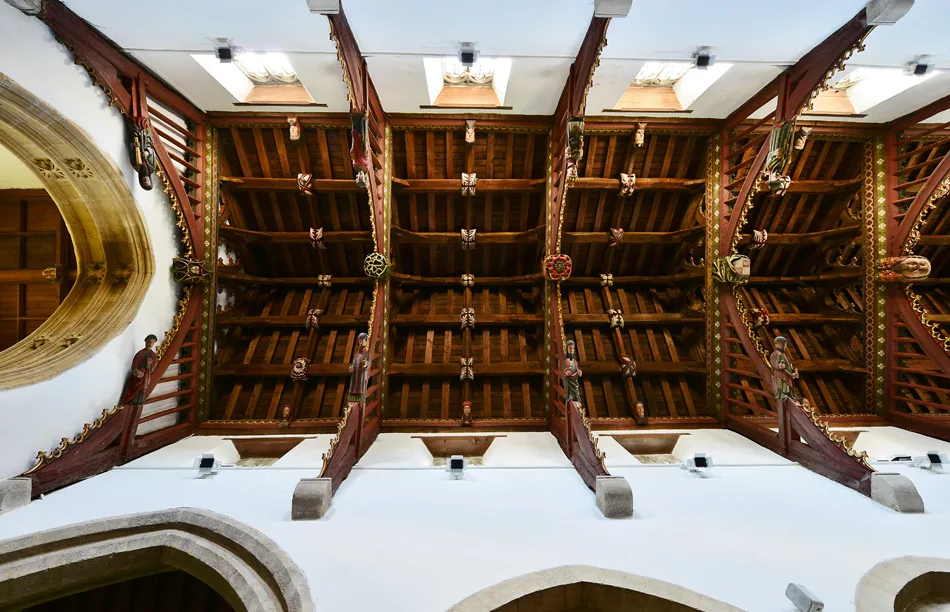
Looking up into the unique roof of St John the Baptist church in Bere Regis. John Morton gave the carved and painted oak roof to the church in around 1485. As well as the 12 apostles along the sides, and various embossed carvings, Cardinal Morton’s face is represented (far right of this image)

A Lancastrian advisor to the Yorkist King
This was the time of the Wars of the Roses, and Morton was one of the lawyers involved in drawing up the Act of Attainder against the Yorkist nobles revolting against Henry VI. After the bloody Lancastrian defeat at Towton, Morton was captured. Imprisoned in the Tower, he was lucky not to lose his head at the hands of the new King, Edward IV. After a brief exile – during which he served the Lancastrian Queen Margaret of Anjou – Morton was pardoned and resumed his career in royal service. King Edward had recognised his extraordinary administrative skills, making him Master of the Rolls, and also appointing him as a diplomat to establish peace with France.
His ecclesiastical career too was on an upward path again, being appointed Bishop of Ely. The new bishop enthusiastically engaged in several notable building projects, including the rebuilding of the old Bishop’s Palace at Hatfield in 1480. Hatfield was acquired by the Crown and eventually became the much-loved residence of Anne Boleyn’s daughter, Elizabeth. On Edward IV’s premature death, Morton was involved in planning the coronation of his young son Edward V. Edward’s uncle, Richard Gloucester, decided to take the throne himself as Richard III, however, and Morton found himself back in the Tower. He avoided execution, and was committed into the custody of the Duke of Buckingham, under house arrest, was involved in a plot against Richard and eventually had to flee to Flanders where he co-ordinated opposition, under Henry Tudor, to King Richard III.
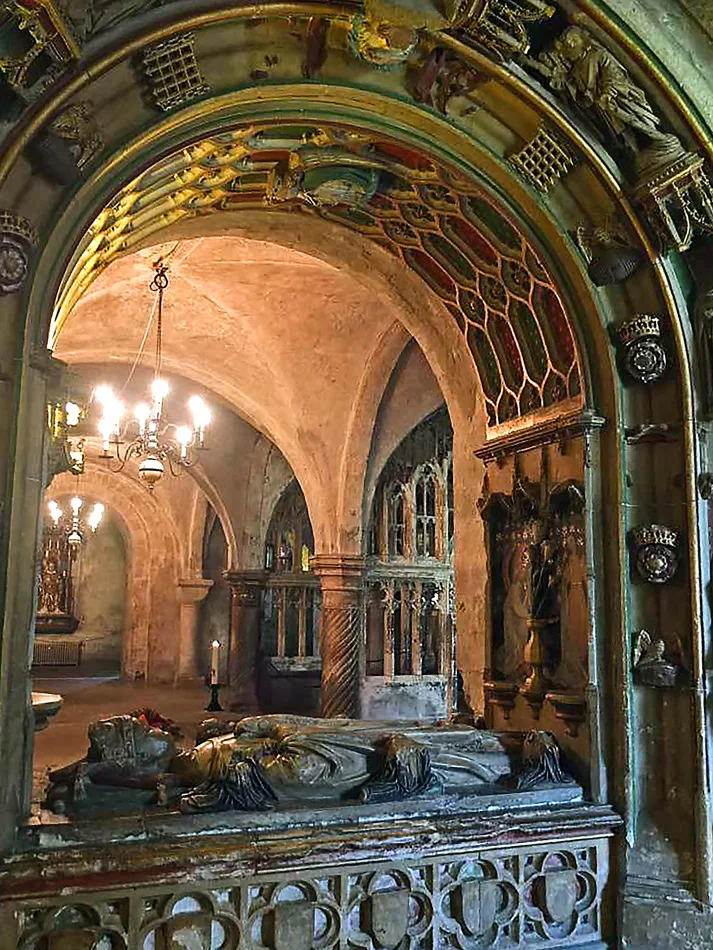
Cardinal John Morton’s tomb on the Chapel of Our Lady in the Undercroft at Canterbury Cathedral

Inventor Of Morton’s Fork
Henry VII’s success at the battle of Bosworth Field in 1485 meant a swift return to London – and a new role as Lord Chancellor, becoming one of the King’s most trusted and faithful advisors, sitting at virtually every recorded council meeting for the rest of his life. His role was to implement royal policy, including taxation, but first he was instrumental in arranging the marriage of Henry to Elizabeth of York, thus ending the Wars of the Roses: a significant achievement which is remembered in the central boss of the nave at Bere Regis.
There is no evidence that, as Chancellor, Morton advocated a harsh level of taxation, but clearly Henry needed to replenish his coffers after a civil war that had devastated England for decades, as well as the French war. The idea later known as ‘Morton’s Fork’ – named for him by Francis Bacon a century later – captured the brutal logic of his Tudor taxation. It is a type of false dilemma, in which contradictory observations lead to the same conclusion. Apparently Morton rationalised the payment of a benevolence tax to the King by arguing that someone living modestly must be saving money, and could therefore afford the benevolence, while someone living extravagantly was obviously rich and could afford it anyway. Although used in various contemporary Jacobean plays, the term did not come into more regular use before the 19th century.
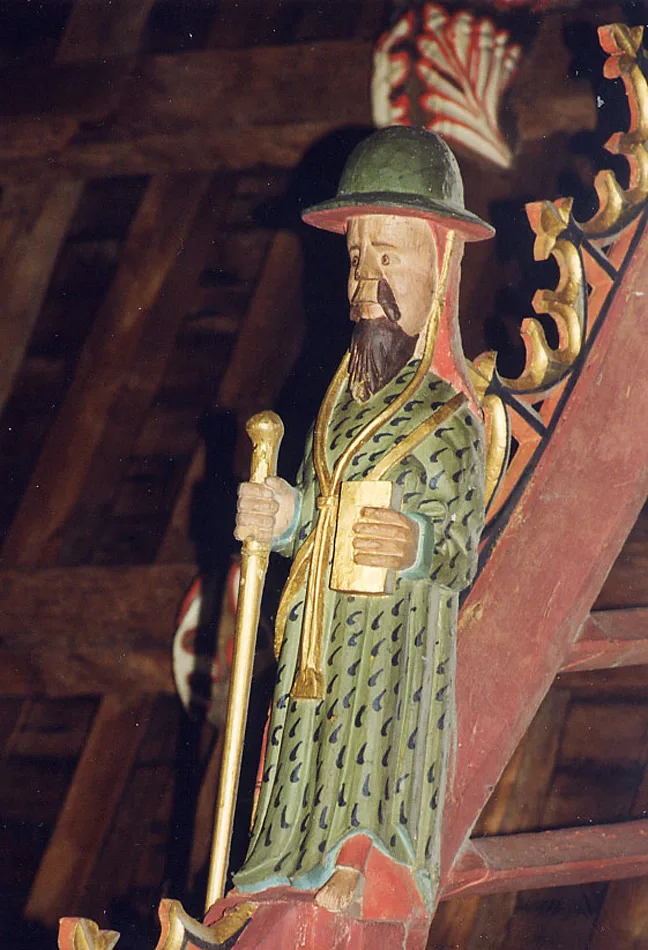
St John the Baptist,Bere RegisRoof figure– geograph


The death of his mentor, Archbishop of Canterbury Cardinal Bourchier in 1485 led the King to persuade the monks at Canterbury to elect Morton as his replacement. He did not seek personal enrichment, but he was very active in defending the jurisdiction of the archbishop’s courts, reforming the church and restoring ecclesiastical buildings. His main achievement was to complete the memorable central crossing tower at Canterbury Cathedral. He was appointed a Cardinal by the Pope in 1493.
Morton died in 1500, and was buried at Canterbury Cathedral. His tomb was desecrated in the Civil War and his remains pillaged, with his skull ending up at Stonyhurst College in Lancashire. He was much mourned in his time, having enjoyed a high reputation … if you ignore the views of some apologists for Richard III, who were no doubt biased. The Spanish ambassador, De Puebla, wrote: ‘The Cardinal of England is dead, and has left no statesman who can be compared to him.’
He was a mentor of Thomas More, who described him as talented, witty, erudite and charming – and known to be a moderating influence on Henry VII. Morton is also believed to have contributed to a critical but unfinished biography of Richard III, which may have been the inspiration behind Shakespeare’s plays, which demonised the king.
He was recognised as an extremely capable and loyal administrator, who had been the right hand man of two kings and one queen. There are not many who combined key roles in both the church and politics so well.
For most visitors to St John’s, Morton is just a face in the roof among the bosses. But for a man born in Bere Regis, who survived civil war, shaped a dynasty and quietly steered England through one of its most unstable periods, that carved gaze feels entirely fitting.

Anyone who would like to know more can read Stuart Bradley’s excellent book
John Morton: Adversary of Richard III,
Power Behind The Tudors.
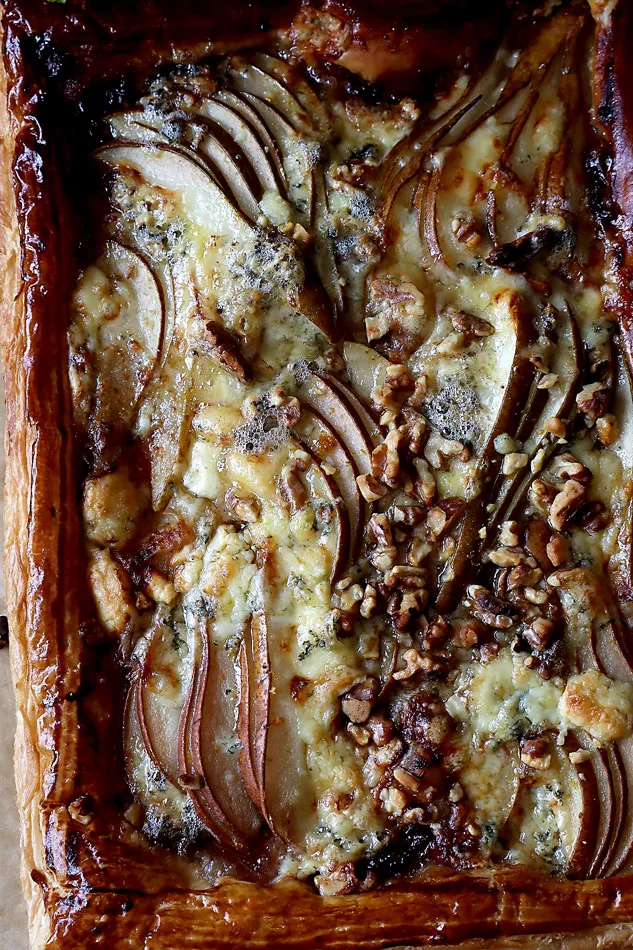
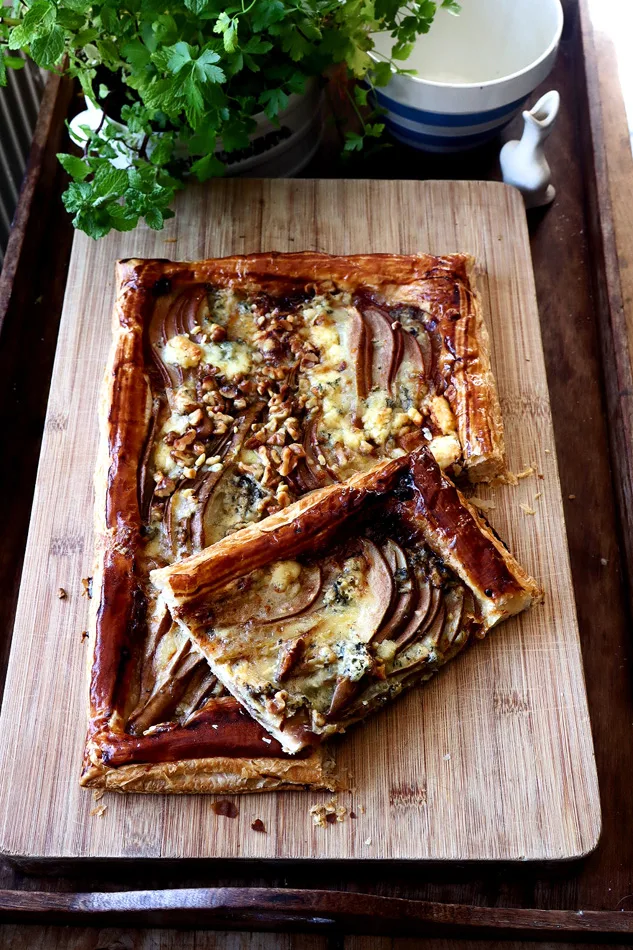
Pear and blue cheese puff pastry tart

0

‘Simplicity is key for this quick mid-week supper! This tart makes the most of Dorset produce: grab a roll of Dorset puff pastry, some Dorset blue cheese (try Blue Vinny or Cranborne Blue from Book & Bucket) and I used Elwell Fruit Farm pears. This small farm in Waytown, just outside Bridport, was established in the late 1940s. Will and Caroline grow more than 30 varieties of apples and pears. I bought mine at a Dorset farmers market but they also sell via the farm gate. Add sweet onion marmalade (if you don’t make your own, try From Dorset with Love) with juicy pears and sharp, creamy blue cheese, add orange zest to bring it together … easy and delicious.’ – Lizzie

Image © Lizzie Baking Bird

Ingredients

  • 1 sheet ready rolled puff pastry
  • 2 pears
  • 4 tbsp onion marmalade
  • 125g blue cheese, crumbled
  • 1 orange, zest
  • 25g walnut pieces (optional)
  • 1 egg yolk
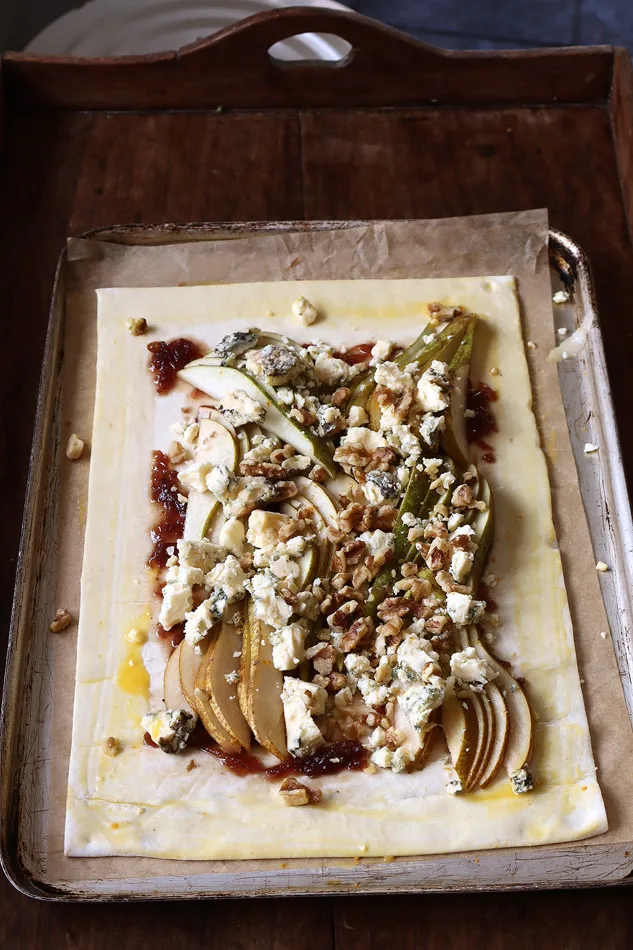
The uncooked tart will look like this

Method

  1. Unroll a sheet of ready-rolled puff pastry onto a lined baking tray.
  2. Spread onion marmalade evenly across the base, leaving a rough 2cm border
  3. Thinly slice two large ripe pears and lay them over the marmalade.
  4. Crumble over the blue cheese, then zest an orange directly over the tart.
  5. Brush the edge with beaten egg. Season with salt and pepper, and if you like a bit of crunch, sprinkle over a handful of chopped walnuts.
  6. Bake the tart at 210ºC/ gas mark 7 for 15 to 20 minutes, until the pastry is puffed up and crisp and the cheese is bubbling.
  7. Enjoy!
Image © Lizzie Baking Bird

Hall & Woodhouse events team donates £253,000

0

Independent Dorset brewer Hall & Woodhouse (H&W) has announced a bumper year for its H&W Events team, donating an impressive £253,000 to local charities and community causes following its busiest events season yet. Launched in 2022, H&W Events was created to bring the Badger Beer Experience to outdoor festivals and shows, while deepening the company’s community impact. In 2025, the team operated bars at 21 major events across the south – including new partnerships with Bournemouth Pride and The Tank Museum’s Tiger Day – helping boost donations by 15 per cent on 2024’s total of £220,000.

H&W Events was created to bring the Badger Beer Experience to outdoor festivals and shows.
Image © Dorset County Show

‘Our purpose has always been to enrich the communities we serve,’ said Anthony Woodhouse, H&W chairman. ‘Running bars at brilliant events like TANKFEST and Dorset County Show isn’t only great fun – it enables us to reach new audiences and make meaningful donations to incredible causes.’
A standout highlight was H&W’s ongoing headline sponsorship of Teddy Rocks Festival, which supports the fight against children’s cancer. H&W team members volunteered to run bars on site, including a replica pub and self-pour beer machines, and donated nearly £130,000 through profits and sponsorship.
At TANKFEST, held at The Tank Museum in Bovington, H&W raised a record £27,500, with 2025 also marking its debut at the museum’s new spring and autumn Tiger Day events.
The season closed at Dorset County Show, where H&W operated three bars – including one run entirely not-for-profit. Half of all profits from the other bars were donated to the Dorchester Agricultural Society’s own Education Fund, Julia’s House, and The Farming Community Network.
The H&W Events team has now firmly established itself as a key part of the brewer’s ambitious charity target: to raise £1 million annually by the company’s 250th anniversary in 2027. This sits alongside Hall & Woodhouse’s long-running Community Chest fund, Charity Day, and other fundraising efforts across its managed pub estate.
With more partnerships planned for 2026, the bar team looks set to top this year’s total and pour even more back into the communities it serves.

sponsored by Wessex Internet

Farming through the squeeze

0

James Cossins reflects on a typical winter of farming pressures – and why resilience, shared voices and the promise of spring still matter

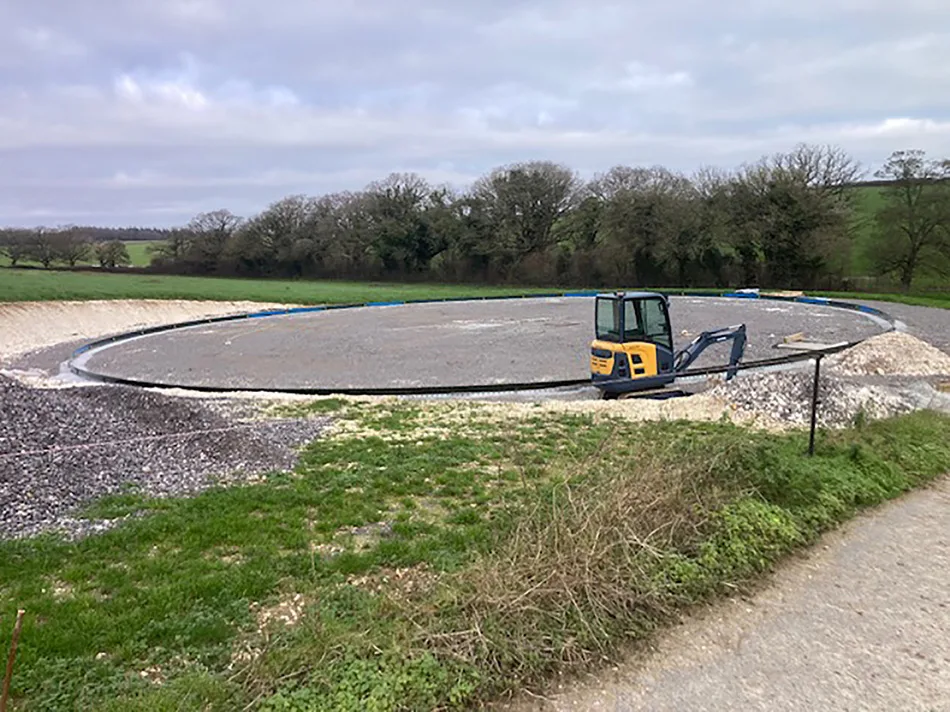
The new slurry pit, years in the planning, is finally under construction on Rawston Farm.
All images: James Cossins

The Christmas festivities now seem a long way off! The recent weather has been relatively kind to us in Dorset, and even the recent storm Goretti caused less damage than in the rest of the country. We did have our polytunnel sheet blown off due to a strong easterly wind on Christmas Eve, exposing the 30 calves inside – we soon moved them on Christmas Day! The daily routine of feeding cattle continues, with a careful eye checking feed stocks to see if there will be enough to see us through the winter. We hope for an early spring!
Politically it has been a busy period, with the Government finally doing a U turn on the Inheritance Tax threshold, raising it from £1 million to £2.5 million. This will help many family businesses – not just in farming, but in all businesses. The lobbying by the NFU, CLA and many other groups seems to have paid off.
What I cannot understand is why families up and down the country were put under such financial stress in the first place, with such a poorly thought-out policy. I suppose the next question is do we back off from any more lobbying, in the hope of the tax being dropped completely? Or do we continue with the protests?
Ups … and downs
Another announcement recently released by DEFRA included the details on how the Sustainable Farming Incentive for 2026 will work. Last year, new applications were suddenly stopped in March: It is only now that we can begin to plan what environmental options we can put in place. Small farms who have not applied before – quite what a ‘small farm’ is we are not sure yet – can apply in June, and the remainder of farms in September. Financial support for these schemes is especially welcome at the moment, as many farm gate prices are dropping, or are very low. Our milk price has dropped by 10 pence per litre since October – that is more than 20% of our income, just wiped off. The apparent reason is over supply. We will have to see what prices 2026 brings us: I fear many more milk producers will decide enough is enough, that they cannot continue producing milk at a loss. It will be interesting to see if supermarkets drop their retail price accordingly. Also it appears that there is a shortage of organic milk, and the price received for that has not dropped. The differential between organic and conventional is now quite considerable. Prices for grains such as wheat and barley are also depressed, and have not increased since harvest. Producers are having to sell at below what was budgeted in order to empty their stores for next harvest and to keep the cash flowing.
These concerns about the future direction of farming were discussed at a recent meeting with our North Dorset MP Simon Hoare. Simon took on board the issues we raised, and also the possibility of closer links with Europe which the Government is considering.
It was also acknowledged that it is not only farming suffering at the moment but many other businesses. The hospitality sector is also under great pressure. The Cossins’ family pub, the Langton Arms, like all other pubs, is experiencing higher costs, including an increase in business rates. With society’s habits changing and people not going to pubs so often, the pubs are facing the real prospect of closing. In many rural villages, pubs are the lifeline to the community, enabling people to meet up with each other.
Simon took all of this on board and promised to keep lobbying other MPs, especially the rural Labour ones, who are supposed to represent the voice of rural businesses.

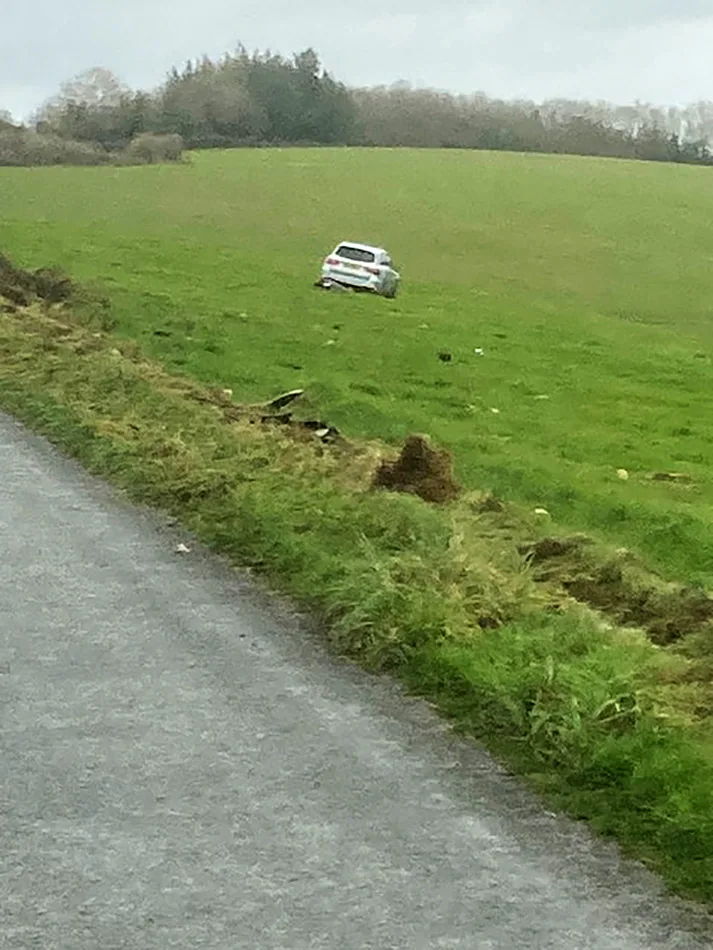
A stretch of black ice caused some unexpected off-roading on the farm recently

Here comes spring
The farming community is known for its resilience. Looking forward, it is encouraging to see the various farming groups that have formed across Dorset: cluster groups, discussion groups and many more, where we can get out, meet fellow farmers and realise we as individuals are not alone in the problems we face. Simply sharing them can be so good for our wellbeing.
On a positive note, I always feel that once January has passed, the days will get longer and spring will be just around the corner with the countryside waking up. We have a few projects taking place on the farm, such as building our new slurry store, and it will be great to see it completed after several years of planning. The crops in the ground so far look well and we can only hope that this year’s harvest will be a good one without any extreme weather conditions like last year’s drought.

See what we can achieve this year!

0

From salmon to family farms via local pharmacies, Edward Morello MP rounds off 2025 with hard-won progress for West Dorset communities

Edward Morello MP for West Dorset

Happy New Year! I hope you had a wonderful and restful Christmas and New Year. Before we got to the end of 2025 there was a flurry of good news. After months of campaigning and pressure, the Environment Agency and Natural England gave the go-ahead to a pilot salmon recovery project on the River Frome. The Frome, Piddle & West Dorset Fisheries Association has been fighting hard to reverse the decline of salmon numbers in our precious chalk streams, and I hope this pilot project will prove that targeted intervention can help prevent the catastrophic loss. I would like to thank everyone who worked so hard, and continues to do so, to ensure this project didn’t die.
Right before Christmas the Government announced a surprise partial U-turn on the disastrous Family Farm Tax. The raising of the inheritance tax threshold to £5m per couple will come as a huge relief to farmers and family business owners across West Dorset. It was a policy that caused unnecessary worry and distress, and I would like to pay tribute to the NFU and our farmers, who never gave up on the hope that the Government could be forced to back-down – especially those who repeatedly drove their tractors up to London!
Finally, on the very last day of the year, I received the fantastic news that Allied Pharmacy had agreed to take over and re-open the pharmacy in Lyme Regis, bringing to an end the long-running Jhoots saga and meaning residents will once again have a local service.
The resilience and strength shown by the staff – who have gone months without pay – was a sight to behold. And the support they were given by the community was a tribute to everything that makes West Dorset the best place in the UK to live.
This new year has certainly started interestingly, with US action in Venezuela and threats against the territory of Greenland, part of Denmark, a NATO ally. I suspect there will be plenty to keep me busy on the Foreign Affairs Committee. However, my focus remains on West Dorset, and I can’t wait to see what we can achieve in 2026!

Trust the people, back the countryside

0

Simon Hoare MP uses Opposition Day debates to challenge government thinking – and argue that rural Britain cannot remain an afterthought

Simon Hoare MP

One of the few ‘joys’ of being in Opposition as far as the Parliamentary timetable is concerned is that on about 14 Wednesdays a year, His Majesty’s Loyal Opposition is able to choose the topics for debate. These are (rather unimaginatively) known as Opposition Day Debates. The Opposition is not able to make laws: the point is to draw attention to particular issues of concern. Our most recent topics were, firstly, the government’s proposals to water down access to justice via jury trial, and our second was rural communities.
My fellow Conservatives and I are opposed to reducing the number of trials by jury. I personally have two, non-lawyerly, objections to it. First, the attraction of a jury trial is that evidence is put before 12 fresh sets of eyes and minds. They look at the application of the law anew. Not only is doing so a benefit in itself, but so is the fact that jurors are drawn from the current community. They represent all views and backgrounds. With the greatest of respect to the legal profession, and notwithstanding the important progress in diversification of the cohort, the same cannot be said of judges, and a narrower view is likely to dominate.
The danger of having only a judge hear evidence is that, in time, human nature introduces group thinking and an ‘ah yes, we had a similar case to this a few months ago. It’s bound to be roughly the same’.
You don’t get that with a fresh jury.
Magna Carta set out the principle of being judged by one’s peers. It was a good principle then, and it is now. As Randolph Churchill set out in his late 19th century Tory philosophy, Trust the People. He, like the Barons at Runnymede, was right.

VAT and guns
Given how many Tories wished to speak on the Rural Communities debate, we were pressed for time and I was lucky to be called. First, though, I intervened on one of the Lib Dems who was demanding a reduction in VAT for the hospitality sector (something I have called for for years). I highlighted the irony that they were doing so having spent several minutes undermining the democrat decision to leave the EU. The freedom to reduce rates of VAT is only permissible having left the EU. It was a bit of a rabbit in the headlights moment …
I was able to point to the fact that while Reform UK seeks to paint itself as the ‘friend of rural Britain and her farmers’, not a single Reform MP attended or spoke in the debate – Trump-supporting, laissez faire, race-to-the-bottom, UK-food-security-destroying free traders as they are. Actions speak louder than press releases.
I know our rural communities are too canny to fall for Farage’s preening.
I called for a number of policies. In no particular order – to try to save rural; hospitality and village pubs, I called for a reduction on VAT and absolution of Business Rates.
Alongside the pub, our village churches play an important role. I called for the restoration of grants to places of worship where restoration projects could reclaim the VAT. This is particularly relevant for my ‘parish’ as the Lydlinch Bells are being restored by community fundraising – and now have to pay VAT for the privilege.
I called for the resurrection of funding for Neighbourhood Plans – a case powerfully put to me by those involved with Blandford’s. Such plans support the delivery of smaller scale housing in the villages and towns where they are needed, thereby underpinning rural vitality and viability.
Slightly more niche, but hugely important to our valuable shooting sector, I spoke up against merging Sections 1 and 2 of the gun licensing process. The process needs to be robust, but this is a cost and bureaucracy-increasing initiative which needs to go.
Having made some steps forward. I urged the Treasury to abandon the Family Farm Tax altogether. I remain enormously fearful that it still represents the death knell for our crucial North Dorset family farms, and that Hardy’s Vale of the Little Dairies is really looking at the cliff edge.
With that in mind I also called for a government-led dairy strategy to mitigate against the impact of wildly fluctuating commodity prices.
Finally, yet again, I beat the drum for ensuring a clear rural dimension for funding formulas for schools, police, local government and the Environment Agency. Without it we are in the fight with one hand tied behind our backs from the get go.

Sherborne’s Snowdrop Remembrance and Thanksgiving Service returns in February

0

The Yeatman Hospital, Weldmar Hospicecare and Cruse Bereavement Support will once again join together for the Sherborne Snowdrop Remembrance and Thanksgiving Service in 2026, hosted by Sherborne Churches Together.


This year’s service will take place on Friday 6th February at 11.15am at the Church of the Sacred Heart & St Aldhelm, Westbury, Sherborne (DT9 3RA). Everyone is warmly invited to attend, to gather in remembrance and give thanks for the lives of loved ones.
The snowdrop is a traditional symbol of hope – appearing at the end of winter and signalling the promise of new beginnings. The service offers a chance for quiet reflection and shared comfort, acknowledging the ongoing journey of grief.
Staff from all three supporting organisations will take part in the service, and it will be followed by a chance to talk over refreshments.
The Sherborne Book of Remembrance will also be available, and attendees will have an opportunity to add the name of someone they wish to remember.
For further details, please contact Reverend Lesley McCreadie on [email protected] or call 01963 210548

sponsored by Wessex Internet

When frost turns to silk

0

Jane Adams is looking for a rare woodland phenomenon: something fleeting, beautiful and unexpectedly personal

The rare hair ice pehenomenon happens only in precise atmospheric conditions, and is caused by the fungus Exidiopsis effusa

My mum had the most beautiful snow-white hair. Touch it, and it felt like pure silk.
I’d never heard of hair ice, but when I saw a story about it on a Devon Wildlife Trust Facebook group – with a photo of ice growing like hair from a rotting piece of wood – it reminded me of Mum’s silken locks. Ever since, I’ve dreamt of finding some.
So, on a chilly winter morning, I wrap up and go in search of this ethereal phenomenon.
What’s all the fuss about a bit of ice? Well, this is no common-or-garden ice. Oh no!
It looks like flowing white hair growing from a fallen branch – sometimes as much as 15cm long. Hair ice only forms on decaying broadleaf wood during damp, still weather when the temperature is just below freezing. As well as depending on exactly the right atmospheric conditions and the correct type of decaying wood, it also needs the help of a particular fungus.
Ordinarily, when there’s water in dead wood, it gets pushed along tiny channels to the surface, where it might form ordinary frost or ice crystals. But with hair ice, it’s thought that when the fungus Exidiopsis effusa is present, it releases substances – most likely proteins – that stop the water from forming a solid mass. Instead, each icy strand freezes individually, forming fine, silky filaments.
It’s still dark when I reach my nearest deciduous woodland. As dawn lightens the sky, I scan each rotting branch, squatting down to turn some over, cold and wet to the touch, even through gloves. As I do, the disturbed ice-rimmed leaf litter releases a full-on whiff of earthy goodness, a feel-good scent if ever there was one, and a robin sharply ticks an alarm above me.

Look for it on still mornings when the temperature is just below freezing – it only occurs on moist, dead, broadleaf wood


Within half an hour, the sun breaks weakly through the skeleton branches of the trees, and all hope of finding hair ice is gone. Even a weak sun will melt it in seconds.
I may not have found hair ice today, but there will be other times. Winter has a way of hiding its most magical wonders – especially ones this rare – but one wintry morning, in the right patch of shaded woodland, I’ll find it. And I will be reminded of Mum, who would have loved to have seen it.

Why Dacombes still delivers

0

As home technology grows more complex, Matt Renaut argues that experience, control and local accountability are what keep Dacombes of Wimborne relevant

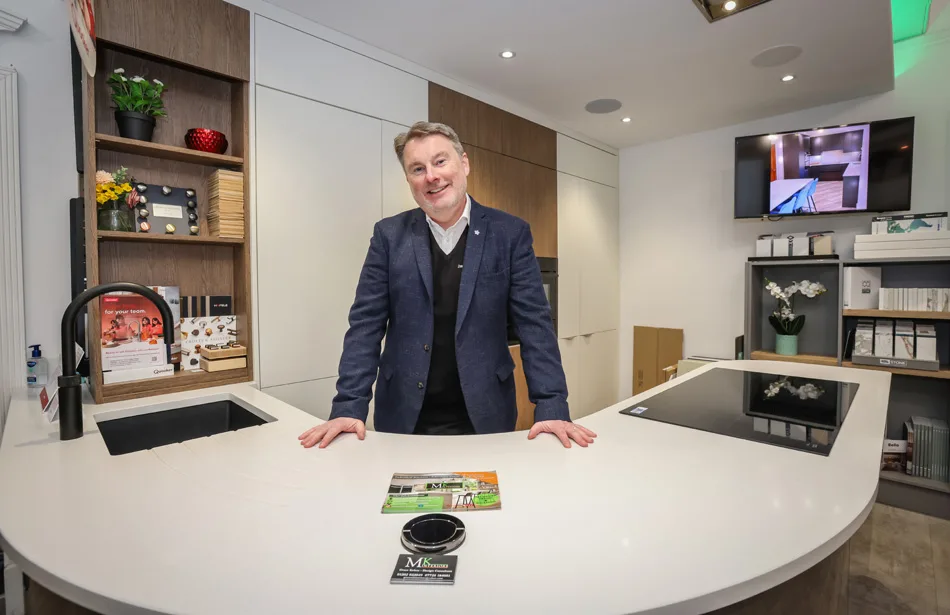
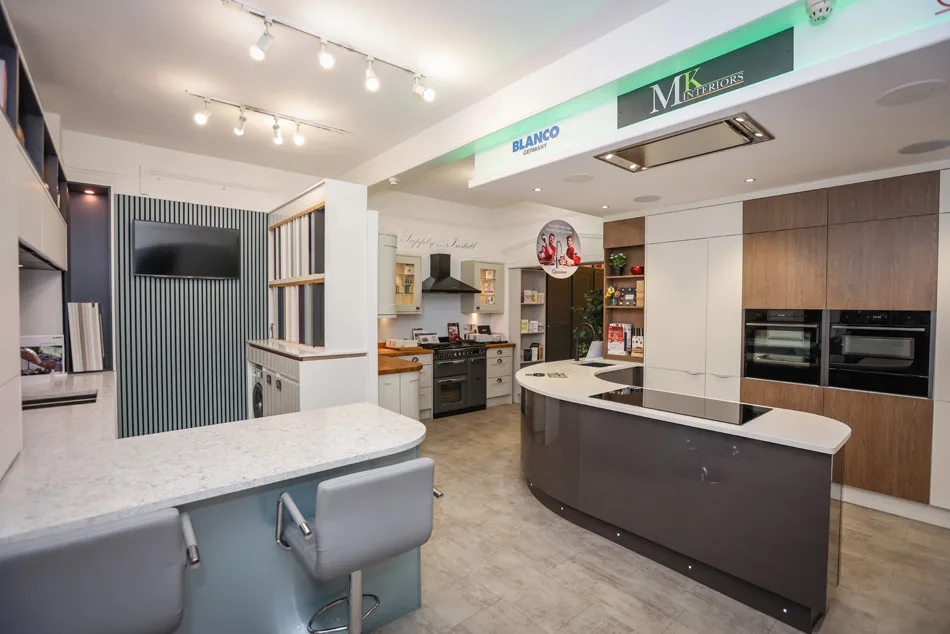
Matt Renaut in Dacombes award-winning kitchen area

When Matt Renaut talks about what sets Dacombes of Wimborne apart, he doesn’t reach for nostalgia, despite the business being part of the town for more than a century. There’s no talk of ‘the good old days’ or doing things the way they’ve always been done. Instead, he talks about experience and what happens after the sale.
‘We like to deliver all of our products in our own vans and install them properly,’ he says. ‘That way we’ve got control. If something goes wrong, we know exactly what’s happened and we can sort it.’
It’s a practical mindset that runs through the family business Matt now manages – and the store today has evolved far beyond simply selling televisions or washing machines. The focus is now just as much on audio-visual systems, media walls, home cinema rooms and integrated home technology as it is on domestic appliances.

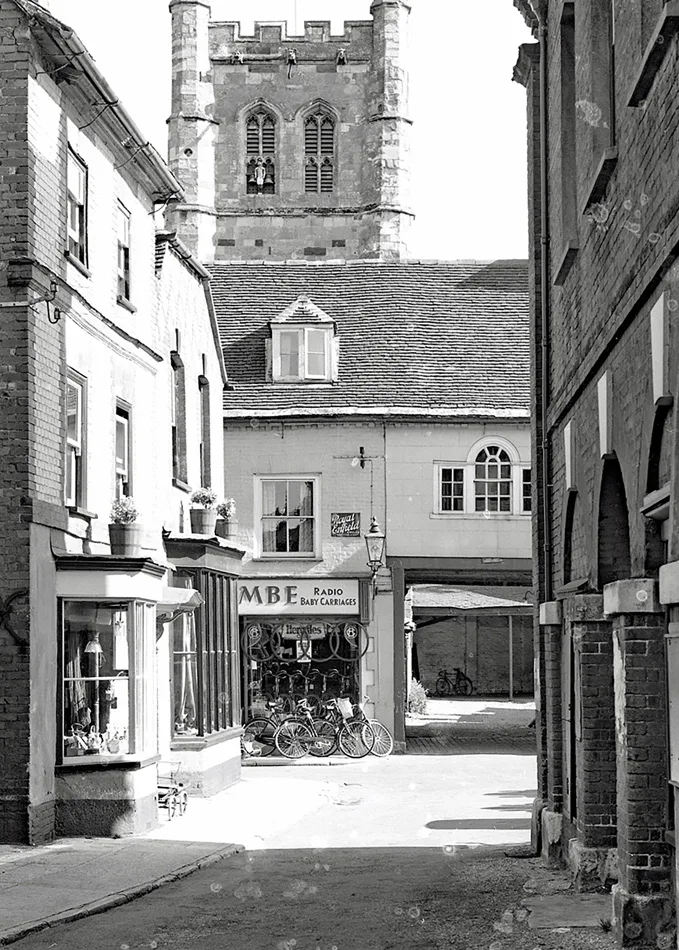
Post-war Dacombes selling bikes, with radios and baby carriages advertised outside
Image: Museum of East Dorset

Maintaining trust
The company itself has deep roots. In 1923 Mr E.T. Dacombe opened a business in Wimborne, selling prams, household goods, and later offering accumulator battery charging for early radios, as not every house had electricity. Televisions followed, and when Ralph Dacombe joined his father’s business after the war, the business became the first in the area to rent TVs – a necessary addition built on reliable, fast service at a time when sets were temperamental and technical support mattered.
When Ralph retired in the 1980s, the business was taken over by the chief service engineer John Lodge. Looking to retire in the late 1990s John offered the business to John Renaut, Matt’s father. John and his wife Carole, with help from their family, set about bringing the business up to date. John saw technologies arrive, peak and disappear again, and learned early that survival depended on adapting without losing trust. ‘You either move with it or you don’t last,’ he says. ‘People don’t forgive technology that doesn’t work – or businesses that disappear once they’ve taken your money.’
That emphasis on service has been steady through every chapter of the business. Matt joined the family firm in 2000, having already had a career with national retailers and a background as a trained engineer. ‘I’ve always been on the technical side,’ he says. ‘Understanding how things work, how they should be installed, how to fix them – that’s still at the heart of what we do.’
A significant turning point came with the move away from the traditional high-street shop into a larger, purpose-built showroom just outside the town centre. It was a considered decision – and a calculated risk – to give the business something it simply couldn’t achieve before: space.
‘We wanted to be a destination store,’ Matt says. ‘Somewhere people could come, park easily, sit down, take their time and actually experience the technology we’re selling.’

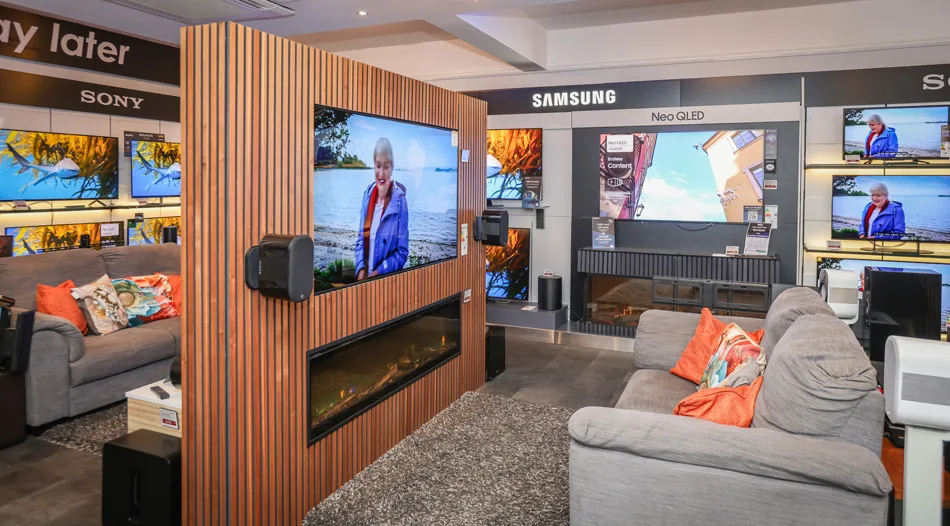
The Dacombes showroom is laid out as a series of living spaces
Matt Renaut (left) with his dad, John Renaut, in the Dacombes showroom – image Courtenay Hitchcock The BV

Changing homes
Instead of rows of boxed products, the showroom is laid out like a series of living spaces. Screens, sound systems, lighting and furniture are set up as they would be in a home. Customers are encouraged to sit, watch, listen and compare.
‘We don’t tell customers what things can do – we show them,’ Matt says. ‘That’s when it clicks.’
That approach has proved particularly effective as home entertainment has become central to how people live. Media walls, integrated sound systems and dedicated cinema rooms now make up a growing part of the business, often designed collaboratively with a customer around how they actually use their home.
‘People are staying in more,’ Matt says. ‘If you’re not going out every weekend, you want your home to work harder for you. That might be a media wall in the lounge, or a spare room turned into a cinema space. It doesn’t have to be extravagant – it just needs to be done properly.’
That word – properly – comes up often. For Matt, it applies equally to high-end installations and everyday appliances. ‘If someone wants a washing machine, that’s fine,’ he says. ‘We do those too! The point is, whatever someone buys, they get the same level of service, delivery and backup.’
Price, he says, is often misunderstood. As part of Euronics, one of Europe’s largest buying groups, Dacombes can compete directly with national chains and online retailers. ‘We wouldn’t still be here if we weren’t competitive,’ he says. ‘Sometimes we’re even cheaper overall, especially once you factor in the delivery, installation and support we offer.’

Once a month, Five Loaves Bakery, a local charity, uses the kitchen showroom to bake together

Make sure you get it right
Support is where the difference becomes most obvious. Warranties are registered in-house. Serial numbers are recorded. Even years later, if a customer calls with a problem, the details are already there. ‘You’re not dealing with a call centre,’ Matt says. ‘You can probably talk to the person who sold or installed the product.’
That approach has not gone unnoticed within the industry. National recognition first came in 2016, when Dacombes won its first major industry award at an event in London.
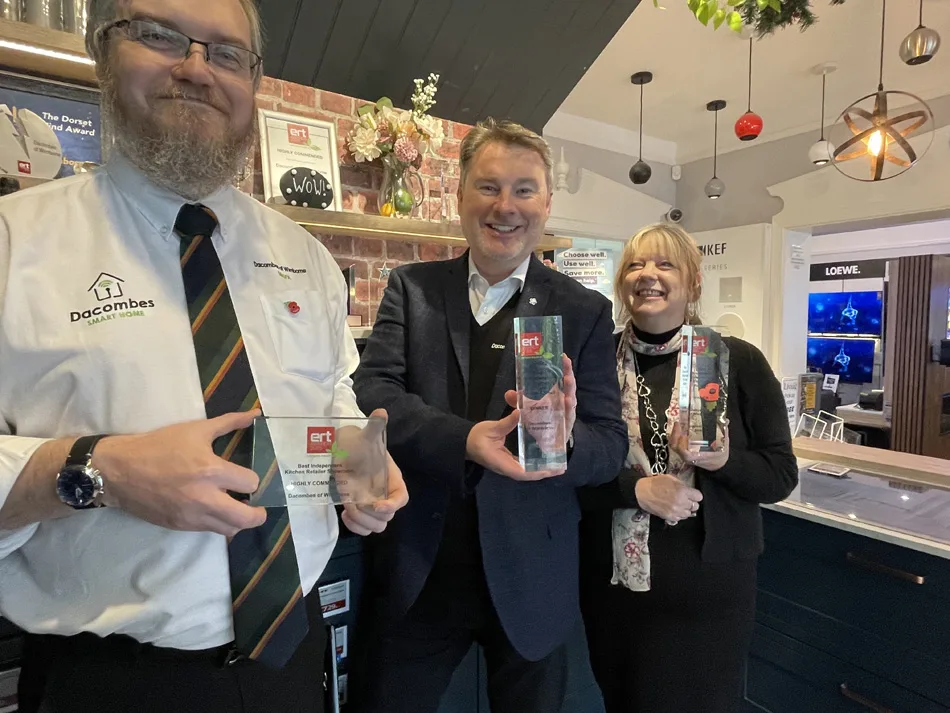
More recently, the business has picked up multiple honours at the ERT Awards – widely regarded as the UK electrical retail industry’s ‘Oscars’ – including being named Best Sustainable Independent Electrical Retailer and also Best Independent Consumer Electronics Retailer (Small Business).

A trio of awards for Dacombes of Wimborne – Mark Winton with Matt Renaut and Helen Potter. Image: Tracie Beardsley


Judges cited the company’s environmental strategy, technical expertise and consistency of service in a sector increasingly dominated by national chains. They were also particularly impressed by the fully working in-store kitchens. These were designed to showcase modern kitchen technology, but Matt offers them free of charge to local community groups for cookery classes and events, reinforcing the idea that the building is a shared asset, not just a showroom. Once a month, Five Loaves Bakery, a local charity supporting people experiencing loneliness and isolation, uses the space to bake together using locally sourced ingredients, with the baked goods sold to raise funds for the charity.
‘We’re part of the community,’ Matt says. ‘So we try to do things that make sense, long term.’
That includes supporting local events. Dacombes sponsors Wimborne Folk Festival and Wimborne Green Festival, and is a main organiser and sponsor of Wimborne Food Festival, alongside backing the town’s flower festival and many other local charities.
The business’s sense of local responsibility was reinforced in 2025, when Dacombes welcomed the Holmans business into the fold. The merger brought another long-established independent Wimborne retailer and its team under one roof, ensuring continuity of service for long-standing customers. And that continuity matters to the Renauts. John is clear about the responsibility that comes with trading in the same town for more than a century: ‘You see people in the street and in the supermarket,’ he says. ‘If something’s gone wrong, you soon hear about it. So you make sure you get it right.’

Electric future
Looking ahead, the direction is clear, and the building itself reflects similar thinking. The roof is fitted with 100 solar panels, backed by battery storage. From May to September, the business runs entirely on its own generated power. Two EV charging points are already installed on site, and infrastructure is in place for electric delivery vehicles in the Dacombes fleet.
Appliances remain important, but the future lies in integrated home technology – kitchens designed around appliances, living rooms designed around sound and vision, and homes where systems work together seamlessly.
‘It’s been 25 years, and I’m still enthusiastic,’ Matt says. ‘There’s a lot more we can do, and a lot of people don’t yet realise what’s possible in their own homes.’
Dacombes is a business shaped by a century of change, but it is firmly focused on what comes next – modern, technically confident and deeply rooted in the place it serves.

dacombesofwimborne.com