The Blackmore Vale logo
Home Blog Page 34

How Earth Observation Is Cultivating Modern Agriculture

0

Farming is changing fast. Instead of checking their fields by foot, more and more farmers are turning to views from space to keep an eye on their crops. What used to be a tool for scientists and space agencies is now something growers use every day.

This matters because satellite imagery supports modern agriculture by giving farmers a way to watch their crops over large areas and spot problems early. With this information, they can use water, fertilizers, and other resources more wisely, and adjust quickly to weather or environmental shifts. Combining satellite data with what they see on the ground helps farmers make smarter choices that are better for both their yields and the environment.

Smit Shutterstock

Eyes in the Sky, Decisions on the Ground

When satellite data arrives, the most valuable moments begin. These high-resolution images and measurements inform decisions that directly affect yield, cost, and environmental impact. Across the farming calendar, Earth observation helps farmers respond with precision and speed.

Instead of relying on routine schedules or visual inspection, farmers today can use satellite-based insights to fine-tune how and where they irrigate. By analyzing vegetation and moisture indices like NDVI and SMI, which reveal subtle changes in crop health and soil moisture, they can pinpoint exactly which areas need attention. This smarter, data-driven approach reduces unnecessary water use and ensures plants aren’t harmed by inconsistent watering, leading to healthier crops and more sustainable farming practices.

Fertilization also benefits from this targeted approach. Satellite images of agricultural land reveal nutrient deficiencies before they become visible to the naked eye. Farmers can then apply fertilizer variably across the field, reducing waste and avoiding environmental runoff. These decisions not only lower costs but also support healthier soils over time.

Pest and disease detection has become more proactive as well. When plants are under stress from pests or pathogens, their reflectance patterns change slightly. Satellite imagery analysis can help detect these signals before any visible damage occurs. This allows farmers to take action earlier, often before outbreaks spread across an entire field.

Planning for harvest is another area where satellite data offers clear advantages. By analyzing crop development through satellite imaging in agriculture, producers can forecast maturity and estimate yield potential. With this information, they can better coordinate labor, storage, and transportation, leading to less waste and higher efficiency.

One of the proven examples of satellite imagery efficiency is the European Commission’s use of Sentinel‑1 and Sentinel‑2 data to map crop types across the entire EU. In 2022 this model produced a continental crop map at 10‑meter resolution, identifying 19 different crop types with an overall accuracy of nearly 80 percent. This work combined radar and optical imagery with ground survey data to produce actionable crop monitoring insights.

From Observation to Automation

Earth observation does more than improve human decision-making. It also feeds directly into the automation tools that are becoming increasingly common in agriculture. Tractors, drones, and sprayers equipped with GPS and geospatial data can now operate with extreme precision, often without constant manual input.

These machines rely on data such as precision agriculture satellite imagery to carry out specific tasks. For example, autonomous tractors can follow optimized paths, planting or applying chemicals based on real-time field conditions. This method reduces overlap, saves fuel, and ensures inputs are used efficiently.

Perhaps even more transformative is the shift in mindset that Earth observation enables. Farmers no longer view a field as one uniform space. Instead, they see it as a collection of microzones, each with its own needs and responses. Managing these zones individually, based on data collected from space, leads to healthier crops and better yields.

The long-term benefits are just as significant. By looking at historical satellite records, farmers can identify trends across seasons and years. They can see which parts of their land perform consistently and which areas may need different management. This deeper understanding allows for better planning, smarter crop selection, and stronger resilience to climate change.

Importantly, these technologies are becoming more accessible. Thanks to falling costs and open data policies, Earth observation is no longer limited to large farms. Smallholders in developing countries are beginning to use satellite data for agriculture to improve productivity and reduce risk. In regions like Sub-Saharan Africa and South Asia, projects are helping local farmers use satellite data to make informed decisions about planting, irrigation, and harvesting.

A New Chapter for Agriculture

Farming has always required a sharp eye and careful observation. What is changing is the scale and speed at which farmers can now gather and interpret information. Earth observation extends the reach of that traditional knowledge, offering insights that were previously out of view.

In the face of global challenges such as climate volatility, food insecurity, and resource scarcity, agriculture needs every advantage it can get. Satellite technology is now one of those advantages. It provides information that helps farmers act quickly, use fewer resources, and make better choices.

This shift does not mean replacing boots on the ground. Instead, it means enhancing those efforts with a broader perspective. With each satellite pass, a more detailed picture of the land emerges. And with that, a new kind of agriculture takes shape, one that is more intelligent, more efficient, and more in tune with the planet.

‘Flip-flopping is killing confidence’

0

Farming’s future demands clarity not chaos, says Minette Batters, as she warns of political drift, food insecurity and farmers close to walking away

Former NFU President Minette Batters is not known for pulling punches. As one of the country’s most prominent voices in agriculture – and a tireless advocate for British farmers – she has spent years pushing government after government to take the rural economy seriously.
She speaks to The BV as this year’s president of the Gillingham & Shaftesbury Agricultural Society, taking on the honorary role ahead of this summer’s G&S Show. But the conversation quickly turns to farming’s future – and the cost of continued political drift.
‘Uncertainty is the biggest issue right now. Farmers just don’t know what policy is going to hit them next,’ she says. ‘Morale has been knocked. There’s real worry out there.’

NFU President Minette Batters at her farm in Salisbury, Wiltshire, England on Thursday, Sept 02, 2021. Credit: Lawrence Looi / NFU

A sector in survival mode
‘We’re in a drought, but we’ve just had the wettest 18 months on record – it’s been absolutely extraordinary. I’ve never known weather like it, and I’ve been farming for 26 years.’
‘It has affected every sector: the arable sector is in huge difficulty, with half the amount of wheat being planted. Grass yields are massively down. And bovine TB just goes on and on … you can be shut down, you can lose animals, and then the mental health pressures that naturally follow…’
For many, she says, the pressure feels relentless – and national policy only adds to the stress.
‘In 2018 we were told there would be “public money for public goods” – that food didn’t count, that producing food didn’t count.
‘We’ve spent six years changing direction again and again. Just look at the Sustainable Farming Incentive: people were being paid not to farm, and then suddenly they were being paid to grow wheat again.’
‘It’s that flip-flopping that does the damage. We’ve had enough of being told to do one thing and then, at the last minute, it all changes.’

A plan for the long term
Minette is currently chairing the government’s Review into Farming Regulation and Profitability, reporting directly to DEFRA. It’s a role she takes seriously – but with realism.
‘This can’t be another short-term fix. Farming is a long-term business – you can’t chop and change every four years.
‘We need a 25-year plan. Something stable. Something that stretches beyond political cycles. Until we have that, we’re just firefighting.
‘We’re at a point now where there’s a real risk of large parts of the countryside becoming unproductive and people just walking away. That’s not being dramatic – that’s where we are. And we have to ask: “What do we want our rural economy to look like in ten years? What are we actually trying to achieve?”’

Forgotten value
For years, Minette has campaigned for the public and policymakers alike to take UK food security more seriously. ‘The message still hasn’t landed. People assume there will always be food on the shelves. But look at what’s happening – more than half of all fresh vegetables are now imported. We are exposed. We are vulnerable. And when geopolitical tensions rise, it’s our food system that will suffer first.
‘Cheap food comes at a cost.
And we’ve got to stop pretending that it doesn’t.’

Minette Batters

Farming’s future
Despite the challenges, Minette remains hopeful – particularly about the next generation of farmers.
‘Young people have such a strong sense of purpose. I speak to them all the time. They want to do the right thing – they want to innovate, to farm sustainably, to look after the land. They’re smart, they’re motivated, and they’re less burdened by the traditional structures.
‘But we have to give them a voice. We have to bring them in. Because without them, there is no future for farming.
‘We also need to make sure there are enough support services for them. This is a lifestyle, not a job – and when everything’s going against you, it’s easy to feel isolated. That’s why the agri shows, the local connections – that community spirit – is so important. It holds people up.’

The personal cost
Minette’s own farming journey began with eight rented acres and a small catering business to keep things afloat. Today, she is a tenant farmer, with a 300-acre mixed farm in Wiltshire, raising Hereford cattle and arable crops – and (until recently) dividing her time between that and relentless lobbying in Westminster.
‘You don’t do it for thanks. You do it because you care. Because it matters. I’ve had moments where I thought: what’s the point? But you carry on. You fight the next battle.’

A return to the showground
She says that coming to this year’s Gillingham & Shaftesbury Show feels good, like a full-circle moment.
‘It’s where real farming happens. It’s where you see the next generation stepping into the ring. It’s a space where farmers meet each other face-to-face – no emails, no lobbying, just people, livestock and community.
‘That’s the heart of everything.’

Community always comes first, says James Gibson Fleming MBE

0

Wessex Internet founder and rural champion James Gibson Fleming MBE says true service is just being part of something bigger than yourself

He didn’t expect an MBE. And he’s quick to say he didn’t earn it alone. But for anyone who’s crossed paths with James Gibson Fleming – in a hospice boardroom, a fibre field trench, or a Remembrance Day service – the award probably came as no surprise.

A view across the Ranston Estate – all images Laura Hitchcock


The citation – “for services to rural communities in Dorset” – barely scratches the surface of a career that spans more than 35 years of voluntary work.
‘Of course it’s an honour,’ he says. ‘But it’s really a reflection of the people I’ve worked with – none of these things are done alone.
‘The thing is, my father died when I was 22, and I stepped into his shoes. The family has been here since 1781, and I rather just get dragged into stuff because people expect you to do it. But I’ve always been very happy to – I treat voluntary work and business work in the same bracket. I don’t count the cost of ‘pro bono versus paid’ or anything else. I think there is a duty, if you’re born lucky, to do what you can to help your local communities. I’ve always tried to do things where I felt I could make a difference. Not necessarily rattling a can, but more using my business acumen to make a place more effective and achieve more.’
Among his many roles, James spent 35 years on his parish council, chairing it for much of that time. At a national level he served on various country landowner committees in the 90s: ‘I think it’s important not to let any of these things get too much. I have always tried to avoid being chairman!’
For 36 years he has served as a trustee of the Talbot Village Trust, which gives away more than £1 million a year to good causes. He played a key role in establishing Cancer Care Dorset, and as chairman he oversaw its merger with Joseph Weld Hospice to form Weldmar Hospicecare Trust. ‘That was a really important moment,’ he says. ‘Two brilliant local organisations coming together to form something even better – a hospice charity with real strength and resilience.’

James Gibson-Fleming and his dog.

King’s representative
He explains that the merger wasn’t just financial, but deeply strategic. ‘It allowed us to create a single, unified hospice service for Dorset, with proper clinical governance, long-term planning, and the ability to recruit and retain high-quality staff. When you’re dealing with end-of-life care, that stability and continuity matters hugely.’
He served as Vice Lord-Lieutenant of Dorset for 14 years – first under Val Pitt-Rivers, then under Angus Campbell. ‘It’s a fascinating job,’ he says. ‘You get to represent the monarch at everything from Remembrance events to factory openings. There’s a lot of behind-the-scenes support too – helping charities apply for honours, for example. You are the King’s representative in the county, so it’s your responsibility to be there when a royal visit isn’t possible.
‘And it did give me the chance to see all corners of the county. You meet incredible people doing extraordinary things, often very quietly. That’s something I’ve always admired.’

Superfast villages
But arguably his biggest contribution to Dorset life has come through broadband. James founded Wessex Internet in 2010, out of a frustration that will sound familiar to many rural readers.
‘We couldn’t get internet to the farm office. So we got a couple of wifi dishes, pointed them at each other over a hill, and bounced a signal across. It worked. Then a neighbour asked if they could use it too. And another. And suddenly it wasn’t just our family and friends!’
What began as a wireless workaround quickly grew. ‘We started trenching fields, laying fibre ourselves. Because nobody else would. And we knew we didn’t want to go the usual route, following roads – that’s our advantage. We know how farmers feel about their land, and we built something based on respect for that.’

James Gibson-Fleming

Rural resilience
Today, Wessex Internet employs more than 360 people and has brought fast, reliable broadband to more than 13,000 rural homes and businesses.
‘It’s not about the speed,’ James says. ‘It’s about the opportunity it brings. If you work from home, run a business, have kids doing homework … decent internet isn’t a luxury. It’s essential. Rural areas deserve the same chance as anywhere else. That’s always been the aim.’
James remains closely involved in farming too. ‘It’s my grounding,’ he says. ‘Whatever else I do, I’m a farmer. I love the land. And I think that rural resilience – that ability to find solutions, to get on and make something work – is central to everything I’ve done.’
The MBE, he says, was unexpected. ‘You get a letter saying you can’t tell anyone, and my first reaction was shock. Then you think about everyone who’s helped you get there. Because none of it happens in isolation.
‘It’s not something I ever set out to get. But I’m touched. And I hope it brings a bit of spotlight to the importance of rural communities – the need to invest, to innovate, to value what we have.
‘I’m incredibly proud of Wessex Internet – that’s what I’d like to be remembered for. It’s changed people’s lives.
‘And it’s not just what we’ve built, it’s how we did it – community first, always.’
He pauses for a moment, gazing out across the valley to Ranston, the house his family have called home since 1781.
‘But my passion is this place, you know. It’s about leaving it better than I found it – on my watch. And that changes with time. We aren’t the enemy of the countryside. I believe we’re its best guardians – its trustees.
‘If you’re lucky enough to live in a place like this, you want to give back. You have to give back. And I’ve always felt that if you’re in a position to help, you probably should.
‘That’s not service. That’s just being part of something.’

by Laura Hitchcock

Dorset braces for 50,000 more homes

0

“Come and hear about the Local Plan,” they said. “At last!” I thought. Now I can deal with the good, the bad and the frankly ugly news following the Government’s directive on planning and its impact on my patch in Dorset.
A crowd of councillors piled into Dorchester to hear the news from the council staff. What is the collective noun for a group of parish councillors?
(A wrangle? A mutter? A grievance? – Ed)
We have all been waiting for information: parishes need to manage the impact of yet more houses on top of what they have already agreed.
I think it’s fair to say that every single councillor in the hall was waiting to find out exactly how the plans would impact their area – parish councillors will have to manage the news. Immediately, the entire presentation felt like a ‘slopey shoulders and hands-tied-behind-backs’ job. From the start, Dorset Council said it wanted our help with the consultation. Hard when you don’t have the details.
Most people are aware that the housing targets have doubled under the Labour government. Where Dorset’s obligation was to build 1,700 homes a year, that has increased to 3,283 annually. Where there were plans for 25,000 houses – which seems enormous – there’s a gap, and a further 25,000 need to be planned into the system to make 50,000 additional units in the county by 2040. Already, many of us turn a corner on a familiar road to be faced with unexpected concrete and building sites springing up in the countryside.
Well, it’s about to get far worse.
While brownfield sites will still be prioritised, there’s now a ‘grey belt’ in addition to green belt. A map was flashed on the screen to demonstrate.

Dorset Insider

Why are we looking at Bournemouth?
As I squinted to read the small print on the map, I assumed the coastal part was Weymouth and tried to work out whether any grey belt had infiltrated my patch. But it wasn’t Weymouth.
We were looking at a map of Bournemouth – which isn’t even part of Dorset Council! About as much use as a chocolate teapot to parish councillors wanting to know how the new plan will impact their small, rural villages and towns which are already creaking at the seams. Because that’s what our residents will ask: every councillor knows at least six people in every parish who will pull the plans apart and challenge every sentence. And that’s not a bad thing.
We councillors need the answers for them, and we don’t have those answers right now. Frustrated, the questions came flying. Where was the infrastructure to support this? The gradient on those slopey shoulders promptly got significantly steeper.
What we all want to see is an improved road structure, especially in rural areas. We want confirmation there will be adequate school places – the scale of these builds requires several additional classrooms, possibly a new school. And we want social and affordable homes to be finished on time so people on the local housing register can get somewhere to live.
However, what we’re likely to get is the odd bat box, a wildflower verge and a sand pit. Infrastructure was “a grey area” – a bit like the nebulous grey belt.

What we really need
The Plan includes “reducing the use of cars in Dorset”. Green policy is admirable, but we need a significant improvement to public transport, especially for rural villages, for this to happen. A bus once a week to Dorchester is inadequate for the working population who don’t drive.
For those wanting to get people to cycle more, just try cycling home from work on the A3030 in the dark in winter. Then you’ll have a better idea of why people commute by car.
It is clear that every town and village across the county will need to take more houses, on top of what are already planned. We asked for local builders to be prioritised – there are excellent companies in Dorset who produce quality homes. However, “there has to be a mix” (says the Government) … which means the big boys with the cardboard cut-out monstrosities will be circling.
While green fields will inevitably be lost, there was noticeably little mention of food security, despite agriculture being such a massive part of the Dorset economy. The council’s declared ‘nature emergency’ appears to have conveniently disappeared as well.
Many parishes already have neighbourhood plans, but these will need revising to deal with the grey belt and the new target.
However … there comes a point when housing increases to such an extent that it transforms the entire character of a community. Perhaps that’s what we should focus on developing? Instead of pandering to the government’s diktat on housing tick boxes, what we need to do is demand better infrastructure and work on strengthening the wonderful communities we have already. Rural Dorset thrives on volunteers, on innovation and on having good neighbours. More than ever before, we need to work together as a strong community to retain the very best of living in Dorset.

The Dorset Local Plan will be available for public consultation from 15th August. I urge you to read it, and to add your opinions.

**The Dorset Insider is a no-holds-barred column pulling back the curtain on local affairs with sharp insight, unfiltered honesty and the occasional raised eyebrow. Written by a seasoned parish councillor who prefers to remain anonymous (for obvious reasons), it cuts through the noise to expose the frustrations of grassroots politics, and say what others won’t. Rest assured, their identity is known – and trusted – by the editorial team. Expect opinion, candour and a healthy dose of exasperation …**

Letters to the Editor August 2025

0

This is our 60th edition – The BV is officially five years old.
We launched in the middle of a global pandemic (because why not?), during that surreal, sweltering summer of 2020.
The old Blackmore Vale Magazine had just closed for good. Courtenay and I were both newly jobless in the great pandemic clear-out, sitting on Rawlsbury Camp at midnight, wondering what on earth we were going to do.
Courtenay had the idea (it’s literally all his fault).
A new magazine. Digital-only. Fast, beautiful, interesting, full of brilliant local people and proper journalism. I nodded enthusiastically. I had years of experience in digital publishing. We both ran our own businesses. We had four teenagers and a lot of ideas. How hard could it be?
Reader, I knew nothing. NOTHING. About publishing.
And yet, somehow, here we are.
Five years on, and The BV reaches more than 350,000 people every month. We’ve grown far beyond our immediate North Dorset patch – we’re read across the rural heart of Dorset and beyond – and we’ve won some major national awards (not that we’re still beaming about being Regional Publication of the Year and Regional Website of the Year, obviously).
People do sometimes still confuse us with the printed paper which launched not long after us with a very similar name. For the record: we’re not them. Not connected in any way.
Though in a delicious twist, we do work with the legendary Fanny Charles – the long-time editor of the original BVM – who now sub-edits us alongside Gay Pirrie-Weir (let’s be honest, it’s like employing your own headmistresses. Great, but terrifying).
For all its award-winning polish, The BV is still built by just two of us at the sharp end – planning, writing, designing, photographing, publishing, wrangling inboxes and fixing typos at midnight (3am…) every month. But we’re never alone in it.
The whole team is what holds The BV above the ordinary – and what a team it is: many of whom have been with us since the very beginning. Along the way we’ve collected a gloriously oddball mix of brilliant strangers who’ve somehow become some of our favourite humans. Writers, photographers, farmers, my beloved sub-eds, digital whizzes, wildlife nerds, food nerds, history nerds, opinionated columnists … they’re the shouty-but-kind crowd in my WhatsApp and inbox every day. I’m genuinely honoured to work alongside them – and I think that affection and respect shines through in every single page. We care. About this county, and about telling its stories well.
We’ve got some properly exciting things coming, but really, I’m just here to say: Thank you.
To every person who’s read us, shared us, shouted about us (and at us) on Facebook, forwarded us to a friend, or hunted down a story they once saw in issue 27 but can’t quite remember the title of. To every reader who emails us with praise, corrections, opinions, complaints – or cat photos (especially the cat photos).
And finally, a massive thank you to the hundreds of photographers who submit images every month. Choosing which make the pages is our biggest joy – and our biggest monthly row. We’re so sorry we can’t fit you all in. Truly.
The BV started as a wild idea on a hill. Five years later, it’s louder, braver … and somehow still just as scrappy behind the scenes. We’re incredibly proud of what we’ve built – and grateful to everyone who’s come along for the ride. Here’s to the next five years. And hopefully a bit more sleep.
Laura x


On ‘Eddy’s next chapter’
(The BV, July 25)
Reading about Eddy’s return to Ukraine was both inspiring and infuriating. Inspiring, because his compassion, courage and resolve are extraordinary. Infuriating, because it reminded me how quiet the world has gone on Ukraine.
We’re now awash with news on Gaza – rightly so, it’s horrific – but Ukraine hasn’t stopped suffering just because it’s no longer in the headlines. The war is still there. Civilians are still dying. People like Eddy are still out there trying to help.
How have we let it become background noise?
Sophie L, Gillingham


What an uplifting read Rachael Rowe’s interview with Eddy was. In a world where so many people complain about trivial things, he’s out there, choosing to help others in the most challenging conditions – and doing it all with warmth and positivity. Eddy’s outlook is a real credit to him. His ability to keep smiling and moving forward, despite everything, is deeply humbling. We could all do with a bit more of that spirit.
M Edwards, Sturminster Newton


Dorset Council is railroading residents over the decision to introduce a booking system for council tips. The scheme has now been dropped from most sites, yet Shaftesbury, Sherborne, Wimborne and Dorchester remain on track.
The reasons it’s unnecessary are obvious: there’s no congestion, tips already work well, and the system adds pointless bureaucracy, requires internet access, and assumes people have their own car. Even DC seems aware this is flawed – their reasoning keeps shifting. First, Cllr Andrews suggested it was because ‘other councils do it’ (ignoring that many have scrapped it). Then we were told it was about stopping people crossing county lines – as if we all live by border controls.
The announcement on 12th June sparked a storm of protest – petitions, hundreds of online objections, all against. It was enough for DCC to backtrack on most sites. Yet bizarrely, they still voted against holding a public consultation.
I live in Shaftesbury – why should we be penalised just for living near the edge of the county? And take a look at the time slots: most of us are in and out in three minutes, but now we’re all forced to run at the pace of the slowest driver.
It’s hard not to feel DC is deaf to its residents.
Penny S. Shaftesbury


I have noticed a lot of debate regarding the Shaftesbury refuse collection centre going to a booking system.
I live outside Shaftesbury on a small lane, and for the first time in the many years I have lived here we have had fly tipping, left overnight.
It is very upsetting to find some unbelievably selfish person has just dumped their LAWNMOWER and chair amongst other discarded detritus in the rural countryside – because they are too lazy to go to the tip! It’s not difficult.
Name and address suplied, Shaftesbury


Tradition isn’t a right
Various political parties have been promising to sort out the loop hole that is trail hunting, but we are still waiting for some common sense to prevail from our politicians. Every Dorset resident knows trail hunting is just a cover for actual hunting, usually with dogs.
Maybe once upon a time hunting was a respectable countryside tradition. Sadly, today the hunting industry is more like the drug industry: glamorous and exciting-looking on the outside, but behind the veneer, it is a dirty trail of illegal behaviour, paid thugs and violence.
Just because you call it ‘tradition’ doesn’t make it right. There are plenty of abhorrent traditions that we have thankfully stopped: it’s time to add hunting to this list.
Hazel C, by email


On the ‘Nine Stiles Trail’
(The BV, July 25)
What a terrific idea the ‘Trail of Nine Stiles’ is – exactly the sort of creative, community-rooted thinking that could do wonders for North Dorset.
In fact, I’d go so far as to say Visit Dorset should scrap their recent (and frankly pointless) north-of-the-county photo competition and get behind this instead. A collated map of a number of stile trails – with walkers encouraged to ‘collect’ or tick them off – could create a real sense of adventure.
It would give people a reason to explore our often-overlooked corner of the county, discover its small villages, support local businesses and pubs, and actually spend time in the place rather than just passing through.
And maybe, just maybe, if we manage to generate some proper tourism activity, Dorset Council might start to take notice of us up here. Because at the moment, it certainly doesn’t feel like they do.
AJ Brown, Child Okeford


On ‘No appetite for food security’
(Farming, The BV, July 25)
What a welcome voice Tim Gelfs is turning out to be – angry, informed and unafraid to say what so many in farming have been thinking for years.
His column on food security cut straight to the point. We’re constantly fed empty slogans about “supporting British farmers” while the government does the exact opposite – cutting payments, burying us in red tape, and opening the doors to cheap imports with no equivalent standards.
Tim’s frustration is spot on: food security should be a national priority, yet it’s being treated like a niche concern. The public deserves to know just how fragile our supply chain is becoming, and Tim has the credibility and experience to spell it out clearly.
More, please. We need his kind of honesty if there’s any hope of holding this government to account.
C. Harding, Dorset


On ‘Carbon offsets: a distant dad’s apology’
(Farming, The BV, July 25)
Brilliant article – finally, someone pointing out the farce for what it is.
Apparently, all it takes to wipe away a transatlantic flight is planting a few trees in a Dorset field. Meanwhile, that same field could have been growing food or supporting local biodiversity, but no – it’s now just a guilt sponge for a tech firm’s private jet habit. “Net zero” is fast becoming PR-speak for “we’ve paid someone else to care.”
Bob H, Marnhull


Of course we should be thinking seriously about where local carbon credits are going. Why on earth are Dorset farms selling their environmental goodwill to balance the emissions of a company jetting executives to Davos?
It’s not complicated: if we’re going to do offsetting, we should prioritise local emissions first. Keep it in the county. Use it to help our own businesses and council meet their targets.
It’s really not rocket science – it’s common sense. So why aren’t we doing it already?
Rachel D., nr Gillingham


Want to reply? Read something you feel needs commenting on? Our postbag is open! Please send emails to [email protected].
When writing, please include your full name and address; we will not print this, but do require it.

August issue – No.60! Happy birthday us!

1

It’s our 60th issue – Happy 5th Birthday to The BV!
This month, we’re digging into what happens when dog rescue centres get it wrong, talking to Minette Batters ahead of this year’s Gillingham & Shaftesbury Show (and yes, there’s a six-page show special too), and – staying on a theme – catching up with Simon Ledger, the voice of every agricultural show you’ve ever been to. Whether it’s scurry racing, prize bulls or steam engines, it’s Simon who talks you through the finer points of what you’re watching in the main ring.

We’re also looking at why North Dorset needs a tech college, talk to Matt Riggs about a Parkinson’s diagnosis at 48, the Dorset insider is telling us to BRACE for Dorset’s new Local Plan (50,000 more houses anyone?), and this month’s Grumbler is grumpy about twins (the town variety). I sat down with James Gibson-Fleming, and the Okeford Butterboys are 125.

My top reads this month:

  • Unlicensed rescue centres – when they get it wrong, dogs and families pay the price. One Dorset family’s heartbreaking story lifts the lid on a poorly regulated sector.
  • ‘Flip-flopping is killing confidence’ – Farming needs clarity, not chaos. Minette Batters speaks frankly ahead of her appearance at the G&S Show.
  • Six-page Gillingham & Shaftesbury Show special – what’s on, what’s not to miss, and why we’ll see you at the main ring.
  • In farming, Andrew surprises everyone with a column in praise of Trump. Also: the NFU’s Tim Gelfs wants to know why on earth we’re importing tomato-shaped water.
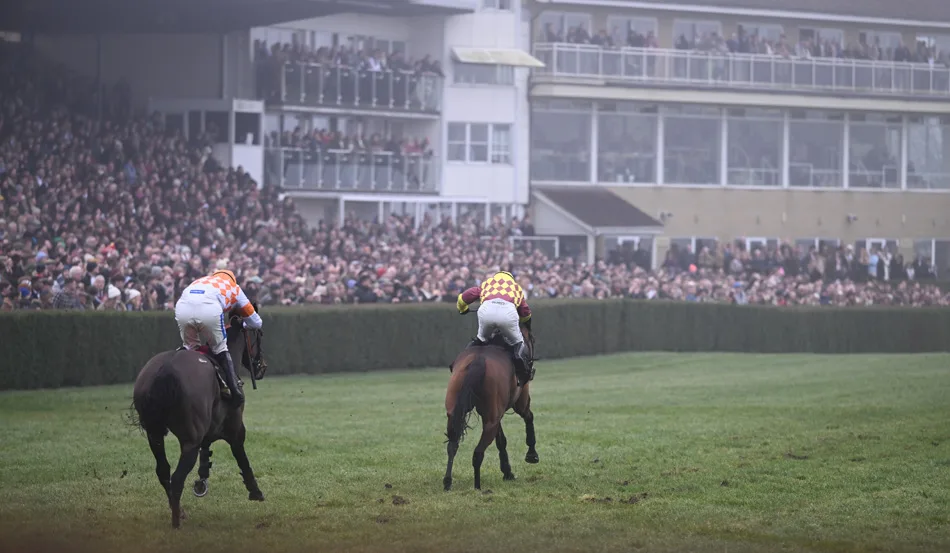
  • The Tizzards are back! After a summer off, Chris Wald catches up with Courtenay ahead of the new racing season.
  • And yes – of course – our usual ridiculous amount of amazing readers’ photography.

The BV – every month we’re jam-packed with Dorset and some frankly stunning photography. And it’s FREE. Why wouldn’t you want a flick through?

New BU and UHD study shows spinning helps hip osteoarthritis patients recover faster – and costs the NHS less

0

A groundbreaking study led by Bournemouth University (BU) and University Hospitals Dorset (UHD) has revealed that weekly group cycling classes significantly improve outcomes for patients with hip osteoarthritis – and may offer a more cost-effective alternative to standard physiotherapy.

Funded by the National Institute for Health Research (NIHR), the research will be published in Lancet Rheumatology at 23:30 UK time on Thursday 31st July 2025.

Participants who attended weekly group sessions combining static cycling and education reported better recovery outcomes than those receiving conventional one-to-one physiotherapy. The study also found the group-based approach required less clinical time, offering an efficient and scalable model for NHS services.

Tom Wainwright, Professor of Orthopaedics at BU and a physiotherapist at UHD, who led the study, said:
“For the time it takes to treat one patient using standard physiotherapy, we can treat multiple patients in a group session and provide them with better outcomes. This has proved to be more cost-effective than standard treatment and so we hope this will contribute to reducing NHS waiting times for physiotherapy treatment in the future.”

The intervention, known as “CHAIN” (Cycling against Hip Arthrosis), involves an eight-week programme of static cycling and education. First launched in 2013, the approach supports people living with hip osteoarthritis (OA) – a condition affecting 3.2 million people in the UK and a major cause of disability in older adults.

A five-year follow-up showed sustained benefits. Participants continued to manage their pain using self-help strategies and, significantly, 57% had not gone on to have surgery.

Professor Rob Middleton, also from BU and an orthopaedic surgeon at UHD, said:
“Hip replacements cost the NHS over £6,000 per patient, so avoiding surgery for hip problems reduces the burden on the NHS, saves money, and provides better outcomes for patients. Now with this new study we can also see the potential for static cycling to save further money for the NHS by bringing down waiting lists for physiotherapy.”

Dr Peter Wilson, Chief Medical Officer at UHD, added:
“We are an ageing population and increasingly we are seeing more patients with osteoarthritis that need either surgery or physiotherapy. Finding alternative ways to treat these patients could help reduce waiting times and the financial demand on NHS services.”

Professor Wainwright continued:
“We previously knew that CHAIN worked and benefitted patients. What this latest study has shown is that it improves clinical outcomes and is far more cost-effective when compared to usual physiotherapy care.”

Patients are referred to the CHAIN programme by their GP and join the eight-week course via the UHD Physio Team. Sessions are currently delivered in partnership with BH Live, a local charity and major leisure centre operator, at BH Live Active, Littledown in Bournemouth.

Viv Galpin, Health & Wellbeing Manager at BH Live, said:
“Studio cycling is a fantastic form of low-impact exercise. Among many other advantages, it helps to improve muscles around joints, maintain bone strength, improve balance, and reduce joint pain and stiffness. It’s great to see so many participants are already benefitting from our programme.”

One participant, Sue, was referred after being forced to give up her two favourite hobbies – walking and dancing – due to hip pain.
“My leg would give way and suddenly I couldn’t walk. The first week of the spinning class I could barely manage to get on the bike. By the third week I had already noticed a positive difference in my hip. After the programme I was walking and dancing and grateful to have a good night’s sleep again,” she said.

To expand CHAIN’s reach, the BU team has developed a virtual version via their education app. This allows patients to complete the programme from home or at a local gym using a static bike.

The long-term goal is national roll-out. BU aims to equip clinical teams across the UK with the knowledge and resources to establish their own CHAIN programmes.

Professor Wainwright concluded:
“By providing an app to help people manage their hip pain virtually and by supporting other clinicians with a toolkit to set up their own CHAIN programmes, the outcomes in the future could change the way we treat hip pain on a national and international level, helping to benefit our patients and improve lives for thousands of people.”

For further information about the CHAIN programme, please visit the BU website.

The BV puzzles August 25

0

Welcome to August’s BV Puzzles page – your free online spot for a quick brain workout. Play our interactive crossword, test your logic with a classic sudoku, or relax with our Dorset-themed jigsaw. No logins, no printouts – just free puzzles updated every month right here on The BV.
Perfect for puzzle fans across Dorset and beyond, our digital puzzles work on mobile, tablet or desktop. Enjoy a quiet moment of challenge with new puzzles published every issue of The BV magazine.

Built by BV magazine using the free crossword builder from Amuse Labs

This month’s jigsaw is the stained glass window inside the church of St Lawrence at Folke near Sherborne – is a Grade I church built in 1628 (the tower is older, and there is evidence of a Saxon doorway). Visit and enjoy the original Jacobean interior, including 17th century pews with carved scalloped ends. Outside there is a causeway built c1583 for access to the church.


Play Sudoku online!

Dorset Council – millions spent, rules ignored

0

Millions spent, rules ignored: A devastating audit has laid bare a two-year collapse in financial control within Dorset Council’s health and safety programme – with £13 million spent largely off-book, 11 officers sacked, and possible dishonesty at senior levels. The report, released last week by the South West Audit Partnership (SWAP), reveals deep structural failings in how the council handled urgent works to bring its buildings up to health and safety standards.

It details how a team of interim staff, brought in after a 2022 internal audit highlighted compliance concerns, operated for nearly two years with minimal oversight. Budgets weren’t properly authorised. Contracts were awarded without competitive tender. Payments were made on the same day, with no checks. Charges included £300 paid for work which is valued at just £20.

‘Governance failures across key operational areas … significant non-compliance with Council policies, poor record-keeping, and a lack of effective oversight,’ the report states.

Undeclared gifts

Despite a Cabinet-approved £4 million budget in 2023, the total spend reached nearly £13 million by 2024 – without Cabinet re-approval, a business case or scrutiny from the council’s usual financial monitoring systems. Some of the funding was quietly taken from surplus reserves – with councillors unaware.

The failings weren’t confined to poor project management. The investigation found breaches of the Council’s Code of Conduct, including undeclared gifts and hospitality, and raised concerns about the timing of key contract signings and decisions coinciding with personal connections and social events.

When did they know?

The council’s new LibDem leadership, in post since mid-2024, says it acted swiftly once irregularities came to light. They ordered the SWAP investigation and also terminated all 11 interim staff in the Place Assets & Regeneration team.

Leader Nick Ireland says the failures ‘predate the current administration’ and has pledged transparency and reform.

Most of the questionable spending occurred under the previous Conservative administration, and the timeline suggests the new leadership acted quickly once the scale of the problem was understood.

Still, with red flags already visible by early 2024, some will question why concerns weren’t more publicly raised during the election campaign – or whether earlier scrutiny might have stopped the overspend sooner.

In a statement, interim Chief Executive Sam Crowe admitted that councillors ‘were not involved in the way they should have been at the time,’ acknowledging that oversight mechanisms failed at both officer and member level.

A failing – or worse?

At its core, the report reveals what happens when urgency is used to justify opacity. The works were considered essential – and they likely were. But in bypassing proper process, the council not only failed on oversight, it may have wasted millions of public money in the process.

Dorset Council says it is now implementing a robust action plan and is working to rebuild public trust. But the implications are broader than just one department. The failures exposed by this report didn’t happen in isolation – they relied on a system that wasn’t watching.

A public Audit and Governance Committee meeting is due in October. The scale of the council’s reputational damage – and how far up it should go – may not be fully clear until then.