While the fuel bills are taking the headlines, the 20 year high in food bills and food poverty requires immediate action, argues the Green Party’s Ken Huggins.
Energy prices have risen dramatically recently, but food prices have also been rising and are now at a 20-year high. As with energy costs, this disproportionately affects the households whose income falls below their needs. For us here in the sixth richest nation in the world it is a national disgrace that food poverty means there are over 2,600 food banks operating across the UK, with almost six million adults and two million children struggling to get enough to eat. This is why the Green Party is calling for a Universal Basic Income, so that citizens have a guaranteed income to support their essential needs. The relentless rise in the use of food banks in the UK began long before the Covid pandemic. It is 22 years since the Russell Trust opened its first food bank in their home town of Salisbury, and it now supports over 1200 food banks across the UK. In North Dorset we have food banks in Sherborne and Blandford and the Vale Pantry community food store in Sturminster Newton. No doubt there are others. While energy is essential for our society, food is essential for our survival. For good health we need good food, and we need to grow more of it ourselves. Here in the UK we rely on imports for a staggering 45% of our food overall, including 84% of our fruit. This means we are extremely vulnerable to external events such as climate change and conflict. Food produced sustainably and consumed locally helps protect us from global shocks. So we have to change what we eat, what we grow, how we grow it … and reduce the appalling wastage. One-third of food production is never eaten! Farmers are THE key workers, and we must support them to transition to more sustainable agriculture.
Many in business could learn from the ‘can do’ attitude of the British public and do better, argues Lib Dems’ Mike Chapman.
Against a backdrop of some glorious Dorset spring weather, the gold of daffodils along verges, the beginnings of blossom and the return of the dawn chorus, we have had some grim stories with which to come to terms. The line on Ukraine that struck me most forcefully came in a conversation with a now very elderly soldier. Echoing Kennedy, he said “Ich bin ein Kyiver”. It is so much to be hoped that the active diplomatic, financial, humanitarian and material support being given to which those words allude will help enable democratic values to prevail. Some of that high ground was lost, though, with the shocking announcement of the mass redundancy at P&O. Thoughts are with those who have lost a livelihood – but also with the agency staff who will do a tough and responsible job on much poorer terms. The phalanx of security men escorting employees from the ships was a sorry sight. They might as well have had a Z on their uniforms for all the moral authority they conveyed. There hasn’t been such instant damage to a well- known brand since the infamous comments of Gerald Ratner! Since we are comparing and contrasting … as a people we seem to embrace the need for a ‘Can Do’ attitude. We are seeing it in the heart-warming stories of the support being mustered for the Ukranian refugees across the nation. We saw it in the Covid vaccination programme and annually in the response to Children In Need. The contrast is with the inertia of government (and its centralisation and secrecy), with the stories coming out of the DVLA about a culture that seems to be at odds with the ethos of public service, and with the light now being thrown on the prosecution, nay, persecution of so many postmasters and postmistresses. A dishonourable mention must also go to high-rise cladding businesses, profiteering energy companies and sewage- discharging water companies. We need to seize the day, hang on to the ‘Can Do’ and turn it into ‘Can Do Better’.
It is the power imbalance which allows giant brands to mistreat their staff, says Labour’s Pat Osborne.
P&O Ferries sacked 800 staff without notice by video this month, replacing them with agency workers on worse pay and conditions. As a subsidiary of Dubai-based DP World, a firm owned by the Dubai royal family, P&O aren’t exactly short of a bob or two. In fact, over the last two years DP World has paid out more than $376 million in dividends to their royal shareholders, at the same time as reportedly receiving more than £30 million in emergency funding from the UK government (including benefitting from the taxpayer funded furlough scheme) while sitting on the kind of bank balance that has Scrooge McDuck reaching for his swimming trunks. P&O aren’t alone in engineering a deliberate race to the bottom for pay and conditions. Household names like British Gas, BA, Weetabix, TESCO, ASDA and Clarks have all used ‘fire and rehire’ tactics to bully and intimidate their staff into accepting cuts to pay and conditions in recent times. It seems that the Tories have created an environment where bad bosses think they have license to tear up staff contracts, leaving many working people leaning into the cost-of-living crisis feeling more insecure about their jobs and income than at any time since WWII. We need to reverse this race to the bottom for pay and conditions by ending the power imbalance that allows bad employers to treat their staff in this way. That’s why Labour’s ‘New Deal for Working People’ and Keir Starmer’s promise that a Labour government will write it into law within 100 days of taking office are so important. Under Labour, work will be more secure and better-paid because unions and individuals will be given stronger rights to redress power imbalances in the workplace.
As we watch the atrocities being committed in Ukraine, Simon Hoare MP praises the communities who have risen up in swift action to provide help – and urges us all to continue to ‘do our bit’ where we can.
While Spring creeps into life the situation in and around Ukraine resembles deepest winter. Our Ukrainian brothers and sisters are living through the hell of war, amid scenes and images which we had all hoped were consigned to the European history books.
The best of us While Russia is showing us the worst of mankind, and of man’s inhumanity to man, across North Dorset we are seeing the best. Our DNA-embedded spirit of wanting to do all we can to help has risen to the fore. I cannot tell you how genuinely moved and inspired I was by the veritable army of volunteers I was privileged to go and help (albeit for a few hours) at The Exchange at Sturminster, and to see similar hives of activity at Shaftesbury’s Guildhall and Blandford’s Ginger Viking. A continuous stream of members of the public, motivated not by instruction but by a spontaneous desire to ‘do something’, bringing literally tonnes of food, clothing, blankets, toiletries and toys. Some came with a car full, others a carrier bag; it was clear that all were doing everything they could to help. Then there were the rooms of people sorting, packing and boxing up. Still others in a human crocodile loading vans for dispatch to Southampton and the port. Each and every one is a hero. They were and are the best of us.
A magnificent spirit Local businesses too have been marvellous. I don’t know all of those who helped but a shout out to Dikes of Stalbridge, Johnsons of Gillingham, Virginia Heywood at Shaftesbury and Gillingham’s South West Packing for either donating goods or that elusive and much-needed commodity, the cardboard box. Thank you too to Dorset Council for allowing the use of the chapel at St Mary’s School for storage purposes, and of course thank you to Ginger Viking and the Exchange for allowing their premises to be used as donation hubs. You’ve all been magnificent.
So – what can be done now? As your MP I continue to press Ministers to be swift and flexible with the refugee resettlement process, and for the Home Office to be far more fleet of foot than it has demonstrated hitherto. We are dealing with a wartime situation and our processes and policies, designed for peacetime, need to reflect that dynamic shift. Whatever can be afforded – be it £1 or £100 – I would urge you to make a donation to the DEC fund www.dec.org.uk.
Can you offer housing? Also, please consider registering on this website for the housing scheme www.homesforukraine.campaign. gov.uk. You might have a spare room, granny flat or a holiday-let. Please do register your interest on this site. If we can do our bit then we should. If we all try to ask ourselves the question ‘if we were in their position, what would we want others to do for us?’ I don’t think we will go far wrong.
Easter has come around again and our social media feeds are full of all kinds of creme egg infusions… the latest trend seems to be rolling a whole creme egg in pre-made croissant pastry and baking in the oven! I can’t decide if that is amazing or an abomination? If you are looking for a chocolatey delight this Easter then our recipe in February’s BV Magazine of decadent chocolate brownies also includes a cheeky twist to bake creme eggs into the top. We also had a delicious recipe for leftover hot cross buns last Easter, turning them into a bread and butter pudding, should you happen to panic buy hot cross buns this Easter. This month’s recipe is a lighter and zestier alternative to all that chocolate. These Lemon Friands are essentially the French version of a cupcake. Made with egg whites and icing sugar, they are deliciously light and the addition of some fresh raspberries and blueberries really work alongside the ground almonds. They are a lovely bake to make to serve with coffee, or as a light little dessert after your full Easter Sunday Roast with loved ones. Perhaps with some clotted cream … Heather x
Delicious lemon friands are the French cupcake – image: Heather Brown
• Pre-heat the oven to gas 5/fan 180º. If you have a friand tin, then by all means use that, but I simply use a standard muffin tin. Grease the base and edges of each cup (mould?) of your muffin tin. Then cut strips of greaseproof paper long enough to go down one side, across the bottom and up the other side of each cup and pop them inside each one. This helps to release the friands from their tins once cooked – they can be super-tricky to get out otherwise. • Mix together in a large bowl the icing sugar, plain flour and ground almonds. Then grate in your lemon zest and stir to combine. • Whip the egg whites until they form stiff peaks. • Add the melted butter to the dry ingredients and mix, then add the egg whites and gently fold to combine. • Divide the batter mixture into the muffin tins, and sprinkle a couple of blueberries or raspberries into the top of each cake. • Bake in the oven for 15-20 minutes until the top is firm to the touch and golden brown. • Leave to cool. • Once cool, remove from the tins and sprinkle with a little extra icing sugar.
By Heather Brown
Heather Brown is on the committee of the Guild of Food Writers; a home economist with a passion for Dorset’s brilliant foodie scene. Heather runs Dorset Foodie Feed, championing Dorset’s food and drink businesses, as well as working with her food industry clients.
Moving crowds to tears is all in a day’s work for Jonathan Marshall, the horseback falconer starring at the new Spring Countryside Show.
Talking to Jonathan Marshall is unexpected. From a look at his website, my impression was of the ultimate showman persona; shinily clichéd, with a confidence bordering just on this side of arrogance. I did not expect a quiet, unassuming northerner on the phone – with an irrepressible sense of humour, the deepest love for his horses and falcons threading through every word, and entirely dismissive of his own importance: “the fella in the middle of the arena telling the story is irrelevant”
An accidental career Jonathan Marshall’s love affair with horses began in early childhood – at 78, his mother still has horses, one of whom is 38 years old. At the age of eight, Jonathan discovered falconry and the birds soon took over his attention. Eventually he realised that he could combine his two passions – falconry was traditionally a horseback method of hunting. “I never set out to be a horseback falconer – I mean, who does? – but in ’86 I made it my professional career. Though I quickly realised if I was going to make it a show, I needed the right horses. It’s not quite so spectacular if I’m on a donkey!” So Jonathan chose to work with the most beautiful – Andalusian, Lusitano, Friesian and Arabs. “We work on dressage lines – high school moves such as Piaffe, Passage, Passo Espanol, Reverencia and Levade. But I’m well aware I’m not a dressage rider, I’m a showman. “We carefully rehearse every second of the shows – the falcons are trained to the lure, flying through the horses legs. It’s all timed to music, and the horses and the birds know exactly what they’re doing. It’s taken a long time to get the show to where it is now – our first season was a steep learning curve, and it was … well, let’s say it wasn’t the most polished performance at first! “And it’s evolved over time – it’s such a natural pairing between the horses and the birds, and it always resonates at an instinctive level with the audience. I’ve noticed it especially since we came back from the lockdowns – last year’s shows were far more emotive. “I think it has to do with our collective lived experience over the pandemic. At the end of each performance I allow the horses and birds to run and fly, entirely uncontrolled and unrestrained, and I simply run with them – it’s the ultimate expression of freedom, and for the first time I found audiences were crying, reacting on a deeply emotional level. It’s spontaneous, the only part of the show that’s not carefully scripted; it’s not a stunt… and I think there’s a part of everyone who longs to be as free as those animals in that moment.”
Jonathan breeds peregrine lanners – or ‘perilanner’ , a hybrid between a peregrine falcon and a lanner falcon. It is larger and faster than a lanner, but does not fly as far as a peregrine.
Books too During lockdown Jonathan began writing “I’m in my 50s now. I’ve got to think forwards – I’m not so young anymore, and it hurts when I fall off!”. His first book ‘Spirit, the fastest bird in the world’ is a story about acceptance, and that no one is more important than anyone else. His second book, ‘A Falcon’s Love’ which he has illustrated himself, is out shortly.
Jonathan will be appearing at the Spring Countryside Show with his 2022 ‘A’ team:
Amadeus In 2018 Jonathan got a call about an unbroken 10-year old Friesian stallion. Kept purely for breeding, when his owner died no one knew what to do with him; his sheer size was intimidating. Within a week of bringing him home, however, Jonathan was riding Amadeus on Bude beach. “He was a bit of a bully, and was used to simply getting his own way. The first time I approached him in the stable, he started to push himself forwards at me, but instead of retreating I kicked the stable door loudly, and he backed off. He came at me again, so I kicked the door again, and in a gesture I’ve come to know and love, he lifted one hoof gently – it was like a sorry, an ‘OK, I’ll be a good lad’. He is honestly the kindest, gentlest, most beautiful horse I’ve ever worked with. Everyone loves him. And he still lifts his hoof to ask permission or apologise, even now.”
The Falcons Jonathan will be bringing Duchess, Sonnet and Aria, his peregrine lanners, to the Spring Countryside Show – the trio are full sisters, though hatched in different years, and bred by Jonathan himself. “I’ve had falcons since I was eight, and these birds are the best I’ve ever had. Anyone who breeds any animal knows that sometimes you get a pairing that just produces magic. The parents are good birds, but their offspring are something else. They have the speed and agility you’d expect, of course, but they’ll spin as they dive, just for fun, they twist like nothing else … they’re amazing birds, spectacular to watch.”
Giles Henschel, the award-winning ‘oliveer’, who came to his national artisan brand by way of school expulsion, the Army, being deported from Libya with his wife (twice), and Take That …
Giles Henschel
From a youth spent rebelling against the expectations of a world which insisted on comparing him to his disciplinarian headmaster father, Giles Henschel followed a circuitous route to become The Olive People with his wife Annie. “I was eventually expelled by my own father at the age of 16 – and kicked out of home too. I joined the Royal Engineers (who are known for building things then blowing them back up again. Which was exactly what I wanted to do). I was told I wasn’t bright enough to operate a giant digger, but perhaps I should apply to Sandhurst? I did, and then joined One Squadron, 30 Signal Regiment in Blandford – the very best posting. We flew all over the world; Hong Kong, Belize, Namibia, Bahamas, Beirut… “
Out on Civvy Street “I left the army as a Captain, expecting simply to walk straight into another job. I obviously started to apply for £150k a year jobs… and didn’t get them. So I reduced my expectations a little and applied for more… down to £80k, £60k, £35k… the last job I was rejected from was a second hand car salesman in Clapham for £11k a year. I didn’t ever get an interview. Not one single interview. “I was 30, and living in a bedsit in Walthamstow. My landlady Judy Walker worked for Renata John (Elton John’s wife), who owned a music management business, and Judy sat me down one night ‘I want to start my own business. I know the music. But I don’t know the administration – which you do.’ And so we started; we had some opera singers and jingle singers on the books, and then a guy called Nigel from Manchester called: ‘I’m putting a band together, and I need you to run the auditions, and then get them working together’. “Judy did the first auditions, brought me a demo tape to which I said ‘yeah, they’re alright’. She spent some time grooming the band, took them all over the place, and eventually got them onto a kids Saturday morning TV show, and then on Terry Wogan the same evening. “On the Sunday morning Nigel called ‘Yes, I’ll take them from here, thanks’, and they were gone. We had no contract, we were never paid – and that was it with the music industry for me. “Oh, the band? They were called Take That. The only thing I still have is the original demo tape, the first time they ever sung together, labelled ‘March 1991’.
Giles and Annie travelled extensively on their two BMW R100 GSs which they still own to this day.
And then there was Annie “I was working for a charity in Covent Garden when I met Annie who was flying for Japan Airlines. We got married on 4th July in 1992, living in a dilapidated houseboat. Annie was from Stur originally, and neither of us wanted to continue what we were doing. We both wanted to take a gap year out. So we sold what we could, and bought two motorbikes (we still have them; two BMW R100 GSs), and we travelled the Mediterranean. Down through Spain, up the coast to France, Italy, Greece… It was during the Yugoslav war, so we had to adjust our route to go through Turkey, Syria – an utterly amazing country to be in in 1993. Back into Israel, Jordan, Egypt, all the way down the Nile into Sudan, through the Western Desert into Libya – where we got arrested and deported twice – and then bumped back to the UK and ended in a bedsit, flat broke, in Southampton. “The one thing we’d found throughout that trip, every meal of the day, was an olive. Everywhere you went, bar, restaurant, roadside shack, there was always an olive of some description. On the trip we learned to use food as a social lubricant – we were an anomaly, these two people on two motorbikes in winter, but we found a ‘wow, this is delicious, how have you made that?’ got people chatting. We kept journals, noted recipes, but arrived back in the UK not thinking about food at all.
And eventually, the olive “Our bedsit landlord was an old army colleague, and he was an ardent nudist. We were stuck at home, no money, deep in post- travelling blues, and this guy wandering around naked while we tried to set up a training business. Annie and I were so depressed. Eventually Annie said “Why don’t we just go into town, buy some good bread, wine, some nice olives, we’ll put the tent up in the back garden and we’ll pretend we’re travelling again”. And so we did. Up went the tent, we drank the wine, ate the bread, and spat out the olives because they were so awful. We started to make them for ourselves, with a bucket of olives fermenting in the corner of the bedsit. “All our guests refused to eat them ‘no, no, we don’t like olives’, but after a glass or two they couldn’t stop eating them ‘these are amazing! Really good, they don’t even taste like olives! You should SELL them!’ “We resisted – after all, ‘no one likes olives’ – but eventually we put our last £500 into enough jars and enough olives. On the 28th October 1993 we took ourselves to the Rural Living Show in Bath, and came back with £1,875.80p (we have no idea who gave us the 80p). So we did it again the following week, and the week after that, and eventually we found ourselves doing the Country Living Show in London the following March.
Where it actually began “A very pregnant lady wandered past the stand, and stuck her fingers in a bowl, ate one olive and moved on. I hate that, I was about to call out ‘do NOT use your fingers!’, but she’d already gone. Then she came back ten minutes later and did the exact same thing with a different olive – again I couldn’t catch her. “She circled back for a third go, and this time I was armed with a cocktail stick… I was ready to stab her in the back of the wrist, when she said ‘Do you supply the trade?’ “why yes of course” I said, suddenly feeling very friendly to this nice lady. “She pulled her card out and she turned out to be Food Development Director of Fortnum & Mason: ‘I have been looking for someone to supply F&M with olives. I have tasted olives all over the place, and I have never tasted anything as good as these. These are what I want on my shelves. Will you supply us?’ Up until then, it had just been for pin money. It was suddenly a serious business. That was 1994, and we’re still supplying Fortnum & Mason to this day. “We started in Southampton in that bedsit, but circumstances meant we moved into a house owned by Annie’s parents back here in Stur – doing the olives in the shower room. We moved to Stapleford, to Wilton, to Mere, and we were going to go to Wincanton, but the deal fell through on signing day, and we had just six weeks to find new premises. I’d been driving past this place at Rolls Mill, which was just walls. No windows, no heat, light or power; we bought it on the condition it could be finished in the six weeks. We moved in on the Queen’s Jubilee in 2002 – 20 years this year.
And so to Giles’ eight music choices, along with how and why they stuck in his life:
Bakerman by Laid Back First heard when serving in Harrogate with the Royal Signals running the External Leadership troop. I was spending a lot of time in the hills and it brings me back to those days. The lyrics do have meaning – the line Sagabona Kunjane Weni is Swahili for ‘Hello, how are you’ which is basically how we’d greet people in the hills (in English – not Swahili).
Sensitive Kind by JJ Cale I’ve loved JJ Cale since the time I first discovered his laid-back style of blues played with such a casual ease and musicality. He always shunned the big time and his wife used to say if you want to hear the real JJ just come around to the Airstream one evening and listen to him on the porch. This particular track has special meaning to me as it just reminds me so much of Annie – original oliveer and my rock for the last 30 plus years.
Sodade by Cesaria Evoria I came across this wandering through the streets of Cordoba; I was drawn to a café where this was playing one sunny Sunday morning while we were out there for the olive harvest. Her voice is so plaintive and speaks to the heart and was just perfect to let wash over us as we sat and watched the world go by. We discovered later that the song is sung in her native Cape Verde Kriolu – a blend of Portuguese and West African languages and speaks of loss and sorrow at leaving the islands.
Into the Night by Santana I have always liked Santana and this collaboration with Chad Kroeger really makes the most of his voice and Carlos Santana’s amazing guitar skills. It makes me think of family holidays – driving with the windows down in a beaten up rental, hot air and sandy beaches with the kids singing along in the back.
Go! by Public Service Broadcasting I was seven when the first moon landing happened and I was fascinated and begged to be allowed to stay up and watch as Neil Armstrong first stepped onto the surface. My favourite film is Apollo 13 – the story of the greatest space rescue. To hear the original radio transmissions from those on board and at Mission Control stitched together in this track still gives me goose bumps. Such an original and timeless piece and yes, as an avid Blue Peter watcher I did make the rocket from Fairy Liquid bottles …
Mul Mantra by Snatum Kaur My mother, Norah Forbes Stewart, was a deeply spiritual and widely-read lady for whom no one religion, creed or faith was enough – this was one of her favourite pieces of music which we played at her funeral last year. She is sorely missed by so many and I’ll be forever grateful for all she opened my eyes to – from the occult to different faiths, poetry and forever seeing the beauty in everyone who was lucky enough to meet her and life itself.
Refugee by Oi Va Voi Oi Va Voi is a British collective of musicians, celebrating many different genres but with a distinctly Yiddish flavour. The name is Yiddish for “Oh Dear”, and being of Jewish descent, this sings to roots I never really knew I had. Especially poignant given the current unjust war in Ukraine, and while this is not a political statement or choice – we are all refugees in some way, some more than others and there but for the grace of god go all of us – this song is a reminder of both where I’m from and where so many are headed.
Senegal Fast Food by Amadou & Mariam I came across Amadou & Mariam while working at the Larmer Tree Music Festival as MC on one of the fringe stages. I loved the feel and warmth of their music, and this song from their fourth album Dimanche à Bamako is produced by and featuring another favourite artist, Manu Chao. This song combines them both and takes us back to a five-week road trip in an old Land Rover down to Morocco and the edge of the Sahara we took as a family for my 50th Birthday. This was on a playlist called Sahara Songs and we played it endlessly as we reached the very edge of the road in a town called M’Hamid El Ghizlane about 20km from the Algerian border. Amazing Chicken Tagine followed, by the most miraculous night spent camping under the full moon and stars way out in the dunes …
And if the waves were to wash all your records away but you had time to save just one, which would it be? I’d save the JJ Cale track, Sensitive Kind – it’s probably the only one I can sing along to and keep in tune, as well as being a reminder of Annie!
My luxury item Would be an acoustic guitar with unlimited string replacements. And before you ask, my book would be the best primer of how to play the damned thing properly as I’ve been playing for 45 years and still can’t do it any justice.
Click here to listen to Gile’s entire playlist on YouTube
Grade 13 Points: 7-11 (£20,444- £22,199) – Subject to experience.
Fairmead Community Special School transforms the lives of pupils aged between 4-19 years with additional learning needs (MLD and ASD). The school works in partnership with parents/carers and other stakeholders to develop our pupils in becoming positive individuals who make a valuable contribution to their community.
The post holder will work under the direction of the Headteacher to provide a clean, healthy, and safe environment for the benefit of the pupils and staff of the school. This is a vital role within the school being responsible for the maintenance and security of school buildings, management of frontline caretaking and cleaning. The successful candidate will also need to demonstrate that they have good communication skills to be able to work within a Special School whilst undertaking the requirements of this post with enthusiasm and motivation. The applicant must have a full UK driving licence.
Fairmead School is committed to safeguarding the school community. All job applications must contain the disclosure of any spent convictions and cautions. The school will carry out pre-employment vetting procedures, which include the successful outcome of an enhanced DBS.
Closing Date:Tuesday 3rd May
Interview Date: Friday 6th May
Visit the school: Prior visits can be arranged, please contact by email: [email protected]
New columnist Toots Bartlett can’t hide her excitement as she leaves home to move into William Fox-Pitt’s yard near Sturminster Newton, buys a horse without seeing him, and looks ahead to a busy 2022 season.
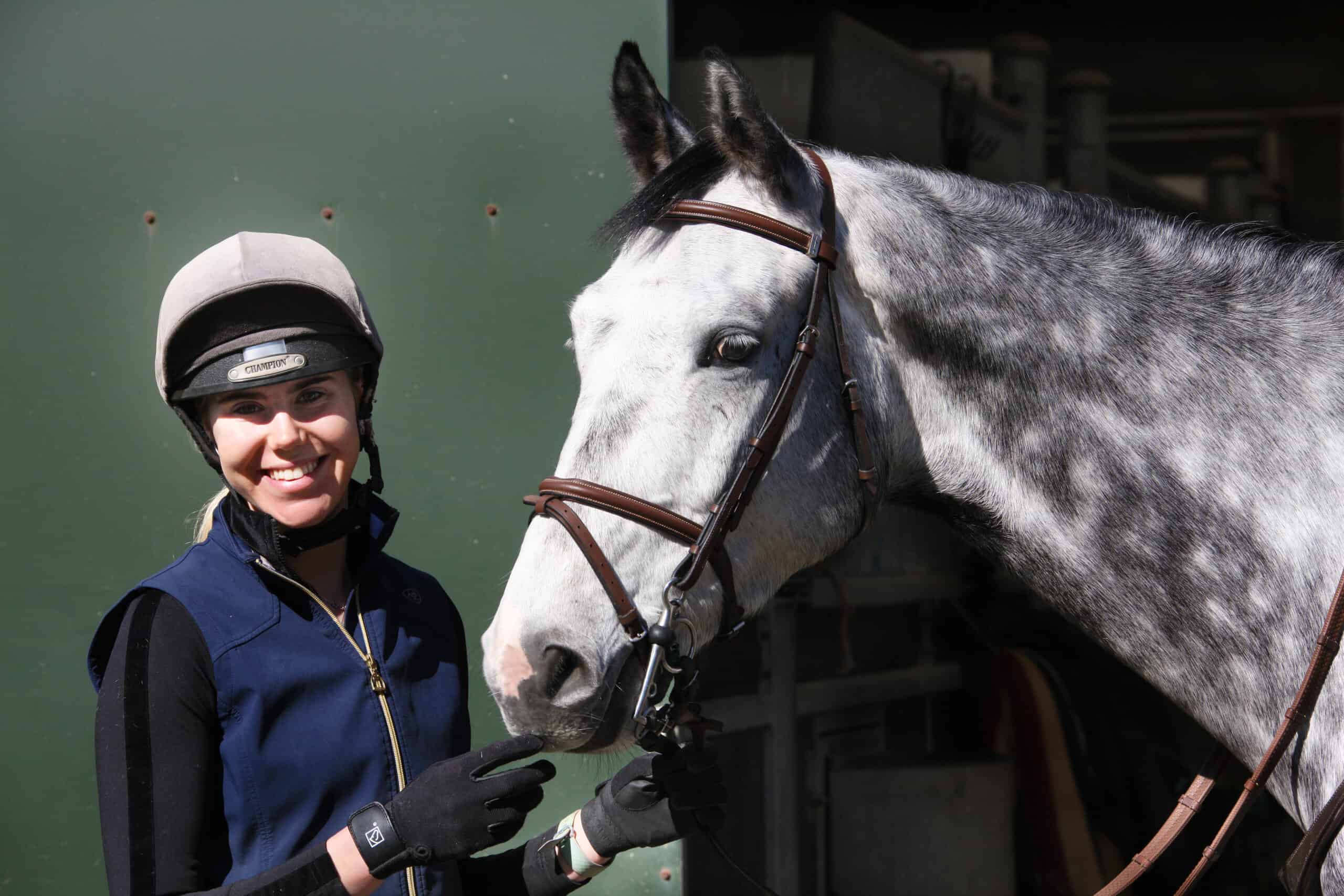
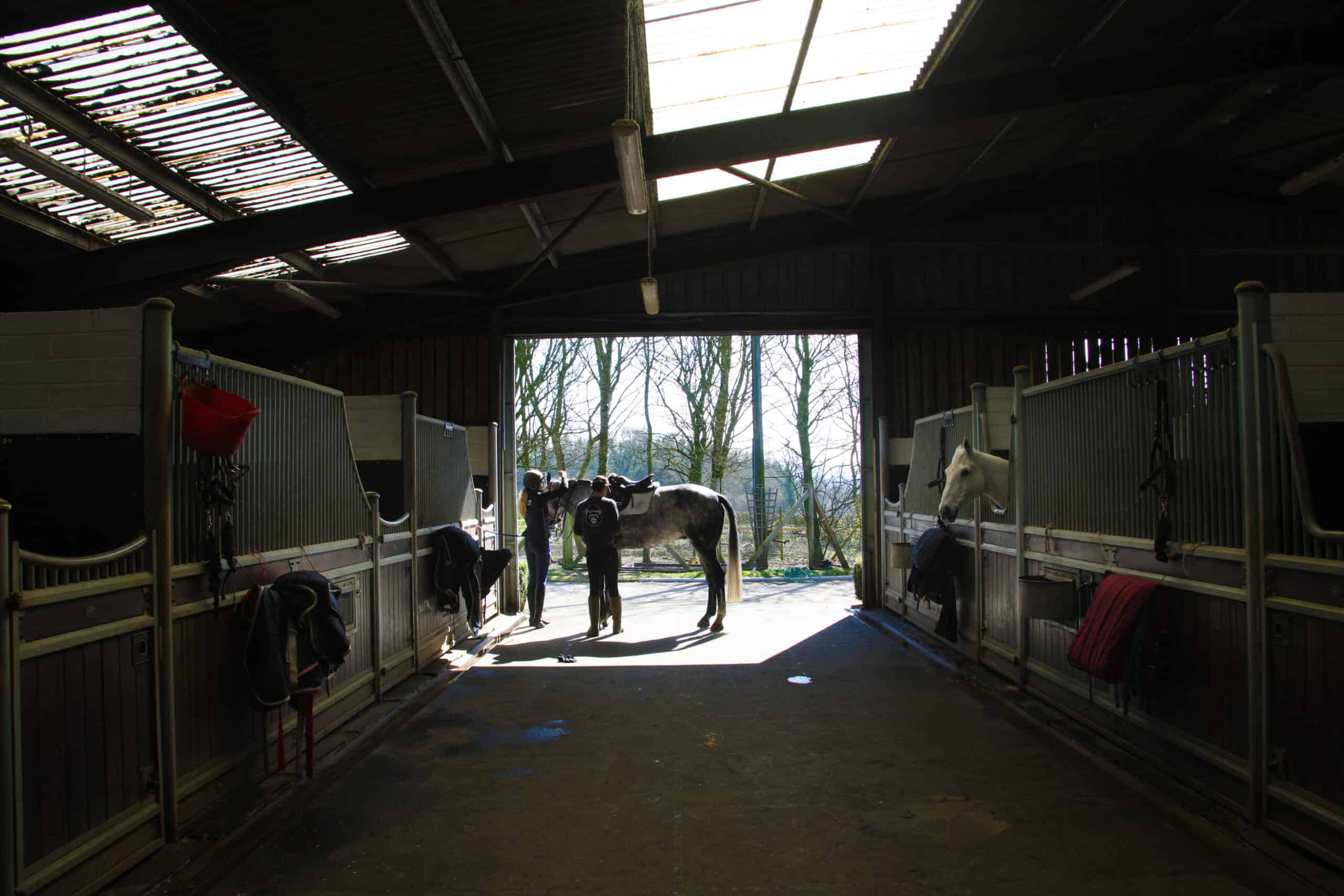
It was definitely time, but the idea of leaving home and finding a base to begin a professional career within the world of Eventing filled me with excitement – and some trepidation. I wasn’t absolutely sure how to even start the process … until I remembered that William Fox- Pitt has encouraged young riders in the past by allowing them to be based at his beautiful yard in North Dorset. A few messages with William (and a visit with my father …) and the adventure of moving began. What an absolutely life-changing opportunity, to be based alongside one of the worlds’ best Eventers, and with such fantastic facilities – I am honestly still pinching myself! We moved in the middle of November, originally bringing three horses; Carlos 55 (Charlie), Freestyle R (Freebie) and Extasy SR Z (Gatsby) from home, as well as my wonderful groom Joel Harts and his horse The Rag Lad. Although the move was a long process, it didn’t take long for us all to settle in.
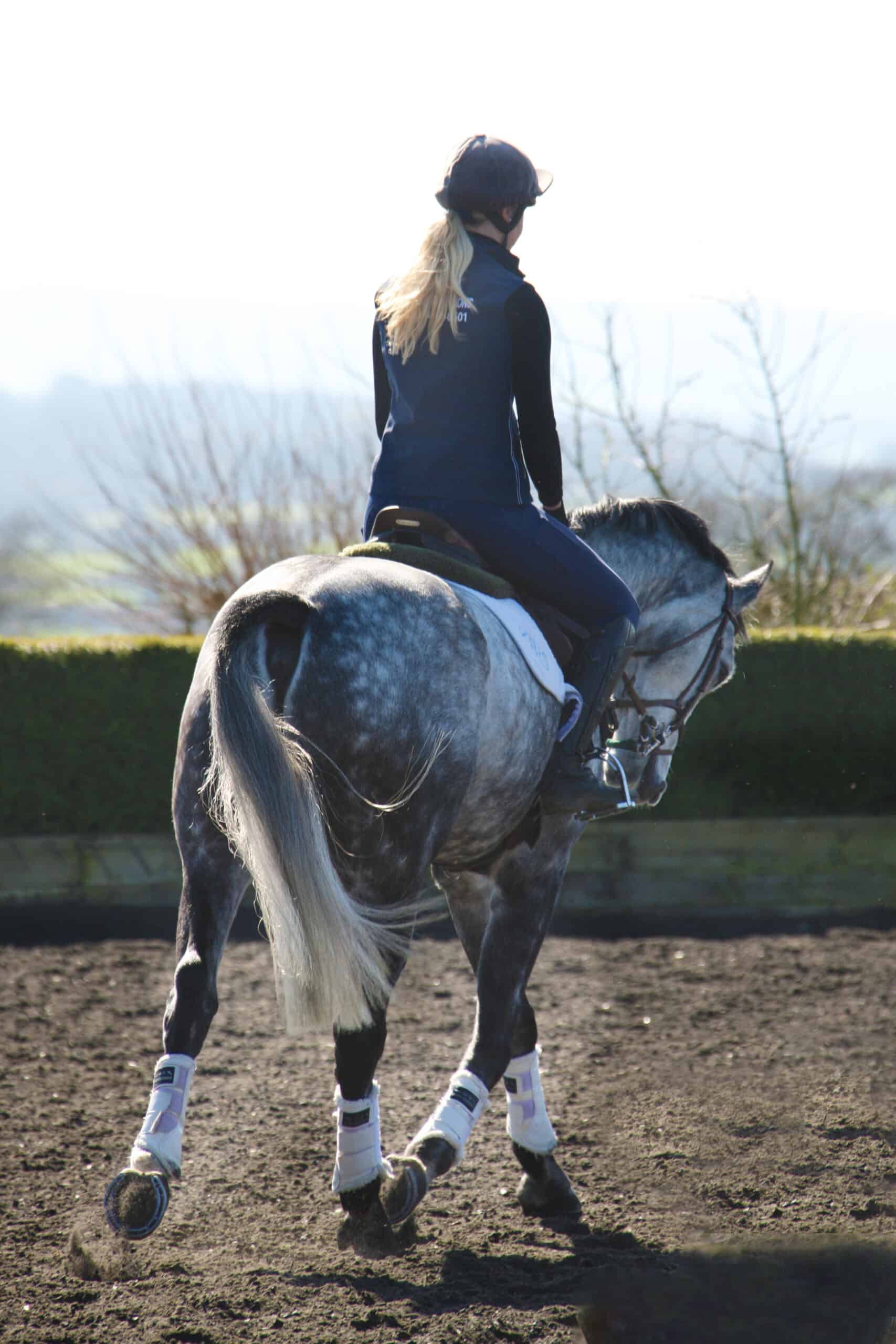
The work begins We spent the winter basically hiding from the weather – made all too easy here with the amazing indoor barn, horse walker and indoor arena. We brought a few of the horses slowly back into work, allowing them to develop their muscle and strength correctly after a few months off. The training has now picked up, and we are trying to get the horses out to British Show jumping (BS) and British Dressage (BD). We have regular training with both William Fox-Pitt and Emma Fisher (GB Young Rider Eventing Coach and Chef d’Equipe) on the jumping side, and Lisa White (FEI International Grand Prix dressage rider and trainer) for the flat work.
A new boy With the excitement of the event season around the corner I received a call about a fabulous six year old about to go up for sale. I had been saving for a house, but when I heard about him I knew if I didn’t grab him someone else would, so I used my house deposit money and bought Cor Y Taran over the phone, without actually seeing him. He’s the first horse I’ve owned by myself, and he’s worth every penny. He is a superstar in the making and I can‘t wait to get him out eventing and to start his career.
The rest of the team My top horse for this season, Freebie, produced the second best dressage and a double clear at his first event of the season at Tweseldown in March. The remaining four horses all begin their event season in the next two weeks. C Why, my partner for the last three seasons, is returning to me after a period of rehab and I can’t wait to have him back with us. He is an incredible jumper and we have gone from BE100 (competition level with a maximum height show jumping of 105cm and cross country of 100cm) to 4* and Championship events (CCI4*-L is for experienced riders with Advanced horses competing at the top of the sport, and who may go on to greater International success at CCI5*-L) in a very short period of time. We also have a very exciting new horse joining our lovely team in the next coming weeks so there is a lot to look forward to. 2022 is looking to be a very exciting year ahead, with a fantastic team of horses and some big goals to try and fulfill!