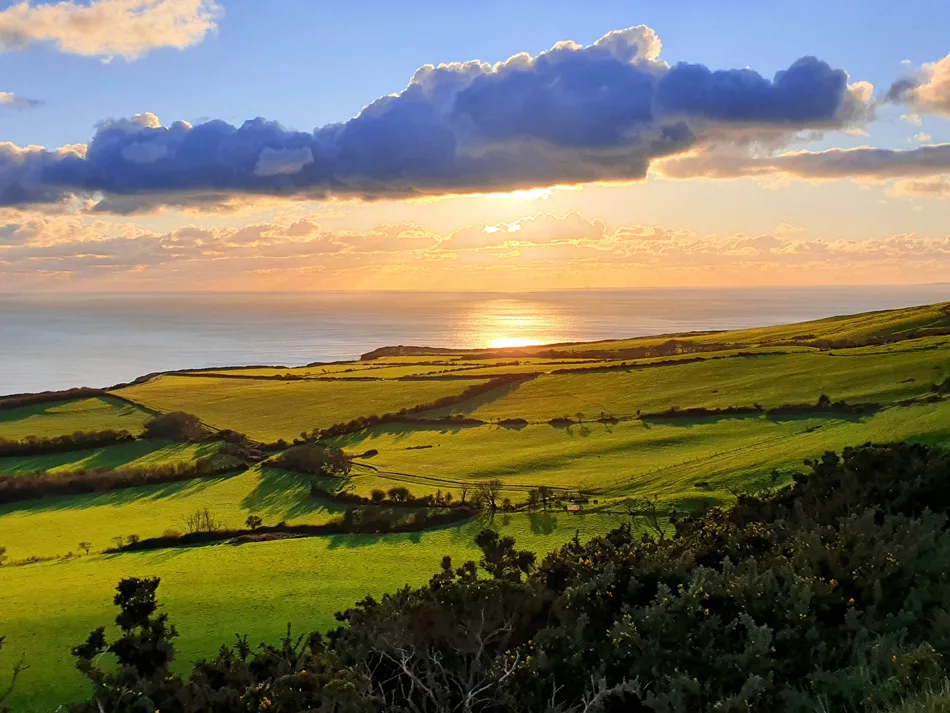
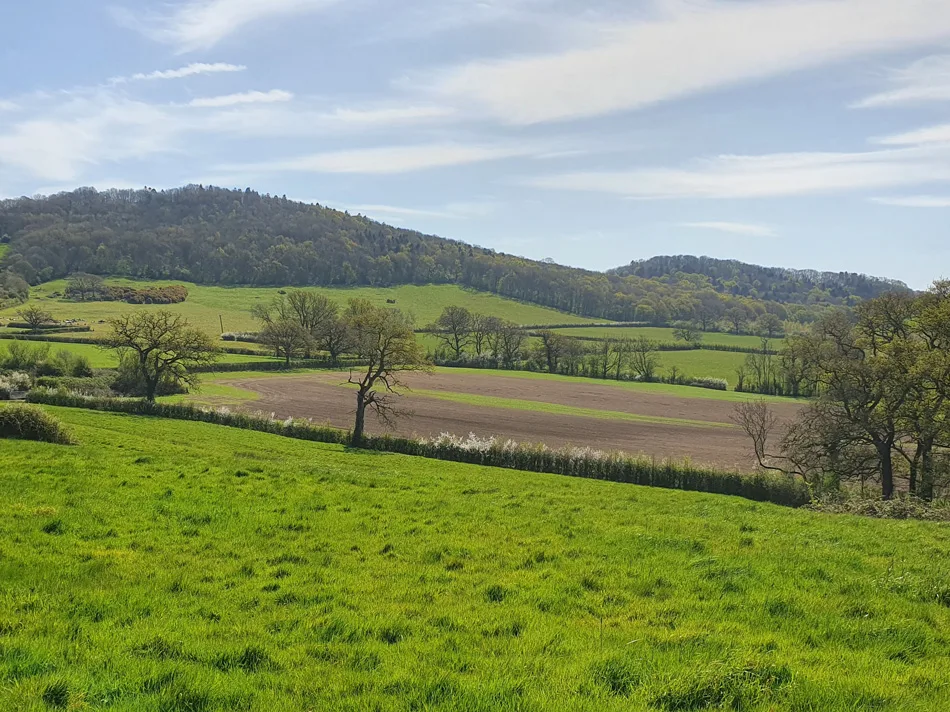
Welcome to April’s BV Puzzles page – your free spot for a quick brain workout. Complete the crossword, test your logic with a classic sudoku, or relax with our massively popular seasonal Dorset-themed jigsaw. This month we have a classic springtime small starry carpet of celandines studded with our first bluebells of the year (we were early: this was taken in the middle of March!). Fair warning – it’s a tricky one. You might need a bigger mug of tea to keep you going.
Perfect for puzzle fans across Dorset and beyond, our digital puzzles work on mobile, tablet or desktop. Enjoy a quiet moment of challenge with new puzzles published every issue of The BV magazine.
From potholes swallowing tyres to the unravelling of developers’ planning promises – by way of a hanged Cornish forger – March’s podcast has a few unexpected turns along the way.
Who’s holding developers’ to account for their promises?
It was meant to be something really special… and people are heartbroken.’
Chair of Shaftesbury Town Council, Virginia Edwyn-Jones, speaks candidly about a local development where the promised beautifully-finished housing estate has failed to materialise, leaving residents dismayed. From stripped topsoil to failed planting and unusable play areas, the conversation exposes a far greater concern than just some missing footpaths: once planning permission is granted, who ensures developers deliver what they promised?
Discovering a hanged family forger
‘It was just like touching time.’
Dorset writer Rachel Rowe uncovered an extraordinary story buried in her own family history – a press-ganged schoolmaster turned forger, executed in Bodmin in the early 1800s.
What begins as a tale of crime becomes something more complex – a story of inequality, bad luck and a system stacked against those with the least power. (featured image is that of the Rowe family in 1900)
Are we wasting our time?
‘As a parish councillor, I’m left having to explain to people why our opinions count for nothing.’
Our anonymous parish councillor lets their frustration boil over this month, asking whether any parish or town council truly have a voice any more?
Potholes and the Price of Keeping Dorset Moving
After one of the wettest winters on record, Dorset’s roads are showing the strain – with pothole reports up 92% and thousands of defects logged.
“Nearly 10,000 highways inquiries were logged in three months.”
Despite increased funding and rapid repairs, the bigger question remains: is the system built to cope with a changing climate – or simply patching over the problem?
The Grumbler: Building Homes That Don’t Add Up
This month’s Grumbler lays bare the financial reality facing small developers – where rising costs, new regulations and stagnant house prices leave projects unviable before they’re even finished.
“We will be lucky to make any profit at all.”
From soaring build costs to punitive council tax on unsold homes, it’s a stark account of an industry under pressure – despite government promises to build more.
Coffee and Craft: Getting the Perfect Brew
And finally, Jenny is back with Giles Dick-Read in his Dorset farmhouse kitchen to learn how to make a proper cup of coffee – from grind size to brew ratios.
“You can buy the best coffee in the world and still make a horrible cup of coffee from it.”
A reminder that even the simplest things – done well – are worth the effort.
This episode is based on stories from March’s BV, available to read online here https://bvmag.co.uk/March26 . News, people, place and perspective – all in one place.
The BV – named Best Regional Publication in the UK (ACE Awards) and Regional News Site of the Year (Press Gazette). Always worth your ears.
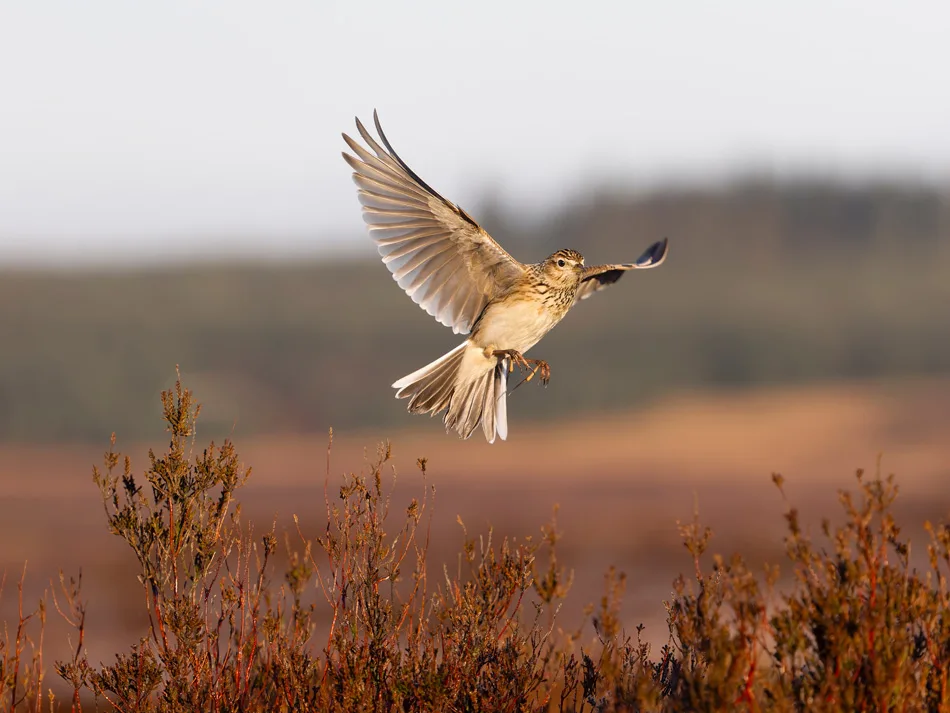
Jane Adam’s chance encounter with an injured skylark at Badbury Rings becomes a meditation on loss, renewal and the fragile return of spring
The skylark (Alaudala arvensis) – famed for its soaring songflight, the male skylark delivers a fast, complex cascade. Victorians estimated the birds’ songflight to be at 600m (2,000ft), but in reality most birds sing from around 50m and few ever go beyond 200m (650ft). The average display lasts just over two minutes, but some have continued for half an hour
If it hadn’t moved when it did, I would never have seen it. I had gone to Badbury Rings to blow away a few cobwebs. It was one of those March days where the wind turns your fingers to ice and hair to rags, but the sun tricks your brain into thinking it’s spring. Perfectly camouflaged against the dead autumn leaves, the skylark’s feathers were the colour of oak and ash, with a tuft on the top of its head like a peaked cap. It was trailing a wing, unable to fly – I gathered it up, soft feathers as light as clouds, and placed it gently into my rucksack.
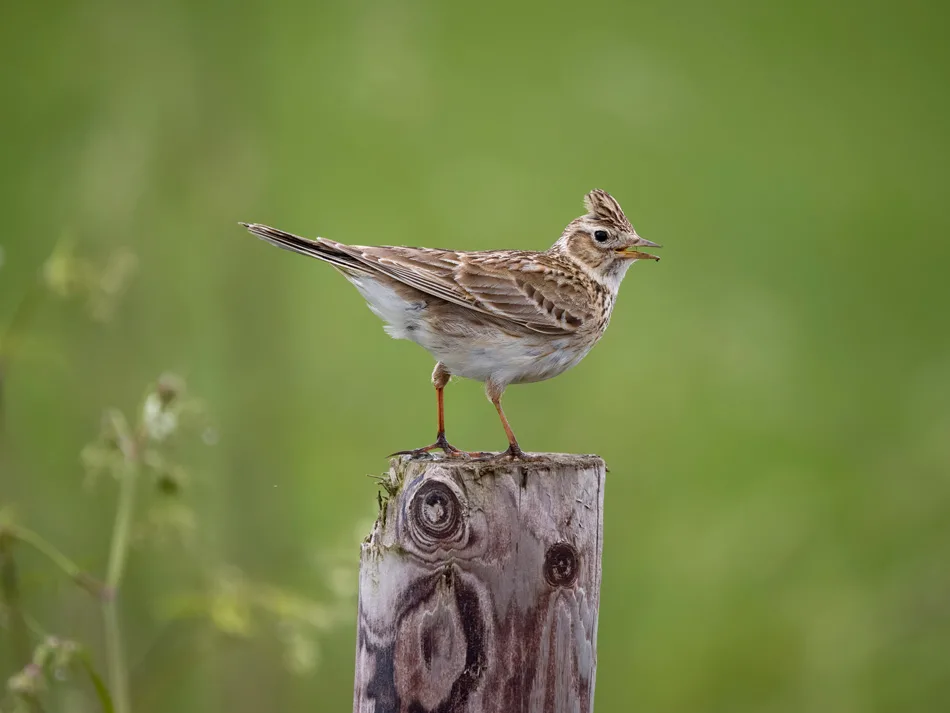
Skylark, Alauda arvensis, single bird on post, Wiltshire, May 2023
Messengers A skylark that can’t fly is a profound paradox. Its collective noun – an exaltation – is no accident. To hear the song of a skylark, to look up and know it’s there somewhere high above, even though you can’t see it, is enough to lift anyone from a winter melancholy. It’s the males that sing at this time of year: some start before dawn, spiralling hundreds of metres into the sky, singing continuously. Their unique vocal anatomy allows them to breathe in and out while still producing a stream of sound. These performances aren’t just on a whim – they’re the skylark’s way of wooing a mate and claiming territory … though I like to think they sometimes sing and fly simply because they can. In European literature and poetry, skylarks have long been associated with renewal, hope, and rebirth. Chaucer, Shakespeare and Vaughan Williams all refer to them as messengers of the day. Just as farmers once observed cows’ resting habits to forecast the weather, they also paid attention to the way skylarks flew: a gradual descent foretelling a fine day, while a rapid fall signified rain. March is undoubtedly a month of awakening, of nature surging back after winter – of growth, green shoots and birds announcing new beginnings.
Sadly, skylark numbers have declined due to farming intensification. To hear one – let alone an exaltation – is now a rare joy. I took the injured skylark to my local vet. Its wing was badly broken, and it couldn’t be saved. Later, as the sun set, I returned its body to the ancient rings, its connection between sky and earth now irreparably severed. But around me, skylarks descended quickly with silver song and tumbling wings, heralding spring even as the rain began.
For more than 15 years, Sturfit has kept the Sturminster Newton community leisure centre open, maintained and evolving – not as a business, but as a not-for-profit charity run by local people. It’s a place used every day by families, clubs and individuals – and is much-needed by the local high school. Several thousand people a week walk through the doors, and for many, it’s not a luxury. It’s something they rely on.
And now, we need a few more people to help make sure it stays that way.
A role that genuinely matters
Being a trustee isn’t about helping out at the edges: you’ll help shape decisions that affect thousands of local people every year. Being a trustee is about helping to guide how this centre is run, how it’s sustained and how it continues to serve the community well.
It’s a few hours a month, but the responsibility – and the impact – is real. Decisions made by the trustees affect how the whole town uses this place.
Who we’re looking for
We’re looking for a small number of thoughtful people who care about the community and are willing to play a part in keeping this facility strong and sustainable.
We would particularly welcome:
– Someone with experience of leadership or management – perhaps you’ve led a team, department or organisation – Someone with a good understanding of finance or business planning
Alongside this, we are always open to people who can bring a fresh perspective, sound judgement and a willingness to contribute.
You don’t need to be sporty. Many of us aren’t. What matters is that you can think clearly, ask sensible questions and commit a few hours each month.
Why it matters
Keeping a facility like this open, accessible and financially sustainable doesn’t happen by accident. It depends on local people being willing to step forward and take a share of responsibility for it. Most assume someone else will do that.
This time, it could be you
If you’ve ever thought you might like to contribute to something local – not just support it, but help protect and shape it – this is a straightforward way to do it. It’s a small commitment in time, but it helps ensure something important remains here for everyone.
Interested?
In the first instance, email [email protected] and tell us a little about yourself.
Sturfit is a registered charity that has operated Sturminster Newton’s leisure centre for over 15 years, providing accessible sport, fitness and wellbeing facilities for the local community.
One hundred years after the founding of CPRE, Rupert Hardy celebrates its legacy, while urging renewed defence of Dorset’s rural landscape
Sunset over Kimmeridge Bay – part of Dorset’s protected National Landscape. All images: Rupert Hardy
CPRE – the Campaign to Protect Rural England – has spent 100 years defending the countryside from unregulated development and urban sprawl. Founded in 1926, it has spent a century helping shape National Parks, Green Belts and the modern planning system.
Founding years CPRE was founded in 1926 by Sir Patrick Abercrombie and Sir Guy Dawber as the Council for the Preservation of Rural England. It brought together organisations including the National Trust and the Commons Preservation Society. Early efforts targeted ribbon development and the lack of planning controls in rural areas. Abercrombie had famously warned against ‘ribbon development’ as it would create “glimpses through an almost continuous hedge of bungalows and houses” – a vision he believed would destroy rural beauty. Key early achievements included securing the Petroleum Act in 1928 to control roadside advertising, influencing the 1932 Town and Country Planning Act, creating the first Country Code in 1935 and campaigning for the Metropolitan Green Belt Act in 1938. It was helped by such inspiring figures as Sheffield-based Ethel Haythornthwaite, the environmental campaigner and poet.
Post-war transformation Following World War Two, CPRE’s advocacy contributed to significant land-use legislation. The 1947 Town and Country Planning Act addressed many of CPRE’s goals for land-use controls. After a 20-year campaign, the 1949 National Parks Act established National Parks, Areas of Outstanding Natural Beauty and Sites of Special Scientific Interest. By 1955, the government accepted CPRE’s call for protected Green Belts around major urban areas. Campaigns in the Last Seventy Years CPRE’s focus has evolved to address new threats and environmental sustainability. Since the 1960s CPRE has continued to adapt. In 1963 it campaigned for protection of England’s coastline. A long campaign against hedgerow loss led to legal protections in 1997. From the 1980s onwards, work has included promoting brownfield development, energy efficiency and opposition to fracking. More recently, CPRE has focused on dark skies and rural tranquillity, developing light pollution maps and promoting ‘star count’ initiatives. As it approaches its centenary, CPRE has also been shaping modern planning policy and strongly promoting roof-top solar energy, affordable rural housing and hedgerow restoration. CPRE is celebrating a hundred years of standing up for the countryside, and a century of achievements, impact and dedication with lots of events throughout England, including a parliamentary reception in February. As Mariella Frostrup, CPRE Somerset president, puts it: ‘Protecting the countryside isn’t about freezing places in time or saying no to change. It’s about making better change – for people, for nature, and for the long term.’ Award-winning garden designer Sarah Eberle is creating a CPRE-themed show garden at the 2026 RHS Chelsea Flower Show, after which the garden will be relocated to a regenerated housing development in urban Sheffield. We have also produced a short video, 100 Years in 100 Seconds – see it playing above right. In May, Future Rural: Imagining Tomorrow’s Countryside – a call to action as well as a celebration of the CPRE centenary – will be published in May.
Duncliffe Wood, the iconic hilltop landscape currently threatened by a huge solar farm proposal
Dorset CPRE’s successes Our local branch, Dorset CPRE (DCPRE) has been campaigning to promote and protect our countryside, as well as supporting rural communities. Recent successes have included: Helping to stop the West Dorset, Slyer’s Lane and Blandford Hill windfarms, as well as the Rampisham, Mapperton and Sadborow solar farms, which we believed would have had serious visual impact on the Dorset countryside. Helping to save the beautiful Crown Meadows from a housing development we considered inappropriate in Blandford Forum. Working to mitigate the effects of hundreds of inappropriate planning applications. Campaigning throughout Dorset to control littering since our former President, Bill Bryson, launched Stop The Drop. Sponsoring and judging the Best Dorset Village Shop competition until 2019 (the Best Dorset Village competition is sadly currently in abeyance as it needs a new major sponsor). Helping to fund the refurbishment of iconic fingerposts and we are supporting Community Land Trusts. Sponsoring the annual Dorset Hedgelaying Competition, organised by the Melplash Agricultural Society. We also promote the Great Big Dorset Hedge initiative. Organising a number of successful conferences: the next will be on 9th June on Getting the Balance Right between Dorset’s Housing, Nature and the Countryside.
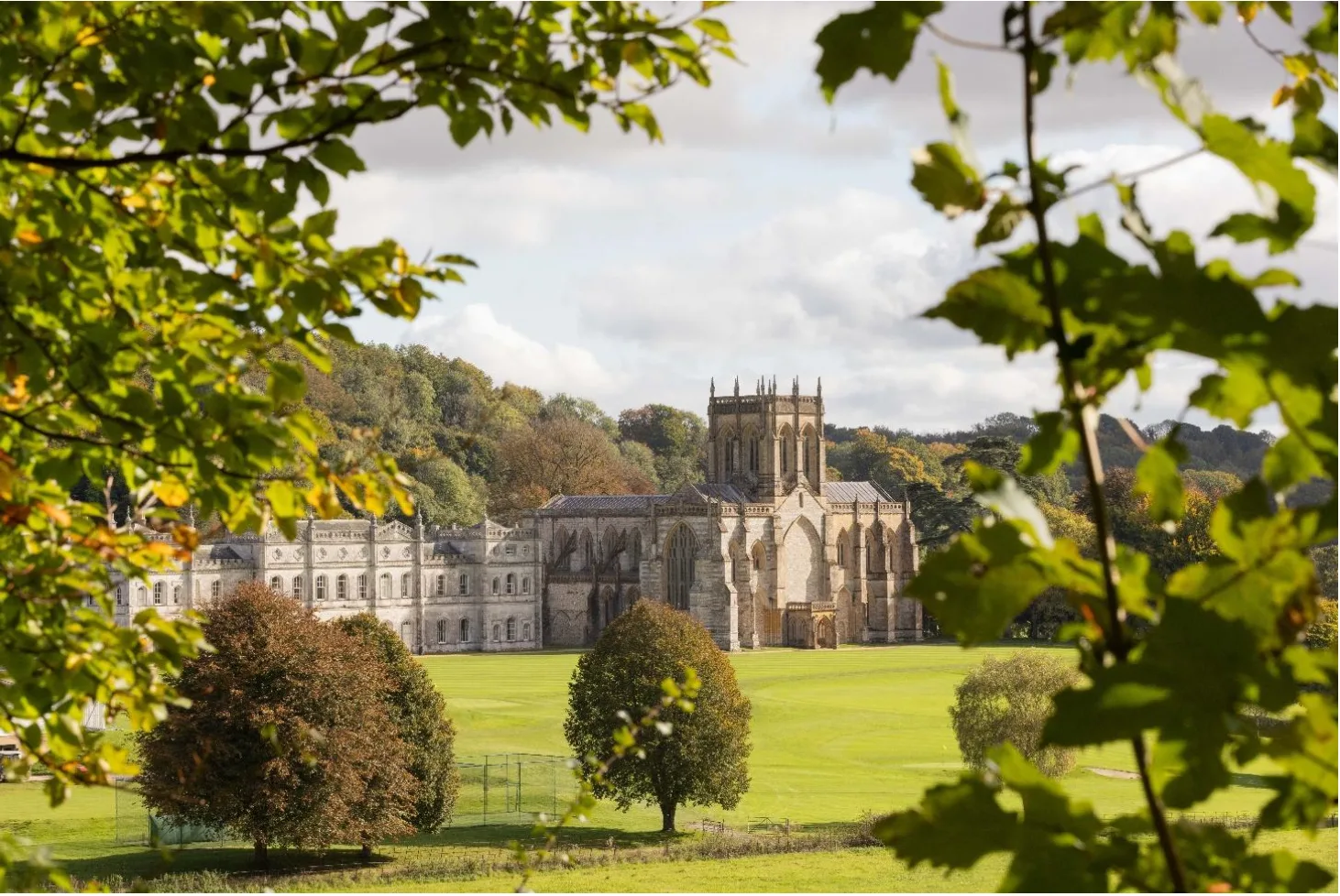
Celebrate the centenary! Dorset CPRE’s events will include a big party at Milton Abbey, with lots of speakers, to which our members and others will be invited. Second, the group will be planting lots of trees across the county, including England’s rarest native timber species, the black poplar. Dorset CPRE has a new logo and website and is also offering membership at a centenary rate of just £3 per month. meeting on 31st March at Clayesmore School, where Dr Miles Russell, Bournemouth University’s director of archaeological fieldwork, will speak on excavations at Winterborne Kingston: Investigating Iron Age and Roman Dorset. Do let me know though if you are coming –[email protected] Finally, we must resolutely fight a government that seems determined to concrete over the countryside and flout local democracy.
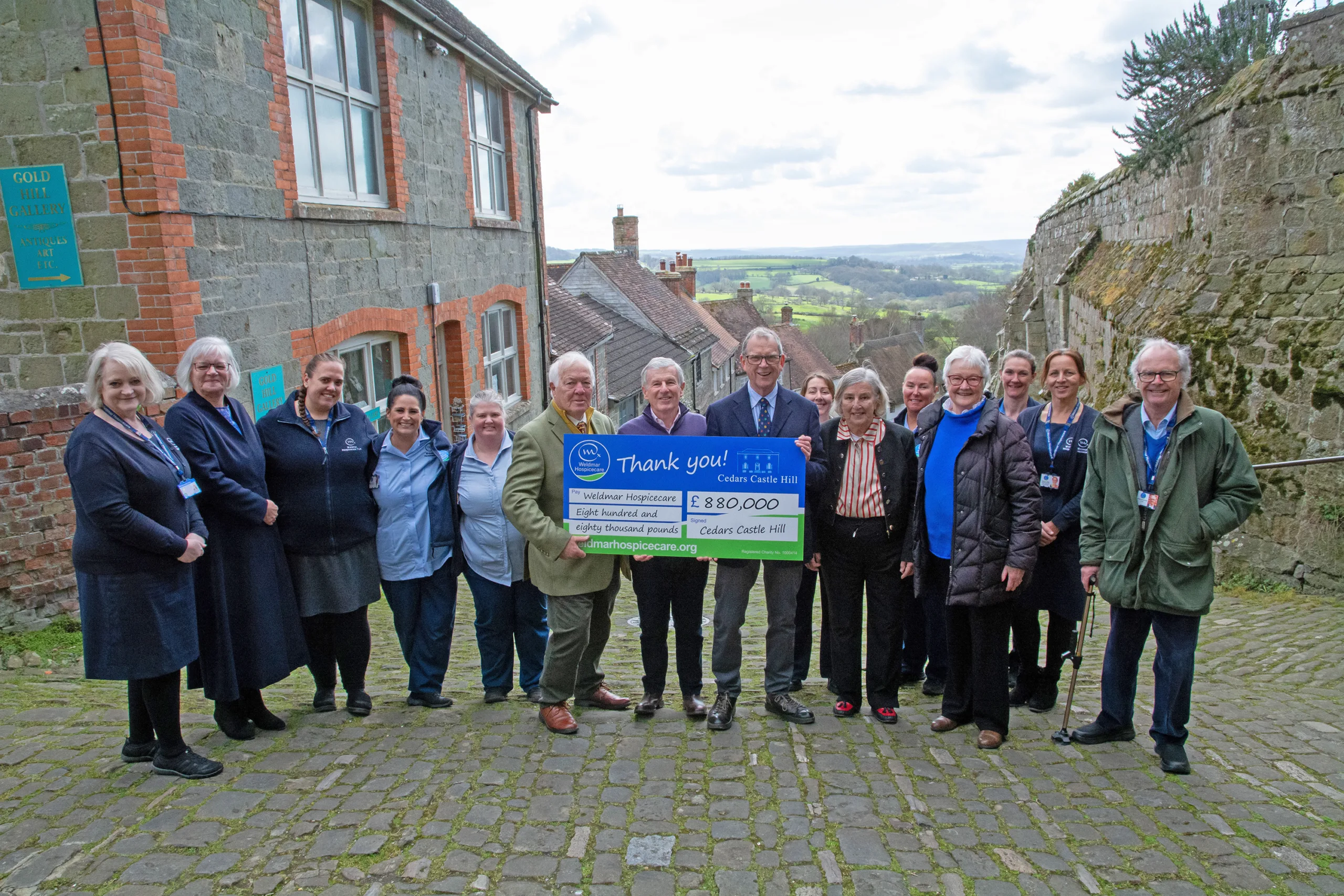
Specialist end of life care across Shaftesbury and North Dorset has been given a significant boost following an £880,000 donation to Weldmar Hospicecare from local charity Cedars Castle Hill.
The funding follows the sale of Cedars Nursing Home to an established care provider and Castle Hill House for development by a family-run business specialising in the restoration of historic buildings. Trustees have directed the proceeds towards supporting local hospice services, ensuring continued care provision in the area.
Trustees from both Weldmar Hospicecare and Cedars Castle Hill, alongside nurses and health care staff from Weldmar’s Specialist Hospice at Home North Dorset hub.
The donation will fund Weldmar’s Specialist Hospice at Home North Dorset hub, which enables patients with life-limiting illnesses to receive care in their own homes. The service brings together nurses, doctors, therapists and counsellors to support both patients and their families, often working alongside GPs and district nurses.
Caroline Hamblett, CEO of Weldmar Hospicecare, said: ‘We are overwhelmed by the generosity of the Cedar Castle Hill Trustees. At a time when hospice funding is under immense pressure nationally, this injection of funds is a lifeline. It ensures our teams can continue to provide comfort and reassurance to families in Shaftesbury and the surrounding area when they need it most.
Cedars Castle Hill has been providing exceptional care for people in Shaftesbury for over forty years now, and we are delighted that their gift will provide a solid foundation for the continuation of care and support of the local community.’
Martin Thomas, Chairman of Cedars Castle Hill, added: ‘As Trustees we’re delighted that Cedar Castle Hill’s legacy will lead to the strengthening of local care and support services so ably provided by Weldmar.
We are also proud to have achieved our twin goals of securing continuity of care for our former residents and job security for our staff, in response to a very challenging economic environment.’
Weldmar supports adults across Dorset who are thought to be in the final twelve months of life, with most care delivered at home rather than in its inpatient unit in Dorchester.
Selina Heaton, who leads the North Dorset hub, said: ‘North Dorset is a unique patchwork of close-knit towns like Shaftesbury and Gillingham, alongside many beautiful but isolated villages. For patients living in rural communities, the idea of travelling for care can be daunting. This incredible donation means we can keep our ‘hospice at home’ moving, bringing expert clinical care and emotional support directly to people’s doors. It ensures that no matter how rural your home is, you aren’t facing a life-limiting illness alone.’
Weldmar Hospicecare is an independent charity which must raise more than £27,000 each day to provide its services free of charge across Dorset.
Martha Brown, a widow married to a much younger man, John Brown, ran a little shop in the tiny village of Birdsmoorgate in the Marshwood Vale of West Dorset. It was not a happy marriage – he openly flirted with a younger woman and drank a lot. One night he returned home late from the other woman’s house and beat Martha viciously. Driven by fear for her life, she grabbed a hatchet and killed him. Later, she tried to claim he had been kicked by his horse, but the evidence pointed to his having been attacked in the house. Martha was found guilty of his murder at Dorchester Assizes, and condemned to death. She clung on to her story until two days before her execution, when she wrote her confession. But although the sympathetic prison chaplain rushed to London with the document it was too late – the Home Secretary was in Ireland and he was the only person who could commute the sentence. Martha was executed on Saturday 9th August 1856. Her story would be just another grim footnote in Victorian court reports if her execution had not been witnessed by a young Thomas Hardy. That shocking event stayed with him, haunting him into old age, and importantly influencing, if not actually inspiring, one of his greatest Wessex novels.
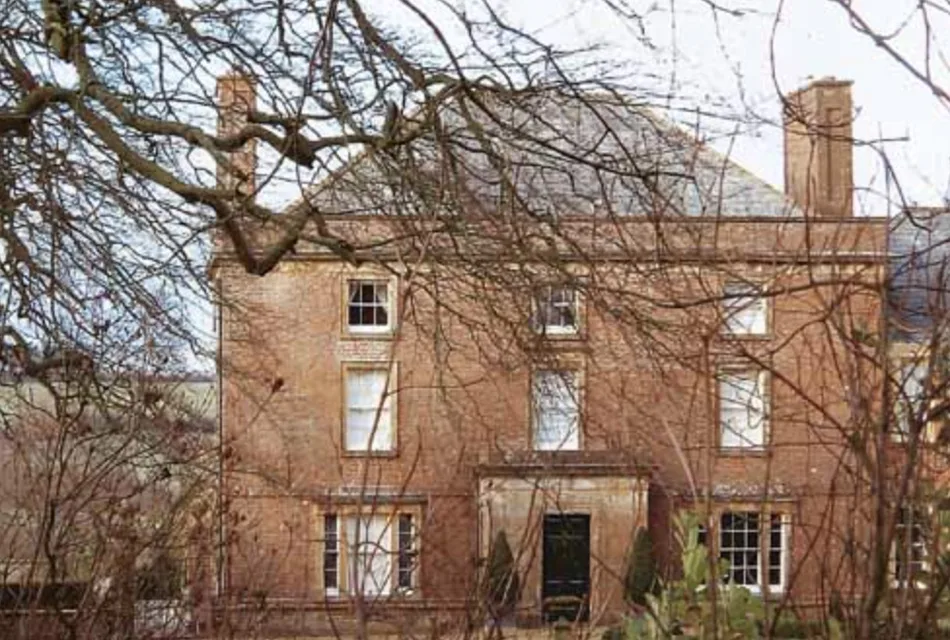
Most people associate William Wordsworth with the Lake District, but the revered poet actually lived in Dorset for two years (see Dorset Life here). He lived with his sister Dorothy in a manor house at Racedown, at the foot of the Iron Age hill fort Pilsdon Pen. The house was owned by the Pinney family and was leased to Wordsworth fully furnished and rent-free. William and Dorothy lived there between September 1795 and June 1797, and Samuel Taylor Coleridge came to visit them from Nether Stowey near Exmoor, where he lived in the late 1790s. Racedown was a short distance from Birdsmoorgate in the Marshwood Vale, the scene of a notorious 1856 murder. Nowadays, Wordsworth fans head to Dove Cottage in Cumbria, but in the early 20th century – with long-distance travel more difficult – Racedown attracted many people who were interested in the life and work of one of England’s greatest poets. One of these ‘pilgrims’ was Thomas Hardy. Lady Hester Pinney described the visit in a short memoir, published in 1966 by James Stevens Cox*, in his Toucan Press monographs on the life and works of Thomas Hardy. ‘Thomas Hardy came to the house as a pilgrim in 1925 and as such signed the pilgrim’s end of the visitors’ book. After doing so, he cleaned the pen on the striped lining of his waistcoat, a thing I remember seeing my father’s business friends do. ‘We had been talking about the years gone by, and as he was leaving and being hurried home by his careful wife, he turned to me and said: “Can you find out about Martha Brown? She lived over there,” and he pointed towards the west. “I saw her hanged when I was 16.” He was bustled into the car, before there was time for more.’
Racedown House, the Pinney family home in the Marshwood Vale, visited by Thomas Hardy as a Wordsworth ‘pilgrim’. Image: Dorset Life
A fine figure Lady Pinney was a district councillor and Poor Law Guardian, and used to visit the old and bed-ridden folk in the Beaminster Infirmary. In her memoir, she wrote: ‘I asked them about Martha Brown. They told me that she was a “wonderful looking woman with beautiful curls.” ‘She and her husband lived at Birdsmoorgate. Martha was about 20 years older than her husband, who, they said, had married her for her money – £50. John Brown was a tranter [a man who did jobs with a horse and cart], kept a horse and did hauling for people. Martha kept a general shop. The other woman in the story, Mary Davies [later Powell], also kept a shop and took in washing. ‘One day, Martha looked in at Mary’s window and saw her sitting on John Brown’s knee. ‘John Brown went to Beaminster on a Saturday with a load of poles and came back in liquor very late at night. He and his wife had a quarrel, and while he was bending down by the fire, untying his boots, Martha hit him on the head with a hatchet. Later she called in a neighbour and said she had found her husband dying at the door from kicks from his horse. The story was not believed and Martha was hanged at Dorchester. ‘Mary Davies started to walk the 25 miles to see the hanging, but when she reached the village of Broadwindsor, three miles away, the people threatened to mob her and she turned back. When I had collected all these stories I sent them to Hardy.’ In his reply thanking Lady Pinney for her report, Hardy wrote of his shame at seeing the execution of ‘that unhappy woman Martha Brown.’ Hardy, then only 16, said his only excuse was ‘that I was but a youth and had to be in the town at the time for other reasons … I remember what a fine figure she showed against the sky as she hung in the misty rain, and how the tight black silk gown set off her shape as she wheeled half-round and back.’ Hardy’s second wife, Florence, also wrote to Lady Pinney: ‘What a pity that a boy of 16 should have been permitted to see such a sight. It may have given a tinge of bitterness and gloom to his life’s work.’ It certainly stayed with him, and undoubtedly informed the development of the story that would become his best-known novel, turned into a play during his lifetime, and later filmed and staged. Tess of the D’Urbervilles ends with the heroine being hanged for the murder of the man who had seduced her, abandoned her, and later dragged her back into what we would now call a toxic relationship.
She had a little axe Martha Brown’s story was vividly recalled to Lady Pinney by one of the Beaminster Infirmary inmates, Jim Lane, who (like Hardy) was only 16 at the time. He recalled John Brown as ‘a bad man’ and described what the villagers believed happened on that fateful night in Birdsmoorgate: ‘Martha went along … and found her husband on Mary Powell’s knee, she was at the window and she see’d un there. She went home and got there first. After John came home, he sat by the fire untying his boots. I expect they had a few words – you know. She had a little axe and she hit him on the head (because he had been along of that other woman.) She did hit him on the same night and the blood did make a stain what never could be got out till the house fell down. ‘Mary Powell, she ought to be hung instead because she did uphold a man to her house. Martha Brown were hung openly at Dorchester and no one’s been hung openly since …’ Martha had money, said Jim, but Mary was younger and smarter: ‘I suppose John liked the younger woman best … but Martha was a nice-looking lady, too. Me and one or two other lads went to see the body on Sunday morning about 12, before dinner, but they wouldn’t let us see it.’ John and Martha were both nice people, he said, but John ‘used to have a drop or two to drink going about on his job.’ Perhaps still thinking about Mary Powell/Davies and her part in the tragedy, he concluded: ‘It is hard to be killed for other folks’ wrong.’ A crowd of three to four thousand gathered to see the hangman William Chalcraft perform his grisly duty. He was reported afterwards to have said that he ‘never saw a criminal die so easily.’ Lady Pinney noted, in her memoir, that Martha’s execution was the first public hanging in Dorchester for 23 years – and she was the last woman to be publicly executed in the town. In its report of Martha’s execution, the Western Gazette of 24th July 1856 looked back to that previous execution, of 15 year old Sylvester Wilkins: ‘In a lark he ignited a piece of tow that had been stuffed into a hole in an adjoining house … The jury recommended the convict to mercy on account of his youth, yet the judge left him for execution and he was hanged on the 23rd March 1833.’
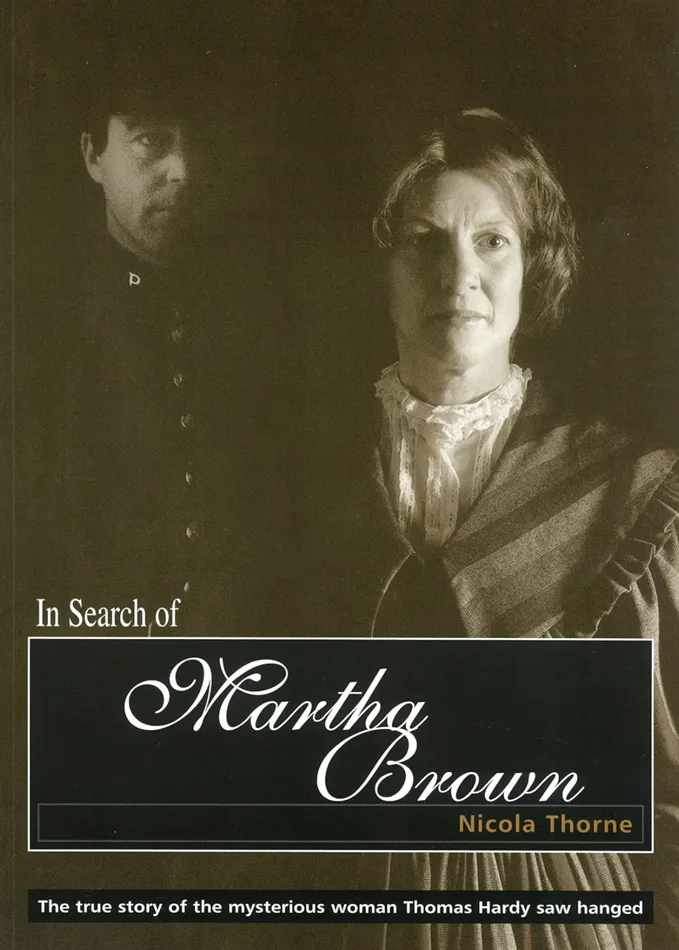
In Search of Martha Brown is Nicola Thorne’s book about her researches into the murder and the trial
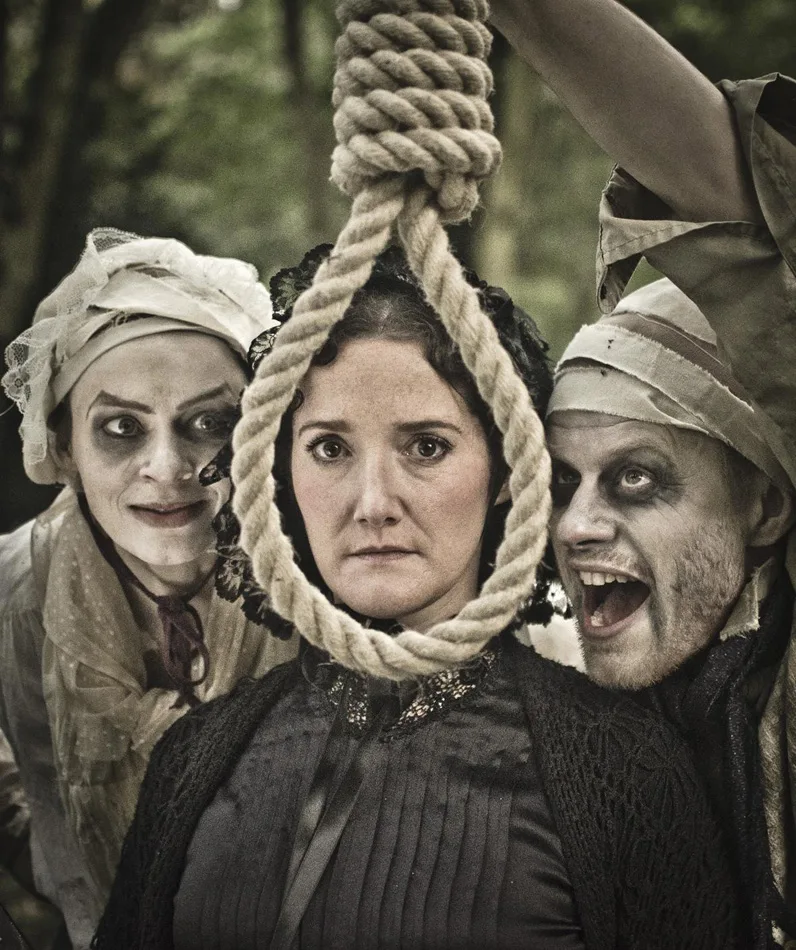
A grim chorus Martha’s story continues to attract interest and comment – most recently in an episode of Lucy Worsley’s Radio 4 series, Lady Killers. The historian and broadcaster travelled to Dorchester to see the old Crown Court in Shire Hall, where Martha was tried and convicted (as were the Tolpuddle Martyrs, 22 years before). Looking at the changes in understanding of domestic abuse and women’s suffering at the hands of men (fathers, brothers, husbands), Lucy Worsley also talked to solicitor Harriet Wistrich, the founder of the Centre for Women’s Justice, about coercive control and the plight of women who kill their abusive husbands – and they considered what the outcome would be if Martha was tried today (listen to the full Lady Killers episode here). The story has, of course, special resonance in Dorset. In 2014 it was turned into a play, The Ballad of Martha Brown, by the locally-based theatre company Angel Exit. The company presented the story in a dark and powerful visual style, with memorable, original music and gleefully black humour. There was a grim chorus of hollow-eyed storytellers evoking a mysterious blend of reality and fantasy played out under the constant stare of the gallows.
The prolific romantic novelist Nicola Thorne, who lived in Dorset for some years, developed the story into a novel, My Name is Martha Brown. The writer, who also wrote as Rosemary Ellerbeck and died in 2025 at the age of 92, became fascinated by Martha’s story and published a non-fiction work, In Search of Martha Brown, based on her own extensive research as well as Lady Pinney’s collected memories and records. The reader who knows of Hardy’s teenage experience is bound to recall it in the final sentences of Tess of the D’Urbervilles, as Angel Clare and ‘Liza Lu look down on the prison where Tess is to be executed: ‘Justice was done and the President of the Immortals, in Aeschylean phrase, had ended his sport with Tess. And the d’Urberville knights and dames slept on in their tombs unknowing. The two speechless gazers bent themselves down to the earth, as if in prayer, and remained thus a long time, absolutely motionless: the flag continued to wave silently. As soon as they had strength they arose, joined hands again, and went on.’
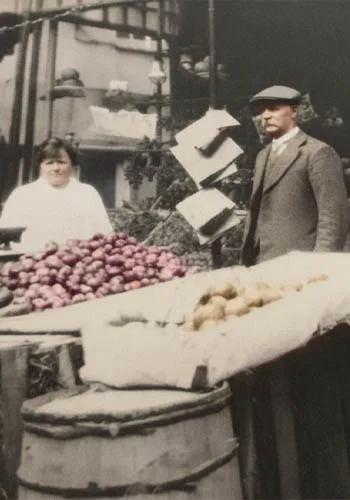
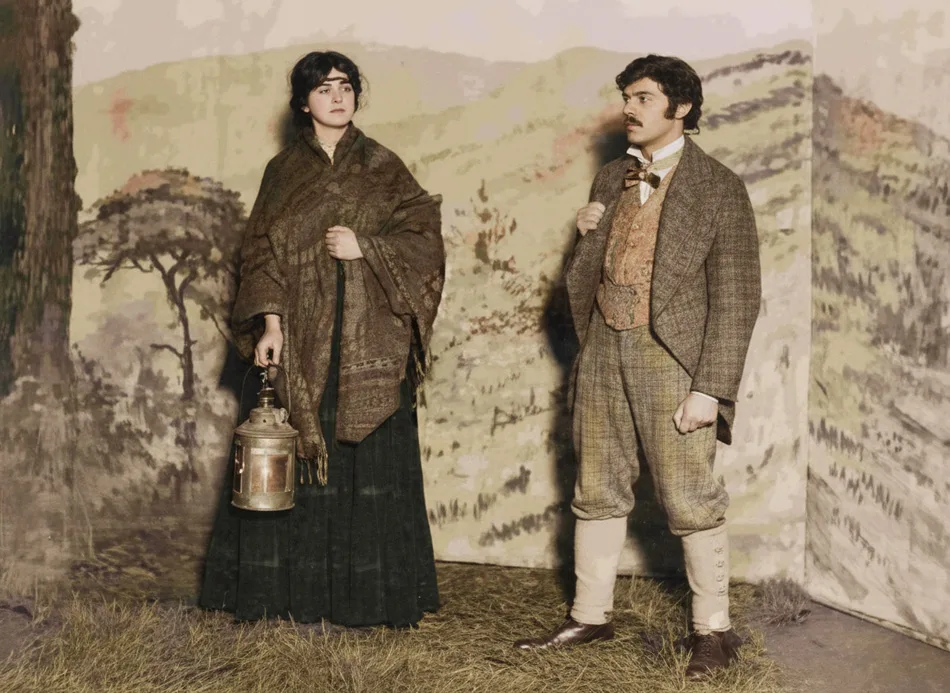
Gertrude Bugler’s mother, Augusta, had attracted the attention of a young Thomas Hardy years before he found fame, and is widely believed to have inspired his creation of Tess of the d’Urbervilles. Decades later, when Hardy returned to Dorchester and formed his Hardy Players, he cast the teenage Gertrude in several productions before choosing her, in 1924, to play Tess herself. The role was still considered daring, and she said in an interview that the character was controversial: ‘A friend of my father was shocked … Even to-day there are people who think I am not quite nice to appear in Tess.’ The play opened in Dorchester on 26th November 1924 at the Corn Exchange. The Daily Mail described it as “less a play in the accepted sense than four outstanding episodes … told in the language of the book”, and reported that the production’s “beauty … lay chiefly in the acting of Tess by Mrs Gertrude Bugler”. Getrude died in 1992. Image above is an enhanced version of an original, showing Gertrude as Tess.
JOB DESCRIPTION: Head of Admissions and Marketing (maternity cover)
9-Month fixed term contract commencing June 2026
Closing date: 12 noon Monday 20th April 2026
RESPONSIBLE TO: Senior Deputy Head
JOB PURPOSE: The Head of Admissions and Marketing will play a central role in shaping the school’s public profile and ensuring families experience a warm, professional and efficient journey from first enquiry through to enrolment. Reporting to senior leaders, you will oversee admissions operations, lead marketing initiatives across digital and traditional channels, manage key events, and act as one of the school’s ambassadors.
Specific responsibilities include but are not limited to the following:
Duties and Responsibilities:
Admissions
• Working closely with the headmaster and other members of the SLT, to have ownership of the school’s pipeline of future pupils which the postholder will manage with the goal of maximising entrants to the school.
• Deliver effective admissions plans to support pupil recruitment, with some input in the ongoing development of these plans
• Manage the full admissions journey, ensuring a welcoming and customer–focused experience for all prospective families.
• Respond promptly along with the Admissions Officers to enquiries and maintain high-quality, personalised communication throughout the process.
• Organise and oversee school tours, open events, taster/trial days, assessments, experience days and other admissions touchpoints
• Ensure compliance with regulatory requirements and the consistent application of admissions policies
• Oversee application and placement testing, ensuring suitability and managing expectations.
• Build strong relationships with educational agents and recruitment channels both in the UK and overseas managing the commercial and administrative aspects of their relationships including contracts and commissions.
• Provide regular admissions reporting and data analysis to inform decision -making.
• Line-manage Admissions team, ensuring efficient, professional and cohesive team operation.
• Gather and analyse information on pupil withdrawal and support retention through effective follow-up.
Liaise with relevant colleagues on bursaries, scholarships, SEND matters and UKVI compliance
• Maintain accurate pupil roll data and oversee registrar–related responsibilities
Marketing
• Implement a dynamic marketing strategy using digital, print, social media, PR and other channels, with some input in the ongoing development of these plans.
• Oversee the school website with the Marketing Officer, ensuring it is engaging, up-to-date, secure and reflective of the school’s values and achievements.
• Monitor website analytics and use insights to enhance engagement and recruitment.
• Ensure consistent branding across all publications, templates, prospectuses and communications.
• Support with creation and updating of marketing resources such as prospectus and infographics.
• Build the school’s media presence and seek opportunities to raise its profile across relevant networks.
• Capture and promote school events, achievements and wider life to enhance reputation.
• Represent the school at events and ensure high quality, professional presentation at all times.
• Identify new markets and opportunities for recruitment; attend fairs, exhibitions and conferences where needed.
• Lead internal and external admissions and marketing events, supporting successful planning and delivery.
• Monitor local, national and international trends, adjusting marketing activity accordingly.
Personal Attributes
You will be a positive, proactive individual who enjoys working with families and colleagues alike. You will bring strong presentational and organisational skills, excellent attention to detail and the confidence to represent the school in a compelling and professional manner. Experience in admissions, marketing or customer–facing roles – ideally within an educational setting – will be a strong advantage but is not a necessity.
For the full job description and how to apply please see and download the PDF below
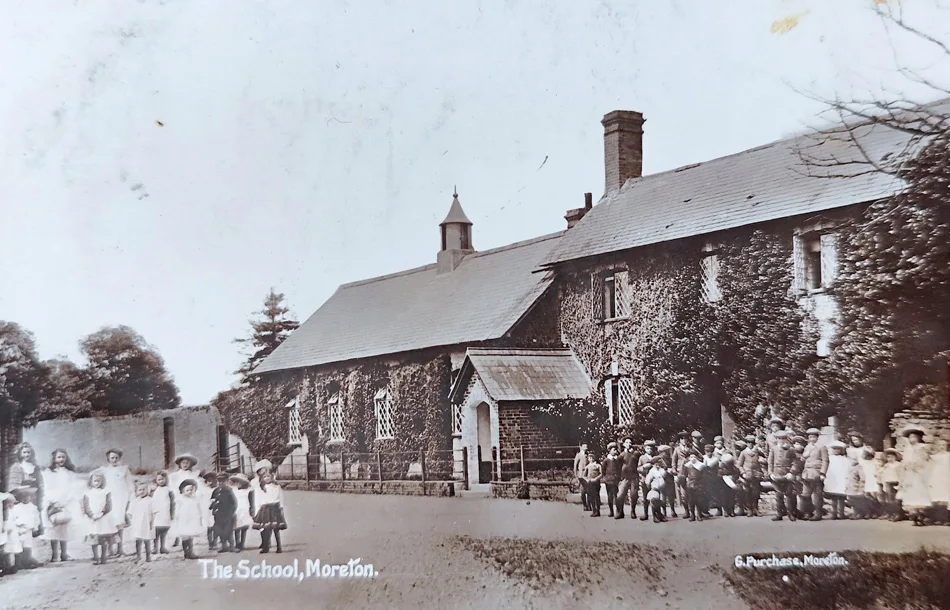
This month Barry has selected a postcard of Moreton School, sent in 1911 (right). The letter that follows was written by Hermann Lea, one of the village’s most notable early 20th century residents. A close friend of Thomas Hardy, Lea was both a writer and an accomplished photographer, working with Hardy to document the real landscapes behind Wessex. He published A Handbook to the Wessex Country of Thomas Hardy’s Novels and Poems in 1905 and later Thomas Hardy’s Wessex. Born in Bristol in 1860, Lea later moved to Dorset and built his house in Moreton, naming it Var Trees – later Vartrees – at Hardy’s suggestion. He seems to have become a regular contributor to local newspapers: a search of the archives shows him to have been an active correspondent, and the following letter, concerning the state of his local roads, appeared in the Western Gazette in July 1912, just a year after the above postcard was sent. It makes strikingly familiar reading in Dorset today …
THE SCANDALOUS WASTE OF PUBLIC MONEY. To the Editor of the Western Gazette, Sir, —My attention has just been called to a notice in your issue of the 2lst, in which it is stated that I made a complaint regarding the condition of the roads near Moreton, That is correct. I am further credited with a withdrawal of this complaint since “the recent rains.” Here, however, there enters a slight inaccuracy, or at least a misunderstanding. The tracks in this neighbourhood – tracks which are by courtesy only termed roads – are always less impassable after heavy rain, but it must be borne in mind that this improvement is of a temporary nature only, and that, after a few hours of wind and sunshine, they quickly relapse into their normal condition. My letter of complaint was addressed to the County Council, and one of their surveyors came here very promptly to inspect the tracks in question. After seeing him I discovered that there were at least four bodies responsible for the upkeep of these tracks, their responsibilities being divided in a somewhat complicated manner. Thus, a few yards came under the guardianship of A. Then B took over the responsibility for a short distance. A entered once more. C had a look in here and there, and D appeared to superintend such portions as the others ignored or repudiated. In my letter of complaint I stated that some portions of these roads were absolutely dangerous, and this fact I am prepared to maintain today – in spite of “the recent rains”. No one who has the least respect for their tyres would venture to drive over these tracts of road: and I can name a dozen people who have told me they invariably walk and push their cycles rather than risk the punctures which would almost inevitably follow if they rode. If I want to drive a car to Puddletown (a distance of four and a-half miles), I go via Affpuddle (a distance of nearly 10 miles). If I want to drive to Dorchester – now, to-day, since “the recent rains” – I am constrained to avoid the direct road (six miles), also the road through Woodsford (seven and a-half miles), and am forced to go via Broadmayne (a distance of nine miles). This is somewhat annoying, certainly: but the most irritating factor is the scandalous waste of money due to the inadequate way in which it is expended on what is facetiously termed *the upkeep of the roads!” I do not wish to pose as an expert on road-making, but 1 do claim to possess a slight amount of common-sense, a possession shared in the main by the labourers who draw the gravel. Let us glance for a moment at the methods chiefly in vogue. The gravel appears to be selected mainly from pits which produce clean stone eminently suitable for concrete work. It is carted and spread on the road. It is then either rolled with a heavy roller designed for rolling in granite, or else it is left to work its own way in by the help of passing wagons, carriages, motor-cars, and bicycles. Where it is rolled the stone is quickly and efficiently reduced to a fine sandy powder. The sun shines, the wind blows, and away goes the road in clouds of dust. Or it rains, and this same dust is washed into the ditches. In the case of such sections as are not rolled, the same process is repeated, but more gradually. The wheels gradually wear two comparatively smooth hollows. Then a man is detailed to rake the unpulverized stones into these grooves, and they are in time reduced to impalpable dust and borne away by wind and rain. The ratepayers’ money is thus spent in a perfectly reckless manner. It would be far cheaper in the long run if a larger initial sum were spent and the road made properly in a workmanlike manner. I make this statement emphatically, and I defy any practical man to prove my contention wrong. Meanwhile we muddle on and grumble, and grumble and muddle on. I am not attempting to place the blame on any individual member of the various Councils, nor on any individual of their staff. I merely state that the methods employed are unscientific, antiquated, provedly inadequate, and disgracefully expensive. Should there be any sceptical readers either amongst the Council or the men in the street, I should be pleased to act as showman and to point out the sections of road referred to. I am, Sir, yours faithfully. HERMANN LEA. Var Trees, Moreton, Dorchester, 9th July, 1912
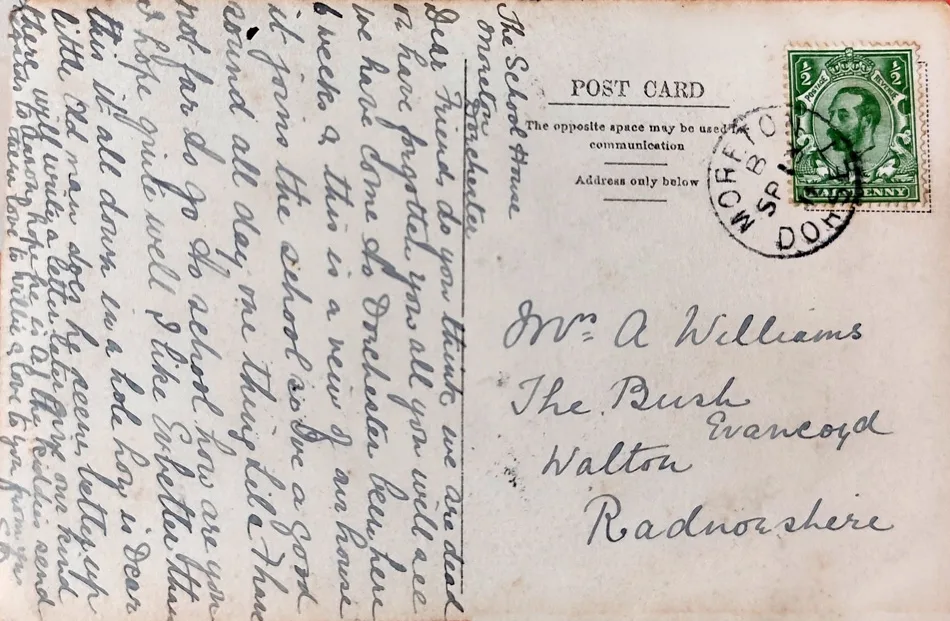
*** The postcard was sent to Evancoyd, in the village of Walton, Radnorshire – presumably the ‘Ev’ mentioned – in September 1911. The back of the postcard reads as follows (the editor has taken the liberty of adding punctuation, as the writer felt no need to do so!): The School House, Moreton. Dear Friends, do you think we are dead, or have forgotten you all? You will see we have come to Dorchester: been here 6 weeks & this is a view of our house. It joins the school, so I’ve a good sound all day! One thing, Lil & I have not far to go to school. How are you? I hope quite well. I like Ev better than this, it all down in a hole. How is Dear little old man, does he seem better up there? Will write a letter later. Give our kind regards to Aaron, hope he is Ok. The kiddies send their love to Willie & love to you from Yrs, CB ***