The Blackmore Vale logo
Home Blog Page 467

Voice of the Books | February 2021

0

“…Why is he here?
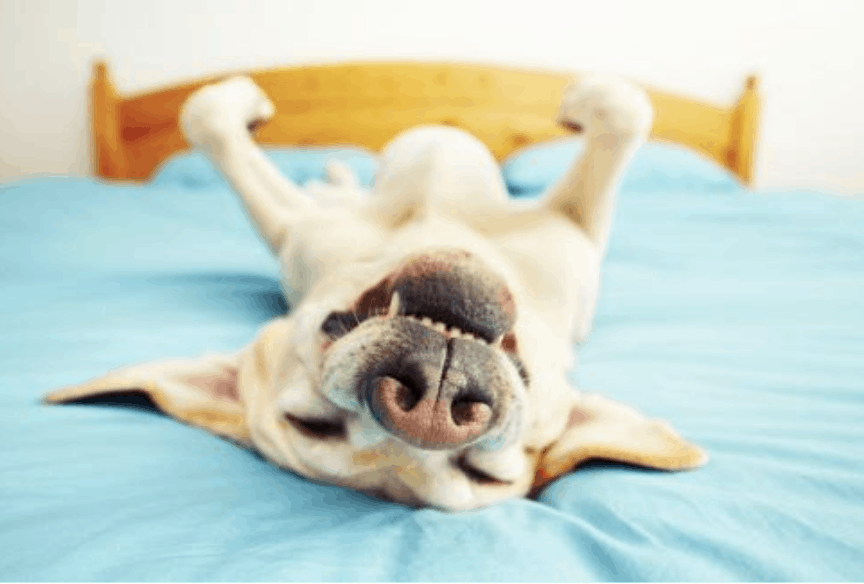
Why is my dog lying at my feet in the shape of a croissant as I write this? How have I come to cherish his warm but lightly offensive pungency? How has his fish breath become a topic of humour when friends call round for dinner? Why do I shell out more than a thousand pounds each year to pay for his insurance? And why do I love him so much?
Ludo is not a special dog. He’s just another Labrador retriever, one of approximately 500,000 in the UK (he’d be one in a million in the United States, the most popular breed in both countries). Ludo has a lot in common with all these dogs. He loves to play ball; obviously he’s an expert retriever. He could eat all the food in the universe and leave nothing for the other dogs. He is prone to hip dys- plasia. He looks particularly attractive on a plush bed in a centrally heated house very far from the Newfoundland home of his ancestors. But of course Ludo is a unique animal to me and the rest of his human family. He is now an elderly gentleman aged twelve and a half, and we would do almost anything to ensure his continued happiness. We willingly get drenched as he tries to detect every smell on Hampstead Heath. We schedule our days around his needs his meal times, his walks, the delivery of his life-saving medication (he has epilepsy, poor love). We spend a bizarrely large amount of our disposable income on him, and he never sends a card of thanks. (If you’re reading this at a point where you’re thinking of getting your first dog and consider a purchase price of £1,500 a little dear, then all I can say about the costs to come vets, food, dog-sitting, accoutrements both essential and superfluous is ha ha ha.) ”
(excerpt from Dog’s Best Friend by Simon Garfield)

Dog’s Best Friend by Simon Garfield £9.99

One of the most welcome changes to lockdown is being able to get out and discover the countryside on your doorstep, often accompanied by a dog. So I thought it would be interesting to discover how this relationship began. Simon Garfield has done just that.
One of the first words we learn. Perhaps the best friend we’ll have. An animal so much part of our lives that we speak to it like a child and spend small fortunes on its wellbeing and wardrobe.
DOG’S BEST FRIEND investigates this unique bond by revisiting some of the most important milestones in our shared journey. It begins with the earliest visual evidence on ancient rock art, and ends at the laboratory that sequenced the first dog genome. En route we encounter the first Labradoodle in Australia, a misguidedly loyal Akita in Japan, an ill-fated Poodle trainer in the United States, and a hilariously disobedient Romanian rescue dog named Kratu at the Birmingham NEC. We will also meet Corgis and Dorgis at the Palace, the weightless mutniks of the Soviet space programme, a Dalmatian who impersonates Hitler, and an owner who claims his Border Collie can remember the names of more than a thousand soft toys.

DOG’S BEST FRIEND is as entertaining as it is informative, as eccentric as it is erudite, and all told with Simon Garfield’s irrepressible gift for witty and insightful storytelling.
Wayne

CLOSED FOR BROWSING, OPEN FOR BUSINESS
We are temporarily closed for browsing but remain here for all your book-ish needs. Please contact us by phone, email or order online – the books can be picked up from kerbside (nearest car park) or posting at cost. Stay well, stay well-read.

A Vet’s Voice | Lockdown: A dog’s tail

0

England is in its third lockdown and people are spending more time at home and with their dog. It is important, therefore, to think about the dog’s perspective on lockdown and the implications it has, not just now but for when life does return to normal. 

Being home all day with your dog should be a good thing right? Not necessarily. It’s important to keep in mind that any change in routine can be stressful for all animals, human and non-human. Dogs trust has found that owners are seeing at least one new problem behaviour during lockdown.(1)

So how can we help? Well routine is key. Although there has been a massive change to all of our routines, try to keep it as similar to your old routine as possible. For example, getting up at the same time, walking the dog/letting them out into the garden at the same time, feeding at the same time. The more predictable their day is the more secure they will feel after a change and the closer to your old routine the better as it will mean less of a change when lockdown rules are lifted or eased. Of course, you can still keep to your normal weekend routine. 

Shutterstock

Alone time is a good thing, it gives dogs the time and space to relax, unwind and sleep. It is important for them to feel secure and happy without you. Prevention of problem behaviours such as separation anxiety will be a lot easier than treating them. Therefore, if your dog is used to being alone, be sure to still give them their alone time. They may seem like they are much happier with you around but keeping up their ability to cope without you will make both your and their life a lot happier when you are able to go back to work, or have evenings/days out without them. 

Dogs can also become bored and frustrated when there is a decrease in the amount of exercise they are having, and there are plenty of interactive toys and games you can get or make at home to help with this. 

There is plenty of information and help out there; the most important thing to remember is this is a very stressful time for us all, including our pets. 

Some helpful websites to check out are:

www.dogstrust.org.uk/changethetale 

www.battersea.org.uk

www.bluecross.org.uk 

Reference

  1. Reasearch carried out by the dogs trust research team from [04 May 2020] to [12 May 2020] of 6004 respondents. Www.dogstrust.org.uk/news-events/news/2020/dogs-trust-warns-of-impending-dog-behaviour-crisis-as-new-research-shows-the-impact-of-lockdown-on-the-nation-s-dogs

By: Carly Tempany BSc (Hons), RVN

Voice of the Farmer | February 2021

0

As this is my first contribution I will give a little introduction as who we are and what we do.

I am the fifth generation of the Cossins family to farm at Rawston farm, Tarrant Rawston. Our family came here in 1887 having moved from Somerset and took on the tenancy  and in 1919 had the opportunity to purchase the farm. We are what is described as a mixed farm or some may call us traditional in that we have cattle and grow crops. We have milking cows , beef cattle and grow wheat ,barley , oilseeds and beans. We rotate the fields between grassland and crops using the manure from the to maintain soil health and the fertility of the land. I think in this modern era this might be what is called sustainable farming , but is difficult to get a definition of what exactly sustainable means.

Rawston Farm’s Waterwheel house on the river Tarrant. Built by James Cossins Grandfather in the 1930’s

In the current covid pandemic crisis the farm has thankfully not been affected too badly. Our milk and grain collections have continued as normal and there have been no issues obtaining dairy feed  from local mills. The demand for beef seems largely unaffected with the farm continuing to supply our farm shop on a weekly basis.  Our  staff largely live in the quiet village here and at work can spend time working alone especially during  the busy planting and harvesting periods using tractors. Let’s hope we can continue to stay safe. Unfortuneatly for my wife Barbara her hospitality business has had to close for the time being, with no indication as to when it will reopen.

As we move into February there is always some optimisom on the farm as the days get longer, the weather may improve and we can start preparing fields for spring sowing.  The  cattle also start looking over the gates from their winter accommodation hoping the grass will soon start growing so they can be back out grazing .

My family has always been very good at keeping a farm diary. Referring back to 1921   the farming events at the beginning of February  included hedge laying , wheat thrashing ,and taking the wheat to Blandford and Webb in Blandford in sacks with a horse cart. Blandford and Webb were a local agricultural merchant who had a presence in our local town for many years.

This months picture shows our waterwheel house on the river Tarrant in the summer. This was built be my Grandfather in the 1930’s , where a water driven wheel drives a pump to draw up water from a borehole to the farms reservoir for cattle drinking. Early thinking of renewable energy ! .I think the picture was taken in the early 1940’s as in the back ground is the new road to the Tarrant Rushton Airfield built during the second world war.

Lets hope by the time I am writing next month spring will be with us and we can all look forward to better times!

By: James Cossins

The Blackmore Vale Valentine’s Day Messages

0

The past year has seen us rely on our loved ones in ways we have never done before. So in honour of St Valentine, we’re celebrating them (because frankly we think we all need a big virtual tight squeezy hug right now, in the absence of the real ones).

So we offered a proper old-fashioned local Valentine’s message board – and you didn’t disappoint. Nearly a hundred messages came flooding in – the warmth and affection palpable in every single one.

So let’s feel the love for a change, and spread some smiles across the Vale for Valentine’s Day. We’ve loved every one of them.
Feel free to add your message in the comments below, too – don’t miss this chance to say a public ‘thank you’, ‘love you’ or ‘miss you’ to those special people in your life.

The Valentine’s Messages start on page 22 of the February Blackmore Vale magazine, or you can see pictures of them all below.

(be sure to subscribe here to receive all your future issues direct to your inbox!)

Blackmore Vale Valentine's messages page 2
Blackmore Vale Valentine's messages page 3
Blackmore Vale Valentine's messages page 4

Make tracks for a very unusual wedding venue by choosing to say ‘I do’ at The Tank Museum!

0

It’s Dorset’s newest, and probably most unusual, wedding venue.

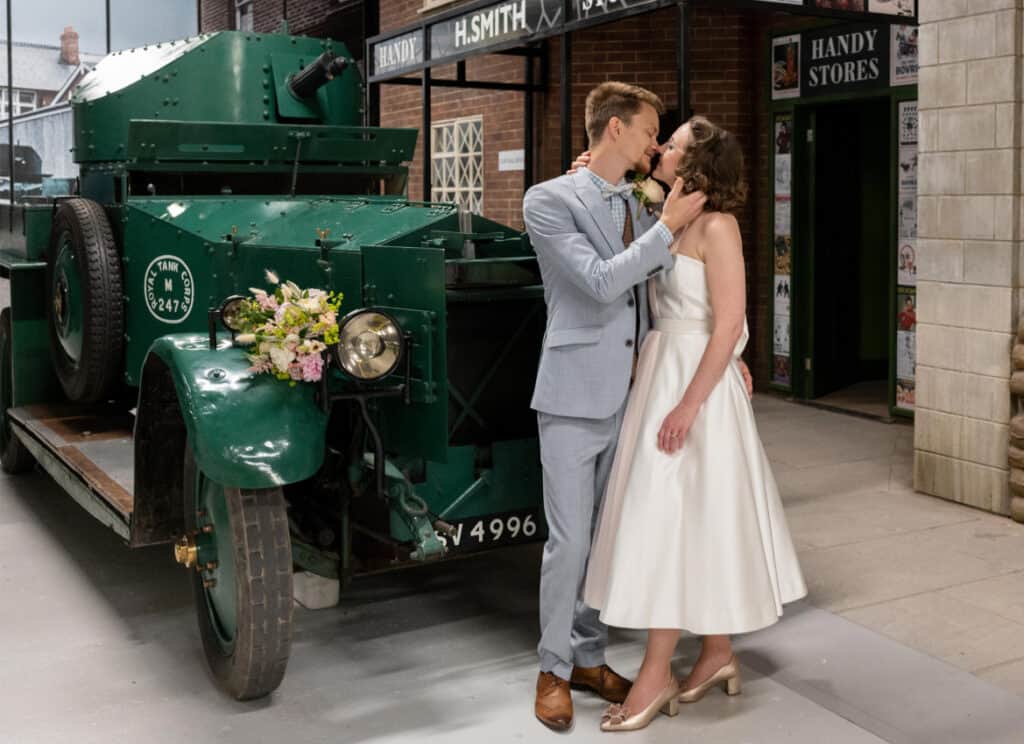
Couples can now walk down the aisle at The Tank Museum.

The Tank Museum

The county’s top tourist attraction has officially launched Tank Museum Weddings with the first booking already confirmed for September.

Rosanna Dean, Events Manager, said: “It might seem like a quirky place to get married, but we know there are lots of people looking for something a little different on their wedding day.

“Our unique surroundings have already attracted couples with a special connection to The Tank Museum, who want to celebrate their marriage with us.

The Tank Museum

“Some have links to the military, a keen interest in our subject and others have ties to the local area.

“The variety of settings and the expertise we have at the Museum mean we can offer a completely tailored experience for our couples.”

Whether it’s a 1940s rustic wedding with an intimate guestlist, or a classic contemporary white wedding design with up to 1,000 guests, The Tank Museum’s experienced events team says it can create a unique day.

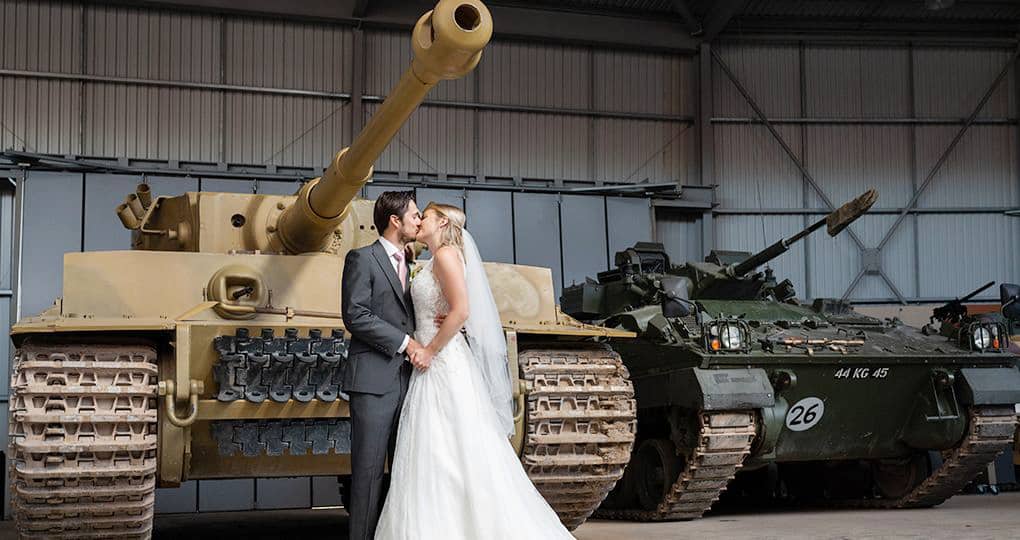
Couples can even tie the knot in front of their favourite tank!

Guests to a wedding at The Tank Museum are also given the opportunity to explore the Museum itself.

Once married, The Tank Museum’s in-house catering team can provide a wedding breakfast for friends and family.

Finally, a photoshoot among the tanks will give a permanent reminder of a day with a real difference.

All profits from the weddings will go to support The Tank Museum charity, allowing a couple’s special day to help preserve history for generations to come.

The Tank Museum

Rosanna added: “We’ve had a number of requests for weddings over the years and we’re pleased to finally be able to offer people the chance to get married at The Tank Museum.”

Tank Museum Weddings is the latest addition to the Museum’s comprehensive venue hire offering.

Meetings, conferences and large-scale special events are regularly held at the Museum and overseen by the events team.

To find out more about holding a wedding at The Tank Museum click here and follow Tank Museum Weddings on Instagram here.

By: Andrew Diprose Dorset Biz News

Business Lasting Powers of Attorney

0

More and more people are now appreciating the importance of preparing Lasting Powers of Attorney ensuring that trusted individuals can, in the event of unforeseen events, make decisions about their personal affairs, whether concerning their finances and/or their health and welfare.

However, far fewer people consider the benefits of an additional Business LPA and the consequences of a key individual within said business suddenly being temporarily or permanently unable to act. Especially in these turbulent times we find ourselves, many businesses are having to evolve, adapting to an ever changing playing field. The tried and tested regimes relied upon previously are suddenly stretched by self-isolation requirements, by travel restrictions whether abroad or closer to home, or perhaps a prolonged illness or lack of capacity. A Business LPA could be equally adept at solving the smaller operational issues or indeed the larger more strategic ones.

In a business partnership, a “Partnership Agreement” may include provisions to deal with the above dangers. Equally, a “Shareholders Agreement” will assist Limited Companies.

However, in their absence, a Business LPA could appoint fellow Partners or Shareholders to act as Attorneys for each other.

If the individual is a sole trader then they should certainly consider preparing one as the business is effectively them.

Without a Business LPA, it would be necessary to make a costly and time consuming application to The Court of Protection. They would then be tasked with deciding whom should be appointed to act. This application could take months to conclude thus affecting the stability of your business and potentially its very existence.

For more information contact Adam Hillier on 01935 846165 or email [email protected]

The 79yr old Master Butcher – Ross Huey at Dorset Farm Butchers

0

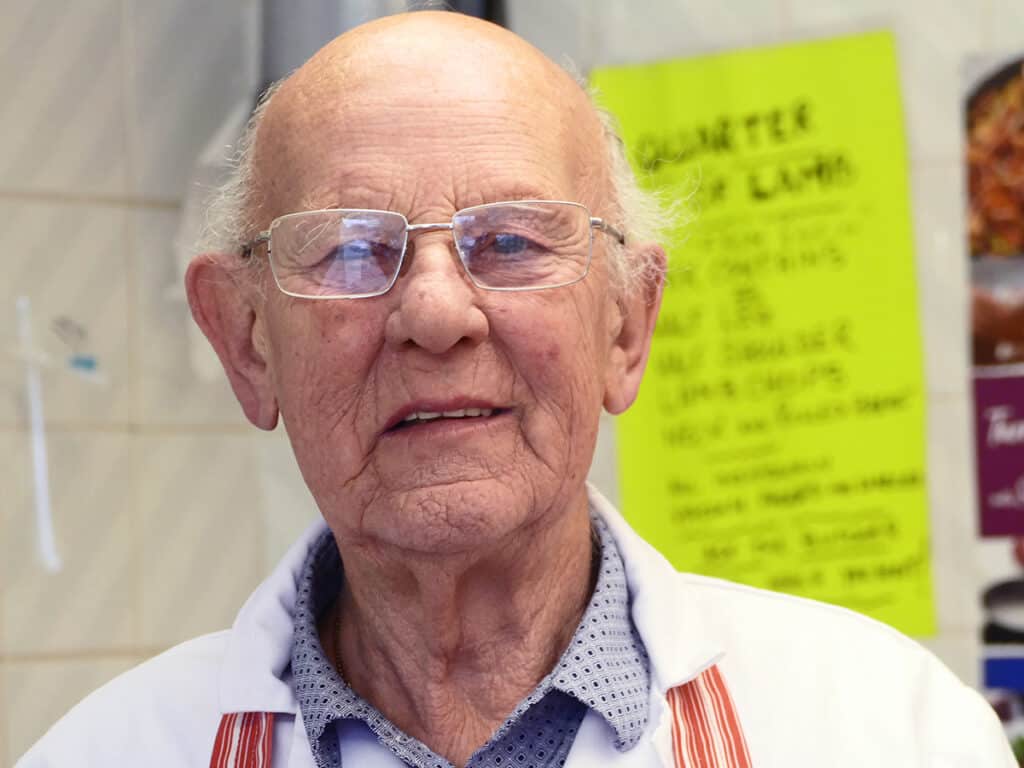
Ross Huey has been a master butcher for just over 60 years, and runs Dorset Farm Butchers at Sturminster Marshall. He is 79 years young and works with colleagues John (age 85 and about to retire) and the younger of the trio, Andy who is 66. 

 “When we started up, meat was sold in last night’s Echo with a bit of greaseproof paper. Can you imagine what Health and Safety would say today.”

“My dad had a big farm near Ringwood and we kept lots of pigs. When I left school I planned to be a draughtsman at Hurn Airport but within two weeks of me leaving, De Haviland went bust.
Dad said to me, if I get a small van I could drive it round and sell our pork. So I did that and I passed my driving test on my seventeenth birthday. Well I was driving a tractor at nine!


I noticed the mark up in the butcher’s shops. We were selling at 1 shilling, and their price was 4s! I went back to Dad and suggested we sell our own meat. At the time he had a greengrocers shop, and we converted that to a butchers shop. At nineteen years old I had my own business.” 

Ross Huey
Ross Huey Master butcher at dorset Farm butchers
Ross Huey 79yr old Master Butcher at Dorset Farm Butchers in Sturminster Marshall

It took six years for Ross to become a Master Butcher. His certificate – dated 21 June 1960 – hangs proudly in the back of the shop.

Ross has not always been at Dorset Farm Butchers in Sturminster Marshall. 

“I had two shops in Christchurch. And then mad cow disease put paid to them. That was terrible.”

ross huey, master butcher

He has retired twice, but was headhunted to run Dorset Farm Butchers and returned to the trade. When an opportunity arose to buy the business in 2013, he jumped at the chance.

“I have control of what I sell. Most of my meat comes from the Broadlands Estate near Romsey. I know the life it has had, and the quality. My venison is from Dorset. And our products like faggots and sausages are all homemade here.”

Ross has seen many changes in the butchery business. “I’m still working in pounds and ounces. It’s what people understand. 

And I remember when chicken was a luxury meat. People didn’t kill chickens as often because they produced eggs.”

He has noticed the method of meat being cut has changed too.

“Now they cut all the fat off and its more lean, which is good I suppose. But I was brought up on bread and dripping because that’s all we had.”

So how has the Covid-19 pandemic affected business at Dorset Farm Butchers?

“My trade has doubled.” Ross shares an infectiously impish grin “People are cooking at home and they can’t go out. It’s the husbands too. They can use shopping as an excuse to get out of the house! And after they have tasted my meat, they keep coming back for more.”

Ross and his team usually make 150 pounds of sausages each week but have recently increased it to 250lb so they can keep up with demand.
“A good sausage has high quality free range pork, natural casings and is well seasoned.” advises Ross. In summer they have ten varieties on sale.

He is open seven days a week, and is looking for a new butcher to help with the increase in demand.


I can’t help but spot the ‘Wanted’ poster behind Ross’ head as we talk. He’s looking to recruit a replacement for the now-retiring 85yr old John. And the poster?  
‘…would suit a semi retired person”.

Chatting away to Ross, it’s obvious it suits him and his team, anyway. For someone with the right attitude there are opportunities in becoming a butcher.

“After all these years I’m doing exactly what I wanted to do –  to be a master butcher selling quality locally sourced meat.”

Rachael Rowe is a freelance food, health and travel writer in North Dorset. Her portfolio is at www.rachaelrowe.com

Yu can see all past issues of The Blackmore Vale here, and subscribe to receive it every month direct into your inbox here.

Farmer’s Jesty’s Quantum Leap | Looking Back

0

Edward Jenner usually gets the credit as the world’s first vaccinator but arguably the title should belong to North Dorset’s own Benjamin Jesty.

Almost 250 years before covid vaccines hit the surgeries and 22 years before Jenner did his thing, Yetminster’s Jesty performed an extraordinary medical experiment on his own family.


Michael Sharp’s portrait of Benjamin Jesty. Picture: Wellcome Trust

As a farmer, Jesty knew of the country belief that people who’d had contact with cows that had cowpox were immune to the virus’s more serious cousin smallpox.

Smallpox was a ghastly disease that usually led to facial scarring and often death.

But people with cowpox escaped with a mild fever and lesions on the hands at the point where the virus entered the skin.

Dairymaids were known for their fair complexions in contrast to smallpox survivors, and Jesty had first-hand evidence of this.

His own dairymaids, Anne Notley and Mary Reade, had both been infected with cowpox by contact with the udders of cows they had milked yet both escaped smallpox even when nursing relatives with the disease.


Upbury, Benjamin Jesty’s home at Yetminster

When a smallpox epidemic broke out in North Dorset in 1774, Jesty made what his biographer Patrick J Pead describes as a ‘quantum leap’ in thinking.

‘Faced with the awful implications of his family suffering the ravages of smallpox, and knowing the hazards of inoculation, he conceived an ingenious idea,’ writes Pead.

Inoculation had been practised for several decades but involved introducing one of the actual smallpox viruses.

Although it saved some lives, it claimed others due to a lack of control over the type of virus used.

Jesty’s ‘quantum leap’ was to borrow the inoculation method but replace the smallpox virus with cowpox.

Displaying amazing confidence in his plan, he took his family to Chetnole, where William Elford had some cows with the marks of cowpox on their udders.

Jesty then used a stocking needle to take a tiny sample of pus from an udder and insert it into the arm of his wife, Elizabeth.

He then repeated the procedure with sons Robert and Benjamin, then aged three and two respectively, but omitted baby Betty.

Jesty’s effort may never have become known had it not been for a complication that arose.

While the infants suffered no significant ill effects, Longburton farmer’s daughter Elizabeth developed a fever and was treated by the slightly disapproving Dr Trowbridge of Cerne Abbas.

She recovered fully and none of the trio ever succumbed to smallpox despite the boys being inoculated with it by Dr Trowbridge in 1789.

Jesty tried to keep a low profile but word soon got around and he his fellow villagers proved seriously unsympathetic.

Suspicious of anything that did not conform to their existing beliefs and familiar with biblical warnings against contaminating the body with animal matter, people subjected Jesty to physical and verbal abuse.

Despite this, the Jestys continued living in their Yetminster farmhouse, called Upbury, until 1796, when Jesty moved them to Downshay Manor, Harmans Cross, near Swanage, which offered more land and more space for a family that now included seven children.

Coincidentally, 1796 was also the year that Jenner administered his first experimental cowpox vaccination on eight-year-old James Phipps at Berkeley, Gloucestershire.


The commemorative blue plaque at Yetminster

Because he was a village doctor, Jenner was better placed than Jesty to put the method on the medical map.

He also coined the phrase ‘variolae vaccinae’ – meaning ‘vaccine of the cow’.

This is the origin of the word ‘vaccine’ that we use today.

Jesty, meanwhile, continued vaccinating people in his new parish, where his method was better received than at Yetminster.

There’s a memorial inside Worth Matravers church to someone whose mother was ‘personally inoculated for the cow pox by Benjamin Jesty of Downshay’.

A Swanage clergyman, the Rev Andrew Bell, was so impressed that he campaigned for some recognition for a man ‘so often forgotten by those who have heard of Dr Jenner’.

As a result, in 1805 Jesty was invited to the Vaccine Pock Institution in London, whose members questioned him at length and tested his and son Robert’s continued immunity by inoculating them with live smallpox.


Jesty’s gravestone at Worth Matravers

Both proved immune and the Institution praised not only Jesty’s pioneering work but his ‘superior strength of mind’ in the face of ‘prevailing popular prejudices’ and the ‘clamorous reproaches of his neighbours’.

They also presented Jesty with a testimonial scroll, a pair of gold-mounted lancets, 15 guineas to cover his expenses and a portrait by Michael W Sharp, whose other subjects included the Duke of Wellington.

Jenner later acknowledged Jesty’s contribution as ‘corroborative evidence’.

Jesty died in 1816 aged 79. His gravestone at Worth Matravers describes him as the ‘first person (known) that introduced the cowpox by inoculation’.

Elizabeth lived to be 84. Sons Robert and Benjamin died in their sixties in 1839 and 1838 respectively.

• This article was adapted from Roger Guttridge’s book Dorset: Curious and Surprising (Halsgrove, £9.99).

Church House Wimborne | Then and Now

0

It’s not Wimborne’s prettiest building but what Church House lacks aesthetically it makes up for in prominence.

Standing alongside the Minster, the two-storey parish room is the scene of social and charity events and church admin in normal times.


Sansom & Son’s ironmongery in 1900

Together, the Minster church and Church House dominate the view as you look down Wimborne High Street from the Square.

But 120 years ago we’d have seen a very different building alongside the Minster.

In Victorian times the site hosted Sansom and Son’s ironmonger’s shop.


The grand opening of Church House on the same site in 1906. Picture from Wimborne Camera by Barbara and Derek Willis

The oldest of my pictures shows Sansom’s in 1900.

It was given to me 40 years ago by Bill Topp, who worked there in the early 1900s.

The property had been left to the Minster in 1617 but in 1905 they gave Sansom’s notice to quit to make room for the construction of Church House.


Church House in 2000

Sansoms announced a sale of their ‘stock, ironmongery, furniture etc’ and later moved to new premises at 9 and 25 High Street.

One of these eventually became Bill Topp’s own shop, Topp & Bollen.

Bill was also chairman of Wimborne Urban District Council in 1950.

Meanwhile Church House arose from the rubble of the original Sansom’s shop.


Church House in 2021

Mrs Bankes of Kingston Lacy House laid the foundation stone on September 13, 1905, and the Bishop of Salisbury dedicated the new building on July 25, the following year.

Building costs totalled £2,870 4s 11d, raised by public subscription.

Roger Guttridge