A local expert from Citizen’s Advice provides timely tips on consumer issues.
Q: I lost some money in a banking scam and I am scared that it might happen again. What can I do to minimise the risk?
A : Sadly, you are not alone. In September 2025, Citizens Advice commissioned a survey to find out the extent of this problem. Our research shows that an estimated ten per cent of people across the South West and around seven million people nationally were caught out by a scam in the past year. The top five scams people have unwittingly fallen for are:
Includes fake websites and counterfeit or non-existent goods
Investment scam (18%) – Like ‘get rich quick’ schemes and cryptocurrency scams
Other financial scam (18%) – Such as banking, fake loans, card and bank account fraud
A friend or family member ‘needs help’ scam (16%) – Tricked into thinking someone you care about needs money urgently
Mobile network scam (14%) – Includes being scammed into taking out a new contract or paying for a new handset.
cautious when taking advantage of shopping deals ahead of Black Friday and Christmas. As scammers get more sophisticated it’s important to work together to raise awareness, report scams and share our experiences to help protect ourselves and others. There are steps you can take to better protect yourself and your loved ones. Something might be a scam if: Someone you don’t know contacts you unexpectedly, or you’re asked to transfer money quickly You’re being asked to share personal or security information like passwords, PINs or codes You suspect you’re not dealing with a real company, for example there’s no postal address You’ve been asked to pay in an unusual way – paying by debit or credit card gives you extra protection if things go wrong Remember – if something seems too good to be true or doesn’t feel right it might well be a scam, so take a moment and get advice.
If you’ve been scammed: Talk to your bank or card company immediately if you’ve handed over any sensitive information or made a payment Report the scam to Action Fraud on 0300 123 204 Contact the Citizens Advice Consumer Service on 0800 144 8848 for help with what to do next.
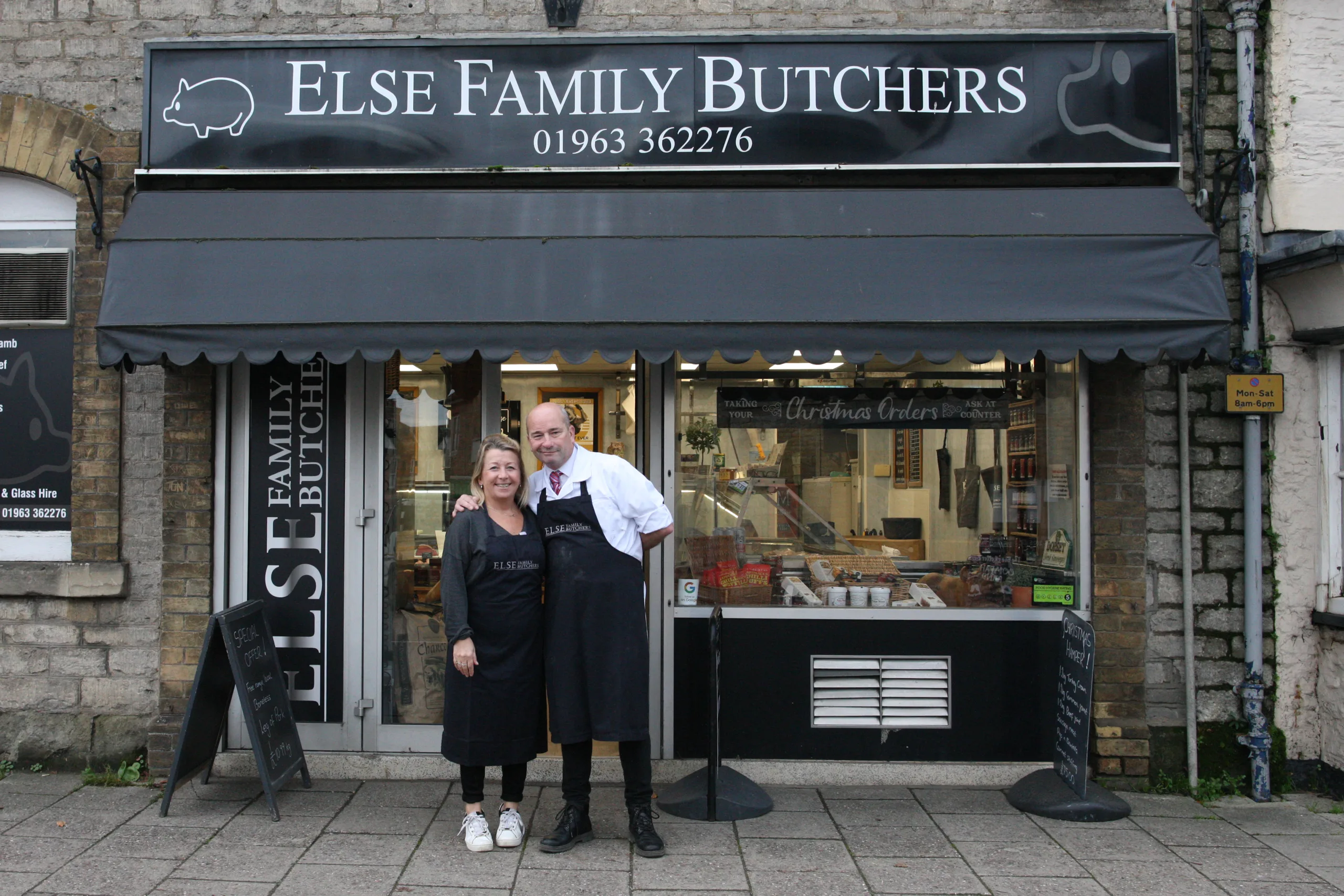
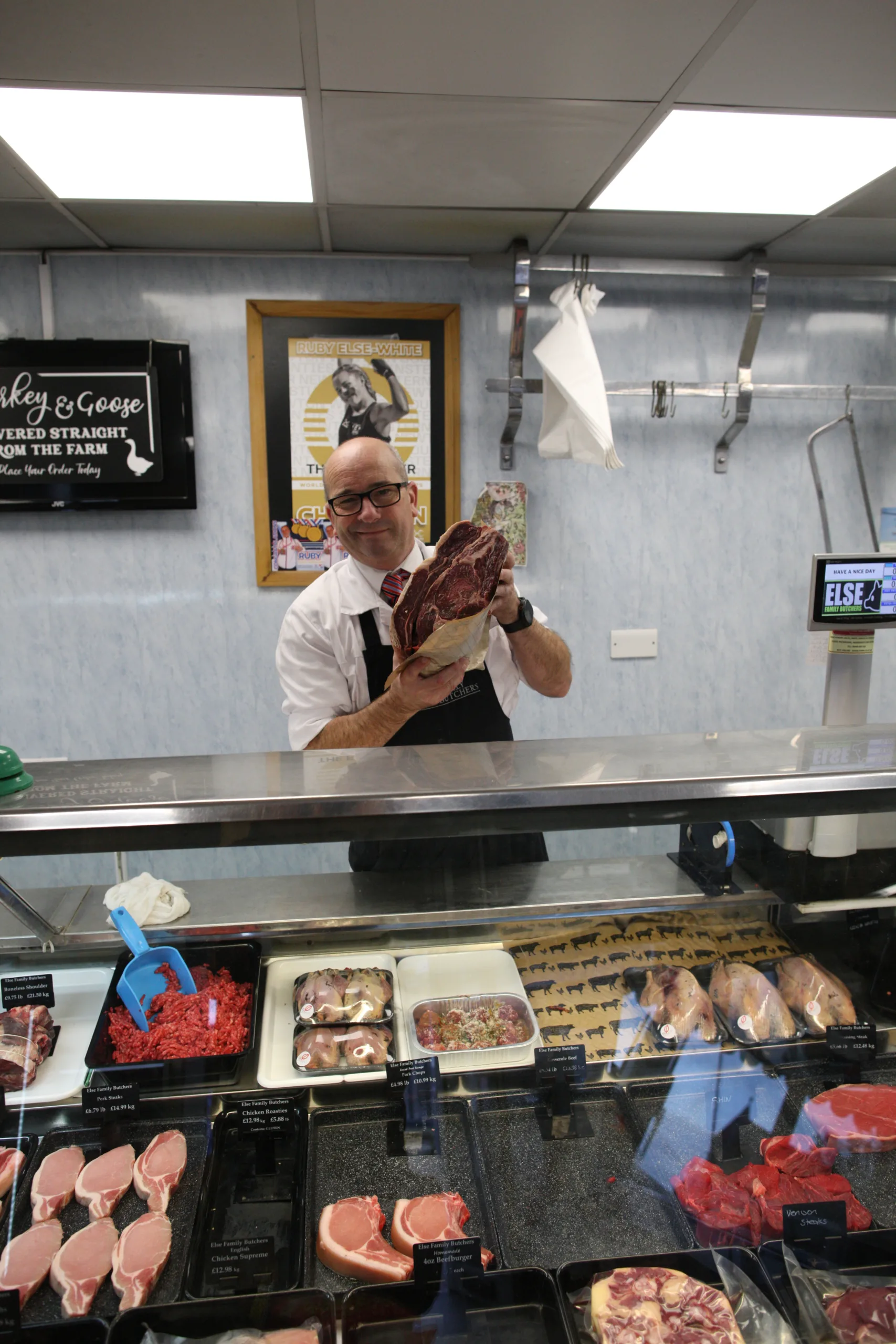
‘Cost-wise, there’s not that much difference between a supermarket and us at the moment,’ Julian says. He’s standing behind the counter at Else Family Butchers, trimming a rib of beef with the easy confidence of someone who has spent a lifetime doing exactly this. Outside, Stalbridge High Street is just waking up: inside, there’s already a gentle flow of people ducking through the door. Young couples, gym-goers looking for some good protein and older regulars stopping in for a chat and a couple of ‘bits’ – it’s barely past seven in the morning but Julian has been open since the hour struck.
The Else family have served Stalbridge from this shop since 1994, when Julian’s father Roger first opened the doors. Julian learned the trade on the job, working alongside his dad until he and his wife Heidi took over the business fifteen years ago. The early starts, the long hours, the absolute insistence on quality – it’s all part of the rhythm of the place. ‘We’ve been trading in the High Street for 30 odd years now,’ he says. ‘Still going strong, still doing well.’
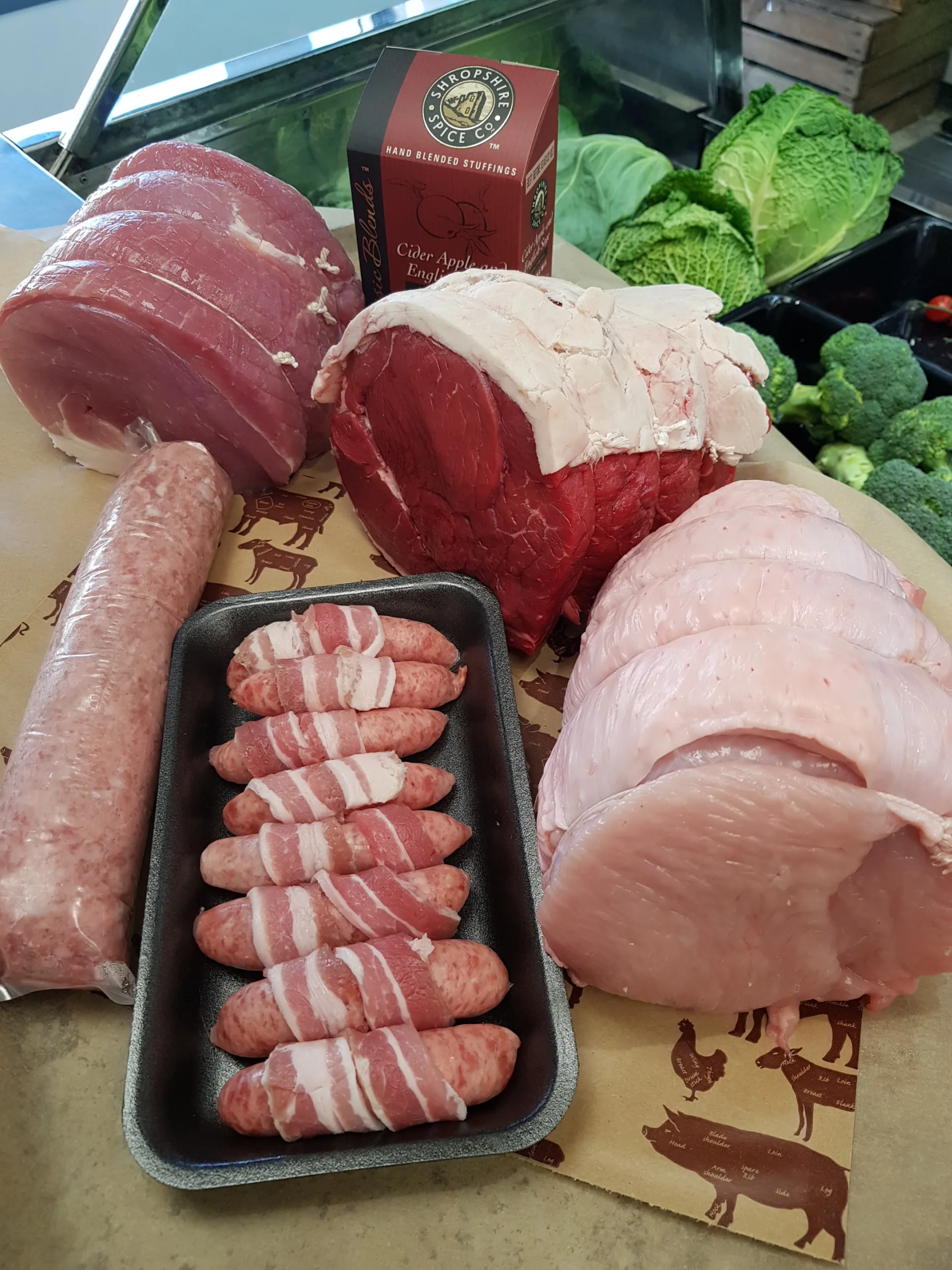
And Christmas, of course, is the busiest time of the year. The Christmas order book is already out, and the shop’s much-loved Christmas hamper is back again this year after repeated requests. It includes an entire Christmas dinner, with each joint easily feeding four people: a 1.2kg turkey breast, a 1.2kg piece of gammon, 1.2kg of topside, pigs in blankets, sausage meat and gourmet stuffing, all packed into an Else Family Butchers reusable bag for £75. The price is up by £10 on last year: but Julian is frank about it. ‘Food’s costing more,’ he says. ‘But we’ve ensured the quality is as good.’ (find your Else Hamper order form here)
Locally sourced is a quiet principle running through everything here – not as a marketing slogan, but simply as how they work. The beef is all West Country, the pork and sausage meat are from a farm near Taunton, the gammon is from Wiltshire Bacon Company and the turkeys come from just down the road at Stourton Caundle. Ducks and chickens are from Cracknell’s Farm, while the geese are from Milborne Wick. ‘Unfortunately due to bird flu majority of poultry will be barn reared,’ Julian says. ‘But the animal husbandry is as good, if not better, as free range. That’s the most important thing.’
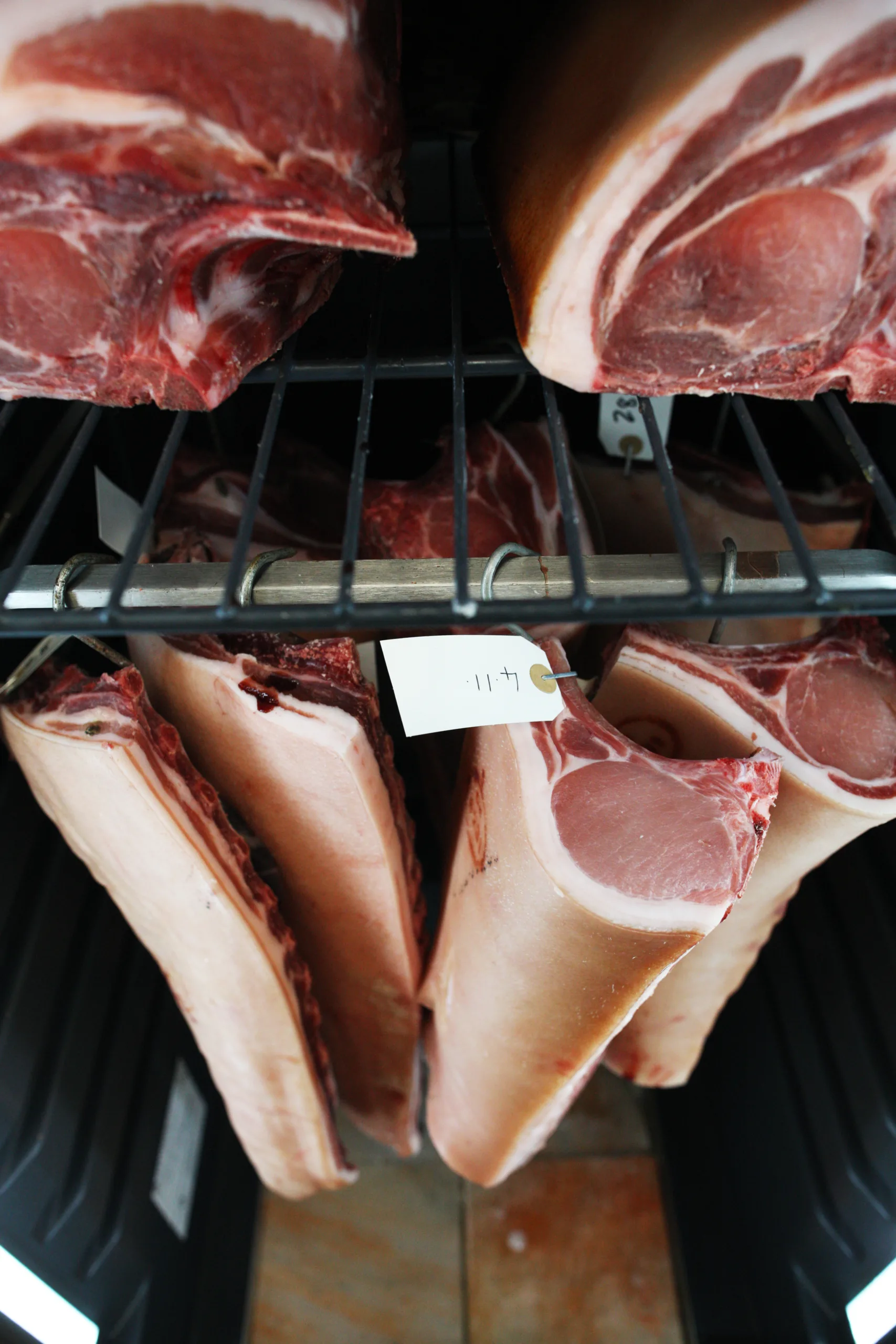
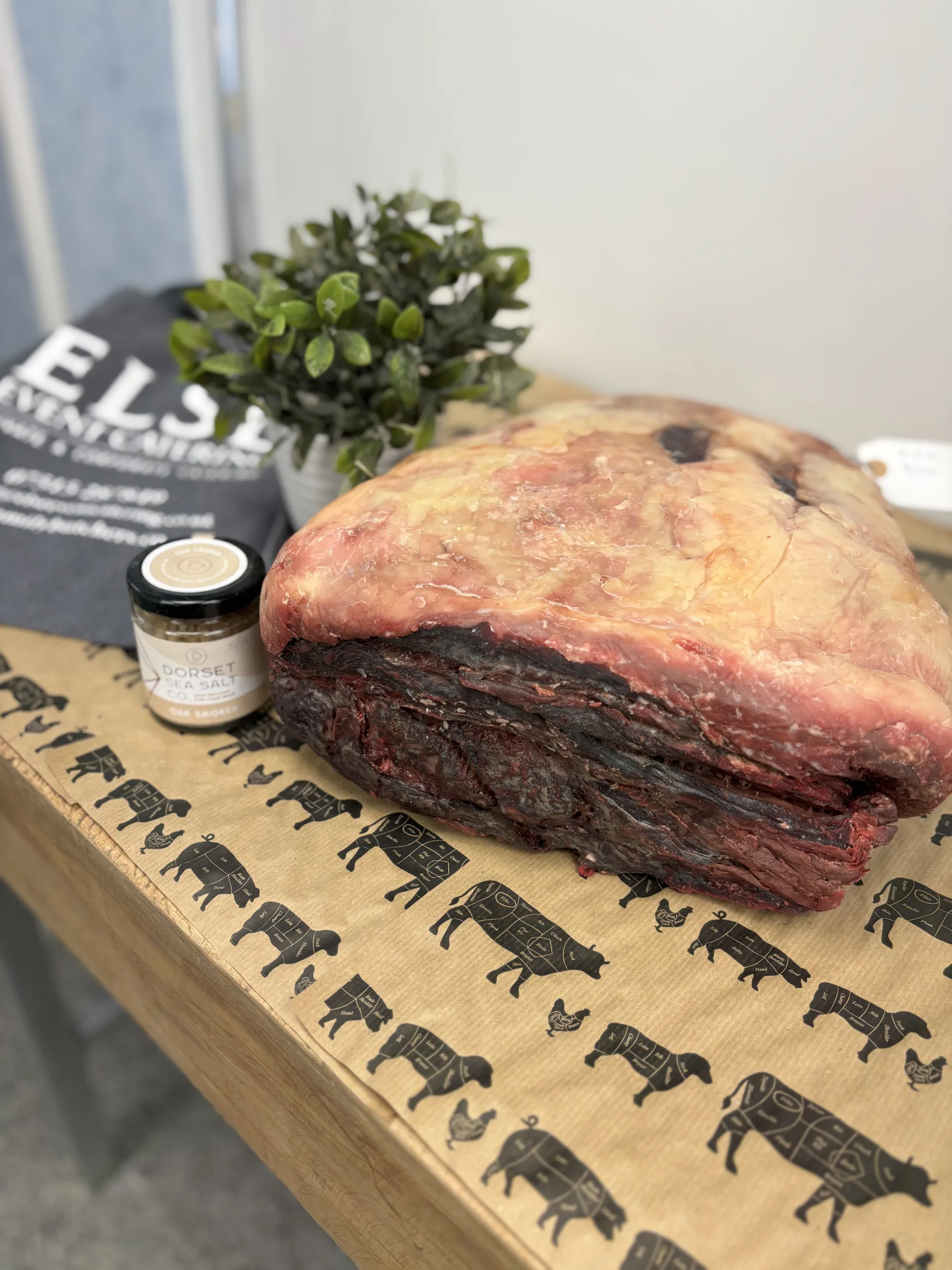
Then there’s the dry-ageing cabinet – something Julian talks about with genuine enthusiasm. A glass-fronted fridge, with Himalayan salt blocks stacked at the base, and air circulating constantly around the meat. ‘It breaks down all the fibres,’ he says. ‘It enhances the eating quality and the flavour. The difference is really noticeable.’ Customers can choose a piece of meat and have it aged specifically for them, something he says has been a real talking point. ‘And it’s not just about the beef. The dry aged pork is absolutely phenomenal. We’ve had so much good feedback on that. We put it in there for two weeks, and as well as the beautiful, tender meat, the crackling you get … it’s just incredible. People travel miles and miles to come for our dry-aged meat,’ he says. ‘It has definitely given us a bit of an edge.’
There’s an honesty, too, about the economics. Trimming dry-aged beef means waste, and with beef prices rising he admits he’s hanging it for slightly less time than he once did. But the price stays the same. ‘We’re at the top end of what we can really charge,’ he says. ‘Right now there is a national shortage of good beef, which is a bit scary. We must support the local English farmers – without them we wouldn’t have anything.’
Supermarkets, he says, are feeling the same pressures, and the idea that a butcher’s shop is vastly more expensive is simply outdated. ‘There’s really not that much difference between a supermarket and us,’ he says again. The distinction, he thinks, is in the clarity. ‘When people come in here and spend 20 or 30 pounds on something, they know they’ve spent 20 or 30 pounds. But when they go to the supermarket, it all goes in the trolley and the cost gets lost. They don’t know what they’ve actually spent on their meat.’ Shopping locally, he says, is the only way forward – not out of charity, but because it makes sense.
Especially in December, there’s far more than meat on offer, too. Alongside the traditional beef, gammon and poultry, Else’s Christmas range stretches into whole sides of kiln roasted salmon, prawns, crab meat, gravlax. Around 25 cheeses, all personally selected by Julian. Gourmet stuffings. Chutneys … even some really good beef, poultry and veg stock. The shelves have been filling steadily for weeks, and ordering is open now in person, by phone or by email. The personal touch is deliberate: ‘We can advise and help with what would work for you, and on cooking instructions and ideas,’ he says. ‘We’re here to help everybody. We’re friendly!’
He’s noticed a shift in who’s coming through the door, too. More young people, more new residents from the recent housing developments, more customers who care about provenance and quality. His small Saturday posts on social media have helped. ‘People feel that they know you,’ he says. ‘They come in and think they’ve already been part of your family business. ‘And that’s the point, just to keep getting new people to taste the difference. We get so many comments on basics like sausages and burgers and mince. We eat so much of that as a nation, but everyone goes to the supermarket and is used to a rubbish sausage, or a rubbish burger,’ Julian says. ‘It’s such a simple thing – we should all be able to take the quality of our meat for granted, and trust where the meat comes from. Processed food doesn’t need to be rubbish food. That’s what we hear, all the time, it’s what everyone notices, and that is what it’s all about. The quality of what you get when you walk through our door.’
Christmas week, Else’s will be open from six in the morning till four in the afternoon: ‘But we do close at lunchtime on Christmas Eve, so make sure you’ve collected your turkey by then!’ Julian says.
The Besnard Lakes know how to take their time. Not only has it been over four and a half years since their last LP hit the shelves, but – as is typical for the Montreal-based collective – they stretch the eight tracks making up the new album The Besnard Lakes Are The Ghost Nation over a full 45 minutes. However, this is a record which never feels drawn out or aimless. Rather, the record unfurls quite naturally, gently but insistently leading the listener on a sonic journey full of introspective valleys and euphoric peaks.While plenty of parallels can be drawn between The Besnard Lakes and contemporaries such as London-based conceptual rock band Public Service Broadcasting, this album shows greater restraint and purpose. The songs are given space to breathe, yet never miss a step or lose focus – a quality that elevates the band well above their peers.
smouldering Calling Ghostly Nations, a contemplation on societal development and decay, before settling into its stride with the more direct but still dreamlike Chemin de la Baie “Dive deep down far from the day… float down to that darkest place”. From this foundation, the album ebbs and flows through its neo-psychedelic core (the band cite Spiritualized’s 1992 debut Lazer Guided Melodies as a primary influence), before finishing with Give Us Our Dominion, a cathartic closer which successfully marries Beach House-style dream pop with a Greek bouzouki melody line. Thematically, this is an LP which is difficult to pin down. From the blurry, two-tone artwork to the reverb-soaked vocals, the album works hard to keep its mysteries intact. But it is precisely the records’ combination of ambiguity and universality which makes it so inviting. As with so much of the very best music, deriving meaning is a responsibility willingly passed to the listener, and it rewards the effort with a deeply moving musical experience. 4.5/5 stars
Two of Wimborne’s oldest family-run businesses are joining forces in a landmark merger that marks a new era for local independent retail.
Holmans of Wimborne, established in 1948, is relocating from King Street to merge with Dacombes of Wimborne, the award-winning electrical retailer on Leigh Road. Together, the partnership brings nearly 180 years of trusted local trading under one roof, forming what is now the most dynamic, independent electrical retailer in Dorset.
Cheers as two of Wimborne’s longest running family businesses combine forces
“The coming together of these two historic companies means customers will now enjoy unrivalled choice, service and expertise,” says Gary Holman, Executive Director of Holmans. “It’s a proud moment, and we’re excited for what’s next.”
The move also sees many familiar Holmans staff joining the Dacombes team — a deliberate decision to ensure continuity in the friendly, expert service both businesses are known for.
“Bringing the Holmans name and team into our family is a real privilege,” says Matt Renaut, Managing Director of Dacombes. “We’re proud of our reputation for personal service, and this merger only strengthens what we can offer.”
Dacombes’ history stretches back to 1920 when it was founded by Edwin Thomas Dacombe, originally selling prams, bicycles and charging accumulators. It evolved with the times — embracing the dawn of television in the 1950s and expanding into domestic appliances.
Dacombes over 100 years in business
Joining the international Euronics buying group, the firm took over another Euronics dealer and family business in the town – Brian Dryden, taking on all its staff. Dacombes opened a 5,000 sq.ft destination showroom in 2017, offering everything from a home cinema and a kitchen showroom to a vast range of domestic appliances, “all with expert advice, installation and in-person support”, says Matt.
Holmans, too, began by charging accumulators and selling wireless radios in the post-war years. Run today by brothers Gary and Steve Holman, the business has adapted across generations — but never lost its core values.
Steve Holman (perched) with Gary Holman and Matt Renaut
“Although the technology has changed, the ethos has remained the same,” says Steve. “Friendly service, knowledgeable staff and competitive prices – that’s what we’re both about.”
To mark the transition, Holmans’ King Street shop is running a massive relocation sale until the end of December, offering customers a chance to grab genuine bargains before the move.
Across Dorset, farmers and volunteers are joining forces – Rupert Hardy finds out how the Great Big Dorset Hedge is quietly reshaping our rural landscape
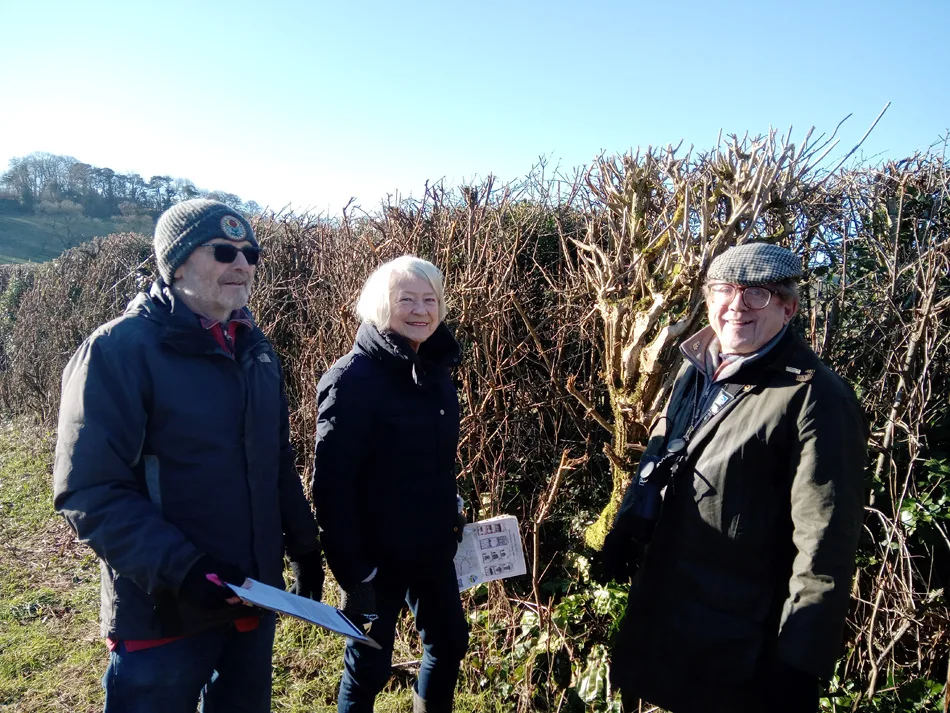
Kate Adie – president of the Dorset branch of the CPRE – assisting with a Great Big Dorset Hedge survey
Dorset CPRE’s 88th AGM will be held on 15th November at Cerne Abbas Village Hall, where guest speaker and Charmouth farmer John Calder will talk about a project that’s quietly transforming Dorset’s countryside. Since 2022, the Great Big Dorset Hedge – partly funded by Dorset CPRE – has been restoring and extending the county’s hedgerows. Often overlooked, the humble hedge is a vital refuge for wildlife: a larder, shelter and corridor for birds, mammals and insects. It’s the farmed landscape’s unfarmed edge – one that stores carbon, slows water and softens field boundaries. Hedges escape the intensification of modern farming.
Great Big Dorset Hedge surveys are carried out by volunteers
The Great Big Dorset Hedge ‘The aim,’ says John Calder, ‘is to bring landowners, volunteers and local communities together to enhance and extend Dorset’s hedgerows over time.’ So far, more than 100 farmers have signed up to have the GBDH volunteers survey all the hedges on their farms: and the project now involves planting, too. More than 400 volunteers have enlisted and over 500 km of hedges have been surveyed, all over Dorset. Surveys are carried out in summer when hedges are in full leaf – winter is for planting. The project has received widespread praise from organisations like Dorset National Landscape and the Farming & Wildlife Advisory Group, with Clare Lees of Post Green Farm noting that it helps ‘bridge the gap between urban and rural communities.’ Though there have been challenges, including the sudden abandonment of the Sustainable Farming Incentive scheme, John remains optimistic. “When new funding arrives next spring, hedgerows will stay central to the agenda,” he says. Later this year, he expects Dorset’s Local Nature Recovery Strategy to prioritise hedgerows as a stand-alone target, with GBDH highlighted as an example of nature recovery in action. Within the GBDH project, new collaborations are emerging all the time. Since the middle of 2025, Wessex Water has been introducing the team to farmers in the Poole Harbour catchment area (which covers much of the southern half of the county) so that enhanced and increased hedgerows are created where they have the most impact on water quality. In early 2026, John expects a comprehensive assessment of every hedge in the Brit Valley Landscape Recovery Project, which covers 600km of hedgerows across 50 neighbouring farms.
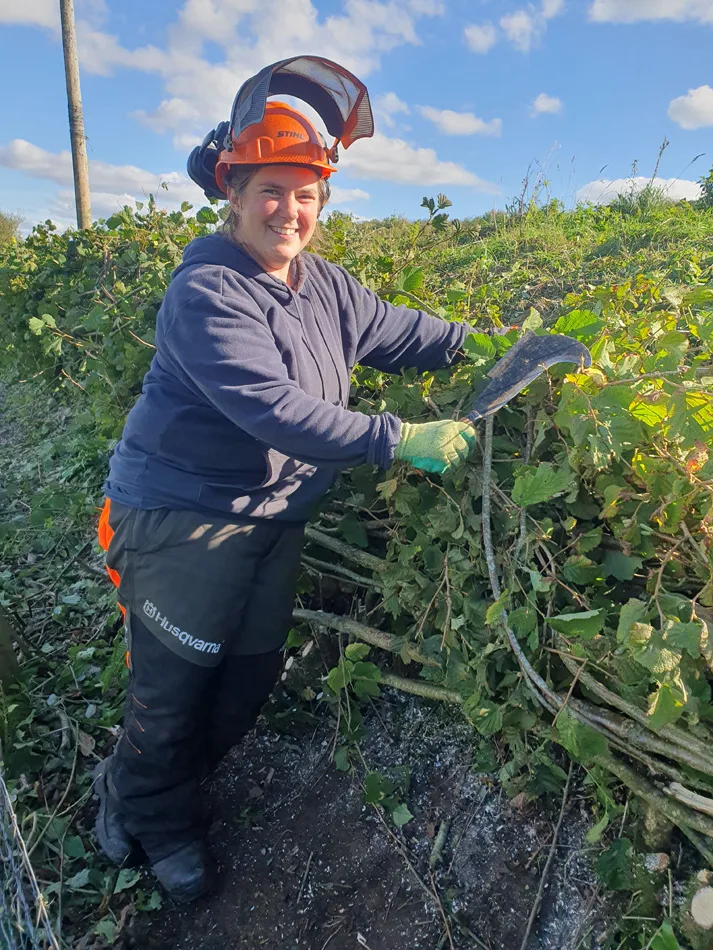
Jemma Barker, winner of the Novice Hedgelayer and Russell Woodham Billhook Trophy for best hand-tool competitor
Farmers in the project From small family-run farms to larger estates, farmers across Dorset have signed up to the project. At Post Green Farm in Lytchett Minster, volunteers have surveyed 40km of hedgerows, and last winter they began replanting. Similarly, at Rampisham Farm in West Dorset, 50km of hedges have been surveyed, with 30km at Bussey Stool Farm and 20km at Lower Farm. All four farms have contributed financially to the project. George Hosford, Dorset CPRE’s agricultural adviser and former chair of NFU Dorset (and, of course, regular BV columnist), says the results have been remarkable: ‘I’m bowled over by the success of the GBDH project.’ A solid base of farmers and volunteers has now been established, and specialist contractors are being used to orchestrate the volunteers. However, John has a message for farmers north of Dorchester, where the take up has been less enthusiastic than elsewhere: ‘Please do invite the GBDH volunteers onto your farm now!’
Russell Woodham, three times national champion hedgelayer and Melplash Society’s hedgelaying chair
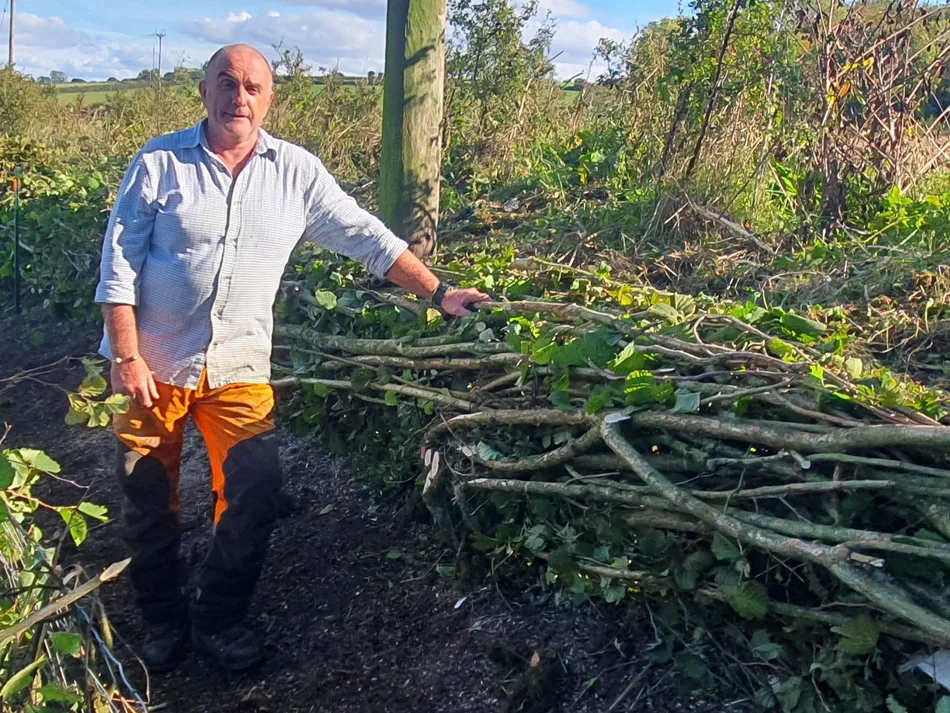
Dorset hedgelaying competition Dorset CPRE is also one of the sponsors of an annual Dorset Hedgelaying Competition held in September, organised by the Melplash Agricultural Society, which is committed to keeping the traditional skill of hedge laying. This year’s event, hosted by kind permission of JH Yeates & Son and Mr Colin Hawkins, was at Toller Fratrum in West Dorset under bright autumn sun. Competitors were given six hours to lay 10 metres of hazel hedge in the Dorset Style – laid on top of a bank, tightly woven with itself, and bonds (thin sticks) are used to secure it internally and externally. The finished hedge should be curved like a half-barrel and around 3′ high. The event welcomes spectators and is free to attend, so do go along next year to learn more. There are classes for individuals and pairs, open to both novices and experienced hedgelayers, and there is also a mechanical flail hedge cutting class. Judging was carried out by local experts, including Roger Vickery from Thorncombe and Kevin Goodfellow from Bridport, Phil Hart from Uckfield, Chris Stanton from Ashburton and Peter Yeates from Bridport.
In a world of noise, true listening is rare – but as Jon Sloper says, being genuinely seen and heard can change everything
Twice last month, people we supported at Help and Kindness said the same thing: ‘This is the first time someone has really listened to me.’ We’ve heard those words before – many times – but they never lose their weight. Behind them sits a lifetime of being overlooked. When people say it, it’s rarely about one moment. It’s about years of feeling invisible. Out and about in Dorset – chatting in community groups, catching up with colleagues, or in chance conversations on the street – we hear this sense of invisibility everywhere. It changes people. Being unseen and unheard affects how we move through the world. It changes how we feel, and what we believe ourselves capable of. The impact of not being seen or heard is profound. It is unsettling and frustrating, leading to anger or a kind of helplessness – and eventually, we stop showing up. It contributes to a sense of powerlessness, of being divided into ‘us and them’ or ‘important and insignificant’, creating resentment and disconnection. It’s not just individuals who feel invisible. Whole communities do too. Stereotypes creep in – ‘deprived’, ‘hard to reach’, ‘elderly’ – labels that replace understanding. When we listen to the communities described this way, they tell us they’re tired of being defined by oversimplifications that flatten the truth, turning people into statistics and stories into summaries. When services are designed around these labels, they rarely fit the people they’re meant for. They lack roots and relevance, and will usually lack buy in from the people and communities they seek to serve. We all know it: we only place our trust in people who truly know us.
Part of the change Many of Dorset’s public sector programmes are recognising these challenges. Approaches such as resident involvement in service design are helping to make people more visible and more involved. Listening is becoming part of how the change happens – not an afterthought. At Help and Kindness, we work with people, organisations and communities to support this shift. We keep asking ourselves: have we really seen and heard the people we’re working with? Have we listened deeply enough to understand what matters to them? That kind of listening takes time and effort. It can be hard to hear people’s experiences – some of them traumatic and life changing. The loss of trust is sometimes all that’s left. When connections are made, though, things happen. Sometimes tears. Sometimes a hug. Sometimes it’s just silence, and a deep sigh of relief. These moments are fragile and can be fleeting, but are often profound. As those connections strengthen, shared goals become possible. The work gains deeper roots and fits better with the people it seeks to serve. Starting with being seen and being heard changes everything. Letting people know they are seen doesn’t have to be complicated. It can be as simple as saying ‘Good morning’, asking ‘How are you?’, or offering a smile as you pass someone in the street. What we’re really saying is: I see you. I hear you.
We have some exciting opportunities for friendly and helpful drivers to join our excellent team.
Driving one of our wonderful minibuses, you will be providing the safe and caring transport of our pupils to and from school at the start or end of the school day, as well as to fixtures and various events across the school year.
The successful candidates will have a clean driving licence with D1 category and will be required to undertake a full driving assessment.
Further details and an application form are available from:
If you have any questions regarding the roles please contact the HR Department on 01747 813213
Interviews will take place on a rolling basis, as applications are received.
Clayesmore School is totally committed to safeguarding and promoting the welfare of children and young people and expects all staff to share this commitment. Applicants must be willing to undergo child protection screening, as all new staff will be subject to enhanced DBS clearance, identity checks, qualification checks and employment checks to include an exploration of any gaps withinemployment, two satisfactory references and registration with the Disclosure and Barring Service (DBS).
Salary: Up to £30,000 depending on qualifications and experience Contract type: 52 weeks a year Hours of Work: Full time, 40 hours per week Contract term: Permanent Start date: January 2026
We are seeking to appoint Early Years Practitioners to join Clayesmore Nursery. This is an exciting opportunity to join, work in and shape the setup and development of our nursery, creating a nurturing and inspiring environment for young children.
Nestled in the picturesque Dorset countryside, Clayesmore is a vibrant community where students thrive both academically and personally. Our dynamic curriculum, both inside and outside the classroom, creates a buzzing atmosphere teeming with possibilities. From outstanding academic achievements to personalised support in our renowned learning department, we ensure success at every level. Opening in early 2026, the nursery at Clayesmore will extend the excellent offering to our youngest pupils.
As an Early Years Practitioner, you will play a pivotal role in launching and growing our nursery, joining a team of dedicated staff, and embedding our vision and best practices. We are looking for passionate staff to take this journey with us. We would welcome applications from experienced Early Years Practitioners as well as those who have recently qualified.
If you are able to demonstrate the following, we would welcome your application:
• Level 2 or 3 qualified in Early Years.
• Able to inspire our pupils with enthusiasm and a love of learning.
• Have a sound knowledge of the requirements of the Early Years curriculum.
• Able to plan and prepare engaging and stimulating activities for pupils or every ability.
• Able to positively impact pupils in every aspect of their education including pastoral care.
• Able to encourage learning and development, through play and teaching.
• Can create a secure environment, using imagination to help children to learn.
• Can work with parents and carers to support their children.
• Enable children to build their literacy, language and numeracy skills.
• Monitor progress to enable planning.
• Put together activities which will keep the children engaged throughout the day.
This is your chance to play a key role in the launch of an exciting new nursery. With the support of the manager and the Inspired Learning Group, you will have the opportunity to grow professionally and make a positive impact in young children’s lives.
If you are an experienced or newly qualified practitioner ready to take on a rewarding new challenge, we look forward to your application. Please apply by visiting https://www.clayesmore.com/work-for-us
Interviews will take place on a rolling basis, as applications are received.
Clayesmore School is totally committed to safeguarding and promoting the welfare of children and young people and expects all staff to share this commitment. Applicants must be willing to undergo child protection screening, as all new staff will be subject to enhanced DBS clearance, identity checks, qualification checks and employment checks to include an exploration of any gaps within employment, two satisfactory references and registration with the Disclosure and Barring Service (DBS).
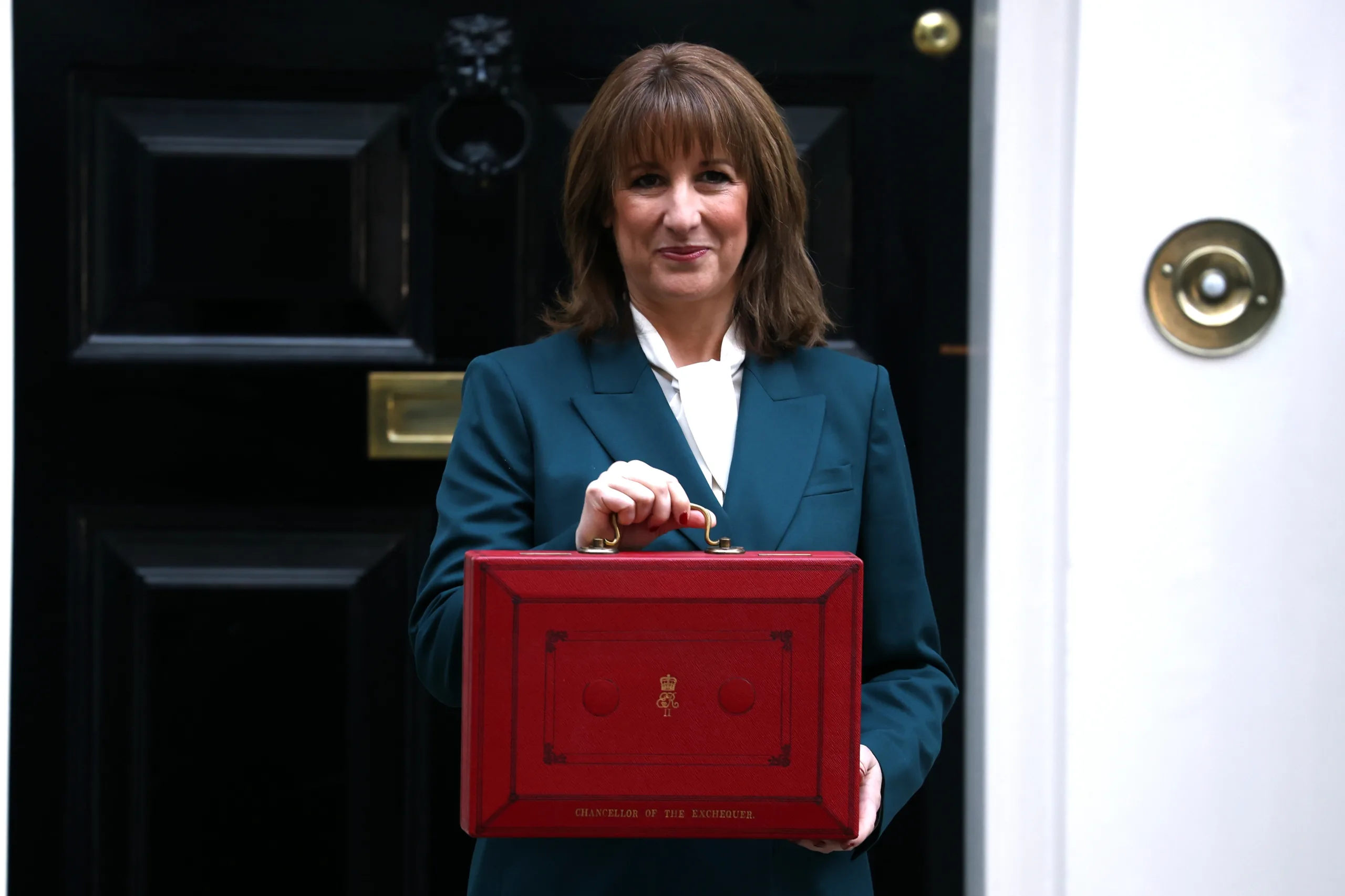
Just when Rachel Reeves thought she had enough on her plate, a fresh set of figures has landed on her desk that’s got Westminster talking. The numbers show just how much gambling companies spent on advertising last year, and the timing couldn’t be worse. With the budget coming up fast, what might have been buried in a trade report has become the kind of statistic that makes headlines and puts ministers on the spot.
When Marketing Numbers Become Political Ammunition
The estimate doing the rounds suggests gambling firms dropped nearly £2bn on marketing over the past year. That’s an eye-watering amount by any measure, but what’s really caught people’s attention is the contrast. While the government talks about tough choices and tightening belts, here’s an industry spraying cash across every screen and surface it can find. TV ads during the football, banners on streaming sites, social media blitzes, podcast sponsorships, affiliate deals, you name it, they’re on it.
To be fair, this isn’t unique to gambling. Pretty much every sector fights tooth and nail for your attention these days. Food delivery apps, streaming platforms, and gaming companies they’re all chasing eyeballs in an impossibly crowded market. Gambling operators are just playing the same game everyone else is.
And when you dig into where people actually spend their time online, it makes sense why there’s such a scramble. Users want things that feel seamless and don’t bog them down with hoops to jump through.
That’s part of why you hear more chat about alternative options, especially for UK self excluded players. According to gambling expert Wilna van Wyk, these platforms often cut through the red tape that traditional sites wrap themselves in. They typically offer a broader game selection, fewer restrictions, and quicker payouts thanks to more modern payment systems. The usual perks are still there too, bonuses, free spins, cashback, but without as much faff. It’s a glimpse into how much the whole digital entertainment world has tilted toward making things frictionless. Which circles back to why companies throw such massive budgets at staying visible in the first place.
The Tax Argument Heats Up
Here’s what’s really getting people fired up: the mismatch between what gambling companies spend on ads and what they contribute in taxes. Last year, the duties collected from online casinos were dwarfed by the advertising spend. For those pushing for reform, that gap tells the whole story. If there’s money for billboards and brand partnerships, there’s money for the taxman.
Several MPs have seized on this, saying it completely undermines the idea that the industry is skating on thin ice financially. Their logic is straightforward: if you can afford a £2bn marketing blitz, you can stomach a bigger tax bill. Reeves is now facing mounting calls to see this as a chance to boost revenue without hitting regular people or smaller businesses.
Industry Fights Back With Job Loss Warnings
The Betting and Gaming Council isn’t having it. They reckon the advertising figures are overblown and that the real numbers tell a different story. More importantly, they warn that hiking taxes could cost thousands of jobs. According to them, you can’t just look at one year’s ad spend and one year’s tax take and draw neat conclusions.
We’ve heard this tune before, though. Remember when alcohol duties went up years ago? The industry predicted doom and gloom, brewery closures, and mass redundancies. None of it happened on the scale they warned about. That’s why a lot of critics take these doomsday scenarios with a large pinch of salt.
The Black Market Boogeyman Returns
There’s always a bit of noise around what happens if regulated companies pull back on marketing, but history suggests convenience usually wins out. Think of how streaming platforms grew, despite the presence of piracy websites; most people stuck with services like Netflix simply because they were easier and more reliable. The same pattern often shows up in online gaming: players tend to favour platforms that feel stable, trusted, and accessible, regardless of what’s happening around the edges of the market.
Outspending Cars and Cosmetics
One detail that has raised eyebrows is that gambling marketing now exceeds the ad budgets of massive sectors like automotive and beauty. TV still grabs a decent chunk, but digital channels, especially social media where younger audiences live, are where the real growth is happening. Gambling firms are just following the same playbook as every other sector, chasing attention online.
The Credibility Problem
For some MPs, the real issue is the mixed signals. It’s tough to claim financial fragility while simultaneously outspending half the economy on marketing. The numbers just don’t back up the narrative of an industry on its knees, and that disconnect is what’s pushing them to demand that Reeves take action.
There’s also the fact that advertising isn’t just about attracting customers; it shapes perception. When you’re spending this much, you’re projecting confidence and dominance, not weakness.
Reeves Walks a Tightrope
The budget will reveal whether Reeves is ready to take the industry on, or if she’ll opt for the safer, quieter route. Raising duties would bring in money the Treasury could definitely use, but it risks a nasty public battle with an industry that knows how to make noise. Doing nothing invites accusations of bottling it from those calling for tougher regulation.
It’s not the first time a government has faced this kind of standoff. Tech companies got hit with digital service taxes after years of skating by. Fast fashion brands are feeling the heat over sustainability. Eventually, public pressure tends to force politicians’ hands.