

Debby Kirby’s loom has sung through Walford Mill for 40 years as she weaves her hand-dyed silk into luminous accessories and wall art
All images
© Courtenay Hitchcock
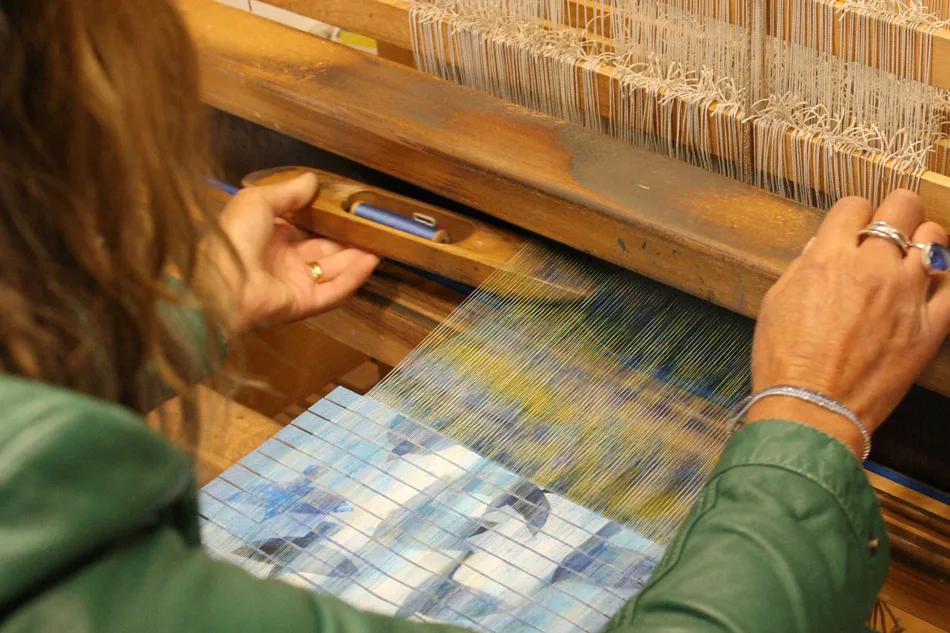
You can hear Debby Kirby hard at work long before you see her. The rhythmic clack and sigh of her loom travels across the ancient stone floors of Walford Mill Crafts Centre in Wimborne, a hypnotic beat that rises and falls like steady breathing. Step closer and you see woman and machine working in unison. Nimble hands slide – ‘battening’ – the shuttle across the weave; fingers passing – ‘picking’ – the weft thread through the loom shed, feet driving the pedals below – ‘shedding’ – the yarn with effortless dexterity. It’s mesmerising to watch.
‘It’s like patting your head and rubbing your stomach at the same time,’ Debby says. ‘It’s physically a tough workout. You must sit properly, engage your core. Even though it’s hard work, you do get into a zone. Your breathing slows down and it’s very meditative. If I’m tired or out of sorts, I always feel better after weaving. It’s quite Zen-like.’
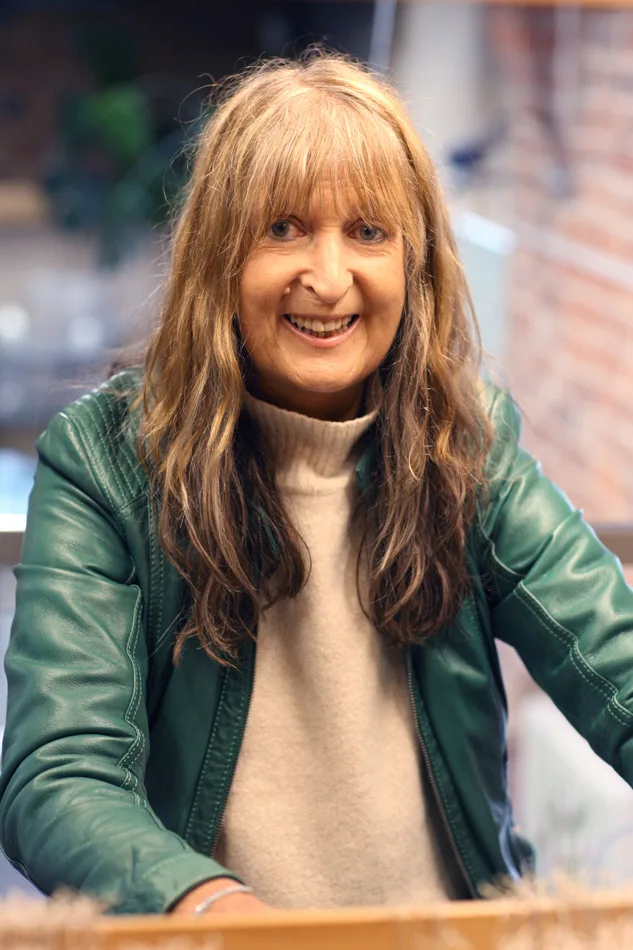
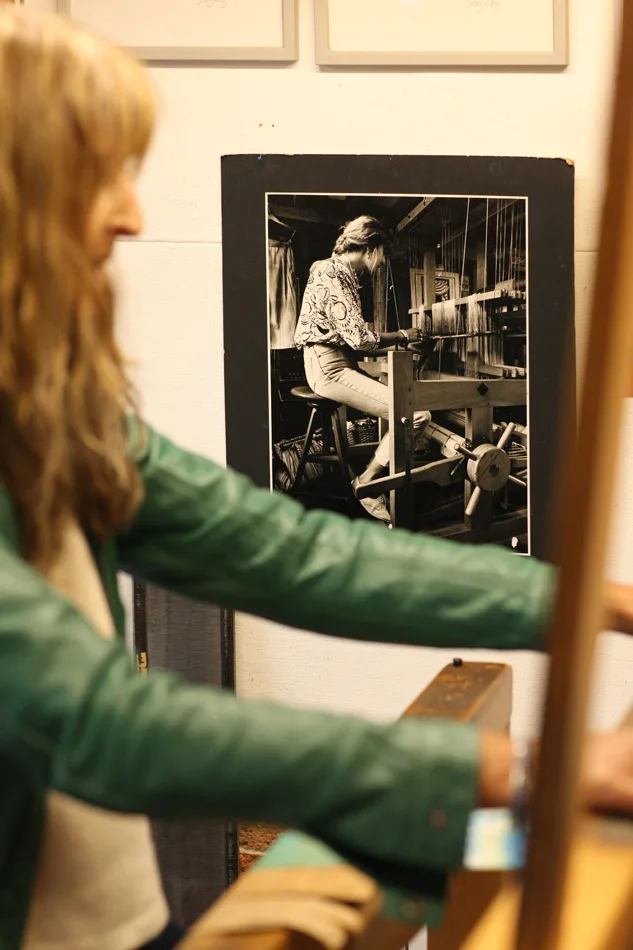
Debby has been performing this intricate mind-and-body choreography for more than 40 years. Since the mid-1980s she has worked in her corner of the mill, a building dating back to the 1760s and now run by Walford Mill Education Trust as a centre of excellence for contemporary British craft and design.
Nestled on the mezzanine, her loom sits in full view of the mill visitors, who often pause to watch silk transform, thread by thread, into something luminous, tactile and beautiful.
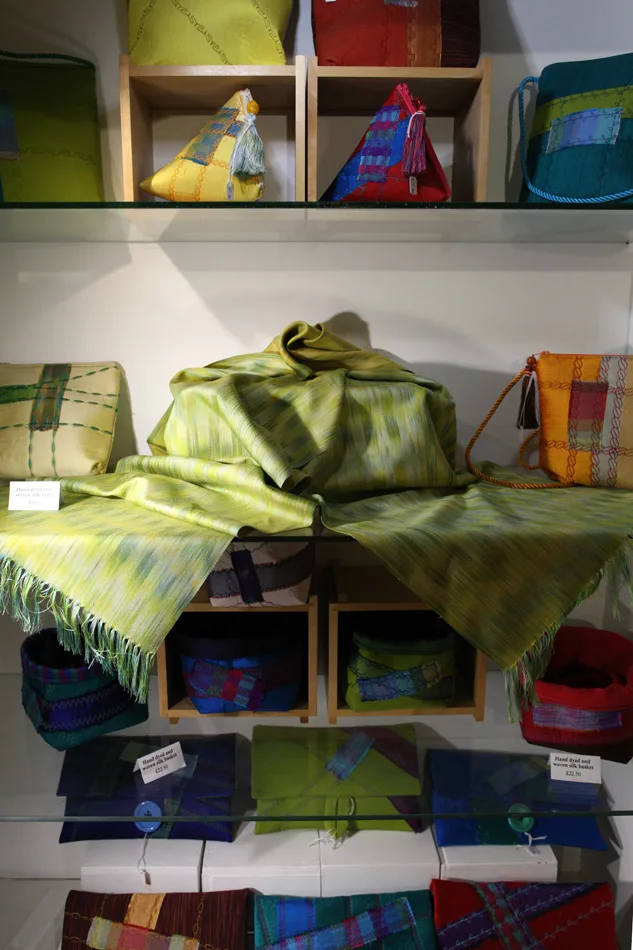
At just 24, Debby was one of the original artists to take up residence when the mill became a creative hub. Today, her output ranges from beautifully designed silk accessories including colourful spectacle cases, make-up bags and her signature flowing scarves to, more recently, large, dramatic wall-hangings.
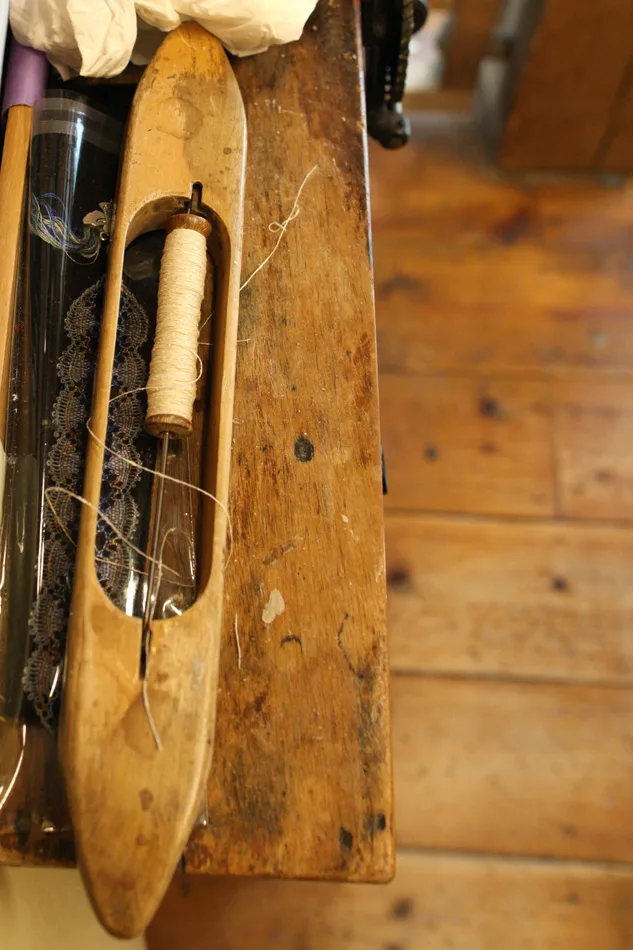
At the heart of it all is her Harris loom, faithful companion for more than four decades. ‘In all this time it’s only needed one day of maintenance,’ she says with pride. Made from beech it cost £500 (loaned by her father Mac, and taking two years to repay).
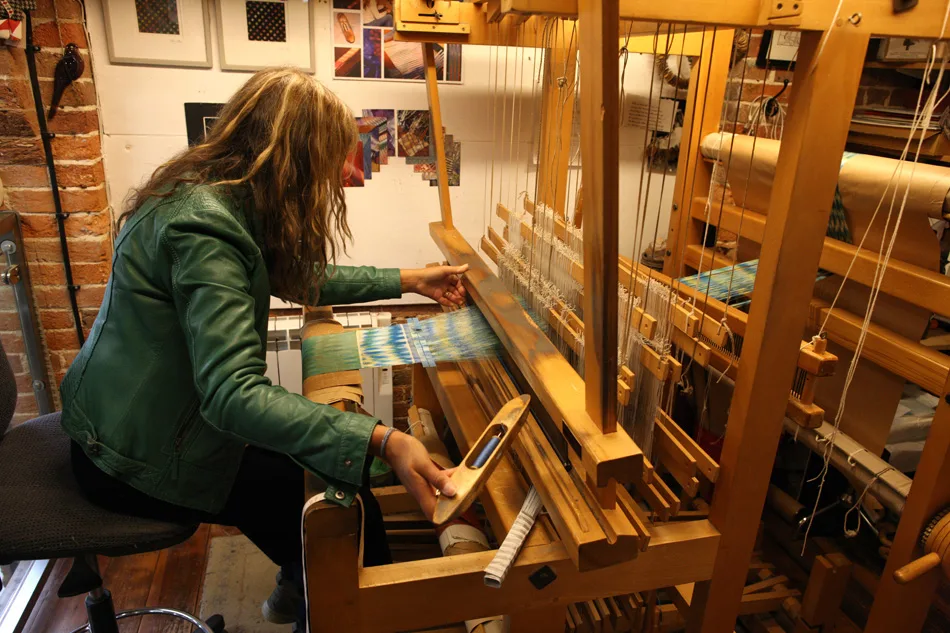
The loom is the type still used by Scottish Harris Tweed weavers today. ‘It’s very friendly to use,’ she says. ‘Everything works evenly and there’s very little that can wear out or break.’
Does such a trusted co-worker have a name? ‘I guess it’s me. I guess it’s Debs. It’s such an extension of me that when I come into work, I don’t even see the loom – only the work on it. I know all its noises and its foibles. I talk to it. If a thread breaks, my language can be sharp, but when I reach the end of a length and I’m excited, I’ll pat it and say, “well done”.’
She also admits to being lovingly territorial. ‘I occasionally let work placement students use it, but there’s nothing weirder than coming back into the room and seeing someone else on my loom. It just doesn’t look right.’ As for her weaving on another person’s loom? ‘Sacrilege,’ she says firmly. ‘It would be like playing someone else’s musical instrument. It just feels wrong.’
Liberty’s and Fortnums
Debby’s creativity goes back to childhood. Growing up in Poole, she was always drawing and painting, and as she grew she became fascinated by landscapes, architecture, proportions and the way spaces divide. ‘Weaving is very much like graphic design,’ she says. ‘It’s all about proportion.’
University beckoned, but not quite as expected. After an inspiring foundation course at Bournemouth University, Debby applied for graphic design, only to be nudged, wisely, towards textiles. Accepted by West Surrey College of Art, she arrived knowing ‘absolutely nothing’ about the discipline. The early weeks were discouraging – lino cutting, lace making, spinning sheep’s wool collected from barbed wire:
‘I remember thinking this really wasn’t for me,’ she says.
Then came weaving. Working with finer cottons, everything clicked. A tutor and master weaver, Mary Restieaux, introduced her to the delights of fine silk, and Debby knew instantly she had found her material. ‘That was the catalyst,’ she says.
After graduating, for 18 months Debby worked in an office by day, waving by night, while building her speed and confidence. A local craft fair and a Bournemouth Echo interview which generated a call from Vogue Patterns magazine helped launch her professional career. Buyers at Liberty & Co and Fortnum & Mason followed. Joining the Dorset Craft Guild led to her invitation to Walford Mill in 1985.
Silk remains her enduring passion. Entirely natural, it drinks in colour and reflects it back with extraordinary lustre. Debby dyes all her own threads by hand at home in Stourpaine, taking over the kitchen on dedicated dyeing days. Using non-toxic, colourfast dyes, she can dye up to 60 colours in one day. A run of scarves may need up to 250 feet of silk and it’s a long day standing over boiling pans. ‘My husband is banned from the kitchen and we get a takeaway! For me, dyeing brings an element of chaos,’ she explains. ‘Weaving is very ordered and mathematical, counting in cycles, feet pressing different pedals to create pattern. With dyeing, silk just sucks up the colour. You never fully control it. I love that balance between randomness and structure.’
A steady rhythm
Debby’s visual inspiration is constant and instinctive. A recent visit to Egypt left a lasting impression – not so much the history, she admits, but the proportions of the pyramids. ‘I’ll have my camera out or use coloured crayons on graph paper. My designs stem very much from my gut reaction to what I see.’
Spread across several floors, the mill hums with the quiet creative energy from jewellers, painters, potters and other makers, all working alongside one another. ‘It’s always been such a lovely place, even with the challenge of recurring flooding!’ Debby says. ‘You bounce ideas off other artists. There’s lots of collaboration.’
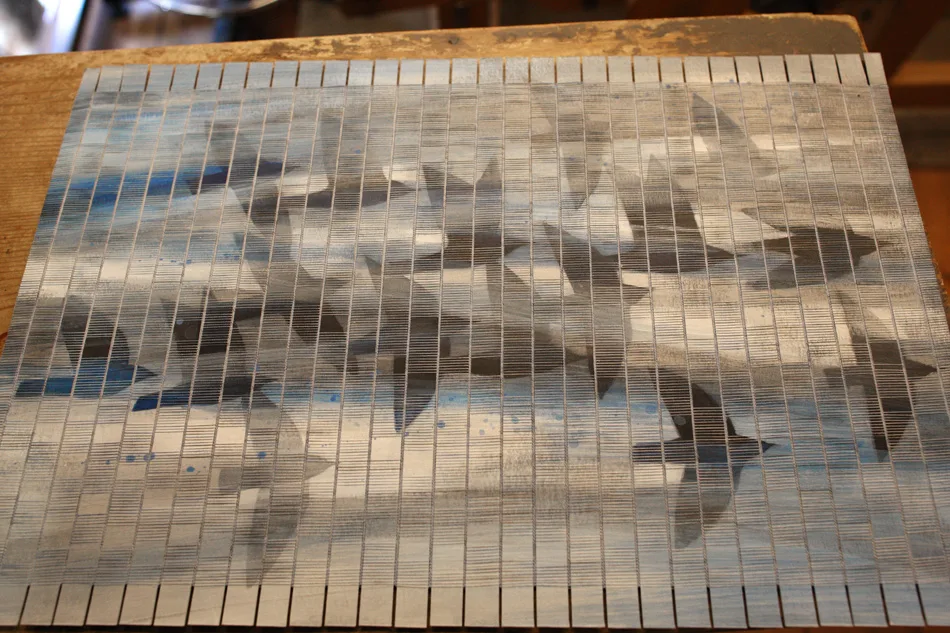
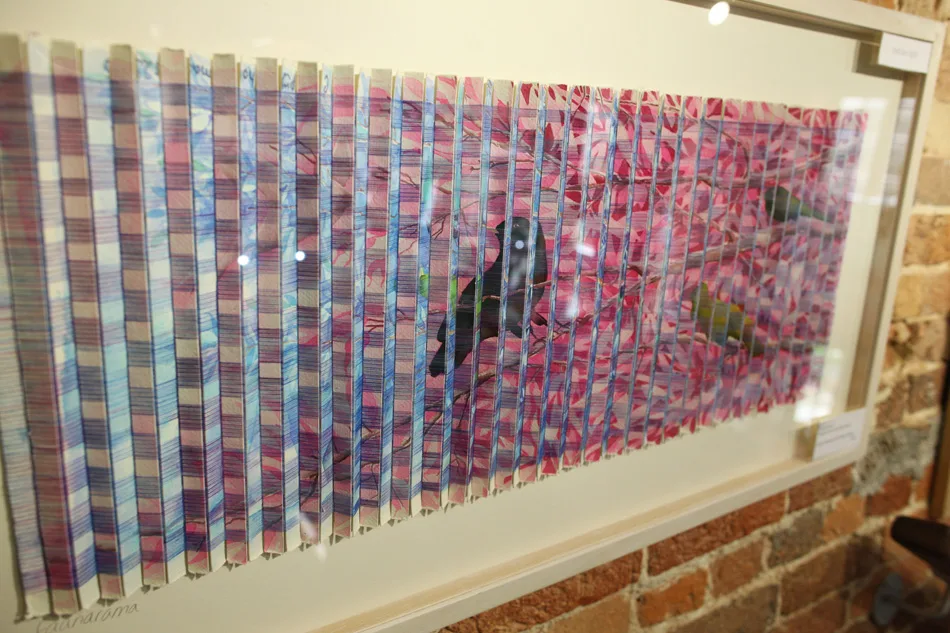
One of her most distinctive projects emerged this way: weaving silk with paper. Developed over more than twenty years with a calligrapher friend, this unique technique has evolved into three-dimensional hanging works and collaborations with painters and photographers, with pieces displayed in hotels, surgeries and private homes.
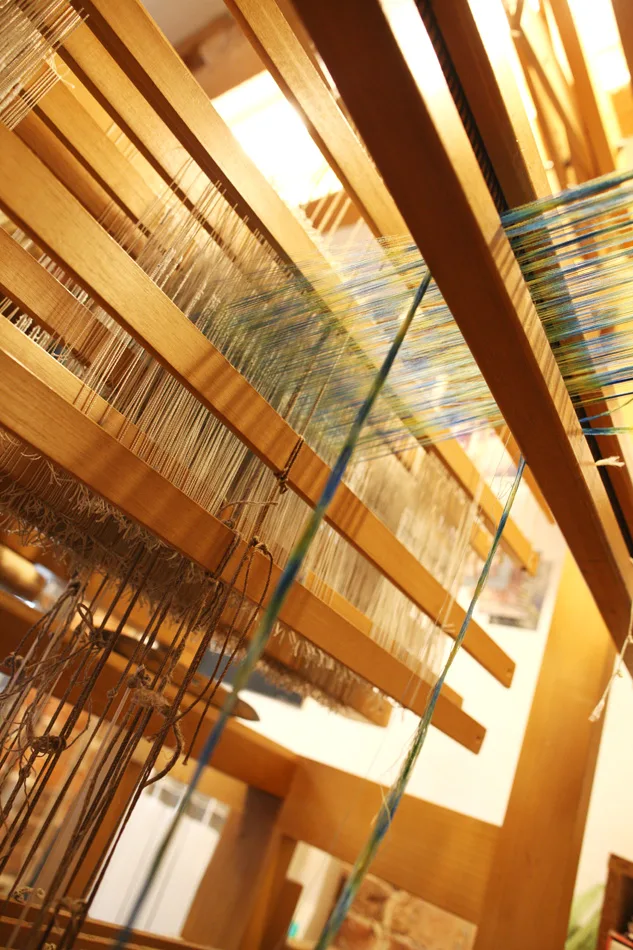
of service. © Courtenay Hitchcock
An exhibition is planned this summer to celebrate both the craft centre’s and Debby’s 40th anniversary. For her, it’s a swansong of sorts, but also a beginning. Her trusty loom will be moving to her garden studio at home. ‘I’m retiring from Walford Mill – but I’m still weaving. It’s just a change of pace. I’m excited about having more time to experiment.’
And as the loom continues its steady rhythm, there’s no sense of finality. It’s clear that Debby Kirby’s life, like her work, will always be woven with creativity.
debbykirby.co.uk