

Jane Adam’s chance encounter with an injured skylark at Badbury Rings becomes a meditation on loss, renewal and the fragile return of spring
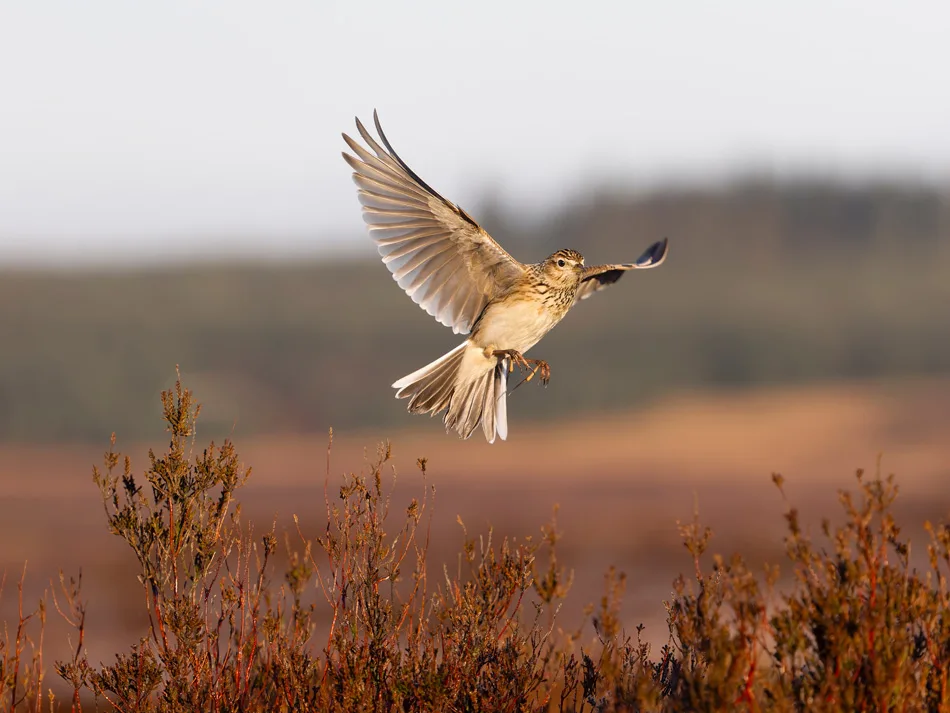
If it hadn’t moved when it did, I would never have seen it. I had gone to Badbury Rings to blow away a few cobwebs. It was one of those March days where the wind turns your fingers to ice and hair to rags, but the sun tricks your brain into thinking it’s spring. Perfectly camouflaged against the dead autumn leaves, the skylark’s feathers were the colour of oak and ash, with a tuft on the top of its head like a peaked cap.
It was trailing a wing, unable to fly – I gathered it up, soft feathers as light as clouds, and placed it gently into my rucksack.
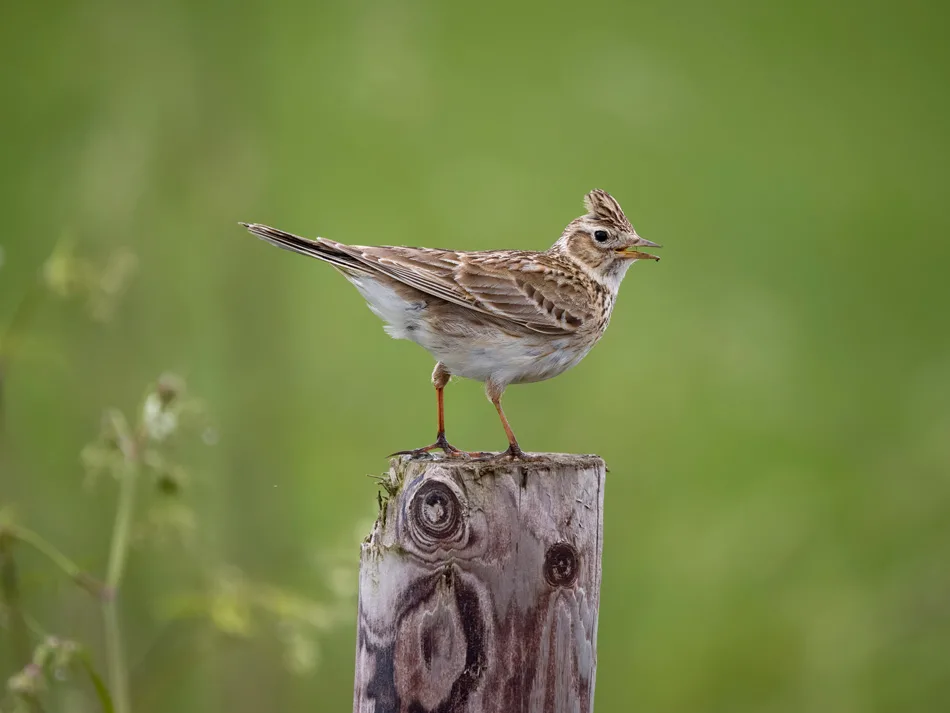
Messengers
A skylark that can’t fly is a profound paradox. Its collective noun – an exaltation – is no accident. To hear the song of a skylark, to look up and know it’s there somewhere high above, even though you can’t see it, is enough to lift anyone from a winter melancholy.
It’s the males that sing at this time of year: some start before dawn, spiralling hundreds of metres into the sky, singing continuously. Their unique vocal anatomy allows them to breathe in and out while still producing a stream of sound. These performances aren’t just on a whim – they’re the skylark’s way of wooing a mate and claiming territory … though I like to think they sometimes sing and fly simply because they can.
In European literature and poetry, skylarks have long been associated with renewal, hope, and rebirth. Chaucer, Shakespeare and Vaughan Williams all refer to them as messengers of the day.
Just as farmers once observed cows’ resting habits to forecast the weather, they also paid attention to the way skylarks flew: a gradual descent foretelling a fine day, while a rapid fall signified rain.
March is undoubtedly a month of awakening, of nature surging back after winter – of growth, green shoots and birds announcing new beginnings.
Sadly, skylark numbers have declined due to farming intensification. To hear one – let alone an exaltation – is now a rare joy.
I took the injured skylark to my local vet. Its wing was badly broken, and it couldn’t be saved. Later, as the sun set, I returned its body to the ancient rings, its connection between sky and earth now irreparably severed. But around me, skylarks descended quickly with silver song and tumbling wings, heralding spring even as the rain began.