A Dorset charity for women, The Water Lily Project, has launched a newinitiative to help disadvantaged women and particularly those in rural areas in our region get back into education or the world of work.
The Water Lily Project, which has worked with vulnerable women in the community for over 10 years, is putting particular emphasis on women from deprived and rural areas of the county. Project Manager Liz Carter explained:
“It’s a fact that it’s often women from poorer or rural areas whose life chances for continuing their education or becoming employed are reduced significantly. “Giving them the opportunity to learn and reboot their career chances is vital for empowering them to live independent lives and fulfil their potential. We are asking women to come and EAT with us – ‘empower, activate and train’. “We know from our years of helping women in crisis that equipping a person with the right life skills is a vital building block in their route to helping themselves improve their own circumstances.” This scheme is offering 24 places to women aged 18 or over who are currently unemployed or economically inactive. The European Union Social Fund and the Education & Skills Funding Agency (ESFA) fund it along with support by Groundwork UK, a federation of charities mobilising practical community action on poverty and the environment across the UK.
The women will benefit from mentoring and fully- funded training suited to their individual needs for five hours a week for 20 weeks to help equip them with the skills to get a job or to continue their chosen path of education.
The Water Lily Project is keen to hear from other support agencies across Dorset, especially those in rural areas, who may be working with women who meet these criteria and could benefit from the scheme.
To find out more about the how the scheme can help you or someone you know, please contact Liz Carter via email: [email protected]
This month can be used to get yourself properly prepared for springtime. The following jobs will help, says gardener Pete Harcom.
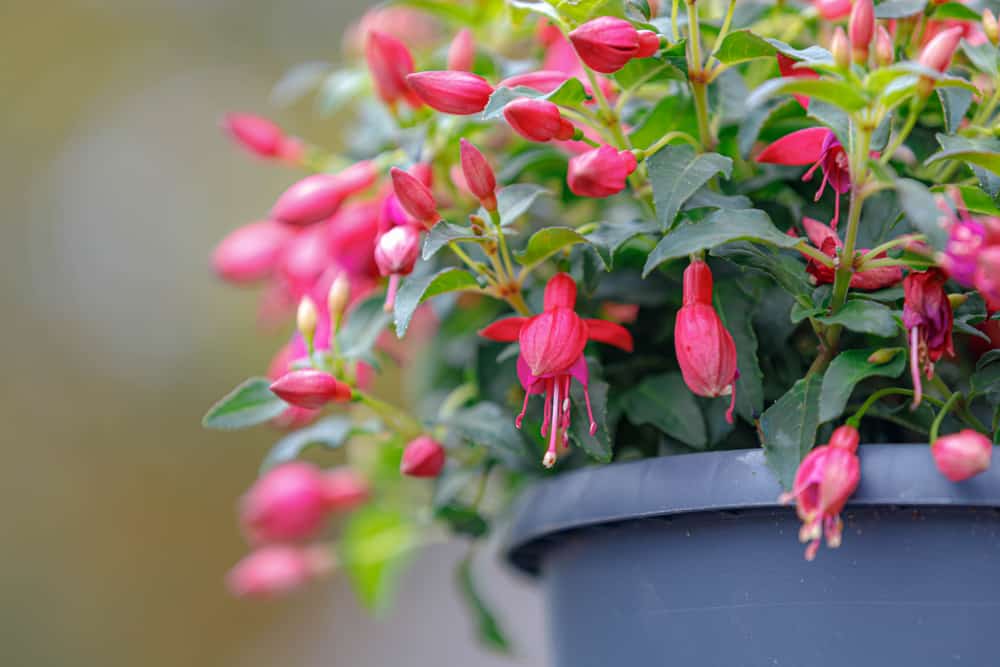
Fuchsias are a popular patio plant, but have a habit of becoming leggy when overwintered. Pete shares his pinching out method to ensure yours will be covered in summer flowers
Tips for Basic housekeeping
Clean up and consider fumigating the greenhouse – this will help keep pests under control.
How about installing a water butt now, ready for the summer? Rainwater is particularly useful for watering acid-loving, ericaceous plants.
Find out what type of soil you have. Invest in a soil testing kit to help you choose the right plants for your garden.
Wash empty pots by scrubbing them with hot water and a mild detergent. Rinse them well afterwards.
Keep feeding the birds, hangup fat balls and keep bird feeders topped up.
What you should be pruning
Prune winter-blooming shrubs such as mahonia, winter jasmine and heathers, once they’ve finished flowering – but be careful not to cut back into old wood.
Cut back wisteria side shoots to three buds from the base, to encourage abundant flowers in spring.
Prune buddleia and elder hard back – right to the base – to keep these vigorous shrubs to a reasonable size. Trust me. They’ll grow back!
Trim back ivy and deciduous hedges, Virginia creeper and any other climbers. Do this now, before birds start nesting and to keep gutters and windows clear.
Prune summer-flowering clematis towards the end of the month, before active growth begins. Cut stems back to healthy buds about 30cm from the base.
Get ready for sowing
It’s a good idea to organise this year’s seeds by sowing date. Get hold of a box with dividers, and file your seed packets by the month they need to be sown in. This will make life a lot easier in the weeks to come.
Start now for show-stopping summer fuchsias
If you have a cold greenhouse you can start potted Fuchsias back into growth. Prune overwintered fuchsias back to one or two buds on each shoot. For the next few months if you pinch out the lead bud on every shoot, you will have lots more flowers in the summer. Show- quality Fuchsias (used for showing later in the year), are pinched out like this. Removing the growing tip stimulates the side shoots into growth, so, instead of having one main stem, you double the shoots each time you pinch out. These side shoots will then take precedence. Let those side shoots grow until they have two or three pairs of leaves, then remove their growing tips. Repeat this process until you’re happy with your fuchsia form, though it’s best to stop pinching out around June at the latest. Having pinched out several times, you’ll have a nice bushy plant with lots of growth, lots of flowers and maybe even a show quality plant!
A ‘cardboard’ caravan in the depths of winter with no running water or electricity! Unlike most of us who’d run screaming for our creature comforts, Jack Fazey calls that an ‘incredible experience’. Tracie Beardsley reports in this month’s A Country Living
Wood craftsman Jack Fazey learned traditional woodland management, coppicing and hedge-laying, charcoal making, timber framing and green wood crafts during his apprenticeship with renowned woodsman, author and eco-builder, Ben Law, of Channel 4’s ‘Grand Designs’ fame. Image: Courtenay Hitchcock
After four years of working in conservation in Mexico and Australia, Jack Fazey was struggling with living back in his home city of London. When an apprenticeship came up with renowned woodsman, author and eco-builder, Ben Law, of Channel 4’s ‘Grand Designs’ fame, Jack applied and never looked back.
Living in an ancient woodland in Sussex in a leaky old caravan, he learnt from his wood guru about traditional woodland management, coppicing and hedge-laying. As the ice thawed on his blankets and spring appeared, Jack turned his hand to greenwood crafts, making use of materials gathered during winter. He went on working with Ben, building bespoke timber frame houses. Not bad for a lad with no formal carpentry qualifications.
Jack recalls: “The apprenticeship was a baptism of fire and a wonderful experience – a complete immersion in woodland living. I’ve always loved bush-craft and camping. Waking up on a frosty morning, building and lighting a fire before you can have a brew – you know you’re alive!”
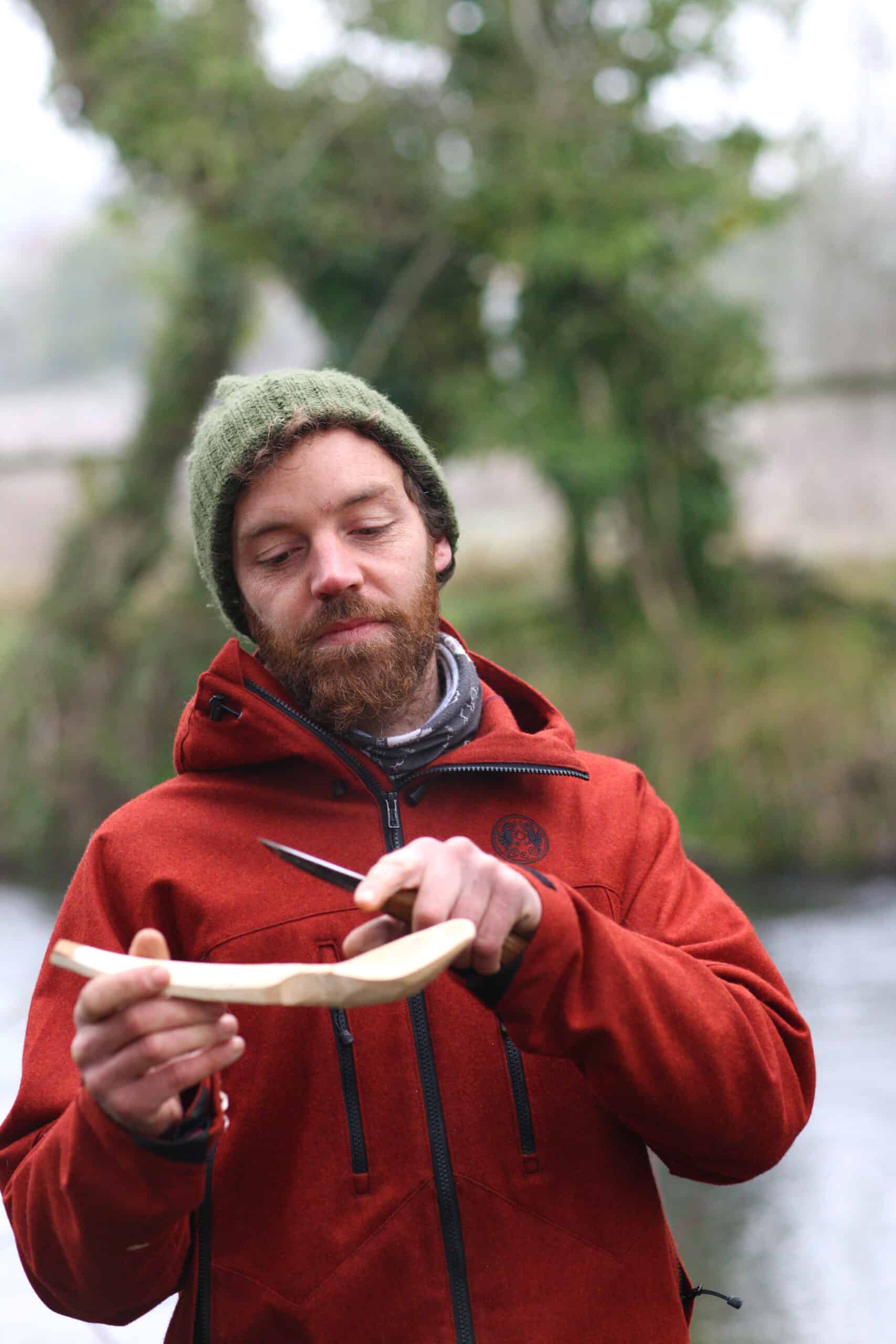
Green woodworker Jack Fazey demonstrates the natural curve in a branch which makes a good spoon Image: Courtenay Hitchcock
A wood living
Now 35 years old and settled in Dorset with his wife Hayley and two young daughters, Jack lives in a timber-framed house he built with Hayley, and has launched his own business – Fazey Woodcraft – inspired by his love of all things to do with wood. Fazey Woodcraft combines all Jack’s talents, offering eco-builds, stunning wooden garden structures, plus bushcraft and green woodworking courses. His latest venture is a series of workshops in venues and woodland spaces across Dorset. People from 18 to 80 years old learn the arts of spoon-carving, green woodworking, basketry and ancient bark crafts, using wood from local tree surgery waste.
Some of the items made during Jack Fazey’s classes: spoons, woven baskets and bark containers. All images Courtenay Hitchcock
‘You can get addicted!
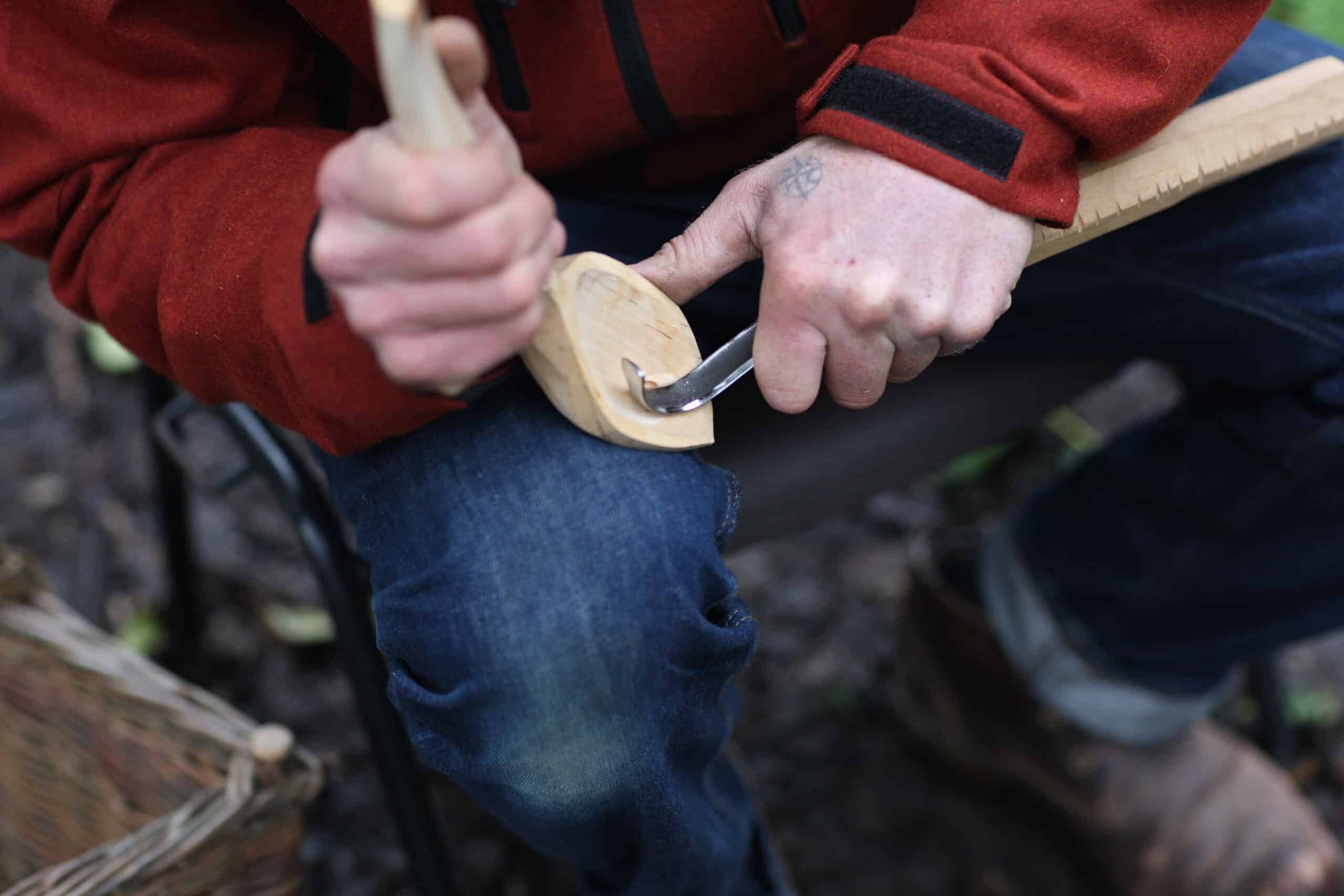
He explains: “Since lockdown, there’s been a surge of people wanting to work with their hands. My workshops attract all demographics – I’m amazed by the variety of folk I see in front of me, happily covered in wood-shavings. “Spoon carving is one of the most popular workshops. You can get quite addicted to it. Perhaps it’s the simplicity – all you need is a log, an axe and two knives.”
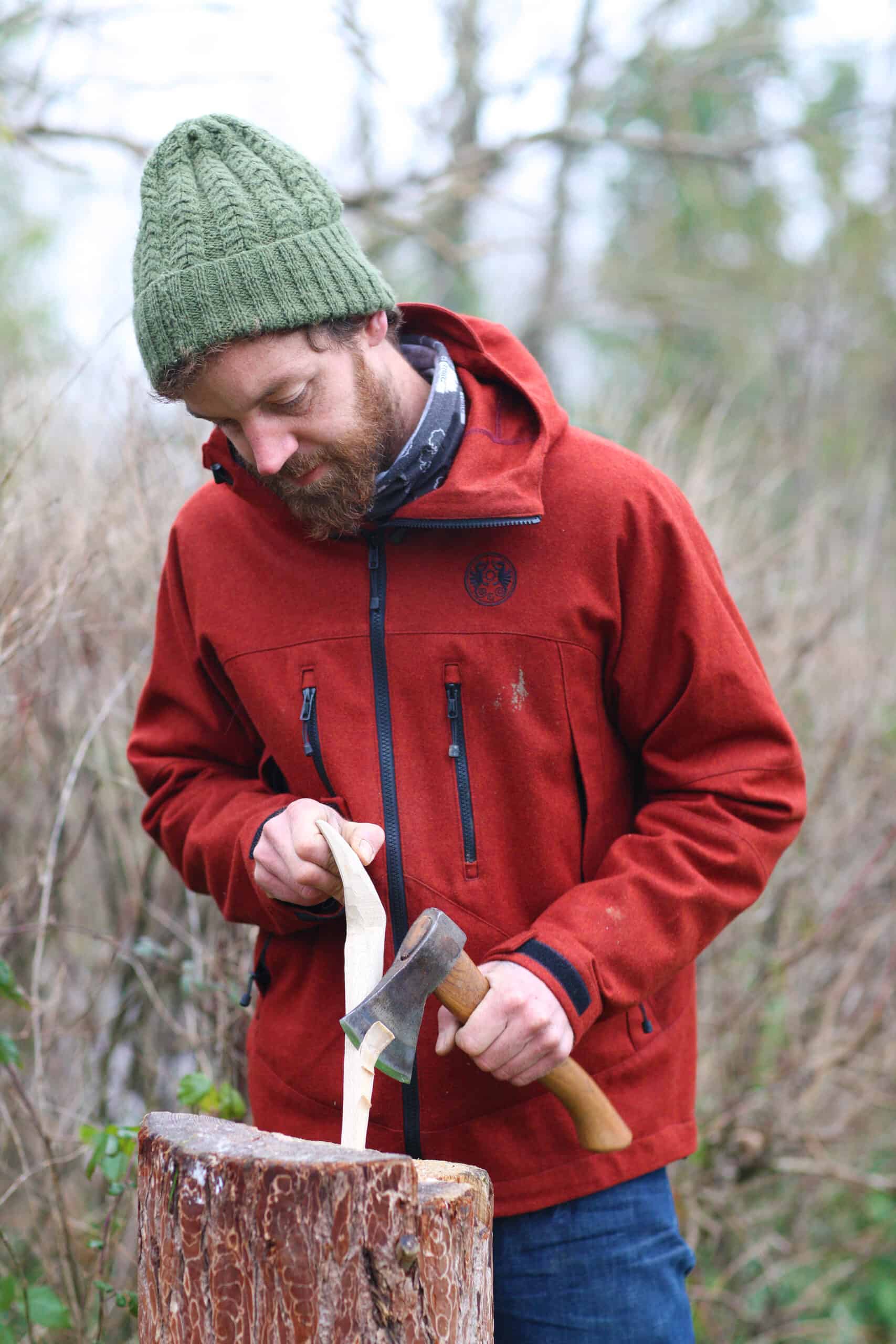
A few simple hand tools are used to create the majority of Jack’s projects. The Axe, Froe, Knife & Saw are the tools he uses the most. Image Courtenay Hitchcock
Bespoke workshops are proving a hit, even with hen and stag parties. “I’ve managed to silence very rowdy blokes as they sit absorbed in their carving. The rule is no beer until the tools are down!”
Wood and wellbeing
Jack is a firm believer in the emotional benefits of working with wood. Last year, Fazey Woodcraft
supported Mental Health Week, offering workshops for men at Okeford Fitzpaine’s Big Yellow Bus Garden Bus Project, which encourages people with mental health issues to get outdoors.
Just listening to feedback on Jack’s website videos shows people loving the opportunity to ‘switch off’. “Anything that engages your hands allows the sub-conscious to do its own thing
while you’re completely absorbed in the process,” explains Jack. “There’s infinite realms of possibility for expression. How much can I push this design idea before a spoon becomes sculpture? That’s what I love about working with wood and bark. I appreciate the artistry but also the use and purpose. One of my favourite sayings: “Have nothing in your house that you do not know to be useful or believe to be beautiful.”
Jack’s happiest outdoors – when he’s not working with wood, you’ll find him wild-camping in the woods with his wife, Hayley, five-year old daughter Lyla and toddler, aptly-named Hazel : Image Courtenay Hitchcock
And when he’s not working with wood, you’ll find Jack wild- camping in the woods with his wife, Hayley, five-year old daughter Lyla and toddler, aptly- named Hazel. Lyla’s first wild camping experience was at just three months. “You can’t beat a night sleeping out, looking up at the stars through the trees.”
: Image Courtenay Hitchcock
Quick-fire questions with Jack:
Favourite TV show?
Anything Sir David Attenborough does. I also like the Repair Shop.
Ideal dinner guests?
David Attenborough along with tribal elders. I’ve always been fascinated with the way indigenous people see the world. We need to listen and learn from them to save our planet.
Birch – it’s not only beautiful but has so many uses. Its bark is probably the oldest form of making containers. It resists fungal growth so it’s ideal for food storage. It’s a great firelighter in the dampest of conditions and in spring, you can drink its sap which is loaded with nutrients.
Pension planning is a complex area – Sherborne’s AFWM Ltd’s independent financial adviser, Dan Driscoll highlights some key considerations.
shutterstock
Nearly seven years on from the introduction of pension freedoms, the demand for pensions advice continues to be strong. With the events of the pandemic still creating uncertainty, could you benefit from a review into your own pension planning approach?
What if I have unused pension allowances from previous years? This can be particularly important if you’ve had a large redundancy payment, are a business owner/ Director or if you’re a high earner. The carry-forward rule lets you take advantage of any unused allowance from the previous three tax years.
If you’ve used all this year’s allowance (£40k), but you hadn’t used any allowance from the previous three tax years, you could invest up to an extra £120,000 in your pension in the current tax year.
Effectively, you’d pay in up to £96,000, with the government’s contribution adding up to £24,000 in basic-rate tax relief to the pension.
If you were a UK additional-rate taxpayer, you’d also be able to claim up to a further £30,000 in tax relief via your tax return. There are two requirements to be able to carry forward pension allowances:
• You’ve had a pension in each year you wish to carry forward from, whether you made a contribution or not. The State Pension doesn’t count.
• You have earnings of at least the total amount you’re contributing this tax year. Or if not, your employer could contribute to your pension – this is likely to be most relevant for those with their own limited companies.
Effective use of your savings in retirement Having the right investment strategy combined with ensuring that the level of withdrawals remain sustainable are critical elements of your retirement plans. But it is also vitally important that those withdrawals are as tax efficient as possible.
Retirement with pension savings only If you are solely reliant on pension savings in retirement, using your personal allowance is key to ensuring funds last as long as possible. A personal pension becomes a ‘crystallised pension’ as soon as you cash it in and start taking your retirement benefits. You can currently crystallise your pension from the age of 55, and can access your crystallised pension via drawdown or an annuity. The personal allowance currently sits at £12,570 – this allows you to crystallise £16,760 each year without paying any tax. Alternatively, where a higher income is needed and to spread the tax free cash over more years, the full crystallised amount could be taken each year. Factor in the State Pension to your plans, as this may mean altering the amounts drawn from other pension savings.
Semi-Retirement
You may not want to fully retire, but instead reduce the hours you work, or take up something that has been a long-held ambition. This becomes more of a possibility from age 55 (57 from 2028) if you can support your part-time earnings by accessing your pension. The choice is then whether to take tax free cash only, or a mix of tax free cash and income. Taking tax free cash only could mean more tax on the income element in future years.
However, there is an argument for taking tax free cash only: when you draw taxable income from your pension drawdown pot for the first time, the ‘money purchase annual allowance’ is imposed. This means that the total of future contributions to money purchase pension schemes is limited to £4,000 a year. Anything over this will be subject to the annual allowance tax charge. This could restrict future planning opportunities via pension savings. You could even lose out on employer contributions.
At AFWM we offer independent and impartial advice to help you plan around these key considerations. We offer a free, no obligation consultation meeting to any prospective clients and don’t have any minimum investment requirements. If you would like to book an appointment, please contact AFWM Ltd on 01935 317 707 or [email protected].
Clayesmore School have an exciting opportunity for a professional counsellor or mental health worker with counselling qualifications and experience of working with school-age pupils, to provide approximately 2 days per week of counselling services for the school.
Based in our newly established Health and Wellbeing Centre, the successful candidate will have an appropriate level of qualification including a Diploma in Counselling/Psychotherapy or be a previously registered mental health nurse with CBT accreditation, and have links with professional bodies such as NMC, BACP, UKCP, BPS.
The successful candidate will have a proven track record of working with children and young adults as well as dealing with a variety of issues that the modern world presents; building effective relationships with pupils and staff is important for this role.
In addition to a competitive salary and benefits we offer excellent facilities and resources and a warm, friendly and supportive workplace. We are committed to the wellbeing and development of all our staff, and promote continuous professional development in a creative and innovative environment.
For further information and to apply please go to:
Clayesmore is committed to the safeguarding and promotion of children’s and young people’s welfare and expects all staff and volunteers to share in the commitment.
We are looking for energetic and engaging applicants to be part of a friendly team looking to refocus on the provision of providing a fun, safe and quality experience for all our customers. The successful candidates will have a passion to work in a sports environment, possess good communication skills and a commitment to providing great customer service.
In addition to lifeguard duties, you will be required to assist in various other Sports Centre duties and sporting activities. NPLQ training will be provided if necessary.
There are flexible working hours available alongside more fixed working hours ranging from early starts, middle of the day shifts to weekends and evenings.
We offer excellent facilities, resources and a warm, friendly and supportive workplace. We are committed to the wellbeing of all our staff, and promote continuous professional development in a creative and innovative environment. In addition to a generous non- contributory pension scheme and annual leave entitlement, you have use of the Sports Centre facilities free of charge in order to maintain your professional fitness when available for staff use.
For further information and to apply please go to:
Clayesmore is committed to the safeguarding and promotion of children’s and young people’s welfare and expects all staff and volunteers to share in the commitment.
Lovers of historical murder mysteries will enjoy this exquisitely researched tale of dark goings-on set in Victorian Dorset and told in the vernacular of the time. Author Andy Charman explains the story behind Crow Court.
The paperback edition of Crow Court, a novel set in 19th century Wimborne Minster, is published by Unbound on February 3rd. Crow Court is my first novel and I was proud to see it long-listed for the Desmond Elliot prize 2021. Set in Dorset and centred on Wimborne Minster, it tells the story of several townspeople who are drawn into a mystery surrounding the drowning of a choirboy and the disappearance of the choirmaster. Rather than telling this story with a single narrative, I used Crow Court to explore the lives of as many different characters as possible, so the tale unfolds through fourteen episodes, each telling different aspects of the story. The narrative is passed from the vicar, to a cordwainer, to a wine-merchant, a farm-hand, a sailor, and a well-to-do composer of parlour music – among others. While the events are entirely fictional, I was determined to make the characters and their lives as realistic as possible. It took a great deal of detailed research, to the level that, for example, every name and profession is drawn from census data. Most importantly, the voices needed to sound right, and rural labourers of the 1800s spoke in Dorset dialect. Fortunately, William Barnes (1801-1886) left us fabulously detailed records of both the vocabulary and grammar of the time. Using this, I was able to attempt a recreation of fulsome Dorset expressiveness. ‘Proper trimmen crop o’ rushes here,’ says Bill Brown in the opening chapter. ‘You joinin’ us a-labourin’?’ asks his more mischievous friend, John Street. After a lot of practice, I attempted a few sections as if narrated entirely by a farmhand. I kept the spelling modern for clarity, and aimed at as good a re-creation of Dorset dialect as I could manage; the jokes are predictably earthy. Anyone who knows Wimborne Minster will find the setting of this novel familiar and it ranges out to Sturminster, Swanage and Lyme Regis. With such a broad survey, I hope that Crow Court captures the warmth, good-humour and quick-witted nature of the Dorset character.
There is no richer reward than spotting planets in what is sometimes considered a ‘slow month’ for star and planet gazing, says Rob Nolan
On the evening of the 17th January, we witnessed the first full moon of 2022, the aptly named ‘Wolf Moon’. Named as such because wolves were more likely to be heard howling at this time. Traditionally believed that wolves howled due to hunger during winter, we know today that wolves howl for different reasons.
Therefore it seemed right to start the year off with our closest neighbour at an average distance from the Earth of 238,855 miles. The rhythm of the phases of the moon has guided humanity for millennia; our calendar months are roughly equal to the time it takes to go from one full moon to the next.
The moon is a bit more than a quarter (27%) the size of Earth, a much larger ratio than any other moons to their planets in our solar system. This means the Moon has a great effect on our planet, including the tides, and may even have been a major factor in making life on Earth possible.
This type of Lunar image (opposite) is known as a Mineral Moon. By enhancing the colours usually unobserved, we can reveal the mineral deposits on the surface. The blue tones reveal areas rich in ilmenite, which contains iron, titanium and oxygen, mainly titanium, while the orange and purple colours show regions relatively poor in titanium and iron. This image was taken using my 1000mm Skywatcher 200 PDS Newtonian Reflector Telescope, and a Nikon D850 DSLR camera. Zooming in on the surface you can easily make out the Sea of Tranquillity (the large blue patch towards the North East face of the Moon). The two most prominent craters Tycho (South) and Copernicus (toward the East) are easily identifiable as are many of the other features.
To find out more about the Lunar surface, visit NASA’s site. We often take the Moon for granted, always there, always influencing our planet and our daily lives, so why not make this year the year to get to know it a bit more!
Grab your binoculars or a telescope and take a tour along its stunningly beautiful and dramatic surface! It was also Buzz Aldrin’s Birthday on the 20th January, who is now 92 years old, and was the second person to set foot on the Lunar surface during the Apollo 11 space flight, Happy Birthday Buzz!
The Night Sky, February 2022 – amazing things you can see this month:
This month is generally considered ‘quiet’ for planetary observing. However, exciting observations can still be made. The Orion Constellation continues to dominate the sky, along with Taurus and Gemini. These great constellations appear weaved in the night sky by the Milky Way galaxy band. As these star patterns drift to the west, they make way to new constellations rising in the east: Leo (the Lion) and Boötes (the Herdsman). New constellations constantly come into view because our relative position constantly changes as we orbit the Sun. Sirius dominates the night sky this month, at the head of Canis Major (the Great Dog). Sirius boasts a temperature of almost 10,000 ̊C and is twice as heavy as our own Sun.
As Sirius rises you’ll notice it twinkling a multitude of different colours. This is partly exacerbated by its low position in the sky and Earth’s atmosphere. These colours also act as a cosmic thermometer, allowing us to tell how hot or cool the star is. Stars are not just ‘white’: using binoculars, take a look at Betelgeuse, the second star on Orion’s shoulder and you’ll see it shines red. Capella in the constellation Auriga shines yellow, while Rigel, also in Orion, is a blue supergiant star.
On the 7th February, it may be a good evening to try and spot the faint planet Uranus. Grab a pair of binoculars and follow the terminator on the Moon. This is where the line is drawn between the bright and dark regions of the surface. Track up and to the right for three Moon-diameters, and you should happen across the faint speck of light that is the seventh planet in our solar system. Towards the end of the month, look towards the south-west after sunset to find Jupiter. Once Jupiter sets in the twilight, the only two visible planets throughout most of the night are the two outermost planets, Neptune and Uranus. Mars is visible in the early morning after 5:30am, in Sagittarius, with Venus also visible above it. Mercury is only visible in the deep dawn twilight, to the lower left of Venus in the south-east.