On Sunday 3rd April St Greg’s Primary school were finally able to host the M12K road race. Having been deferred due to covid since 2020 it was a mighty relief to see runners gracing our undulating roads. The race was proudly part of the Dorset Road League fixtures for 2022 and so attracted a good field. The roads around Marnhull offer a decent challenge, with runners having to either run up or down most of the way.
250 runners started the race in perfect conditions – so perfect that the ladies course record was smashed by local runner and Dorset Doddler; Molly Rasch, with a blistering 46:09 Lee Dempster of Twemlow Track Club won the race in a terrific time of 41:21. Tom Hawtree of Marnhull Stores was the honorary starter, having sponsored this year’s race. A Marnhull spokesman said ”We are very thankful for Tom’s continued support of the school. Our other sponsors and prize donors all deserve a mention as without them the race would not be the financial success it is: Thomas Fudge’s, Hall & Woodhouse, The Dorset Dairy Company, Marnhull Festival, Dorset Doddlers, Dorset Tech, Friars Moor Vets, Camelot Builders, Wyke Farms, Compton Smith Interiors, AJN Steel, Toyota Somerset County Cars, Cooks Garage, MG Maintenance & Building and Hook Electrical Contractors.
Well, THAT went well! We genuinely expected a quiet whimper of perhaps 30 downloads for our first episode last month. We did not expect over 375 inside the first week!
just press play above to dive in!
Nor did we expect the lovely comments – we expected to be popular with crafters and drivers (my own preference is a podcast in the kitchen while I’m baking). But Courtenay was even taken aside at a wedding by a lady to be told how the podcast had enthralled her blind mother in Stalbridge, who was overjoyed at sitting and listening to her dose of local news, read by local voices. One of the comments we DID receive, however, was that it was far too long. Whilst you can of course dip in and out like an audio book, far nicer would be shorter episodes through the month. And we are nothing if not obedient (we’re not, actually, but we DO listen– Ed). So this month has been divided into three parts – and part one is out now for your listening pleasure, 45 minutes read as always by Jenny Devitt and Terry Bennett (except for a small walk-on part by Laura….)
In this first of May’s episodes:
The Letter from the Editor
How ‘A Dorset Kitchen’ is so very much more than a recipe book A wonderful new country life focusing on home-grown produce and beautiful food could have been shattered by the death of a son. But the family have strained every sinew to wrestle good from the tragedy, says Rachael Rowe
Clamping down on rural crime Rural crimes can be violent, costly and yet are often misunderstood, requiring an entire community approach reports Andrew Livingston
Storm clouds are brewing on the horizon at the Vale Pantry A growing number of proud pensioners are in tears when seeking help to feed themselves – the Pantry’s Carole Jones spoke to Rachael Rowe
Philip Hart 1958 – 2022. ‘I’ll always remember his infectious laugh’ “We are sad to say ‘farewell’ to a community-minded employer, a stalwart of local business, and simply my friend” says Jon Dart
Dorset Chamber auction raises over £11,000 for Ukraine DEC Swift donations from Dorset businesses lead to a successful auction raising £11,242 for the Disasters Emergency Committee Ukraine Appeal
The Iron Man of Sturminster! ‘Forging ahead to restore the past’ seems a good motto for Ian Ring, who owns Newton Forge, the Sturminster-based World Heritage business, and whose work is in demand across the UK. Tracie Beardsley reports in this month’s A Country Living
Covent Garden Dance Company Director Matt Brady takes on the Random 19 Matt Brady, Director of The Covent Garden Dance Company, who created Ballet Under the Stars at Hatch House, is celebrating the event’s return this summer, after a three year absence. On 22nd, 23rd and 24th July audiences in the beautiful 17th century walled Dutch garden venue just north of Shaftesbury can enjoy an incredible line-up of dancers – many of them Principal dancers from companies including the National Ballet of Ukraine, The Royal Ballet, English National Ballet, Paris Opera Ballet and Staatsballett Berlin. Xander Parish returns to the Hatch theatre this year dancing with his wife, Anastasia Demidova.
“James Herriott has a lot to answer for” David Sidwick is about to celebrate his first anniversary as Dorset’s Police Crime Commissioner. He shares his top eight music choices with us as May’s Castaway on Dorset Island Discs
Life or death foals, DIY one-sided milking, windswept legs, film stardom and “Go Honeysuckle, go!” – it’s another average month at TGS with Lucy Procter.
One such troublesome filly was foaled in early April. We were delighted with her during her first 24 hours, but by the second morning she had collapsed, and we couldn’t get her up to drink from her dam. Our vet attended quickly, and we stomach-tubed milk stripped from the mare into the foal, to help alleviate dehydration and further deterioration in her condition. Despite various vet-administered drugs and even roping – a practice whereby one attempts to replicate the squeezing of the foal that would naturally occur during the foal’s passage through the birth canal, thought to help alleviate the symptoms of a ‘dummy’ foal, which can be caused by too swift a foaling – there was little improvement in the foal’s condition, and it was decided that she needed intensive care that could only be provided by a specialist veterinary hospital.
Roping a foal: replicates the squeezing of the foal that would naturally occur during the foal’s passage through the birth canal
Doug had already left for Cheltenham, as we had Last Royal (regular readers will remember him as Honeysuckle’s frustrating little brother), making his handicap hurdle debut in the afternoon and, as the chosen vet hospital was en route, I swiftly changed into clean racing clothes and set off in the lorry to deliver the poorly foal and her dam to hospital, before going on racing, only to watch Last Royal fall at the last. Definitely one of those not so good days at the office! Having been diagnosed with sepsis on the brain, we were delighted the following morning to receive the news that, with round-the-clock veterinary treatment, the foal’s condition was improving. Three days later, we collected the mare and foal from hospital and the foal has been thriving ever since. So, a happy outcome in the end!
Just from the left bar thanks Another tricky foal was one that simply refused to drink from one side of his dam. With the dam producing more and more milk that wasn’t being drunk, we had to manually strip the milk out to help the mare feel more comfortable. However, her bags quickly became so tight it was difficult to milk her out by hand. So I made a makeshift milk pump, by cutting off the nipple end of a syringe and reversing the plunger – by drawing the plunger down, the milk easily flowed into the syringe and could be emptied into a jug and the process repeated. We were stripping the dam out several times a day like this, until eventually the foal decided that he would drink from both sides after all.
Behind the scenes at the Tattersalls video shoot. Doug and Lucy are with Doubly Guest, dam of Glanvilles Guest who has featured in previous articles, and her Falco filly. Image Shirley Anderson-Jolag
A skiing foal Some foals are born with crooked legs and, if left alone, many will self-correct over the first few months. However, to produce a top equine athlete, correct conformation is vital to help reduce injuries during a racehorse’s career – and thus poor conformation will reduce a horse’s sale value. One foal last month had been born, what in the industry is called ‘windswept’, which means that their hind legs look a bit like a skier doing a hard, fast turn. With doing nothing more than putting supportive, resin extensions on the side of the foal’s hind feet, six weeks later the hind legs are now perfectly straight and strong.
In other news… On the racing front, our daughter Alice has had another point-to-point win, this time in the Ladies Open at the Cattistock Races at the end of April, and Freddie, who is in the States riding in timber races, has so far won five ‘sanctioned’ races and is second in the table for prize money won. He will remain in America until their Spring season finishes at the end of May and will hopefully return for their Autumn season, but more about this next month.
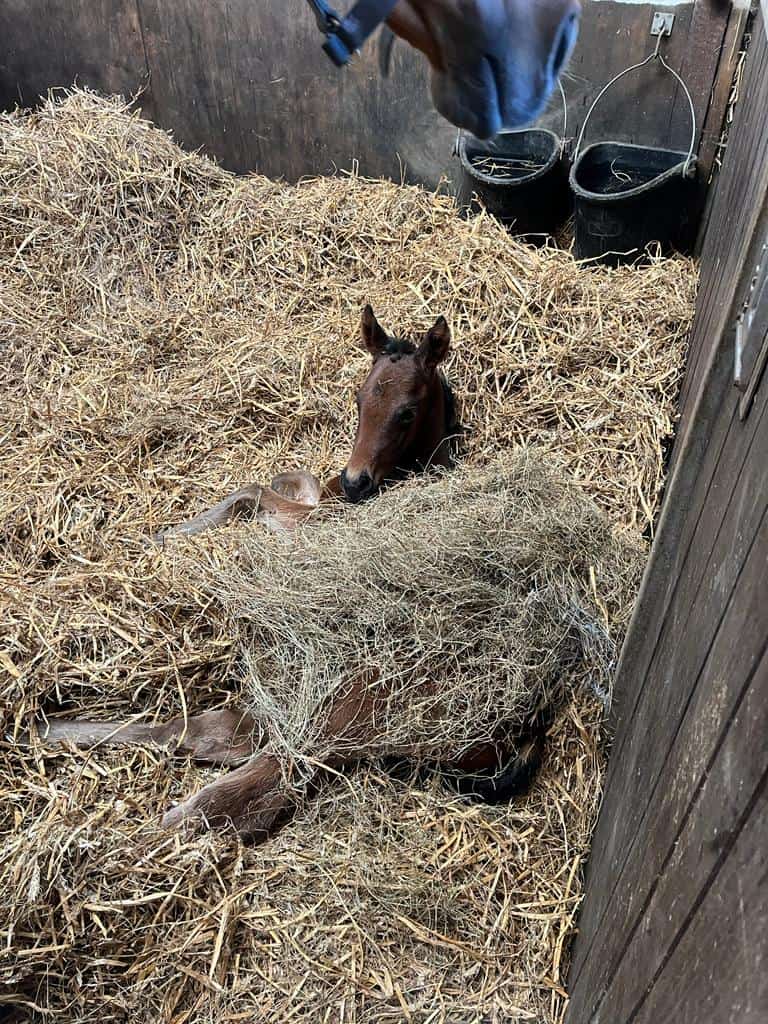
Our mares were wrapping their foals up warm this season! Image Lucy Procter (I double checked – Lucy swears the mares cover the foals up themselves – Ed)
Our final racing news has to be all about Honeysuckle yet again, who remains unbeaten, having claimed her 16th win in a row since debut and her 12th Grade One victory, when she won the Punchestown Champion Hurdle on 29th April. We were amused to hear from one local vet that her daughter’s young Pony Club friend, whose elderly pony is called Honey, is regularly to be heard happily shrieking “Go Honeysuckle, go!” as her pony takes off around the arena at pony club rallies. Happy days!
Lucy Procter, co-owner of The Glanvilles Stud (TGS), shares her diary of life on a Thoroughbred stud.
Congratulations to Upper Sixth pupil Hetta Falzon who has won the Pilton Stage Competition 2022. The Pilton Stage is a contest that provides up and coming bands and solo artists the chance to win a performance slot at Glastonbury.
Competing against 600 artists, Hetta fought off tough competition in the heats and then triumphed in the final to secure her place at the world-renowned festival. At 17 she is the youngest person ever to win the competition, and Hetta will perform at Glastonbury Festival on the Field of Avalon stage every day during the festival. We wish Hetta the best of luck for her big performances!
This month’s news from the unofficial capital of the Blackmore Vale …
A move to re-open the NatWest bank building in Sturminster Newton will give local artisans their own ‘shop front’, and seeks to increase consumer footfall to benefit all local businesses.
The planned indoor shopping area in the old NatWest Bank is to be known as ‘1855’ – the year the building is believed to have opened as the National Provincial Bank
The NatWest Project for a new indoor shopping area – to be known as ‘1855’ – is coming together. The unusual name refers to the date the building is believed to have opened as the National Provincial Bank. If you are interested in a customer-facing selling space for your artisan business, a presentation for potential hirers will be held on 11th May, for an informal gathering at 5pm with the presentation starting at 5.30pm. To book a space and learn more about the scheme, please contact either Cheryl Basten on [email protected] or Jacqui Wragg on [email protected]. The target date for opening is the 20th July, exactly two years after the popular Emporium opened in the former Lloyds Bank.
Alongside established retailers There will be varying areas of selling space available to hire, from two strong rooms and one small room, to separated spaces on the open floor, along with shelving and cabinets. A curator will in charge of sales. The Community Benefit Society intends this to be a high quality destination to attract more shoppers to Stur. “The commitment we have made is to avoid new retailers who compete with existing shops – we want our local shops to thrive, not to drive them out of business,” says Cllr Nick Dodson, Chairman of Sturminster Newton Community Benefit Society Limited (SturBen) who is leading the project. “This is not ‘another charity shop’, this is a commercial enterprise. We hope this project will enable our Blackmore Vale entrepreneurs to grow, move on and employ staff, thereby creating more jobs in the area.”
Applicants should have basic computer and numeracy skills, a good telephone manner and a full clean Driving License. Work well under pressure in a busy office environment and be a good team player. Duties to include all general office work plus some yard duties.
For initial interview and application form please contact Shirley on
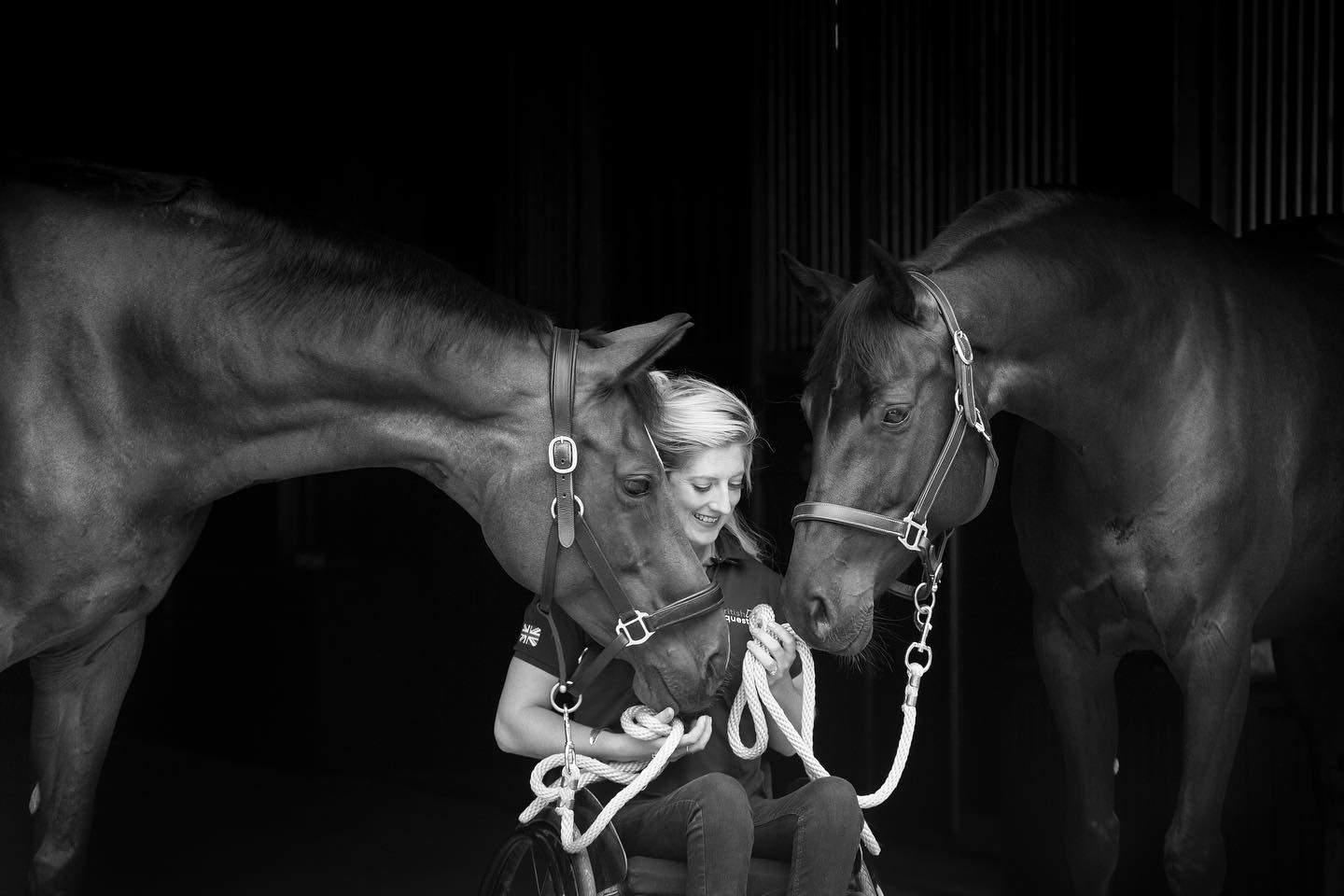
When Jemima Green was paralysed from the waist down after a car crash, she thought she’d never be able to ride again. She was wrong – this is her story.
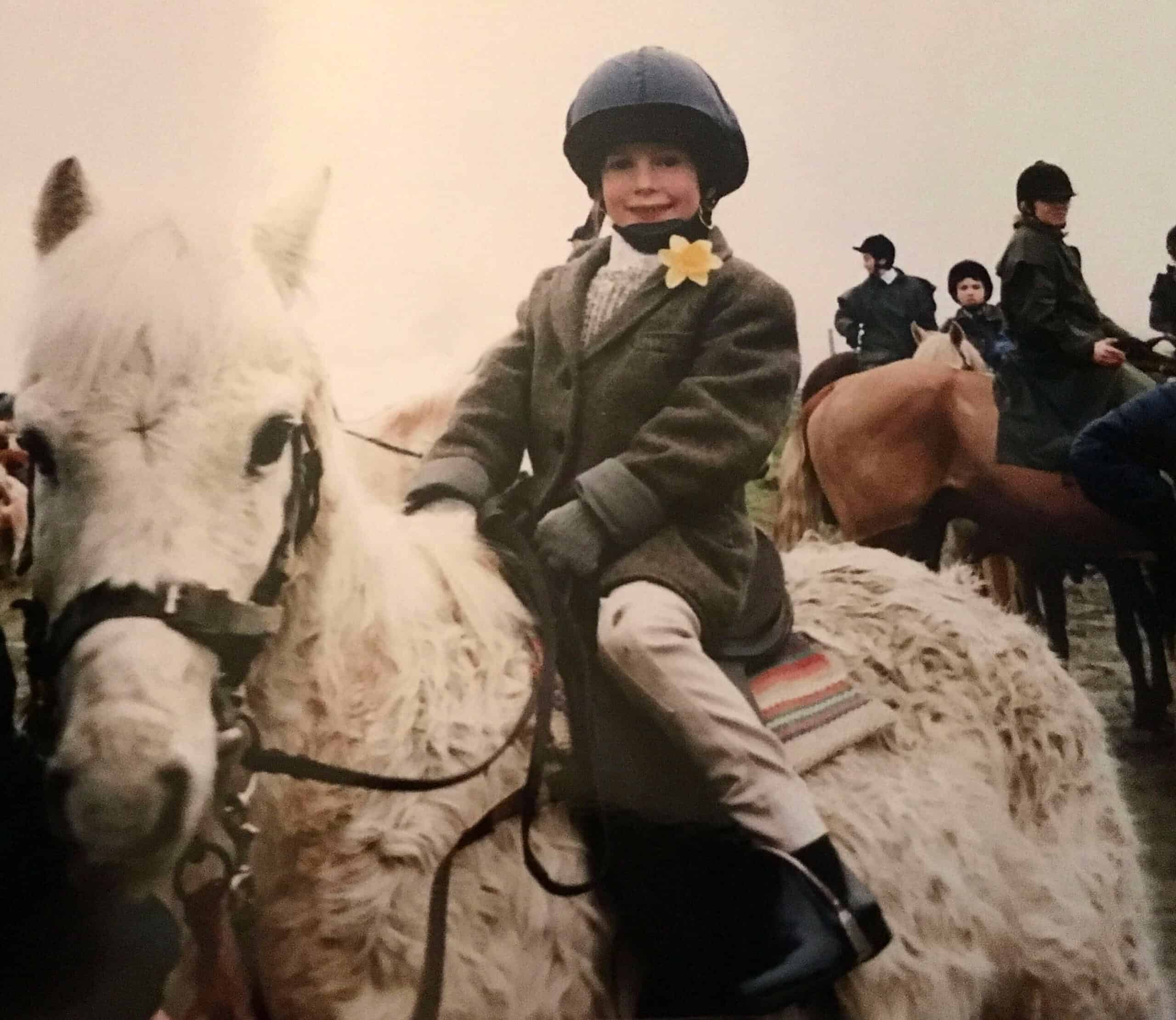
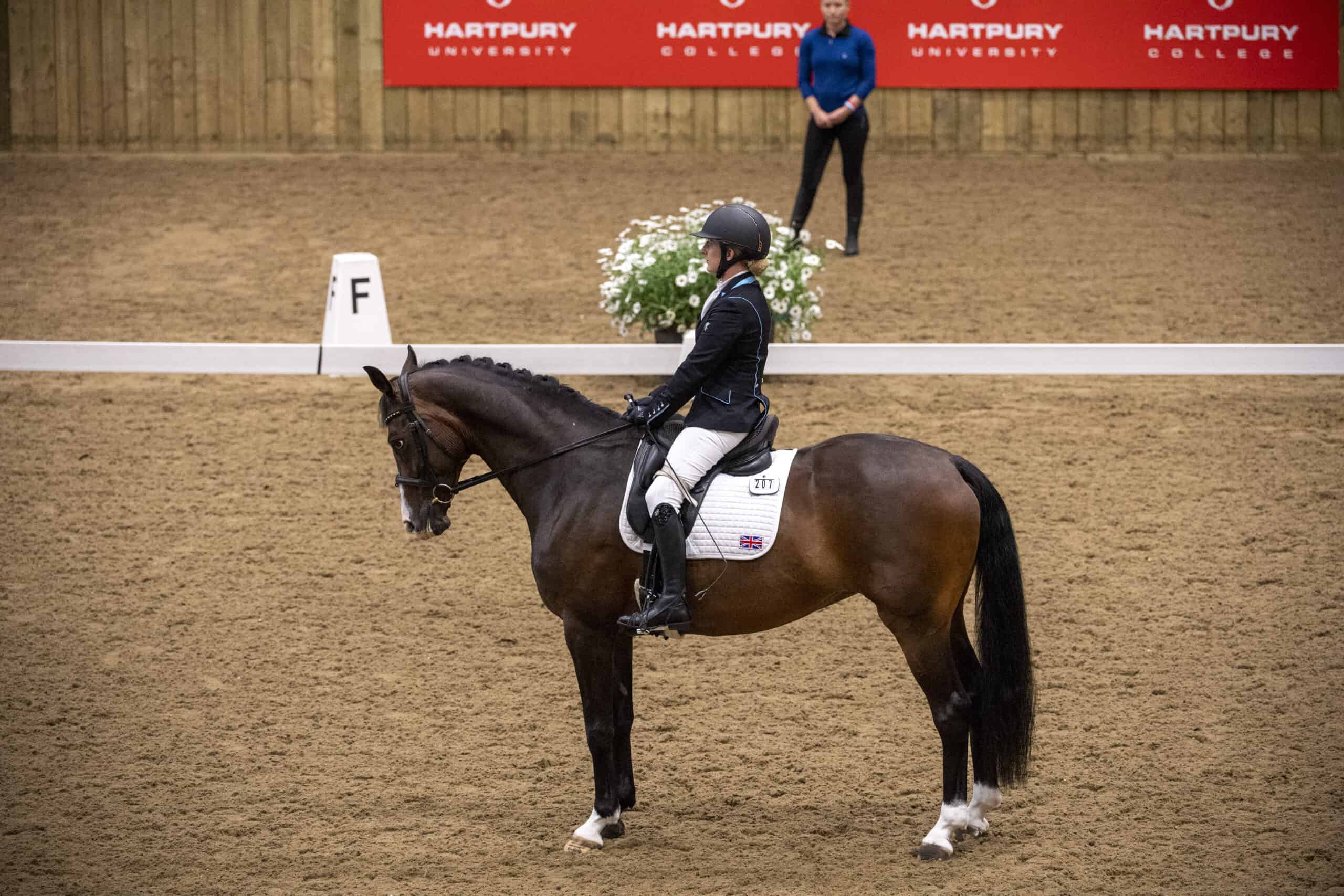
My passion for riding started when I was just two years old. I had a very fluffy 12.2 Welsh pony who took me through pony club and many open fields and embedded my love of horses. I knew this was how I wanted to live my life, and so chose a career working in eventing and producing my own horses. I worked my way up to my dream job as head girl and second rider for a top 4* eventer (Jodie Amos). This all changed in 2015 when I was involved in a very serious car accident, which left me paralysed from the waist down. My parents, brothers and family were, of course, devastated. I too felt the same – but I wasn’t thinking how I was going to manage my new life. I was terrified I would never ride again.
Jemima with her first pony, a ‘very fluffy 12.2 Welsh’ called Dinky
Hard climb back I started with the fantastic Riding for the Disabled (RDA) charity, which supported and encouraged me (with hours and hours of walking round next to me while I just tried to stay upright in the saddle. I had no idea it was going to be this hard). The fabulous RDA horse, Pandora, was so patient, and looked after me even through our first wobbly trot strides. I had little confidence that I was ever going to be able ride properly again but each time we got me on there was always a step further and the confidence built.
Jemima in the hospital, not long after the accident
Competing against the best After months of hard work, I managed to finally progress to a different pony, Bubbles, and we managed to start my para dressage competition experience. She was the perfect stepping stone to get back to what I felt was normality, and to prepare me for the years ahead. In the near seven years since I became a paraplegic I have managed to compete against the best. I have won international competitions, and I am now supported by the world class programme.
Big businesses buying productive farmland to promote their ‘green’ credentials may impact rural communities and UK food security, argues Andrew Livingston.
Roman Abramovich at Chelsea football club, Saudi Arabia buying Newcastle FC and a World Cup hosted in Qatar have all continued to fill the back pages of newspapers in the UK. Not so reputable people and nations for years have used sporting teams and tournaments to change their public reputation – this is called sportswashing. In farming and business, something similar occurs, and it is becoming ever more prevalent since COP26 and global plans to be net-zero in 2050 – this is known as greenwashing. Previously, the main types of greenwashing were seen in companies’ marketing and advertising. For example, some oil companies in the past have been challenged for advertising heavily on low-carbon products, while most of their annual spending is on oil and gas. Greenwashing is more commonly now being seen in big businesses investing in land to offset their carbon spend.
Does it matter? People may say it is fine as it’s a global issue, but are companies doing the right thing if they just throw money at the situation and if we don’t try to reduce our carbon usage? Greenwashing is being seen as having a bigger effect on farmers in both Wales and Scotland. In Wales, paid afforestation schemes were set up to encourage farmers to plant trees on their land. But large investment firms have been purchasing Welsh farms and land and planting the trees in order to sell off the carbon offset. Although once again it seems great that the environment is being taken care of, but for local communities it’s hard to see their farming heritage ripped up and the land they worked for generations changed forever. As an example, some airlines are known to have bought farms in Wales as they look to offset carbon for their global flights. Land purchasing for carbon offsetting is having a larger effect on farming in Scotland. Last year two-thirds of land sales in Scotland were done privately, meaning that they never went on the ‘open market’ – with one-third of those being sold to overseas buyers. Farms sold ‘off the market’ means that members of the local community are unable to get into farming or expand their current business. On the face of it, greenwashing doesn’t quite have the newsworthy nature of sports washing. Most people see any tree planted as a good news story. But it seems that even capturing carbon comes at a cost as businesses look to exploit environmental schemes, and local communities to be seen doing the right thing. As with knowing where your food comes from, we must ask ourselves when a business advertises its green credentials “Do I know the real story behind this?”