Home Blog Page 357

Belle’s journeyto work alongside Veterans with Dogs

0
Veterans With Dogs specialise in helping Veterans lead independent lives by training assistance dogs in task-specific skills relevant to mental health.
Belle -Veterans With Dogs

Veterans with Dogs trains and provides assistance dogs for current and former members of the British Armed Forces with service-related mental health conditions.
Veterans with Dogs was founded for the purpose of training fully accredited assistance dogs to help mitigate the symptoms of mental health difficulties for Veterans and active-duty service members. Veterans who qualify through the programme have partnerships that they can depend on to help them recognise earlier the increasing symptoms of their difficulties. The dogs are trained to intervene with interruptive
behaviours to help their Veteran with emotional regulation, grounding and to remain safe.
It is commonly recognised and accepted, a Veteran suffering from a condition such as PTSD can become extremely isolated – and their life can become dominated by conditions such as anxiety and depression. Introducing a specially trained dog into the life of a Veteran who is suffering from PTSD has been shown to have hugely beneficial outcomes, increasing their quality of life and regain independency.

Local girl Belle
Belle is a three-year-old black Labrador and a much-loved family pet. To help raise awareness of the charity, she has recently passed her assessment to be a Veterans with Dogs Community Support Dog. She is now able to wear her Community Dog coat with pride.
A Community Dog provides access to the public within group activities and represents the charity at public
events. These dogs need to be trained and are assessed before they are accepted as a Community Dog. They can be playful and fun, but also have the ability to be very relaxed and settled when required. They need to be calm and confident in many different situations and be able to bring their natural benefits of physical interaction to the public.
Belle’s training is continuing so that she can further the support she can give to the charity. She is now learning to carry out tasks which might be required of an assistance dog to support their veteran. She will then be able to demonstrate these to the public as an example of what these highly intelligent and special
assistance dogs can do. Belle, and her humans, Carol and Andy, are happy to attend any local events to help raise awareness of this much needed charity. They can be contacted through Veterans with Dogs.

Damory Vets in Blandford have very kindly agreed have a collection tin in the reception area from the end of April in support of Veterans with Dogs. For more details of the charity, please visit their website (veteranswithdogs.uk) and support the charity in any way that you can.

Arts Centre Marketing & Front of House Assistant | The Exchange Stur

0

Sturminster Newton DT10 – £19,500 full time 37.5 hours per week or £9,360 part time 18 hours per week.

Full Job Description

Do you have a passion for live music and events with a grounding in marketing and promotion? Looking to work with a supportive team of staff and volunteers? Enjoy being creative? This might be the role for you!

The Exchange is an award-winning Community Arts Centre based in Sturminster Newton, Dorset. We have a 301-seat venue that hosts an impressive range of local and international performers including live music, theatre and cinema. We have a suite of rooms available for private hire, a range of community groups and activities, such as the Country Market, who base themselves at the Exchange and a programme of art exhibitions. There is also a community café and a bar available for evening performances.

Ideally we are seeking a full time employee working 37.5 hours per week and five out of six days (Mondays to Saturdays). We will also consider those looking to work part time providing they can work at least 18 hours a week.

Marketing:

Essential – You must be experienced in producing creative copy and content writing, designing of brochures/posters etc., social media marketing & email marketing. Use of Microsoft, Outlook, Word Excel, Publisher, and PDF.

Desirable – You will have some expertise of social media, design software, be open-minded, a good communicator, well organised and hopefully be used to working with Mailchimp and Canva.

You will be able to maintain excellent relationships with regional press and media to raise the profile of The Exchange through timely press releases and effective advertisements, features, and listings.

Front of House and Box Office:

You will need to also provide cover for the Box Office and Front of House, including evenings and weekends when required. This should be no more than one Saturday and Friday evening and one Saturday morning per month. Duties will include taking bookings and payments, greeting visitors and dealing with general enquiries over the phone and in person.

General:

  • The ability to work within a small team of staff and with volunteers.
  • Ability to communicate with all members of the community at any level
  • To work in accordance with current legislation and our policies and procedures.
  • Any other responsibilities that may reasonably be required by the Manager.
  • To provide cover for other areas of responsibility from time to time when exceptional events occur.

To apply please email your CV and covering letter to [email protected]

or call Sharon on 01258 475137 for more information

House Pastoral Assistants Clayesmore School

0

House Pastoral Assistants

Full Time, Term Time, Permanent – And Part Time, Term Time, Permanent

These roles require enthusiastic, well organised individuals with a warm and welcoming nature to assist the House parents in 2 of our boys’ boarding houses, and the duties associated with the boarding operation, and to oversee the pastoral wellbeing of all the pupils in their care.

The successful candidates will have experience of working with young people and an understanding of safeguarding and child protection responsibilities, along with the ability to deal calmly with sensitive situations.

Role 1 Is a term time, full time role, working 10.00am until 6.00pm Monday to Friday

In addition to the House Pastoral Assistant role, the successful candidate will have the opportunity of undertaking the HPA Team Leader role for which an additional salary allowance will be paid – details of this role can be found with the application pack.

Role 2 Is a term time, part time role, working 14.5 hours per week and the hours are 3.00pm – 6.30pm Tuesday and Thursday, and 4.00pm – 6.30pm Monday, Wednesday and Friday.

For further information and to apply please go to:

https://clayesmore.com/work-for-us/

Closing date: 8:00am on Friday 10th June 2022

Clayesmore is committed to the safeguarding and promotion of children’s and young people’s welfare and expects all staff and volunteers to share in the commitment.

www.clayesmore.com

An in Depp-th look at defamation

0
The Johnny Depp and Amanda Heard trial has sparked an interest amongst most. The case is centred around the ever-growing law of defamation, explains expert Wingwai Tam of Blanchards Bailey.
shutterstock

With increased social media usage and the ease of posting statements/comments about other people and businesses publicly, we are seeing an increased level of defamation claims. How do you know if you have crossed the line between harmless banter and a statement damaging one’s reputation and character?

What is Defamation?
The Defamation Act 2013 protects people and businesses from injury caused by words spoken or written by another. The statement made, needs to be damaging to your reputation/ lowers your integrity to others, be largely untrue and misleading.

How much is my claim worth?
Depp has claimed $50 million for the defamatory statement and Heard has Counterclaimed $100 million.
The value of your claim will largely depend on the seriousness of the statement. For example, Heard wrote an article in the Washington Post alleging she was the subject of domestic abuse. The Washington Post is a worldwide news outlet which has the potential to cause much greater damage than one that is published to a smaller group of people.
Your claim will also depend on the person’s livelihood the statement has affected. Heard and Depp are public figures in which Depp’s professional reputation has been seriously affected. The court in this
scenario will most likely look to the value of the work lost by him (such as the latest Pirates of the Caribbean film) amongst a whole host of other aspects of his career and personal life the statement has affected. It will then be for the person that made the statement to prove what they said is true. Currently, Heard is presenting to the court her evidence of the alleged domestic abuse suffered and evidence to show Depp’s explosive behaviour.
Evidence both sides have shown are photos of injuries, witness evidence from people that have an insight into their relationship such as friends, family and bodyguards and their own personal evidence. It will then be for the court to assess the evidence presented and whether the damage correlates with the monetary
sum suffered.
The aim of the compensatory damages is to restore you to the position you would be in if you had not been defamed.

What if I/my business suffer?
Your first point of call should be to contact the person who made the untrue statement to ask them to retract it.
Remedies include involving the court to issue an injunction order to stop the person making the statement from making any further statement, and compensatory damages.
Other remedies can also include removal of the statement from publication, withdrawal of statement, written public apology and/or amending the statement.

Can Blanchards Bailey help? If you’re looking for help or advice, please get in touch on 01258 483609 and speak to Wingwai Tam about the facts surrounding your potential claim.

Helping our farmland birds to return and thrive

0
Birds living and breeding on the UK’s farmland saw numbers decline by almost a tenth in just five years, says Dorset Wildlife Trust.
Farmland bird populations have declined by 56% since 1970, largely due to agricultural changes including the loss of mixed farming, a switch to autumn sowing of crops, a reduction in hay meadows and the stripping out of hedgerows.
Image © corn bunting by Luke Massey 2020VISION

From chattering flocks of linnets, buntings and finches, yellowhammers singing from thick bushy hedges and skylarks hovering above fields, farmland has traditionally provided key habitats for some of our most
beautiful and melodic native farmland birds. However, changes in farming practices have led to the loss of many such habitats. According to the bird indicators produced jointly by the British Trust for Ornithology and the RSPB for Defra, breeding farmland birds declined by more than half between 1970 and 2019.
Dorset Wildlife Trust works with landowners across the county to provide guidance and advice on managing their land with wildlife in mind. From unplanted patches for skylarks to nest, to designating grassy margins
for ground-nesting birds such as corn bunting, birds can be encouraged to return and thrive. Making space for nature and in particular, these traditional birds has never been more important.

What to look out for in Dorset:

Yellowhammer
The yellowhammer is a sparrow-sized, bright yellow bird that feeds on seeds and invertebrates. They are often seen perched on top of bushes singing their ‘a little bit of bread and no cheese’ song. Whilst the numbers of this bright yellow bird have declined in recent years, surveys have identified yellowhammer
at our recently acquired Wild Woodbury rewilding project at Bere Regis. By changing the way the land is
managed, we hope to build the numbers of this red list species.

The yellowhammer has declined in number in recent years. Spot this bright yellow bird singing from the top of a bush or fence, or in a mixed-species flock in winter.

Skylark
The song of the skylark has been the subject of many great musical and literary works. They are easy to spot rising almost vertically from farmland and grasslands singing and hovering effortlessly at a great height
before parachuting back down to earth. Despite their aerial activities, skylarks nest on the ground laying three to four eggs. Fontmell Down is a great place to spot the skylark, a streaky brown bird, with a crest.

Corn bunting
A streaky brown, thick-billed bird which is similar to the skylark but with a thicker bill and no crest. Male corn buntings are often seen perched on top of bushes singing loudly – a song that sounds just like a jangling set of keys. The corn bunting often joins mixed flocks of buntings, finches and sparrows feeding on seeds on farmland in the winter.

To find information on birds, visit the Dorset Wildlife Trust website at dorsetwildlifetrust.org.uk.

Where is my legal boundary and who’sresponsible for it?

0

Back in February, Storm Eunice caused widespread property damage and destruction, together with power cuts, to many households. Because of the resulting damage and destruction, particularly to fencing, many have been left wondering where their legal boundary is and who is responsible for paying to repair or replace the damaged fence.

Neighbourly disputes
Many household insurance policies specifically exclude fencing as an insured risk. It can be expensive to fence and the choice of structure and colour scheme are often a very personal choice. It is not uncommon for neighbours to disagree over what type of boundary feature should be erected; the precise position of the posts; who should have the ‘best side’ facing them; and what colour to paint it. In circumstances where a fence needs replacing, and the fencing quotation far exceeds £1,000, it is not surprising that many people would then look to their title deeds or documents to try to ascertain the answers to the questions posed above.
The truth is that deeds or registered title documents and plans are often silent on the question of ownership of boundary features. Some plans contain ‘T marks’ that can be taken as evidence of ownership; most plans do not. There is also a common misconception that the red line shown on registered title plans shows precisely the position of the legal boundary between properties.

Don’t reply on the red lines
Land Registry plans are for identification only, based upon ordnance survey plans. The red line shown on the plan and depicting a boundary may in fact provide for an error of a couple of metres from the position of the true ‘legal boundary’. It is a far from satisfactory position, and often misunderstood.
In the absence of express obligations as to ownership or maintenance, it can be extremely beneficial to obtain professional legal, and also surveyor’s advice, if you are looking to establish the position of your legal boundary and who may be responsible for maintenance or replacement of the boundary features.

We’re here for you
Porter Dodson Solicitors has a designated Property Disputes Team who can provide advice and assistance where a boundary dispute or boundary question arises. To find out more, contact Helen Williams:
[email protected] or 01935 846758.

What’s happening in the bluetit nestbox?

2
Blue tits are on a surprisingly precarious tightrope each spring. Nature writer Jane Adams shares the task ahead of ‘her’ Bonnie and Clyde.
Both sexes look similar, but the male blue tit is considerably brighter, especially in the blue on the head. It is thought that as they get older, they get brighter plumage with each subsequent moult. No other British tit has blue in its plumage. The breeding season varies with location and season, but generally starts in the third week of April. Though blue tits will lay repeat clutches if their first is lost, they rarely try and rear two broods.

In March, as I battled with 6ft bamboo canes in the overgrown veg patch, two blue tits scolded me from a nearby beech tree. It happens every year: they’ve chosen a nest box nailed to the side of the potting shed and as they flit back and forth, they think I’m a bit too close for comfort.
I’ve named them Bonnie and Clyde and they look glamorous in their yellow and blue feathered coats. They’re living life on the edge – their eggs must hatch at the same time as the caterpillars they catch to feed their chicks. It’s all down to timing.
In April Bonnie built the nest. Starting with a platform of moss and leaves and finishing by wiggling her body to form a nest cup where she placed tiny soft feathers. This month she’s laid an egg each day until she has a clutch of ten. Each weighs in at a whopping one gram. By the time she finished, she’d laid more than her own body weight in eggs. Now, she has her bare plucked chest (called a brood patch) resting against the eggs to incubate them. Anyday now they’ll hatch. If the weather’s good, both parents will find the caterpillars needed to appease the appetites of their hungry chicks. It’s thought that blue tits need to find 100 caterpillars a day to feed each chick, and as the youngsters can take three weeks to fledge, that’s more than 15,000 caterpillars.

The clutch size is highly variable, but usually ranges from 7-13 eggs. Clutches as large as 19 eggs, all laid by the same female, have been recorded

No wonder scientists are worried by the effect climate change will have on our native birds’ long-term survival. With spring starting earlier, temperatures rising and rain increasing, will (or can) our birds adapt? For now, I’m keeping an eye on this intrepid pair and hoping they don’t come to a sticky end like their namesakes.

Extra Fact File:
If you see bees buzzing in and out of your nest boxes, don’t panic. It’s a privilege. They’re likely to be tree bumblebees, and they often nest in bird nest boxes. Treat them with the same respect you would nesting birds. Relish having them in your garden pollinating your plants. Their lifecycle is quick, and they’ll be gone within a couple of months.

by Jane Adams

Part Time Housekeeping Assistant required | Ilchester Estates

0

Part time housekeeping assistant (permanent role) required for Country Estate near Evershot. Working as part of a small team carrying out daily cleaning and laundry to a high standard with the requirement to undertake occasional dinner service.

Hours of work: weekdays, 4-5 hours per day. Occasional evening and weekend shifts as required.

Training will be provided.

Own transport essential.

Immediate start.

To apply please send your CV and covering letter to [email protected]

Every salad should contain a wild harvest …

0
…and foragable flowers, buds and leaves make gorgeous tissanes – and will always perk up your spice mixes, says expert Carl Mintern.
Ox Eye Daisies – also known as Dog Daisy or Moon Daisy, this tall grassland flower native to Europe also has another trick up its leaves. The flowers are tasty eaten raw and can be added to salads or desserts and the flower buds can be pickled like capers. The flowers also can be tempura battered and bizarrely taste a little bit pineappley.

As we move closer to the heights of summer, the outdoors draws us more heavily with its mild temperatures, and longer days. What better time to go foraging for some delicious wild edible plants to celebrate the incoming heady days that summertime promises.
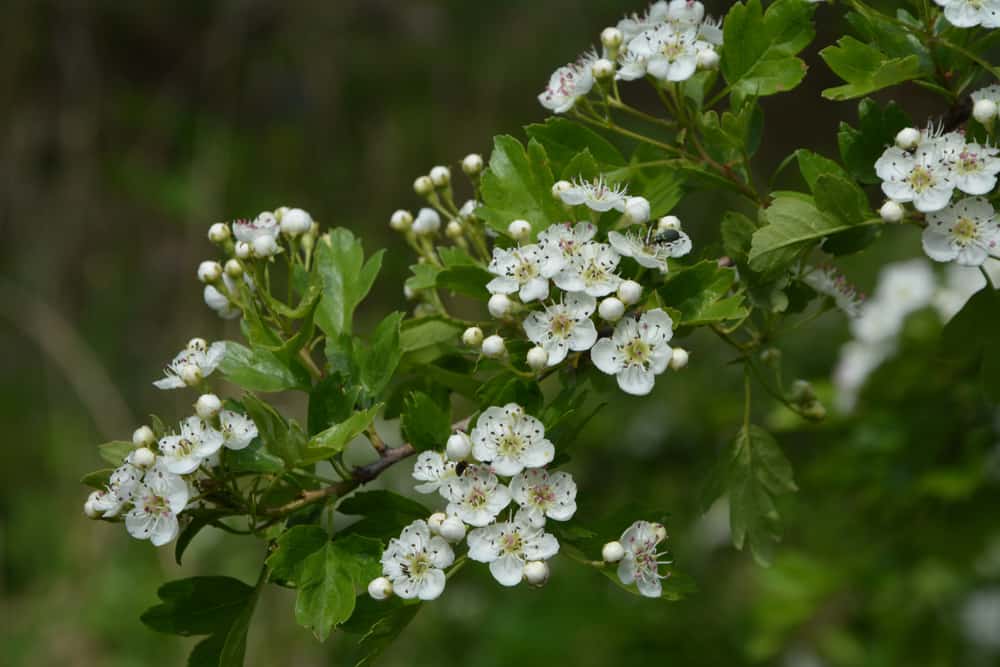
In May the hawthorn (Crataegus monogyna) bushes are heaving with blossom. Their blooms being a May staple is surely the reason so many May Day traditions of the UK feature their thorny branches. And these flowers can make a great addition to salads and other dishes as an attractive garnish.
The young growth of the flower buds and young leaves are all edible now before they mature later in the season, and can be used to make more of any side salad: indeed, at this time of year I would argue no salad should be denied the inclusion of a wild harvest.
Hawthorn can be found in many hedgerows all over the Blackmore Vale and beyond, and on waste ground
and woodlands. It flowers from now to midsummer, sporting five petalled flowers that smell faintly of almonds, with deeply lobed leaves on its thorny thin branches.

The small-leaved lime: charming, sturdy, pollinator-magnet. Not only does the small-leaved lime’s blossom produce a sweet scent and pleasantly minty honey, its leaves support the caterpillars of moths such as the lime hawk, peppered and vapourer.

Mild and succulent leaves
Next up, the lime (Tilia cordata) tree is one you really ought to include on your itinerary of May foraging. The young, heart-shaped leaves of small-leaved lime (and other species of lime) are not only edible, but entirely delicious and can make up the bulk of a decent salad. Mild and succulent, they have a great flavour that isn’t tainted by the bitterness associated with many wild salad greens.
Be sure to harvest the young leaves though, before they mature and get a papery texture. If you are really
lucky, you may even find an aphid farm, curated by ants, which has excreted a silvery substance on your leaves. If so, this is a real prize, as it is almost as if the leaf has been dipped in honey. This substance is the
equivalent of aphids making lime syrup from the sap for you and leaving it behind.
The lime tree is one of the trees that is found growing wild in any space where such habitat is preserved, but also cultivated in parks and the like, making it another easy to find specimen for novice foragers.
My last choice for May’s Foraging guide is the oxeye daisy (Leucanthemum vulgare).
Sometimes also called the dog daisy, oxeye daisy is a plant no doubt you will already recognise which offers up to us both its flowers and flower buds as table fare. In addition, the leaves are also edible, although tend to become bitter once the flowering has begun – so be sure to harvest only leaves from younger plants.
Growing almost anywhere grass grows and isn’t too manicured, the oxeye daisy is another incredibly common plant one can pursue with little trouble and will likely be available right through into September or even October.

Britain’s most famous hawthorn is the Holy Thorn of Glastonbury. Legend tells of how Joseph of Arimathea, the uncle of the Virgin Mary, arrived at a hill overlooking Glastonbury Tor. Where he thrust his staff into the ground it sprouted and grew into a thorn tree. Though the original is obviously long gone, one of its supposed descendants does still stand on the hill. This particular hawthorn
blooms twice a year, once in May and again around Christmas. A sprig of one of these Glastonbury thorns from outside St Johns Church is traditionally sent to the Queen. She is said to decorate her breakfast table with it on Christmas morning.

Think beyond salads
Once harvested, the fun has only just begun as there is a plethora of uses for the edible parts of this much overlooked plant. As mentioned, the leaves can be added to salads, and the flowers are often cooked in a simple tempura batter (recipe here). Just the petals can be used to liven up any dish as a garnish (have I mentioned before that no salad should ever be without some wild flowers?!) but there are many uses even beyond this.
Dried leaves and flowers can be stored and used to make teas when they are out of season, and the fresh versions can be used likewise straight away. The dried leaves can be crushed and used to add to herb mixes, and the flower buds can be pickled like capers.
For me, my love of foraging begins and ends in the kitchen, and what better way to spend your May evenings than by enjoying a wild salad with lime and hawthorn, with some daisy tea as the sun sets, before
setting about preserving your produce in the kitchen, pickling and drying. Productive bliss, a gift from
May’s bounty.

by Carl Mintern

See details and availability of Carl’s local foraging courses on his website Self sufficient Hub here