Home Blog Page 280

Meet your local – Okeford Village Store

0

Vince and Sharne have made Okeford Store the villagers’ favourite, Rachael Rowe reports.

Okeford Fitzpaine village store
All images: Rachael Rowe

Village shops are a vital part of the rural infrastructure of the Blackmore Vale. They kept services going during the pandemic when everyone was in lockdown and are always there when you have forgotten to buy something. But like all local independent businesses, they need regular support from the community.
I visited Okeford Village Stores in Okeford Fitzpaine (Sturminster Newton) and spoke to owners Vince Lee and Sharne Ferris.

What brought you here?
‘We have been here for six and a half years. We ran the Red Barn in Hazelbury Bryan and turned it around to be a successful business, but it was a leasehold arrangement on the property. We wanted to do the same thing, but with a freehold property, so we moved to Okeford Fitzpaine. We’ve got the shop and Post Office here and have now created a small cafe in what was a derelict building,’ says Vince.

ell us about the team?
‘There’s Sharne and me! We also have Nicky, who works at weekends.’

What’s selling right now?
‘I shouldn’t really say this, but the alcohol is popular! And our bags of logs are literally flying out of the door. Our bread – from Taylors of Bruton – also does well, and the hot foods (sausage rolls and pastries) are good sellers in cold weather. And we have cakes made by Rob Corben*.’

Who are your local suppliers?
‘We have bread from Taylors of Bruton, meats from Else’s in Stalbridge, Mere Trout, Dorset Charcoal, and our eggs are from Bishops Caundle.’
Using lots of local food suppliers means the shop is in its turn supporting the local economy. However, Sharne pointed out a couple of things. ’People think a village shop is going to be very expensive, but we have some products that are cheaper than the supermarket. For example, Heinz tomato soup is cheaper here than at a nearby supermarket. We also have the equivalent of an own-brand basics range (Jack’s) which is very good.’

Robert Corben (left) with co-owner Vince Lee

What is your big challenge?
‘Right now, just maintaining the turnover during the cost of living crisis and coping with the huge electricity bills.’
Looking around, the shop has several chillers and freezers, required to supply fresh and frozen food to the community. While we’re all finding the rise in energy costs a challenge at home, so imagine the impact on our village shops at the moment.

Owner Sharne Ferris

What are you most proud of?
‘Resurrecting the shop after it almost disappeared from the village. It’s the same sense of pride we had when we took over the Red Barn.’
I remember the dark days of the village shop in Okeford Fitzpaine before Vince and Sharne took over – it was much less welcoming. Today, it is an asset to the village and surrounding area and has become a community hub.
Sharne added: ‘We really want to leave a legacy of successful and thriving village shops for the local community.’

The stores has a small cafe attached

So what’s next?
Vince says what many local storekeepers are saying: ‘At the moment, we’re just aiming to survive the winter on a month-to-month basis, making sure we can pay our energy bills.’
When was the last time you used your village shop? If you haven’t visited for a while, pop in and buy something – or save a few items from your supermarket shopping list to purchase in the village shop. They were here for us during the lockdown, and now we all need to support them as they face the huge pressures of the current economy.

Contrary to expectations, Vince and Sharne try to stay competitive on many household basics

If you haven’t sampled a fruit cake made by Okeford local Robert Corben – you don’t know what you’re missing! And his date and walnut cake is very moreish – RR


UFOs – or something else tonight?

0

Richard Miles, Dark Skies Adviser for Dorset CPRE, was chatting with fellow astronomers over a coffee – all missing the fireball shooting overhead!

Fireball captured by video at 8pm on 9th January near Sturminster Newton. Image made available by John Savage and the Allsky7 Fireball Network.

Have you been tucked up safe and warm at home these long dark winter nights? I have for the most part, but occasionally – when a cold, clear, crisp evening presents itself – I will venture out for a little stargazing. Staying indoors with curtains drawn will guarantee I’ll miss what’s going on every night overhead!
The night sky is a busy place, partly thanks to all the artificial satellites that glide silently by, looking like stars in search of a new constellation until they disappear from view in the earth’s shadow.
One of the most spectacular sights is that of a bright meteor, or fireball, as it bursts into view for a few seconds, soon to vanish after hitting our upper atmosphere and burning up more than 50 miles high.
Bright fireballs appear every few nights but most go unreported. One exception occurred over the Blackmore Vale on the evening of 9th January 2023. More than 200 people across the country reported it to the International Meteor Organization.
As this bright meteor burst into view, I was sitting indoors chatting with some astronomer friends, oblivious to what had passed overhead! Fortunately my colleague John Savage operates an all-sky meteor video camera, which secured a view of its trail.

Go stargazing
If you hope to see a fireball then try venturing outside for a bit of stargazing. GoStargazing is great for finding stargazing venues – we advertise our own Cerne Abbas events on there. I also refer you to Rob Nolan’s piece on the next page where he gives details of what is visible in the night sky this month, including a new comet with the unwieldy name of comet C/2022 E3 (ZTF) that passed about 10 degrees from the Pole Star on 31st January. It is now heading south towards the constellation of Taurus, and will best be seen in a NW direction around 6.30pm on 7th February, before the brilliant moon rises.
I should add that fireballs have to be extremely bright for them to produce meteorites that hit the ground. Given the odds of many billions to one against, there is no danger of being hit by such an object or any other ‘UFO’ for that matter!
Do always wear plenty of warm clothing, take a Thermos flask with a hot drink in it and watch how you go at night by using a torch when needed.
Wishing you clear skies!

Report your light pollution
You may have seen the report last month on the BBC website about an increase in light pollution. Monitoring our night skies is important; consider taking part in Star Count 2023. Organised by Emma Marrington, it is the CPRE annual citizen science project to map the nation’s view of the night sky and monitor the impact of light pollution across the country. It’s easy to take part, whether you live in town or country: just look to the night sky between 17th and 24th February and see how many stars you can see in the constellation of Orion.
Then enter your postcode and report the star count for your location on the CPRE website.

King Arthur’s School recognised for strong improvements in latest Ofsted report

0
King Arthur’s School in Wincanton

Staff at King Arthur’s School in Wincanton are thrilled that OFSTED have recognised the progress the school has made since it’s last inspection. The inspector and her team were keen to highlight the school’s huge ambition for all students and the excellent curriculum. The school secured a ‘good’ judgement for personal development, a strength across the whole school, where young people are supported to develop the key skills and qualities to thrive for life.
The inspectors also praised students, saying that they are “active citizens, who contribute to the community”, something of which the King Arthur’s team are rightly proud.

Previously inadequate
The school was previously rated as Inadequate in 2017, when it was still a local authority maintained school. It joined the Sherborne Area Schools’ Trust (SAST) in April 2019, and headteacher Jen Jacklin was appointed the following September. The school has since been on a journey of rapid improvement with a new leadership team in place, expert support and funding from SAST and a broadened range of subjects on offer to students. In terms of exam outcomes, the school has made considerable and significant progress since the last nationally-comparable exams data was published.
Jen Jacklin said, ‘We have been on an amazing journey at King Arthur’s and have achieved so much. We are thrilled that the inspectors have recognised the swift progress we have made and validated all the hard work of leaders, staff, students and our families. We are proud of our school and its place in the community. We have worked hard to ensure the very best education in all we do, every day. We look forward to taking the next step in our journey.’
In this latest inspection, the school has been upgraded across all four OFSTED inspection areas, with the new overall grading of ‘Requires Improvement’ sitting in line with the school’s long term improvement plan. Colin Sinclair, CEO of SAST, said, ‘We are incredibly proud of our team at King Arthur’s, they have shown such ambition and determination against the backdrop of the pandemic and an unprecedented teacher recruitment and retention crisis. They have turned the school around and are only midway through implementing its strong improvement plan. ‘The school continues to go from strength to strength, with admission numbers rising 20 per cent in the last year. We are excited that our local families have recognised the fantastic educational experience that King Arthur’s offers, and are actively choosing King Arthur’s for their children. We look forward to welcoming even more students in September 2023.”

A copy of the report can be found on the King Arthur’s website.

In the studio with children’s book illustrator Jane Chapman

0

Anyone who has had to read bedtime stories in the last 25 years is very likely to have had Jane Chapman’s work in their hands. Edwina Baines reports.

All images: Courtenay Hitchcock BV Magazine

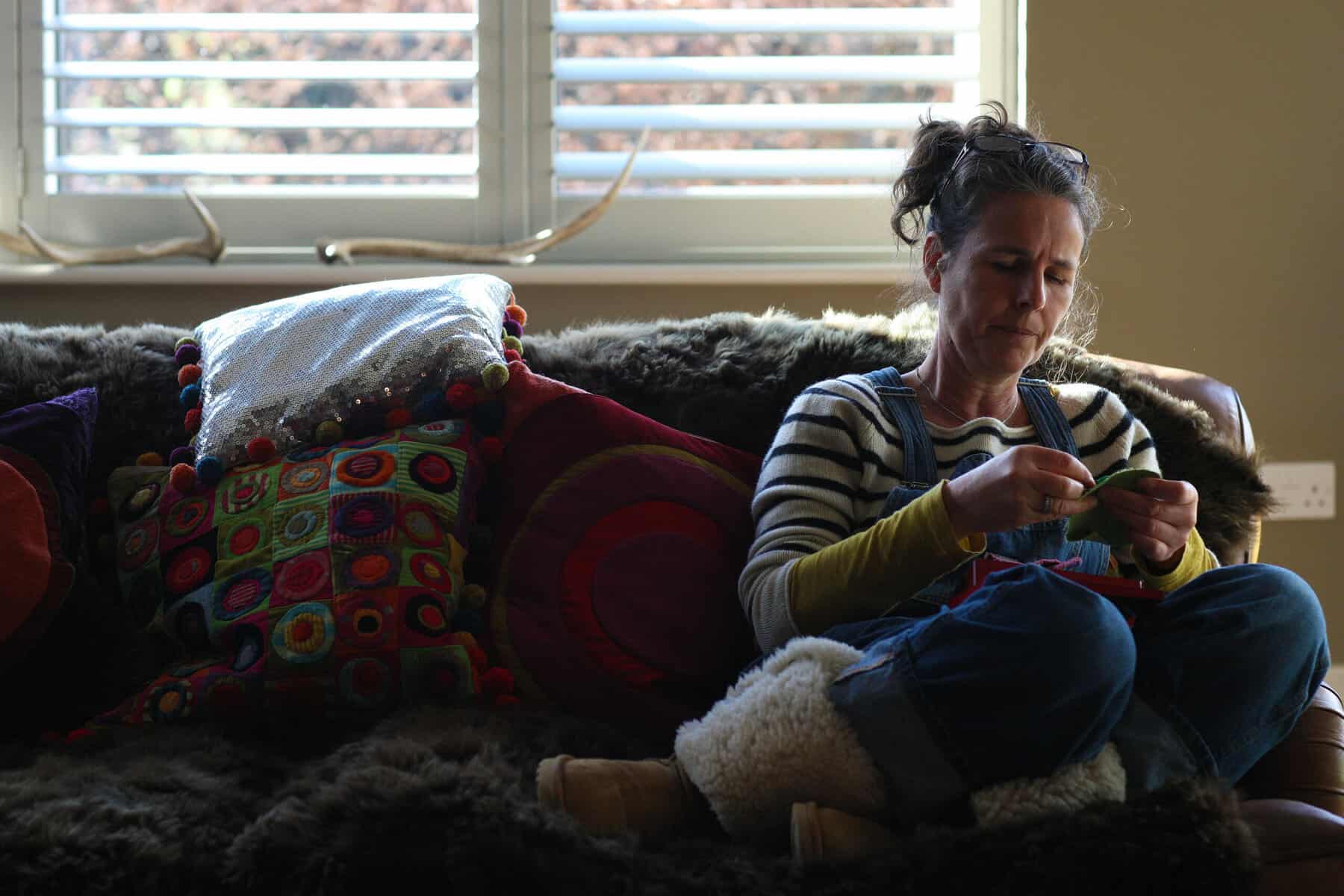
Jane Chapman is an incredibly successful illustrator of children’s books with almost 150 publications to her name. Her paintings do not simply illustrate the words – they tell their own story, allowing even the youngest non-readers to understand and follow.
From an early age, we interpret complex expressions and emotions through drawings, in ways we cannot do with language or the written word. It’s the old adage, ‘a picture paints a thousand words.’ Children’s picture-book characters can become grippingly alive and transformed into living, breathing beings who, as Jane says, ‘you might meet on a walk in the woods.’
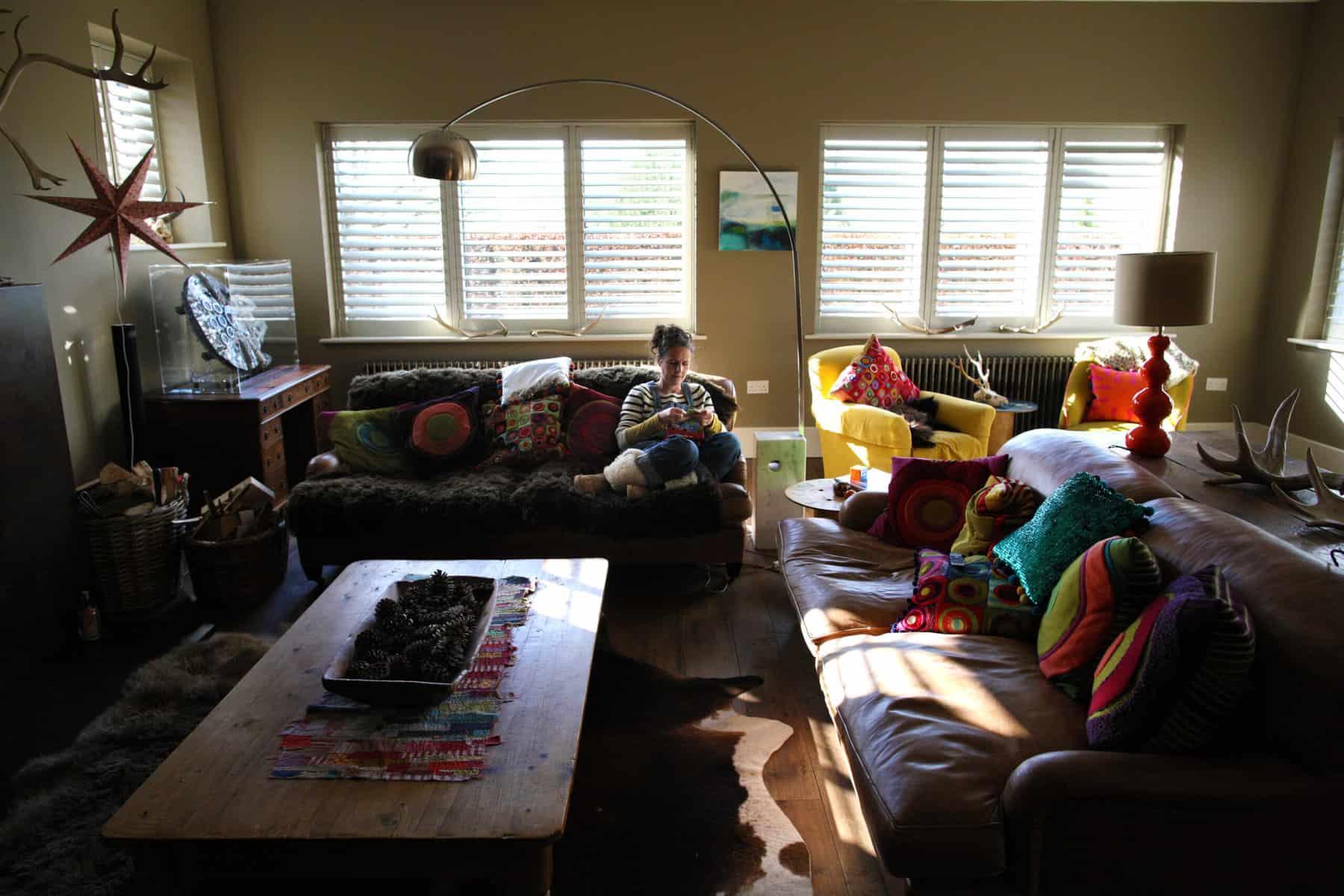
I met Jane on a grey, wet, windswept January morning in her beautiful house tucked away in Cheselbourne.

image Courtenay Hitchcock BV Magazine
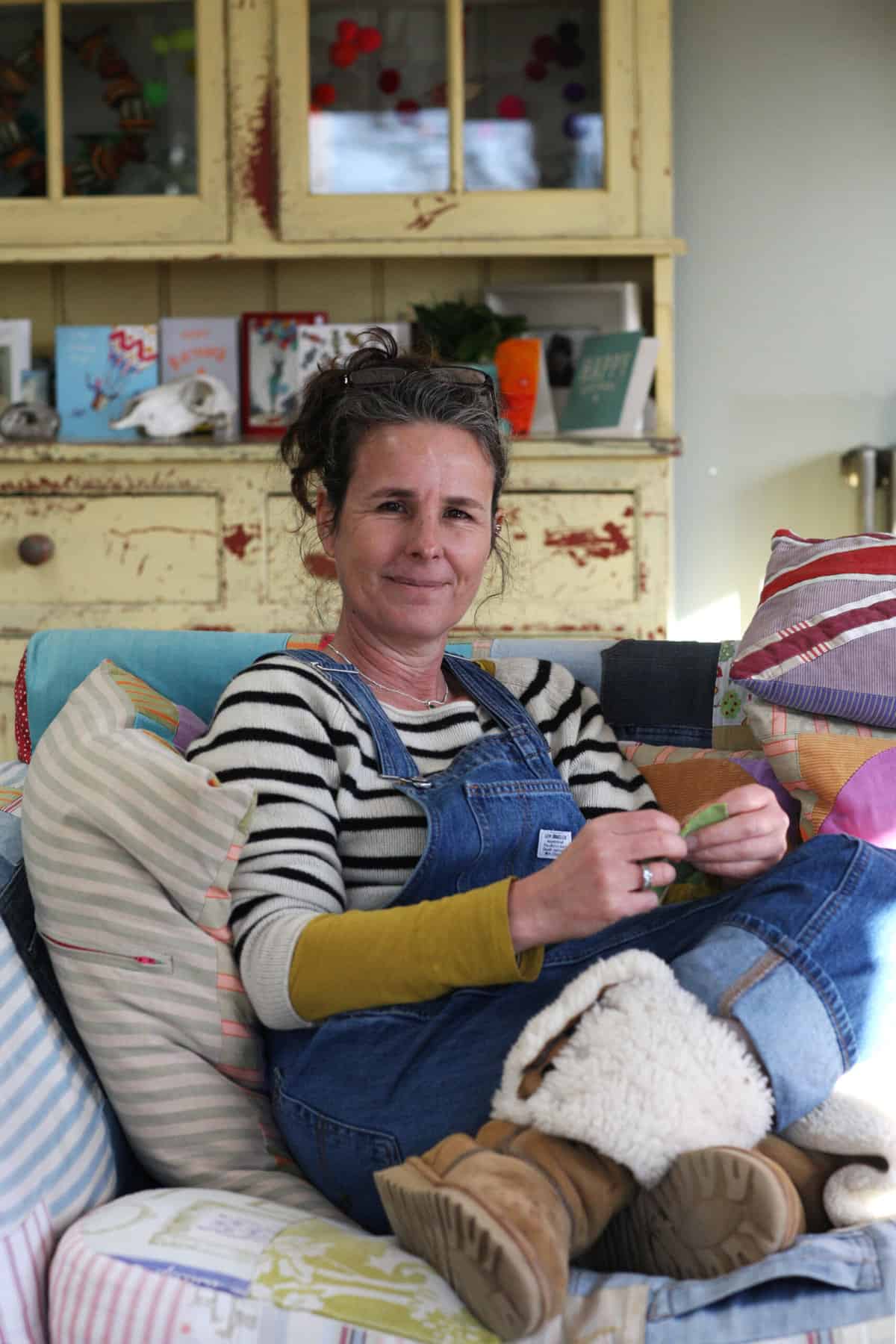
Jane Chapman – Courtenay Hitchcock BV Magazine

Toys to books
Having successfully completed science and maths A Levels, a chemistry degree was nearly Jane’s chosen path. After a foundation art course, however, science was soon left behind. Illustration seemed a more sensible, practical option for her academic and business mind and she graduated with a first class honours degree from Brighton University.
Initially a portrait painter in the 1990s, Jane moved through soft toy design before landing a children’s book publisher; commissions soon flowed in. She has been illustrating for Little Tiger Press (now owned by Penguin Random House) for more than 25 years and has produced many best-selling and award-winning titles.
In recent years Jane has taken to writing as well as illustrating and so far has had 15 books of her own published.

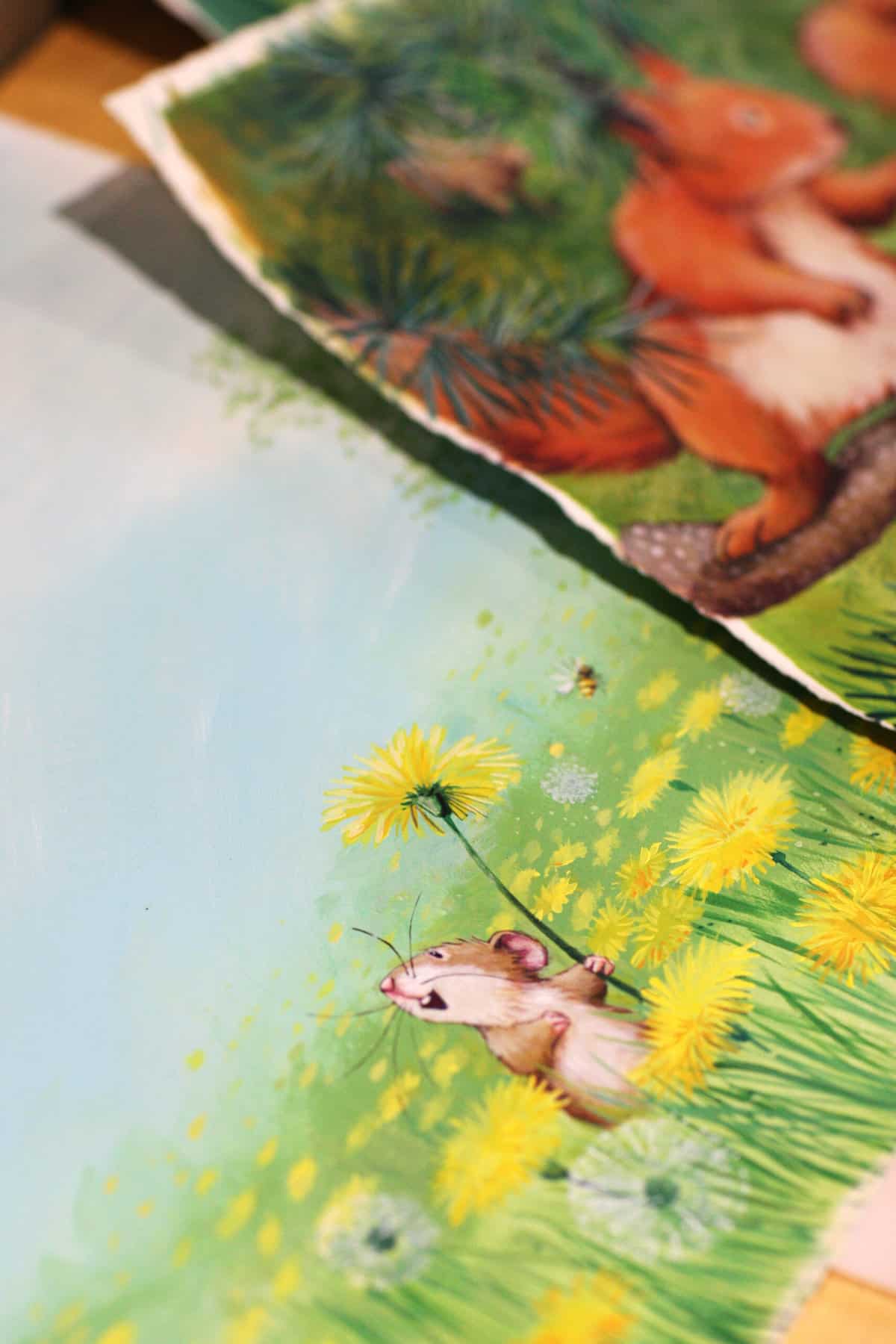
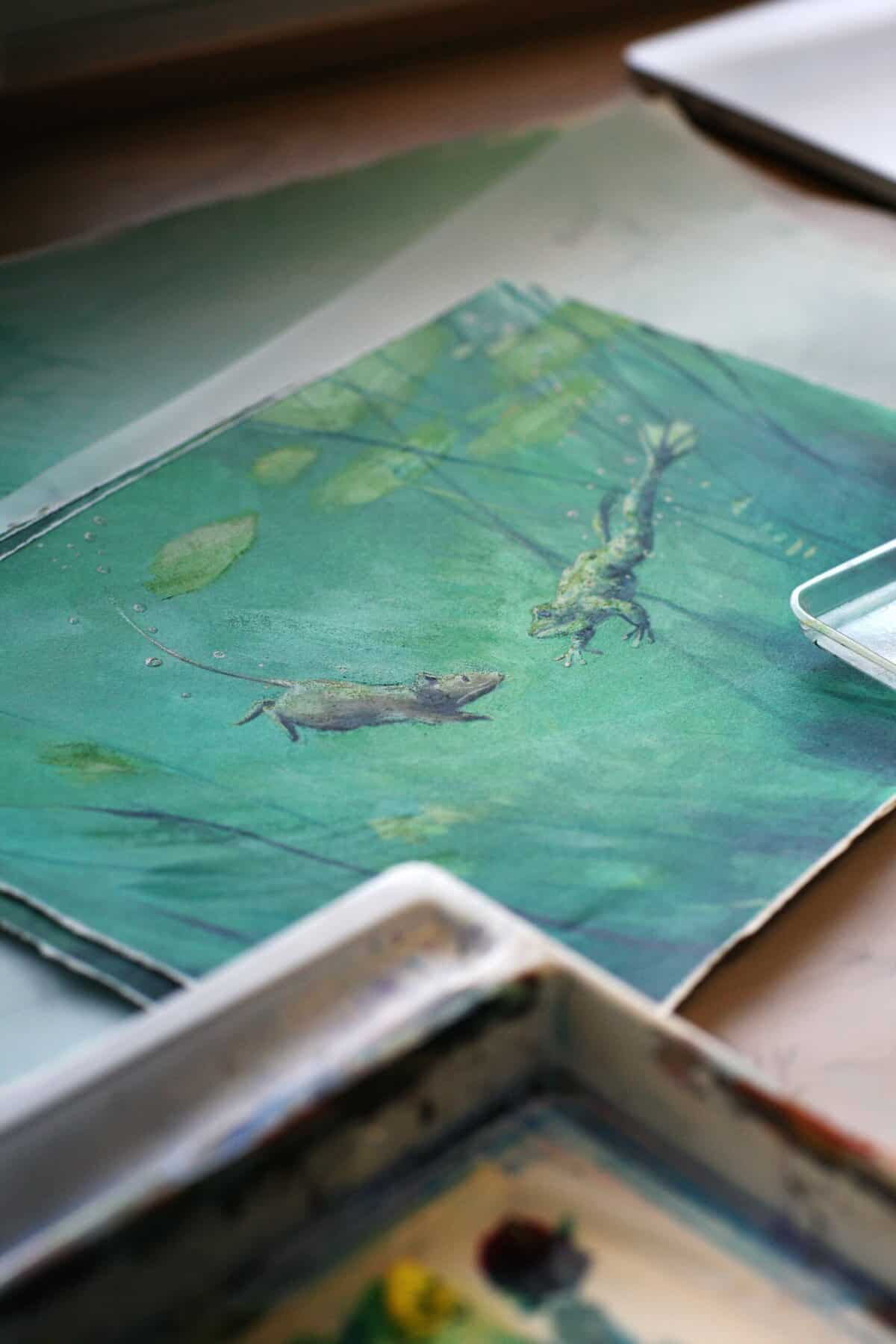
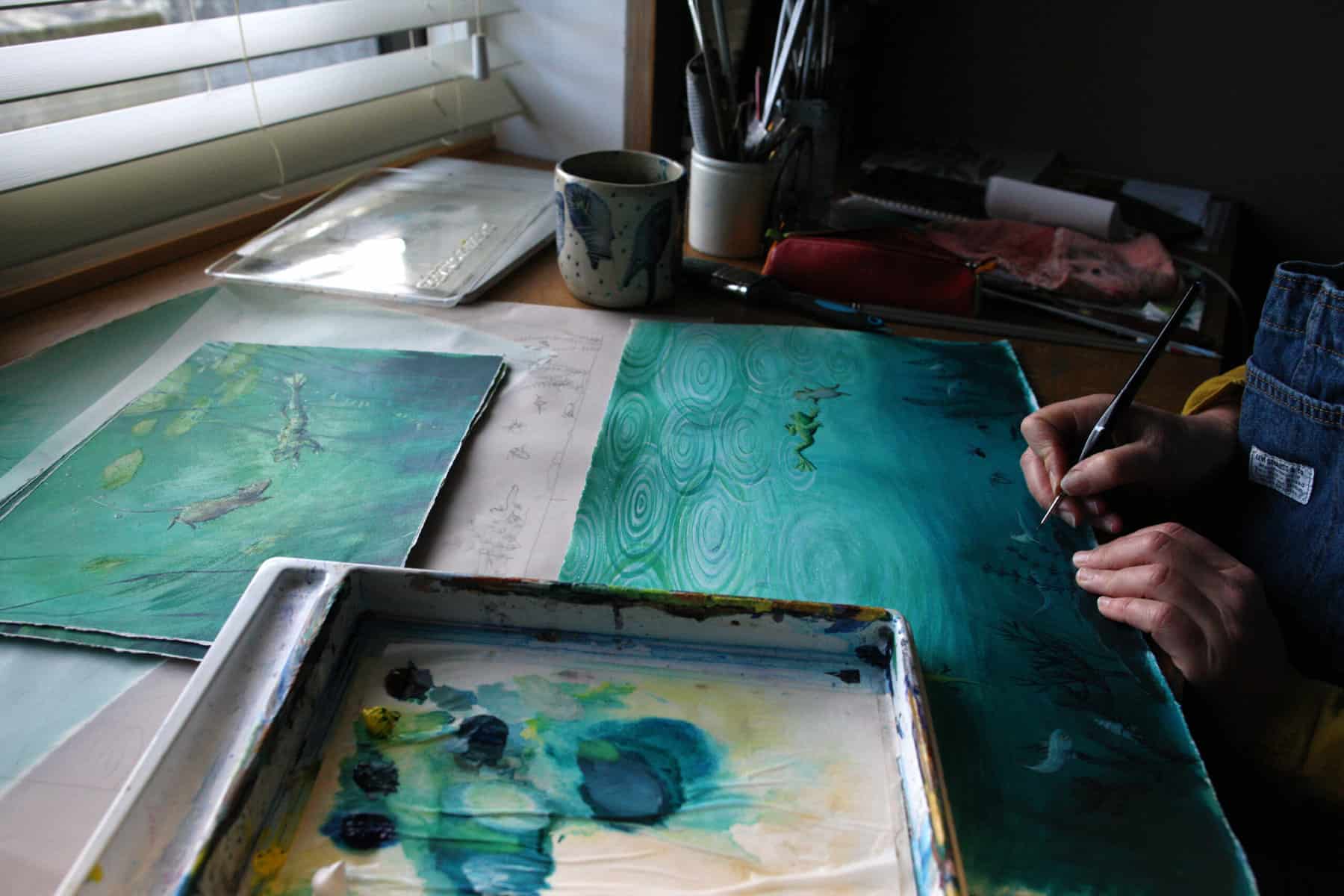
New artwork for Jane’s next manuscript, waiting to be shipped to the publisher
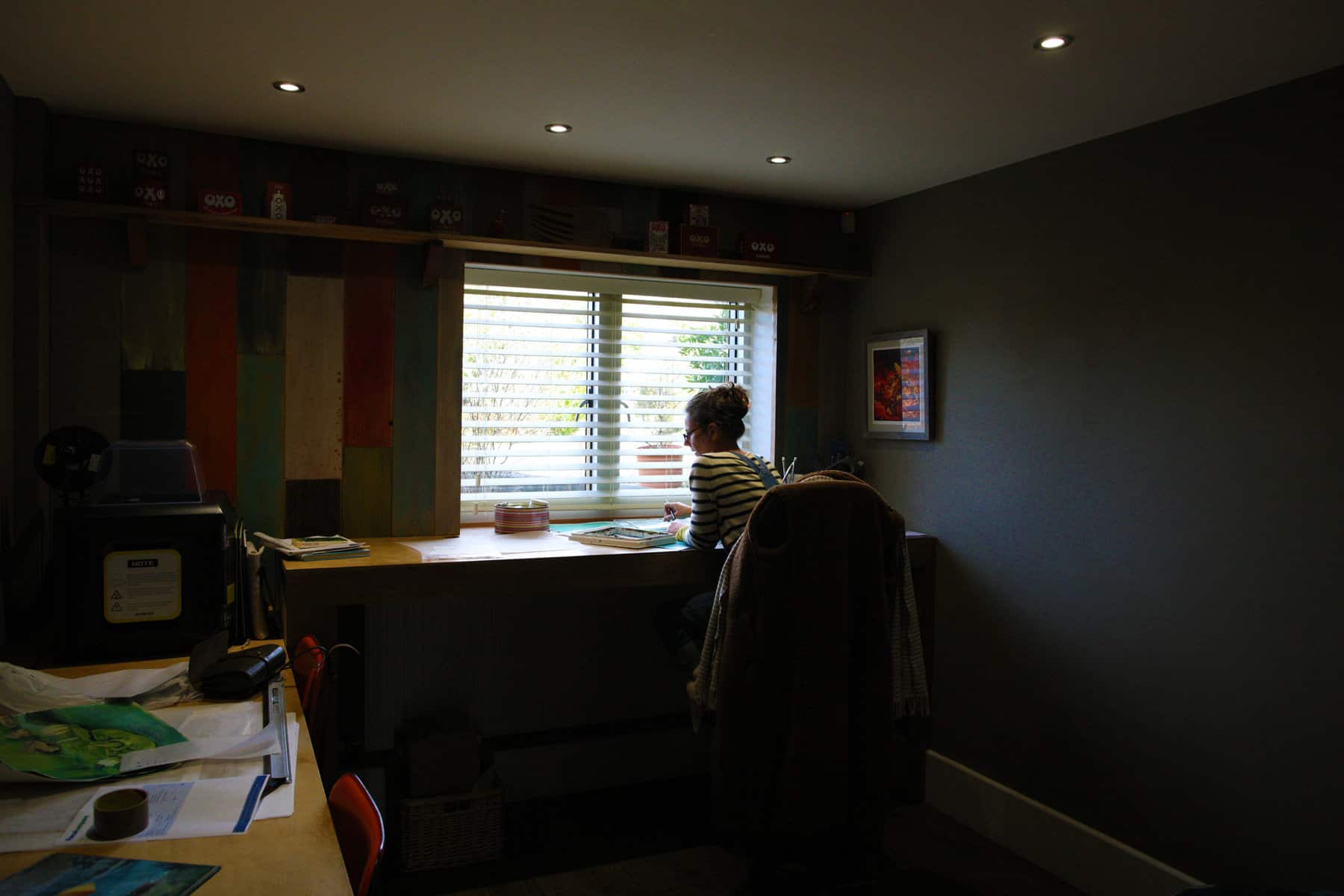
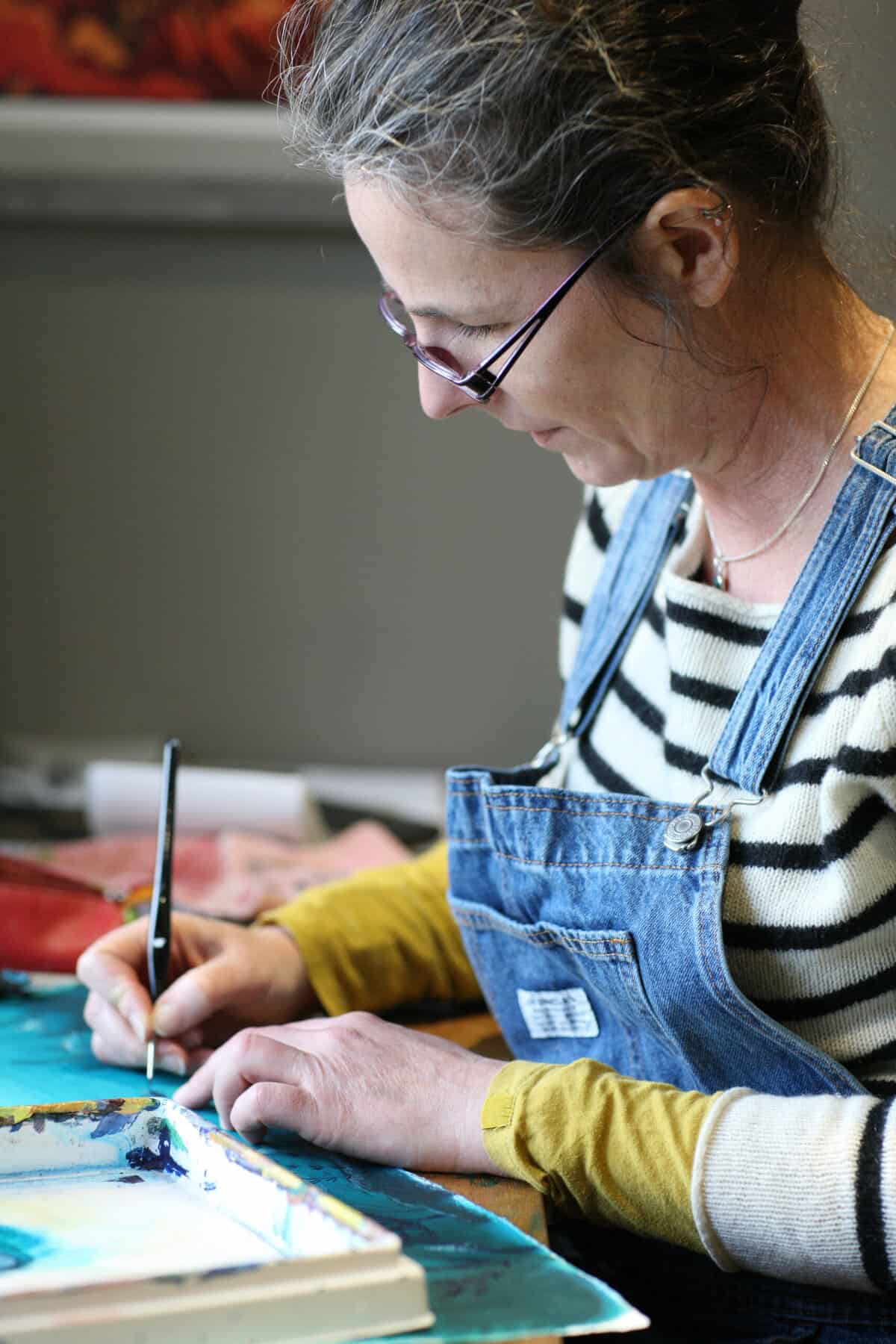
Jane Chapman working in the converted garage which is now her printing room

She showed me some of the charming initial draft drawings of a frog and a mouse for her next book, which would soon be sent off to the publisher. She says: ‘The whole creative process for the book is a collaboration between the editor, designer, sales team and illustrator.’ Other recent books include Together, a tender story about a tiny gorilla who is finding a way through sadness, conveying the importance of compassion and connection in a big and challenging world.
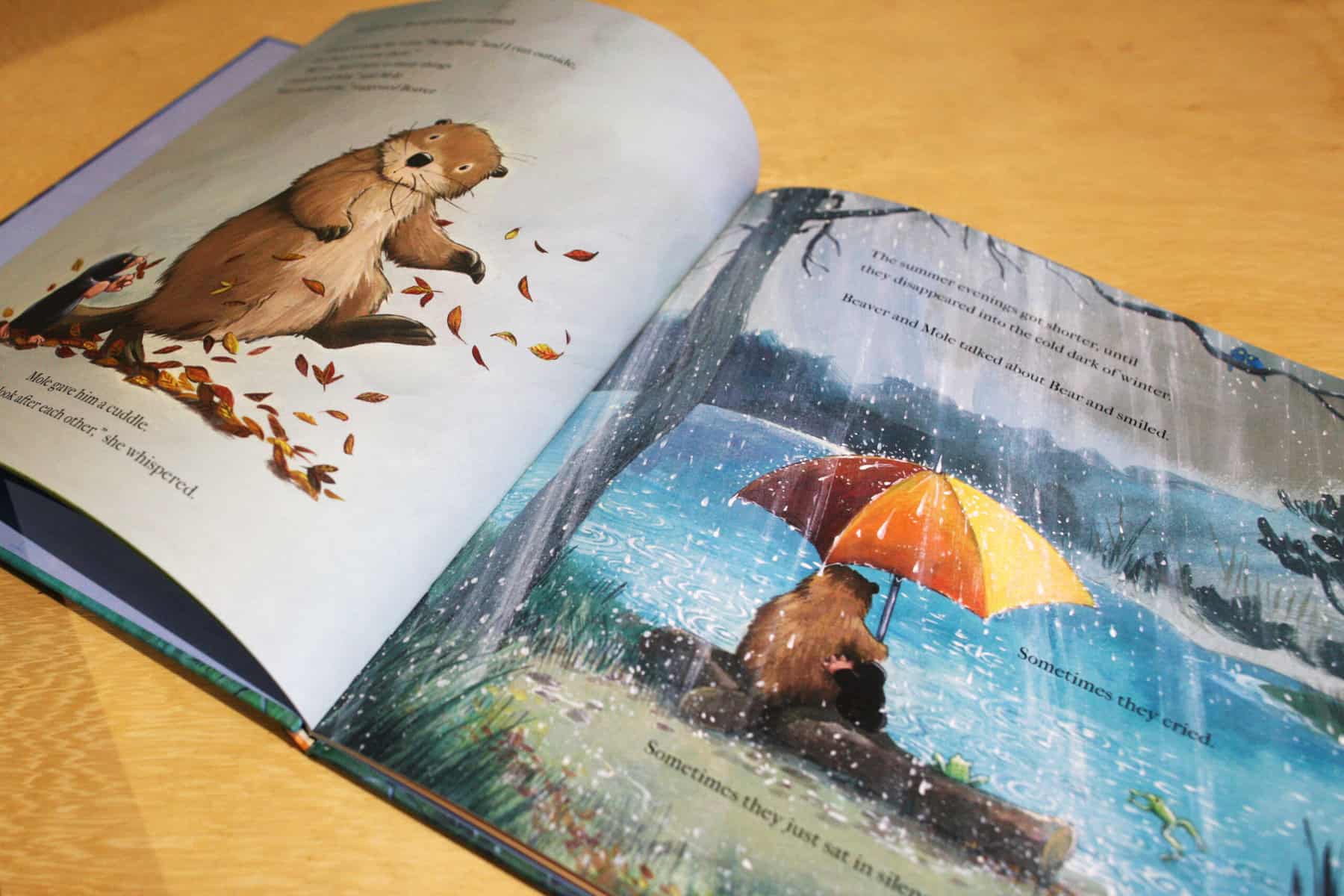
Mole’s Quiet Place is a moving tale of friendship and understanding that encourages empathy, teaching children to consider the needs of others. But Jane is most proud of her recent book Goodbye Bear, which tackles the difficult subject of bereavement for children. ‘Beaver and Mole miss Bear very much, but they find a way to celebrate him with the help of all their friends.’

Nero, who ‘invariably walks over the paint palette, leaving green splodges everywhere’

To be able to write and illustrate with such sensitivity, I wondered if Jane had to find her own inner child? She says: ‘What I’m trying to do in my work is to reach adults as well as children. I try to get some solid truths into my books. I don’t want to preach nor do anything scary. I want to create a safe world where things are resolved. Picture books are like haiku – the story doesn’t work without the pictures. In a good book, the child (without reading the words) should be able to tell the story through the pictures and be given time to talk about the images.’

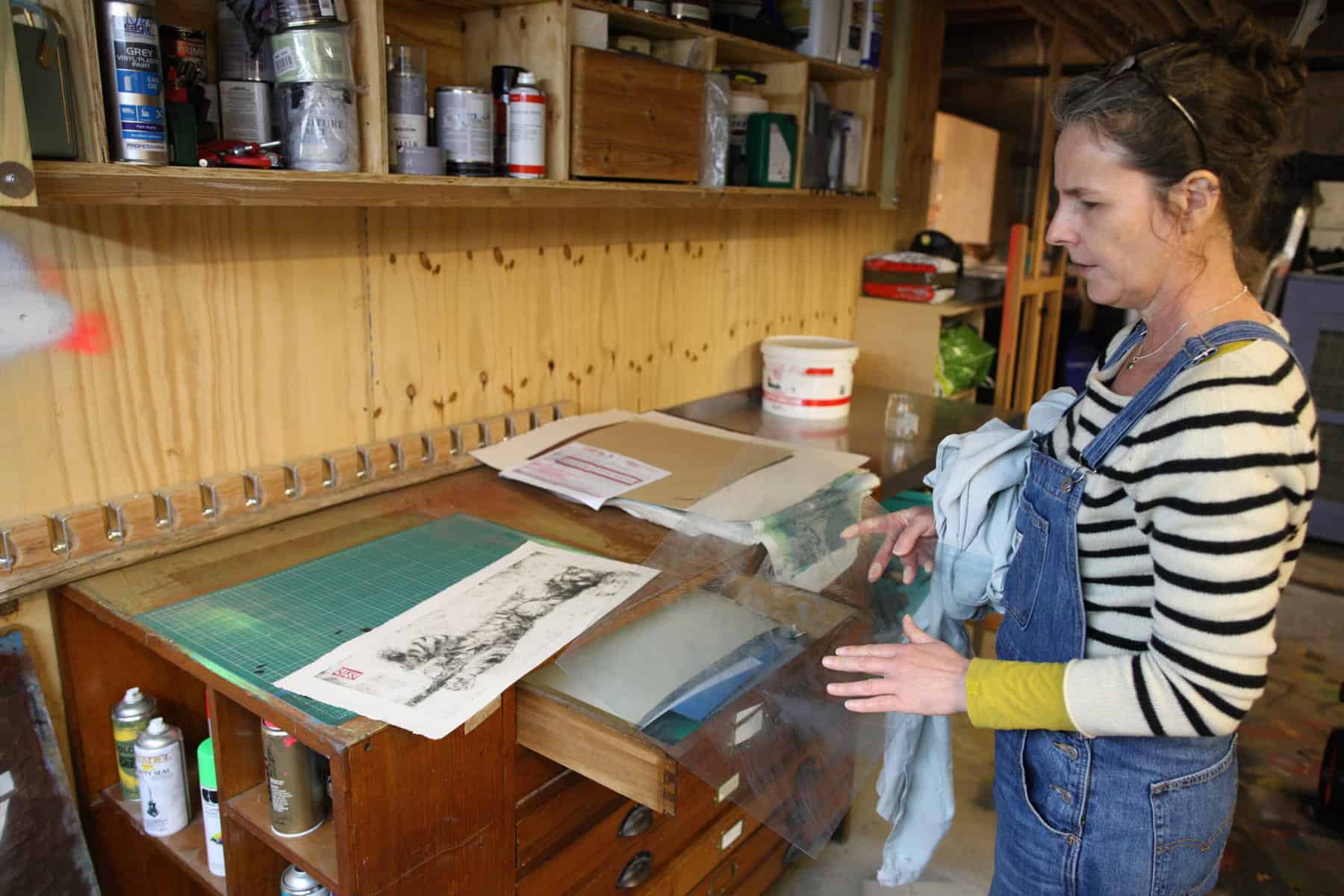
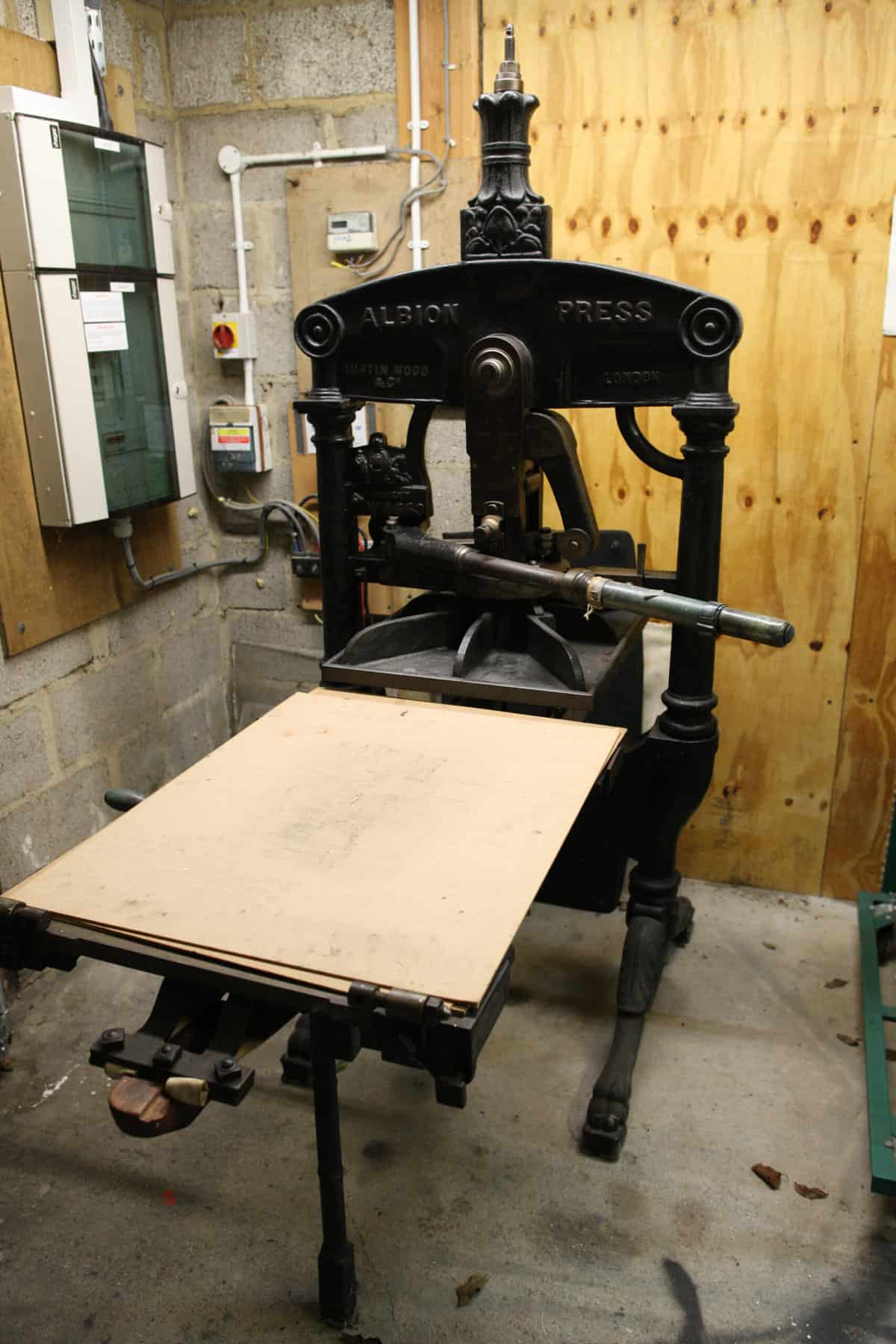
Jane’s cast iron 19th century Albion press.

Timeless style
Another successful series published by Simon and Schuster has been a collaboration with Karma Wilson, who is the author of the bestselling Bear books illustrated by Jane. They include Bear Snores On, Bear Stays Up and Bear Can’t Wait. They also include other memorable and recognisable characters including a wren, mouse, mole, badger, raven, rabbit, and owl. For these books, Jane says that she ‘settled on a traditional, timeless style’, which has remained popular. The books sell well in the United States and have been translated into numerous languages.
Jane’s characters generally emerge from the animal kingdom and come to life in beautiful original acrylic illustrations. Her bright colour palette creates the mood for each painting. However, every individual page must contain a more muted, lighter section for the text insertion and this will have been agreed upon beforehand when the rough draft is submitted.
She says: ‘I have very specific ideas about my characters and what sort of personalities they have. They become real in my head, living an alternative life when we’re not there!’
It is a painstaking way of working: Jane will paint from 60 to 70 hours a week to meet her deadlines, leaving little time to explore other genres of art.

Jane’s next book centres on a frog and a mouse

However, she also showed me her printmaking room which boasts a splendid cast iron 19th century Albion press – beloved by all printmakers. Jane uses the Albion for relief printing; another press in her studio is for intaglio printing, a method where ink is lifted from below the surface of the plate. Last summer, a series of lino prints were made for the Look Up exhibition at Sculpture by the Lakes, where some of Jane’s intaglio images from the book Together were also on show.
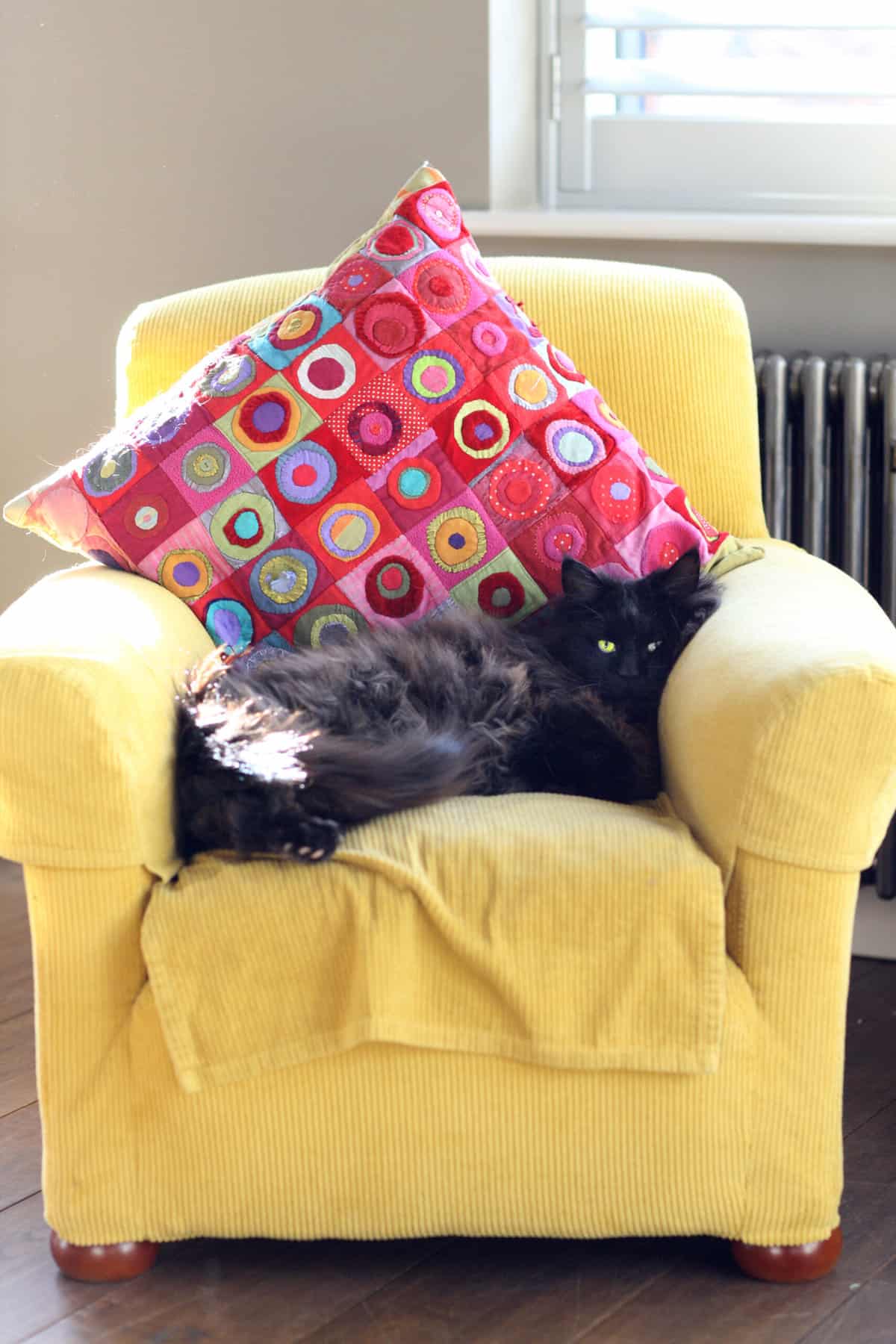
After meeting Nero the cat (‘he invariably walks over the paint palette, leaving green splodges everywhere’), I was left with the impression that Jane puts her heart and freedom of expression into every aspect of not only her art, but also her busy family life and garden. She is passionate in her belief that children’s picture books will always have a place. ‘It is such an intimate thing to read with a child. There will always be hope at the end of my books, a feeling of safety. That all is right with the world.’

‘Picture books are like haiku – the story doesn’t work without the pictures’
A page from Goodbye Bear

janekchapman.com

The end of an era and a final splash for Abbey Swimming Club

0
Becky Heath (left) accepting the £7,000 cheque on behalf of Dorset and Somerset Air Ambulance

It is with great sadness that the Abbey Swimming Club has had to permanently close after more than 30 years as a community swimming club.
Located at the Milton Abbey School pool, the club had its first swimming session on Tuesday 14th June 1988. The club was run solely by volunteers – including the lifeguards, swimming teachers and all committee members. For almost 32 years (the pandemic forced a closure in March 2020) the club held four swimming sessions per week – members were aged from a few months to the over-80s.
The club ran children’s and adult’s swimming lessons, and for many years diving lessons, toddler swimming lessons, and aquafit. There were also regular galas at the pool – both competitive ones, and those for fun. The club had close links with Milton Abbas surgery and offered ‘back to fitness’ sessions for many surgery referrals.
But it wasn’t all about swimming – it was also a valued social club for its members. There were regular events to raise funds, such as New Year’s Eve barn dances, summer barbecues, skittles evenings and quiz nights. Since 2001 they have run the cream tea stall at the Milton Abbas Street Fair. The whole swimming community came together at these events.
After COVID the club was hoping to re-open as before. Unfortunately, under new safeguarding rules Milton Abbey School could only allow the club to access the pool during some school holidays. Much searching couldn’t find another pool that offered the ‘community club’ facilities. In September 2022 the members reluctantly voted to wind up the club.
On the evening of 18th January 2023, a farewell reception was held at the Milton Abbas Reading Rooms. The club assets were distributed to the local charities chosen by club members and the following cheques were presented during the evening:
£7,000 to Wimborne Wagtails – A Dorset based swimming club for the disabled. The cheque was received by the club chairman, Julian Vernon.
£7,000 to Dorset and Somerset Air Ambulance. The cheque was received by Becky Heath.
£7,000 to Weldmar Hospicecare – A Dorset based charity providing specialist end of life care. The cheque was received by Marie Notley.
£2,000 to Milton Abbas Street Fair. Cheque was received by chairman, Freddie Robinson.

Sponsored by Wessex Internet

Beef is beef. Except when it neighs.

0

A decade after the horsemeat scandal, how have we ended up in a place with more risks than ever to our food, asks Andrew Livingston

Definitely a cow on the banks of the Stour. Image: Laura Hitchcock

This may be a testament to how quickly time seems to have sped up since the pandemic, but I was amazed to see the other day that it is the ten-year anniversary of the horsemeat scandal.
In my head, being petrified of lasagne was a noughties thing, like updating your Bebo, listening to the Black Eyed Peas or sitting down to watch Robot Wars on the TV (it really wasn’t a decade of high culture).
The scandal started in the November of 2012 when the Irish Food Safety Authority started testing cheap frozen beef burgers and ready meals. Results came back and horsemeat was found in over one-third of the burgers and pig in the ready meals.
The horsey burgers were made in three factories –two from Ireland and one from Yorkshire. Two of the factories were a subsidiary of ABP Food Group, the largest beef processor in Europe.
ABP was quick to pass on the blame to their continental suppliers, stating that they had no knowledge of the contamination, but as more and more products were tested the issue snowballed.
ASDA ‘beef’ bolognese was soon found with horsemeat, the first case of it found in fresh meat. It was starting to seem like no one was safe.
French manufacturer Comigel had its frozen beef lasagnes and bologneses, which it supplied to Tesco and Aldi, tested.
The result came back at 100 per cent horsemeat.
Now, I don’t bring this up to simply remind everyone of the time they gnawed on Black Beauty, Red Rum and My Little Pony.
Food contamination scandals like this occur in most decades. Less than ten years before the Horsemeat Scandal, the UK had an outbreak of BSE (Mad Cow Disease), when infected meat from cattle went into the food chain and resulted in 176 human deaths.

Dorset cows don’t neigh
Since Brexit, the risk of another food scandal has increased. Great Britain is no longer a part of the food safety network of Europe, meaning food entering the large European ports destined for the UK is waved through without inspection.
Staggeringly, 40 per cent of the food we eat is imported – it is susceptible to tampering and contamination, but does not receive any proper checks when it reaches our borders. In an ideal world, the UK would be 100 per cent self-sufficient, of course, but unfortunately people love eating avocados too much. I do however believe that the horsemeat scandal should be a lesson that British beef is best. I guarantee the beef found on our Dorset hillsides spends a lot less time neighing than the meat in your frozen lasagne or burger …
Unfortunately, the UK government has an aversion to taking British farming seriously – and, frankly taking food seriously at all. A crashed egg market, pigs being slaughtered on farms and their meat thrown away, and a global pandemic that left shelves bare have all left our government with egg on their face.
Yet our MPs continue to leave agriculture at the bottom of their To Do list.

Sponsored by Trethowans – Law as it should be

More EXCLUSIVE BV interviews – with Henry Blofeld and Luke Rake

0

The February BV podcast begins, as always, with this month’s letter from the editor and all the latest reader’s letters – moving on to two interviews; one with the principal of Kingston Maurward college, and the other with Henry ‘Blowers’ Blofeld.

Never miss an episode – if you’re not already subscribed to the BV, you can sign up here and receive a notification of each new podcast (just three a month) straight to your inbox! Or you can catch up on all previous episodes right here.

In the first February episode:

  • Letter from the editor, Laura Hitchcock
  • Reader’s letters
  • Following a local outcry based on inaccurate information, Jenny Devitt speaks to Luke Rake, principal of Kingston Maurward College about the rumours surrounding the cancelation of apprenticeships
  • Legendary cricket commentator and broadcaster, Henry Blofeld OBE, known amongst his many fans as Blowers and famed for his plummy tones and all-round good humour, invites you to join him in a brand new show, My Dear Old Things – coming to the Exchange in Sturminster Newton and the Tivoli in Wimborne in March. Terry Bennett has a chat with Henry to find out about what’s in store.
    Click here to win tickets to one of the shows!

It’s time we learned to talk

0

As February heralds Time to Talk day, Dorset Mind’s Ash Langwith looks at how we can make it easier to talk and to listen, breaking the stigma

Talking with friends and colleagues breaks the ice – shutterstock

Time to Talk Day is an annual celebration of mental health, organised by the two charities Mind and Rethink to encourage people of all ages to start a conversation, whether it be at work, a place of study or at home. The important thing is to be open with your friends, families and colleagues.
The aim is to normalise talking about mental health whenever you need to – at any time of year.

Why is talking important?
Talking honestly about our mental health helps to create supportive communities and an understanding environment. It will also reduce the stigma surrounding these conversations, which can be a massive barrier to seeking support. If someone in your circle doesn’t have the courage to speak up, seeing you take that first step might be the reassurance they need, letting them know they are in a safe space and have allies they can turn to.
As someone with several mental health conditions, I find that it’s important to express how I feel. And talking doesn’t have to mean over-sharing. If you’re nervous about talking about mental health for the first time, simply mentioning how you feel in the moment is a good stepping stone for further discussion.

Who can you talk to?
When talking about mental health, it’s easiest to talk to people you trust. Friends, family or colleagues can be the easiest people to approach for a chat when you need it. Sometimes talking is easier when you have something you can do to take the pressure off.
I find starting a conversation while walking, making a coffee, cooking or some other simple activity helps.
However, it’s important to remember that some people cannot seek support from family or colleagues. In situations like these there are still people you can turn to!
Dorset Mind offers 1-2-1 services such as counselling and mentoring. There are also wellbeing groups, where talking and making connections is encouraged to build a sense of belonging and self-confidence. Visit the website dorsetmind.uk for more information.

How can you help people who need to talk?
If you aren’t struggling with your own mental health but would like to support those who are, there are definitely ways you can help.
If you think someone is showing signs of struggle, ask how they’re really feeling; and ask twice because the first time you’ll likely get an automatic ‘I’m OK.’
Politely asking if someone would like to talk and if they’re really OK might be the push they need. If someone does open up, listen to what they’re saying. Asking questions is a great way of proving that you’re listening, and it will help to dispel assumptions about certain mental illnesses.

If you need emotional support, call the Samaritans FREE on 116 123, at any time.
Dorset residents or visitors can also call Dorset’s Connection Helpline on NHS 111 or 0800 652 0190
If phone calls aren’t your thing, text SHOUT to 85258.
If you’re having a crisis, it’s important to get help as soon as possible. If you’re in a mental health crisis and need urgent help, call 999 or head to your nearest A&E if you can do so safely.

Win tickets to see Henry Blofeld!

3

**** COMPETETION IS NOW CLOSED ****

Legendary cricket commentator and broadcaster, Henry Blofeld OBE, known amongst his many fans as Blowers and famed for his plummy tones and all-round good humour, invites you to join him in a brand new show, My Dear Old Things – coming to Frome, Sturminster Newton and Wimborne next month.

Henry is a brilliant raconteur and as usual his new show is full of humour and wonderful stories. And don’t think for a second that it’s just for cricket-lovers: the first half is entirely filled with behind-the-scenes untold stories of his time recording The Real Marigold Hotel. Henry said: “I can’t tell you how excited I am to be getting back onto the stage after nearly three years! It will be a lively mixture of making the Real Marigold Hotel and almost fifty years with Test Match Special. We’ll have huge fun and I can’t wait to see you all there!”

You can listen to Henry chatting to Terry Bennett about the show in the first of February’s BV Podcast’s here, and The BV has three sets of tickets give away!

Henry Blofeld is appearing at the Tivoli Theatre in Wimborne (8th March), The Exchange in Sturminster Newton (16th March) and the Memorial Theatre in Frome (17th March).

To be in with a chance to win, all we need you to do is select which venue you’d like to win tickets for. Please do make sure you’re available on the date selected before you enter, as tickets are non-transferrable!

To be in with a chance to win a pair of tickets to your chosen venue, just answer the first four questions in the widget box below. There are more chances to win by completing the other entry options if you so wish – they’re entirely up to you! The closing date for this competition is 6th March 2023 and only entries received on or before that date can be included. The prize will go to the first randomly chosen entry for each venue. Good luck!

Win 2 tickets to see Henry Blofeld in Sturminster Newton, Wimborne or Frome