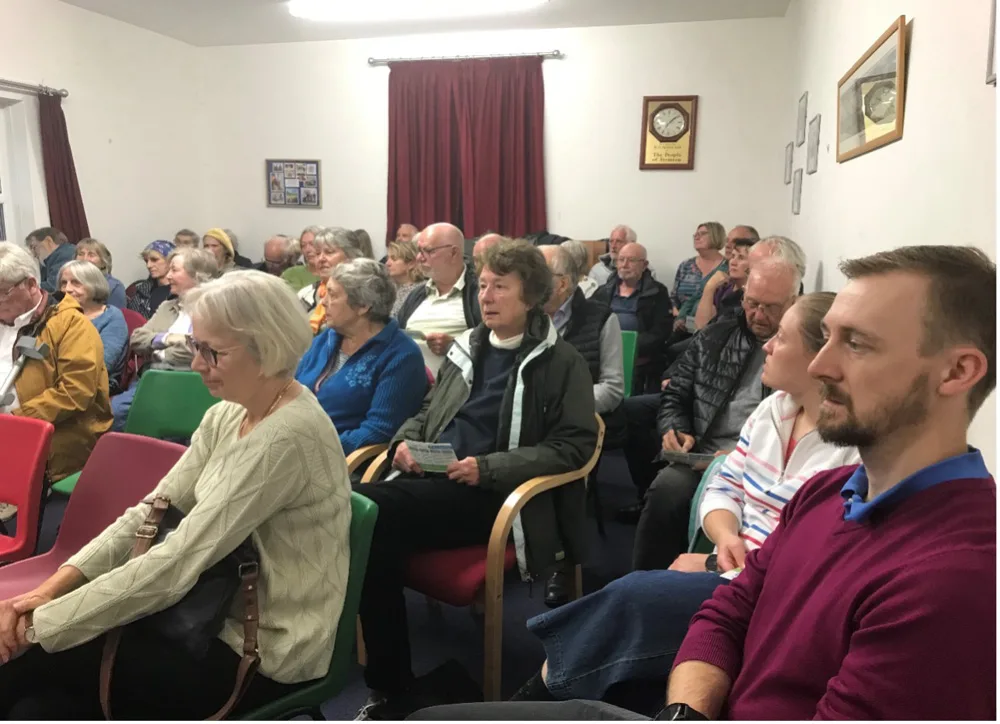
Stratton’s lack of a bus service drew a packed audience of around 45 people to the village hall on 17th September, showing the strength of local concern. The village is about three miles north-west of Dorchester, and the meeting was organised by Dorchester Transport Action Group (DTAG) following their open forum in June, where the challenges faced by villages around Dorchester were raised as a major issue.
Stratton village hall was packed for the meeting to discuss the public transport issue
DTAG chair Stewart Palmer told residents that while reinstating the old 212 bus service was probably unrealistic, there was scope to campaign for some kind of provision. He pointed to Martinstown as an example, where it took years of persistence to secure a service. In the meantime, he suggested exploring other community-based options such as car and lift-sharing schemes, which have worked successfully elsewhere in rural Dorset. The first task for Stratton’s residents will be to establish what sort of service people actually need, how often it would be used and for what purposes. This could include canvassing nearby villages such as Frampton, Grimstone and Bradford Peverell to demonstrate wider demand: ‘A campaign has to start with clear evidence of need,’ Stewart said. Les Scarth, a DTAG supporter who helped lead the Martinstown campaign, described practical steps that had worked there – including surveys, door-to-door conversations and mass email and letter campaigns to decision-makers. William Gibbons, DTAG’s lead for buses, stressed that Dorset Council has £4m of new money available for community transport projects, but warned that it will come down to priorities: ‘You need to make your case and make it the best case.’ By the end of the evening, 22 residents had given their details to form an initial working group. DTAG will support them in launching a campaign and a follow-up meeting is planned in the coming weeks. More details about DTAG at dorchestertransport.org.uk
I often write about food production in this unstable world, and today’s world news only reinforces the message. I’m writing this on the last night of a short visit to Turkey. Once self-sufficient in food, the country has badly damaged its agriculture through over-use of underground aquifers. Today it imports just under seven per cent of its food – still far better than the UK, where we manage only 65 per cent self-sufficiency. Some UK sectors are critical: fresh vegetables at just 53 per cent, and fresh fruit a shocking 15 per cent. My cousin, commanding officer of HMS Prince of Wales, is in the Far East, on exercises with allied navies against very real current threats. He and his crew know they are preparing for war.
Local produce on sale at a Turkish market
Back home, most people remain blissfully unaware of how dangerous the world has become. Many commentators now predict a world war within three to five years … if that comes, the UK will be in a dire position, unable to feed ourselves. We need a government that genuinely supports farmers and encourages them to grow more food, ensuring we can feed the nation and survive without imports if disaster strikes.
Instead, ministers seem blind to the collapse in morale across farming. Too many farmers are leaving the industry – some even making devastating life decisions to avoid inheritance tax. In schools, too, we fail to teach children where food really comes from, or how fragile the supply chain becomes in times of conflict. The answer is simple: we must keep lobbying our MPs. We need their backing to grow more, buy more and eat more local. Food production must return to the school syllabus. After the Second World War, Winston Churchill urged farmers to produce more to feed the nation. Keir Starmer should take up the same cry. It’s time to wake up and smell the coffee – or better still, cut the carbon footprint and smell the farmyard muck! Barbara Cossins
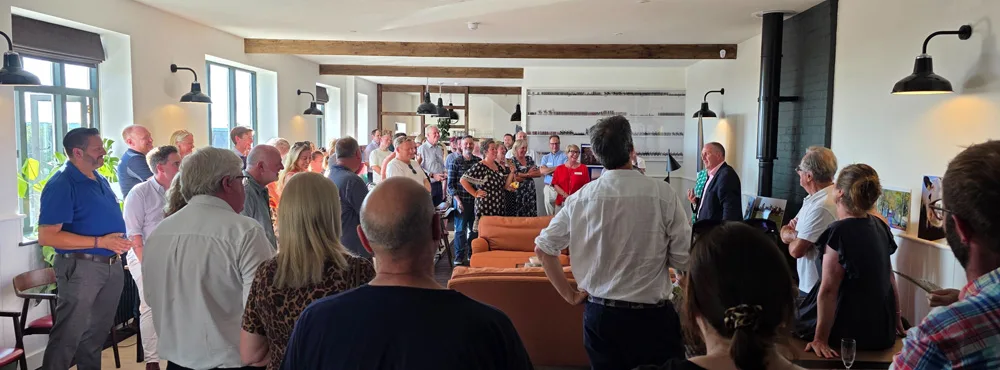
North Dorset businesses are invited to connect, collaborate and grow at the Hinton Workspace Business Expo on Wednesday 12th November – a one-day celebration of local enterprise and ambition. The day will begin with breakfast networking at 9am, before doors open on two floors of exhibition stands showcasing local talent and services. From 10.30am, the focus shifts to expert-led talks across two hubs: the Growth Room, with sessions on sales, funding and AI, and the Wellbeing Room, offering guidance on balance and resilience in business. At lunchtime, a Lunch & Learn panel hosted by Alice Fox-Pitt will bring together five leading local business voices to share insights and experiences.
Hinton Workspace has become a hub for North Dorset business networking
Hinton Workspace, profiled in The BV when it opened, has quickly become a popular hub for rural business, tackling rural isolation and lack of amenities by offering space, support and community for entrepreneurs across North Dorset. Opportunities to get involved in the EXPO include booking a stand space, securing a 20-minute speaker slot, or sponsoring one of the talk spaces – attendance is free (pre-booking is advised as spaces are limited).
When I first asked what type of work I’d be doing as a new parish councillor, I was firmly told that all I would need to do is ‘come to the meetings and listen to the chairman’. In other words, ‘keep quiet and don’t rock the boat’. Reader, I rocked the boat.
But I am not everyone… Parish councils today are very different creatures from 50 years ago, when the same families effectively held a fiefdom over villages for decades. Thankfully, the situation is more open and inclusive today. There is an extraordinary amount of work to do, with difficult challenges, so people with all manner of diverse skills and abilities are valued. Councillors need to be able to turn their attention to a range of issues, from a blocked footpath to a serious discussion about future infrastructure in a village swamped by developments, or the impending closure of a local pub. The majority of councillors work extremely hard in their communities, and a lot of what they do is invisible to the public. But every parish councillor knows that not every councillor pulls their equal weight – and that raises a fair question. How does someone who contributes very little end up in the role at all? While most people realise that this attitude of being a passive representative is very outdated, there are still people around who think the role of a councillor is in name only, simply requiring an appearance at public events and meetings. Every council has at least one person who does absolutely nothing … and it is really frustrating. Typically, the individual turns up at a meeting and sits there, either saying nothing or exposing the fact they have not read any of the papers. They might nod off on occasion, or need to be prodded to keep on track. If they are given a job to do, it never gets done. Some are also alarmingly behind the times – including on equality, diversity and basic workplace conduct. Why do they even sit on councils? For some, it’s a power game. Others miss the meetings they had when they were working full time, and join just to feel important again. One or two join because there’s an impending development spoiling their view, and they think they can stop it (that strategy rarely works) – people focused on a single issue frequently lose interest in everything else. Sometimes people are encouraged to stand as a parish councillor because the community wants an election, and there is a need for enough people to come forward to create the ballot list. That’s fine, of course, but when insufficient people stand for a place on a council, someone will be elected uncontested. The old saying ‘be careful what you wish for’ is absolutely true in this case.
Standing for election requires courage However, at least these people have had the guts to stand in an election, risking being judged by their community – and not being elected in a democratic process. But in order to stand as a candidate, two people need to propose you as a suitable person. If those proposers are aware you’ll contribute very little, why are they putting you forward? I’d suggest asking a few blunt questions before anyone puts a name forward. Can they read a document properly? Do they know what the council actually does? Have they got the time to contribute? And if you’re that candidate, be honest with yourself – and with your community.
It could be you We desperately need a succession plan for local councils – something that actually prepares new candidates, not just scrambles to find warm bodies come election time. We need individuals who have already learned about the skills needed, honed their leadership abilities, and perhaps dipped their toes in the water on a community project would be ready and motivated to contribute – people full of energy, wanting to make a difference, and in a position to step up and serve on a parish or town council. With the voting age limit dropping to 16, younger people need to be actively encouraged to come forward, and an ‘aspiring councillor’ programme would build skills and confidence. Meanwhile, the minority of councillors who do nothing are here to stay – because they have been democratically elected, and like most modern workplaces, you can’t get rid of them. The hard work, then, falls to the remaining team – when being able to spread the workload would help get more done. So. If the person who contributes little to your parish council is you, do your community a favour: find someone better. And at the very least – read your papers.
This month’s side quest And just when I had warned my own regular ‘non-readers of essential papers’ to prepare for meetings properly, along comes Dorset Council with its Local Plan. Apart from carpet bombing almost every field in Dorset with a solar farm or windmills, the lack of communication is astonishing. A lot of landowners had no idea their property was even in the plan! But it gets worse. I’ve spent years frustrated by councillors who don’t read the paperwork. Now I’m being asked to give a formal view on proposed development – without even seeing the plans. How is that normal? For all I know, they’re building a theme park, a sewage plant … or both.
** The Dorset Insider is a no-holds-barred column pulling back the curtain on local affairs with sharp insight, unfiltered honesty and the occasional raised eyebrow. Written by a seasoned parish councillor who prefers to remain anonymous (for obvious reasons), it cuts through the noise to expose the frustrations of grassroots politics, and say what others won’t. Rest assured, their identity is known – and trusted – by the editorial team. Expect opinion, candour and a healthy dose of exasperation …**
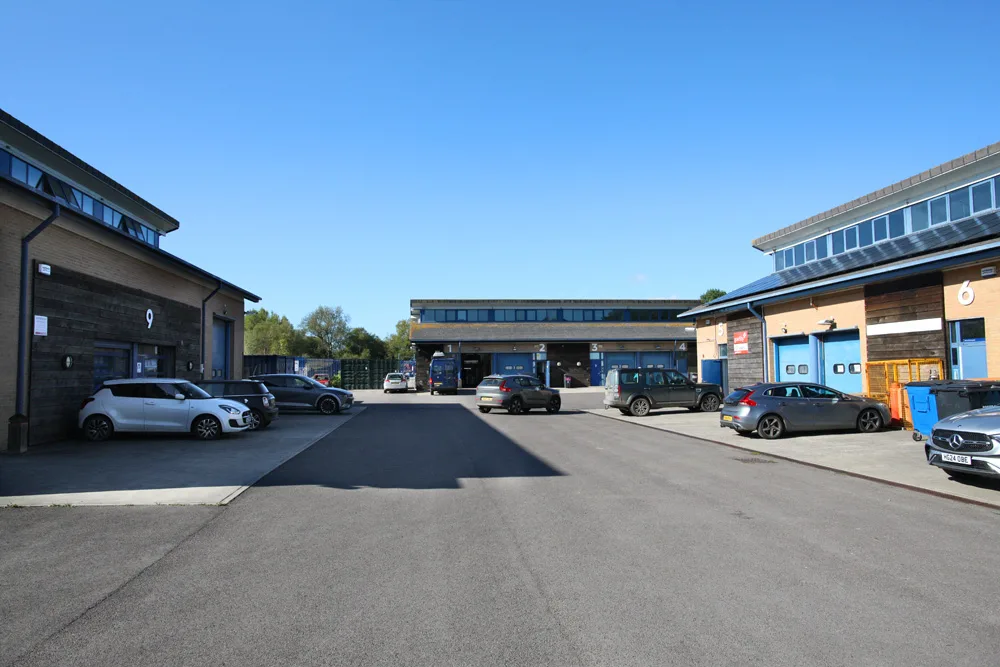
At the edge of Sturminster Newton, Rolls Mill Business Park is quietly thriving – and not in the way you might expect. Once a neglected asset in a portfolio, River Court is now home to chilli-makers, dry ice car detailers, and ultra-light expedition gear designers – and it’s working, thanks to two local landlords who ripped up the rulebook. When Chris Ridge and Colin Andrews – both chartered surveyors – first looked at River Court, two units were vacant, and other tenants were preparing to leave.
River Court is a three-sided business courtyard on the North Dorset Business Park at Rolls Mill, on the edge of Sturminster Newton – image Courtenay Hitchcock The BV
‘No one was interested in the place. It was part of a large investment portfolio,’ says Chris. ‘Everything was done through remote agents. The tenants didn’t even know who to call. Contractors based in Bristol were employed to come and cut the grass and clear the gutters – it was ridiculous. ‘We spoke to every tenant before we bought it. When they heard we were local and planned to turn things around, they agreed to stay.’ Noel Bryson of Henryettas Hooks, a bespoke crochet hook maker, says the difference was immediate. ‘We had looked to move here before, and the previous landlords wanted a £6,000 deposit up front. We told them what we thought of that idea. But when Chris and Colin took over, they showed us Unit 2 and it was a no-brainer. We’ve got our own toilet! There were 40 units and one toilet at our old base! It’s a lovely area to be in: it’s clean, it’s tidy, it’s quiet but busy… we already love it here.’
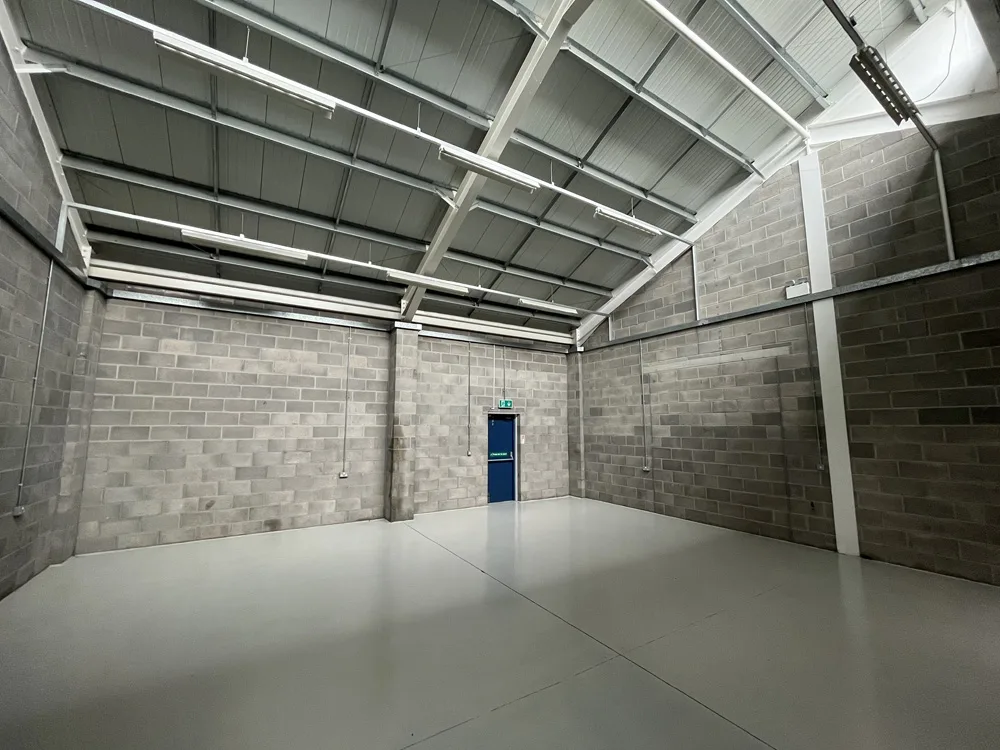
One unit on the River Court development has just become available
Not your average tin shed In their first year, Chris and Colin halved the service charge for tenants, landscaped the site, added solar panels to high-energy using units, and began planting wildflowers and trees. ‘We want to make it a genuinely nice place to work,’ says Chris. ‘Internet access is good, we’ve got fibre to every unit. Unlike most business parks, we’ve got space – only 23 per cent of the site is developed, so we’re working to make the rest feel like somewhere people want to be.’ The units themselves are unusually high quality for small industrial lets – built in brick with tiled roofs and proper insulation. ‘They’re miles better than your standard tin sheds,’ says Colin. ‘Dorset Council set the original spec, and it’s far higher than developers would use today. And with new energy regulations coming in, that’ll really matter. A lot of newer builds will struggle. These won’t.’ The result is a quiet but thriving estate attracting a unique mix of tenants – and some surprising collaborations. One firm needed a specialist ceramic coating. Another tenant had the skills. They started talking. That job led to another – and a whole new contract.
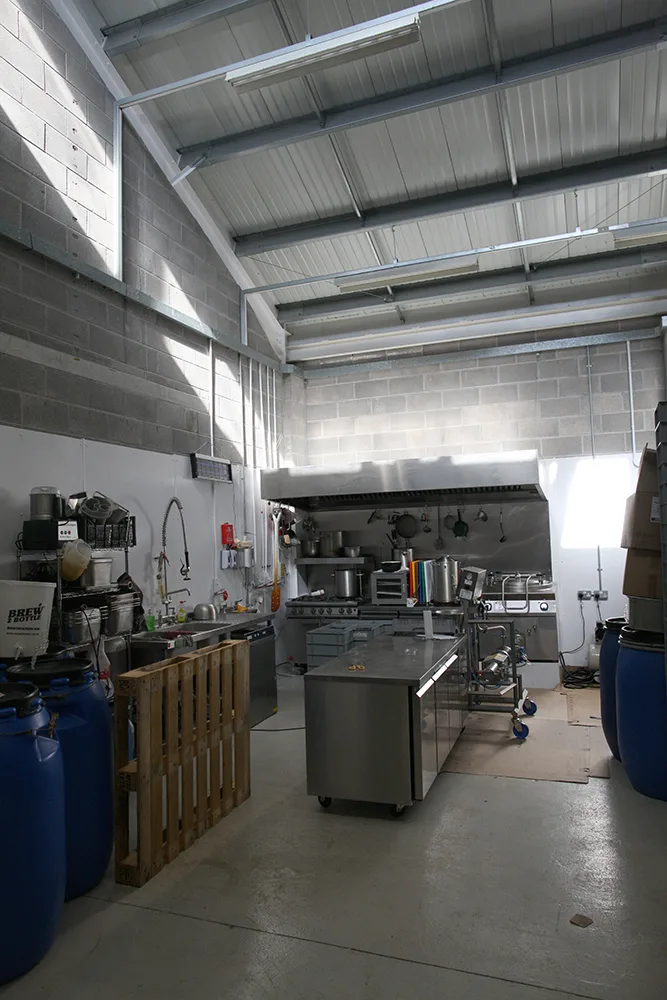
The sunshine-filled commercial kitchen takes up just a small corner of Weymouth 51’s unit
David and Mikka Tamlyn of Weymouth 51 moved in soon after Chris and Colin took over. ‘We considered a unit up the road – twice the size, double the business rates,’ says David. ‘Then we found this one online, phoned Chris, and said, “We’ll have it!” straight away. It’s perfect. ‘The neighbours are great. The chap across the way forklifts our deliveries – we pay him in wine and beer! It’s tidy, safe and secure, that’s the point.’ ‘There are three blocks of units, ranging from 550sq ft to 3,100sq ft. Some have mezzanines, and uses range from storage to food manufacturing to light retail … it’s any business use really, except for those which will cause a disturbance to the others. So if it was a car paint sprayer, for instance, that doesn’t sit very well with roasted nuts!’ The tenants are a diverse and fascinating mix. As well as the worldwide-shipping of bespoke crochet hooks, and Dorset-made chilli sauces and preserves, there’s MJB, a precision engineering firm. There’s a commercial cotton tent specialist who sells and hires tents across Europe, and a backpack designer creating ultra-light custom bags for expedition teams, who works a few doors down from where Olives Et Al do their nut roasting. Danny, from Branded Autocare Ltd, offers dry ice cleaning for classic and supercars: ‘Some of those cars are worth hundreds of thousands – and very low slung’ he says. ‘You don’t want them coming down a rickety gravel track or over speed bumps. Here it’s tidy, safe and professional. That matters.’ ‘The diversity is incredible,’ says Chris. ‘It’s what we love about it. These are real, innovative businesses.’
Not for flipping Tenancy agreements are deliberately simple – easy-in, short-term leases without break clauses or complex renewals. ‘We want to make it easy for people to say yes,’ says Colin. ‘And if it’s working, we’ll make sure they can stay.’ Chris and Colin visit regularly, at least once a month, speaking to tenants, and helping to foster a sense of community. ‘It’s a business relationship, of course,’ says Colin, ‘but at the end of the day, people want to deal with somebody that they know, who they can meet and talk their issues through.’ That approach is paying off. One unit has just become vacant. Plans are in place for additional 10ft containers to give home-based startups an easy entry point, and the pair are exploring additional lightweight modular structures to meet demand. On the wider North Dorset Business Park businesses include Screwfix, Olives Et Al and Sturminster Newton Building Supplies. There’s talk of weekend events with the tenants – car meets, pop-up food days – to make better use of the site’s community feel. ‘We’re not here to flip the place for profit,’ says Chris. ‘It’s a long-term family investment. We want it to grow – but grow well.’ With wide open spaces, strong local management and an impressively eclectic mix of tenants, River Court is becoming something increasingly rare: a small business park that actually works for small businesses.
‘I don’t know what I need’ – Jon Sloper received one phone call that revealed the power of connecting the dots to support lives across Dorset
A call came in from an older Dorset resident this week: ‘I’ve just come home from hospital after treatment for a fractured hip. I can’t lift anything for a month. I’m trying to sell my house – my wife died recently and my family live hundreds of miles away. I’ve been given a postcard from the hospital saying you might be able to help … I don’t know what I need, or what to do …’ At the start of the week, I’d been in a meeting with NHS colleagues, talking about how to reduce hospital readmissions after planned treatment. The next day, I was meeting Dorset Council to talk about unpaid carers – so often family members, balancing care with cleaning, shopping, loneliness, bills, and stress. Yesterday, I was standing on a farm, discussing food security and the current crisis in agriculture: farmers’ mental health, food standards, procurement and poverty. These might sound like separate issues. But they’re not. They’re woven through daily life here in Dorset, each one connected to the next. Through our work at Help & Kindness, we’ve had the privilege of listening to those voices, looking at the challenges and the reality of life in Dorset, finding the overlooked issues, the unheard voices, and the wicked problems that are beyond the scope of any one of us – or any one agency – to fix. Where we began Back in 2019, my wife Nicola and I set up Help & Kindness as a not-for-profit project, with a simple idea: to make it easier for people in Dorset to find help, offer help, and work together. That idea has grown into a wide-ranging journey – and a humbling one. We’ve learned how the systems work (and don’t). We’ve seen the real impact of rising need and stretched services. And we’ve done our best to offer something practical in response. Over the years, we’ve built strong relationships with NHS teams, local councils, communities, businesses and national organisations – but most importantly, with local people. We’ve created a growing database of more than 13,000 Dorset-based services, organisations and community groups. Hundreds of people help keep it up to date, so it remains genuinely useful. But from the beginning, we knew an online resource wouldn’t be enough. Not everyone in Dorset has internet access – so we also take phone calls, respond to letters, and share information face-to-face and by post. Through thousands of these conversations, we’ve gained a real-time picture of what’s happening on the ground. It keeps us focused on lived experience – not just policy, plans and projections. Over time, public sector teams began inviting us into their discussions, asking us to share insights and shape how services might work better. And we’ve kept doing the work – one call at a time. Which brings us back to the gentleman who rang this week. We helped him find a carer who could assist with domestic tasks, and connected him with local befriending services to ease the loneliness. We’re also linking him with the frailty team for extra support. We’ll check in again soon – and we’ve posted him a letter with all the details. His situation shaped the NHS discussions we’d just been having – about discharge planning, and how we can support people before they go into hospital, to help make their return home safer and easier.
Small, simple steps Last winter we ran a Be Prepared campaign to encourage people to think about the things that they’d need if they went into hospital suddenly: mobile phone and charger, hearing aids and batteries, medicines, neighbours’ phone numbers, etc. This autumn, we’ll run it again, building it into conversations around planned treatment to make sure the discharge-planning happens before the person is even admitted to hospital. Over recent years, we’ve brought stories like this into wider conversations across Dorset: about transport, social care, housing, mental health, the arts, inequality and more. It’s not just about services … it’s about people, their needs, their experiences and the way the system responds. This is what “help and kindness” looks like in practice. It means helping someone find a carer. It also means helping public sector teams see what’s working, what isn’t, and what could be done better. We’re not part of the public sector, but we do work alongside it – one foot inside, one foot firmly in community life. That perspective lets us speak honestly, highlight what’s needed, and encourage collaboration. No two weeks look the same. But whether we’re talking to a farmer, a hospital patient or a policymaker, we keep returning to the same principle: that by working together – across sectors, silos and services – we can build something better for everyone in Dorset.
Learn more about Help and Kindness, their services, and community projects at helpandkindness.co.uk. If you need help, contact the team on 01305 595958 or [email protected]
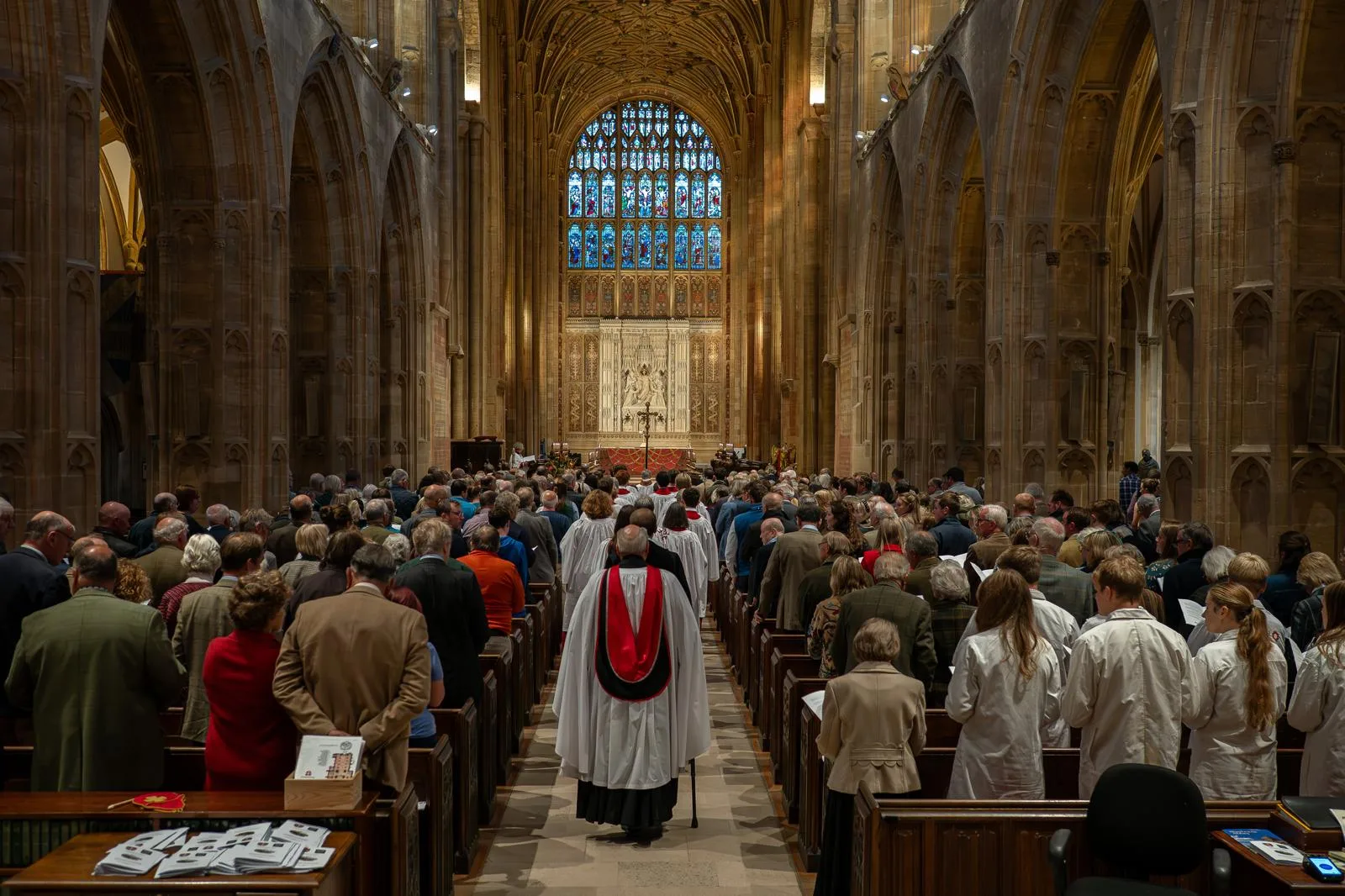
Sherborne Abbey was filled with voices, laughter and a strong sense of solidarity as 500 people gathered to celebrate the 30th anniversary of the Farming Community Network (FCN) with a traditional harvest evensong on Sunday 28th September. Farmers, landowners, rural families and dignitaries joined FCN volunteers for an evening that brought Dorset’s deep agricultural roots to the fore.
The Abbey choir, led by James Henderson, filled the space with their voices, while the bells rang out a quarter peel in FCN’s honour. The event was organised by Bec Hill, the joint co-ordinator for Dorset FCN, who farms at Winterborne Kingston. She, along with her fellow co-ordinator Barrie Cooper, have a network of trained volunteers who support farming families through times of difficulty and change. ‘It was a joyful, inclusive event,’ she says. ’The Abbey choir performed, and the hymns were ones that everyone knows! It was a proper celebration of what Dorset does best.
A traditional bundle of wheat held by a member of the congregation, symbolising gratitude for the year’s harvest
‘It’s not only about looking back at 30 years of FCN’s work, but also about bringing our community together to give thanks and look forward. We’re proud to have hosted this event in Dorset – we’re a county with deep agricultural roots, and a strong spirit of support.’
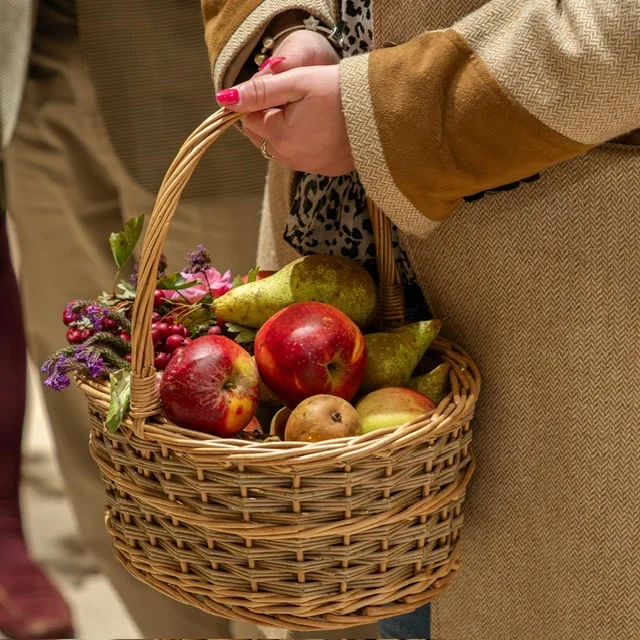
Produce was donated for local food banks
FCN’s Chief Executive Officer, Dr Jude McCann, attended the abbey service: ‘Thank you to our generous and caring volunteers, trustees and colleagues for a truly uplifting and inspiring service,’ he says. ‘It is thanks to the hard work of our local volunteers and their close connections to farming that we are able to build relationships and help people to find a positive way forward. This was a beautiful service and a true testament to the hard work and resilience of UK farmers.’
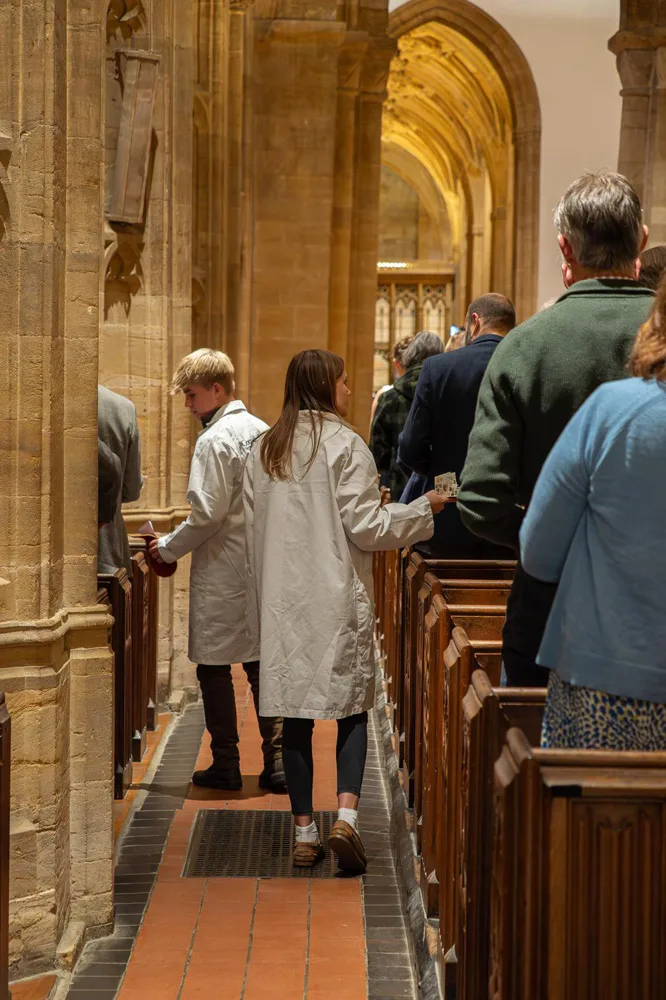
Dorset Young Farmers acted as ushers in their white showing coats
The Abbey was dressed with wonderful floral arrangements courtesy of the Sherborne Flower Ladies and the Dorset Young Farmers decorated the Abbey porch. They also attended as ushers in their traditional white coats, helping guests to their seats. Sherborne YFC’s Silas Horsington delivered a reading during the service. Afterwards, the crowd headed to the Memorial Hall for tea, coffee, cake and conversation, with catering by Dorset Delights. Produce was collected for local food banks, and a raffle was held of 29 generously-donated local hampers. More than £5,000 was raised by 45 local sponsors in support of FCN’s work.
Vintage tractors were parked outside the Abbey
From the vintage tractors parked outside to the warmth inside, the evening was a celebration not only of FCN’s 30 years, but of Dorset’s resilient and caring farming community that continues to show up for one another.
Dorset & Somerset Air Ambulance has £44 million in reserves, but is still asking for donations. Is its second helicopter appeal really necessary?
Pegasus – ‘Peggy’ – the Dorset & Somerset Air Ambulance Helicopter
The Dorset and Somerset Air Ambulance (DSAA) has launched a public fundraising appeal to raise £1 million – the final piece of funding, it says, needed to acquire and equip a second helicopter to meet growing demand. The new aircraft would be based at Henstridge airfield, joining the charity’s existing Leonardo AW169 helicopter, ‘Peggy’, which responded to more than 3,000 incidents in the last year alone. According to DSAA’s chief executive, Charles Hackett, the goal is to improve service resilience and move toward a full 24/7 emergency response. The second helicopter, he says, will help ensure uninterrupted coverage during downtime and maintenance – and allow them to extend operations from the current 7am to 2am. It’s a compelling case … until you look at the accounts. An investigation by Somerset Confidential has done just that, and their findings, published this week, were revealing.
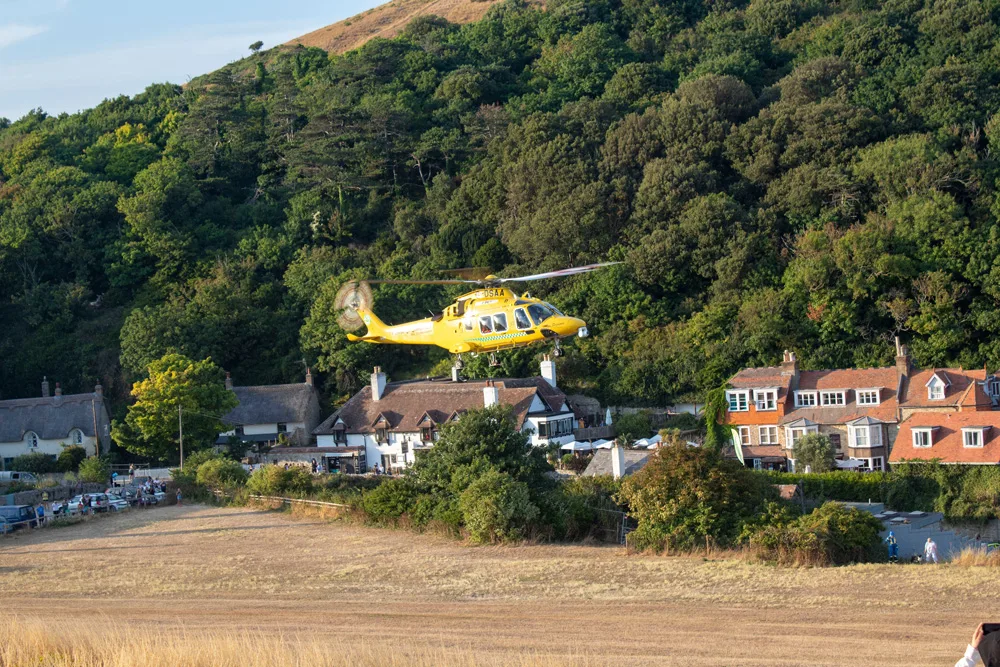
Dorset & Somerset Air Ambulance G-DSAA coming in to land near the Dorset coast
£44 million in reserves According to DSAA’s annual report, published just ten days before the appeal, the charity holds nearly £44 million in reserves – with £9.5 million already earmarked for a second helicopter. And yet, the charity is now asking for £1 million more. That’s raised more than a few eyebrows. ‘Urging donors to dig as deep as possible, Hackett chose not to explain that the charity already had the money it needed to buy and equip a second helicopter,’ noted Somerset Confidential (SC), whose investigation first highlighted the inconsistency. ‘Donors to the fund would be giving the charity money it already has banked – potentially depriving other charities in greater need of financial support.’ So why is DSAA asking for public donations to cover a cost it’s already budgeted for? DSAA says it anticipated a £1 million shortfall in 2024–25, but last-minute legacy donations wiped it out. The appeal went ahead anyway, and that explanation hasn’t convinced everyone: ‘They forecast a £1 million shortfall in 2024–25 but did better, and didn’t have one,’ a former air ambulance charity chief executive told SC. ‘They’ve known for the last six months that they didn’t have a shortfall. The last accounts show their income was £11 million – up from £9.4 million the previous year. In the three years before that, they made surpluses of more than £2 million each year.’
24/7 ambition at what price? The charity is open about its longer-term ambition to move toward 24/7 operations – a goal that has prompted some to question whether it is necessary or financially sustainable. ‘It’s not just a second helicopter – they will need more pilots, paramedics, doctors, fuel, aircraft maintenance … Why not be transparent about that?’ says the former chief executive. He also questioned the clinical case for flying at night: ‘Most of the country sees few serious incidents between 3am and 6am – and at that hour, it’s often quicker to drive than fly.’ He points to Thames Valley Air Ambulance, which recently scrapped night flights in favour of rapid-response cars – a model it believes delivers faster patient care. East Anglian Air Ambulance operates two aircraft 24/7 at a cost of £17.8m annually – £7m more than DSAA’s current budget. ‘To match that model, DSAA would need at least an extra £5 million every year. Do the trustees really think that’s realistic? And can the people of Dorset and Somerset afford it?’ In response, a DSAA spokesperson re-affirmed that all funds raised in support of the 2nd Heli Appeal will be spent solely on the new aircraft and its medical fit-out. There’s no doubt that DSAA is a vital and rightly much-loved service, nor that its ambition comes from a desire to do more, not less. But at a time when household budgets are under pressure and smaller charities are fighting for survival, it’s reasonable to question whether this particular appeal is necessary – and whether the trustees’ long-term vision is realistic.
Read more – This article is based on original reporting by James Garrett for Somerset Confidential. To read the full investigation – including the detailed financials, operational breakdown, and expert commentary – click here to view the full story on Somerset Confidential
*The former chief executive, who stills works in the aviation industry, has requested anonymity.
£36,000 for cutting trees, £120,000 for useless roofing – Dorset Trading Standards secures convictions in two major fraud cases targeting vulnerable residents
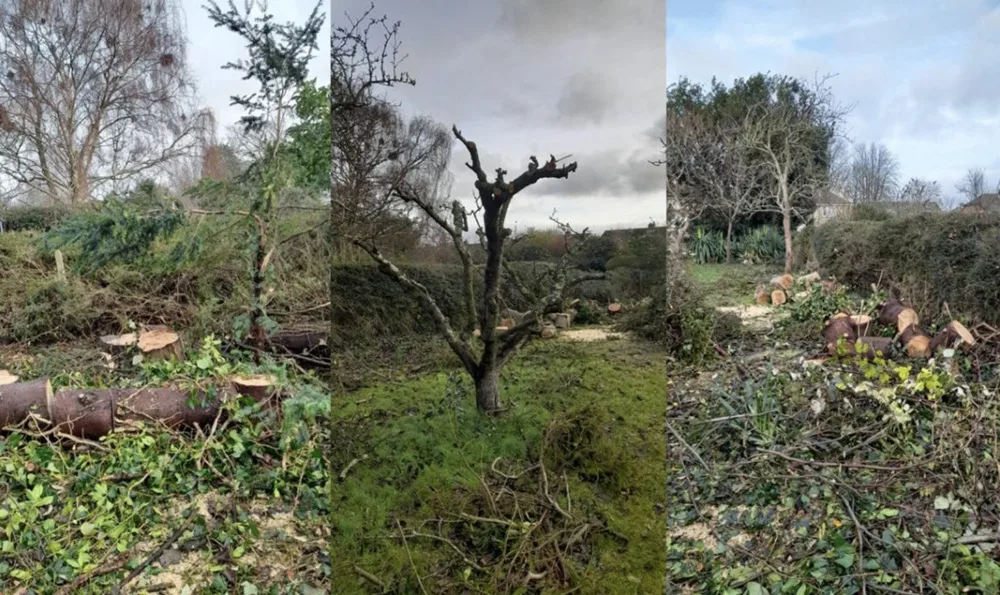
The mess left behind by rogue gardeners Coker and CochraneLeft in the scaffolded lurch
An elderly Dorset resident was charged £36,000 for gardening work that should have cost £3,500. Now four people have been convicted at Bournemouth Crown Court in one of the county’s most shocking recent fraud cases. In 2022, a man approached the victim and his wife, claiming he had been recommended to speak to them by two neighbours, whose hedges he had cut. The victim agreed to the hedge trimming, but the man, Dan, did not provide written cancellation rights, a legal requirement for “doorstep contracts.” Two men carried out minimal work, and then demanded £1,600 in cash. Over the following days, they returned repeatedly, using misleading and aggressive tactics, claiming trees were dangerous or diseased and recommending work, much of which turned out to be unnecessary. They felled three conifers, a holly and a sycamore tree, reduced the height of another sycamore from 60ft to 15ft, and a conifer from 60ft to 30ft, coppiced two hazels and vigorously pruned a fruit tree. The victim, concerned about their liability and safety issues with the (apparently) diseased trees, eventually paid out a total of £36,000.
More crooks caught Trading Standards investigated the case and traced the cheque payments through multiple bank accounts – they identified Scott Cochrane (aged 35, from Poole) and Daniel Coker (aged 39, from Salisbury) as the principal offenders. Both men were later identified by the victim in an identity parade. Aaron Frigot (aged 27, from Poole) banked a cheque for £25,000 from the victim. He passed the majority of the money to Coker and Cochrane via Penny Jayne Barney (aged 57, from Verwood). At the Bournemouth hearing, His Honour Judge Fuller KC said Barney “had laundered the money for financial gain and turned a blind eye to its source.” Daniel Coker, an experienced offender who was on bail for other matters at the time, was sentenced to six years and seven months imprisonment. Scott Cochrane, who was also on bail at the time of the offences, was sentenced to three years and seven months. Penny Jayne Barney had her 12-month prison sentence suspended for 12 months, was sentenced to a 7pm to 7am curfew for five months and ordered to pay £200 in compensation. Aaron Frigot, who had pleaded guilty earlier at Poole Magistrates Court, had a 12-week prison sentence, suspended for 12 months, and was ordered to spend up to 20 hours in rehabilitation and to pay £1,500 compensation . The victim statement read to the court said: ’Two years since the offence, I am still haunted by it. These men left my garden in a terrible mess. I am still concerned about the state of it today. Every morning when I wake up, I think about what happened and hope that nothing similar ever happens to me or anyone like me again. I am fearful of being targeted again.’ This was not the only recent successful prosecution by Dorset Council’s Trading Standards service. They secured convictions against a couple trading as Your Roof Buddy Ltd. Christopher Call (aged 36) of Horsham and Georgia Smith (aged 33) of Cranleigh admitted carrying out grossly inflated and incompetent roofing work, targeting vulnerable individuals aged between 65 and 93, who responded to leaflet drops. Smith also falsely claimed to be a member of Checkatrade, despite having been removed from the scheme and instructed to stop using its name and logo on her company website. Call would initially suggest minor repairs, which quickly escalated to claims that entire roofs needed replacement. Customers who questioned the work, or refused to pay, were threatened by Smith with legal action. The total quoted for roofing work across four victims amounted to almost £120,000. An expert building surveyor later assessed the properties and concluded that the work was “incompetent, unnecessary and of no value.” All the work needed to be redone. Cllr Gill Taylor, Dorset Council’s Cabinet Member for Health and Housing, said: ‘This case is a stark reminder of the devastating impact rogue traders can have on vulnerable members of our community. I commend our Trading Standards team for their tireless work in bringing these individuals to justice. This is the second conviction this month and work is ongoing on a number of other cases.’ Neil Martin, principal officer in Public Health and Prevention at Dorset Council said: ‘Sadly this type of crime occurs regularly in Dorset. Mostly it involves gardening, roofing, driveways and loft insulation (the installation and/or the removal of foam-sprayed insulation). We feel a great deal of sympathy for the victims of these types of crimes. The criminals who carry out this type of work can be very convincing, and will often offer small, simple jobs such as trimming a hedge or replacing a roof tile. Once they have gained the householder’s trust, the price and need for additional work quickly increases. Unfortunately, they often prey on the more vulnerable consumers, who perhaps don’t know the true value of the work carried out, or are too afraid to say no.’ How easy is it to fall foul of a dodgy gardener or tradesman? Surprisingly so – and I speak from experience. I thought I could spot a scam. But two years ago, after struggling for months to find someone to fix my shed roof, I hired a man who simply made it worse – and then became aggressive when we questioned the bill. Eventually, we paid, just to end the calls. A few days later, I saw a Facebook post about fly tipping in a nearby farm gateway … and there was a photo of my old shed guttering, dumped with the rubbish. I hadn’t just been scammed – I’d unknowingly contributed to illegal fly tipping, and the council made it clear I was still liable. Lesson learned.
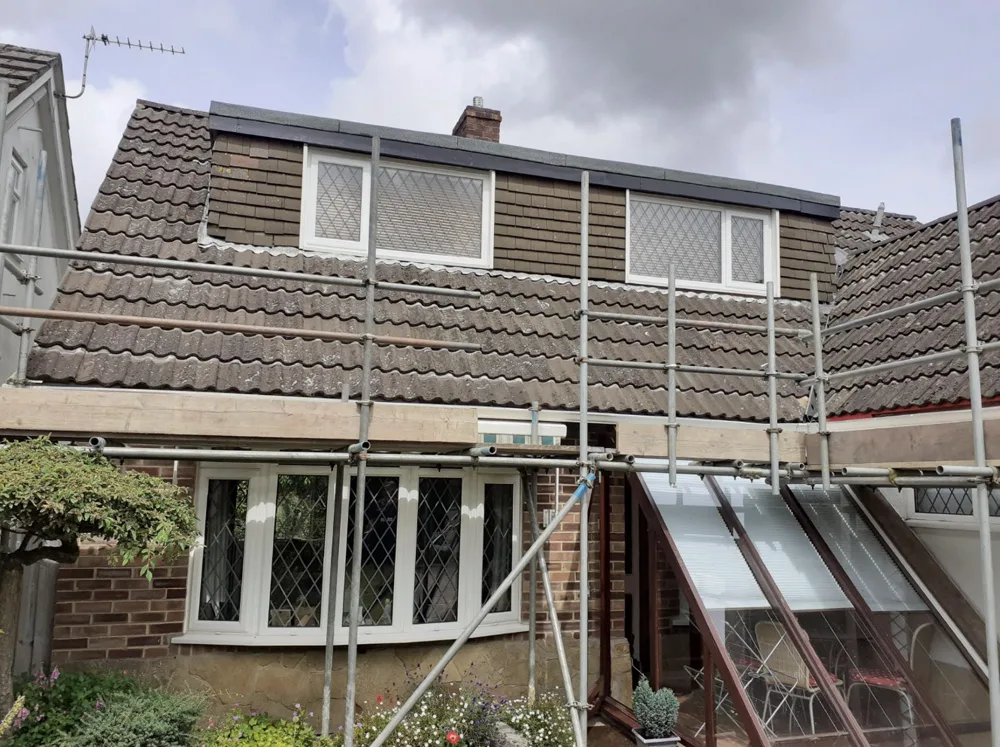
Left in the scaffolded lurch
How not to get ripped off With con artists continuing to prey on the vulnerable (and not-so-vulnerable) who do need gardening work done, how can the public find someone who will provide a good quality job? Neil Martin has some advice: ‘Never respond to someone knocking on your door to offer work, and be very cautious responding to a leaflet put through your door. Many reputable firms advertise in this way, but unfortunately we are finding that more rogue traders are also using this method to gain work. If you need work carried out on your home, try to use a local business recommended by family or friends, and get several quotes. If you cannot find a business, Trading Standards operates a trusted trader scheme called Buy With Confidence. All members of this scheme have been vetted by trading standards so you can be sure they are honest and trustworthy. A full list of Buy With Confidence members can be found at buywithconfidence.gov.uk or by calling 01392 383430.’ Charlie Saunders of Hambledons, a specialist gardening service based in Shillingstone, adds: ‘Always get three quotes – and don’t only judge on price. Consider the overall professionalism of the company too – does the quote include all the necessary detail? Ask what’s included, check if they’re insured, and look for memberships in schemes like Buy With Confidence, or any other scheme where traders are vetted – it gives you a route to complain through if things go wrong. ‘If they’re a limited company, you can easily check their financial health on Companies House. ‘Remember, the cheapest quote is not always the most cost-effective: A 10-year fencing guarantee may cost more upfront – but it’s far better value.’ In a positive end to the awful gardening fraud case, a local business, Knighton Countryside Management, heard about the victim and offered to clear up the mess left behind by the crooks – entirely free of charge.