Abi Carlyle-Clark, Sandroyd’s Deputy Head of Academics, leaves Sandroyd at the end of the spring term to become Headteacher for Semley CE VA Primary. We wish her all the best for this exciting new chapter, and look forward to forging an even closer relationships with Semley School. Abi has been with Sandroyd since 1995, teaching many of our current and past pupils during her time. She joined as a teacher in our junior department, then worked as a Houseparent, and latterly as Deputy Head of Academics where she has truly made her mark on the school.
Sarah Whitty joins Sandroyd in September 2022 to take over the role of Deputy Head, Academic. Originally from Portsmouth, Sarah started her career in Reading for a local primary school before moving to Dubai in 2014, where she joined Dubai British School. In 2018 Sarah took up the post of Deputy Head Teacher for over 600 children in the primary area of the through school. We look forward to welcoming Sarah into the Sandroyd team, and the wealth of experience she brings with her.
Following the crisis occurring in the Ukraine at the moment, as a school, the children decided they would like to help the humanitarian effort by taking part in the following fundraising events.
1. Dress down day for £1 donation (children wore blue or yellow the colours of the Ukraine flag) 2. Sunflower planting 50p donation (the children planted and took home the national flower of Ukraine) 3. Everyone loves a cake stall at the end of the day – we were overwhelmed with the level of donations made by parents and staff, looking beautiful and tasting just as good. The school council did a fantastic job selling the cakes to parents.
We raised an amazing £152 on the day and still have cakes left; the children have agreed all proceeds will be sent on to the Disaster Emergency Committee, who will disburse the funds to Save the Children, Action Aid and British Red Cross as the need arises. Thank you everyone again for your support.
Many are talking about the atrocities in Ukraine – but UK farmers are already fearing the repercussions of the war in Europe’s largest granary, says Andrew Livingston.
2021 Near Kharkiv. Ukraine has the largest area in Europe in arable use, and is a massive producer of barley, wheat, rye, corn and countless other produce. Ukraine has a population of just over 40 million but has the agricultural capabilities to feed 600 million people. Reuters reported recently that Ukraine’s then-agricultural minister Roman Leshchenko said planted acres could be cut in half due to the war. He said farmers in Ukraine may only be able to plant about seven million hectares this year, compared to 15-million last year before the Russian invasion.
For more than a month now the UK population has been horrified as they’ve watched Russian forces invade and attack Ukraine. Twenty-four-hour rolling news and social media have meant that the data and fear that comes with war is being viewed like never before. What the public may not know, however, are the long-lasting consequences the war will have on our own lives safely back in the UK. Fuel prices had been gradually rising since last summer, but in the last month petrol and diesel have gone up nearly 20 pence per litre – the highest price in 14 years. The sharp rise in fuel cost is due to Russia being an oil and gas-rich country. Although it is believed that only 6% of our oil in the UK is imported from Russia, the global reduction in supply has caused the market wholesale price to increase. Unfortunately, the war is due to have larger ramifications than just the cost to run your car or heat your home. The food you eat is already rising in price, and set to go higher; Ukraine and Russia are two of the largest exporters of agricultural commodities.
Less supply, same demand Due to Ukraine having the largest arable land use in Europe, the country is a massive producer of barley, wheat, rye, corn and countless other produce. To put it into context, Ukraine has a population of just over 40 million but has the agricultural capabilities to feed 600 million people. Mole Valley Farmers’ Alternative Feeds Trading Manager Catherine Ward explained the effect of the war: “The trade does not expect to be able to get the normal amount exported from these regions if any. So this tightens [the] supply up, but demand will stay the same, resulting in price increases in those products or replacement products.” Ward buys and sells bulk raw materials and other feed products and says that, in the space of a month, wheat, maize and barley all went up by £100 or just under per tonne. This obviously has huge ramifications on farm, while trying to feed your animals. However, the Mole Valley employee explains that there are other issues raising costs on farm. She continued: “Others have been impacted by the increase in energy costs that have resulted from the war, which impacts on distilling and crushing plants, hitting margins and resulting in higher prices.”
Risk of shut-down in poultry One farmer who has been feeling the squeeze on his farm in West Dorset is chicken farmer Tim Gelfs. He has 15,000 chickens across two sites and explained how dire the current situation really is: “Our feed costs in April will go up to the tune of £6,000 per month above our budgeted price, with little impact on the egg price yet.” If the price he is paid for his eggs isn’t improved he says he will just move away from chickens; fellow farmers he knows have already done the same. “I can close my chicken unit at the end of this crop or whenever it becomes unviable. You just shut it down and then you don’t replace them – simple as that. “I know people aren’t re-ordering pullets because the pullet price has gone up over a pound a pullet because of the feed and fuel costs; a lot of people just shut down.
West Dorset chicken farmer Tim Gelfs has 15,000 Lohmann Brown chickens across two sites. “Our feed costs in April will go up to the tune of £6,000 per month above our budgeted price”
Feeding ourselves This isn’t the first time that food security issues have flared up over the last few years; in March 2020, as the world shut down due to COVID-19, fears of empty shelves in the supermarket began to heighten. The NFU Poultry rep for Dorset says that the country needs to be self-sufficient and food secure. He said: “We should be producing enough food that we can feed our country in calories every day, rather than going for 60% or 70% as that is no good if we can’t buy 30% from elsewhere. “Nowadays we will always buy food from abroad because we’ll want choice in the supermarket. But, if we haven’t got that choice, we’ve got to produce it here.”
Doubly ambitious Currently, in the UK, the National Farmers Union plans for agriculture to be carbon neutral by 2040. To do this the countryside is going through a major transition. Crops are being removed as farmers are being paid to have wildflowers, wild animals and the public roaming in their field – but is this right? Gelfs says we need to try to do our bit for the environment. He said: “I don’t know if you can achieve both but it’s worth looking at and it’s worth exploring it. To say that either we’ve got to produce food or look after the environment is a bit of a no no going forward because the population is going to grow so they’ve got to go hand in hand. “Whether there’s a food crisis or not at the moment, longer-term we have to balance each of them out because if we just buy our food from abroad and we keep our countryside looking lovely and full of birds and bees, all we’re doing is exporting the problem to a different country. It’s a world problem, so we’re not actually sorting it.”
Children add personal messages of hope as aid trucks depart for Ukraine following record fundraising drive by Bryanston pupils.
Bryanston School’s annual Charities Weekend was organised by Head Girl, Esme Thomas, and Head Boy, Spencer Davies, in support of their chosen charities – #Willdoes, a Dorset mental health charity, and the ‘Girls will be Girls’ programme. In view of the immediate and growing humanitarian crisis, they also organised a special fundraising auction for the people of Ukraine.
Aid and messages The enormous fundraising effort paid for over 22 tons of medical kit, a huge quantity of tinned food, well over a hundred sleeping bags and blankets, 40,000 nappies and other much-needed supplies, as well as a bulk supply of food for refugee welcome centres in Moldova and Slovakia. Personal messages from Bryanston pupils were also included in nearly 400 special fun packs for Ukrainian children. One lorry was loaded with specialist medical supplies off-site, but pupils were able to give the second lorry loaded with humanitarian aid an enthusiastic send-off as both vehicles started their 1,500-mile journey. “Raising so much money at such short notice for the people of Ukraine was very challenging but also very fulfilling,” says 18-year-old Esme. “We’re over the moon that our efforts will do so much to help improve the lives of so many people. I’m also really pleased we’ve been able to support a programme that is helping young girls from Nepal, Myanmar and Cambodia into education, as well as a more local charity that is so close to our hearts.” “We’re indebted to the entire Bryanston community for everyone’s generosity and enthusiasm,” adds 18-year-old Spencer. “pupils from all year groups have done a sterling job in helping to pack and sort so many pallets of baby materials, sleeping bags, personal hygiene products and fun packs for children that are now on their way to Ukraine. It really has been a case of everyone wanting to do something to help!” More than 12 pallets of aid were loaded onto the two lorries; they are expected to arrive at the Ukrainian border on the 4th April.
Charities Weekend Open to parents and staff at the school, the weekend featured sponsored personal challenges, a concert by bands and musicians from the school, a lunch for friends and family, a fashion show, a dog show and a special dinner for pupils in their final year at the school. The Silent Auction for Ukraine benefitted from the advice and support provided by Jumblebee – the prizes were donated by parents, staff and local companies, and included everything from a pizza evening with a pupil’s favourite teacher and golf course tickets, to a stay in a holiday cottage and overseas trips.
More than aid As well as the humanitarian mission to Ukraine, the Charities Weekend fundraising has supported Willdoes and United World Schools. Dedicated to the memory of William Paddy, a sporty and charismatic child who grew up near Swanage and known to a number of Bryanston pupils, Willdoes promotes mental and physical health, social inclusion and wellbeing for young people across Dorset and the surrounding area. United World Schools is an international education charity that builds schools, empowers communities and transforms the lives of children in deprived and remote areas of Cambodia, Myanmar and Nepal. This is the second time the charity has benefitted from funds raised from Bryanston’s Charities Weekend.
When Idris Briggs (year 4) saw someone sitting on the ground outside some shops, his mummy explained that some people do not have homes to shelter them and keep them safe. Idris was upset, and wanted to do something to help, so Mummy explained about getting people to sponsor you to help raise money for charity.
“I decided to raise money by swimming. I used to be very frightened of the water, but two and a half years ago I set myself a challenge to overcome my fear. Now I feel safe in the water and I love swimming. I have not yet swum a length on my own and wanted to challenge myself by swimming as far as I can, hopefully a whole length or more! Idris raised a fantastic £445 for Centre Point!
Now is the time to start planning your hanging baskets, says Sherborne gardener Pete Harcom – but keep watching out for frosts.
It’s the month to start planting up your hanging baskets – with some planning now you can create one of these huge balls of flowers this year
April.. at last! Things really do get going in the garden in April, there is lots to do now:
Watch out for frosts Even if the days are warm, watch out for frosts at night, and resist the temptation to sow and plant out too early. Keep an eye on the weather forecast, and wait a few days if necessary. Protect any early outdoor sowings with fleece. The growing lawn will also need attention, including sowing fresh grass seed on any bare spots.
Hanging baskets at the ready Hanging baskets can now be made up in a cold greenhouse. Top tip – use a pot to stand the basket in while you plant it up! When it’s done, either hang the basket up in the greenhouse, or keep it standing on the pot for support. Don’t hang the basket up outside until the danger of frosts is over. I have seen some baskets in the last few years that have been ‘mounded up’ to, in effect, create a large ball of flowers. To create a huge ball of flowers lots more moss is needed to line the basket and the higher ‘mound’ (the soil is also ‘mounded up’). You need to have a basket that is not less than 15 inches in diameter, and is capable of having flowers planted through the sides of the basket (through the wire sides of the basket). Once it’s well underway, don’t forget to deadhead the flowers throughout the season, as this helps repeat flowering. These large hanging baskets my need an irrigation drip to ensure they’re watered regularly, too.
Understand your fertiliser These huge balls of flower will need regular feeding with a slow release fertiliser high in potash for more flowers. All fertiliser plant foods have ‘NPK’ on their packs. N stands for Nitrogen, P stands for Phosphorus and K stands for Potassium or Potash. Have a close look at the packs when next in a garden centre. A fertiliser with NPK of 7:7:7 would be a balanced fertiliser, 10:5:3 would be for early in the year plant growth (i.e high in Nitrogen), and for lots of flowers (i.e. later in the season, and hanging baskets…) an NPK of say 5:5:12 would be good.
The effects of the war have filled our screens and our conversations; Rachael Rowe has spoken to one local councillor who went straight to a refugee point in Krakow.
“Krakow is just one of many onward ‘safe’ points from the Ukraine border. I have spoken to too many Polish people today torn by this war. Young staff at our lodgings and in the cafes who have said goodbye to young Ukrainian men who have gone home to fight. People who have Russian friends who have been hissed and spat at. This current generation in Poland was not expecting to see this.”
Rachel McNamara on right, with former colleague Mike Miles as they arrive in Krakow
The recent events in Ukraine have shocked and appalled people across the world. However, local resident and chair of Shillingstone Parish Council, Rachel McNamara, could not stand by and do nothing. She packed a bag and travelled to Krakow with an ex- colleague from British Airways to roll up her sleeves and help. When I contacted Rachel, I was curious why she decided to go to what is the edge of a war zone, and whether it was part of a charity or NGO. “We both felt sure there must be something we could do. We’d heard the visa application process was awful and thought we could just get stuck in. We are both ex-BA cabin crew with access to cheap flights, and just years of experience travelling to strange and sometimes hostile environments. “We, like others we met yesterday and today, are independent. There are lots of ex-cabin crew that we have met here. There are a couple of charities here, but I’d say [there’s] as many people like us who just decided to pack a bag and try and help.”
Refugees in Krakow What were your first impressions of the impact of refugees on the city of Krakow? “It’s strange. Initially, we couldn’t find them, and life in this affluent city looked unaffected. But then our instincts took us to the railway station. Suddenly, the contrast from ‘life as normal’ to the refugee centre in the middle of a brand new train/shopping mall was striking. “Every day two trains arrive from the Ukrainian border. Refugees are cared for by loving volunteers with some basic financial support from the Polish government (about £6 per day). Some prefer to stay. Feeling far enough away to dodge the bombing but close enough to feel connected with their loved ones fighting or unable to escape. Hundreds of thousands are processed to Germany, Sweden, the USA and many other countries. They are hungry, without papers, with uncertain futures. “I came here with friends to help, and we are astonished by what we can do. We thought we might not be needed or welcome.”
Rachel McNamara, left, peeling apples in the refugee centre
Peeling fruit So how was your offer of support received, and what sort of things have you been doing? “Open arms! There is a volunteer process and registration with the police, but it is also possible to just dive in and start peeling fruit. This morning that’s what I did. Mike went shopping with another volunteer for sanitary essentials and spent about £200 of his own money. He came back, helped give out the essentials and then helped with lunch.” Rachel also described how refugees were helping each other in Krakow. “Refugees are getting involved themselves. Some refugees are not looking to go any further. They have left friends and family behind and want to be far enough away to be safe but close enough to feel they haven’t left properly. These refugees are starting to help the new refugees arriving. They work alongside us with food provision. Most importantly, some of the younger ones have multilingual skills in Polish, Ukrainian and English translation. Last night, we learnt from locals who are fearful for their own loved ones. Many Ukrainians lived in Krakow and went ‘home’ to fight. There is also some fear that the war will spread here.”
Rachel’s friend Mike Miles stocking up on sanitary essentials for the refugees – he spent about £200 of his own money
How can readers help? It is important to know that there is still so much to do and help with. The visa application process takes about two and a half hours. Help is needed to do that with each applicant. Volunteers are also ladling soup, giving drinks, sorting accommodation, finding funds for onward transport etc. I think sometimes we think that ‘someone else is dealing with it’. We had initially considered going to the border, but we were genuinely concerned that we should not take up required accommodation. Equally here we have chosen accommodation with plenty of availability. Many volunteers are in hostels. “There have been conflicting reports about what is needed. I think this is because what is required in Ukraine, on the border and here at a secondary refugee point are different. So here, less medical supplies are needed but more daily sanitary essentials, reading glasses, paper/plastic food dispensing stuff like plates, bowls, cups, cutlery … There is a supply here, so volunteers go and buy it each day. There are volunteers in Poland that money can be passed directly to in order to buy supplies. “Register to be a sponsor on ‘homes for families’ here https://www.gov.uk/register-interest-homes-ukrain . Then email me on [email protected] , and I will connect them with the volunteers who are matching individuals and families here to the requirements of sponsors in the UK.”
Location : The Blackmore Vale Partnership surgeries
Contract Type: Permanent
Hours per week : Negotiable (must be over 24 per week)
Pay scale : Band 7 £37,699.24 – £43,428.43 pro rata
Closing date 15.04.2022
We have an exciting opportunity available, to join our established nursing team to work across our 4 sites with a wide range of team members/professionals.
We are looking for an enthusiastic Registered Lead Nurse to join our diverse Health Care team to help us deliver care to the surrounding community, enjoy life, maintain the quality of our practice and explore new horizons. Must be able to work across our sites, a clean driving licence is required.
For an informal chat please contact, Richard Broad on 01747 856700
For a full job description and application form, please see
Activity gathers pace as the roses come out, playing their own part in the constant cycle of growing and moving, says Thorngrove’s Kelsi-Dean Buck.
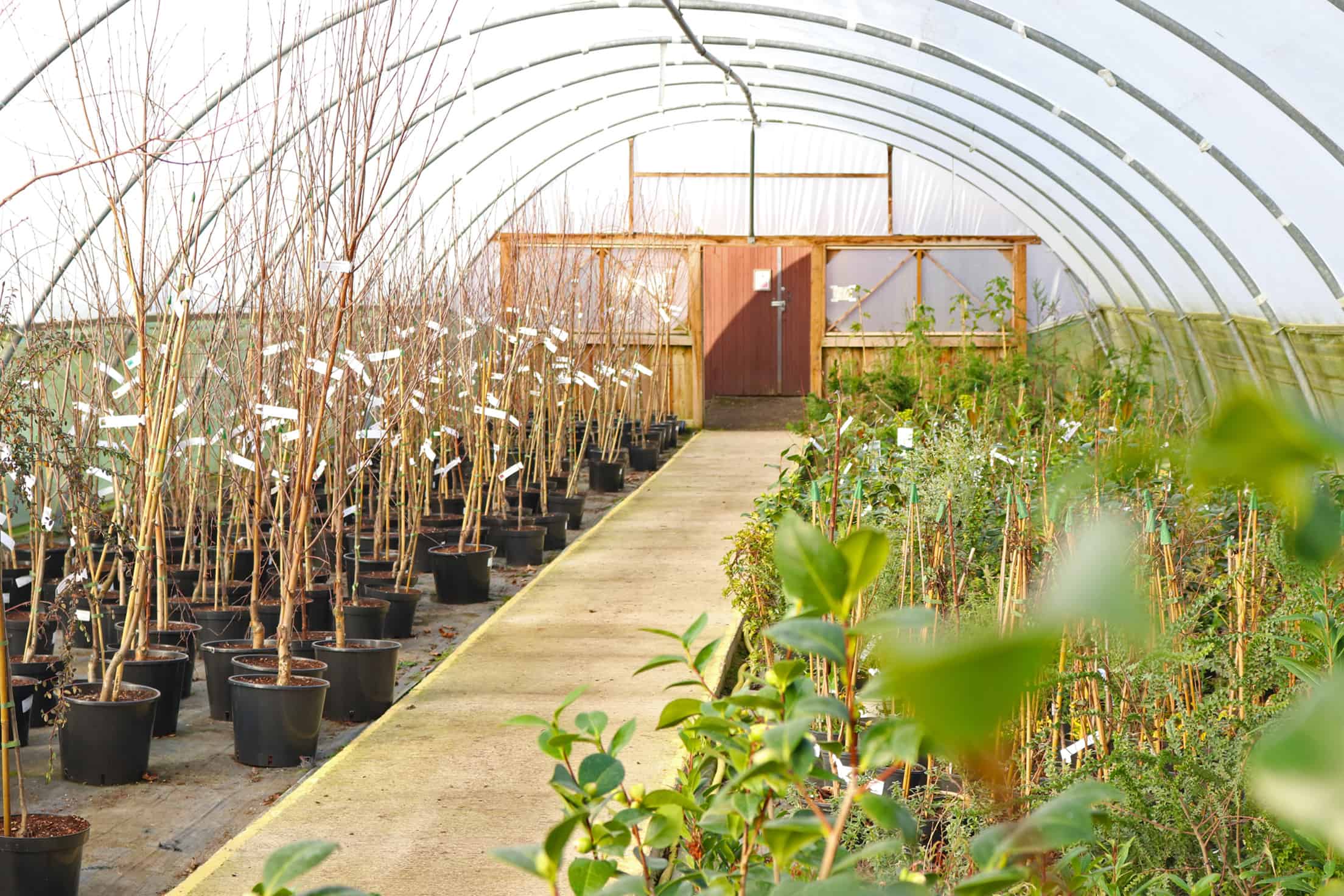
Thorngrove Polytunnel
Well how about this weather, eh! It’s been mayhem the last few days and we hope the recent wind hasn’t caused too much damage to your homes and garden spaces. We can always get some unpredictable weather as we approach spring but we’d quite like it if there were fewer storms, that’s for sure!
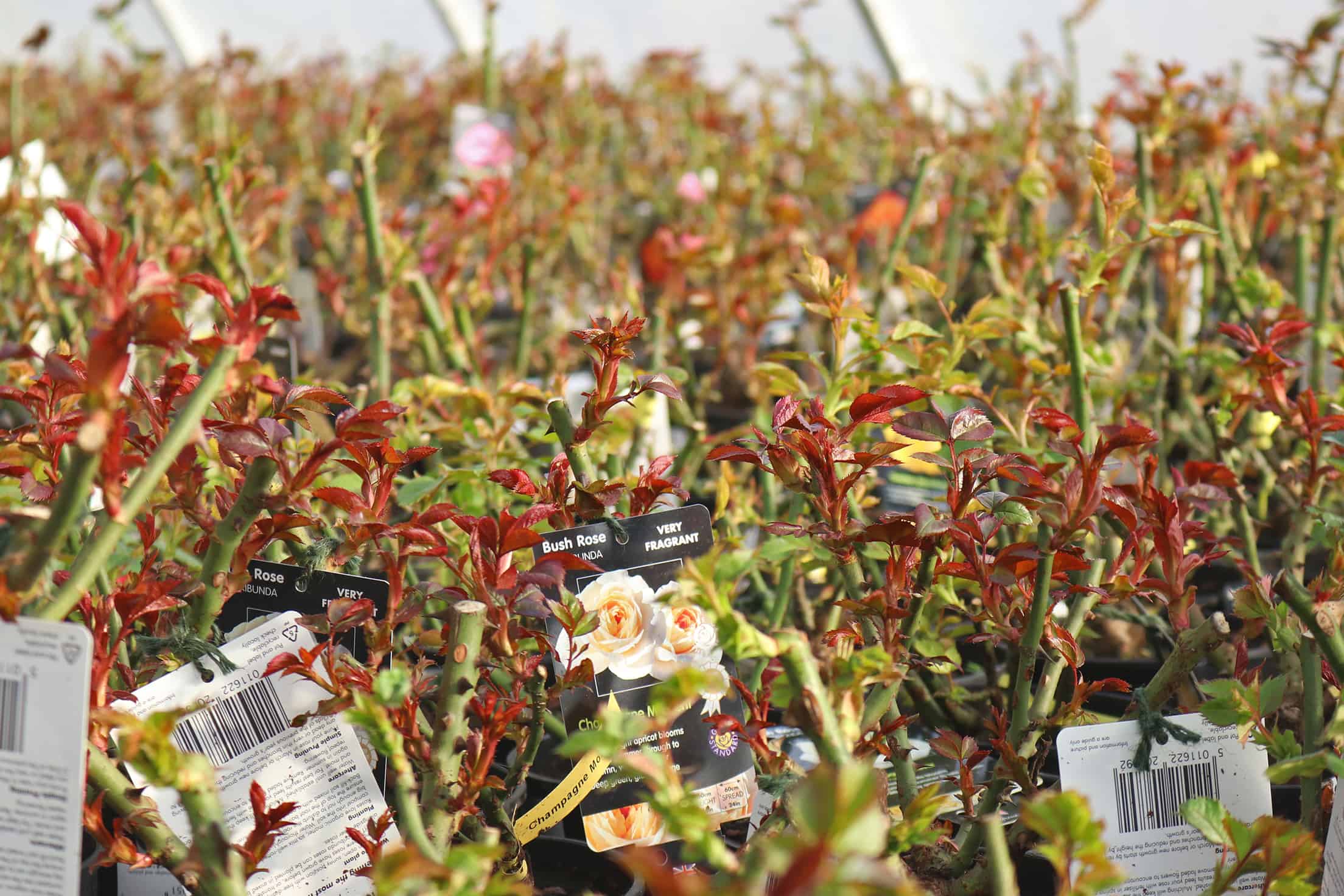
Bring out the roses
Our plan for the end of February had been to move the newly potted up roses out of the polytunnels here, but we’re currently holding off due to the storms. By the time you read this we may have moved them out (Kelsi says that the roses are now officially ‘out’ – Ed). Roses leaving the polytunnels is a big sign that Spring is arriving and they’ll be blooming before we know it. Once the roses have been moved out and we’ve freed up the space, we’ll be potting up the new Clematis – aka the Queen of Climbers!
Our new trees will also be leaving the polytunnels in the next couple of weeks and will be on display around Thorngrove, which means we’ll then be potting up this year’s stock of shrubs… and so the cycle goes on!
The secret of an outdoor cafe
As for what else is new? The Secret Garden Café here on site has a new manager and our new menu has just launched – do stop by, say hello to Ben and his team, and give the new menu a try! Those who’ve visited the café in the last year will have seen how much things have changed since we first opened. After moving all the seating ‘outside’ to our fully enclosed patio area, revamping all the furniture and replacing the tables and chairs, we’ve created what we feel is one of the most unique and cosy café spaces in the area – and we’re not done yet!
This past week we had a new temperature control system installed, meaning your visit will be comfortable whatever the weather. Please keep your eyes peeled on our Facebook page too as there may be even more exciting news on the café very soon…
We’re always adapting and developing the site to become a place the whole community can be proud of, and we’re excited for the rest of 2022! What’re your gardening plans for the Spring? Stop by Thorngrove for a chat, some professional advice, gorgeous Mother’s Day gifts and all your gardening needs!