The word game Wordle went viral within weeks. Now two Dorset familieshave created Nerdle – a maths equivalent that’s destined for stardom, says Steve Keenan.
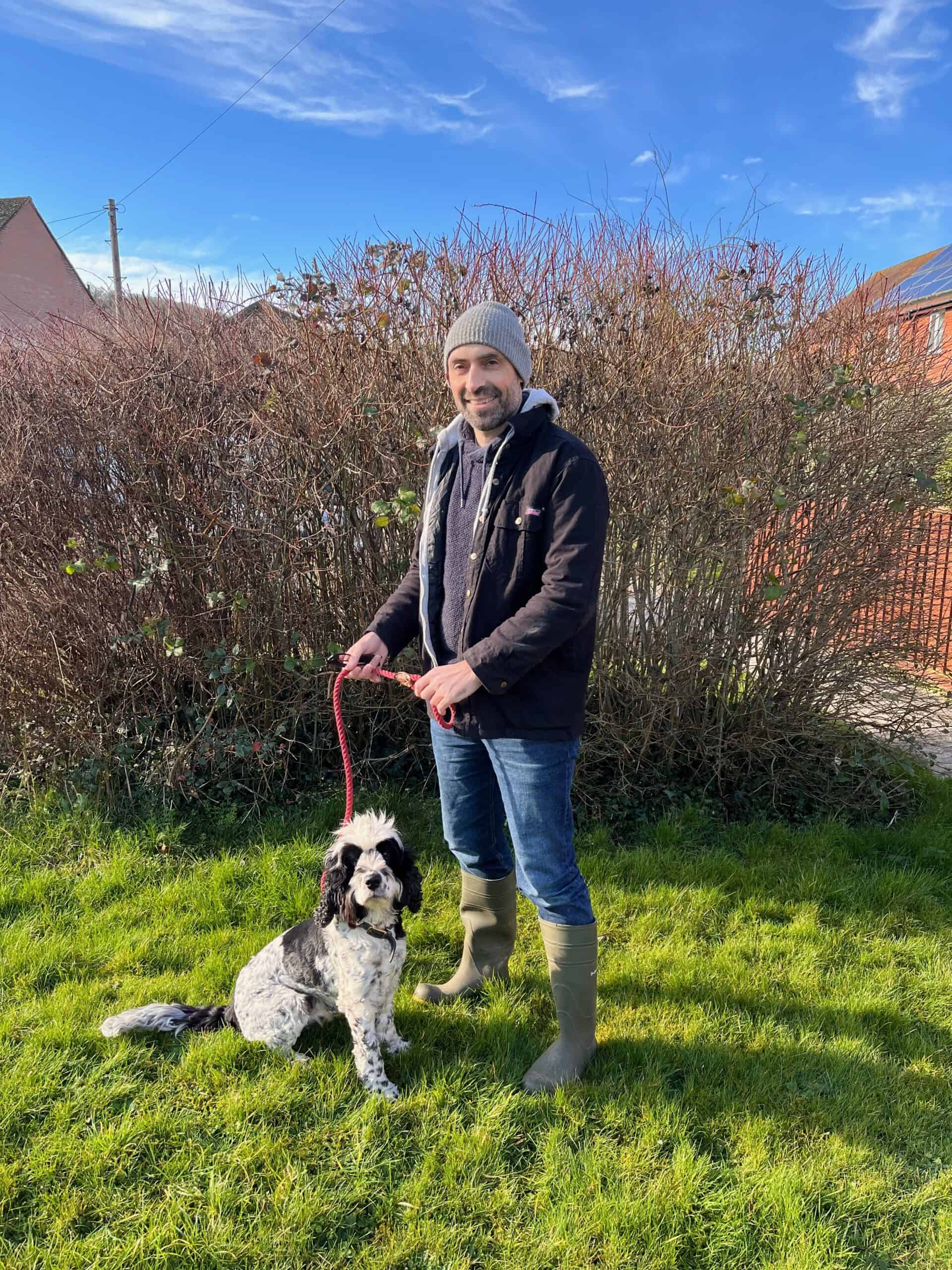
Richard Mann, from Iwerne Minster, who created Nerdle with his childhood friend Marcus Tettmar
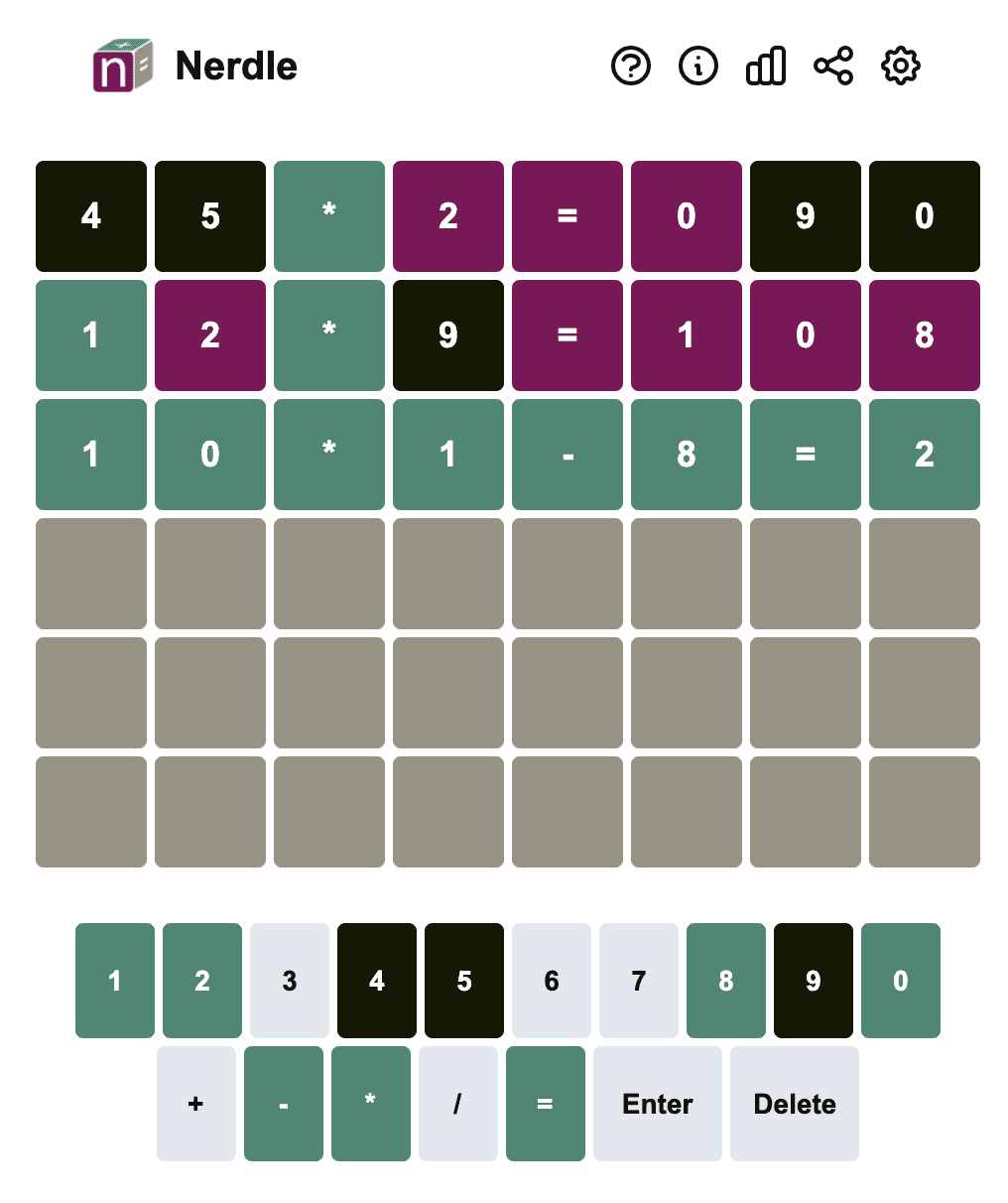
A maths version of the hugely successful word game Wordle has been developed in the Blackmore Vale and is taking the education world by storm. Teachers, from primary schools to universities, are praising Nerdle, which gives users six tries to solve a mathematical equation. The daily numbers game only launched on January 20 but within five days was being played by 400 users per minute in 53 countries. And, as with Wordle, the game’s popularity has spread like wildfire, so much so that by Day 13 (Tuesday, Feb 1), it had 360,000 users worldwide. The response has been overwhelming for childhood friends and developers Marcus Tettmar and Richard Mann, who created Nerdle. Said Richard: “I was driving home with my daughter Imogen, 14, chatting about the Wordle craze and agreed there must be an equivalent for us maths fans. A few minutes later, we’d decided on the rules of the game and the name ‘Nerdle.’” Richard’s son Alex, an A-level maths student, got involved and the whole thing was put together “in a few hours” by Marcus, using open-source coding from a Wordle clone.
Note from Ed: this is my first ever attampt at a Nerdle. Wordle users will instantly grasp how to play, and also how much I whooped when I managed this. Definite fluke – but I’ll take it.
…and for younger maths fans
Marcus’s son helped check the coding and his primary school teacher sister advised. As a result, the team have also launched a mini Nerdle (six squares across, instead of eight) for younger children. Said Marcus, 50, who lives in Shroton (Iwerne Minster): “I guess we thought it was going to be educational. It came from a conversation with the kids, who were very much at the forefront of helping develop it.” The response from the educational world on Twitter has been huge: “Using Nerdle to reinforce our Algebra standards! We love math puzzles!” posted a primary school teacher in Maryland, USA. A lecturer at the University of South Australia added:
“It encourages you to use many different aspects of working and thinking mathematically.” And teacher Emma McCrea, author of Making every Maths Lesson count said: “Move over Worldle. It’s Nerdle time.”
As with Wordle, Nerdle was set up as free to use: Marcus also runs games and tax return software companies with an office base in Blandford. Wordle was sold recently to The New York Times but Marcus says he is not surprised.
“Not everyone wants to make things commercial but when things get popular, they become expensive to run. The bandwidth needed is huge. “We want to keep Nerdle non-commercial but when there comes a point when it’s getting too expensive, maybe we introduce a donation button. Something else we have talked about is donating money to a charity.
“We’ll see what happens. People are saying the game is addictive but right now, so is watching the site stats!”
Nocturin ‘Noc’ Lacey-Clarke, 35, is a Conservative councillor in Blandford. He is not your average tory councillor. He is different. And he is making a difference in the town.
Nocturin Lacey-Clarke chooses the eight pieces of music he could not live without.
Raised by a highly creative single mum (now a lead maths advisor for primary schools, but who as a young punk in London used to help Boy George and Adam Ant with their make-up), Noc says his upbringing was loving, but there was poverty. ‘People used to donate second hand clothes and toys to us,’ he says.
Raised in Tolpuddle, he was bullied at school. ‘I didn’t fit in,’ he explains, ‘I had Asperger’s Syndrome and was OCD. I could read, but writing was a challenge. It still is. And I didn’t like sport. My real friends were my mum’s university friends, not people my own age’.
Skilled at sciences he studied maths and psychology at Bournemouth & Poole College.
From drifter to politics
After college, Noc admits he became a drifter with no fixed ambition until, living in Blandford, he became disenchanted with certain decisions taken by some local councillors.
‘They said that if I thought I could do better, why don’t I stand for election. So I did in 2018. I won by three votes.’ Noc stood again at the last election, winning around 1,500 votes. His nearest competitor received around 750.
Keenly interested in helping people struggling with mental issues, Noc’s charity ‘New Opportunities for Community Support (NOCS)’ was made official three years ago, and today around 100 people of all ages receive help weekly from his premises in Blandford Forum.
‘We help people through the medium of gaming. We listen to their stories.’ NOCS is part funded by the shop, as well as The National Lottery and Children in Need.
Noc lives in Blandford with his wife, Charlotte. My eight music choices: ordered chronologically according to when and how they affected my life:
Talking Heads – Once In A Lifetime
My mother introduced me at an early age to this US indie band and I fell in love with the absurdity of the lyrics, the artwork on the records and the amazing use of language. I’ve always enjoyed the idiosyncrasies of the English language.
Crash Test Dummies – God Shuffled his Feet
A whole album of what appears at first glance to be insightful quotes and parables but in reality led me to question a lot of ideas I had always taken for granted. How does a duck know which direction south is? And was that a parable or a very subtle joke I heard at church?
Korn – Follow The Leader
For a young teenager that was struggling with being bullied, not fitting in, and the general angst of being a teenager, this album put into words what I was feeling and gave me an outlet that was exciting and physical.
Joy Division – Unknown Pleasure
This is for those times in all our lives when we struggle with mental health – something that has played a huge part in my life. When the world seems broken and you just want to swim in oblivion for a while or curl up in a foetal ball in the corner of a room, what better music to do it to?
System of a Down – System of a Down You can’t keep a good man down for long. The band that truly made me fall in love with live concerts, with an energy I had never experienced before. System of a Down captured geo- political views and had an urge to change the world which led me through college where I learnt who I was, what was important to me, and where my place was in the world
The Eels – Beautiful Freak
Reaching my late teens and early twenties, I had calmed down, and so did my taste in music. Still obsessed with lyrics, The Eels merged the lines between depressive downbeat music and subtle optimism which really appealed to my love of everything paradoxical. To me, it reflects life’s natural juxtapositioning.
My Beloved Monster is a song from this album (later used in the Shrek movie sadly..) that summed up my relationship with my partner, Charlotte, of now 15 years.
We chose it as a reading at our wedding and so will forever hold a special place in my heart.
Lana Del Rey – Born to Die
By my late twenties and early thirties, having seen many different sides to the world, and experiencing the accompanying highs and lows, I really found my passion which was helping people.
This led to the creation of my community-based shop, charity and lastly election. Lana Del Rey is a mixture of hopeless love songs with darker undertones and the need to ask for help when we are at those low points. It resonated with both Charlotte and I as it points out the pain in the world but carries hope and dreams that can be attained if we work together.
Phil Spector – A Christmas Gift For You The one album that has truly been a part of my entire life. As a child every year at Christmas my mother would take this record out and play it as we decorated the house and had our first treats of the season.
Still to this day I kiss the same Father Christmas stocking and hang it on the window sill with the sounds of this record playing. I truly could not feel the Christmas spirit without it. Even on a desert island it would bring back all the warmth and memories of a full life filled with luck.
And if the waves were to wash all your records away but youhad time to save just one, which would it be? Joy Division’s Unknown Pleasure.
My book
The Hobbit by JRR Tolkien. It was one of the very first books I read independently. I knew the main character was Bilbo Baggins and wanted to find out about him
as my middle name is Bilbo – I needed to know why! It turns out my mother not only has a great taste in literature but also knew I was born to live an adventurous life!
Bilbo was always trepidatious about adventure and liked a structured, ordered life, but when push came to shove his bravery shone through – and he helped save the whole of Middle Earth.
Not a bad role model to aspire to!
My luxury item
Definitely my Lego Star Wars Death Star kit. This will provide me with hours of entertainment building it. I can fulfill part of my OCD nature organising the blocks and best of all, relive the greatest moments of the Star Wars saga.
The increase in second homes combined with rocketing property prices in the south west mean tough decisions must be made for planners wanting to house modestly-paid key workers, says Rachael Rowe.
Dorset is in desperate need of new affordable homes. Radical new plans Councillor Spencer Flower, Leader of the Council, has discussed with the Secretary of State include fewer, but larger, new housing developments – potentially a new town
Local plans are essential as they shape how land use and places will change and develop in the future. When Dorset Council recently conducted a public consultation on its local plan, more than 9,000 people responded. Many of the views received felt the plan focused on housing numbers and not the needs of the people of Dorset. As a result, a radical new approach has been proposed.
The Proposal for Dorset
In his response to the consultation results, the Leader of Dorset Council, Spencer Flower, has instigated a radical proposal and discussed it with Secretary of State, Michael Gove.
He has asked whether Dorset can pilot a radically different approach to planning. Cllr Flower has also requested to break the link between the housing land supply numbers and the Duty to Cooperate – i.e. the requirement for Dorset Council to accept unmet housing needs from neighbouring councils. As a result, there is potential to have fewer but larger developments that could include a new town. But what does all this mean for people in Dorset?
It is not the first time Dorset has bucked the trend by asking to adapt the national policy to suit the needs of the people. For example, in 2013, the Health and Social Care Act was adapted locally, retaining vital expertise in planning healthcare. So, how common is it for a national policy to be adapted locally as Dorset Council aspires?
Cllr Flower explains: ’It’s not the first time I have challenged the government. Of course, we have to use standard methodology with planning, but we need to look at the best way of doing it to get the best outcomes. I’m an advocate for Dorset and not an apologist for the government.”
Soaring house prices
There are currently 2,497 people on the Dorset housing register, so there is a need for homes that people can afford. However, key workers have difficulty finding suitable housing, and housing prices have increased. One thing that concerns people in the South West, including Dorset, is the proliferation of second homes. So how will Councillor Flower deal with the challenge of creating a new settlement, potentially in the countryside, and ensure homes are prioritised for people in Dorset and not second homeowners or AirBnB? “The key thing for me with a new settlement is that we have a lot of master planning that goes with it. So it includes the importance of upskilling local people so they can stay in Dorset and not have to move away.” Dorset CPRE Chair Peter Bowyer said: “We’re broadly supportive of these plans but would like to see homes that suit the needs of Dorset and fewer houses.” A new settlement like a small town needs significant design and options appraisals. So, how will Dorset Council work with parish and town councils and the wider public in shaping a new vision? I asked Cllr Flower how valid will existing neighbourhood plans be? “Neighbourhood plans are subservient to local plans. So I’d encourage all communities to have a plan. And some neighbourhood plans may need to be reviewed. We want to give people an opportunity to inform these developments.”
Councillor Spencer Flower, Leader of the Council, has instigated a radical proposal and discussed it with Secretary of State, Michael Gove
A new town in Dorset?
The one question in readers minds will be where any large settlement will be sited. The idea of Dorset creating a plan that meets local people’s needs is a compelling one. Until that is, a new town is planned next door to you. So how does Spencer Flower plan to deal with what could be unpopular choices?
“We have to do a lot of work on where a new development will fit into Dorset. It needs to be the right housing, the right quality, in the right place, and the right infrastructure. It needs to be a lasting legacy for 30 years or more.”
Peter Bowyer said: “We need to prioritise local Dorset requirements for houses that are affordable or rented so that people can afford to live here. We have an ageing population that will need support, and we will need people to provide that care. At the moment, those people cannot afford local housing.” There’s another thorny question. What about all those plans that have already been passed? How will that impact a new proposal? Will we end up with even more builds than anticipated? Cllr Flower said: “We are using those plans as legacy planning to inform this new development.” Whatever you think about building, we must find a solution for people requiring housing and affordable homes. The Local Plan for Dorset is one to watch. It also demonstrates why we all need to be proactive in consultations and be aware of what is happening in the wider world. Finally, it shows the importance of questioning national (often city-centric) policy, especially in rural areas, and thinking outside the box for a sustainable solution.
The leisure centre in Sturminster Newton has been sucessfully run as a not-for-profit charity by Sturfit for over 15 years. It is a valuable resource for the local community, and is run almost exclusively on the strength of our volunteers and trustees.
Sturfit was formed to safeguard long term access to sports and leisure facilities for Sturminster Newton and surrounding Parishes through:
Operating a leisure centre accessible to the entire community
Providing and managing sports facilities to support the local schools and community groups
Promoting inclusive health, fitness and wellbeing for the whole community
We are now seeking two or three like-minded individuals to join the trustees to help shape the next phase of our journey.
Being a trustee is a stimulating and rewarding opportunity to build on our success – to support and help shape the strategic direction of Sturfit, making a significant difference to benefit the whole community.
No experience or sportiness is necessary; rather we are looking to build a team of individuals with different skills and life experience.
If you feel this might be you, then please send an email to [email protected] telling us a little about yourself.
Saturday, 19th February – 10am – 4pm with free entry
Digby Memorial Church Hall, Digby Road, Sherborne, Dorset, DT9 3NLOur fair attracts sellers from the West Country selling second hand to antiquarian books on many subjects, together with local maps and ephemera. A warm welcome awaits and entry is free!
For more information email [email protected] or call Ed Bailey on 07967643579
Wessex Internet is a dynamic and fast-growing internet service provider that is changing the way full fibre broadband is rolled out in rural areas. We believe that the countryside deserves lightning-fast broadband and are passionate about delivering a fantastic service to our customers.
We’re looking for an experienced, self-motivated and engaging individual to join our new Town Build Team. As Delivery Manager you will be responsible for the day-to-day delivery of the Town Build civils and PIA blockage clearance projects through effective leadership of all internal build resources. You will be expected to own and grow the internal delivery function so previous experience in a similar role is essential. Key responsibilities will be to lead and develop a team to successfully meet internal delivery and growth expectations while championing quality and health and safety and managing excellence in all SHEQ practices.
Wessex Internet is a dynamic and fast-growing internet service provider that is changing the way full fibre broadband is rolled out in rural areas. We believe that the countryside deserves lightning-fast broadband and are passionate about delivering a fantastic service to our customers.
Our Civils Infrastructure Team are looking for experienced machine operators to join our Vibratory Mole Plough and Directional Drilling teams. Our unique trenchless equipment allows for simple and efficient network build across varying soil types and terrain.
Reporting into one of experienced team leaders you will be working within Wessex Internet’s Civil Engineering Department. Initially your main role will be operating one of our 2.7ton Kubota diggers, supporting the smooth running of the mole plough and or drilling machines.
Our successful candidate will have experience within a civils construction role or come from a farming background with experience of using agricultural machinery. Knowledge and experience of working across agricultural land and or experience in excavation works and cabling will support in understanding the challenges faced when building new infrastructure across tricky terrain.