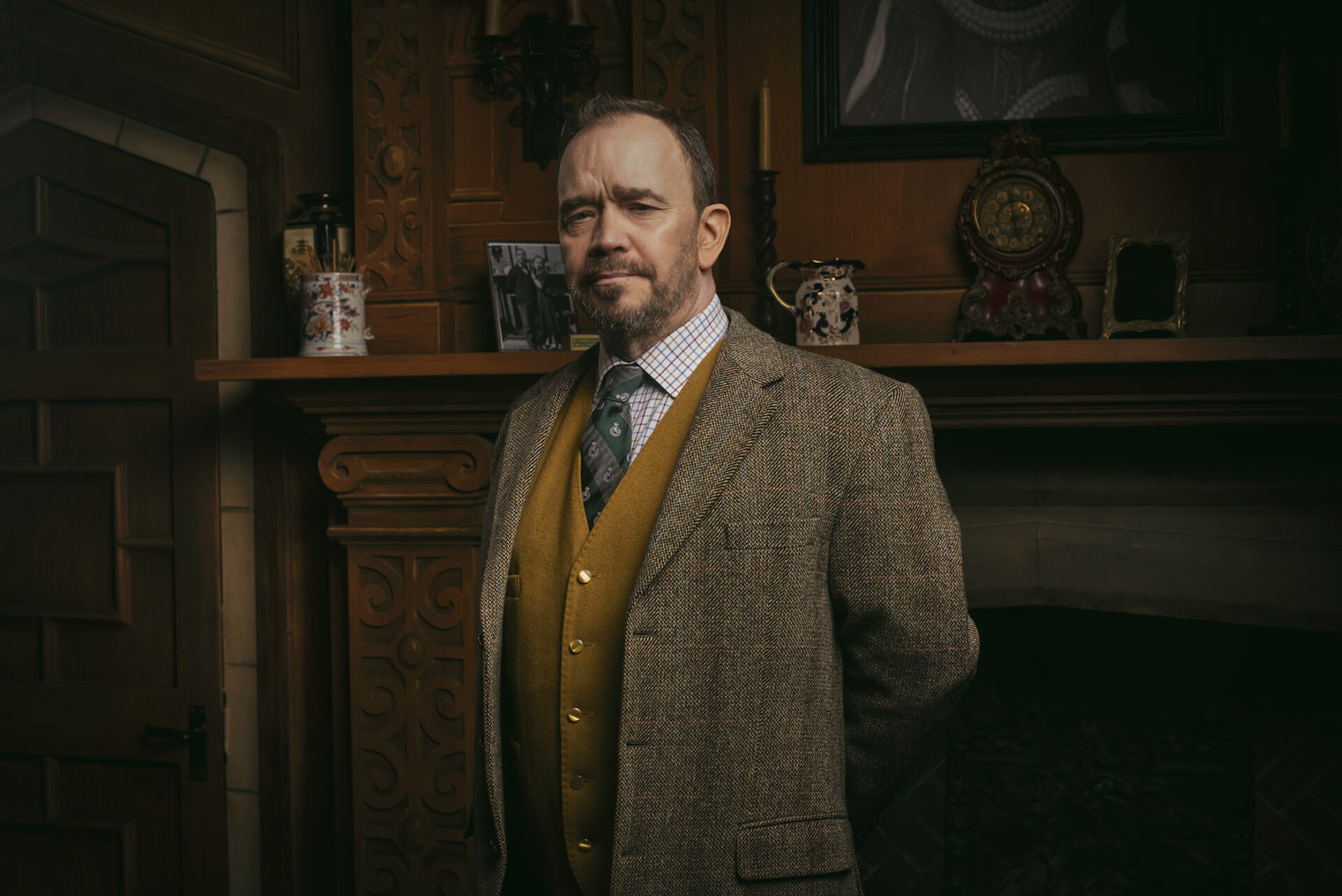
Celebrate 70 years of suspense with The Mousetrap; the longest running play in the world is still captivating audiences on its tour across the UK and Ireland. It arrives at Lighthouse Poole for one week from 29th April to 4th May. The genuinely iconic murder mystery stars Todd Carty (EastEnders, Grange Hill, Dancing on Ice) as Major Metcalf and Gwyneth Strong (known best as Cassandra Trotter in Only Fools and Horses) as Mrs Boyle. They will be joined by Neerja Naik as Mollie Ralston; Barnaby Jago as Giles Ralston; Shaun McCourt as Christopher Wren; Amy Spinks as Miss Casewell; Steven Elliot as Mr Paravicini and Michael Ayiotis as Detective Sgt Trotter.
Agatha Christie’s The Mousetrap debuted at Theatre Royal Nottingham in 1952 and toured the UK before opening in the West End – where it continues its record-breaking run at the St Martin’s Theatre. Now it’s back on the road, and it’s 70th anniversary tour, having also opened in Nottingham, is marking its milestone anniversary by visiting more than 70 theatres, including all cities to which it originally played 70 years ago. In this classic whodunnit, seven strangers stranded at Monkswell Manor by a snowstorm face a chilling reality as a detective reveals there’s a murderer among them. As the suspense builds, each character’s dark past unfolds, leaving audiences guessing who the real culprit is. Don’t miss this classic piece of mystery, directed by Ian Talbot OBE and Denise Silvey, and produced by Adam Spiegel.
The Mowlem are pleased to announce that they will be hosting a recording of BBC Radio 4 Any Questions? On Friday 8th March at 6:30pm. Tickets are free, but must be booked, with a maximum of four per person. The show is broadcast live on Radio 4 on most Friday evenings of the year following the 8pm news. The programme is repeated on Saturday lunchtimes at 1.10pm, and is followed at 2pm by the Any Answers? phone-in which gives listeners a chance to join in the debate by calling or emailing the Saturday host Anita Anand. Any Questions? was first broadcast on Friday 12th October 1948; for the first eighteen months it was a West of England Home Service programme, run from Bristol. It moved to London in April 1950, but after 61 years in the capital, it returned to the production offices in Bristol in 2011. Over the years, many figures of note have appeared as panellists, including most past and present leaders of the political parties. Every Prime Minister since Harold Wilson has appeared on Any Questions at some point in their political career! Panels also feature many distinguished figures from the worlds of the Arts, Science, Business, Law and other areas of public life. Currently, around 1.59 million people listen to the programme each week, the majority of them hearing the Saturday lunchtime repeat. Tickets via the Box Office and themowlem.com.
From two of the biggest names in the visual arts to tiny arts centres, there is plenty of colour and excitement in local galleries over the next few months
A vessel by Adam Buick, in a dramatic setting – see his work at Messums West in Tisbury
Hauser & Wirth At Durslade Farm, Bruton, is the Somerset location of one of the world’s biggest gallery groups, with galleries in New York, Los Angeles, Zurich, St Moritz, Gstaad, London, France, Spain, Monaco and Hong Kong. A family business with a global outlook, Hauser & Wirth was founded in 1992 in Zurich by Iwan Wirth, Manuela Wirth and Ursula Hauser. The firm represents more than 90 artists and estates. As well as the gallery, showing world class exhibitions, there is a famous garden designed by Piet Oudolf, restaurant, farm shop and programme of events, talks and more. The late winter and early spring programme begins with Present Tense, on until 28th April, spotlighting the next generation of artists living and working in the UK, from emerging to mid-career. Celebrating the breadth of creative talent and socially-engaged practices, the exhibition features work by 23 contemporary artists who are testing the boundaries of their mediums to address and confront notions of identity, consciousness, humanity and representation. Through their individual lens, each artist is responding to the cultural climate of the UK right now, depicting a range of lived experiences that coexist and connect within the rich fabric of the same location.
Let The Land Speak, by Ania Hobson, can be seen in Present Tense at Hauser & Wirth
Messums West The rural wing of top London gallery Messums is hosted by the Tisbury tithe barn – one of the great architectural wonders of the south west and the country’s largest thatched building. The regular programme includes outstanding contemporary dance, exhibitions, workshops and talks. Look out for the Messums Ceramics season, featuring Of The Earth – a group exhibition with thoughts and actions around making in clay. It runs from 2nd March to 29th April, and features artists Claudia Barreira, Charly Blackburn, Adam Buick (pictured opposite), Halima Cassell, William Cobbing, Bouke De Vries, Sara Howard and Nina Salsotto Cassina. Of The Earth reflects Messums’ special interest in active environmentalism. It explores the connections of raw clay and fired ceramic with the earth, the body and time, while considering what making means in relation to the environment. The raw material of clay is abundant and richly varied across the globe.
Some of the old stone buildings at Guggleton Farm Arts
Archaeology has revealed clay being formed into figurines, vessels and architecture as far back as 30,000 years ago. It has and continues to play a crucial role within the ceremonies and routines of our birth, life and death cycles – but the ceramic medium enacts a heavy toll on the earth, artistically and industrially, from mining clay and glaze elements to energy-consuming kiln firings. Running over the same period, Contem’plate presents a historical narrative around the development of the plate from decorated functional objects to canvases for contemplation. There will also be a Ceramics Symposium on Saturday 6th April, bringing together artists and experts in ceramics to discuss their artistic practice and to talk about the ecological and environmental aspects of ceramics practices.
Empire of Light by Finn Campbell, in Dreamscapes at Sladers Yard, West Bay.
Shaftesbury Arts Centre The gallery at the arts centre in the old covered market in Bell Street has a programme of regularly changing exhibitions, often with leading local artists and makers. Look out for the Spring Open (formerly Snowdrops in Art), from 7th to 24th February. From 6th to 19th March, photographer Justin Orwin has a joint exhibition with Mary Tambini, who shows the development of her art, from large paintings of swimmers from 25 years ago to prints, collages and 3D work. She has taught art and ceramics for many years.
Robin Rae’s Portland Bill Lighthouse in Dreamscapes at Sladers Yard, West Bay
The Gugg Guggleton Gallery, now known as Guggleton Farm Arts (and affectionately as The Gugg), at Stalbridge, is a combination of gallery and workshops, in old farm buildings. There is a regularly changing programme of exhibitions as well as talks and workshops. Currently having a winter break, The Gugg has live music and a host of activities, including classes and workshops on everything from bonsai and bag-making to wet felting and wreath making. There are also Coffee Companions mornings, Knit and Natter sessions and a Men’s Shed club.
Barry Flanagan’s Large Left-Handed Drummer at the NewArtCentre at Roche Court Sculpture Park
Sladers Yard Housed in a Georgian rope warehouse in West Bay, Sladers Yard is the base of the acclaimed furniture designer-maker Petter Southall, and shows work by many of the region’s leading artists, as well as major retrospectives. Gallery regulars include the sculptor and collagist Marzia Colonna, colourist Philip Sutton, ceramicists Adela Powell, Akiko Hirai and Yo Thom, and husband and wife painters Alex Lowry and Vanessa Gardiner. The current show, running to 16th March, is Dreamscapes, an exhibition of surreal, strange, humorous and beautiful paintings by Finn Campbell-Notman (Sky Arts Landscape Artist of the Year 2023 – see image on page 69), Alfred Stockham, who spent seven years in the Royal Navy before becoming a full-time artist, and the late and much-missed Robin Rae, whose later landscapes have been compared with Edward Hopper’s paintings. There are also wood carvings by David West and Petter Southall’s furniture.
The Art Stable will be showing In The Beginning – early Brian Rice work from the 1950s
The Art Stable Run by Kelly Ross in a former farm building at Gold Hill Organic Farm, Child Okeford, The Art Stable has an astonishing view of Hambledon Hill, and it’s no surprise that the huge chalk hill topped with an Iron Age fort, often features in work by gallery artists, such as Liz Somerville. Specialising in contemporary and 20th century British paintings, prints, and ceramics, The Art Stable has eight exhibitions a year of both established and emerging artists. There are two spaces – one showing solo exhibitions and the other an ever-changing selection of pieces by gallery artists. The spring programme includes In The Beginning, early works from the 1950s by Brian Rice, from 10th February, to 9th March.
Don’t forget … A little further afield, but always worth a visit (although it’s perhaps best enjoyed when the weather is a bit warmer and less stormy), the NewArtCentre at Roche Court Sculpture Park, near Winterslow just the other side of Salisbury, is one of the country’s top contemporary art venues. It has regular exhibitions, but the real attraction here is the astonishing collection of artwork in the grounds – Roche Court is one of the pioneers of British sculpture parks. At any given time you may find works by Henry Moore, Barbara Hepworth, Richard Long, Antony Gormley, Anthony Caro, Barry Flanagan … and more. … and don’t forget the wonderful Elisabeth Frink exhibition at the Dorset Museum, which continues to April, and Georgia O’Keeffe drawings at Poole’s Lighthouse arts centre until 24th February.
Remote work has become a staple for many residing in the picturesque Blackmore Vale. The transition from office to home hasn’t been without its hurdles, but with the right technological tools, these challenges can be transformed into opportunities for greater flexibility and productivity.
Efficient Internet Connectivity
A reliable internet connection is the lifeline of remote work, especially in the varied landscapes of Blackmore Vale where connectivity might be inconsistent. Upgrading to a mesh Wi-Fi system can be a game-changer, creating a seamless network coverage across your home. This ensures your video conferences are uninterrupted and your work submissions timely. Consider also a backup mobile data plan for those critical moments when your primary internet falters, ensuring you remain connected with your team and clients without skipping a beat.
Living in a rural area shouldn’t mean settling for less in terms of internet speed and reliability. Many providers now offer specialised rural broadband packages designed to meet the needs of remote workers. Investing in the best possible option within your budget can significantly enhance your productivity and reduce stress, allowing you to focus on your work without worrying about connectivity issues.
Ergonomic Home Office Setup
An ergonomic workspace is fundamental to maintaining productivity and well-being. Investing in a quality chair and desk that support a comfortable posture can make a significant difference in your workday. Additionally, consider the positioning of your screen, keyboard, and mouse to prevent strain on your eyes, neck, and wrists. An ergonomic setup is not just about comfort; it’s about creating a sustainable work environment that prevents long-term health issues.
The arrangement of your home office plays a pivotal role in your daily routine. Natural light, a quiet space, and a dedicated work area can enhance focus and efficiency. Personalise your workspace with plants or artwork to make it more inviting. Remember, a well-designed office is a stepping stone to a happier and more productive work life.
Digital Organisation Tools
Staying organised is key to managing work from home effectively. Digital tools like calendar apps and task managers enable you to outline your day, set reminders for deadlines, and allocate time for breaks. This not only helps in keeping track of your responsibilities but also in establishing a healthy work-life boundary, essential when your home doubles as your office.
In addition to personal organisation, these tools can facilitate team coordination, allowing everyone to stay updated on project progress and deadlines. By clearly defining tasks and expectations, you can minimise misunderstandings and ensure projects move forward smoothly. Embrace these digital aids to bring structure to your workday, leaving more time for relaxation and enjoyment of the countryside serenity.
Optimising Document Management
Document management can be cumbersome, especially when handling multiple formats and collaborating with others. The PDF to Word tool from Smallpdf is invaluable for converting documents into an editable format, streamlining the review and collaboration process. This tool simplifies the workflow, enabling you to make quick adjustments, add comments, and share documents effortlessly, enhancing team productivity and communication.
Beyond conversion tools, establishing a digital filing system can further optimise your document management. Categorising files by project, date, or type and adopting a consistent naming convention can save time and reduce stress when searching for documents.
Cloud Storage Solutions
Cloud storage has revolutionised the way we store and access data, offering a secure and efficient method to manage files. With cloud storage, your documents, presentations, and spreadsheets are accessible from anywhere, enabling you to work seamlessly across devices. This flexibility is particularly valuable for those balancing work with the rural lifestyle of Blackmore Vale, allowing for a fluid transition between work settings.
Choosing the right cloud storage provider involves considering factors such as storage capacity, security features, and integration with other tools you use. Opt for services that offer encryption and two-factor authentication to protect your sensitive work data. Embracing cloud storage not only boosts your mobility and flexibility but also ensures that your files are safe and retrievable, no matter where your work takes you.
Video Conferencing Software
Video conferencing has become the cornerstone of remote work, offering a way to maintain face-to-face interaction with colleagues and clients. Quality software is crucial, providing clear audio and video, alongside features like screen sharing and virtual whiteboards, to facilitate effective meetings. Taking the time to learn the nuances of these platforms can greatly enhance your meeting experiences, making them more engaging and productive.
Regular video calls can also play a significant role in combating the isolation that sometimes accompanies remote work. They offer a chance to connect on a personal level with your team, sharing updates and achievements or simply having a laugh. This sense of connection is vital for sustaining team morale and fostering a collaborative work culture, even when working miles apart.
Cybersecurity Measures
The importance of cybersecurity cannot be overstated, with remote work introducing new vulnerabilities. Protecting your devices and data with robust passwords, antivirus software, and a VPN is essential for safeguarding against cyber threats. Additionally, staying informed about potential scams and ensuring your Wi-Fi network is secure can prevent unauthorised access to your work information.
Regular updates and backups are also crucial components of a solid cybersecurity strategy. Keeping your software up to date protects against the latest threats, while backups ensure that you can recover your work in the event of data loss. Taking these steps not only secures your professional data but also provides peace of mind, allowing you to focus on your tasks without worry.
Time Management Apps
Effective time management is crucial for distinguishing between work and leisure, particularly in the comfort of your home. Apps that help you schedule your tasks, reminders, and breaks can significantly improve your productivity and well-being. They encourage a disciplined approach to work, ensuring you make the most of your day without encroaching on your personal time.
Time management apps can assist in tracking the time spent on different tasks, offering insights into your productivity patterns. This can help you adjust your schedule to maximise efficiency and allocate time for activities that recharge your batteries, like a walk in the countryside or a cuppa with a neighbour.
The Bottom Line
Navigating the remote work landscape in Blackmore Vale with the aid of technology can transform challenges into opportunities for growth and productivity. By equipping yourself with the right tools and resources, you can create a work environment that is not only efficient but also conducive to a balanced and fulfilling lifestyle.
The alchemy of cookery with a 17th century adventurer and the secrets of some old Dorset kitchens – Fanny Charles
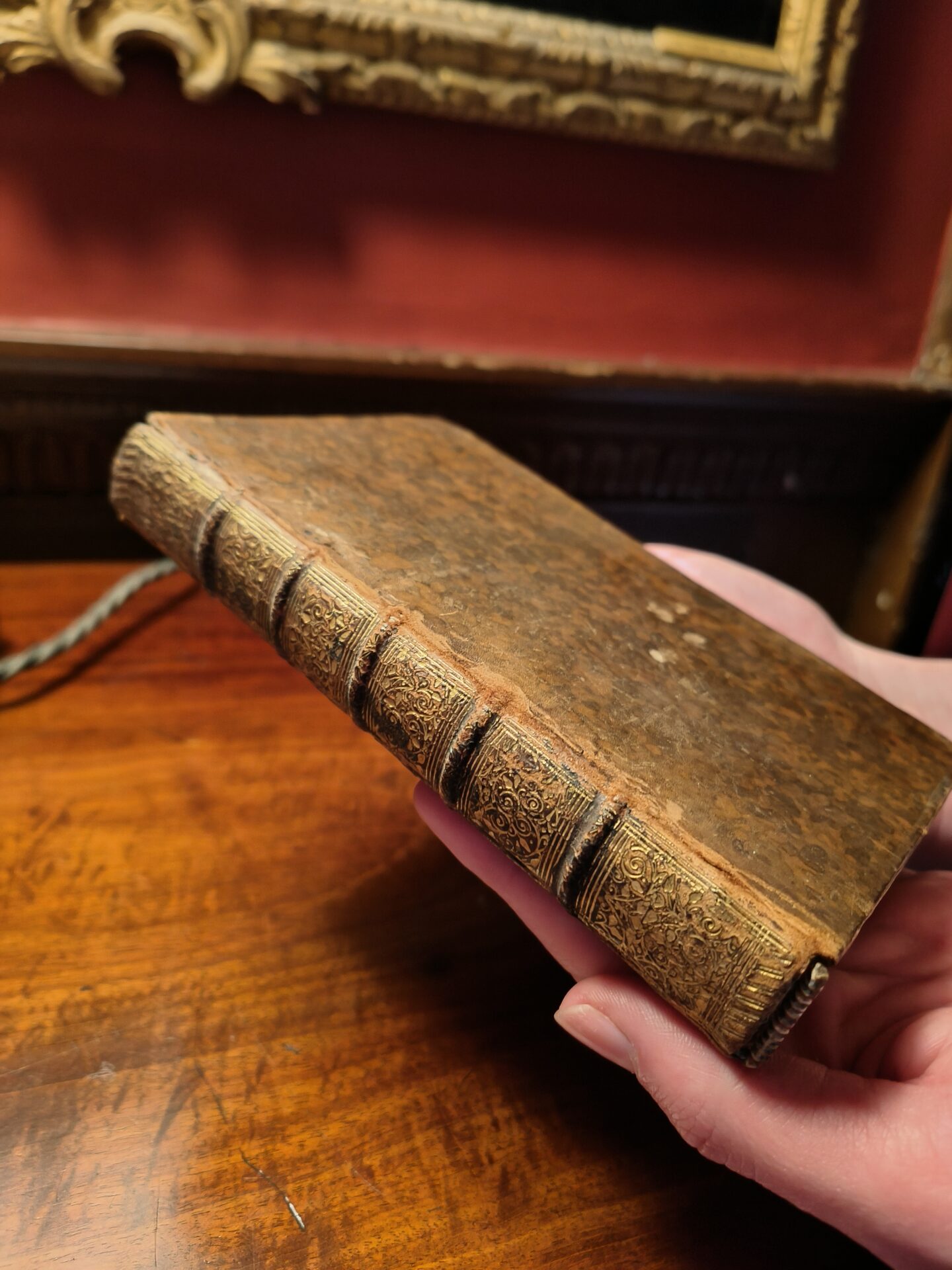
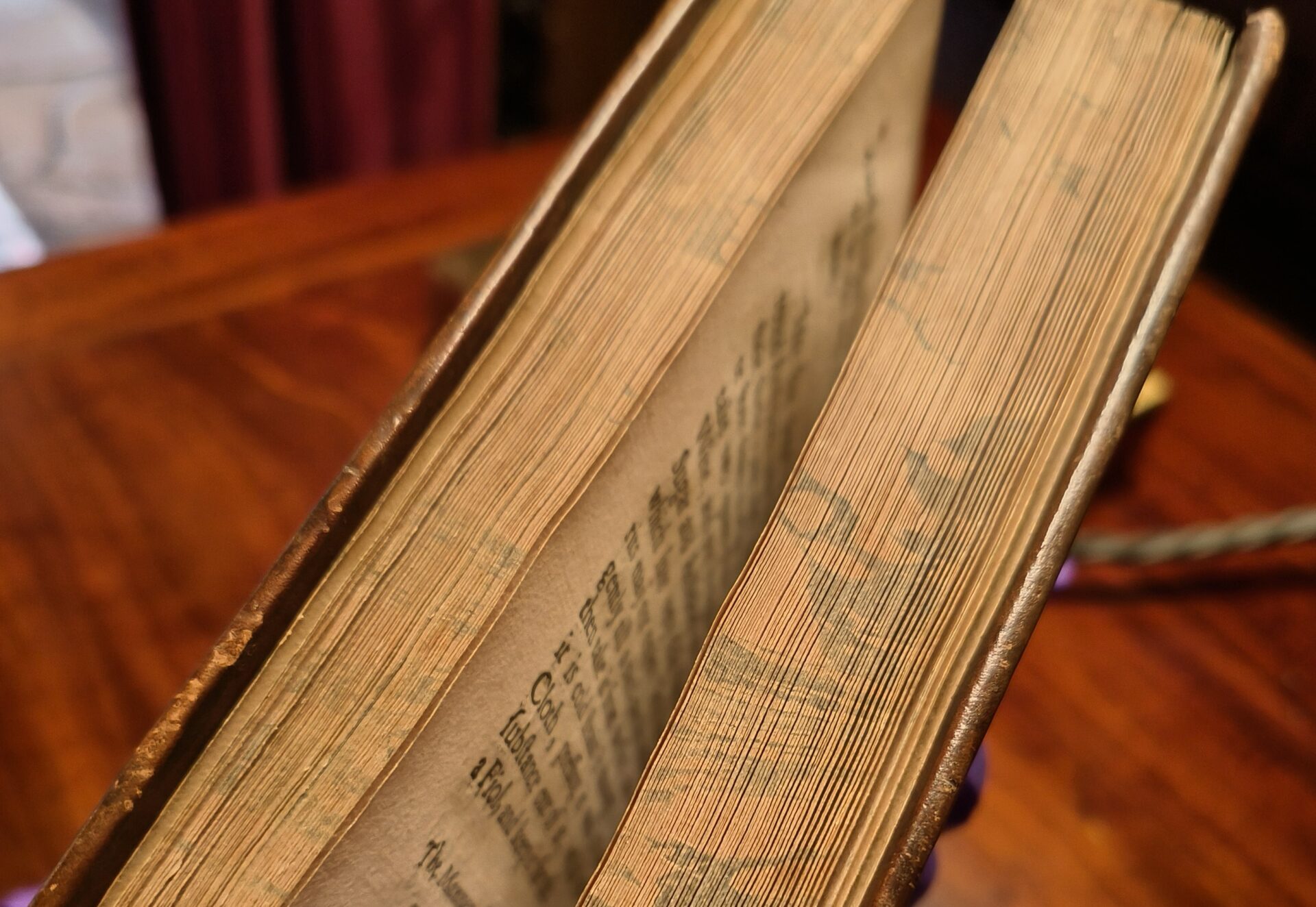
An original copy of Sir Kenelm Digby’s The Closet Opened in the Bankes library at Kingston Lacy. Image: National Trust /Georgie Long and Emma Lansbury
Fifty years ago there wasn’t much interest in the history of food – a few specialists researched the diet and cooking methods of our ancestors, but there was little available for the general reader or domestic cook. Nowadays, as fans of BBC Radio 4’s delicious Kitchen Cabinet know, food historians are frequent broadcasters and popular authors, feeding a growing appetite to understand more about the ingredients, cooking equipment and dietary health of past centuries. Chefs and domestic cooks enjoy exploring historic recipes and hunting down the sort of ingredients that our great-grandparents would have used. Reconnecting with the food of our past is a way of reaching back to our forebears. It can also offer more healthy eating – don’t forget American food campaigner Michael Pollan’s famous quote: ‘Don’t eat anything your great-great grandmother wouldn’t recognise as food’. It is, of course, naive to suppose that our ancestors only ever ate delicious, local, seasonal food – which is so often glorified as simple peasant food. We don’t have any traditions like Italy’s cucina povera, which has been made fashionable by top Italian chefs including Mario Batali and Cesare Casella (in whose skilled hands, of course, it is anything but ‘povera’.) But we do have strong traditions, including herbs and spices, baking and roasting.
The collection of a 17th century diplomat and adventurer, in the library of one of Dorset’s great houses, reveals the diversity of ingredients and the importance of taste in the diet of Restoration England. Any food history will always feature lavish descriptions of Tudor feasts, vast banquets in pre-Revolutionary France or the sheer, astonishing amount of food consumed at a grand Victorian dinner or a shooting breakfast with the future Edward VII. The truth is that the rich, particularly in the 18th and 19th century, ate very well (albeit often with too much sugar), while the poor ate … what they could gather from the hedgerows or grow, if they were lucky enough to have a little patch of garden. George Mitchell, who lived on the estate of the Phelips family of the Elizabethan mansion, Montacute House, in the Somerset village near Yeovil, wrote The Skeletons at the Plough 1827-1846. It makes for grim reading: “Our food consisted principally of a little barley-cake, potatoes, salt, tea kettle broth and barley ‘flipped.’ Tea kettle broth consisted of a few pieces of bread soaked in hot water with a little salt, sometimes with a leek chopped up in it. … Barley flipped was made by sprinkling barley-meal into a pot of boiling water which when sufficiently thickened was served up with salt and a little treacle. Sometimes I would pull a turnip from the field and gnaw it to prevent hunger … and many a time have I hunted and foraged about for snails in the hedges and roasted them for my lunch and tea.” *
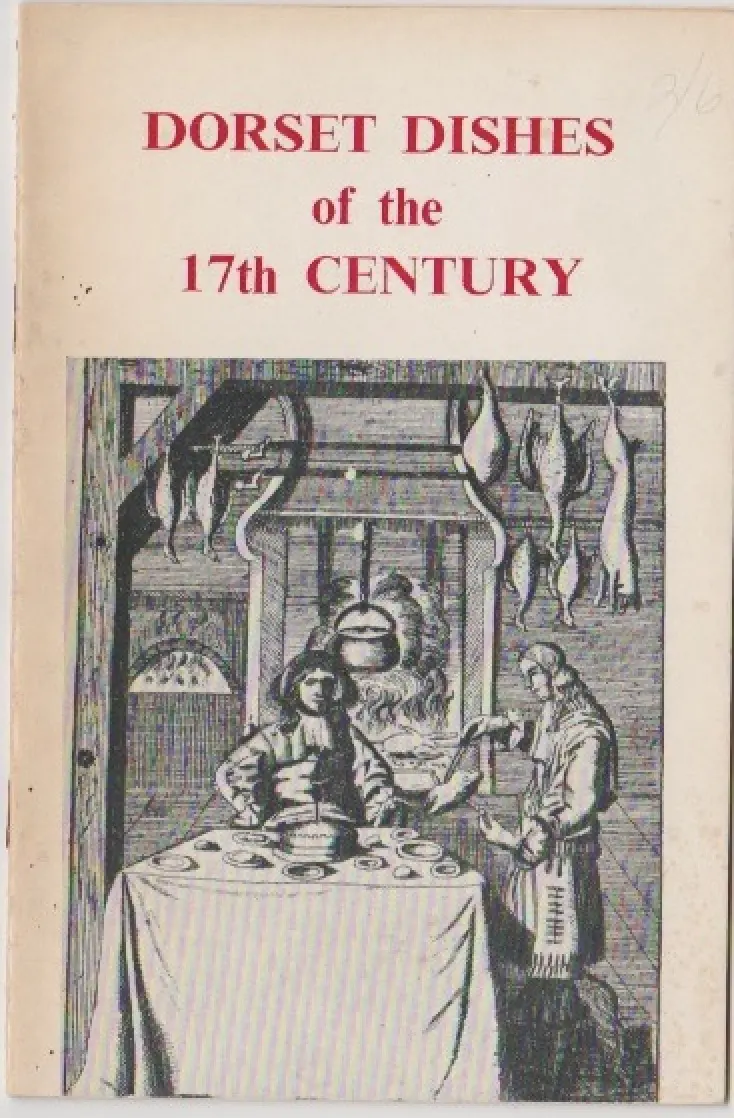
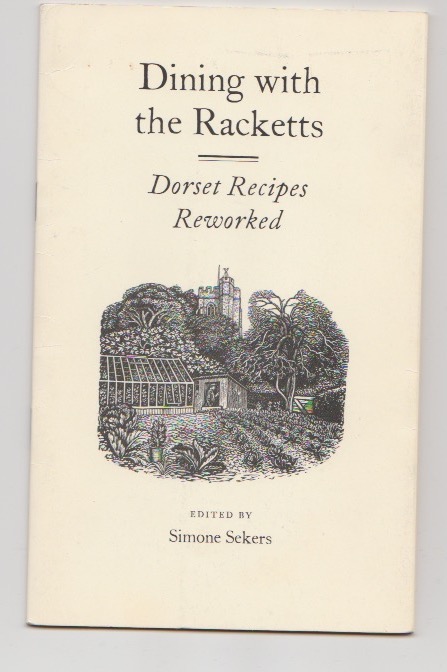
Dishes from Dorset kitchens In the late 1950s and early 60s, antiquarian, book-seller and polymath James Stevens Cox was living in Beaminster and began to gather recipe collections from some of the old country families and manor houses in the area. He published two booklets, both from his Toucan Press at Beaminster – Dorset Dishes of the 17th Century (1967), and Dorset Dishes of the 18th Century (1961). The 18th century collection, which is simply described as “from Dorset inhabitants” – including Lady Trenchard, Judith Frampton, the Bragge family and Tyneham House – includes almond flummery, Hog’s Pudding (still a local delicacy in Cornwall), ‘a pasty of beef or mutton as good as venison … snail water … mackerooms … quaking pudding and jugged hare.’ Some of these names are still familiar, although jugged hare is rarely eaten now and snail water doesn’t much appeal! The recipes in the 17th century collection come from two Dorset families, the Lyfords and the Bragges. Mary Lyford’s Receipt Book covers the period from around 1650 to 1690. After a rather dramatic start in life – she was rescued as a baby from a burning house – she settled down to domesticity, making such dishes as macaroons, “harty chock pie” [artichoke], piping [a form of pippin] marmalade, custard, fritters and tripe pie. Recipes from the Bragge family, of Beaminster, covering the Restoration period 1660 to 1690, include a “ragoo of hog’s ears”, butter chicken (which bears no resemblance to the much-loved Indian dish), a soup with lettuce and a “cabob’d leg of mutton.” For many reasons, including the lack of accurate weights or method, we would struggle to replicate many of these dishes – particularly, for obvious reasons, Mrs Bragge’s lark pie – but the Dorset-based food writer Simone Sekers managed to convert some 18th and early 19th century recipes for modern cooks in a fascinating booklet, Dining with the Racketts, published by Dorset County Museum in 2008. Thomas Racket was the Rector of Spetisbury, an antiquarian, archaeologist, natural historian and musician, who loved good food and drink, and divided his time between his Dorset flock and the rather more exciting society in London. The dishes described in the letters of Thomas Rackett and his sister-in-law Lady Davis make a fascinating and rich contrast with the more humble country cooking of the West Dorset families. Lady Davis wrote from Bath, where she was on a roasted apple and no wine diet for a ‘detestable pain’ in her leg. She described being praised ‘for the elegance of my dinner last Tuesday’ when she served ‘a beautiful brill and excellent lobster sauce … a small fillet of veal and elegant little ham … larded pullets with forcemeat … lobster patties …’ (and that was just the first course!) The recipes which Simone Sekers has cleverly updated include lobster sauce, buttered chicken, a steamed spinach soufflé, orange jellies and a wonderfully alcoholic orange cordial. This is ideal for this time of year as it requires two Seville oranges, stuck with a dozen cloves each, put in a large jar with half a pound (225gr) of sugar and a bottle of whisky, kept for a fortnight, then strained. It improves greatly by keeping, says the recipe, without actually suggesting how long. Still, it sounds worth a try!
A rare copy of Sir Kenelm Digby’s The Closet Opened, is in the Bankes library at Kingston Lacy. It is too fragile to be fully opened, but the picture gives a glimpse of the text. Image: National Trust /Georgie Long and Emma Lansbury
Courtier, diplomat, spy … cook Sir Kenelm Digby was not born in Dorset but he was a member of the well-known Dorset family whose estates include Sherborne Castles and Minterne. Born in 1603, he was a leading Roman Catholic intellectual and the son of Sir Everard Digby, one of the Gunpowder Plotters who were executed as traitors for their conspiracy to blow up Parliament and King James I. His activities as courtier, diplomat and spy took him all over the country and Europe, and out to sea where he was a noted privateer (defined in naval history as a private person or ship that engages in maritime warfare under a commission of war – and not to be confused with a pirate). He was also an astronomer and alchemist – and he was very interested in food and drink. His many writings include a Discourse Concerning the Vegetation of Plants and his best-known work (at least for food historians), The Closet of the Eminently Learned Sir Kenelme Digbie Knight Opened. You wouldn’t guess from the title but this is actually a cookbook, which was published by a servant a few years after Digby’s death in 1669. Quoted by the late great Elizabeth David, who called it ‘a beautiful piece of English kitchen literature’ this collection of often detailed recipes recommends a wide use of herbs and spices, famously gives instructions for making metheglin (the word is derived from the old Welsh word for mead) and also includes one of the earliest references to the beneficial effects of drinking tea. Tea With Eggs calls for freshly brewed tea to be poured on beaten eggs and sugar. It is said to ‘fly suddenly over the whole body and into the veins and strengtheneth exceedingly, and preserves one a good while from the necessity of eating.’ It was a very new drink in England – tea from China had arrived in England shortly before the Restoration of King Charles II in 1660, less than ten years before this book’s publication. Historically referred to as ambrosia, nectar of the gods or honey wine, mead is the world’s oldest alcoholic drink – its origins go back to pre-history, and definitely to around 6500BC and the discovery of a drink fermented from honey in northern China. Mead has been traced back around 4,000 years in Europe, with traces found on ceramics from 2800-1800 BC. It is suggested that Sir Kenelm Digbie’s metheglin, with a list of ingredients that reads like poetry, probably tasted like the French sweet, sticky liqueur Chartreuse. The cook is instructed to ‘take sweet marjoram, sweet briar buds, violet leaves, strawberries leaves, of each one handful, and a good handful of violet flowers, thyme, borage, agrimony, rosemary, caraway, coriander and fennel, as much of the best honey as will make the liquor bear an egg the breadth of six pence above the water.’ It’s a more interesting measure than your average digital scales! When it comes to food, his instructions are often quite precise: penny royal (a herb that you don’t often see nowadays) should be used sparingly in black pudding, for example. He advised that the cook should add a little to a ‘plain bag pudding … as not to taste strong … onely to quicken the other flat ingredients.’ If you are a wine lover or someone interested in odd corners of history, Kenelm Digby has another claim to fame – he is considered the father of the modern wine bottle. During the 1630s he owned a glassworks where he produced round wine bottles with a high, tapered neck. The manufacturing process involved a coal furnace that was hotter than usual because of the use of a wind tunnel and a higher than usual ratio of sand to potash and lime. The bottles were stronger and more stable, and, with their dark colour, better protected the contents from light. You can enjoy The Closet Opened in its entirety for free online in the Project Gutenberg library here. There is a rare physical copy of the book, dating from 1671, in the Bankes library at Kingston Lacy House near Wimborne. It was probably acquired by Ralph Bankes, the builder of Kingston Lacy, who was a contemporary of Sir Kenelm and fellow Royalist. It was Ralph’s mother, Lady Mary Bankes, who famously defended Corfe Castle against the Parliamentarians in the English Civil War.
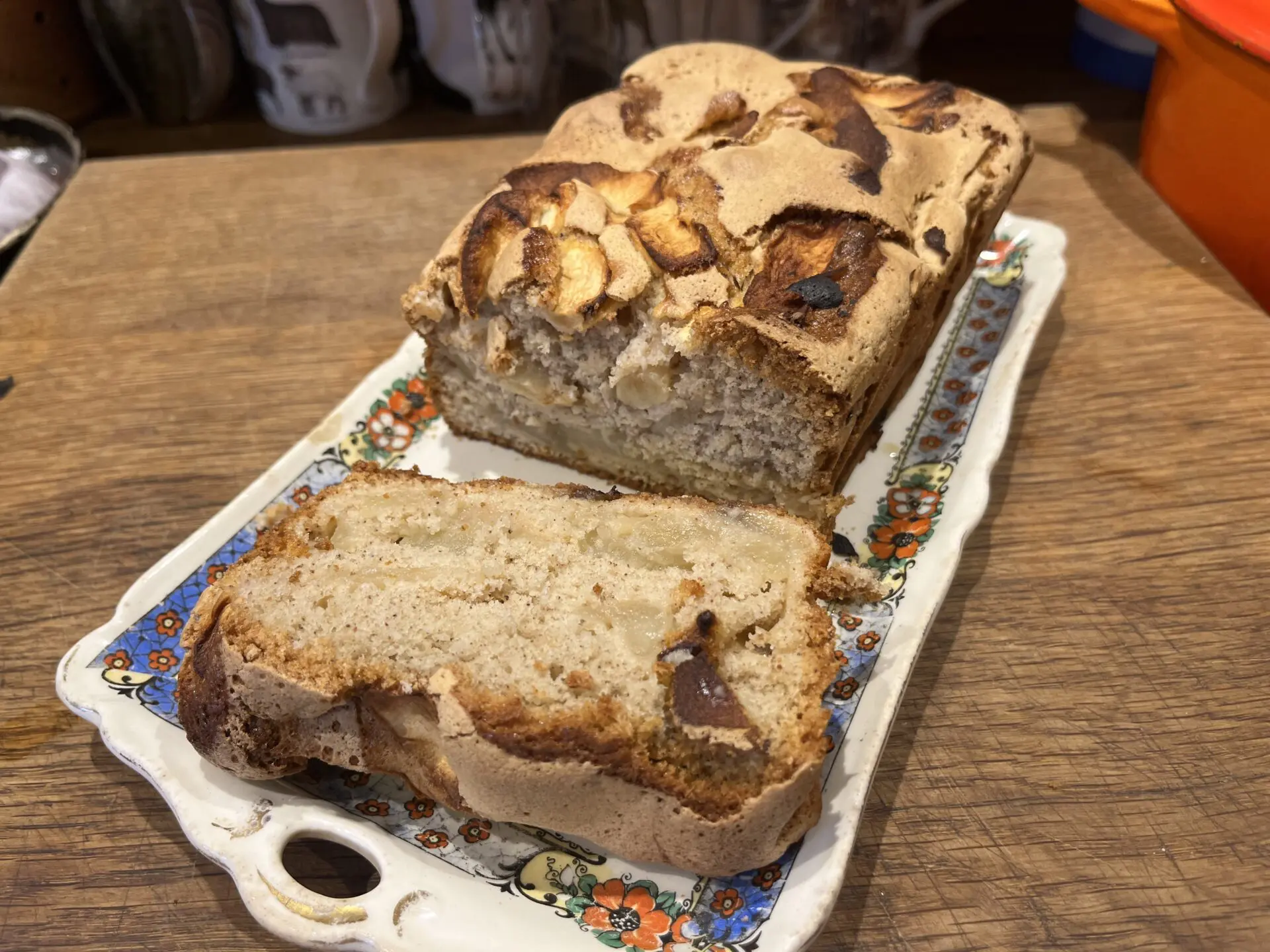
A 21st century version of Dorset apple cake, based on Philippa Davis’s recipe in Deepest Dorset
… and a local favourite While Dorset Blue Vinny may be Dorset’s best-known historic product (mentioned by Thomas Hardy, among others), perhaps the county’s best-loved speciality is Dorset Apple Cake. Many apple-growing counties claim the apple cake, and historically the biggest differences would probably have been the local apple varieties. But Dorset can claim to have a genuinely old recipe, reproduced in Florence White’s Good Things in England. White, the founder of the English Folk Cookery Association, published her famous book in 1932. It is an absolute treasure trove for anyone interested in regional recipes and historic food from around the country. Many of the recipes came from country house kitchens and many more were sent in by people who remembered them from the food made by their mothers or grandmothers. The recipe for Dorset Apple Cake was sent in by a Miss Annette Vipan, ‘as it was given to me by a farmer’s wife in this village, North Chideock.’ As was often the case with old family recipes, there were no weights, so Miss Vipan suggested the quantities: INGREDIENTS: Apple and flour, equal quantities; fat half the quantity, sugar half the quantity; salt, a pinch; baking powder 3 teaspoonfuls to the lb. of flour; milk enough to make a firm dough. TIME: To bake 3/4 to 1 hour. One of my favourites in our ever-growing library of food books is Marie Stone’s Covent Garden Cookbook**, published in 1974. Its publication marked the transition of Covent Garden from its role as the historic vegetable, fruit, nuts and flower market to its new life as a shopping, eating and leisure area. Marie Stone includes an 1840 recipe for apple cake which is a far cry from the cake we know today. It involves boiling a large amount of sugar in water, adding cored, thinly sliced apples and the rind of two lemons and pouring the thick reduced puree-syrup into oiled moulds, where, says the recipe writer, ‘it will keep good for a month.’
Finally, I can’t resist mentioning the excellent Dorset Apple Cake recipe in Deepest Dorset, which Gay Pirrie-Weir and I wrote and published a few years ago. The recipe is by the Shaftesbury-based private chef, Philippa Davis, and we can vouch for how well it works – see above! (Sadly, Deepest Dorset is sold out, with around £40,000 contributed to local charities from the proceeds – deepestbooks.co.uk) *George Mitchell’s book was exhibited by Montacute Parish Council and is quoted in the 1990 National Trust Book of Healthy Eating, by Sarah Edington. **The Covent Garden Cookbook, by Marie Stone, pub. Allison and Busby Ltd, 1974
Polecats have quietly been making a secretive but fragrant return, says wildlife writer Jane Adams – but there are hybrid hurdles to overcome
The polecat Mustela putorius is a native British mammal and a member of the mustelid (weasel) family.
Who hasn’t heard about the population recovery of otters? They’re now regularly seen in Dorset. However, another close cousin of the otter, the polecat, has also been making a much quieter comeback. Polecats have been in mainland Britain since the end of the last ice age. These long, dark-brown mammals with short legs and a facemask of light and dark fur survive on a diet of rabbits, small mammals, amphibians and worms. They’re also nocturnal and secretive. It’s not surprising they keep themselves to themselves. Over 300 years, we humans nearly wiped them from the map due to their supposed penchant for chickens and game birds. So much so that, by 1915, we had eradicated them from most of their British haunts. Only strongholds in Wales, Herefordshire and Shropshire remained. After the First World War, the end of commercial rabbit trapping and fewer predator controls meant they made a slow but steady recovery – and they’re spreading.
The English skunk Less fussy about habitat and territories than badgers and pine martens, our hedgerows, rabbit warrens and woods are perfect hunting grounds for Dorset polecats. However, don’t expect to see one anytime soon – and, if you do, approach at your peril. Their Latin name, Mustela putorius, means ‘foul-smelling musk bearer’. This refers to the smell they release from their anal glands as a defence mechanism when scared or hurt. It’s worth keeping your distance! Sadly, the most likely place to see one is dead at the side of the roads which are now a major cause of mortality. Still, there are currently more polecats in the British Isles than at any other time in the last 100 years, which is good news, isn’t it? Yes … and no … and this is where it gets controversial.
Perceived as bloodthirsty animals, polecats were declared vermin during the reign of Elizabeth I and the name ‘polecat’ was used to refer to vagabonds.
Ferretcat or polerat? Wild polecats will breed with their closest relative, the domesticated ferret, especially feral escapees. And, though there are visible differences, these hybrids are difficult to distinguish from pure polecats without DNA testing. This may not be the natural disaster it sounds. Some researchers have suggested polecats might have benefited from ferret genes. So, rather than losing the species completely, the roguish, masked bandit has survived and is thriving, because it’s not in a completely pure state. It’s a tricky conservation conundrum and one that will no doubt rumble on for years to come.
Key visual differences between ferrets and polecats:
Polecat: Dark fur on the face extending to the nose. Pale cheek patches contrasting with its dark facial mask. No scattered white guard hairs over its body. No pale throat patch (or less than 50mm long). Dark fur on paws. Ferret: Dark fur on the face that does not reach the nose. Pale cheek patches, often extensive, that contrast poorly with its darker facial mask. Scattered white guard hairs over the entire body, especially its hindquarters and tail. Pale throat patch 50mm or more long and one or more white paws.
Wessex Internet has clinched a spot in the South West final for the esteemed Countryside Alliance Awards 2024. The company’s nomination in the Rural Enterprise category places it in contention for what is affectionately known as a ‘Rural Oscar.’
Hector Gibson Fleming Wessex Internet
Established 17 years ago, the Countryside Alliance Awards recognise the spirit, resilience and unique nature of rural businesses, underscoring their pivotal role in local economies and communities. Wessex Internet’s inclusion among the finalists is due to its commitment to bridging the digital divide in rural areas through its provision of ultrafast full fibre broadband.
The prestigious awards are driven by public nominations giving an opportunity for the general public to shine a spotlight on their favorite rural businesses, recognising their passion, commitment, and dedication to championing local communities. With categories spanning village shop, butcher, pub, rural enterprise, and local food, the awards showcase the diverse tapestry of rural entrepreneurship.
Hector Gibson Fleming, CEO of Wessex Internet, expressed pride in the nomination, stating, “We’re proud to have been nominated for the Rural Enterprise category at the Countryside Alliance Awards. This nomination is recognition of our commitment to connecting the rural countryside to ultrafast full fibre broadband, for the last 14 years.”
Voting has now opened to decide the winners, the announcement of which is scheduled for mid-April, with regional champions convening at a distinguished House of Lords reception on Tuesday, June 25th, where the ultimate UK champions will be unveiled.
To cast your vote in support of Wessex Internet please click the following link: https://bit.ly/3SMTixX.
Sowing seeds of agricultural knowledge, the NFU programme is connecting students with the vital role of farming in food production and sustainability
The NFU Education ‘Live’ lessons have reached 360,000 students in 5,000 classrooms
In a landmark year, the NFU Education programme has made significant strides in bringing agricultural education to more than 500,000 students nationwide. With the assistance of more than 250 farming ambassadors, the programme works to broaden a new generation’s understanding of the pivotal role of British agriculture in responsible, sustainable food production, while simultaneously emphasising the importance of environmental stewardship. The ambassadors have visited more than 50 schools since September, delivering assemblies on farming to more than 7,000 schoolchildren – an increase of more than 300 per cent on 2022. Looking beyond traditional classrooms, NFU Education has captivated a wider audience through innovative live lessons like Science Farm Live, Harvest Thali and The Lamb Diaries, reaching a further 360,000 students in 5,000 classrooms. These sessions are meticulously designed to integrate agricultural themes into the national STEM curriculum, providing students with a practical and immersive learning experience. NFU President Minette Batters said: ‘I am extremely proud of the work delivered by NFU Education, resulting in some incredible achievements this year. The sheer number of students engaged in our Live lessons demonstrates the enormous appetite from children and teachers to teach and learn STEM subjects through the lens of agriculture, whether they come from a farming background or not, and we have dozens more Farmers for Schools booked in for the next school term. ‘It’s really heartening to see so many schools wanting to engage with us and provide their pupils with such a fantastic learning experience, helping them gain a greater understanding of where their food comes from. ‘As we celebrate these successes, it’s good to reflect on the power of education to excite children in food and farming and pave the way for a future generation that really values, understands and champions British agriculture.’ Farmers for Schools Ambassador Evan Taylor said: ‘Farmers for Schools appealed to me because I wanted to share my passion and experiences in farming. ‘I also want to try and get young people into farming – it can only help to future-proof farming in Britain, and the NFU programme gave me a platform to do this. ‘I gave an hour-long talk to 200 Year 10 and 11 students and it was great to see them asking questions and showing a real interest in getting into agriculture as a career. ‘Ultimately, it’s about starting a conversation – I’m looking forward to doing more and spreading awareness about how important British farming is.’
if you would like to register your interest in being an NFU Farmers for Schools ambassador you can contact the NFU Education team at [email protected]
Ferne Park Part-Time Handyman required Berwick st John
Join our team at Ferne Park, Berwick St John, nestled on the picturesque Dorset/Wiltshire border, where we’re seeking a reliable and skilled Part-Time Handyman to join our dedicated staff.
As a Handyman at Ferne Park, you’ll enjoy flexible hours, allowing you to balance work with your other commitments. Your responsibilities will be diverse, ranging from maintaining the pristine appearance of our stable yard to assisting with hay bales and undertaking minor repairs around the estate. From painting to paddock maintenance, your role will be essential in upholding the charm and functionality of our beautiful country estate.
While prior experience with horses or animals is not a requirement, it could be advantageous in this role. Regardless, we’re looking for someone with a proactive attitude and a willingness to learn. In return for your hard work and dedication, we offer good pay and the opportunity to work in a stunning rural setting. If you’re someone who takes pride in their work and enjoys being hands-on in a dynamic environment, we’d love to hear from you.
Join us at Ferne Park and become part of the team. Apply now to embark on this fulfilling opportunity!