At last, there are jobs waiting on your list this month – Pete Harcom suggests a good start now will prevent things getting out of hand later
Even a tiny garden pond will encourage frogs, birds, slowworms and beetles, and all these help to keep those slug and snail populations down without resorting to pellets
At last, spring is in the air – but be careful, don’t get too excited and start buying bedding plants too early. It may be best to wait until late March before you purchase too many tender plants such as fuchsias and pelargoniums, unless you have some good frost protection like cloches or a cold greenhouse. It can be late April or even May before night-time frosts are actually over.
Jobs for March
from this month onwards – just rake the soil to a fine tilth on a dry day before you sow them. Watch the weather forecasts for frosty nights and protect if necessary with cloches or horticultural fleece – even old net curtain works!
Using a hoe may be all that is needed to keep weeds down before they get a hold in your borders. If it’s done in early March, when weeds in the borders are small, it will save a lot of work in the future. After the weeding is done, and if the soil is moist, it is a good idea to cover with a thick layer of mulch or garden compost.
March is the last chance to plant bare-rooted trees and shrubs. Now the soil is warming up, shrubs will soon begin to grow.
Fuchsias that were potted up in a cold greenhouse should start budding soon – start watering, sparingly at first, and prune away unwanted old growth.
Try and warm up your potting soils by storing them in the greenhouse or shed before starting off seeds.
Top up any potted plants with an inch or so of fresh soil.
Pest control Slug pellets are a problem for hedgehogs and frogs as they eat the snails and slugs that have been killed by the slug pellets and are then poisoned themselves. To reduce your reliance on slug pellets try creating even a small wildlife pond – they encourage wildlife in general, of course, but particularly frogs, birds, slow worms and beetles… and all these help to keep slug and snail populations down. Remember to clean up the inside of any bird nest boxes before the garden birds start exploring!
Pruning Prune Group 1 winter or early spring flowering clematis after they have flowered. Large flowered clematis (Group 2) can be pruned slightly, as they flower on the current year’s growth. The late summer flowering clematis (Group 3) should be cut now to around 30cm (1ft) above ground level, as they flower on this year’s growth. If you don’t prune these early, they may produce flowers too high on the plants for you to enjoy! Prune bush and shrub roses hard. Cut back any Cornus (dogwood) in the garden now for more colourful stems next year, and also prune your winter-flowering jasmine (Jasminum nudiflorum) when it finishes flowering, to similarly encourage new growth for next year’s blooms. And don’t forget – the clocks will go forward on 31st March …
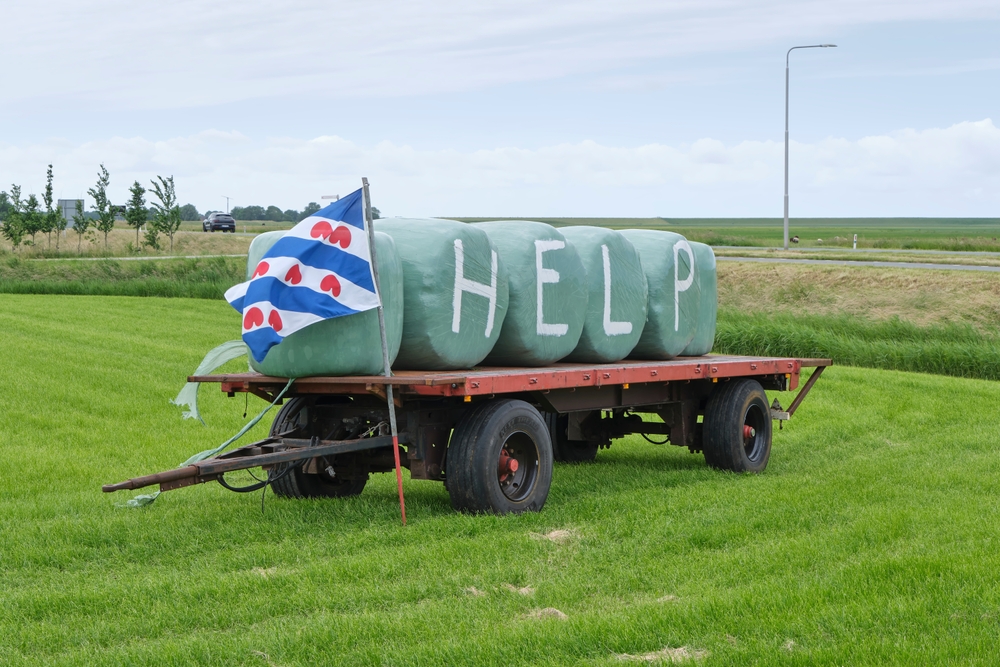
The public perception challenge: how British farmers’ protests could risk alienating the very people whose understanding they need
Farmers in the Netherlands are protesting against forced shrinking of the livestock industry because of CO2 emissions
Despite being borderline Gen Z, I have an admission to make … I have never protested. It’s not that I lack the passion, or that my art skills don’t convert well onto placards, or even that I don’t want to get glue on my favourite jeans. I simply never had the reason to cause disruption. It’s safe to say that the Just Stop Oil protesters have the passion, the art skills and charity shop jeans. What they lack now is the support of the public – frankly, their actions just annoy everyone who is trying to go about their day. Some of the footage of European farmers that has made it across the channel has been comical. Call me immanure (see?), but spraying slurry onto government buildings is pretty funny. And I tell you now, a police barricade looks great till a Massey Ferguson tractor ploughs through the middle of it! Poland, Belgium, France and the Netherlands have all experienced tractors rolling in to their capital cities in an attempt to change government policies that are making it ever harder for farmers to make a profit.
Berlin, Germany December 2023 – tractors at the Brandenburg Gate
On home soil Farmers here at home have been getting increasingly jealous, wanting to get in on the act and (literally) cause a stink. This week the Welsh have been the first to openly show their displeasure. The Welsh Parliament has announced that the Sustainable Farming Scheme (SFS) to be introduced next year (to replace EU subsidies) will require farms to have ten per cent of their land planted with trees, and ten per cent of their land treated as wildlife habitat. How any farm could survive with a fifth of its land given up to non-profitable endeavours is beyond me, but it’s the ridiculousness of these controls that have turned fury into action. ‘Digon yw digon’ was written over hundreds of tractors as they, and an estimated 5,000 farmers, descended on Cardiff on Wednesday. The slogan (‘Enough is enough’ for those whose Welsh is a little rusty) encapsulates the Welsh farmers’ feelings that if actions are not taken there will no longer be a way to make a living for those in the Welsh countryside. The convoy of tractors shut down a major road in the city, while the talking was done in front of the Senned, the Welsh Parliamentary building. For two hours farmers stood in the rain listening to speeches calling for change. I will always back my farming brethren … but they must be very careful of the thin line that they walk when protesting. It is all well and good to make a statement and get your voices heard – and if you can annoy the government at the same time, even better. But we British farmers must not overstep the mark and turn the public against us.
The A15 motorway near Paris, where the demonstration by the farmers in their tractors is stopped by the police barricade
Get to work When you trundle your tractors into the major cities, the vast majority of the people you are disrupting don’t understand how their food really gets to their plates. They think we farmers are standing about in the sunshine throwing corn out of a bucket to a few chickens while we ‘oo-ar’ around a bit of straw. They literally don’t care that the price the farmer gets for a dozen eggs doesn’t even cover the cost of producing them – but they’ll quickly care when you add an hour onto their commute to work. Every single month I talk about how little positive coverage there is of farmers in the media. During the COVID pandemic, farmers gained an ounce of recognition for their efforts during lockdown. Unfortunately, that is becoming a distant memory. The public already presumes that the British farmer causes all global warming, makes the countryside stink at all times and makes all the food in the supermarket expensive … Let us at least not make them late for their meetings.
A typically colourful selection of Ukrainian preserved fruit and vegetables
The recent second anniversary of the Russian invasion of Ukraine was a sombre reminder of the trauma and horror that Urkainians have endured – and the continuing need to support the many refugees who are living in this area. If most of us didn’t know much about Ukraine’s distinctive culture and history before the Russian onslaught, we have all learned a lot now. Two workshops at Compton Macrae near Shaftesbury on 8th and 9th March will introduce participants to important aspects of traditional Ukrainian food. On Saturday 9th, from 4pm to 7pm, cook and writer Olya Patiuta will focus on fermentation, vegetables and soup. And on Sunday 10th, from 10am to 1pm, the workshop will feature varenyky, formed and filled dumplings with savoury and sweet fillings. Organised by the very active Shaftesbury Refugee Group, Flavours of Ukraine is intended for Ukrainian guests and the wider community of North Dorset and South Wilts. These hands on and active sessions, led by Olya of Zhiva Authentica, will bring new flavours and techniques to some and a taste of home to others. Join Olya at Compton Macrae, the deli and cafe at Semley, for one or both workshops. The maximum number is 30, to keep it interactive and fun. Olya’s Instagram feed, Zhiva Authentica, is full of mouthwatering photographs of her food, preserves, ferments and sourdough, details of the markets she attends and her masterclasses. To book for one or both of the workshops (places are very limited), visit shaftesburyrefugeegroup.org
Dorset’s allocation of NHS funding only provides eight per cent of the children’s hospice annual income – Rachael Rowe asks why
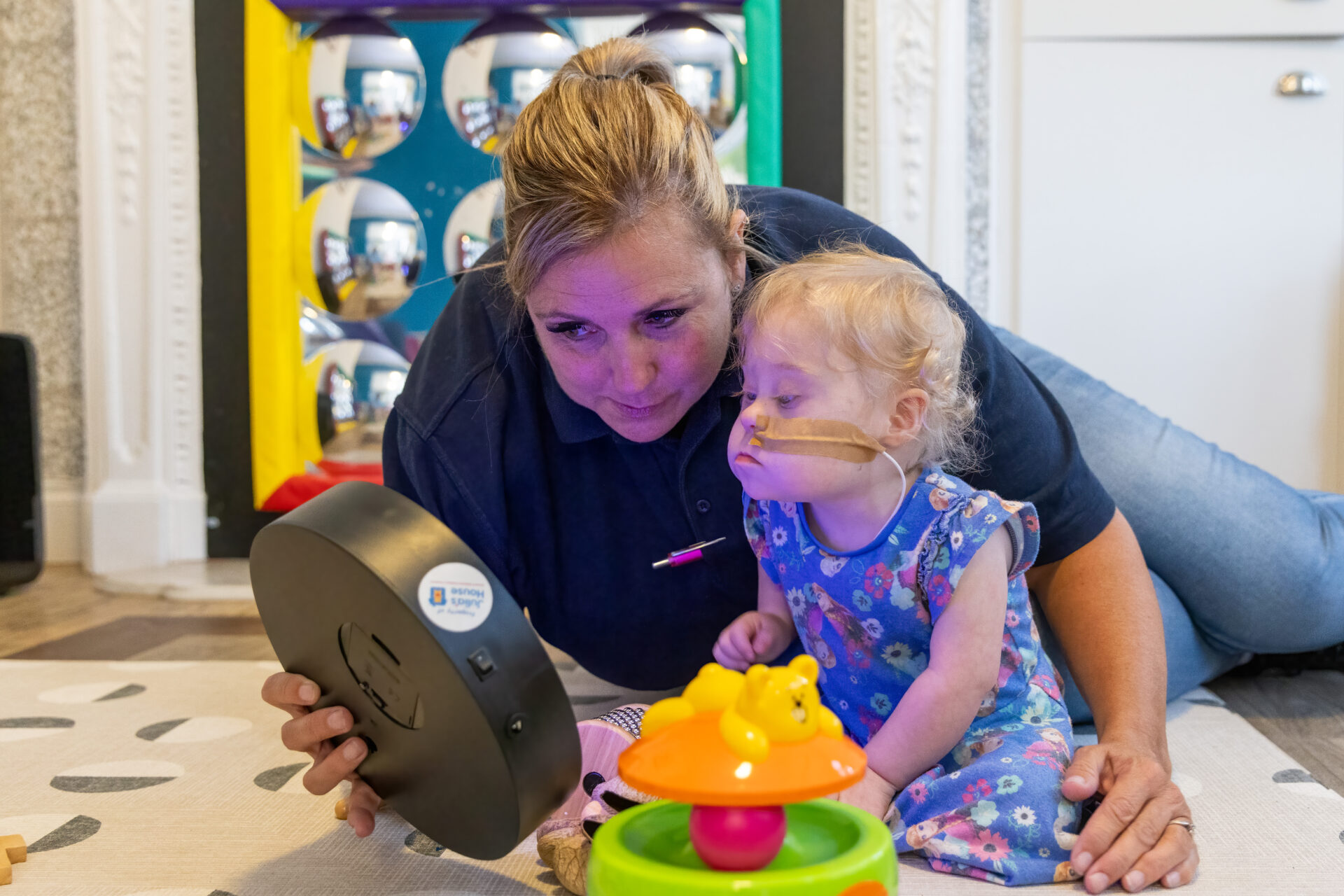
Scarlett with her Julia’s House nurse Helen
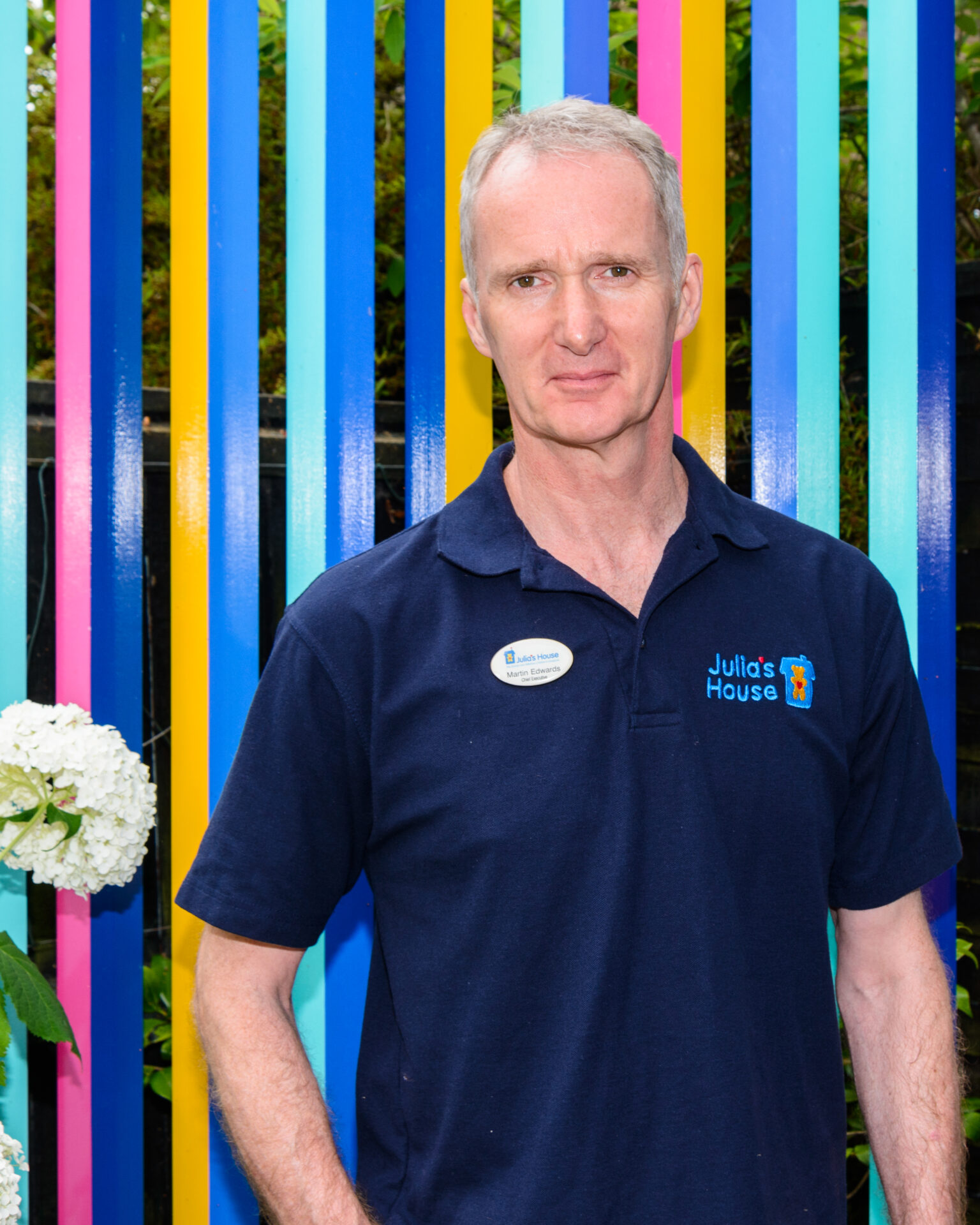
‘It shocked a lot of people. And it’s not for want of trying at national and local level.’ When the chief executive of Julia’s House, Martin Edwards, wrote a post on LinkedIn about the funding inequalities in children’s hospice care, it received more than 30,000 views and generated several shocked responses. Some hospices receive up to 30% of their funding from the NHS, though the national average is 13%. Dorset gets just 8%, and even that is no longer secure.
How it works Children’s hospice funding comes from a combination of charitable donations, including bequests, and a nationally-defined budget. For several years, NHS England has commissioned the service using a £25m grant, shared between children’s hospices in England. However, NHS England wrote to children’s hospices in April 2023 to tell them that this year (2023/24) will be the final year of the grant. In future, local integrated care boards (ICBs) will be responsible for providing all of their NHS funding. In 2022/23, Dorset ICB spent just £125,049 on children’s hospice care, and has additional contracts with a community-integrated continuing care team. Julia’s House receives no funding from the NHS in Wiltshire. The total NHS contribution to the Julia’s House budget, from contracts and grants, is just 8% of the hospice’s annual required income.
Respite care is an essential service Unlike adult end-of-life care, children with life-limiting illnesses are fewer in number, but many have highly complex and rare conditions. Apart from the instability and uncertainty of hospice funding, the costs associated with providing palliative care have escalated in the last year alone. The number of children with a life-limiting condition nationally has trebled in the last 17 years. According to the Dorset End of Life Care Strategy, there are believed to be 1,038 children between the ages of 0 and 19 needing palliative care support in the county. Julia’s House cares for 176 families across Dorset and Wiltshire, with around two thirds in Dorset. Martin outlined some of the issues: ‘We are seeing more children with complex needs now. More than 80% of our children require two staff members to be with them at any time. It’s an intensive process. We also continue to care for the entire family, supporting them for up to five years after bereavement.’ Hospices do much more than providing end-of-life care. Martin believes one of the reasons that Julia’s House receives less public sector funding is because it provides a lot more respite care. ‘People think of hospices as buildings that provide end of life care, but we do a lot more. Respite care is just as vital. ‘Research shows that respite care impacts upon the entire family’s wellbeing. We led a national research project with Bournemouth University, looking at how a child needing hospice care impacted the parent’s relationship. We found that the stronger parental relationships also had up to 43% more respite care than those families where relationships were struggling. ‘Another important research study from York identified that a mother of a child with palliative care needs is twice as likely to develop a heart problem as one with a healthy child. She also has an increased risk of mental health problems. Respite care prevents a crisis. If we can keep children stable and families healthy, we can avoid many problems. The most expensive thing is a bed night in hospitals.’
Martin Edwards, CEO of Julia’s House, took to LinkedIn to explain the funding inequalities in children’s hospice care
Equal, reliable funding Laura Gilbert’s four-year-old daughter Sophie has a life-limiting illness and has been waiting for a double lung transplant and major heart surgery at Great Ormond Street Hospital for 10 months. The family is supported by Julia’s House and explained why respite care is essential. ‘Having a child with a life-limiting illness is mentally and physically traumatic and exhausting. A lot of parents suffer with chronic sleep deprivation and associated ill health because they are the primary carer for their affected child day and night. ‘Julia’s House offers services which can help alleviate that stress and provide support and care not only the child under their services but also for the parents and siblings. Having a poorly child impacts many generations of the family and Julia’s House goes above and beyond in offering any support/services that they can. The staff bring a sense of inclusion to all children, regardless of their physical and mental capabilities. When you see your child feeling supported, included and cared for so exceptionally, it reminds you that you are not alone in this. To be able to offer fully supported respite sessions in the child’s own home, giving the parents some time out, or to simply spend time with their partners or other children, is invaluable. It gives to the whole family. ‘I don’t think it is acceptable that so many of the services that a hospice provides are funded purely by the generosity of the public. It is utterly amazing how many incredible people and organisations donate, raise and support Julia’s House financially, and it is very much needed year after year to enable the hospice to function and provide the exceptional service that it does. ‘We, as service users, are so thankful that the public supports the hospice. Simply, without them, our children wouldn’t receive the quality and range of care they get. Care costs should be funded by the government each year, and a guarantee given that each children’s hospice has a contract and sustainable financial support that is equal across all children’s hospices around the country.’ Staff at Dorset ICB were unavailable for the interview but shared their county-wide end-of-life care strategy, which includes integrated working between community teams and hospices. However, with Dorset’s funding allocation at a paltry 8% and an increased demand for services for children with life-limiting illnesses, it is perhaps time to look at an equitable funding model for children’s hospice care that values preventive interventions like respite support.
Guy first became interested in travelling to Africa when he was a teenager at Sherborne School: ‘In my last year, I received a travel guide about Africa, and on the cover was a photo of people setting up camp in the Sahara. And I wanted to do it. I thought it was fantastic – but I never found time to do it. I’ve always had that dream, since I was 18. I retired in 2019, and I finally had the time to do the journey, so I just thought I’d get on and do it. ‘I already had Parkinson’s by then and I did think everything might be too difficult, but a friend said: “you have to get on and do this. Don’t give in.” ‘Parkinson’s is a degenerative disease – it doesn’t get better, it just keeps getting worse. So if I didn’t do it then, I wouldn’t do it at all. That’s why I got off my fat arse and just got on with it. ‘My aim was to prove to myself I could. A supplementary aim was to demonstrate to others that just because you have Parkinson’s, it doesn’t mean you can’t do what you want. ‘I wanted to set an example. Others might not want to drive through Africa, but they could set their own goal – even something simple like going to the cinema or taking the dog for a walk. You should keep trying to do things until you know you can’t.
Guy Deacon, who has Stage 3 Parkinson’s, drove solo 18,000 miles from his home in Sherborne to Cape Town
‘I was diagnosed with Parkinson’s in 2011. It was a surprise and probably a shock. I knew something wasn’t quite right – I was in the army, a colonel in The Royal Armoured Corps, and had just returned from working in the Congo. I was very run down but didn’t expect to be told that. I didn’t know much about Parkinson’s at the time. The doctor said I needed to see a neurologist straight away, and it took them about ten seconds to diagnose me, it was so obvious. ‘The doctor told me to keep on doing what I’m doing. He said “the good news is it won’t kill you. The bad news is it won’t get any better”. I carried on working until 2019, the army was an excellent employer.’ Accommodating his health while planning for the journey across Africa was complex – Guy had to take at least three months’ supply of medication with him. ‘To start, I planned to go as far as Sierra Leone. I wasn’t sure after that, so I had enough supplies to last me until then. I was taking eight or nine pills a day. Thankfully the army was my pharmacist, so I didn’t have to do repeat prescriptions every month. You can’t get the drugs in Africa – and if you can, they may not be the right thing.’
Deadvlei, Namib Desert
With a special message Guy’s solo driving route took him from his home in the UK 18,000 miles and through 25 countries along the west coast to Cape Town on the southern tip of Africa. He planned it to avoid conflicts in other parts of the continent, and he was keen to visit countries he had never been to, like Togo and Benin. ‘People were amazed. When they saw the English car with the right-hand drive, their eyes would light up when they heard what I was doing. All along the coast, they were so helpful, or soon became supportive when they found out I was old and infirm. There’s this huge respect for older people in Africa. They were very respectful of my age and were fascinated by my story. ‘When I met people with Parkinson’s, they thought I had come to see them. I arranged to meet people along the way and had contacts through Parkinson’s UK.’ Guy had a special message to bring some of the people with Parkinson’s disease. In parts of Africa, the disease is regarded as witchcraft, and sufferers are isolated and shunned by their community.
‘In Canada with my tank’ 1999
‘Because there’s no cause or cure, it manifests in unpleasant ways and arrives from nowhere, people don’t understand it. Tribal and traditional faiths are still powerful in some places. There’s a huge stigma attached to it. People are shunned. I met one chap whose mother had Parkinson’s at age 35. He and his family left her in her house, and she died five years later, starving to death. She spent five years in isolation because people were afraid of catching it and thought she was a witch.’
A family holiday in Scotland in 2002
‘It became my mission to go along and see these people, show them that they can do things. Still live their life. Drugs are important, medical care is important, but most of all it is the care and love from your family. Just telling people they can hug someone can make a huge difference. It’s like the Diana moment. When people realise they won’t catch it, they can give better care. ‘I appeared on radio and TV there to give my message. I estimate I barged my way into 500 million households! I’d do a radio interview in every country I went to. Some places really want to do something about the stigma – people began to recognise me.’ Guy had got as far as Sierra Leone in early 2020 when COVID 19 started. ‘It was very interesting in Sierra Leone because they had experienced Ebola, so they were very conscious about disease management. Everyone wore masks, and there were hand-washing stations everywhere. You couldn’t go anywhere without washing your hands, you couldn’t use a cash point without handwashing, or the police would stop you. At the time, there was no indication of it getting into Africa, and I thought I might be OK, but I was persuaded that if I did get it, the hospitals would not be able to cope. So I was on the list for an evacuation, and the UK Government flew me home. I left my vehicle with a colleague and he kept it for two years but I returned in 2022.’
Meeting people with Parkinsons in Youande, Cameroon
The kindness of strangers When Guy returned to Sierra Leone to continue his journey, his symptoms had worsened, but he was determined to complete the journey. He met many people on the route, with complete strangers stepping forward to help him. ‘The deeper the trouble you are in, the more people will help you out of it. I took things terribly slowly and stopped a lot. I did things as and when I could. ‘In Andorra, I had a problem with the differential, and a Moroccan mechanic, Mohammed, stepped in to help. He was fantastic. I met him again in Morocco, and he became a really good friend. ‘In Gabon, I hit a pothole, bent the suspension and couldn’t move. The first person who stopped asked if I was alright. He spent eight hours with me until the truck driver came. All the way, people bent over backwards to help. In Libreville, the taxi driver would only leave me once he knew I was in the right place. ‘The one occasion when I couldn’t manage and was nearly carted off in an ambulance was in Ivory Coast. I didn’t take my pills in time, had a bit of a meltdown and got distressed. I was in a shop, and started to make no sense. I didn’t have my phone as I had left it in the car. The staff took me to a quiet area, but I couldn’t explain. A doctor checked me, and I was fine. One of the shop attendants had my car key, and she found my phone so I could ring someone. And then she ordered a taxi to take me to her home where I could rest.’ Finally, Guy arrived in Cape Town – the end point of his momentous journey.
Dune Camping in Morocco
‘There was no champagne or ice cold beer. It was actually disappointing, and I shed a tear. ‘All of a sudden, it was over. ‘And I was so very tired. ‘If I had to pick one single highlight of the journey it was appearing on TV in the Ivory Coast and my family came on screen to encourage me!’ He drove his wagon for the last time on December 7th 2022, before handing the keys to a friend and flying back home to England and his home near Sherborne. Guy has established a charity that will help fund grassroots projects to de-stigmatise Parkinson’s disease in Africa and improve the quality of life for people with the disease. Guy has also written a book, Running on Empty, which tells the story of his remarkable journey: ‘Parkinson’s is a pain in the arse, but if you don’t let it get to you, you can enjoy your life to the full.’
Rob Nolan navigates the UK’s fickle weather, finally having to fall back on January’s rare clear skies to present another celestial gem
SH2-190
It feels like we just can’t catch a break at the moment – I think there have been only one or two clear-ish nights since the last issue of the BV was published! For astronomers in the UK, the collective frustration is building. Just when will we get some clear skies again?! This is always the challenge with amateur astronomy, especially here in the UK, and we must carry on with the hope of clear skies on the horizon! Fortunately, I have a couple of targets to fall back on from January, and I decided to go for the heart of the nebula. The actual Heart Nebula to be exact! IC 1805 is called The Heart Nebula due to its shape, but in this image I’ve deliberately focused on a column of ionised gas in the very centre. This emission nebula is some 7,500 light years away from Earth, located in the Perseus Arm of our Galaxy, in the constellation Cassiopeia. The Heart Nebula is made up of ionised hydrogen, oxygen and sulphur gases. It spans almost two degrees in our night sky, covering an area four times larger than the diameter of a full moon. In this particular image I’ve created what is known as a HOO image. This is where we use the oxygen channel twice during the processing to make the image, alongside the hydrogen data, and discard the sulphur channel narrowband data. This is what gives the image its rather menacing red and subtle green tones, compared with some of my other image finishes. The image was captured using my dedicated mono astrophotography camera and a 1000mm Maksutov Newtonian reflector telescope, along with narrowband filters, in our own Dorset skies.
The night sky, March 2024 – Rob’s guide for your stargazing this month:
Oh I do hope we get some clear skies in March, because there is an absolutely stellar (pun intended) event to observe – it’s comet time! Comet Pons-Brooks, which was first observed back in 1812, is set to pass close by to us on its recursive 71-year journey around our Sun. It was last seen in 1954, so for many of us it’ll be the first time seeing it, and the first time it will be photographed by many astrophotographers. Throughout March, the comet will track from Andromeda to Aries. Named for its co-discoverers Jean-Louis Pons and William Brooks, the comet is expected to brighten from magnitude +7 to +5, and has experienced spectacular outburst during its past flybys, which could mean that, like Neowise back in 2020, it could easily become visible with the naked eye! The comet will become ever more visible throughout March, so I really hope we get to witness this one. Grab your binoculars and scan low in the evening twilight to spot the comet.
In other news … The comet really does trump most of the other celestial events scheduled for March, with our neighbouring planets putting on a pretty poor display at the moment – only Jupiter is holding the stage until Mercury decides to make an appearance much later on in the month. However, when Mercury does decide to grace us with its presence in the skies, it’ll be its best appearance of this year, so that will be worth looking out for! On 24th March, Mercury will be at its greatest separation from the Sun; watch out and enjoy it in the twilight of dusk. Other events of note this month include the spring equinox on 20th March, marking equal night and day length. The Moon will become slightly dimmed by our Earth’s outer shadow, in what’s known as a penumbral eclipse between 4.53am and 9.32am on 25th March. However, the moon will be setting during this event for us in the UK, so unfortunately, you may not get to see much of it. And then finally on March 31st at 1am, British Summer Time (BST) officially starts, so don’t forget to put your clocks forward that night! Until next time, clear skies.
Time’s peculiar. I think I can say with confidence that January was at least 10 weeks long … and yet February was about 11 days maximum, by my very scientific reckoning. This month, I interviewed a number of local business owners – entirely different businesses, at entirely different stages, from a one-year-old start up to a 30-year established firm. But each of those business owners had done exactly what Courtenay and I – and so many others – have done. At one point they took a deep breath, gritted their teeth and decided to go for it. Running your own business isn’t for everyone – frankly, many people get a glazed look of horror when you start to talk about the realities of it. But when I asked each of those entrepreneurs what they loved about running their own business, the answer was always the same – and it’s the same I would give, and I suspect the same thing that every small business owner would say. It’s the independence and the freedom. You’ve never worked so hard, but you’ve never minded less – the benefits of being your own boss far outweigh the down sides. It’s no wonder that one in three adults in the UK dreams of quitting their job and setting up on their own. Whether it’s a secret baker who yearns for a sticky bun business, or a surveyor tired of having their day micro-managed. It doesn’t matter what – some people just decide to give it a go. It takes courage to start, and grit and determination to make it succeed. If you know someone who runs their own business, never underestimate how important it is to them, or how fast they’re learning. And do try and support them – it’s pretty easy and it’s free. Just follow them on social media and like and share their posts. It really does help. Tell your friends and family about them. And tell them yourself just how good they are. That matters. The BV team work incredibly hard to support and raise up local small businesses – a quick flick through and I have just counted 25 of them in this one issue (not paid adverts, just us writing about local people doing good things). Let’s all do more than just applaud from the sideline – we should stop and try that brand new café, browse our friend’s shop, or just pass on a good word about them. Small gestures that really matter. And if you’re one of the one in three dreaming of taking the plunge, may I point you to page 32? There’s some priceless advice in those pages from people who learned their lessons the hard way. Have a lovely month – I’ll see you in April. So about 61 days, yes?
Laura x
Want to reply? Read something you feel needs commenting on? Our postbag is open! Please send emails to [email protected]. When writing, please include your full name and address; we will not print this, but do require it.
On the hunt
(our postbag was busy after last month’s story on the Blackmore & Sparkford Vale Hunt suspension, and I have a selected a couple of the representative views. None of those contacted was willing to have their name and address published in connection with this matter. Ed)
It was terrific to see you cover the B&SV hunt story properly. Whichever side of the hunt debate you lie on, there can be no ambiguity on the law around allowing a pack of dogs to kill a fox in front of you. The B&SV Hunt have not done themselves, nor other responsible hunts (of which there are some, contrary to popular opinion), any favours by allowing such practices to continue. At a time when we are expecting a new Labour government who are already planning tougher measures on hunting due specifically to this kind of action, it is more important then ever that hunts abide by the spirit of the law, even if they say there are loopholes in the meaning of the words. Well done to The BV and to Andrew Livingston for the factual, calm and unsensational reporting. Name and address withheld
How long will these hunts continue to get away with their incessant and blatant disregard of the law? The drone footage was shocking – well done to the sabs for obtaining such irrefutable evidence. As a lifelong Dorset resident I am only too aware that in the past, the sabs have been as much of a problem as the hunt themselves. I hope this is changing, and calm, clever data recording is the way forward for a suitable solution on all levels. Name and address withheld
I have long since noted that it says a lot about a news publication when a difficult story happens right on their patch – do they ignore it, sensationalise it, or investigate it thoroughly? Well done BV team on tackling the hunt story head on, and in such a detailed, balanced manner. Name and address withheld
On rugby
It’s not often your favourite local news publication reports on your favourite sport. When I saw the picture of Jerome Kaino in last month’s BV I was jumping for joy – until I read the byline. For someone who describes himself as a fan of the sport from such a young age. I was extremely disappointed with Sam Peter’s article and how little time he spent talking through the benefits of playing rugby, especially at a young age. I played at school and for my local club of Bridport RFC from the age of four – I never witnessed anyone suffer from a concussion. I do not doubt that there is an issue with concussions in the professional game, but these figures do not compare with either the junior or amateur levels. In his article, Mr Peters says that he hopes to see the game return to being an evasion sport. Since its conception, rugby has been an invasion game – the object being to get the ball over the opponent’s try line. If the game were to be an evasion game, as Mr Peters so hopes, then you take away the fundamental part of why the sport is welcoming for such a huge demographic of young children. It is a sport for all shapes and sizes. Evasion excludes players that are of a larger size from taking part – they don’t have the agility to avoid and move around defenders. I don’t know where my life would be if I hadn’t pick up a rugby ball as a chubby child. I know for a fact that I wouldn’t have the skills I do in leadership and teamwork, nor the respect for those in authority. I respect that Mr Peters is a distinguished journalist, but it’s been a long time since he played rugby as a child. Did he really learn what’s best for children from watching a professional sport that bears little resemblance the one that gets kids out, being active and happy? I would love to see him use his platform to also highlight what’s great about rugby, not just bash the professional level of the sport that gives so many of us 80 minutes of happiness a week. Andrew Livingston, Hooke
On Snoozy Floozy
This year’s Child Okeford Pantomime was a tale that loosely follows the Sleeping Beauty story, wonderfully penned by John Nash. There were three shows; Friday and Saturday night plus a delightfully chaotic matinee on Saturday afternoon, and all three were performed to full houses. The cast were clearly inspired by the fabulous steam punk set painted by Rob Adams and Celia Ebdon, which was echoed by the costumes created by Jackie Chapman and Gilli Gale. Throw in dramatic lighting by Mike Powell and (sometimes hilarious) sound effects from Tim Beynon, and this Panto was ready to be baked. The cherry on top was the superb musical interpretation of Phil Blake and Nick Briggs (despite losing their drummer 24 hours before curtain up). There were fairies on scooters and an evil sorceress (with the obligatory frog eating, simpering sidekick) singing Paint It Black, the best bad jokes and classic panto moments, all stitched together under the imaginative direction of Sammy Upton. Happy audiences headed home still grinning, saying that “that was the best one yet!” and “wish there were still tickets for tomorrow”. Speaking to some of the cast after the last show, they wanted to express their thanks to the audiences for their energy and inspiration. I, for one, can’t wait for the next production. Barbara Ireland, Child Okeford
Can you help?
When we first arrived in North Dorset there was a bakery called Smiths in Gillingham, on Hardings Lane I think, and they used to make a particular loaf called a Special. I am wondering if anyone in the area has the recipe? We have tried time and again to replicate it, without success. Can anyone help? Gay Pirrie-Weir, Wincanton (contact l[email protected] if you can!)
On East Stour
I am disappointed and indeed surprised that The BV have not informed their readers that Dorset Council, in their wisdom, have refused to install traffic lights at the East Stour A30 crossroads. The grandly titled Collision Reduction Officer states that “this site is too constrained” (what ever that means) and any signalling would be “difficult to achieve” (!?) and that the scheme was likely to be “so expensive that it would not be justifiable”. He goes on to say that “there are no capacity issues at the junction.” So it has not even been costed before a decision made? Now we will have to wait for a fatality before the Council make the required decision. Hedge cutting and road markings are not enough. They only regard any collisions that have taken place as ’slight’. Disgraceful. Jeremy Bloomfield, address supplied
On yet more development
Bourton, the most northerly part of Dorset, continues to try and absorb the 30-plus families on the housing development on the former Bourton Mill site. The GP surgery in the next village is small and already extremely busy. St George’s Primary School is turning away the kids of new arrivals. Yes, admittedly, we have a garage and small convenience store, a draughty barn for a village hall, a pub and a church. There are almost no other places of employment. The village’s primary asset, however, is its setting: astride the nascent Stour, nestled under the scarp slope of the Cranborne and West Wiltshire Downs National Landscape with heritage buildings and important views, green fields in every direction. Remote rural village, right? So, here’s the plan. Let’s increase the number of houses from about 400 to more than 500 in short order, adding a couple of hundred more cars which will be driven to work, school, leisure, shops, healthcare … dentist. Let’s inject not one but two new, densely-packed housing estates on green field sites outside the longstanding settlement boundary, plus some other infill projects. Why would you do that? Why would you wreck an ancient settlement and destroy community well-being for a generation? Why would you add all that carbon? To make money, of course. How sad. How greedy. How unnecessary. Mike Chapman, Bourton
A call from Sherborne Abbey
commemorated on monuments and memorials. The Abbey is developing a project to provide toilets and a new vestry in its historic church building. This will involve adjustments to a number of monuments and memorials, some of them lost in the mists of time but some more recent. We would be pleased to hear from anyone who may have an interest, particularly descendants of those commemorated, including: Abbot Clement: c1155 Sir Thomas Wyatt: 1542 Sir John Horsey: c1560 George Brown: 1709 Elizabeth, wife of James Piddle: 1710 Pemberton Methuen: 1835 Richard and Francis Hodgson: 1918 If you would like to know more, please write to the Parish Office at 3 Abbey Close, Sherborne DT9 3LQ, email [email protected] For general information on the project, visit sherborneabbey.com/new-facilities