February’s the last month to really prep the winter garden for spring, says Pete Harcom, and it’s time for some tidying up and getting ready!
January is the best month for getting the cheaper bare root shrubs and trees into the ground
February can still be quiet in the garden, but it should be used to get the garden prepared for spring. Take a long look around and evaluate what plants did well last year and also decide if any need replacing or removing. February is a good time to plant shrubs, as the soil will soon be starting to warm up. That will give the plants a good start when the sap starts to rise.
Out of the rain If you have a greenhouse it is a real pleasure to be out of the wind and rain, so have a good tidy up and get ready for sowing your seeds. Organise the seeds into their sowing date, and bring bags of potting soil into the greenhouse to warm it up before its used for sowing. The greenhouse can also be used to start potted fuchsias back into growth: prune overwintered fuchsias back to one or two buds on each shoot. For the next few months, if you pinch out the lead bud on every shoot, you will have lots more flowers in the summer.
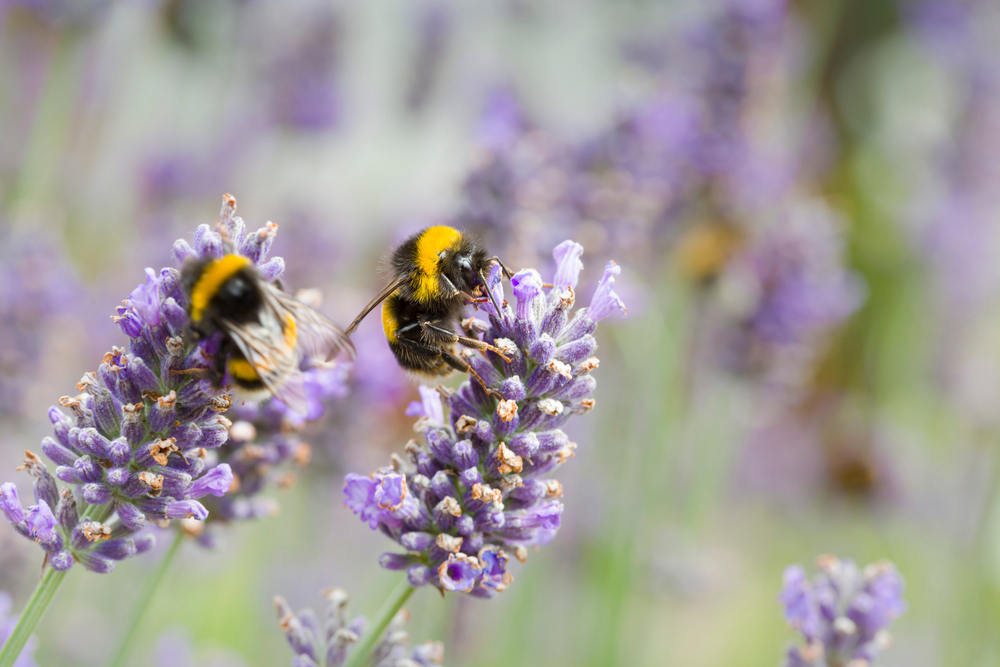
Help the bees When choosing plants and seeds for the coming year how about focussing on our pollinators, all the moths, flies, beetles, butterflies, bumble and honey bees (among others)? These pollinators need homes – the easiest option is just to leave areas of long grass or log piles and leaf letter in unused corners of the garden. The compost heap will also shelter insects. There are a variety of ‘bee homes’ or ‘bug hotels‘ which can be purchased, but you can easily create your own using old plant pots, twigs and small bamboo sticks. Once they move in, then these new residents, plus their visiting pollinator pals, will all need nectar to survive. We have so many nectar-rich plants common to our English gardens: hellebores, snowdrops, heathers, pulmonaria, perennial wallflowers, rosemary, crocus, cowslip, crab apple … and, in summer, lavender, lemon balm, borage and salvias, to name just a few. Why not pick a few and add them to your garden this year?
The odd jobs Other jobs for February include digging out perennial weeds in your beds and borders. Dig them up, roots and all, before the weather warms up and they start spreading. Prune winter-blooming shrubs such as mahonia, winter jasmine and heathers once they’ve finished flowering. Cut back wisteria side shoots to three buds from the base, to encourage flowers this spring. Prune Buddleia Davidii (aka a butterfly bush) hard, right back to the base, to keep these vigorous shrubs to a reasonable size. Before the birds start nesting, trim back ivy and deciduous hedges, Virginia creeper and other climbers.
Pauline Batstone shares her monthly round up of what’s happening among the town’s collection of community enterprises and events
Calling all photographers – from keen amateurs to seasoned professionals! The North Dorset Photography Competition 2025 is your chance to showcase Sturminster Newton and celebrate the beauty, character and life of our town through the power of photography. We want to see Sturminster Newton through your lens – whether it’s the bustling town days, hidden corners or the community spirit that makes this town so special. A panel of judges will select the winning entries, and the winners will be displayed in a local exhibition. Entries will be judged in three categories: Under 18, Amateur and Professional. This exciting competition is part of a wider project celebrating the towns of North Dorset, promoting the area as a vibrant and picturesque destination: Blandford, Gillingham, Motcombe, Shaftesbury, Sturminster Newton and Sherborne will all have individual competitions. Residents will then have the chance to vote for their favourites, with the top North Dorset images going forward to the ‘Winner of Winners’ exhibition at The Exchange. It’s an opportunity for local photographers to have their work showcased across the region and featured on the Visit Dorset website. Whether you capture a timeless view, a fleeting moment of daily life, or the energy of a local event, we want to see your vision of Sturminster Newton. Key Dates: Submissions open – 14 February 2025 Deadline for entries – 28 March 2025 Exhibition opens – 9 May 2025 For full details visit northdorsetphoto.co.uk
What’s on On Sunday 23rd February The Exchange and Artsreach are partnering with Dorset Food & Drink to host a pop-up Producers and Makers Market in The Exchange on the day of the always-popular annual Tea With William Barnes, offering the chance to try some famous local produce – or discover something brand new that has been made in Dorset. Taking place in the Atrium of The Exchange, the pop-up market is free, open to the public from 11am to 3pm: come and meet some of our county’s fantastic makers, including Black Ven Distillery, Chocolate Arthouse, Weymouth51, Farm Girl Sausages, Purbeck Ice Cream, Mrs Potter’s Brownies, Dorset Shortbread, Duck Farm Pottery, Rowan Beecham and Luna’s Locket.
And the highlight of everyone’s February … the SturBiz Pancake Races! On the Recreation Ground the first race is at 1:15pm on Shrove Tuesday, 4th March. There’ll be flipping pancake races between William Barnes Pupils, plus competitors from Yewstock School, the High School, local businesses and, of course, parents. All welcome to come and cheer on the racers. And finally … The Emporium is not just another charity shop: it has become a real destination for collectors, and we are very grateful for the advice and guidance given to SturAction by the teams at Charterhouse Auctions and Horrocks & Webb on pricing donations. When appropriate we also put goods into auctions, either with Charterhouse in Sherborne or, depending on the advice, to specialist auctions. As a consequence we get better value from our donations, and more money to give back to the community – around £1,000 on a normal year and £7,000 for one item at a recommended specialist auction a few years ago. So thank you to Charterhouse and Horrocks & Webb for your time and help.
From closed roads to poonamis, we know North Dorset’s flooding is getting worse – Rachael Rowe asks what’s causing it (apart from more rain)
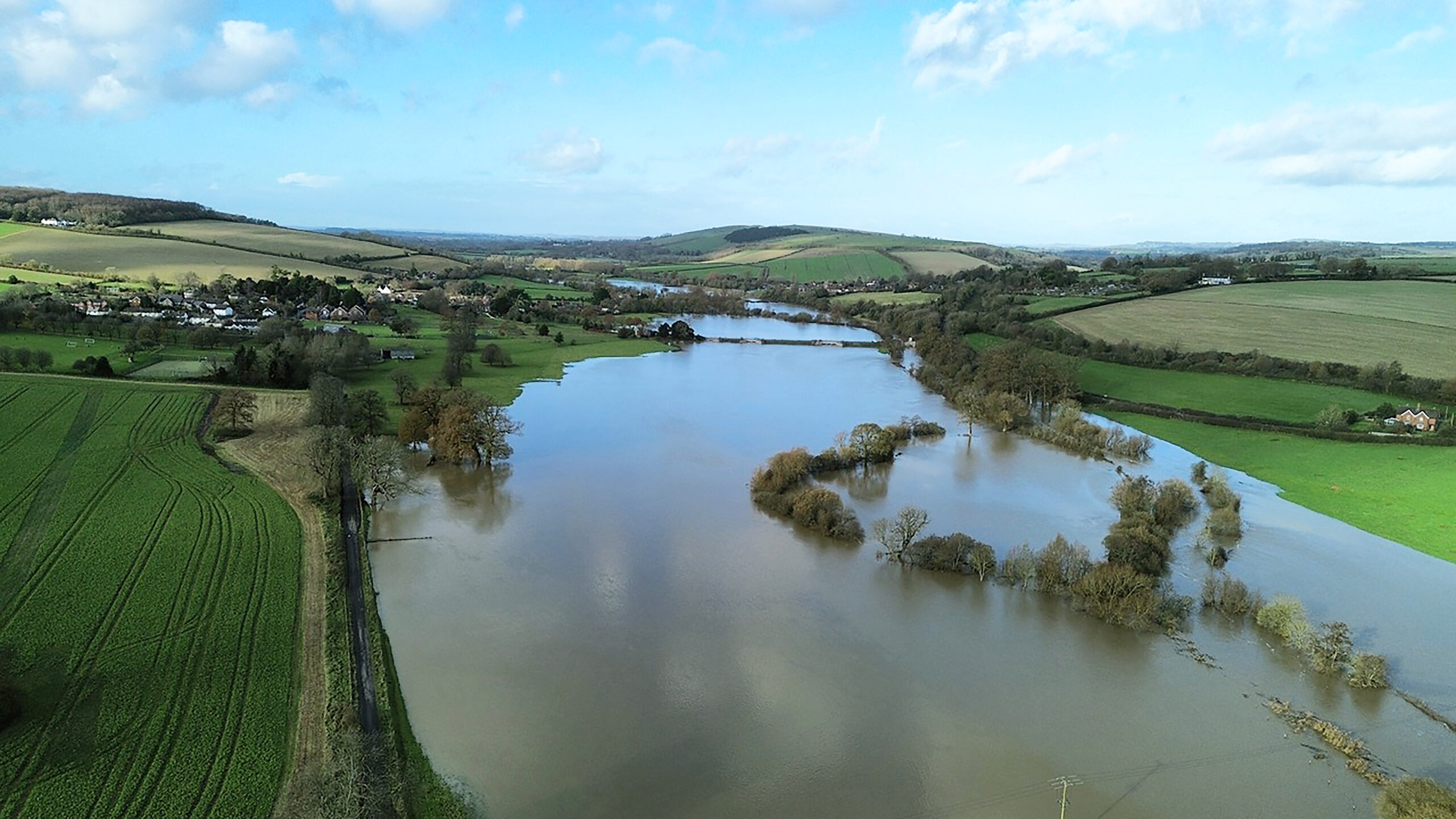
The Stour out in November 2024 – the actual river banks can be seen in the bottom right of the image, with Durweston bridge crossing in the centre. Image: George Hosford
The last weekend in January was a storm to remember, as winds and torrential rain reached North Dorset. Rain described as “biblical” in nature streamed down on the Blackmore Vale, with many places rapidly flooding. For a while, roads across Somerset and Dorset were closed, with cars stranded in floodwater. North Dorset has well-known local flood spots – most people will avoid Hammoon and Caundle Marsh in very heavy rain, for example. However, what surprised many people were new areas with significant floodwater. How often does the A303 flood, for example? The A357 between Shillingstone and Sturminster Newton was closed while investigations took place into the flooding. The amount of water caught people out, stranded several cars. A Dorset Council spokesperson responded: ‘There are no specific known issues with our drainage here: it is likely to just be volume of rain falling in a short period of time that is overwhelming them. We operate a cyclical gully cleansing regime to clean the gullies all around the Dorset Council area and gullies are also checked during routine highways inspections. Unfortunately, some weather events mean that the gullies cannot handle the amount of rain that falls in such a short period.’ Blandford farmer (and BV columnist) George Hosford had some insights into the flooding. His ‘early flood warning system‘ – his 92-year-old father John – generally looks out of the window and tells him when cattle should be moved away from the Stour. George also measures rainfall on the farm and used to see an average of 1,050 ml a year: ‘The last three years we’re seeing an average rainfall of 1,400ml which is a significant increase. It’s down to climate change. Since September last year the Stour has been out five times. It used to be just twice a year. The problem is always a large amount of rain in a short space of time.’ Run-off from fields is another issue. ‘There’s a lot of maize being grown to feed cows and anaerobic digesters. While it’s good for producing carbohydrate, it has a very long growing season. As a result of using the heavy machinery, the soil can get damaged, causing an increased run off of water. With maize crops, some farmers plough up and down, whereas if they ploughed across a field it would slow down the run off. Some fields are also left with maize stubble in winter: with no other vegetation, there’s nothing to slow the run-off.’
The brown stuff One very unpleasant aspect of the storm was the sewage outfall. SewageMap.co.uk is an online mapping tool that shows, in real-time, which river sections are downstream of sewage discharges from storm overflows. After Storm Herminia, parts of the Blackmore Vale map appeared to have been hit with a giant poonami. It’s a very interesting website – just don’t browse while you are eating. It wasn’t just the fields drowning in sewage. Some unlucky residents with surprise bathroom floods – thanks to those overworked drains – discovered that their neighbours have been flushing wet wipes (seriously, please don’t do that).
SewageMap.co.uk is an online mapping tool that shows, in real-time, which river sections are downstream of sewage discharges from storm overflows.
Busy emergency services Naturally, the emergency services were busy dealing with the adverse weather. The Environment Agency had an incredibly demanding weekend, working to protect lives and properties in Somerset. The impact was also widely felt in Dorset, where the southern communities faced a heightened risk of coastal flooding. A spokesperson said: ‘We have warned nearly 17,000 people and 9,000 properties in the past three days (Sunday 27th to Wednesday 29th) and supported local authorities and fire services with evacuating people at Somerton and Ilford.’ A spokesperson from Dorset Council said: ‘We responded to 14 call-outs: 12 for flooding and two for fallen trees. ‘We made three road closures, all due to the amount of heavy rainfall in a short period. These were the A350 Beacon Hill, Wheatsheaf Hill – the county boundary between Sherborne and Corton Denham – and at Knoll Lane, Corfe Mullen. We also monitored the Portland Road beach road for two consecutive nights, in case the sea came over the beach on to the road. Spring high tides and the wind direction increased the likelihood of the waves overtopping the road, but this did not happen.’ Dorset Fire and Rescue were also busy, on shouts and advising people not to drive through floodwater. ‘Over those two days, we received 20 weather-related calls, three of which were in North Dorset. We attended four of those 20 calls, which were all to assist drivers who had tried to drive through flood water. ‘The biggest challenge we always face is getting the public to follow our advice of not trying to drive through flood water. Our advice for driving in adverse conditions can be found on our website – dwfire.org.uk.
Reducing flood risk With increased adverse weather and higher rainfall, what can be done to reduce the risk of flooding? George Hosford had a couple of suggestions: ‘There should be no building at all on flood plains … no car parks, no buildings and no roads. The Upper Stour is not a naturally flowing river any more. It has been deformed by dredging and building mills and weirs. If farmers in the upper catchment, where the tributaries flow, were given incentives to allow fields to flood for a period, less water would come downstream all the way into Christchurch.’ The Environment Agency noted that with climate change, flooding will be more frequent. It encourages people to sign up for flood warnings. However, with that increased frequency comes the need for more creative solutions to protect the North Dorset infrastructure.
Edward Scott has survived a drone attack while delivering humanitarian aid in Ukraine, where he has been volunteering since October 2022.
Eddy is in an intensive care unit in Dnipro, having chosen to remain in Ukraine for his treatment. Image: Base UA
Sometimes, the war in Ukraine feels distant, despite frequent news reports and its proximity to Europe. However, the devastating news that 28-year-old Edward “Eddy” Scott from Stour Row, near Shaftesbury, had been seriously injured in a drone attack has brought the war much closer to home.
On 30 January 2025, Eddy was driving a clearly marked, armoured humanitarian vehicle as part of an evacuation mission in Pokrovsk. The vehicle, operated by Base UA, was hit by a Russian First Person View (FPV) drone carrying a cumulative charge. The drone struck the top rear left side of the vehicle while it was navigating a damaged section of the road at low speed.
The humanitarian truck which Eddy Scott was driving, after it was hit by a Russian FPV drone. It was clearly marked ‘EVACUATION’. Image: Base UA
Eddy sustained severe injuries, rendering him unable to continue driving. His team leader, Pylyp Rozdestvennkyi, acted swiftly, applying tourniquets to Eddy’s left limbs to control the bleeding. Suffering minor shrapnel wounds himself, Pylyp checked the two evacuee passengers, confirming that one was unharmed while the other had a minor shrapnel wound.
With no time to lose, Pylyp flagged down a passing military vehicle and secured urgent assistance. Pylyp carried Edward into the military vehicle, and the unharmed evacuee stayed with him. Pylyp followed the military vehicle in the damaged Fiat Ducato as they made their way toward Hryshyne, where a casualty transfer point was located.
Upon arrival, medical personnel were standing by. Despite his injuries, Eddy remained conscious – he was immediately assessed, moved to an ambulance and transported to a larger medical facility for emergency surgery.
Doctors at the hospital made every effort to preserve Edward’s limbs, but due to the severity of his injuries, he was taken into surgery for amputation. His left leg was amputated above the knee, and his left arm underwent a high amputation, preserving approximately 10 cm below the shoulder. Following surgery, he was transferred to an ICU ambulance operated by MOAS and transported to a hospital in Dnipro – Pylyp followed in a separate vehicle right behind.
Humanitarian Work in Ukraine
Eddy (back left) assisting an elderly disabled woman to evacuate her home. Image: @MadisonTuff Humanitarian Photographer
Eddy, a British sailor from Shaftesbury, attended Sherborne School. He has been actively involved in humanitarian efforts in Ukraine since October 2022. Initially considering joining the military, he was instead encouraged to work in aid relief. He first set up Dorset to Donetsk, using a truck to deliver humanitarian supplies, and later joined Base UA, a Ukrainian NGO for humanitarian aid and cultural work founded by activists and journalists. His work focused on evacuating civilians from frontline areas and rebuilding damaged homes.
Eddy holding his dog Ice, posing with civilians evacuating from frontline areas. Image: Base UA
In the three weeks leading up to the attack, Base UA had been working in coordination with Vodafone and East SOS to refuel generators powering the only two mobile network towers in Pokrovsk, ensuring residents could contact evacuation hotlines.
Increasing Drone Threats
Kamikaze drones, also known as loitering munitions, are aerial weapons equipped with warheads that crash into their targets. Russia first used drones on military targets in September 2022, but since then, they have increasingly been deployed against civilian infrastructure. The attack on Eddy and his team marks the second time in two months that Base UA vehicles have been directly targeted by Russian drones.
Drones such as FPVs are manually controlled, allowing the operator to visually confirm and select a target before initiating an attack. Targeting clearly marked civilian vehicles and humanitarian workers violates the Geneva Convention and constitutes a war crime.
Recovery and Support
Images of Eddy in hospital have gone viral, with an outpouring of support from the global community. Despite his life-altering injuries, Eddy remains in stable condition, high spirits and is determined to continue supporting Ukraine in any way possible. Base UA described Eddy as a dedicated humanitarian who has risked his life countless times to help others: ‘Eddy’s story highlights the increasing dangers faced by aid workers and civilians in Ukraine, particularly from drone attacks, as they strive to assist civilians amidst ongoing conflict as well as the often overlooked and numerous war crimes by Russian forces daily.’
Eddy has chosen to remain in Ukraine for his treatment, receiving assistance from The Weatherman Foundation. A GoFundMe campaign has been launched to aid in his rehabilitation and recovery. At the time of writing, more than £104,495 has been raised to support his long-term care.
This week I heard a news story (OK, fine, I watched a TikTok. But I promptly checked it was true!) about a beaver colony in the Czech Republic which has put us all to shame. In just two days, without a single feasibility study, planning consultation or eye-watering quote from a contractor, the eight beavers built a dam that local authorities had been trying (and failing) to construct for seven years. Bureaucracy, it turns out, is no match for a determined rodent with an architectural vision. The project – meant to restore a wetland area – had been tangled in red tape for so long that the beavers took matters into their own paws and built the thing, in exactly the right place, in two nights … and promptly saved the administration more than a million pounds. No paperwork, no planning disputes, no hearings, no requests for a budget extension. And after inspecting it, the head of the Czech Nature and Landscape Protection Agency admitted it was better than the one they’d spent seven years planning. Honestly, at this point, I think we should put beavers in charge of most things. Imagine the possibilities: public transport, NHS waiting lists, pothole repairs … government budgets … It’s such a great story. There’s something deeply reassuring about the idea that, while the rest of us are watching world events unfold with a mix of horror and fatigue, somewhere out there, beavers are quietly (and efficiently) beavering away (badoom tish), making things better. Speaking of fatigue … I’d like to request that, just for February, we can live in precedented times. Just once. For a few blissful weeks, could we have everything proceed exactly as expected? No surprises, no chaos, no new horrors. Just a nice, predictable, boring run of days where nothing major goes wrong, nobody has to ‘pivot,’ and no one uses the phrase ‘unprecedented challenges’ with a weary sigh. I’d like to spend just a few weeks knowing what’s coming next. Wouldn’t that be nice? Here’s to a boring February (but, you know, in a lovely way).
Laura x
What a top! I’ve just returned from a short trip into Shaftesbury – made much longer than planned thanks to the mysterious knitter who has placed a new topper on the postbox outside the Town Hall. It’s WONDERFUL! The detail is astonishing – the snowdrop in Piglet’s hand, the basket of carrots (presumably a gift for Eeyore). I have no idea who created it (does anyone?), but I wanted to make sure they know just how marvellous it is and how many people stopped to admire it. I particularly loved the message behind it. In this chapter of the book, Pooh and Piglet visit a gloomy and lonely Eeyore because they’re worried about him – it’s a perfect reminder on our high street to check in with friends during the bleakest month of the year. Fitting, too, that it was bringing people together, sparking smiles and conversation. Whoever you are – thank you! M Woods, Shaftesbury
Your anonymous correspondent (Letter to the editor, Jan 25 issue) is unhappy at the quality of the little Christmas trees in Stur over Christmas, and the lack of street decorations. The important point to remember is that it is the businesses and the charity SturAction who pay for Making Stur Sparkle, not the Council Tax payer, apart from a £500 grant towards the big Christmas tree and the invaluable help of the Council Grounds Team – and thanks also to the Fire Service. The little Christmas trees were even more of a battle this year because of the two major storms and also coping without our previous worker to put them up and keep them up. We use battery operated lights because for most buildings there is no source of mains electricity we can tap into – the rooms above are no longer occupied by the shop-keepers below. Having some sort of independent ring main just is not feasible. For next year we are investigating using artificial trees with integral lights as some other local towns do, but they would still be battery-operated as there is no alternative. As far as other street decorations is concerned, the costs are beyond what SturAction could afford. So you are just going to have to put up with me putting decorations on the bollards around the place at my own expense. Councillor Pauline Batstone
What’s the Point of Gonkmas? I was interested to read your article on the festive display in Sturminster and the controversial gonks. I have nothing against such characters, however using them in a manger scene was not being inclusive but being deliberately provocative to Christians. It is sad that the town Council could not display, alongside all the festive characters, the reason for the season in the first place. Perhaps in 2025 they could put Christ back into Christmas in a family friendly and less controversial way? The Rt Revd Karen Gorham Bishop of Sherborne
On violins I enjoyed reading a number of the articles last month but I was particularly interested in the violin maker story. I thought Courtenay’s photos brought the article to life so realistically. I am very familiar with the inside of violin workshops and this article brought it all back – I was a violinist in the BBC Concert Orchestra for nearly 40 years. I also played with numerous orchestras and in West End shows as a freelance musician. I played a number of violins over the years, including an Italian instrument made in 1897 by Eugenio Degani – I had to sell that one for a deposit on our house. I then bought a violin made by W. E. Hill. I bought an instrument made in 2000 (in 2000) by a British maker, Melvin Goldsmith, in order to support local makers: he is now famous worldwide. I had many other instruments over the years, of course. Of all the many thousands of recordings and concerts, one of the most memorable was a trip to Milan in 1987, to play at La Scala with the National Philharmonic Orchestra for Rudolph Nureyev’s Nutcracker ballet. He also demonstrated a lot of the ballet moves. On a day off I was able to travel to Cremona to see the exhibition of many instruments made by Antonio Stradivari. These instruments had been brought together from all around the world to mark the occasion of 250 years of his death. I managed to break my left wrist in my late 50s, and despite nearly a year on leave I wasn’t really able to reach the required standard. I eventually had to retire, though I continued teaching for a couple of years. I don’t do any playing or teaching now: watching nature and taking photos has had to replace my violin playing. Mike H, by email
James Cossins TB testing I had the privilege of transporting a gorgeous massive bull, brought over from the Isle of Wight, to a holding pen in Dorset. He was a real character was Edward – he did not want to come out of his trailer under any circumstances! We tried sticks behind him (so every few inches he moved, the sticks were moved) … the crafty blighter knew what we were at, and just lifted his rear legs and smirked at us! He was enjoying the game. One week later he was SLAUGHTERED due to an inconclusive TB test. That was more than ten years ago! Something desperately needs sorting to stop this needless waste of animals. Carol Willment, by email
No Wessex super council The news that Wessex has this week been excluded from the Devolution Priority Programme raises more questions than answers. While the councils have expressed understandable disappointment at missing out on potential funding, I’m left wondering whether we’ve missed the boat … or dodged a bullet. The Dorset Insider last month (I am a firm fan of this mystery parish councillor) rightly asked how local voices would have been safeguarded under a super-council. With such a vast region involved, would Dorset’s distinct rural challenges have been drowned out by urban priorities? Without clarity on checks and balances, it’s hard to see how strategic planning decisions wouldn’t have devolved into the very scenario your Insider feared – targets being shuffled around with little regard for local knowledge. At the same time, this setback could mean Dorset loses access to much-needed funds for infrastructure, housing and economic growth. I hope there’s still a path forward that balances both funding opportunities and genuine local representation. Catherine Sinclair, Dorchester
February’s issue of The BV brings the global headlines close to home, as Dorset reels from the news that local humanitarian volunteer Edward Scott was seriously injured in a Russian drone attack in Ukraine. His resilience has inspired thousands – his story is one you won’t forget.
Elsewhere, we explore the reality of rural bank closures and their impact on older residents, investigate North Dorset’s worsening floods (you’ll not be wading in your wellies in the flooded fields after you’ve seen the map), and the mystery Dorset Insider tackles the biggest problem for any parish councillor: Poo-dunnit?
Equestrian Jess Rimmer starts questioning her life choices over some dressage tests, and in local history we have a treasure trove of vintage wedding photos, plus an archive of 50s and 60s Blackmore Vale Motorcycle Club photos emerges.
A retired farmer has requested to be this month’s Grumbler as he wades into the government’s latest ‘green’ land grab, and we’ve pages of community news, puzzles and politics.
Karen Geary is feeding us all back to health after the winter’s cold season hits, and Heather has the FLUFFIEST pancake recipe for Shrove Tuesday.
With more than 100 pages of community news, equestrian, farming, art, local history, wildlife, gardening, and more… why are you still here? Dive in!
The Blackmore Vale, nestled in the heart of Dorset, is a region known for its rolling green landscapes, charming villages, and a deep connection to nature. The mild climate and fertile soil make it an ideal place for cultivating a variety of flowers, many of which have been growing here for centuries. Whether you’re an experienced gardener, just starting out, or even looking for inspiration to brighten someone’s day—perhaps by deciding to send flowers to Australia as a thoughtful gift—choosing the right plants for this region will ensure a flourishing and vibrant garden.
Understanding the Blackmore Vale’s Climate
The temperate maritime climate of Blackmore Vale provides mild winters and warm summers, with steady rainfall throughout the year. This creates excellent conditions for growing native and traditional flower varieties. However, with the region’s clay-heavy soil, proper drainage is key to avoiding waterlogging, especially in wet months. Selecting hardy, well-adapted flowers will make gardening easier and more rewarding.
Best Local Flowers to Grow in the Blackmore Vale
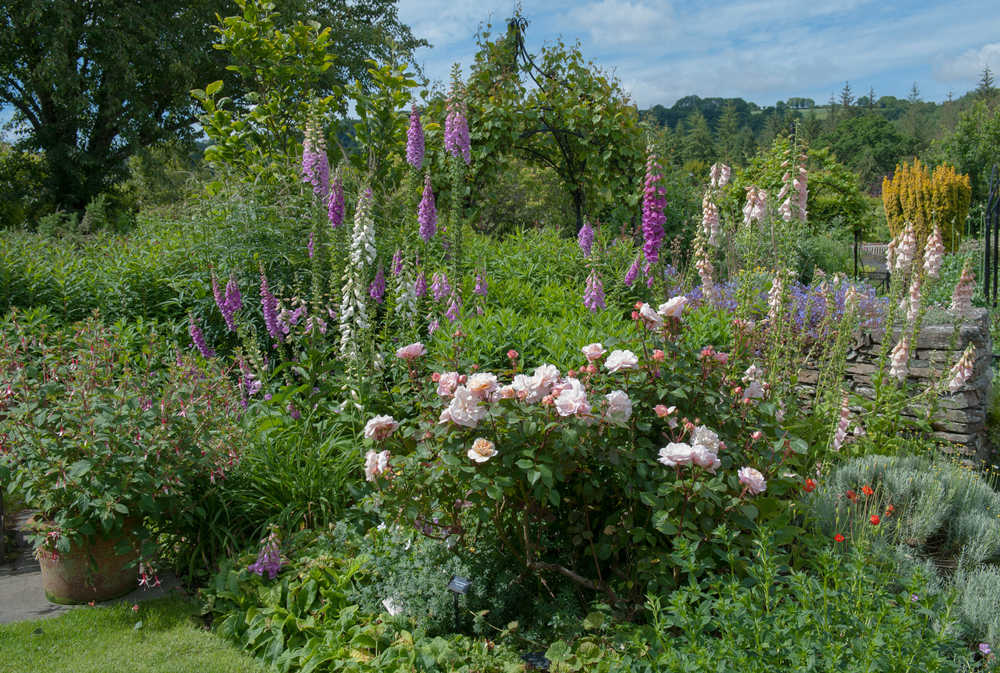
1. Foxgloves (Digitalis purpurea) – These striking, tall flowers thrive in woodlands and cottage gardens. Preferring partial shade and well-drained soil, foxgloves attract bees and butterflies, contributing to the local ecosystem.
2. Primroses (Primula vulgaris) – A springtime favorite, primroses flourish in damp, shaded areas. They are perfect for garden borders and bring an early burst of color after winter.
3. Cowslips (Primula veris) – Often found in meadows, cowslips are excellent for wildflower gardens. They do well in sunny spots with well-drained, slightly alkaline soil.
4. Meadow Cranesbill (Geranium pratense) – A hardy perennial with violet-blue flowers, meadow cranesbill requires minimal care and thrives in both sun and partial shade.
5. Oxeye Daisies (Leucanthemum vulgare) – These cheerful wildflowers are a common sight in Blackmore Vale’s fields and meadows. They prefer poor, well-drained soil and need little attention once established.
Planting and Care Tips
● Soil Preparation: Improve heavy clay soil by adding compost and grit to enhance drainage. Most native flowers prefer well-drained, nutrient-rich soil.
● Watering Wisely: While natural rainfall often provides enough moisture, young seedlings and newly transplanted flowers may need additional watering during dry spells.
● Mulching for Protection: Applying mulch around plants helps retain moisture, suppress weeds, and enrich the soil. Organic mulch like bark chips or leaf mold works best.
● Encouraging Pollinators: Native flowers attract bees, butterflies, and other beneficial insects. A diverse mix of plants ensures a healthy, pollinator-friendly garden.
Seasonal Gardening Tips
● Spring: Start seedlings indoors before transplanting them outdoors. Keep soil moist to support early growth.
● Summer: Deadhead foxgloves and geraniums to extend their blooming period. Deep watering is necessary during dry spells.
● Autumn: Divide perennials like meadow cranesbill to promote stronger growth for the next season. Collect seeds from wildflowers for future planting.
● Winter: Protect tender plants from frost by applying mulch or fleece. Prune back dead foliage to encourage healthy regrowth in spring.
Bringing the Beauty of the Blackmore Vale to Your Garden
Gardening in Blackmore Vale is more than just a hobby—it’s a way to connect with the region’s rich landscape and biodiversity. Whether you’re cultivating a wildflower meadow, a cottage-style garden, or a simple backyard retreat, these native flowers will thrive with the right care.
And while tending to your own garden can be incredibly rewarding, sometimes sharing the beauty of flowers with others is just as meaningful. Let the natural beauty of Blackmore Vale inspire you to grow, give, and celebrate flowers in every way possible.
As an experienced IFA Client Services Administrator with a minimum 3-5 years’ experience, you will be integral to enhancing client relationships within our financial services team. You will know the difference between a platform provider and a life company, a SIPP from an investment bond.
This role requires strong communication (verbal and written) skills in support of our Financial Planning Consultants. You will have a professional telephone manner, superb client service skills and know how to access information easily and speedily from providers. You will be working in a dynamic environment with exposure to all aspects of financial planning and wealth management.
Benefits:
Competitive salary reflecting level of experience
Death in Service, Contributory Pension, employer-sponsored private medical insurance and 25 days holiday plus bank holidays
Assistance with improving your industry qualifications and continuing CPD
All the tea and coffee you can drink, the occasional foodie Friday or tasty Tuesday and a dynamic vibrant workplace!
The Job:
37.5 hours per working week
Office based role in Shaftesbury with free parking
The company’s ethos is one of sustainability and responsible investing; acting with the utmost degree of integrity and professionalism at all times.
Wessex Investment Management is a “Living Wage Employer” a member of The Organisation for Responsible Businesses and a signatory to the United Nation’s Principles for Responsible Investing.
If you want to know more contact Lisa Bailey via email [email protected] or on 01747 859411
WESSEX INVESTMENT MANAGEMENT
The Wincombe Centre, Wincombe Business Park, Shaftesbury, SP7 9QJ