Sturminster Newton Freemasons (Blackmore Vale Lodge No. 3625) have raised £1,372 for local charity Ducks and Drakes Cancer Trust. The Master donated funds raised at his 2022 Christmas function to the charity, which he believes is such a worthy cause. The Provincial Charity Steward was made aware of the charity and asked for a donation from the Dorset Masonic Care who donated a further £1,000. The Masonic Care Foundation then used their matched funding scheme to add a further £1,000, making a grand total of £3,372 for the charity. Ducks and Drakes Cancer Trust is based in Dorset, and was founded by Andrew Drake and his family following Andrew’s bowel cancer diagnosis at the age of 24. The Trust works to create awareness of bowel cancer in young people aged 18 to 30 in Dorset and across the UK. It supports bowel cancer patients and their families through the provision of specialist equipment and financial aid, and fund specialist nurses in Dorset County Hospital, specifically in the Colorectal Department. They also provide financial support for equipment and the new cancer unit at the hospital.
Working for World Wide Sires is so much more than just a job – we provide industry leading genetics and services to ensure continued success for our customers. We supply profitable genetics and superior customer service, with a strong commitment to supporting our farmers in genetic success.
The quality of World Wide Sires’ product is complimented by world-class service, with a team of professionals that is dedicated to improving breeding programs with a range of services, including Cow Manager, the World-Wide Mating Service (WMS) and a state-of-the-art Global Training Centre.
At the heart of all that WWS has to offer the UK, there is a hard-working team of people that are driven and dedicated to their work. We are dedicated to offering a high-quality product with proven results.
FARMER OWNED. FARMER FOCUSED. WE ARE HERE FOR YOU.
Most of us stock up a little too much at Christmas – and if there’s one thing I hate it’s waste. So keep these recipes handy, and in those hazy post-Christmas days when the fridge is still groaning and you need to use up the odds and ends but can’t be bothered to actually cook, I’ll suddenly be your new best friend. Heather x
PS – you can see all of my previous BV Christmas baking and side dish recipes here, including my foolproof Christmas Cake recipe (which reliably gives that delicious deep Christmassy flavour whether you make it two months or just two days before Christmas). There are also make-ahead Christmas Day side dishes, my homemade mincemeat, the easiest sausage rolls to impress and the super-Christmassy star-topped jammy biscuits.
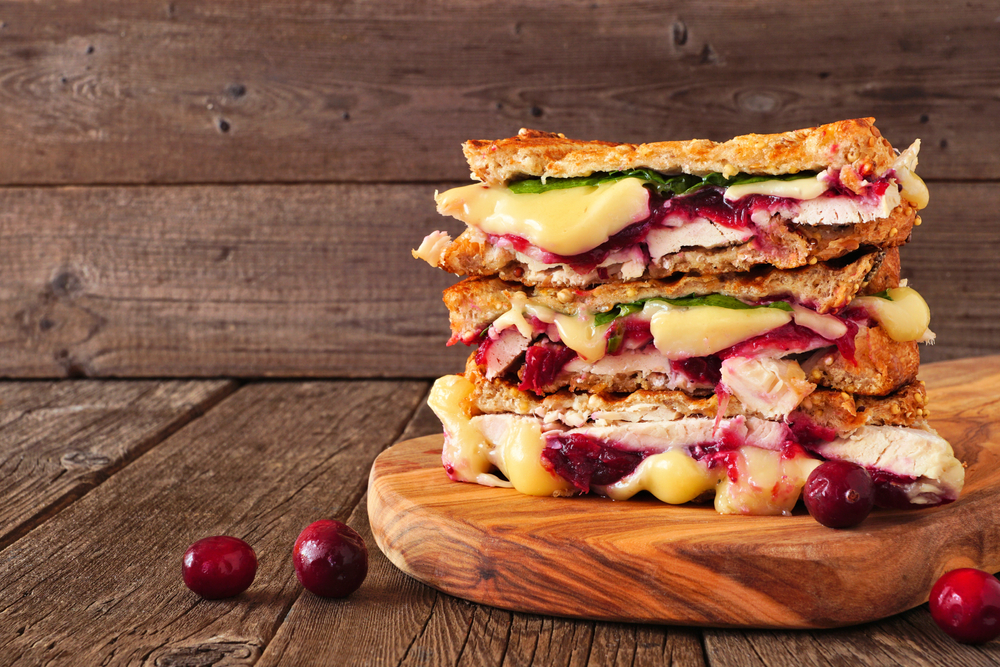
This is a perfect Boxing Day treat. The sandwich takes some of the key components of the Christmas dinner and adds a little bit of extra Christmas decadence – brie! I’ve given rough guidelines on the amount of ingredients here, but be led by what you have left over, what flavours you love most … and just measure with your heart!
Ingredients
Thick cut granary bread
2tbsp butter
Slices of turkey
2tbsp cranberry sauce
Stuffing
Slow cooked red cabbage*
Brie
Heather Brown is a special officer for the Guild of Food Writers, and has worked in the food industry for 20 years. She is a food writer and photographer, offering one-to-one help to local businesses for content and websites.
Method
I have used a toasted sandwich maker/press but you can also make this sandwich in a frying pan.
Butter your bread evenly on both sides of the bread.
Layer the sandwich: turkey, cranberry sauce, stuffing, brie, red cabbage and then the bread. Trust me on the order – this combination ensures that the ingredients will not move around between layers
Place in the sandwich press, or on a hot dry frying pan. Cook until the outside is lovely and crispy and the brie has melted in the middle. If using a pan, cook on one side until the bottom has started to become crispy and then gently turn over. Press down with a spatula to make sure the heat reaches the centre.
Use a long, sharp knife to cut in half.
Play with your fillings according to what you have – I also enjoy a simpler version with just turkey, cranberry sauce and stuffing. This sandwich always works really well with some coleslaw on the side!
This is a wonderfully quick and easy way to use up some of the inevitable left-over turkey. For an easy life I use ready made and rolled puff pastry – also, although I have used ham stock, you can use chicken or vegetable stock too. The biggest issue with this delicious pie is whether there will actually be any pigs in blankets left over after Christmas Day!
Ingredients (serves 4)
1 tbs butter
1 large leek, sliced thinly
350g left-over turkey
12 pigs in blankets
3 level tbs plain flour
Black pepper
500ml stock
Packet of ready-rolled puff pastry
Egg for egg washing
Method
Preheat the oven to gas 5/180º fan.
In a large frying pan, melt the butter with a little oil (to stop the butter from burning). Add the leek to the melted butter and cook on a medium heat until the leeks begin to soften.
Add in the turkey by roughly breaking/shredding it into the pan.
Cut the pigs in blankets into pieces and add them to the mixture too. Make sure the meats are heated through thoroughly.
Sprinkle the flour over the pan and season with black pepper. Then give the mixture a really good stir so that the flour coats the mixture really well and begins to cook.
Pour in the stock and gently stir until it has all mixed together thoroughly. Bring this all back to a boil, and keep gently stirring as the mixture thickens. If you have some odd left-over pot ends of cream you can also add some at this point if you wish.
Once the mixture has thickened, take the pan off the heat and pour the mixture into an ovenproof pie dish.
Take the pastry out of the packet and lay it over the top of the pie dish. Brush the pastry with some of the beaten egg, and stab some small holes to give the steam somewhere to go.
Bake for 20-25 minutes until the pastry is golden brown.
Of all the festive meat left-overs, the one I always end up with is ham. This recipe makes the ham the star of the dish and if you’ve chosen a honey roast ham or one cooked in cola, then that sweetness will work really nicely here. Risottos are a little demanding to cook because they need constant stirring for 20 minutes, but the creamy savoury deliciousness makes a lovely cosy left-overs supper.
Ingredients (serves 4)
75-100g of arborio/risotto rice per person.
250g of ham (or however much you have left!)
3 tbs butter
1 large onion, finely chopped
1 large glass of white wine
Black pepper
1litre hot stock (I used ham stock, but vegetable is fine)
100g parmesan cheese
A couple of rashers of streaky bacon or some bacon lardons.
Method
Melt the butter in a large saucepan over a medium heat.
Add the onion and soften gently. Add the ham pieces and mix, then add the rice and stir thoroughly, letting the rice soak up any butter.
Pour in the white wine and season with black pepper, mixing well. It should sizzle loudly in the pan as the white wine soaks into the rice.
Once the white wine has been absorbed, begin adding the stock, a ladle or cup at a time. Each time you add stock, give the mixture a really vigorous stir, and then keep stirring gently as it cooks, so that the mixture doesn’t stick to the bottom. Keep on adding stock until the rice is cooked (it takes about 20 minutes). If you run out of stock, use boiling water.
To test if the rice is cooked, taste some and see if the texture is soft all the way through.
Once the rice is cooked, grate in the parmesan and stir until the mixture becomes creamy.
Remove from the heat, dot an extra teaspoon of butter on the top and leave to stand for 10 minutes. While you wait, cook the streaky bacon or lardons in a small frying pan until they are crispy, breaking any bacon rashers into pieces.
After 10 minutes, give the risotto a really good stir. You will notice that anything stuck to the bottom of the pan will have loosened and the mixture will come together nicely, ready to serve. Sprinkle the bacon pieces over the bowls to finish.
A Dorset-based charity has initiated an inventive Christmas campaign, aiming to gather £10,000 this season to aid bereaved children throughout Dorset. The local law firm, Blanchards Bailey, is collaborating with the charity Mosaic – which assists bereaved children – in this pioneering partnership. They have worked alongside Fathom, a local branding agency, to create a festive campaign video. This production features children, festive jumpers, and a magnificently orchestrated light display captured by a drone.
Ben Jones, a partner at Blanchards Bailey, commented, “We’ve produced this festive film to highlight the remarkable efforts of Mosaic, to promote awareness of their services, and to encourage contributions to Mosaic’s Christmas appeal. Instead of sending Christmas cards and gifts to our clients and contacts this year, we’re opting to make a special donation to the Mosaic Christmas Appeal.”
Mosaic’s seasonal fundraising activities are crucial for providing a year-round therapy programme for children and young adults dealing with bereavement or the impending loss of a loved one. Mosaic also conducts fundraising events to further support their services.
Jo Revill, the CEO of Mosaic, stated, “This Christmas, we urge you to click, donate, support, and share to make a positive impact on a bereaved child’s life. Any contribution you make, whether it’s the equivalent of your Christmas card expenses, one less box of chocolates, the cost of a hot chocolate, or anything else you can spare, will be immensely helpful.”
Mosaic has a long history of supporting bereaved families and also offers opportunities for children and young people to engage in new activities, such as rock climbing and sailing, while forming connections with others in similar circumstances.
Last year, the charity assisted over 400 children and young people who had experienced bereavement. Mosaic also provides bereavement training in schools across Dorset and organises various other activities to support their mission.
To donate to the Mosaic Christmas Campaign please visit:
Lights, camera, action: Gillingham students unleash their creative potential and debut their new-found skills at a community showcase
Over the last eight weeks Gillingham School students have been taking part in a Media Makers Club through the Gillingham Youth Collective. Young people have worked hard in an after school club, developing media skills ranging from multi-camera shoots through to interviewing and live vision mixing. It culminated in the Big Show, where they showcasing their achievements at a real community event. Parents enjoyed the show alongside Gillingham mayor Barry Von Clements, Dorset councillors Byron Quayle and Val Pothecary, Jules Bond from Gillingham Community Church and Karen Johnson who was representing the Social Prescribing Team and Gillingham Youth Club. The young people have been able to benefit from working alongside Rendezvous’ resident film-maker Marianne King, project leader Lou Donovan and tech specialist Julian Bishop. They have had access to professional equipment and undertaken a range of projects, including green screening, mobile journalism, graphics and post-production techniques. They were supported by the head of Media Studies at Gillingham School, Dan Jones and former Top Gear presenter Nicky Fox. Mel Marshall, assistant head teacher at Gillingham School, said, ‘the collaboration with the Gillingham Youth Collective has been an amazing opportunity. It has allowed our students to access professional training in media making, building both their skills and confidence.’ All the students involved have really enjoyed the experience, which is now in its second year. One said ‘I liked being able to use and do things that we wouldn’t normally, like vision mixing and using lots of proper equipment.’ Another enjoyed the team building element, saying they enjoyed ‘hanging around and working with the other members of the project, and getting to be myself.’ Parents have seen their children’s confidence grow throughout the project, with one saying ‘Media Makers has really inspired my son. So much so that he has applied for a TV Film Level 3 course at Wiltshire College.’
The whole project The Gillingham Youth Collective is a young people’s partnership project funded by the National Lottery Community Fund. Led by Rendezvous and working with Gillingham Youth Club they believe that by working collaboratively they can achieve more for young people (11-19 year-olds) in the North Dorset area. Rendezvous said ‘We are very proud of the commitment and enthusiasm the Media Makers have brought to the project, and we’re grateful for the support of all the team at Gillingham School. We know that both hard and soft skills are to be gained through the teamwork involved in film production, but it’s always great to see young people grow and gain confidence while having fun. We’re looking forward to running the next group but in the meantime we’re thrilled that some of our filmmakers will be going off into the community to produce a promotional film for a youth group running in Gillingham.’ The Gillingham Youth Collective project involves a Media Makers film project run by the Rendezvous a Young Leadership programme run by Gillingham Youth Club and a range of activities run collaboratively and decided upon by young people themselves. The project will run until 2026 and will involve activities and events for 11 to 19 year-olds.
From great bustard tours to dry stone walling – Rachael Rowe presents The BV’s guide to local gifts for the person who has everything.
We all have that one person for whom gift buying is increasingly tricky. Maybe they’re hard to please – or perhaps they’re just someone who really doesn’t need or want anything. Christmas gift buying can be challenging. There’s also a growing trend to not buy more things, but instead to enjoy experiences – you might give the promise of something to look forward to in 2024. Although there are well-known national gift voucher schemes, The BV team prefers to support our local businesses, and we’ve found several ways to give family or friends an experience to remember, and one that also highlights the best of the Blackmore Vale and the surrounding area.
Meet a great bustard on Salisbury Plain
Meet the bustards
Great Bustards were a common feature on Salisbury Plain and the wider English countryside – that is, until the Victorians shot them to near extinction. Thanks to the endeavours and diligence of the Great Bustard Group, there are now around 100 of these huge, magnificent birds in Wiltshire. They are thought to be the heaviest flying birds on earth. The conservation group offers tours where visitors can learn about great bustards and view the birds from hides on Salisbury Plain. You’ll also help fund their valuable conservation work. A two-hour tour is £25 • greatbustard.org
Garden visits galore
The Newt, between Castle Cary and Wincanton in Somerset, is based at the former Hadspen House estate. Here the South African entrepreneur Koos Bekker has created new gardens, a deer park, restaurants, shops and food and drink businesses.
Enjoy endless access to The Newt’s gardens
There is an annual membership at The Newt which not only gives unlimited access to the Somerset attraction, but also some of the country’s most famous gardens including The Eden Project, Kew, Great Dixter, Wakehurst, Blenheim, Chatsworth, the Yorkshire Sculpture Park and even Bekker’s South African estate, Babylonstoren. £85 per person • thenewtinsomerset.com
Tour and taste local wine
Dorset is full of award-winning vineyards with wonderful wines. Visiting a vineyard and learning about how the wine is produced is a great way to discover more about the local food industry.
Try the guided tour at Langham Wine – their English sparkling wine has beaten top Champagne brands in international competitions (see our review of the Langham Wine vineyard picnic experience here). The two-hour experience costing £25 per person and includes a tutored tasting of three of their wines. • langhamwine.co.uk
If you’re looking for a baking masterclass there’s nothing quite like the original bakehouse at Oxford’s Bakery in Alweston, with its century-old ovens still in daily use. Participants are taught baking skills by the one and only Steve Oxford, and will learn to create a range of fabulous baked goods, from lardy cakes to bread rolls (a huge amount of goodies are produced in the lesson to take home and devour as well!). Choose from sourdough, traditional baking or lamination. £99 per person. • oxfordsbakery.co.uk
Drive a steam train
For any railway enthusiast who ever dreamed of being a train driver, Swanage Railway has a range of exciting experiences that make excellent gifts. There’s the chance to drive a steam train (under supervision, thankfully …) along an 11-mile stretch of railway, learning how the engine works. And for those who just want a day out there are fish and chip journeys or a simple steam ride through the Purbeck countryside. Gift vouchers are available from the Swanage Railway website. Steam train driving experiences are £295 – and they sell out very fast. • swanagerailway.co.uk
The Real Cure offers charcuterie workshops
Create your own Dorset charcuterie
Buffets and cold meats are popular all year round, but The Real Cure offers charcuterie workshops where participants get to make their very own chorizo or homemade bacon. Participants will learn about cold smoking, different types of curing, preparing a gammon and making chorizo on a one-day course. It’s an excellent way of preparing for Christmas 2024 while learning something new. £180 per person therealcure.co.uk
Walk with alpacas
Walk with alpacas
Animal lovers will adore a walk in North Dorset with an alpaca. The 90-minute experience with Alpaca Adventure includes meeting the delightful creatures and learning how to handle an alpaca, followed by a leisurely walk around the fields near Shaftesbury. Gift vouchers start from £20 for an adult walking experience. • alpacaadventure.co.uk
Learn the art of dry stone walling
If you know someone who loves a DIY project or who has a bit of garden landscaping to do, a weekend dry stone walling course makes an unusual but practical gift. Dorset Dry Stone Walling Association is running beginner courses in 2024, where participants learn all the basics. It’s a wonderful way for someone to be able to say, ‘I did that’. £120 for a weekend course. • dorsetdswa.org.uk
A Dorset cream tea
What could be nicer than a full Dorset cream tea landing on your doorstep? The Dorset Hand-Made Food Company sends beautifully packaged cream teas, including festive variations, all over the country, and you can select a delivery date 30 days in advance. Prices start from £33 for a cream tea for two people. • thedorsethandmadefoodcompany.co.uk
Last week, the inaugural Gillingham Business Awards captivated considerable attention, attracting a substantial number of entries and nominations from a diverse array of local enterprises. A multitude of business figures congregated with the Mayor, Cllr Barry von Clemens, at The Old Brewery Cafe and Kitchen in Gillingham Dorset for the award ceremony held last Thursday, to join in the celebration.
Nigel Reeve of Marketing West Events, the event organiser, commented, “The Gillingham awards are a continuation of the local business awards we currently host across Dorset, from Dorchester in the west to Bournemouth in the east. These awards are fundamentally about endorsing and honouring the businesses that form the cornerstone of our local economies and significantly contribute to job creation and entrepreneurial spirit within the business community.”
The jubilant winners included Abbey Starr from Farnfields, who was acclaimed as the Rising Star of the Year, an accolade sponsored by the prominent local firm, the Dextra Group. Taylor & Co Lettings clinched the Independent Business of the Year, supported by Hub Accountants. The Customer Service award went to Station Road Garage 1912 Ltd with sponsorship from ActionCOACH. Other victors comprised Dorset Tech, Natura Care Solutions, Franks Maintenance Group, Tops Day Nursery, the BV Magazine, and The Old Brewery Café & Kitchen.
A relatively new establishment in Gillingham, Brides of Dorset experienced an extraordinarily special day themselves. Emerging triumphantly, with three awards, including New Business of the Year and Overall Business of the Year 2023.
All the winners of the Gillingham Business awards Abbey Starr from Farnfields Rising sxtar of the Year 2023Small Business of the Year Dorset TechNew Business of the year Brides of DorsetIndependent business of the year Taylor & CoIndependent business of the year runner up – Brides of DorsetWinner of the Green Eco Awards – Tops Day NurseryExcellence in Customer Service – Station Road GarageFamily Business of the year – Franks Maintenance GroupPub and Casual Dining Award – The Old Brewery Cafe and KitchenBest Place to work – Natura Care SolutionsOutstanding Digital innovation Award – The BV MagazineOverall Business of the Year – Brides of Dorset
From slug battles to seedbed dilemmas, George Hosford looks back at the trials of autumn sowing and the effects of heavy rains
The problematic seedbed – All images: George Hosford
The rain rendered autumn sowing a little challenging this year. Holding off as long as we dare to reduce the risk of aphids infecting our crops with barley yellow dwarf virus (yes, it affects wheat too) then runs the risk of autumnal rain settling in and making good seedbed days hard to find. Luckily, the drilling team threw in some long hours on the good days and we got the job wrapped up. It would have been a different story had we not been direct drilling. Previously cultivated seedbeds do not dry out anything like as quickly as those that have not been touched by machines. The worm holes and airways in the soil remain intact and it is amazing how quickly they drain down after rain. The current downside of the direct drilling model, however, is the underlying slug burden – especially in fields that grew oilseed rape in the previous year. Cultivation can disrupt the slug lifestyle, damage their eggs and reduce the ability of the slimy devils to move through the soil. Direct drilling does not, and in a wet year like this we are seeing a slugfest in the wheat following rape. Slug pellets (now ferric phosphate based, the nasty ones have all been banned) are in short supply, and timing is difficult. Based on the forecast, we took a punt and spread many hectares with a dose, hoping for a good kill overnight before the rain arrived and washed the uneaten pellets away. Waking up to the sound of rain already on the roof was annoying to say the least. Soggy pellets are not attractive to slugs and therefore useless as they wash into the soil. The slugs will continue to paddle around, nibbling off newly emerged seedlings while we look on helplessly. We are assured by our regenerative friends that as soils get healthier, things will improve. Slug-predating ground beetle numbers will build as we disturb the soil less and apply fewer harmful chemicals, and our in-field wildflower strips should also act as reservoirs for other potential slug predators. But when we can expect to go slug pellet free is currently anyone’s guess.
Our Farmer Cluster doing some river dipping in the Stour with FWAG All images: George Hosford
Clay cap pudding Above is an image of a good old fashioned seedbed from mid September when the weather was dry. It’s been over-worked and is consequently vulnerable to run-off and capping during heavy rain events – as I write, it’s like a soil pudding. This is the second time we have tried to establish an AB15 mix on the headlands of a handful of fields. This one is a two-year legume fallow – intended to help farmers get on top of troublesome grass weeds. The rules state that we must mow off the foliage several times during the two years to prevent any re-seeding of weed grasses like blackgrass or brome, and also to ensure that we do not benefit some other area of our business by, for example, making hay out of it for our animals. DEFRA are determined that in rewarding us for one thing, we should certainly not be able to benefit from it in any other way than that which was intended. We overcooked the seedbed here because when we first tried to establish this mix of vetch and clovers in 2022, it did not emerge and grow at all well. Fear of being penalised at an inspection made us try again. First time round we direct drilled it – which we now feel is not the best way to establish small-seeded crops like clover – and the second time we went to town. First we used the Sumo cultivator, which cultivates quite deep, then the discs to create a good tilth, followed by drilling with the old Vaderstad Rapide drill, which further breaks up the soil as well as firming the ground and placing the seeds. Topped off with the ring rolls, the intention was to create good seed-to-soil contact to optimise the chances of a speedy and even germination. The result, however, reminds us why we now try to direct drill wherever we can! This clay cap soil can run together when wet, and capping can prevent seedling emergence; not only that, it will turn to a pudding and dry out very slowly because all the cultivation has destroyed any worm holes and natural fissures between undisturbed soil particles. These are what allow water and air to percolate through the soil, keeping it aerated and free draining. Ploughing has the same effect of damaging soil structure, to a greater depth than simply cultivating – and it can take a whole season or more to recover from. Small-seeded crops are much trickier to establish than larger ones like cereals and beans. Getting the conditions right and judging the right amount of cultivation to suit them is a big challenge. Even after all that work, sadly the germination of the clovers in the mix has not been particularly good.
Main river samples (right) taken after a few days of rain, alongside a still-clear bottleful taken from the Iwerne Brook
Citizen science A popular Farmer Cluster meeting was held in late summer on the Tory family’s land by the Stour at Shapwick, led by Nicola Hopkins of Dorset FWAG (Farming and Wildlife Advisory Group). She had two of us wade into the river with waders and nets to see what we could find on the river bed. We then passed the nets ashore for emptying and sorting, before spending ages trying to identify what we had found! There was a wonderful diversity of species; caddis fly larvae in their characteristic grit-covered duvets, there were damsel fly larvae and even a dragon fly larva, quite a few small fish, as well as snails, water boatmen and a number of what we’ll call ‘unidentifiable wrigglers’. After marvelling at what we had found, we were soon sobered up when Nicola told us what was missing. The river faces many challenges from sewage treatment outflows and leakage from farmland. There was at least a good exchange of ideas among the cluster on how to improve the health of the river. This autumn, as the Stour burst its banks and rather murky brown water spread across our meadows, I was reminded of that delightful evening, and how important it is to prevent soil being carried into rivers. It buries the grits and gravels which are such important habitats for the creatures we found, and threatens their survival. Not only that, but phosphate is often attached to the soil, which can cause algal blooms and other problems in the water, further challenging aquatic ecosystems.
Our new pup needs to regard pet sheep as friends not quarry. Being half collie there are certain instincts in the blood which need to be controlled
Our cluster group has been carrying out some citizen science over the summer: every couple of weeks a group of us take water samples from the river and some of its tributaries, and Claire our leader collects them up and sends them for testing. Suspended solids and other contents are quantified, and we look forward to seeing a whole year’s results, in the hopes we can learn from them. Our own main river samples, taken following a few days of rain (image, left), looked pretty awful alongside a still clear bottleful taken from the Iwerne Brook, which flows down to the Stour from the Fontmell Magna and Iwerne minster direction. Identifying where pollution enters the river is very tricky. In some cases the contributors can simply be impatient drivers in country lanes, squeezing past each other’s vehicles. Tyres rub soil off the bank and into the road, from where it will only wash one way – downhill, to the nearest river.
December is always a special time for The Ridgeway Singers & Band. They’re inviting everyone to come along for a cosy evening filled with traditional Dorset carols, lively folksongs, music that’ll have your feet tapping, and charming local poems and stories to mark the arrival of winter. The group, which was started by Artsreach a decade ago as a part of the South Dorset Ridgeway project, loves to perform the classic carols that Thomas Hardy made popular in his book ‘Under the Greenwood Tree’. Accompanied by nine musicians with their strings and wind instruments, their concerts are a throwback to the community-driven Christmases of old, full of joy, camaraderie, and homemade entertainment. They’re led by Phil Humphries, an expert serpent player (a historical wind instrument) and member of the Mellstock Band, and actor and folk musician Tim Laycock, who is also the artistic director of the New Hardy Players. This year, they’re kicking things off at the parish church in Abbotsbury, where they had one of their very first concerts, on the 8th December. Then there’s an afternoon show in Wareham on the 10th of December. Their final performance will be at the Dorford Centre in Dorchester on Wednesday the 20th of December. Tickets: £12 adults / £6 u18s, and are available online here or by calling 01305 262159.





 THANK YOU FOR YOUR SUPPORT