

Armed with hawks, falcons and fierce dedication, Dorset’s Ryan Ashworth blends old-world falconry with modern pest control – and finds wild beauty
© Jak Bennett
jakbennett.com
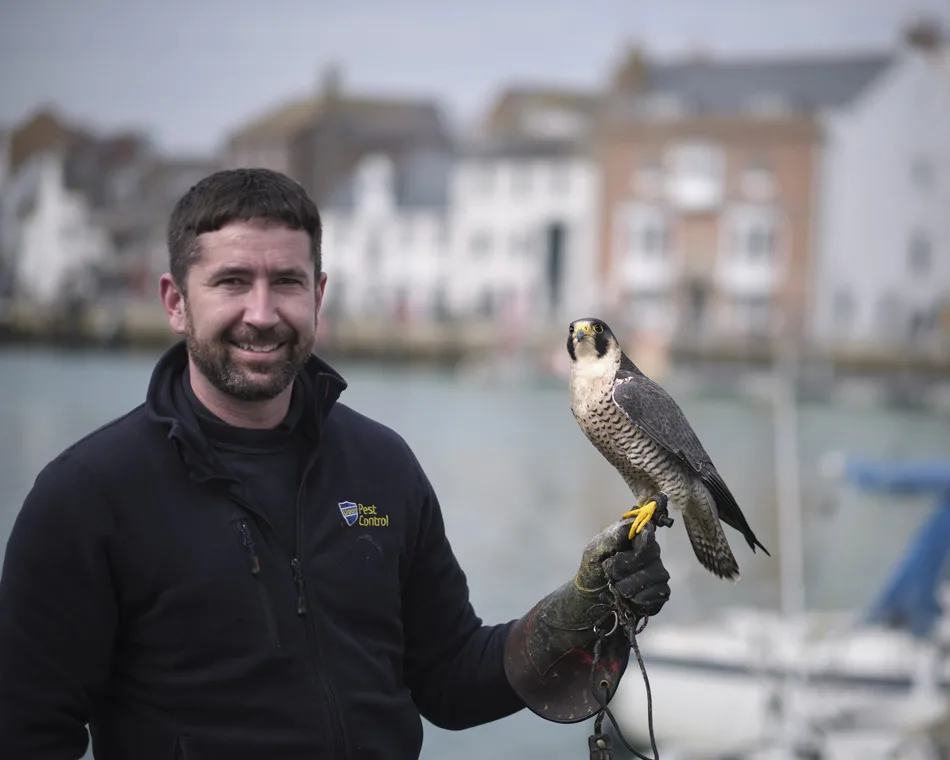
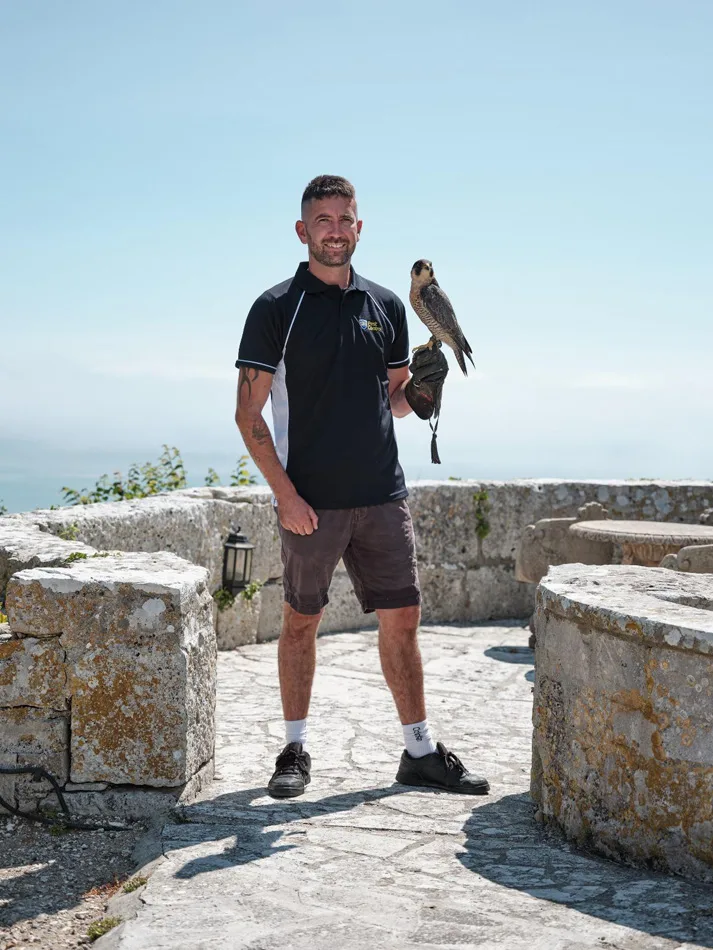
The poet WB Yeats wrote, “falconers are born, not made.” That’s certainly true of Ryan Ashworth. He was just five when he found an injured kestrel and his passion for birds of prey was ignited. ‘Being that close to something so magnificent and wild just stuck,’ he recalls. Decades later, Ryan is a full-time pest control technician and falconer for Dorset-based business, Urban Pest Control, flying birds of prey across rooftops of hospitals, castles, commercial and private estates. His birds are not for show – they’re working predators, part of a modern, site-specific strategy to disrupt infestations and restore balance.
A self-confessed ‘bird geek’, Ryan jokes that someone could pickpocket his wallet when he’s talking about his birds. He clearly loves what he does. ‘Bird abatement is hard to get into because it’s such an awesome job,’ he says.
He’s also a fierce advocate for conservation. ‘Peregrines only exist today thanks to falconers. We noticed the DDT crisis affecting their chicks. We acted,’ he says.
He also finds it ironic that anyone can own a bird of prey in this country without a licence. ‘You can buy a bird online with no idea of just how much commitment falconry demands,’ he rails.
Raised a gamekeeper’s son, his countryside childhood was filled with feeding pheasants, beating shoots, working spaniels, shotguns and dog training with his father. It was a true field-to-fork existence, with his mother teaching him to skin deer and prepare game. School? A struggle. Passion proved a better teacher. He joined the King’s Troop Royal Horse Artillery, then did a stint as a bathroom and kitchen fitter. But the call of the wild never left him.
© Jak Bennett
‘I followed my heart,’ he says, ‘hunting with air rifles, ferreting and lamping rabbits. It was reliving what I had with dad.’
Ryan was inspired by Martin Ballam of Xtreme Dorset Falconry Park, who is still his mentor. He began training a Harris Hawk, unusually working it at night – hawks don’t typically hunt after dark. But Ryan saw potential. ‘It’s one perfect form of nature chasing another. Raw and real.’
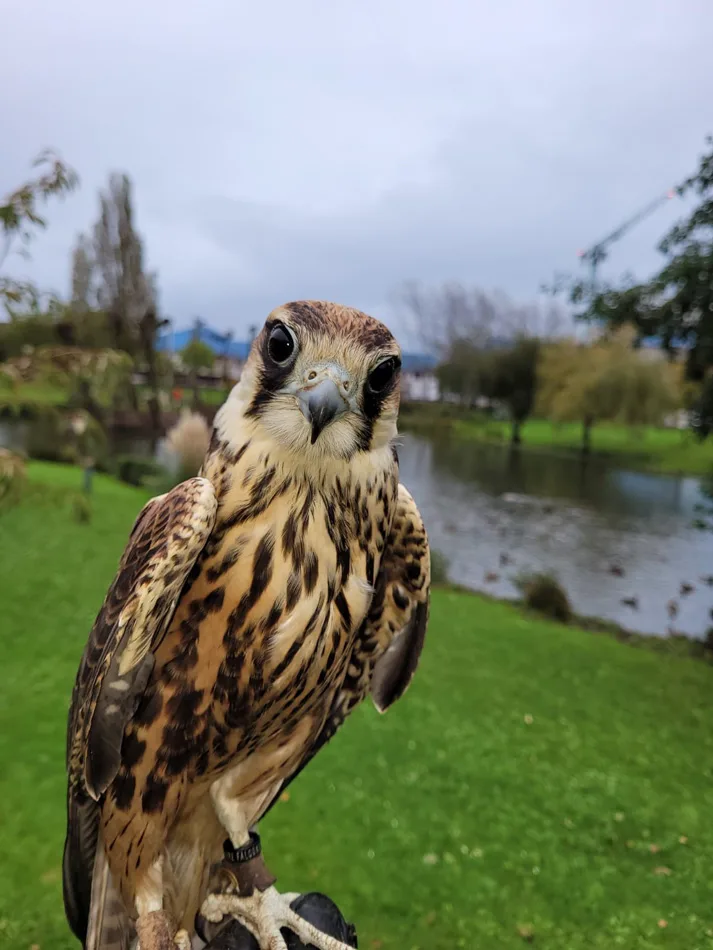
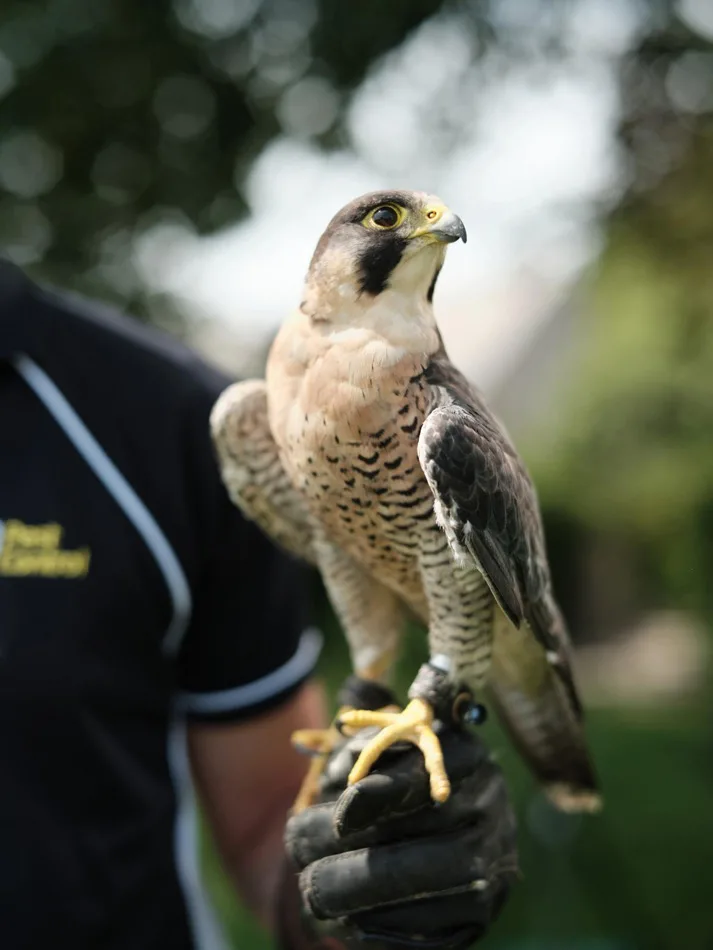
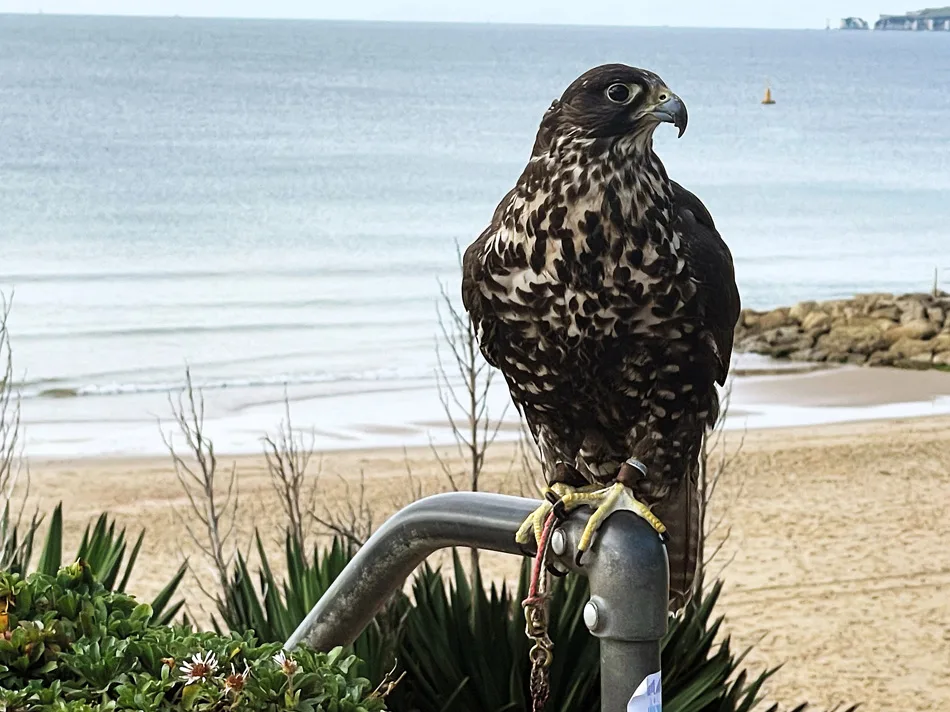
Today, Ryan’s co-workers are his team of five birds – Jesse, a tiercel (male) peregrine falcon; Harris hawk Emily; Betty, a gyrfalcon; Ace, an Asghar tiercel saker falcon; and Maverick, a lanner falcon – each chosen for their temperament and aerial skills. The peregrine, fastest animal on the planet, reaching speeds of 200 miles an hour, is his favourite.
Emily, the ‘wolf of the sky’, is a tireless workaholic. ‘She’d work all day if I let her,’ he says.
Feathered workforce
Each bird is different, with its own fears and triggers. Ryan’s manning process, whereby he acclimatises birds to human presence and builds trust, ensures they can cope with everything they encounter. ‘It’s not about starving them,’ he explains. ‘It’s appetite-based. You wouldn’t eat a roast dinner before a run, would you?’ As soon as the birds have worked their shift they’re rewarded with their full day’s ration. And unlike human employees, they rarely take a sickie.
‘They’re happy to work in all weathers,’ Ryan says. ‘It’s me that’s not so keen. I spend so much time on castle turrets and rooftops, I have had to overcome my fear of heights.’’
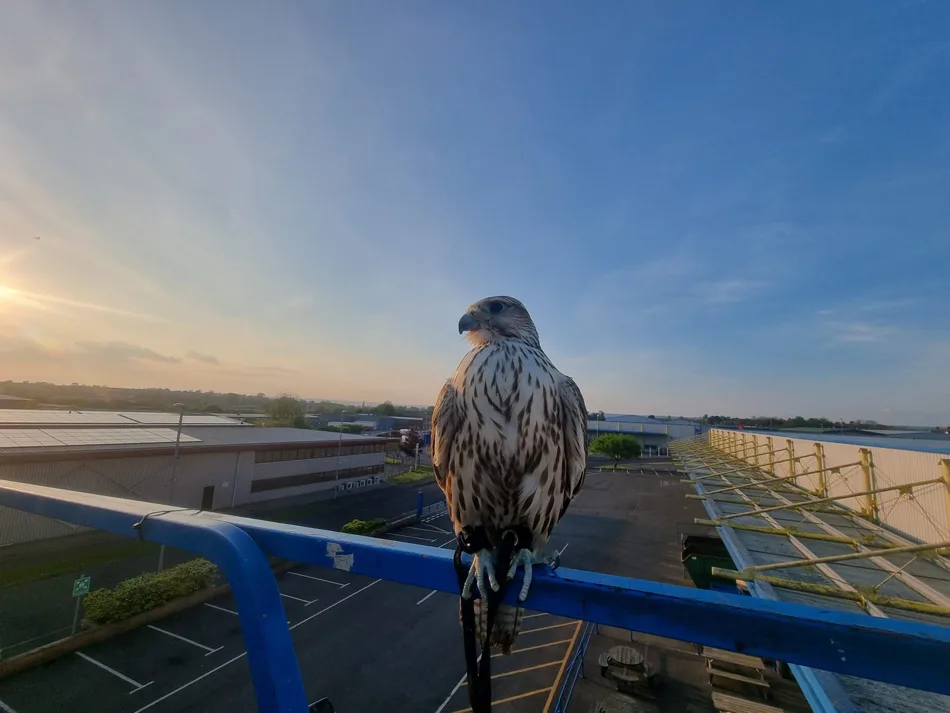
Ryan’s work is gritty, technical and deeply instinctive. He thoroughly assesses each site – Dorset NHS premises, Portland’s Pennsylvania Castle, a sprawling factory site in North Dorset – and plans accordingly. ‘Risk assessment is paramount. Am I on the roof? Are the birds flying or patrolling static on the glove?’
His birds patrol ledges, disrupt breeding gulls and chase pigeons. ‘I’m essentially flying in the fear factor,’ he explains. ‘Imagine someone scary knocking on your door every five minutes. You’d move out quickly!’
He supplements falconry with modern-day deterrents – spikes, nets and strategic advice. ‘Even just moving a bin to another area of a car park can make a difference.’
On one large factory site his falconry solved problematic guano build-up on solar panels, inhibiting eco efficiency. ‘Scaring gulls away meant less poop on the panels: energy efficiency was back to 97 per cent – a huge reduction in cleaning costs.’
In public spaces, the feathered workforce tackles health and safety issues. Aggressive gulls during breeding season can seriously injure unsuspecting people. ‘A protective parent gull knocked a hard hat clean off my head,’ he says. ‘And guano causes slips, respiratory issues and ornithosis, a disease-causing respiratory problem like asbestosis.’
His own birds have accidently injured him too. Having taught his Harris Hawk to hunt at night, the bird mistook his torchlit beard as furry prey. ‘It was totally my fault,’ says Ryan. ‘I thought I was blinded. My eye filled with blood and the pain was excruciating. But I calmed the bird first. That mattered more.’
The pecking order
Ryan can work up to 14-hour days, with inevitable scrapes and scratches, then returns to feed, weigh and clean his birds: ‘They come first,’ he says. ‘Even on Christmas Day. Perhaps that’s why there’s an urban legend that falconry is a top reason cited in divorce cases in America,’ he says. Ryan’s lucky. His partner Jess happily tolerates the birds, even allowing the stunning peregrine, Jesse, into their kitchen to meet me.
Ryan is also keen to get the younger generation interested. He visits schools with his birds. ‘Their faces are a picture,’ he beams – just like that five-year-old boy discovering that injured kestrel.
For more details on Ryan’s work and Urban Pest Control, see urbanpestcontrol.co.uk
Quickfire questions for Ryan:
Books by your bedside?
A TV remote and pest identification logs.
I’m no reader!
A-list dinner party guests?
Tutankhamun – ancient Egypt was the only school subject that engaged me. David Bellamy. Dorset falconer Ronnie Moore – he trained and hunted the same Golden Eagle for 30 years, and he wrote the brilliant ‘Memoirs of a Hunting Falconer.’ And Chris Packham – as the waiter! He does great things for wildlife, though we do clash on some issues!