

Giles Dick-Read spotted the coffee revolution before Britain knew it wanted one, quitting the corporate world for a converted Sherborne dairy
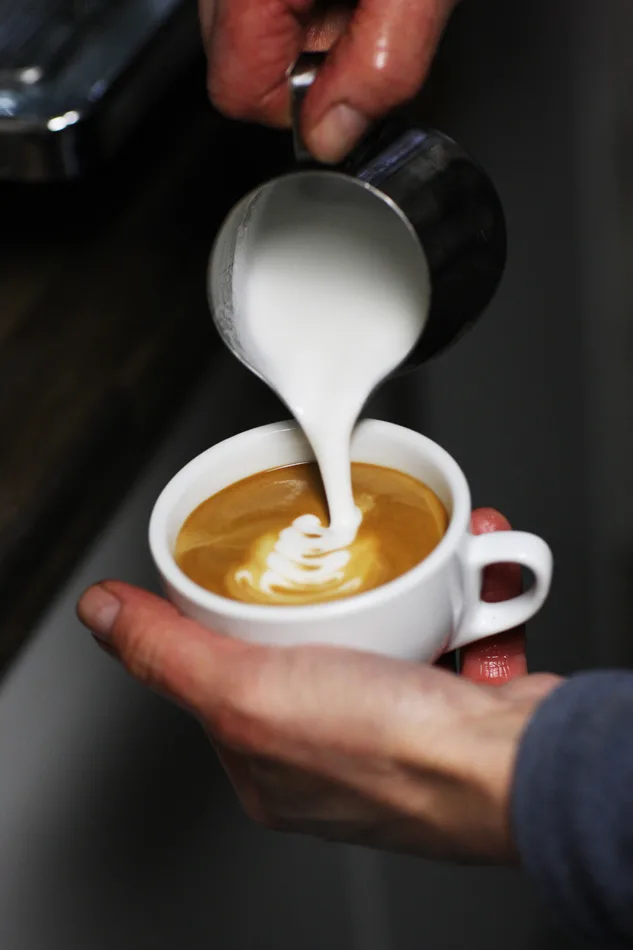
It’s 1993: a world before flat whites and baristas occupying every street corner. Giles Dick-Read is sitting in Starbucks – a new concept – looking out over Kitsilano Bay in Vancouver. But it’s not the stunning view that’s distracting him, it’s the buzz of the place, the easy banter of the dexterous baristas working vast, hissing machines. ‘I remember sitting there, feeling the energy this coffee business was generating,’ he says. ‘I thought, this must be the next big thing. That’s what I’m going to do.’
Giles had just jettisoned a well-paid job in the corporate world of automotives and car audio. He’d hopped on a plane to Vancouver with no set plans, just the question of ‘why have you given up a great job?’ ringing in his ears.
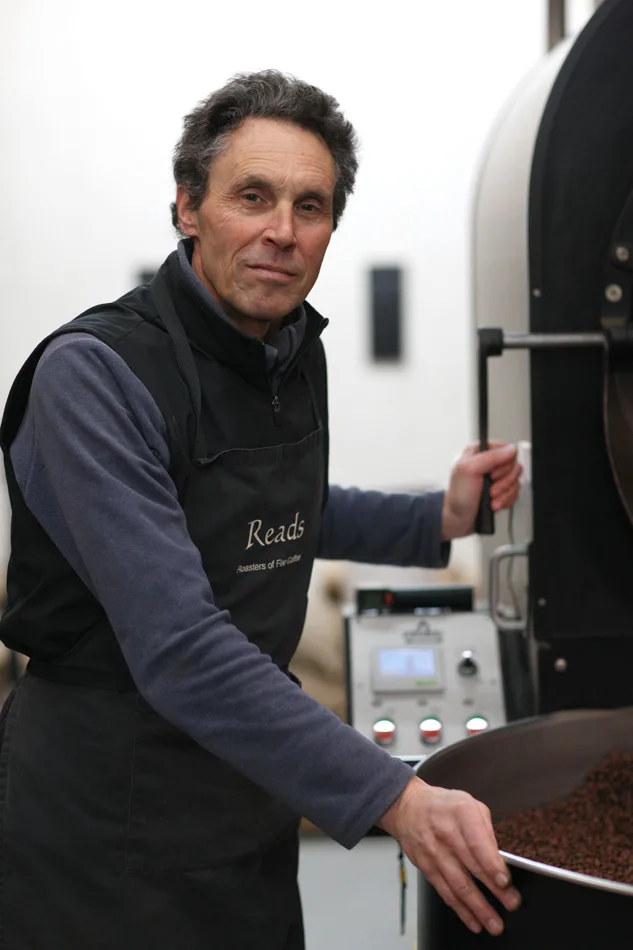
For six months he travelled across Canada and the US, researching the fast-growing world of speciality coffee. ‘I was in the right place at the right time and could see what was coming,’ he says. ‘A coffee explosion!’ He was right. According to the British Coffee Association, we now consume a staggering 98 million cups of coffee every day!
That caffeine-kicked journey eventually led Giles back to London, where he met his wife Charlotte, then working at Café Rouge. She, too, was discovering Britain’s limited understanding of good coffee.
‘Coffee was awful in the UK,’ Giles says. ‘On the road in my corporate job, I’d discovered you just couldn’t get a decent cup. I was also having some health issues thought to be related to caffeine, so if I was going to be able to continue drinking coffee, it had to be good!’
Becoming Mr Bean
A job with a small café chain followed – ‘the only one I’ve ever done where my wages didn’t cover the cost of living’, says Giles, – but it proved pivotal. Having trained as a barista, Giles briefly worked at Whittards while researching speciality beans in his spare time. The real turning point came from a meeting with the owners of sandwich chain Pret A Manger. Giles confidently told them: ‘Coffee is the next big thing and you need to take it seriously.’
They did, appointing him their first coffee man, soon nicknamed ‘Mr Bean’. Consultancy work with major brands followed, advising on beans and machines and writing barista manuals.
‘I’ve lost count of how many baristas I’ve trained,’ he says. ‘My top tip? Give them a tennis racquet and ball and get them hitting it against a wall. Hand-eye coordination is everything in a busy coffee house. Surprisingly, a love of coffee isn’t essential. I’ve trained plenty who don’t even drink it.’
Despite his success as the coffee man, Giles again stepped away from a comfortable salary to begin experimenting.
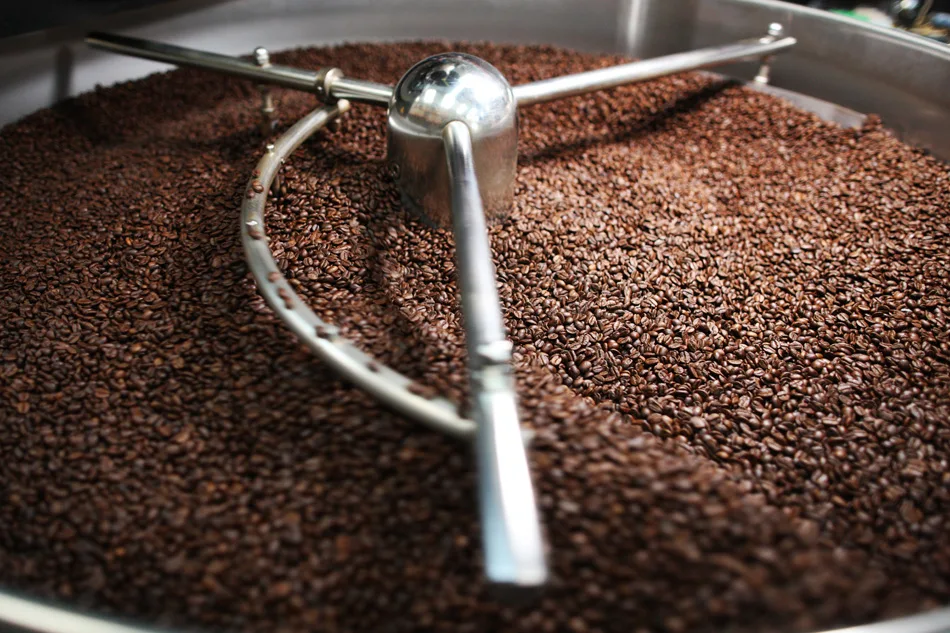
‘I bought a second-hand roasting machine and started to roast my own beans to sell to friends and family. I love all machines, so I was inevitably fascinated by the magic of the roasting process.’
In 2005, Giles and Charlotte moved to Sherborne along with their fledgling speciality coffee business. A farmhouse with outbuildings provided an ideal new home – a way to run a business alongside family life, with their three young children.
Old roots
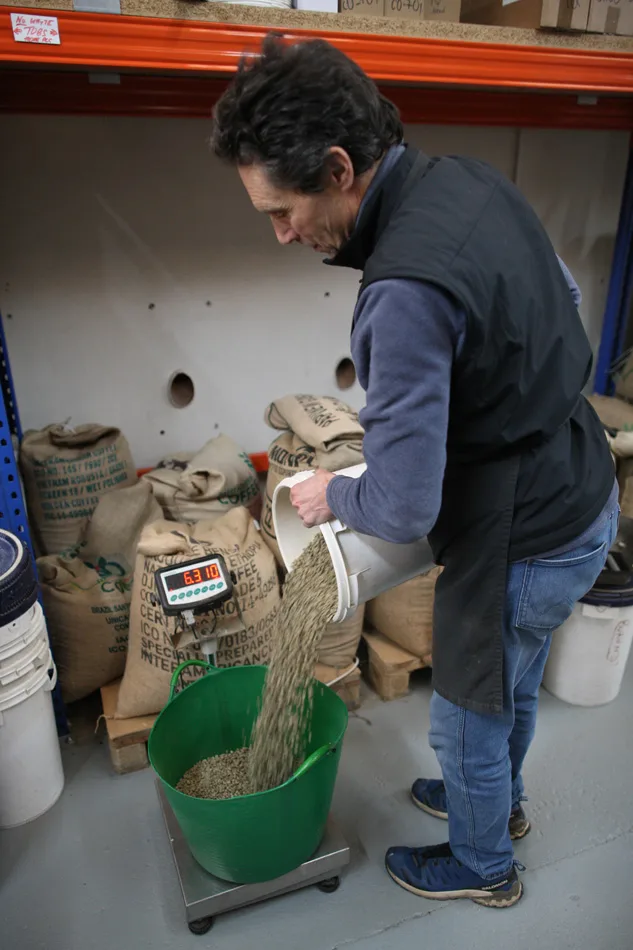
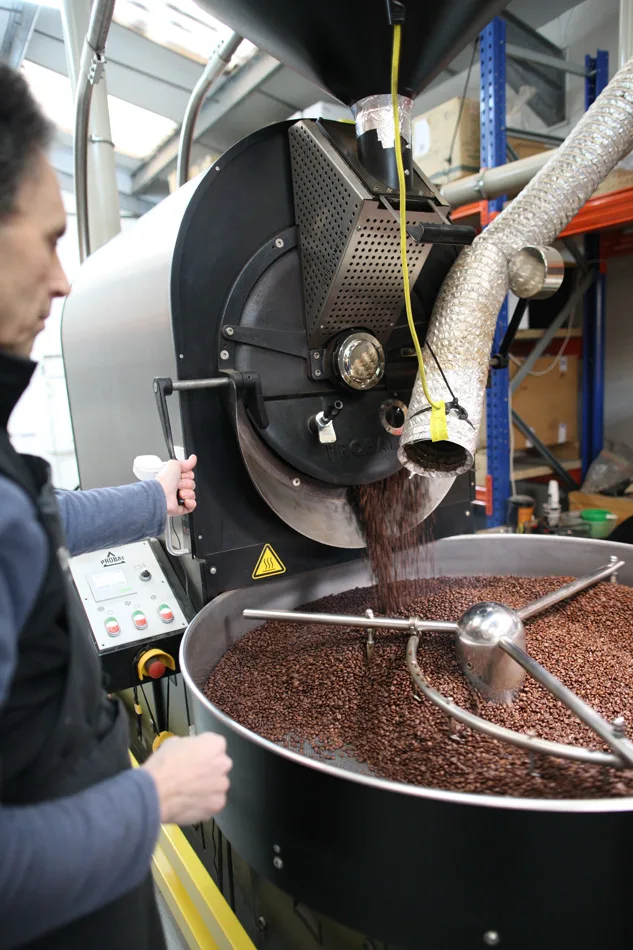
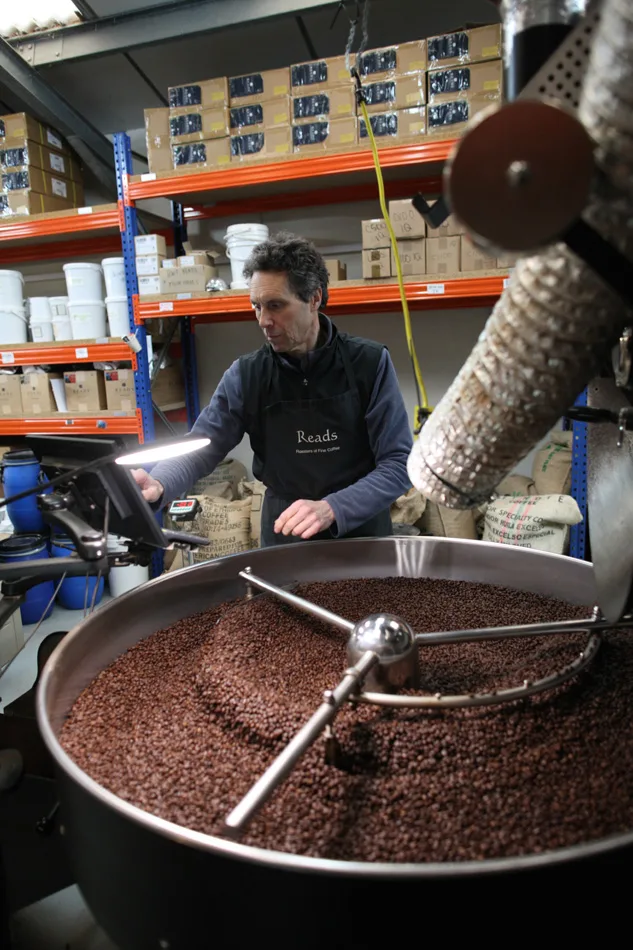
Today, Giles’ ‘happy place’ is a converted dairy – the Roastery. His original small roaster now sits beside a towering Probat machine. Sacks of green beans from a host of countries – Kenya, Sumatra, Peru, Brazil, India and Rwanda – are piled high. The delicious aroma of coffee permeates. ‘Our neighbours are Sherborne Tennis Club,’ he says. ‘They know when I’m roasting – they get a good waft!’
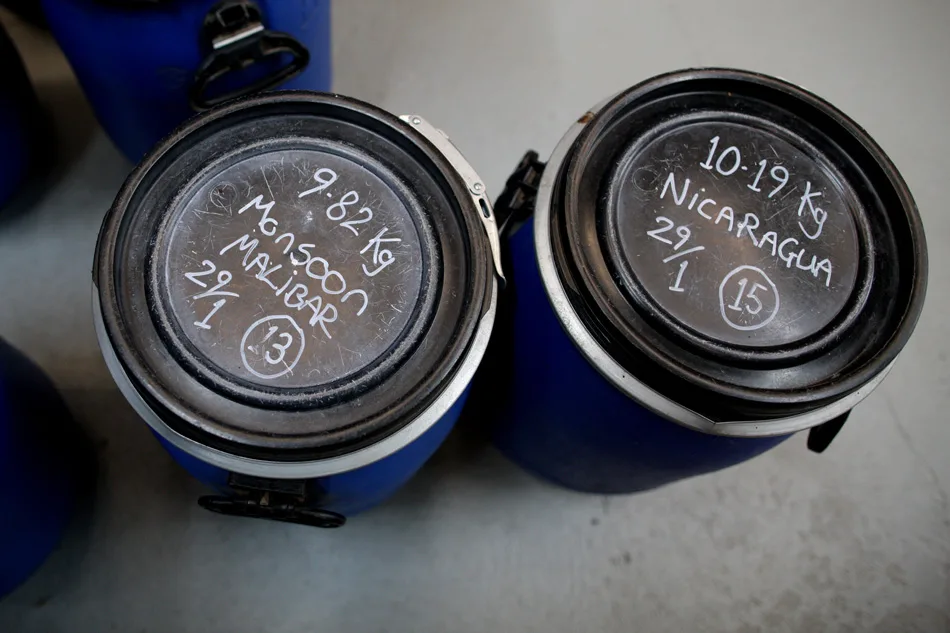
The Roastery is where everything happens, from cleaning and roasting to packaging. Roasting days are Mondays and Thursdays, and every batch is meticulously logged. ‘It’s the only part of my life that’s completely organised,’ Giles ays, explaining that he still does most of the roasting himself.
There’s history in the brand name, too. ‘I hail from Norfolk flour-millers, and my godfather, Brian Read, gave us his blessing to use the Reads name. It’s serendipity, really. Like flour, coffee starts as an agricultural crop. You process it and end up with an ingredient.’
Aside from the roasting, his other favourite part of coffee production is the occasional visit to Tilbury Docks to collect the sacks of green coffee arriving from across the world: ‘It’s such a fantastic experience pulling it off the dockside,‘ he says. ‘Really it’s just the kid in me who loves going to the port to see all the big machines!‘
Coffee culture
From bean to cup, Giles knows every stage of his business, and 20 years on, his core ethos hasn’t changed: ‘We’re still all about roasting special coffee in small batches and helping people make fabulous drinks.
‘As I said, coffee is an ingredient, not a final product. The magic is all in the preparation. The ultimate proof of this is Italy.
‘By and large, Italian coffee is quite ordinary: what’s special is the way it’s so skilfully made.
‘All roasters have their own style – give the same beans to several different roasters, and you’ll get a different coffee from each. We choose to roast traditionally, to produce coffees that are fully developed, without being too dark or too light: we aim for a rich, smooth flavour. In short:
coffee that tastes of coffee!’
Over our own brew (he runs on three espressos a day), Giles gives me a quick lesson on how to use my moka pot: leave the lid open, and watch for the moment the syrupy liquid becomes thinner and paler, that’s the key. A good grinder, he insists, is also essential. Different brew methods need different grinds – cafetières coarse, moka pots fine. The brew ratios of water-to-beans matter too. (Reads supply handy recipe cards to advise customers!)
But Giles is no coffee snob. ‘If people want milk and ten sugars, that’s fine. Coffee should just be enjoyed your way.’
It’s that hands-on passion that Giles brings to Reads’ business relationships, from London eateries like Boxcar to Dorset farm shops. ‘I still love checking the machines, supporting baristas,’ he says. His local customer base grew during Covid, when people came out to visit the converted horsebox coffee bar on the farm for their caffeine fix during the pandemic. Although there is an online shop, Giles still makes time to serve and sell beans himself. ‘We run a pop up stall at Martock Market once a month – the queues are amazing, I couldn’t be more grateful to our loyal customers.’
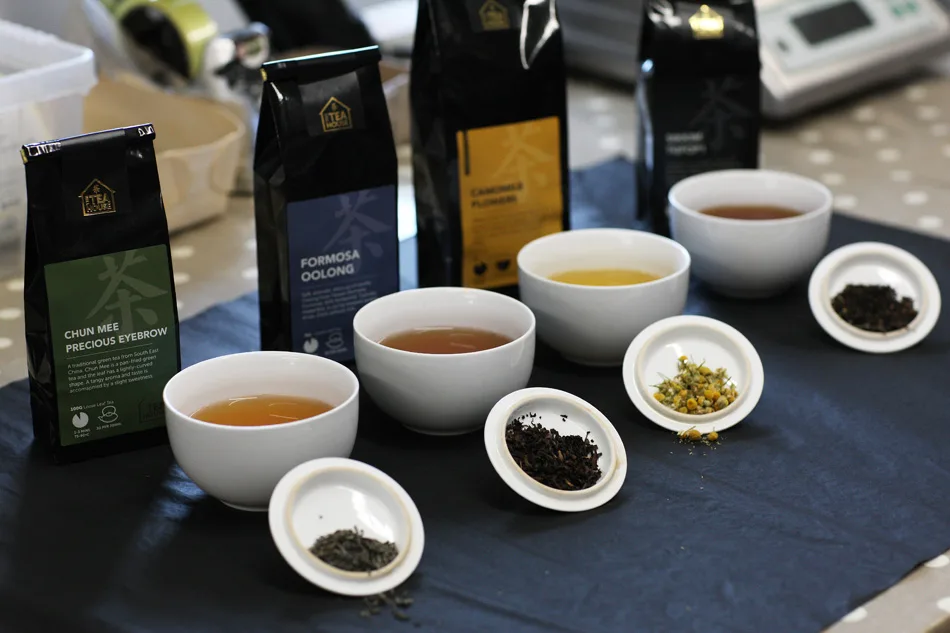
As we leave, he shows me a converted shipping container – ‘the Tea House’. It’s packed floor-to-ceiling with speciality teas bearing evocative names like Chun Mae Precious Eyebrows: a green tea whose leaves have a lightly-curved shape said to resemble a woman’s eyebrow.
‘At heart, we’re still a nation of tea drinkers,’ Giles says, ‘So … watch this space!’
Is tea Mr Bean’s next big thing?
Quickfire questions for Giles:
Who would you have a coffee with?
My grandfathers – I sadly never met them. Grantly Dick-Read was an obstetrician who made his name as a leading advocate of natural childbirth.
My maternal grandfather, Colonel William Kingsberry, was a career soldier killed in Ghent by a V-2 rocket.
For my mechanical fix, racing drivers Stirling Moss, both Graham and Damon Hill, and also Guy Gibson VC, commanding officer of 617 Squadron – he led the Dambusters Raid.
Book by your bedside?
Rivets, Trivets and Galvanised Buckets: Life in the village hardware shop by Tom Fort. He’s a brilliant researcher, a shared passion.
Favourite place to drink coffee?
Ironically, I rarely go out for coffee. If I do, I prefer somewhere we don’t supply as I’m always researching the competition! That said, little beats a fresh brew in my thermos and heading out on my motorcycle to enjoy it on Salisbury Plain or Portland Bill – anywhere wild with fantastic views.