

Happily tucked away from the passing A357 traffic is this magnificent example of Georgian architecture – the Old Rectory in Holebrooke Lane, Lydlinch. The grade II listed building dates from 1775 although an attached cottage is thought to be 15th or 16th century.

A concert party at Lydlinch Rectory circa 1905, from the Barry Cuff collection
The picture shows a well- attended summer concert in the early 1900s, when the Rectory was the home of the Rev Samuel and Mrs Maud Hooper. Present owner Jonathan Elwes was not aware of the Hoopers’ concert parties until he saw this picture from the Barry Cuff collection, published in David Burnett’s book Lost Dorset: The Villages & Countryside. But he was aware of the tower and glass-roofed verandah on the building and is glad they are no longer there. Mr Elwes explains that when Queen Victoria did anything, everyone copied it, so the inclusion of belvedere towers on Osborne House on the Isle of Wight spawned a rash of similar towers across the country.
‘The Georgian characteristics were ruined by what I think are monstrosities,’ he says. Both the Old Rectory’s tower and verandah disappeared decades before Mr Elwes and his wife arrived in 1996. ‘I like the simplicity of the house’s Georgian lines,’ he says. ‘The windows are a great feature of the house. They give tremendous light.’
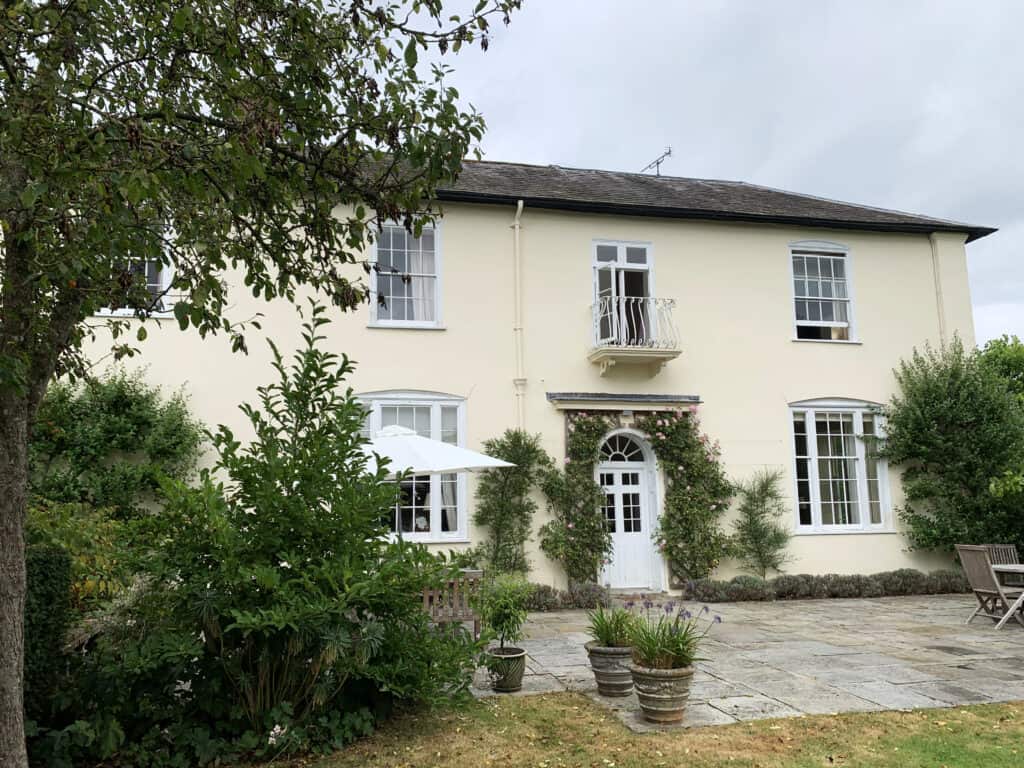
A similar view of the Old Rectory today
In Lydlinch’s historic church across the road is a memorial to the Rev and Mrs Hooper’s youngest son, Leonard, who served in the Dorsetshire Regiment and was killed on the Somme 12 days before his 22nd birthday in 1916.
By: Roger Guttridge